10 Excuses Christians Use for Missing Church

Carbonatix Pre-Player Loader

Audio By Carbonatix

In today’s culture of multiple service times, locations, and worship styles, it’s interesting how many people still come up with excuses for not attending church. Often, these aren’t the casual attendees who appear on major Christian holidays, but those who profess great faith in God, yet struggle to maintain a consistent attendance at any local church.

For some people, “Sunday morning” and “church” just go together. It’s like PB & J, and their weekend just wouldn’t be complete without attending a service as part of a local congregation. Whether they are fancily-clad walking into their white-steepled building, or showing up in skinny jeans to a retrofitted warehouse in the urban center, most people who claim a life of Christian faith typically find someplace to meet with other believers on the weekend. They may jump in quickly, building community, serving in some capacity, and making it “home.”

Others struggle with the idea of putting down roots at a church. For some, they “shop” around for a while before landing someplace permanent, and their reasons for leaving one congregation, and then another, can have some merit—like safe places for their children to learn about Jesus. Sadly, there are far less important reasons for missing church, and we’ve listed those below as well.

Photo credit: ©GettyImages/Prostock-Studio 

1. The "music" isn't their style.

1. The "music" isn't their style.

It’s either too loud or too old. They either want more upbeat songs, or they detest the “fog” and flashy lights. It’s either too much of one thing or not enough of another. 

Throughout the Bible, there are accounts of people coming together in praise and with song. The Psalmist says, “sing to the Lord a new song; sing to the Lord, all the earth. Sing to the Lord, praise his name!” (Psalm 96:1-2) and yet many people would admit that they would come to church more “if the worship was more my style.” 


Photo credit: ©Thinkstock/DesignPics
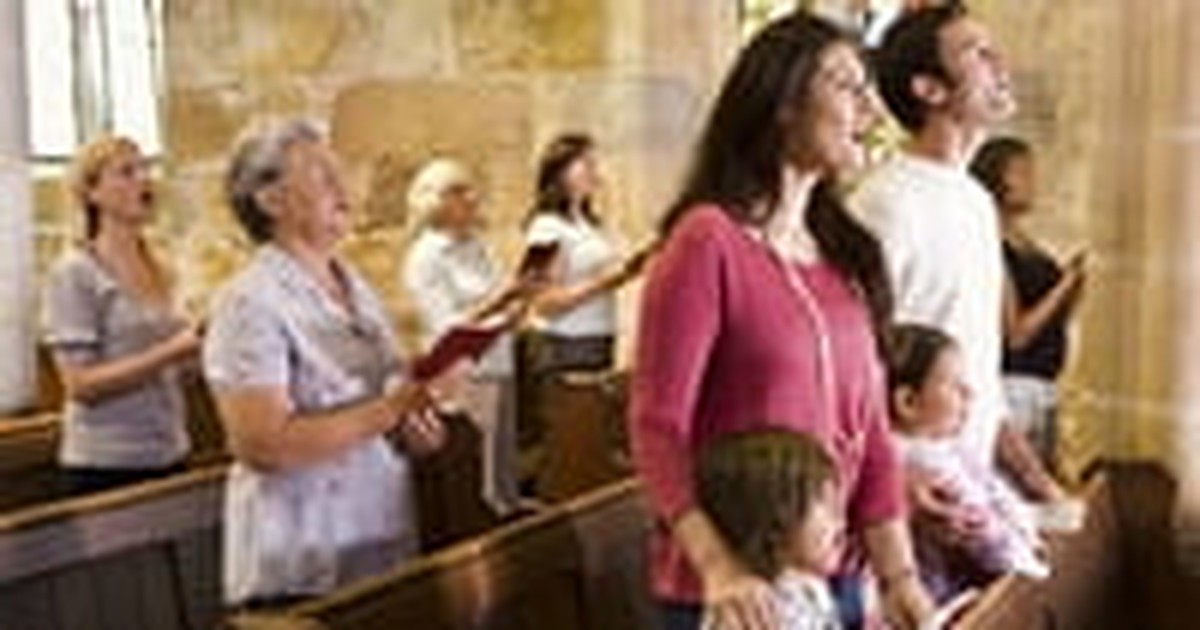
2. They aren't the target demographic.

2. They aren't the target demographic.

Most churches don’t have the resources to have services and ministries that appeal to every age, stage, and interest. It can be difficult to be a multi-generational church that anyone can feel welcomed at and excited about. 

For those individuals who find that they are the only single-and-under-30 person in a room full of gray heads, it’s probably only a matter of time before they are searching for something more youthful. Similarly, families may not feel comfortable in a room full of millennials reading the Bible from their iPhones—especially when there’s no childcare, it’s Sunday night at 8 PM, and their kids have school the next morning. 


Photo credit: ©Thinkstock/Jupiterimages

3. The service times are not convenient.

3. The service times are not convenient.

This statement goes hand-in-hand with the previous excuse. Chances are if someone is complaining about a service time, it’s because they don’t fit into the target demographic. 

Getting up for an 8 AM service on Sunday mornings isn’t going to fit into the late-night style of young person, just as most middle-aged people (with children) want to have service before noon because they are already up and going by then. 

Related Podcast: Is the Church on Life Support?—Nick Vujicic’s Wake-Up Call to American Christians

Is the American church asleep at the wheel—on the very edge of spiritual collapse while pretending all is well? In one of the most profound and challenging episodes yet, Catherine welcomes world-renowned evangelist Nick Vujicic to the show for a candid, no-holds-barred conversation that every Christian parent needs to hear. Born without arms or legs, Nick’s extraordinary journey from hopelessness to hope has reached over 2 billion people across 74 countries. But today, his urgent warning is not for the world, but for the American church and its families. If this episode helps you be a more thoughtful Christian, be sure to follow Christian Parent, Crazy World on Apple or Spotify so you never miss an episode!

Photo credit: ©Thinkstock/Sean824

4. They don't feel connected.

4. They don't feel connected.

While “community” is one of the biggest reasons that individuals have for attending a local church, it is often the excuse people use for missing it altogether. While the responsibility is on each person to establish and then grow relationships within a congregation, it tends to be terrifying enough that the church leadership is expected to produce “authentic relationships” for everyone. 

Rather than getting out of their comfort zone to forge new friendships, they slip into the back of the room late and give excuses as to why they can’t meet up for food after service. They are also typically unable to attend small group meetings or volunteer in any type of ministry—where they would inevitably meet new people. 


Photo credit: ©Thinkstock/vadimguzhva

5. They don't like the teaching.

5. They don't like the teaching.

Other than music styles, this is what individuals complain about the most. The preacher is either too long-winded, or uses an odd translation; they talk about money, divorce, and politics too much; or, they tell a lot of stories, but fail to open the Bible altogether. 

Most people have an opinion about what the pastor should be speaking on every week and expect the church to be run like a democracy where everyone gets to vote on what topics should be on the docket and the amount of time the pastor is allowed to speak. Some find themselves being “screamed” at, and others “coddled,” and if this is the case, it causes enough anxiety to decide that showing up just isn’t worth it. 


Photo credit: ©Thinkstock

6. Their kids don't like going.

6. Their kids don't like going.

For most parents, quality childcare is a major concern and complaint. If their young children are throwing themselves on the floor each week during drop off, parents aren’t going to be eager to get out the door on Sunday morning. Teenagers, in contrast, won’t be screaming and having a tantrum at the door of their class… but if they are barricading themselves in their bedroom in the morning, or dragging their feet and rolling their eyes all the way from the car to the youth room, chances are their parents will be looking into other churches in town with better programs for students. 

Many parents will even stay at a church that they don’t particularly enjoy themselves if they feel like it’s a good place for their kids. Staff, curriculum, and the physical environment are all reasons that kids give for not wanting to return—and that is often enough for mom and dad.


Photo credit: ©Thinkstock/Purestock

7. They are too busy.

7. They are too busy.

Whether they work shifts, or weekends, or have active children who participate in team sports, there are many people who find it challenging to make the service times fit into their calendar. In the case of those who attend a small, country church with only one or two service times, this may be an easily-understood excuse. For most individuals, however, there are sometimes dozens of options between Friday and Sunday evening, and multiple campuses to choose from. 

Others might be able to make a service time work, but they seem to always have a reason for missing: “their business getting off the ground,” “the overtime required by the boss," or the endless list of weekend chores, errands, and travel that is simply too important to prioritize better.


Photo credit: ©Thinkstock

8. They already do a lot of "church" stuff.

8. They already do a lot of "church" stuff.

For many who work at a church or in a para-church organization, this is often the excuse; it tends to be a bit of a work hazard when the place you worship is also the place that signs your paycheck. 

There are others whose calendar is so full of Bible studies, conferences and seminars that they really don’t have time to be part of weekend services. Many people find time to volunteer on the weekend, whether at their church or another charity, and believe doing this is their substitute for attending a service.


Photo credit: ©Thinkstock/JHershPhotography

9. They aren't a fan of "organized religion."

9. They aren't a fan of "organized religion."

They may claim a deep faith in God and love the Bible, yet they really struggle to submit to a local church full of “hypocrites” and “money-hungry” zealots. They love Jesus and believe what He taught, but they have been hurt in the past, taken advantage of, or abused in some way that lumps all churches together. 

They are perfectly fine getting their fix of church service via a live stream or podcast format, and with those options more and more available, it’s easy to see why attendance may be on the decrease. 


Photo credit: ©Thinkstock/welcomia

10. They don't feel weekly attendance is necessary.

10. They don't feel weekly attendance is necessary.

The average attendance for most church-goers in America being twice a month, they can check off their “good deed” one week and feel justified staying home the next. For these individuals, it really isn’t about the specifics of the church; they just don’t see it as a priority. 

Perhaps they have never heard Hebrews 10:25 that cautions, “and let us not neglect our meeting together, as some people do,” or maybe they feel that this verse only applies to those who are “members” of a church.


Malinda Fuller and her husband Alex have served at several churches and para-church organizations in the U.S. and Canada for over a decade. Malinda wields truth and grace through the words on her blog and has also contributed content for Relevant, Thrive Moms and The Influence Network. Malinda and Alex currently reside in Southern California, where they are homeschooling their daughters, working in ministry and trying to not complain about the continuous sunshine.

Photo credit: ©Thinkstock/digitalskillet

 

Salem News Channel Today

Sponsored Links


September 26 - Phoenix, AZ
Scottsdale Center for the Performing Arts


November 2 - Detroit, MI
Zion Christian Church in Troy


October 6 - Los Angeles, CA
Pasadena Convention Center


November 5 - San Antonio, TX
Norris Centers – The Grand Red Oak Ballroom


October 8 - Sacramento, CA
William Jessup University


November 7 - Tampa, FL
The Palladium at St. Pete College


October 22 - Minneapolis, MN
Crowne Plaza AiRE


November 15 - San Francisco, CA
Fremont Marriott Silicon Valley


October 23 - Philadelphia, PA
Green Valley Country Club


November 16 - Denver, CO
CU South Denver - Formerly Wildlife Experience


November 2 - Chicago, IL
Chicago Westin Northwest in Itasca


November 21 - Cleveland, OH
Holiday Inn Rockside in Independence


Salem Radio Network Speakers

Larry Elder is an American lawyer, writer, and radio and television personality who calls himself the "Sage of South Central" a district of Los Angeles, Larry says his philosophy is to entertain, inform, provoke and to hopefully uplift. His calling card is "we have a country to save" and to him this means returning to the bedrock Constitutional principles of limited government and maximum personal responsibility. Elder's iconoclastic wit and intellectual agility makes him a particularly attractive voice in a nation that seems weary of traditional racial dialogue.” – Los Angeles Times.

Mike Gallagher Mike Gallagher began his broadcasting career in 1978 in Dayton, Ohio. Today, he is one of the most listened-to talk radio show hosts in America, recently having been ranked in the Talkers Magazine “Heavy Hundred” list – the 100 most important talk radio hosts in America. Prior to being launched into national syndication in 1998, Mike hosted the morning show on WABC-AM in New York City. Today, Talkers Magazine reports that his show is heard by over 3.75 million weekly listeners. Besides his radio work, Mike is seen on Fox News Channel as an on-air contributor, frequently appearing on the cable news giant.

Hugh Hewitt is one of the nation’s leading bloggers and a genuine media revolutionary. He brings that expertise, his wit and what The New Yorker magazine calls his “amiable but relentless manner” to his nationally syndicated show each day.

When Dr. Sebastian Gorka was growing up, he listened to talk radio under his pillow with a transistor radio, dreaming that one day he would be behind the microphone. Beginning New Year’s Day 2019, he got his wish. Gorka now hosts America First every weekday afternoon 3 to 6pm ET. Gorka’s unique story works well on the radio. He is national security analyst for the Fox News Channel and author of two books: "Why We Fight" and "Defeating Jihad." His latest book releasing this fall is “War For America’s Soul.” He is uniquely qualified to fight the culture war and stand up for what is great about America, his adopted home country.

Broadcasting from his home station of KRLA in Los Angeles, the Dennis Prager Show is heard across the country. Everything in life – from politics to religion to relationships – is grist for Dennis’ mill. If it’s interesting, if it affects your life, then Dennis will be talking about it – with passion, humor, insight and wisdom.

Sean Hannity is a conservative radio and television host, and one of the original primetime hosts on the Fox News Channel, where he has appeared since 1996. Sean Hannity began his radio career at a college station in California, before moving on to markets in the Southeast and New York. Today, he’s one of the most listened to on-air voices. Hannity’s radio program went into national syndication on September 10, 2001, and airs on more than 500 stations. Talkers Magazine estimates Hannity’s weekly radio audience at 13.5 million. In 1996 he was hired as one of the original hosts on Fox News Channel. As host of several popular Fox programs, Hannity has become the highest-paid news anchor on television.

Michelle Malkin is a mother, wife, blogger, conservative syndicated columnist, longtime cable TV news commentator, and best-selling author of six books. She started her newspaper journalism career at the Los Angeles Daily News in 1992, moved to the Seattle Times in 1995, and has been penning nationally syndicated newspaper columns for Creators Syndicate since 1999. She is founder of conservative Internet start-ups Hot Air and Twitchy.com. Malkin has received numerous awards for her investigative journalism, including the Council on Governmental Ethics Laws (COGEL) national award for outstanding service for the cause of governmental ethics and leadership (1998), the Reed Irvine Accuracy in Media Award for Investigative Journalism (2006), the Heritage Foundation and Franklin Center for Government & Public Integrity's Breitbart Award for Excellence in Journalism (2013), the Center for Immigration Studies' Eugene Katz Award for Excellence in the Coverage of Immigration Award (2016), and the Manhattan Film Festival's Film Heals Award (2018). Married for 26 years and the mother of two teenage children, she lives with her family in Colorado. Follow her at michellemalkin.com. (Photo reprinted with kind permission from Peter Duke Photography.)

Sponsored by:

10 Excuses Christians Use for Missing Church

Carbonatix Pre-Player Loader

Audio By Carbonatix

In today’s culture of multiple service times, locations, and worship styles, it’s interesting how many people still come up with excuses for not attending church. Often, these aren’t the casual attendees who appear on major Christian holidays, but those who profess great faith in God, yet struggle to maintain a consistent attendance at any local church.

For some people, “Sunday morning” and “church” just go together. It’s like PB & J, and their weekend just wouldn’t be complete without attending a service as part of a local congregation. Whether they are fancily-clad walking into their white-steepled building, or showing up in skinny jeans to a retrofitted warehouse in the urban center, most people who claim a life of Christian faith typically find someplace to meet with other believers on the weekend. They may jump in quickly, building community, serving in some capacity, and making it “home.”

Others struggle with the idea of putting down roots at a church. For some, they “shop” around for a while before landing someplace permanent, and their reasons for leaving one congregation, and then another, can have some merit—like safe places for their children to learn about Jesus. Sadly, there are far less important reasons for missing church, and we’ve listed those below as well.

Photo credit: ©GettyImages/Prostock-Studio 

1. The "music" isn't their style.

1. The "music" isn't their style.

It’s either too loud or too old. They either want more upbeat songs, or they detest the “fog” and flashy lights. It’s either too much of one thing or not enough of another. 

Throughout the Bible, there are accounts of people coming together in praise and with song. The Psalmist says, “sing to the Lord a new song; sing to the Lord, all the earth. Sing to the Lord, praise his name!” (Psalm 96:1-2) and yet many people would admit that they would come to church more “if the worship was more my style.” 


Photo credit: ©Thinkstock/DesignPics

2. They aren't the target demographic.

2. They aren't the target demographic.

Most churches don’t have the resources to have services and ministries that appeal to every age, stage, and interest. It can be difficult to be a multi-generational church that anyone can feel welcomed at and excited about. 

For those individuals who find that they are the only single-and-under-30 person in a room full of gray heads, it’s probably only a matter of time before they are searching for something more youthful. Similarly, families may not feel comfortable in a room full of millennials reading the Bible from their iPhones—especially when there’s no childcare, it’s Sunday night at 8 PM, and their kids have school the next morning. 


Photo credit: ©Thinkstock/Jupiterimages

3. The service times are not convenient.

3. The service times are not convenient.

This statement goes hand-in-hand with the previous excuse. Chances are if someone is complaining about a service time, it’s because they don’t fit into the target demographic. 

Getting up for an 8 AM service on Sunday mornings isn’t going to fit into the late-night style of young person, just as most middle-aged people (with children) want to have service before noon because they are already up and going by then. 

Related Podcast: Is the Church on Life Support?—Nick Vujicic’s Wake-Up Call to American Christians

Is the American church asleep at the wheel—on the very edge of spiritual collapse while pretending all is well? In one of the most profound and challenging episodes yet, Catherine welcomes world-renowned evangelist Nick Vujicic to the show for a candid, no-holds-barred conversation that every Christian parent needs to hear. Born without arms or legs, Nick’s extraordinary journey from hopelessness to hope has reached over 2 billion people across 74 countries. But today, his urgent warning is not for the world, but for the American church and its families. If this episode helps you be a more thoughtful Christian, be sure to follow Christian Parent, Crazy World on Apple or Spotify so you never miss an episode!

Photo credit: ©Thinkstock/Sean824

4. They don't feel connected.

4. They don't feel connected.

While “community” is one of the biggest reasons that individuals have for attending a local church, it is often the excuse people use for missing it altogether. While the responsibility is on each person to establish and then grow relationships within a congregation, it tends to be terrifying enough that the church leadership is expected to produce “authentic relationships” for everyone. 

Rather than getting out of their comfort zone to forge new friendships, they slip into the back of the room late and give excuses as to why they can’t meet up for food after service. They are also typically unable to attend small group meetings or volunteer in any type of ministry—where they would inevitably meet new people. 


Photo credit: ©Thinkstock/vadimguzhva

5. They don't like the teaching.

5. They don't like the teaching.

Other than music styles, this is what individuals complain about the most. The preacher is either too long-winded, or uses an odd translation; they talk about money, divorce, and politics too much; or, they tell a lot of stories, but fail to open the Bible altogether. 

Most people have an opinion about what the pastor should be speaking on every week and expect the church to be run like a democracy where everyone gets to vote on what topics should be on the docket and the amount of time the pastor is allowed to speak. Some find themselves being “screamed” at, and others “coddled,” and if this is the case, it causes enough anxiety to decide that showing up just isn’t worth it. 


Photo credit: ©Thinkstock

6. Their kids don't like going.

6. Their kids don't like going.

For most parents, quality childcare is a major concern and complaint. If their young children are throwing themselves on the floor each week during drop off, parents aren’t going to be eager to get out the door on Sunday morning. Teenagers, in contrast, won’t be screaming and having a tantrum at the door of their class… but if they are barricading themselves in their bedroom in the morning, or dragging their feet and rolling their eyes all the way from the car to the youth room, chances are their parents will be looking into other churches in town with better programs for students. 

Many parents will even stay at a church that they don’t particularly enjoy themselves if they feel like it’s a good place for their kids. Staff, curriculum, and the physical environment are all reasons that kids give for not wanting to return—and that is often enough for mom and dad.


Photo credit: ©Thinkstock/Purestock

7. They are too busy.

7. They are too busy.

Whether they work shifts, or weekends, or have active children who participate in team sports, there are many people who find it challenging to make the service times fit into their calendar. In the case of those who attend a small, country church with only one or two service times, this may be an easily-understood excuse. For most individuals, however, there are sometimes dozens of options between Friday and Sunday evening, and multiple campuses to choose from. 

Others might be able to make a service time work, but they seem to always have a reason for missing: “their business getting off the ground,” “the overtime required by the boss," or the endless list of weekend chores, errands, and travel that is simply too important to prioritize better.


Photo credit: ©Thinkstock

8. They already do a lot of "church" stuff.

8. They already do a lot of "church" stuff.

For many who work at a church or in a para-church organization, this is often the excuse; it tends to be a bit of a work hazard when the place you worship is also the place that signs your paycheck. 

There are others whose calendar is so full of Bible studies, conferences and seminars that they really don’t have time to be part of weekend services. Many people find time to volunteer on the weekend, whether at their church or another charity, and believe doing this is their substitute for attending a service.


Photo credit: ©Thinkstock/JHershPhotography

9. They aren't a fan of "organized religion."

9. They aren't a fan of "organized religion."

They may claim a deep faith in God and love the Bible, yet they really struggle to submit to a local church full of “hypocrites” and “money-hungry” zealots. They love Jesus and believe what He taught, but they have been hurt in the past, taken advantage of, or abused in some way that lumps all churches together. 

They are perfectly fine getting their fix of church service via a live stream or podcast format, and with those options more and more available, it’s easy to see why attendance may be on the decrease. 


Photo credit: ©Thinkstock/welcomia

10. They don't feel weekly attendance is necessary.

10. They don't feel weekly attendance is necessary.

The average attendance for most church-goers in America being twice a month, they can check off their “good deed” one week and feel justified staying home the next. For these individuals, it really isn’t about the specifics of the church; they just don’t see it as a priority. 

Perhaps they have never heard Hebrews 10:25 that cautions, “and let us not neglect our meeting together, as some people do,” or maybe they feel that this verse only applies to those who are “members” of a church.


Malinda Fuller and her husband Alex have served at several churches and para-church organizations in the U.S. and Canada for over a decade. Malinda wields truth and grace through the words on her blog and has also contributed content for Relevant, Thrive Moms and The Influence Network. Malinda and Alex currently reside in Southern California, where they are homeschooling their daughters, working in ministry and trying to not complain about the continuous sunshine.

Photo credit: ©Thinkstock/digitalskillet

 

Salem News Channel Today

Sponsored Links

On Air & Up Next

See the Full Program Guide