5 Signs Your Church Might Be Heading toward Progressive Christianity

Carbonatix Pre-Player Loader

Audio By Carbonatix

Several years ago, my husband and I began attending a local Evangelical, non-denominational church, and we loved it. We cherished the sense of community we found among the loving and authentic people we met there, and the intelligent, "outside the box" pastor who led our flock with thought-provoking and insightful sermons. Sadly, the church started going off the rails theologically, and after about a year and a half, we made the difficult decision to leave. Today that church is a self-titled "Progressive Christian Community."

Back then I had never heard of "Progressive Christianity," and even now it is difficult to pin down what actually qualifies someone as a Progressive Christian, due to the diversity of beliefs that fall under that designation. However, there are signs—certain phrases and ideas—that seem to be consistent in Progressive circles. Here are 5 danger signs to watch for in your church:

Photo Courtesy: NeOnbrand/Unsplash
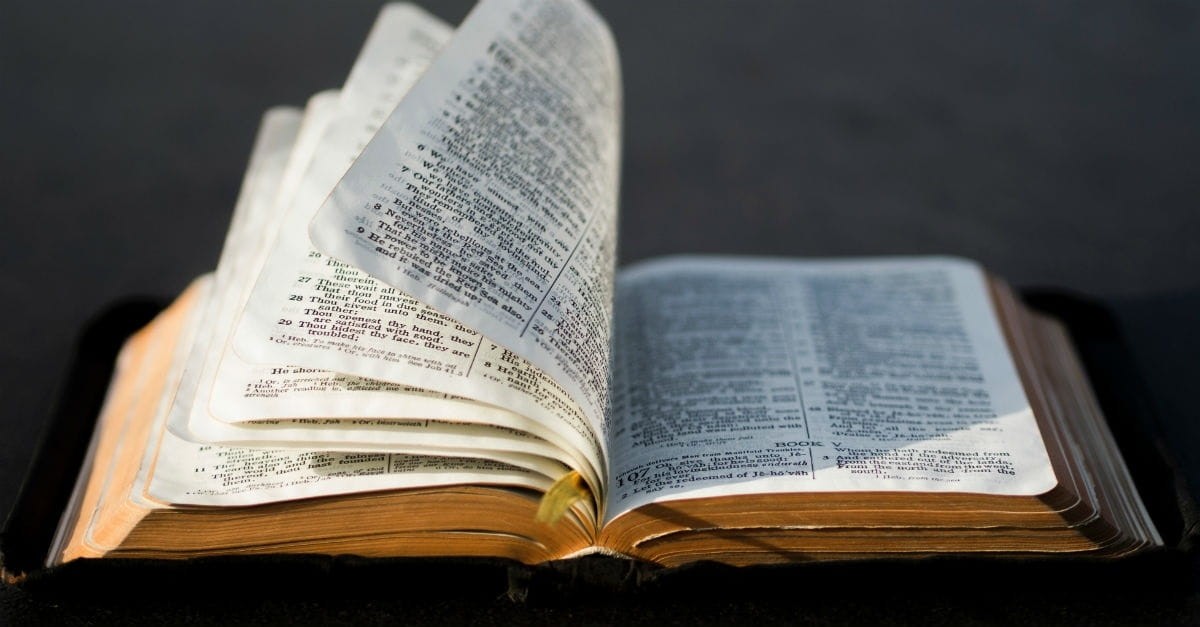
1. There is a lowered view of the Bible

1. There is a lowered view of the Bible

One of the main differences between Progressive Christianity and Historic Christianity is its view of the Bible. Historically, Christians have viewed the Bible as the Word of God and authoritative for our lives. Progressive Christianity generally abandons these terms, emphasizing personal belief over biblical mandate.

Comments you might hear:

  • The Bible is a human book...
  • I disagree with the Apostle Paul on that issue...
  • The Bible condones immorality, so we are obligated to reject what it says in certain places...
  • The Bible "contains" the word of God...


Related Resource: Listen to Alisa Childers on our FREE podcast, The Becket Cook Show. All of our episodes are available at LifeAudio.com.

Photo Credit: ©Unsplash/Aaron Burden

2. Feelings are emphasized over facts

2. Feelings are emphasized over facts

In Progressive churches, personal experiences, feelings, and opinions tend to be valued above objective truth. As the Bible ceases to be viewed as God’s definitive word, what a person feels to be true becomes the ultimate authority for faith and practice.

Comments you might hear:

  • That Bible verse doesn't resonate with me....
  • I thought homosexuality was a sin until I met and befriended some gay people....
  • I just can’t believe Jesus would send good people to hell....

Photo Credit: ©Thinkstock

3. Essential Christian doctrines are open for re-interpretation

3. Essential Christian doctrines are open for re-interpretation

Progressive author John Pavlovitz wrote, “There are no sacred cows [in Progressive Christianity]....Tradition, dogma, and doctrine are all fair game, because all pass through the hands of flawed humanity." Progressive Christians are often open to re-defining and re-interpreting the Bible on hot-button moral issues like homosexuality and abortion, and also cardinal doctrines such as the virgin conception and the bodily resurrection of Jesus. The only sacred cow is "no sacred cows." 

Comments you might hear:

  • The resurrection of Jesus doesn't have to be factual to speak truth....
  • The church's historic position on sexuality is archaic and needs to be updated within a modern framework...
  • The idea of a literal hell is offensive to non-Christians and needs to be re-interpreted....

Photo Credit: ©Thinkstock

4. Historic terms are re-defined

4. Historic terms are re-defined

There are some Progressive Christians who say they affirm doctrines like biblical inspiration, inerrancy, and authority, but they have to do linguistic gymnastics to make those words mean what they want them to mean. I remember asking a Pastor, "Do you believe the Bible is divinely inspired?" He answered confidently, "Yes, of course!" However, I mistakenly assumed that when using the word "inspired," we both meant the same thing. He clarified months later what he meant—that the Bible is inspired in the same way and on the same level as many other Christian books, songs, and sermons. This, of course, is not how Christians have historically understood the doctrine of divine inspiration.

Photo Credit: ©Unsplash/Romain Vignes

Including the Word "Love"

Including the Word "Love"

Another word that tends to get a Progressive make-over is the word "love." When plucked out of its biblical context, it becomes a catch-all term for everything non-confrontative, pleasant, and affirming.

Comments you might hear:

  • God wouldn't punish sinners—He is love....
  • Sure, the Bible is authoritative—but we've misunderstood it for the first 2,000 years of church history...
  • It's not our job to talk to anyone about sin—it's our job to just love them....

Photo Credit: ©Thinkstock

5. The heart of the gospel message shifts from sin and redemption to social justice

5. The heart of the gospel message shifts from sin and redemption to social justice

There is no doubt that the Bible commands us to take care of the unfortunate and defend those who are oppressed. This is a very real and profoundly important part of what it means to live out our Christian faith. However, the core message of Christianity—the gospel—is that Jesus died for our sins, was buried and resurrected, and thereby reconciled us to God. This is the message that will truly bring freedom to the oppressed. 

Many Progressive Christians today find the concept of God willing His Son to die on the cross to be embarrassing or even appalling. Sometimes referred to as "cosmic child abuse," the idea of blood atonement is de-emphasized or denied altogether, with social justice and good works enthroned in its place.

Photo Credit: ©Unsplash

Comments you might hear:

Comments you might hear:

  • Sin doesn't separate us from God—we are made in His image and He called us good....
  • God didn't actually require a sacrifice for our sins—the first Christians picked up on the pagan practice of animal sacrifice and told the Jesus story in similar terms....
  • We don't really need to preach the gospel—we just need to show love by bringing justice to the oppressed and provision to the needy...

Photo Credit: ©Thinkstock

Conclusion:

Conclusion:

Identifying the signs is not always obvious—sometimes they are subtle and mixed with a lot of truth. Progressive Christianity can be persuasive and enticing, but carried out to its logical end, it is an assault on the foundational framework of Christianity, leaving it disarmed of its saving power.

We shouldn’t be surprised to find some of these ideas infiltrating our churches. Jesus warned us, “Watch out for false prophets” who “come to you in sheep’s clothing, but inwardly they are ferocious wolves” (Matthew 7:15). So if you spot any of these 5 danger signs in your place of worship, it might be time to pray about finding fellowship in a more biblically faithful church community.

Related Resource: How Do We Heal Our Nation? 9 Guidelines to Unite and Restore

Against the backdrop of recent troubling events and escalating tensions, Catherine delves into the profound divisions that have permeated society, emphasizing the critical role of faith in bridging these divides. In this timely episode of Christian Parent/Crazy World, Catherine offers 9 guidelines to help heal our nation and bring about unity. These guidelines are not only spiritual but also relational, aiming to bridge the divide by the disciplines of prayer and fasting, and then fostering understanding and a shared sense of humanity with these best practices during contentious exchanges. Listen now and be sure to subscribe on Apple or Spotify so you never miss an episode!

This article originally appeared on AlisaChilders.com. Used with permission.

Photo Credit: ©Thinkstock

 

Salem News Channel Today

Sponsored Links


September 26 - Phoenix, AZ
Scottsdale Center for the Performing Arts


November 2 - Detroit, MI
Zion Christian Church in Troy


October 6 - Los Angeles, CA
Pasadena Convention Center


November 5 - San Antonio, TX
Norris Centers – The Grand Red Oak Ballroom


October 8 - Sacramento, CA
William Jessup University


November 7 - Tampa, FL
The Palladium at St. Pete College


October 22 - Minneapolis, MN
Crowne Plaza AiRE


November 15 - San Francisco, CA
Fremont Marriott Silicon Valley


October 23 - Philadelphia, PA
Green Valley Country Club


November 16 - Denver, CO
CU South Denver - Formerly Wildlife Experience


November 2 - Chicago, IL
Chicago Westin Northwest in Itasca


November 21 - Cleveland, OH
Holiday Inn Rockside in Independence


Salem Radio Network Speakers

Larry Elder is an American lawyer, writer, and radio and television personality who calls himself the "Sage of South Central" a district of Los Angeles, Larry says his philosophy is to entertain, inform, provoke and to hopefully uplift. His calling card is "we have a country to save" and to him this means returning to the bedrock Constitutional principles of limited government and maximum personal responsibility. Elder's iconoclastic wit and intellectual agility makes him a particularly attractive voice in a nation that seems weary of traditional racial dialogue.” – Los Angeles Times.

Mike Gallagher Mike Gallagher began his broadcasting career in 1978 in Dayton, Ohio. Today, he is one of the most listened-to talk radio show hosts in America, recently having been ranked in the Talkers Magazine “Heavy Hundred” list – the 100 most important talk radio hosts in America. Prior to being launched into national syndication in 1998, Mike hosted the morning show on WABC-AM in New York City. Today, Talkers Magazine reports that his show is heard by over 3.75 million weekly listeners. Besides his radio work, Mike is seen on Fox News Channel as an on-air contributor, frequently appearing on the cable news giant.

Hugh Hewitt is one of the nation’s leading bloggers and a genuine media revolutionary. He brings that expertise, his wit and what The New Yorker magazine calls his “amiable but relentless manner” to his nationally syndicated show each day.

When Dr. Sebastian Gorka was growing up, he listened to talk radio under his pillow with a transistor radio, dreaming that one day he would be behind the microphone. Beginning New Year’s Day 2019, he got his wish. Gorka now hosts America First every weekday afternoon 3 to 6pm ET. Gorka’s unique story works well on the radio. He is national security analyst for the Fox News Channel and author of two books: "Why We Fight" and "Defeating Jihad." His latest book releasing this fall is “War For America’s Soul.” He is uniquely qualified to fight the culture war and stand up for what is great about America, his adopted home country.

Broadcasting from his home station of KRLA in Los Angeles, the Dennis Prager Show is heard across the country. Everything in life – from politics to religion to relationships – is grist for Dennis’ mill. If it’s interesting, if it affects your life, then Dennis will be talking about it – with passion, humor, insight and wisdom.

Sean Hannity is a conservative radio and television host, and one of the original primetime hosts on the Fox News Channel, where he has appeared since 1996. Sean Hannity began his radio career at a college station in California, before moving on to markets in the Southeast and New York. Today, he’s one of the most listened to on-air voices. Hannity’s radio program went into national syndication on September 10, 2001, and airs on more than 500 stations. Talkers Magazine estimates Hannity’s weekly radio audience at 13.5 million. In 1996 he was hired as one of the original hosts on Fox News Channel. As host of several popular Fox programs, Hannity has become the highest-paid news anchor on television.

Michelle Malkin is a mother, wife, blogger, conservative syndicated columnist, longtime cable TV news commentator, and best-selling author of six books. She started her newspaper journalism career at the Los Angeles Daily News in 1992, moved to the Seattle Times in 1995, and has been penning nationally syndicated newspaper columns for Creators Syndicate since 1999. She is founder of conservative Internet start-ups Hot Air and Twitchy.com. Malkin has received numerous awards for her investigative journalism, including the Council on Governmental Ethics Laws (COGEL) national award for outstanding service for the cause of governmental ethics and leadership (1998), the Reed Irvine Accuracy in Media Award for Investigative Journalism (2006), the Heritage Foundation and Franklin Center for Government & Public Integrity's Breitbart Award for Excellence in Journalism (2013), the Center for Immigration Studies' Eugene Katz Award for Excellence in the Coverage of Immigration Award (2016), and the Manhattan Film Festival's Film Heals Award (2018). Married for 26 years and the mother of two teenage children, she lives with her family in Colorado. Follow her at michellemalkin.com. (Photo reprinted with kind permission from Peter Duke Photography.)

Sponsored by:

5 Signs Your Church Might Be Heading toward Progressive Christianity

Carbonatix Pre-Player Loader

Audio By Carbonatix

Several years ago, my husband and I began attending a local Evangelical, non-denominational church, and we loved it. We cherished the sense of community we found among the loving and authentic people we met there, and the intelligent, "outside the box" pastor who led our flock with thought-provoking and insightful sermons. Sadly, the church started going off the rails theologically, and after about a year and a half, we made the difficult decision to leave. Today that church is a self-titled "Progressive Christian Community."

Back then I had never heard of "Progressive Christianity," and even now it is difficult to pin down what actually qualifies someone as a Progressive Christian, due to the diversity of beliefs that fall under that designation. However, there are signs—certain phrases and ideas—that seem to be consistent in Progressive circles. Here are 5 danger signs to watch for in your church:

Photo Courtesy: NeOnbrand/Unsplash

1. There is a lowered view of the Bible

1. There is a lowered view of the Bible

One of the main differences between Progressive Christianity and Historic Christianity is its view of the Bible. Historically, Christians have viewed the Bible as the Word of God and authoritative for our lives. Progressive Christianity generally abandons these terms, emphasizing personal belief over biblical mandate.

Comments you might hear:

  • The Bible is a human book...
  • I disagree with the Apostle Paul on that issue...
  • The Bible condones immorality, so we are obligated to reject what it says in certain places...
  • The Bible "contains" the word of God...


Related Resource: Listen to Alisa Childers on our FREE podcast, The Becket Cook Show. All of our episodes are available at LifeAudio.com.

Photo Credit: ©Unsplash/Aaron Burden

2. Feelings are emphasized over facts

2. Feelings are emphasized over facts

In Progressive churches, personal experiences, feelings, and opinions tend to be valued above objective truth. As the Bible ceases to be viewed as God’s definitive word, what a person feels to be true becomes the ultimate authority for faith and practice.

Comments you might hear:

  • That Bible verse doesn't resonate with me....
  • I thought homosexuality was a sin until I met and befriended some gay people....
  • I just can’t believe Jesus would send good people to hell....

Photo Credit: ©Thinkstock

3. Essential Christian doctrines are open for re-interpretation

3. Essential Christian doctrines are open for re-interpretation

Progressive author John Pavlovitz wrote, “There are no sacred cows [in Progressive Christianity]....Tradition, dogma, and doctrine are all fair game, because all pass through the hands of flawed humanity." Progressive Christians are often open to re-defining and re-interpreting the Bible on hot-button moral issues like homosexuality and abortion, and also cardinal doctrines such as the virgin conception and the bodily resurrection of Jesus. The only sacred cow is "no sacred cows." 

Comments you might hear:

  • The resurrection of Jesus doesn't have to be factual to speak truth....
  • The church's historic position on sexuality is archaic and needs to be updated within a modern framework...
  • The idea of a literal hell is offensive to non-Christians and needs to be re-interpreted....

Photo Credit: ©Thinkstock

4. Historic terms are re-defined

4. Historic terms are re-defined

There are some Progressive Christians who say they affirm doctrines like biblical inspiration, inerrancy, and authority, but they have to do linguistic gymnastics to make those words mean what they want them to mean. I remember asking a Pastor, "Do you believe the Bible is divinely inspired?" He answered confidently, "Yes, of course!" However, I mistakenly assumed that when using the word "inspired," we both meant the same thing. He clarified months later what he meant—that the Bible is inspired in the same way and on the same level as many other Christian books, songs, and sermons. This, of course, is not how Christians have historically understood the doctrine of divine inspiration.

Photo Credit: ©Unsplash/Romain Vignes

Including the Word "Love"

Including the Word "Love"

Another word that tends to get a Progressive make-over is the word "love." When plucked out of its biblical context, it becomes a catch-all term for everything non-confrontative, pleasant, and affirming.

Comments you might hear:

  • God wouldn't punish sinners—He is love....
  • Sure, the Bible is authoritative—but we've misunderstood it for the first 2,000 years of church history...
  • It's not our job to talk to anyone about sin—it's our job to just love them....

Photo Credit: ©Thinkstock

5. The heart of the gospel message shifts from sin and redemption to social justice

5. The heart of the gospel message shifts from sin and redemption to social justice

There is no doubt that the Bible commands us to take care of the unfortunate and defend those who are oppressed. This is a very real and profoundly important part of what it means to live out our Christian faith. However, the core message of Christianity—the gospel—is that Jesus died for our sins, was buried and resurrected, and thereby reconciled us to God. This is the message that will truly bring freedom to the oppressed. 

Many Progressive Christians today find the concept of God willing His Son to die on the cross to be embarrassing or even appalling. Sometimes referred to as "cosmic child abuse," the idea of blood atonement is de-emphasized or denied altogether, with social justice and good works enthroned in its place.

Photo Credit: ©Unsplash

Comments you might hear:

Comments you might hear:

  • Sin doesn't separate us from God—we are made in His image and He called us good....
  • God didn't actually require a sacrifice for our sins—the first Christians picked up on the pagan practice of animal sacrifice and told the Jesus story in similar terms....
  • We don't really need to preach the gospel—we just need to show love by bringing justice to the oppressed and provision to the needy...

Photo Credit: ©Thinkstock

Conclusion:

Conclusion:

Identifying the signs is not always obvious—sometimes they are subtle and mixed with a lot of truth. Progressive Christianity can be persuasive and enticing, but carried out to its logical end, it is an assault on the foundational framework of Christianity, leaving it disarmed of its saving power.

We shouldn’t be surprised to find some of these ideas infiltrating our churches. Jesus warned us, “Watch out for false prophets” who “come to you in sheep’s clothing, but inwardly they are ferocious wolves” (Matthew 7:15). So if you spot any of these 5 danger signs in your place of worship, it might be time to pray about finding fellowship in a more biblically faithful church community.

Related Resource: How Do We Heal Our Nation? 9 Guidelines to Unite and Restore

Against the backdrop of recent troubling events and escalating tensions, Catherine delves into the profound divisions that have permeated society, emphasizing the critical role of faith in bridging these divides. In this timely episode of Christian Parent/Crazy World, Catherine offers 9 guidelines to help heal our nation and bring about unity. These guidelines are not only spiritual but also relational, aiming to bridge the divide by the disciplines of prayer and fasting, and then fostering understanding and a shared sense of humanity with these best practices during contentious exchanges. Listen now and be sure to subscribe on Apple or Spotify so you never miss an episode!

This article originally appeared on AlisaChilders.com. Used with permission.

Photo Credit: ©Thinkstock

 

Salem News Channel Today

Sponsored Links

On Air & Up Next

See the Full Program Guide