5 Ways the Early Church Practiced Gratitude

Carbonatix Pre-Player Loader

Audio By Carbonatix

The believers who formed the early Christian church lived in a world where following Jesus often involved the challenges of persecution. Yet they expressed their gratitude to God often. Their gratitude practices were part of how they worshiped God, to thank him for the wonderful ways he changed their lives.

By looking back at how these first-generation Christians lived, we can uncover powerful ways to make thankfulness a constant part of our own walk with Jesus today. Here are 5 ways the early church practiced gratitude. 

Photo Credit: © Getty Images/Johnathan Kana

1. Constant Prayer

1. Constant Prayer

For the first Christians, prayer was largely about expressing gratitude, not just asking for things. They maintained a habit of constant prayer, so their conversations with God were always filled with gratitude, whether they were making a request or simply acknowledging His presence. This steady stream of thankfulness in prayer stemmed from the appreciation that everything they had was a gift from God, so the only fitting response to God’s constant blessings was constant gratitude. They realized that even their ability to pray came from God’s grace. The apostles often led the way, typically by beginning their letters with expressions of deep gratitude for the faith and progress of the people they were writing to. This taught believers that it’s essential to begin prayer by thanking God for what He’s doing in the world and in the lives of others. Their prayers focused on what God had already provided, rather than on what was missing from their lives.

Philippians 4:6 describes how God wants us to pray with gratitude: “Don't worry about anything; instead, pray about everything. Tell God what you need, and thank him for all he has done.” Like those early believers, we can pray about everything by making prayer a constant mindset throughout our day and night. When we do this, we can turn anxiety into gratitude. The early believers didn’t just rattle off wish lists; they first thanked God for his loving and faithful care, which built a foundation of trust in their relationships with God. They even thanked God for hard times because they knew suffering made them stronger (Romans 5:3-4).

By constantly thanking God, their prayer life helped them continuously affirm their trust in him. Their grateful prayers stopped them from falling into complaining and instead made their communication with God a wonderful way to worship.

Photo Credit: ©Pexels/kurt lichtmann 

2. Community Worship and Singing

2. Community Worship and Singing

People in the early church expressed their gratitude together whenever they gathered to worship, in response to the grace they had received through Christ. They met mostly in each other’s homes to worship together, and they often worshiped God by singing to him. As they did so, they thanked God and taught and encouraged each other. Their songs recalled the history of God’s faithfulness and celebrated the reality of their redemption. Colossians 3:16 says: “Let the message of Christ dwell among you richly as you teach and admonish one another with all wisdom through psalms, hymns, and songs from the Spirit, singing to God with gratitude in your hearts.”

By singing psalms (ancient Jewish songs), hymns (new Christian songs praising Christ), and spiritual songs (spontaneous, Spirit-led songs), they expressed their gratitude in a variety of ways. They were inspired by the message of Christ dwelling richly in them to sing with gratitude in their hearts. Their thankfulness came from celebrating how the Gospel message brought them the ultimate hope. When they sang, they were teaching one another about God through their lyrics, admonishing one another by challenging and encouraging each other to stay grateful and focused on God, and worshiping God by celebrating his goodness together. In the face of persecution, their singing helped them rely on God’s strength working through them, in community together.

We see an example of this in Acts 16:16-40, when Paul and Silas are beaten and thrown into prison, yet they respond by singing praises to God. Paul and Silas gave thanks through singing together, and in the process, they strengthened their ability to trust God – even in their challenging circumstances. God responded by making miracles happen! 

Photo Credit: iStockGetty Images Plusdoidam10 

3. Generously Sharing Resources

3. Generously Sharing Resources

The first Christians were remarkably generous with their money, property, and possessions, sharing everything they had with one another. They realized that the gift of salvation – being forgiven and getting eternal life – was so huge and undeserved that their earthly belongings were minor in comparison. Since God gave them the ultimate spiritual gift, they felt motivated to give back in a material way. Their gratitude was a powerful belief that shaped how they handled their resources.

The book of Acts in the Bible paints a fantastic picture of a community where personal wealth took a back seat to the needs of the group. They were all united, and that unity showed up in how they stopped worrying about private ownership when a fellow believer needed help. They figured God had provided for their most significant need (their spiritual salvation), so they could trust him to take care of their temporary needs (such as food and housing). This was a way of worshiping God by showing him that they valued their relationships with each other as part of God’s family more than owning and controlling earthly wealth. They knew God was the ultimate provider, and their resources were merely tools to express gratitude and strengthen the community.

Acts 2:44-45 records: “All the believers were together and had everything in common. They sold property and possessions to give to anyone who had need.” People like Barnabas sold their land and happily gave all the money to the church leaders. Their goal was simple: to make sure “there were no needy persons among them” (Acts 4:34). Richer members sold things not to look good, but to meet the basic needs of the poorer members. This care for the struggling was a hands-on way to show thanks that was inspired by God’s grace, which had lifted them out of spiritual poverty. Their radical, selfless sharing was the natural result of being thankful for their new lives in Christ. 

Photo Credit: Unsplash/Kate Remmer 

4. Enduring Challenges with Hope

4. Enduring Challenges with Hope

One of the most surprising ways the early church showed gratitude was by actively finding reasons to be thankful and even joyful, even in the midst of severe suffering and persecution. They didn’t thank God for the suffering itself (like being jailed or beaten), but they were grateful for the honor of suffering for Christ and the good spiritual results it produced. They viewed persecution as a means of strengthening their faith, relying on God to help them overcome the challenge. They were thankful to be considered worthy of being mistreated for the sake of Jesus’ name (Acts 5:41). This perspective transformed a terrible experience into a spiritual honor. They were also thankful because hard times changed them for the better.

They knew the reality that Romans 5:3-5 describes: “Not only so, but we also glory in our sufferings, because we know that suffering produces perseverance; perseverance, character; and character, hope. And hope does not put us to shame, because God’s love has been poured out into our hearts through the Holy Spirit, who has been given to us.” They were grateful for the opportunity to have their faith strengthened. Finally, the first believers focused on the future. They were grateful for the eternal reward that was much bigger than their temporary problems.

As 2 Corinthians 4:17 points out: “For our light and momentary troubles are achieving for us an eternal glory that far outweighs them all.” This view allowed them to stay joyful and thankful even when facing chains or death. Their ability to remain grateful while in danger was a powerful witness to the outside world. It showed that their spiritual treasures were far more valuable than their physical comfort. In 1 Thessalonians 5:18, the Bible encourages us to: “Give thanks in all circumstances; for this is God’s will for you in Christ Jesus.” We don’t need to be thankful for our problems, but we should keep a grateful attitude while dealing with them, because God has a plan for us, even when we’re in pain.

Photo Credit: ©iStock/Getty Images Plus/PORNCHAI SODA 
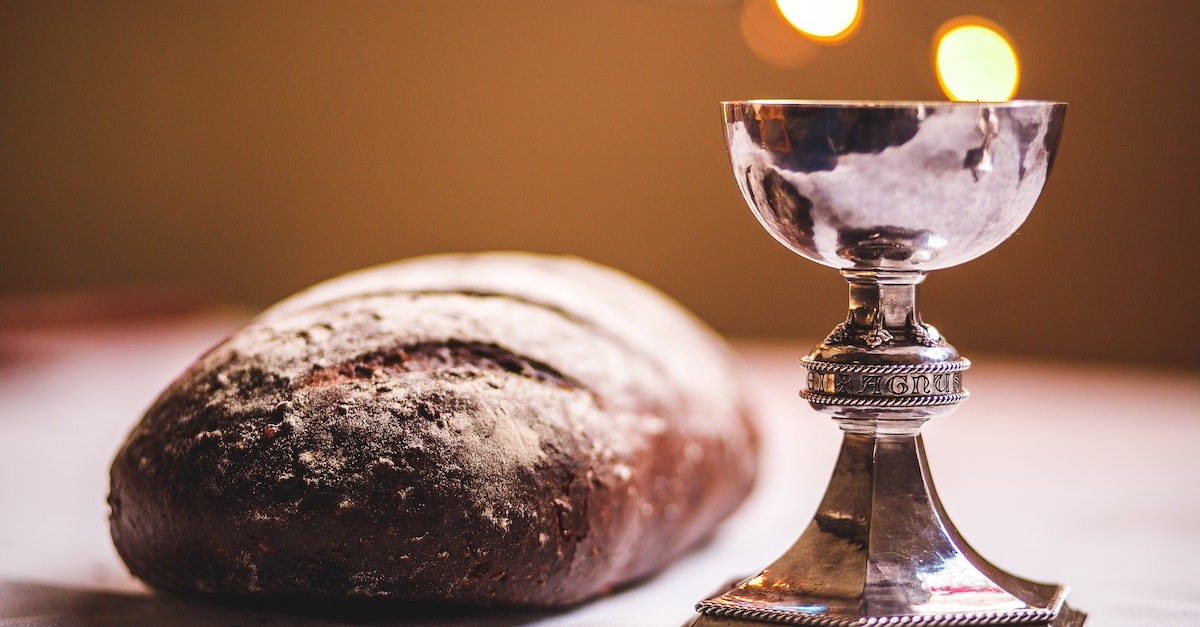
5. Celebrating the Eucharist

5. Celebrating the Eucharist

The most important part of the early Christian worship service was celebrating the eucharist (which we also call communion or the Lord’s supper). The word for it – eucharist – comes from the Greek word eucharistia, which means “thanksgiving.” Jesus himself created this central ritual to be a permanent, group way of believers expressing gratitude for his sacrifice. Every time they met to break the bread and share the cup, they were performing a thankful, physical act of remembering the ultimate gift: Jesus’ body broken and his blood spilled to forgive their sins. Communion was a way to celebrate together that they fully accepted God’s grace and were eternally grateful for the new promise (covenant) established through Jesus’ sacrificial death for their sins.

Celebrating the eucharist forced them to stop and consider how huge the gift was. They remembered they were once separated from God, but Jesus’ death made it possible to connect with their Creator and fully experience his love for them. This remembrance inspired them to be overwhelmingly grateful. Sharing the eucharist together also physically unified them as one body, which made their gratitude a shared experience. They were thankful not just for their own salvation, but for the new spiritual family they had been given. By consistently celebrating the eucharist, people in the early church kept their faith anchored to a heartfelt way to thank God for giving them everything that truly matters. 

In conclusion, the early church teaches us that gratitude is much more than a feeling – it’s a way of life. The people in the early church focused their gratitude on their relationships with Jesus. They realized that since God gave them everything they needed through his Son, the only appropriate response was to live lives overflowing with appreciation. They expressed their gratitude through every part of their lives. Early believers can inspire us to thank God in ways that draw us closer to him. By choosing to live with gratitude ourselves in every part of our own lives, we can enjoy strengthening our faith in the process.

Photo Credit: Unsplash/JamesColeman 

 

Salem News Channel Today

Sponsored Links


September 26 - Phoenix, AZ
Scottsdale Center for the Performing Arts


November 2 - Detroit, MI
Zion Christian Church in Troy


October 6 - Los Angeles, CA
Pasadena Convention Center


November 5 - San Antonio, TX
Norris Centers – The Grand Red Oak Ballroom


October 8 - Sacramento, CA
William Jessup University


November 7 - Tampa, FL
The Palladium at St. Pete College


October 22 - Minneapolis, MN
Crowne Plaza AiRE


November 15 - San Francisco, CA
Fremont Marriott Silicon Valley


October 23 - Philadelphia, PA
Green Valley Country Club


November 16 - Denver, CO
CU South Denver - Formerly Wildlife Experience


November 2 - Chicago, IL
Chicago Westin Northwest in Itasca


November 21 - Cleveland, OH
Holiday Inn Rockside in Independence


Salem Radio Network Speakers

Larry Elder is an American lawyer, writer, and radio and television personality who calls himself the "Sage of South Central" a district of Los Angeles, Larry says his philosophy is to entertain, inform, provoke and to hopefully uplift. His calling card is "we have a country to save" and to him this means returning to the bedrock Constitutional principles of limited government and maximum personal responsibility. Elder's iconoclastic wit and intellectual agility makes him a particularly attractive voice in a nation that seems weary of traditional racial dialogue.” – Los Angeles Times.

Mike Gallagher Mike Gallagher began his broadcasting career in 1978 in Dayton, Ohio. Today, he is one of the most listened-to talk radio show hosts in America, recently having been ranked in the Talkers Magazine “Heavy Hundred” list – the 100 most important talk radio hosts in America. Prior to being launched into national syndication in 1998, Mike hosted the morning show on WABC-AM in New York City. Today, Talkers Magazine reports that his show is heard by over 3.75 million weekly listeners. Besides his radio work, Mike is seen on Fox News Channel as an on-air contributor, frequently appearing on the cable news giant.

Hugh Hewitt is one of the nation’s leading bloggers and a genuine media revolutionary. He brings that expertise, his wit and what The New Yorker magazine calls his “amiable but relentless manner” to his nationally syndicated show each day.

When Dr. Sebastian Gorka was growing up, he listened to talk radio under his pillow with a transistor radio, dreaming that one day he would be behind the microphone. Beginning New Year’s Day 2019, he got his wish. Gorka now hosts America First every weekday afternoon 3 to 6pm ET. Gorka’s unique story works well on the radio. He is national security analyst for the Fox News Channel and author of two books: "Why We Fight" and "Defeating Jihad." His latest book releasing this fall is “War For America’s Soul.” He is uniquely qualified to fight the culture war and stand up for what is great about America, his adopted home country.

Broadcasting from his home station of KRLA in Los Angeles, the Dennis Prager Show is heard across the country. Everything in life – from politics to religion to relationships – is grist for Dennis’ mill. If it’s interesting, if it affects your life, then Dennis will be talking about it – with passion, humor, insight and wisdom.

Sean Hannity is a conservative radio and television host, and one of the original primetime hosts on the Fox News Channel, where he has appeared since 1996. Sean Hannity began his radio career at a college station in California, before moving on to markets in the Southeast and New York. Today, he’s one of the most listened to on-air voices. Hannity’s radio program went into national syndication on September 10, 2001, and airs on more than 500 stations. Talkers Magazine estimates Hannity’s weekly radio audience at 13.5 million. In 1996 he was hired as one of the original hosts on Fox News Channel. As host of several popular Fox programs, Hannity has become the highest-paid news anchor on television.

Michelle Malkin is a mother, wife, blogger, conservative syndicated columnist, longtime cable TV news commentator, and best-selling author of six books. She started her newspaper journalism career at the Los Angeles Daily News in 1992, moved to the Seattle Times in 1995, and has been penning nationally syndicated newspaper columns for Creators Syndicate since 1999. She is founder of conservative Internet start-ups Hot Air and Twitchy.com. Malkin has received numerous awards for her investigative journalism, including the Council on Governmental Ethics Laws (COGEL) national award for outstanding service for the cause of governmental ethics and leadership (1998), the Reed Irvine Accuracy in Media Award for Investigative Journalism (2006), the Heritage Foundation and Franklin Center for Government & Public Integrity's Breitbart Award for Excellence in Journalism (2013), the Center for Immigration Studies' Eugene Katz Award for Excellence in the Coverage of Immigration Award (2016), and the Manhattan Film Festival's Film Heals Award (2018). Married for 26 years and the mother of two teenage children, she lives with her family in Colorado. Follow her at michellemalkin.com. (Photo reprinted with kind permission from Peter Duke Photography.)

Sponsored by:

5 Ways the Early Church Practiced Gratitude

Carbonatix Pre-Player Loader

Audio By Carbonatix

The believers who formed the early Christian church lived in a world where following Jesus often involved the challenges of persecution. Yet they expressed their gratitude to God often. Their gratitude practices were part of how they worshiped God, to thank him for the wonderful ways he changed their lives.

By looking back at how these first-generation Christians lived, we can uncover powerful ways to make thankfulness a constant part of our own walk with Jesus today. Here are 5 ways the early church practiced gratitude. 

Photo Credit: © Getty Images/Johnathan Kana

1. Constant Prayer

1. Constant Prayer

For the first Christians, prayer was largely about expressing gratitude, not just asking for things. They maintained a habit of constant prayer, so their conversations with God were always filled with gratitude, whether they were making a request or simply acknowledging His presence. This steady stream of thankfulness in prayer stemmed from the appreciation that everything they had was a gift from God, so the only fitting response to God’s constant blessings was constant gratitude. They realized that even their ability to pray came from God’s grace. The apostles often led the way, typically by beginning their letters with expressions of deep gratitude for the faith and progress of the people they were writing to. This taught believers that it’s essential to begin prayer by thanking God for what He’s doing in the world and in the lives of others. Their prayers focused on what God had already provided, rather than on what was missing from their lives.

Philippians 4:6 describes how God wants us to pray with gratitude: “Don't worry about anything; instead, pray about everything. Tell God what you need, and thank him for all he has done.” Like those early believers, we can pray about everything by making prayer a constant mindset throughout our day and night. When we do this, we can turn anxiety into gratitude. The early believers didn’t just rattle off wish lists; they first thanked God for his loving and faithful care, which built a foundation of trust in their relationships with God. They even thanked God for hard times because they knew suffering made them stronger (Romans 5:3-4).

By constantly thanking God, their prayer life helped them continuously affirm their trust in him. Their grateful prayers stopped them from falling into complaining and instead made their communication with God a wonderful way to worship.

Photo Credit: ©Pexels/kurt lichtmann 

2. Community Worship and Singing

2. Community Worship and Singing

People in the early church expressed their gratitude together whenever they gathered to worship, in response to the grace they had received through Christ. They met mostly in each other’s homes to worship together, and they often worshiped God by singing to him. As they did so, they thanked God and taught and encouraged each other. Their songs recalled the history of God’s faithfulness and celebrated the reality of their redemption. Colossians 3:16 says: “Let the message of Christ dwell among you richly as you teach and admonish one another with all wisdom through psalms, hymns, and songs from the Spirit, singing to God with gratitude in your hearts.”

By singing psalms (ancient Jewish songs), hymns (new Christian songs praising Christ), and spiritual songs (spontaneous, Spirit-led songs), they expressed their gratitude in a variety of ways. They were inspired by the message of Christ dwelling richly in them to sing with gratitude in their hearts. Their thankfulness came from celebrating how the Gospel message brought them the ultimate hope. When they sang, they were teaching one another about God through their lyrics, admonishing one another by challenging and encouraging each other to stay grateful and focused on God, and worshiping God by celebrating his goodness together. In the face of persecution, their singing helped them rely on God’s strength working through them, in community together.

We see an example of this in Acts 16:16-40, when Paul and Silas are beaten and thrown into prison, yet they respond by singing praises to God. Paul and Silas gave thanks through singing together, and in the process, they strengthened their ability to trust God – even in their challenging circumstances. God responded by making miracles happen! 

Photo Credit: iStockGetty Images Plusdoidam10 

3. Generously Sharing Resources

3. Generously Sharing Resources

The first Christians were remarkably generous with their money, property, and possessions, sharing everything they had with one another. They realized that the gift of salvation – being forgiven and getting eternal life – was so huge and undeserved that their earthly belongings were minor in comparison. Since God gave them the ultimate spiritual gift, they felt motivated to give back in a material way. Their gratitude was a powerful belief that shaped how they handled their resources.

The book of Acts in the Bible paints a fantastic picture of a community where personal wealth took a back seat to the needs of the group. They were all united, and that unity showed up in how they stopped worrying about private ownership when a fellow believer needed help. They figured God had provided for their most significant need (their spiritual salvation), so they could trust him to take care of their temporary needs (such as food and housing). This was a way of worshiping God by showing him that they valued their relationships with each other as part of God’s family more than owning and controlling earthly wealth. They knew God was the ultimate provider, and their resources were merely tools to express gratitude and strengthen the community.

Acts 2:44-45 records: “All the believers were together and had everything in common. They sold property and possessions to give to anyone who had need.” People like Barnabas sold their land and happily gave all the money to the church leaders. Their goal was simple: to make sure “there were no needy persons among them” (Acts 4:34). Richer members sold things not to look good, but to meet the basic needs of the poorer members. This care for the struggling was a hands-on way to show thanks that was inspired by God’s grace, which had lifted them out of spiritual poverty. Their radical, selfless sharing was the natural result of being thankful for their new lives in Christ. 

Photo Credit: Unsplash/Kate Remmer 

4. Enduring Challenges with Hope

4. Enduring Challenges with Hope

One of the most surprising ways the early church showed gratitude was by actively finding reasons to be thankful and even joyful, even in the midst of severe suffering and persecution. They didn’t thank God for the suffering itself (like being jailed or beaten), but they were grateful for the honor of suffering for Christ and the good spiritual results it produced. They viewed persecution as a means of strengthening their faith, relying on God to help them overcome the challenge. They were thankful to be considered worthy of being mistreated for the sake of Jesus’ name (Acts 5:41). This perspective transformed a terrible experience into a spiritual honor. They were also thankful because hard times changed them for the better.

They knew the reality that Romans 5:3-5 describes: “Not only so, but we also glory in our sufferings, because we know that suffering produces perseverance; perseverance, character; and character, hope. And hope does not put us to shame, because God’s love has been poured out into our hearts through the Holy Spirit, who has been given to us.” They were grateful for the opportunity to have their faith strengthened. Finally, the first believers focused on the future. They were grateful for the eternal reward that was much bigger than their temporary problems.

As 2 Corinthians 4:17 points out: “For our light and momentary troubles are achieving for us an eternal glory that far outweighs them all.” This view allowed them to stay joyful and thankful even when facing chains or death. Their ability to remain grateful while in danger was a powerful witness to the outside world. It showed that their spiritual treasures were far more valuable than their physical comfort. In 1 Thessalonians 5:18, the Bible encourages us to: “Give thanks in all circumstances; for this is God’s will for you in Christ Jesus.” We don’t need to be thankful for our problems, but we should keep a grateful attitude while dealing with them, because God has a plan for us, even when we’re in pain.

Photo Credit: ©iStock/Getty Images Plus/PORNCHAI SODA 

5. Celebrating the Eucharist

5. Celebrating the Eucharist

The most important part of the early Christian worship service was celebrating the eucharist (which we also call communion or the Lord’s supper). The word for it – eucharist – comes from the Greek word eucharistia, which means “thanksgiving.” Jesus himself created this central ritual to be a permanent, group way of believers expressing gratitude for his sacrifice. Every time they met to break the bread and share the cup, they were performing a thankful, physical act of remembering the ultimate gift: Jesus’ body broken and his blood spilled to forgive their sins. Communion was a way to celebrate together that they fully accepted God’s grace and were eternally grateful for the new promise (covenant) established through Jesus’ sacrificial death for their sins.

Celebrating the eucharist forced them to stop and consider how huge the gift was. They remembered they were once separated from God, but Jesus’ death made it possible to connect with their Creator and fully experience his love for them. This remembrance inspired them to be overwhelmingly grateful. Sharing the eucharist together also physically unified them as one body, which made their gratitude a shared experience. They were thankful not just for their own salvation, but for the new spiritual family they had been given. By consistently celebrating the eucharist, people in the early church kept their faith anchored to a heartfelt way to thank God for giving them everything that truly matters. 

In conclusion, the early church teaches us that gratitude is much more than a feeling – it’s a way of life. The people in the early church focused their gratitude on their relationships with Jesus. They realized that since God gave them everything they needed through his Son, the only appropriate response was to live lives overflowing with appreciation. They expressed their gratitude through every part of their lives. Early believers can inspire us to thank God in ways that draw us closer to him. By choosing to live with gratitude ourselves in every part of our own lives, we can enjoy strengthening our faith in the process.

Photo Credit: Unsplash/JamesColeman 

 

Salem News Channel Today

Sponsored Links

On Air & Up Next

See the Full Program Guide