Is Your Church Worship More Pagan Than Christian?

Carbonatix Pre-Player Loader

Audio By Carbonatix

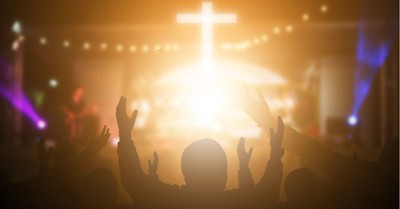
There is a great misunderstanding in churches of the purpose of music in Christian worship. Churches routinely advertise their “life-changing” or “dynamic” worship that will “bring you closer to God” or “change your life.” Certain worship CD’s promise that the music will “enable you to enter the presence of God.” Even a flyer for a recent conference for worship leaders boasted:

"Join us for dynamic teaching to set you on the right path, and inspiring worship where you can meet God and receive the energy and love you need to be a mover and shaker in today’s world... Alongside our teaching program are worship events which put you in touch with the power and love of God."

The problem with the flyer and with many church ads is that these kinds of promises reveal a significant theological error. Music is viewed as a means to facilitate an encounter with God; it will move us closer to God. In this schema, music becomes a means of mediation between God and man. But this idea is closer to ecstatic pagan practices than to Christian worship.

Jesus is the only mediator between God and man. He alone is the One who brings us to God. The popular but mistaken notions regarding worship music undermine this foundational truth of the Christian faith. It is also ironic that while many Christians deny the sacramental role of those ordinances which the Lord Himself has given to the church (baptism and the Lord’s Supper) they are eager to grant music sacramental powers. Music and “the worship experience” are viewed as means by which we enter the presence of God and receive his saving benefits. There is simply no evidence whatsoever in Scripture that music mediates direct encounters or experiences with God. This is a common pagan notion. It is far from Christian.

In his helpful book True Worship Vaughan Roberts offers four consequences of viewing music as an encounter with God. I will summarize them.

1. God’s Word is marginalized.

In many Churches and Christian gatherings it is not unusual for God’s Word to be shortchanged. Music gives people the elusive “liver quiver” while the Bible is more mundane. Pulpits have shrunk and even disappeared while bands and lighting have grown. But faith does not come from music, dynamic experiences, or supposed encounters with God. Faith is birthed through the proclamation of God’s Word (Rom 10:17).

2. Our assurance is threatened.

If we associate God’s presence with a particular experience or emotion, what happens when we no longer feel it? We search for churches whose praise band, orchestra, or pipe organ produce in us the feelings we are chasing. But the reality of God in our lives depends on the mediation of Christ not on subjective experiences.

3. Musicians are given priestly status.

When music is seen as a means to encounter God, worship leaders and musicians are vested with a priestly role. They become the ones who bring us into the presence of God rather than Jesus Christ who alone has already fulfilled that role. Understandably, when a worship leader or band doesn’t help me experience God they have failed and must be replaced. On the other hand, when we believe that they have successfully moved us into God’s presence they will attain in our minds a status that is far too high for their own good.

4. Division is increased.

If we identify a feeling as an encounter with God, and only a particular kind of music produces that feeling, then we will insist that same music be played regularly in our church or gatherings. As long as everyone else shares our taste then there is no problem. But if others depend upon a different kind of music to produce the feeling that is important to them then division is cultivated. And because we routinely classify particular feelings as encounters with God our demands for what produce those feelings become very rigid. This is why so many churches succumb to offering multiple styles of worship services. By doing so, they unwittingly sanction division and self-centeredness among the people of God.

Scripture is full of exhortations to God’s people to sing and make music to the Lord. Our God has been gracious to give us this means to worship Him. But it is important to understand that music in our worship is for two specific purposes: to honor God and to edify our fellow believers. Unfortunately, many Christians tend to grant music a sacramental power which Scripture never bestows upon it.

Todd Pruitt serves as Lead Pastor of Covenant Presbyterian Church in Harrisonburg, Virginia. Raised a Southern Baptist, he is a graduate of Midwestern Baptist Theological Seminary in Kansas City. He blogs regularly at Ref21 and 1517. Todd, along with Carl Trueman and Aimee Byrd, is one of the hosts ofMortification of Spin. He and his wife Karen have three children.

Image courtesy: ©Getty Images / Arkira

 

Salem News Channel Today

Sponsored Links


September 26 - Phoenix, AZ
Scottsdale Center for the Performing Arts


November 2 - Detroit, MI
Zion Christian Church in Troy


October 6 - Los Angeles, CA
Pasadena Convention Center


November 5 - San Antonio, TX
Norris Centers – The Grand Red Oak Ballroom


October 8 - Sacramento, CA
William Jessup University


November 7 - Tampa, FL
The Palladium at St. Pete College


October 22 - Minneapolis, MN
Crowne Plaza AiRE


November 15 - San Francisco, CA
Fremont Marriott Silicon Valley


October 23 - Philadelphia, PA
Green Valley Country Club


November 16 - Denver, CO
CU South Denver - Formerly Wildlife Experience


November 2 - Chicago, IL
Chicago Westin Northwest in Itasca


November 21 - Cleveland, OH
Holiday Inn Rockside in Independence


Salem Radio Network Speakers

Larry Elder is an American lawyer, writer, and radio and television personality who calls himself the "Sage of South Central" a district of Los Angeles, Larry says his philosophy is to entertain, inform, provoke and to hopefully uplift. His calling card is "we have a country to save" and to him this means returning to the bedrock Constitutional principles of limited government and maximum personal responsibility. Elder's iconoclastic wit and intellectual agility makes him a particularly attractive voice in a nation that seems weary of traditional racial dialogue.” – Los Angeles Times.

Mike Gallagher Mike Gallagher began his broadcasting career in 1978 in Dayton, Ohio. Today, he is one of the most listened-to talk radio show hosts in America, recently having been ranked in the Talkers Magazine “Heavy Hundred” list – the 100 most important talk radio hosts in America. Prior to being launched into national syndication in 1998, Mike hosted the morning show on WABC-AM in New York City. Today, Talkers Magazine reports that his show is heard by over 3.75 million weekly listeners. Besides his radio work, Mike is seen on Fox News Channel as an on-air contributor, frequently appearing on the cable news giant.

Hugh Hewitt is one of the nation’s leading bloggers and a genuine media revolutionary. He brings that expertise, his wit and what The New Yorker magazine calls his “amiable but relentless manner” to his nationally syndicated show each day.

When Dr. Sebastian Gorka was growing up, he listened to talk radio under his pillow with a transistor radio, dreaming that one day he would be behind the microphone. Beginning New Year’s Day 2019, he got his wish. Gorka now hosts America First every weekday afternoon 3 to 6pm ET. Gorka’s unique story works well on the radio. He is national security analyst for the Fox News Channel and author of two books: "Why We Fight" and "Defeating Jihad." His latest book releasing this fall is “War For America’s Soul.” He is uniquely qualified to fight the culture war and stand up for what is great about America, his adopted home country.

Broadcasting from his home station of KRLA in Los Angeles, the Dennis Prager Show is heard across the country. Everything in life – from politics to religion to relationships – is grist for Dennis’ mill. If it’s interesting, if it affects your life, then Dennis will be talking about it – with passion, humor, insight and wisdom.

Sean Hannity is a conservative radio and television host, and one of the original primetime hosts on the Fox News Channel, where he has appeared since 1996. Sean Hannity began his radio career at a college station in California, before moving on to markets in the Southeast and New York. Today, he’s one of the most listened to on-air voices. Hannity’s radio program went into national syndication on September 10, 2001, and airs on more than 500 stations. Talkers Magazine estimates Hannity’s weekly radio audience at 13.5 million. In 1996 he was hired as one of the original hosts on Fox News Channel. As host of several popular Fox programs, Hannity has become the highest-paid news anchor on television.

Michelle Malkin is a mother, wife, blogger, conservative syndicated columnist, longtime cable TV news commentator, and best-selling author of six books. She started her newspaper journalism career at the Los Angeles Daily News in 1992, moved to the Seattle Times in 1995, and has been penning nationally syndicated newspaper columns for Creators Syndicate since 1999. She is founder of conservative Internet start-ups Hot Air and Twitchy.com. Malkin has received numerous awards for her investigative journalism, including the Council on Governmental Ethics Laws (COGEL) national award for outstanding service for the cause of governmental ethics and leadership (1998), the Reed Irvine Accuracy in Media Award for Investigative Journalism (2006), the Heritage Foundation and Franklin Center for Government & Public Integrity's Breitbart Award for Excellence in Journalism (2013), the Center for Immigration Studies' Eugene Katz Award for Excellence in the Coverage of Immigration Award (2016), and the Manhattan Film Festival's Film Heals Award (2018). Married for 26 years and the mother of two teenage children, she lives with her family in Colorado. Follow her at michellemalkin.com. (Photo reprinted with kind permission from Peter Duke Photography.)

Sponsored by:

Is Your Church Worship More Pagan Than Christian?

Carbonatix Pre-Player Loader

Audio By Carbonatix

There is a great misunderstanding in churches of the purpose of music in Christian worship. Churches routinely advertise their “life-changing” or “dynamic” worship that will “bring you closer to God” or “change your life.” Certain worship CD’s promise that the music will “enable you to enter the presence of God.” Even a flyer for a recent conference for worship leaders boasted:

"Join us for dynamic teaching to set you on the right path, and inspiring worship where you can meet God and receive the energy and love you need to be a mover and shaker in today’s world... Alongside our teaching program are worship events which put you in touch with the power and love of God."

The problem with the flyer and with many church ads is that these kinds of promises reveal a significant theological error. Music is viewed as a means to facilitate an encounter with God; it will move us closer to God. In this schema, music becomes a means of mediation between God and man. But this idea is closer to ecstatic pagan practices than to Christian worship.

Jesus is the only mediator between God and man. He alone is the One who brings us to God. The popular but mistaken notions regarding worship music undermine this foundational truth of the Christian faith. It is also ironic that while many Christians deny the sacramental role of those ordinances which the Lord Himself has given to the church (baptism and the Lord’s Supper) they are eager to grant music sacramental powers. Music and “the worship experience” are viewed as means by which we enter the presence of God and receive his saving benefits. There is simply no evidence whatsoever in Scripture that music mediates direct encounters or experiences with God. This is a common pagan notion. It is far from Christian.

In his helpful book True Worship Vaughan Roberts offers four consequences of viewing music as an encounter with God. I will summarize them.

1. God’s Word is marginalized.

In many Churches and Christian gatherings it is not unusual for God’s Word to be shortchanged. Music gives people the elusive “liver quiver” while the Bible is more mundane. Pulpits have shrunk and even disappeared while bands and lighting have grown. But faith does not come from music, dynamic experiences, or supposed encounters with God. Faith is birthed through the proclamation of God’s Word (Rom 10:17).

2. Our assurance is threatened.

If we associate God’s presence with a particular experience or emotion, what happens when we no longer feel it? We search for churches whose praise band, orchestra, or pipe organ produce in us the feelings we are chasing. But the reality of God in our lives depends on the mediation of Christ not on subjective experiences.

3. Musicians are given priestly status.

When music is seen as a means to encounter God, worship leaders and musicians are vested with a priestly role. They become the ones who bring us into the presence of God rather than Jesus Christ who alone has already fulfilled that role. Understandably, when a worship leader or band doesn’t help me experience God they have failed and must be replaced. On the other hand, when we believe that they have successfully moved us into God’s presence they will attain in our minds a status that is far too high for their own good.

4. Division is increased.

If we identify a feeling as an encounter with God, and only a particular kind of music produces that feeling, then we will insist that same music be played regularly in our church or gatherings. As long as everyone else shares our taste then there is no problem. But if others depend upon a different kind of music to produce the feeling that is important to them then division is cultivated. And because we routinely classify particular feelings as encounters with God our demands for what produce those feelings become very rigid. This is why so many churches succumb to offering multiple styles of worship services. By doing so, they unwittingly sanction division and self-centeredness among the people of God.

Scripture is full of exhortations to God’s people to sing and make music to the Lord. Our God has been gracious to give us this means to worship Him. But it is important to understand that music in our worship is for two specific purposes: to honor God and to edify our fellow believers. Unfortunately, many Christians tend to grant music a sacramental power which Scripture never bestows upon it.

Todd Pruitt serves as Lead Pastor of Covenant Presbyterian Church in Harrisonburg, Virginia. Raised a Southern Baptist, he is a graduate of Midwestern Baptist Theological Seminary in Kansas City. He blogs regularly at Ref21 and 1517. Todd, along with Carl Trueman and Aimee Byrd, is one of the hosts ofMortification of Spin. He and his wife Karen have three children.

Image courtesy: ©Getty Images / Arkira

 

Salem News Channel Today

Sponsored Links

On Air & Up Next

See the Full Program Guide