A Most-Converted Man: Remembering C.S. Lewis

Carbonatix Pre-Player Loader

Audio By Carbonatix

On Friday, November 22, 1963, three lives ended within hours of each other: John F. Kennedy, 35th President of the United States; Aldous Huxley, noted English novelist and critic; and a man known by his friends simply as “Jack.” But it was this third and final life that has arguably shaped the most lives and who, in the words of The Times, “in his own lifetime became a legend.”

As we move from November to December, I cannot help but be reminded of Lewis. Not only did he die in November, but it was also the month of his birth (November 29, 1898). Yet while many still know his name, they may not know much of the man.

Clive Staples Lewis was born in Belfast, Ireland. Following World War I, where Lewis fought in France and was wounded in 1917, he went to University College, Oxford, where he achieved a rare Double First in Classics, an additional First in English, and the Chancellor’s Prize for academics. He was soon offered a teaching position at Magdalen College, Oxford, where he was a fellow and tutor from 1925 to 1954, and then later at the University of Cambridge as professor of Medieval and Renaissance English (1954-1963).

In 1931, Lewis came out of atheism into the Christian faith, aided significantly by his friendship with J.R.R. Tolkien, author of The Lord of the Rings. The intellectual questions that plagued him during his spiritual journey – why God allows pain and suffering, how Christianity can be the one and only way to God, the existence of miracles – became the very questions he helped others navigate with such skill as a Christian.

His first work, The Pilgrim’s Regress: An Allegorical Apology for Christianity, Reason and Romanticism, came out in 1933. Then came a torrent of works, eventually reaching 40 titles, the vast majority attempting to put forward Christianity in a very non-Christian world. Among the more widely known are The Screwtape Letters, a trilogy of science fiction novels (when the genre was hardly known), and the Chronicles of Narnia (a series of seven children’s books that are widely heralded as classics of fantasy literature).

Lewis’ passion was thoughtfully translating the Christian faith into a language that anyone could understand. He was driven to have people know what Christianity was about. It was a series of radio addresses, given over the BBC during the Second World War, but later published in three separate parts, where his conversational style, wit, intellect, and rough charm revealed Christianity to millions.

The first invitation was for four, 15-minute talks. The response was so overwhelming that they gave him a fifth 15-minute segment to answer listeners’ questions. A second round of talks was requested and given. The clarity of thought, his ability to gather a wide range of information and make it plain, led one listener to remark that they “were magnificent, unforgettable. Nobody, before or since, has made such an ‘impact’ in straight talks of this kind.” The BBC asked for a third round of talks, this time stretching out for eight consecutive weeks. Lewis consented, but made it clear it would be his last.

His goal throughout was simple: “I was... writing to expound... ‘mere’ Christianity, which is what it is and was what it was long before I was born.” Eventually gathered in a single work titled Mere Christianity, the work continues to make Christianity known to millions.

The challenge of Lewis’ life is found in answer to the question, “What would C.S. Lewis do today?” Richard John Neuhaus played with this idea in his essay, C.S. Lewis in the Public Square. “I rather hope that he would continue to do what he did so very well; that he would persistently, persuasively and winsomely make his arguments, engaging people one by one with the questions,” Neuhaus wrote.

In the Old Testament, God-followers were called to love God with all their heart, soul, and strength. Jesus added “mind” to the list, as if making sure that when individuals gave their lives to God, they would not miss out on the totality of conversion, perhaps feeling that the intellect would be one of the more easily missed dynamics to yield to the Divine.

In this light, we can echo an observation made by Walter Hooper, a longtime friend and personal secretary to Lewis, who once commented that Lewis struck him “as the most thoroughly converted man” he had ever met.

James Emery White

Sources

James Emery White, Serious Times (InterVarsity Press), order from Amazon.

Roger Lancelyn Green and Walter Hooper, C.S. Lewis: A Biography.

Richard John Neuhaus, “C.S. Lewis in the Public Square,” Ancient and Modern Christianity: Paleo-Orthodoxy in the 21st Century – Essays in Honor of Thomas C. Oden, edited by Kenneth Tanner and Christopher A. Hall.
 
Walter Hooper in Preface to C.S. Lewis, God in the Dock: Essays on Theology and Ethics, ed. by Walter Hooper.

Related Articles

C.S. Lewis' The Lion, the Witch and the Wardrobe Celebrates 75th Anniversary

5 Books by C.S. Lewis that Everyone Should Read

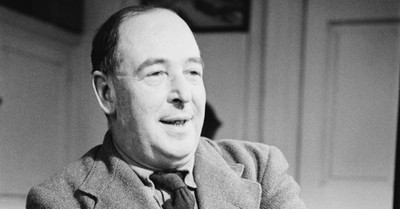
Photo Credit: ©Getty Images/John Chillingworth/Stringer

The views expressed in this commentary do not necessarily reflect those of CrosswalkHeadlines.

James Emery White is the founding and senior pastor of Mecklenburg Community Church in Charlotte, NC, and a former professor of theology and culture at Gordon-Conwell Theological Seminary, where he also served as their fourth president. His latest book, Hybrid Church: Rethinking the Church for a Post-Christian Digital Age, is now available on Amazon or from your favorite bookseller. To enjoy a free subscription to the Church & Culture blog, visit churchandculture.org where you can view past blogs in our archive, read the latest church and culture news from around the world, and listen to the Church & Culture Podcast. Follow Dr. White on X, Facebook and Instagram at @JamesEmeryWhite.


 

Salem News Channel Today

Sponsored Links


September 26 - Phoenix, AZ
Scottsdale Center for the Performing Arts


November 2 - Detroit, MI
Zion Christian Church in Troy


October 6 - Los Angeles, CA
Pasadena Convention Center


November 5 - San Antonio, TX
Norris Centers – The Grand Red Oak Ballroom


October 8 - Sacramento, CA
William Jessup University


November 7 - Tampa, FL
The Palladium at St. Pete College


October 22 - Minneapolis, MN
Crowne Plaza AiRE


November 15 - San Francisco, CA
Fremont Marriott Silicon Valley


October 23 - Philadelphia, PA
Green Valley Country Club


November 16 - Denver, CO
CU South Denver - Formerly Wildlife Experience


November 2 - Chicago, IL
Chicago Westin Northwest in Itasca


November 21 - Cleveland, OH
Holiday Inn Rockside in Independence


Salem Radio Network Speakers

Larry Elder is an American lawyer, writer, and radio and television personality who calls himself the "Sage of South Central" a district of Los Angeles, Larry says his philosophy is to entertain, inform, provoke and to hopefully uplift. His calling card is "we have a country to save" and to him this means returning to the bedrock Constitutional principles of limited government and maximum personal responsibility. Elder's iconoclastic wit and intellectual agility makes him a particularly attractive voice in a nation that seems weary of traditional racial dialogue.” – Los Angeles Times.

Mike Gallagher Mike Gallagher began his broadcasting career in 1978 in Dayton, Ohio. Today, he is one of the most listened-to talk radio show hosts in America, recently having been ranked in the Talkers Magazine “Heavy Hundred” list – the 100 most important talk radio hosts in America. Prior to being launched into national syndication in 1998, Mike hosted the morning show on WABC-AM in New York City. Today, Talkers Magazine reports that his show is heard by over 3.75 million weekly listeners. Besides his radio work, Mike is seen on Fox News Channel as an on-air contributor, frequently appearing on the cable news giant.

Hugh Hewitt is one of the nation’s leading bloggers and a genuine media revolutionary. He brings that expertise, his wit and what The New Yorker magazine calls his “amiable but relentless manner” to his nationally syndicated show each day.

When Dr. Sebastian Gorka was growing up, he listened to talk radio under his pillow with a transistor radio, dreaming that one day he would be behind the microphone. Beginning New Year’s Day 2019, he got his wish. Gorka now hosts America First every weekday afternoon 3 to 6pm ET. Gorka’s unique story works well on the radio. He is national security analyst for the Fox News Channel and author of two books: "Why We Fight" and "Defeating Jihad." His latest book releasing this fall is “War For America’s Soul.” He is uniquely qualified to fight the culture war and stand up for what is great about America, his adopted home country.

Broadcasting from his home station of KRLA in Los Angeles, the Dennis Prager Show is heard across the country. Everything in life – from politics to religion to relationships – is grist for Dennis’ mill. If it’s interesting, if it affects your life, then Dennis will be talking about it – with passion, humor, insight and wisdom.

Sean Hannity is a conservative radio and television host, and one of the original primetime hosts on the Fox News Channel, where he has appeared since 1996. Sean Hannity began his radio career at a college station in California, before moving on to markets in the Southeast and New York. Today, he’s one of the most listened to on-air voices. Hannity’s radio program went into national syndication on September 10, 2001, and airs on more than 500 stations. Talkers Magazine estimates Hannity’s weekly radio audience at 13.5 million. In 1996 he was hired as one of the original hosts on Fox News Channel. As host of several popular Fox programs, Hannity has become the highest-paid news anchor on television.

Michelle Malkin is a mother, wife, blogger, conservative syndicated columnist, longtime cable TV news commentator, and best-selling author of six books. She started her newspaper journalism career at the Los Angeles Daily News in 1992, moved to the Seattle Times in 1995, and has been penning nationally syndicated newspaper columns for Creators Syndicate since 1999. She is founder of conservative Internet start-ups Hot Air and Twitchy.com. Malkin has received numerous awards for her investigative journalism, including the Council on Governmental Ethics Laws (COGEL) national award for outstanding service for the cause of governmental ethics and leadership (1998), the Reed Irvine Accuracy in Media Award for Investigative Journalism (2006), the Heritage Foundation and Franklin Center for Government & Public Integrity's Breitbart Award for Excellence in Journalism (2013), the Center for Immigration Studies' Eugene Katz Award for Excellence in the Coverage of Immigration Award (2016), and the Manhattan Film Festival's Film Heals Award (2018). Married for 26 years and the mother of two teenage children, she lives with her family in Colorado. Follow her at michellemalkin.com. (Photo reprinted with kind permission from Peter Duke Photography.)

Sponsored by:

A Most-Converted Man: Remembering C.S. Lewis

Carbonatix Pre-Player Loader

Audio By Carbonatix

On Friday, November 22, 1963, three lives ended within hours of each other: John F. Kennedy, 35th President of the United States; Aldous Huxley, noted English novelist and critic; and a man known by his friends simply as “Jack.” But it was this third and final life that has arguably shaped the most lives and who, in the words of The Times, “in his own lifetime became a legend.”

As we move from November to December, I cannot help but be reminded of Lewis. Not only did he die in November, but it was also the month of his birth (November 29, 1898). Yet while many still know his name, they may not know much of the man.

Clive Staples Lewis was born in Belfast, Ireland. Following World War I, where Lewis fought in France and was wounded in 1917, he went to University College, Oxford, where he achieved a rare Double First in Classics, an additional First in English, and the Chancellor’s Prize for academics. He was soon offered a teaching position at Magdalen College, Oxford, where he was a fellow and tutor from 1925 to 1954, and then later at the University of Cambridge as professor of Medieval and Renaissance English (1954-1963).

In 1931, Lewis came out of atheism into the Christian faith, aided significantly by his friendship with J.R.R. Tolkien, author of The Lord of the Rings. The intellectual questions that plagued him during his spiritual journey – why God allows pain and suffering, how Christianity can be the one and only way to God, the existence of miracles – became the very questions he helped others navigate with such skill as a Christian.

His first work, The Pilgrim’s Regress: An Allegorical Apology for Christianity, Reason and Romanticism, came out in 1933. Then came a torrent of works, eventually reaching 40 titles, the vast majority attempting to put forward Christianity in a very non-Christian world. Among the more widely known are The Screwtape Letters, a trilogy of science fiction novels (when the genre was hardly known), and the Chronicles of Narnia (a series of seven children’s books that are widely heralded as classics of fantasy literature).

Lewis’ passion was thoughtfully translating the Christian faith into a language that anyone could understand. He was driven to have people know what Christianity was about. It was a series of radio addresses, given over the BBC during the Second World War, but later published in three separate parts, where his conversational style, wit, intellect, and rough charm revealed Christianity to millions.

The first invitation was for four, 15-minute talks. The response was so overwhelming that they gave him a fifth 15-minute segment to answer listeners’ questions. A second round of talks was requested and given. The clarity of thought, his ability to gather a wide range of information and make it plain, led one listener to remark that they “were magnificent, unforgettable. Nobody, before or since, has made such an ‘impact’ in straight talks of this kind.” The BBC asked for a third round of talks, this time stretching out for eight consecutive weeks. Lewis consented, but made it clear it would be his last.

His goal throughout was simple: “I was... writing to expound... ‘mere’ Christianity, which is what it is and was what it was long before I was born.” Eventually gathered in a single work titled Mere Christianity, the work continues to make Christianity known to millions.

The challenge of Lewis’ life is found in answer to the question, “What would C.S. Lewis do today?” Richard John Neuhaus played with this idea in his essay, C.S. Lewis in the Public Square. “I rather hope that he would continue to do what he did so very well; that he would persistently, persuasively and winsomely make his arguments, engaging people one by one with the questions,” Neuhaus wrote.

In the Old Testament, God-followers were called to love God with all their heart, soul, and strength. Jesus added “mind” to the list, as if making sure that when individuals gave their lives to God, they would not miss out on the totality of conversion, perhaps feeling that the intellect would be one of the more easily missed dynamics to yield to the Divine.

In this light, we can echo an observation made by Walter Hooper, a longtime friend and personal secretary to Lewis, who once commented that Lewis struck him “as the most thoroughly converted man” he had ever met.

James Emery White

Sources

James Emery White, Serious Times (InterVarsity Press), order from Amazon.

Roger Lancelyn Green and Walter Hooper, C.S. Lewis: A Biography.

Richard John Neuhaus, “C.S. Lewis in the Public Square,” Ancient and Modern Christianity: Paleo-Orthodoxy in the 21st Century – Essays in Honor of Thomas C. Oden, edited by Kenneth Tanner and Christopher A. Hall.
 
Walter Hooper in Preface to C.S. Lewis, God in the Dock: Essays on Theology and Ethics, ed. by Walter Hooper.

Related Articles

C.S. Lewis' The Lion, the Witch and the Wardrobe Celebrates 75th Anniversary

5 Books by C.S. Lewis that Everyone Should Read

Photo Credit: ©Getty Images/John Chillingworth/Stringer

The views expressed in this commentary do not necessarily reflect those of CrosswalkHeadlines.

James Emery White is the founding and senior pastor of Mecklenburg Community Church in Charlotte, NC, and a former professor of theology and culture at Gordon-Conwell Theological Seminary, where he also served as their fourth president. His latest book, Hybrid Church: Rethinking the Church for a Post-Christian Digital Age, is now available on Amazon or from your favorite bookseller. To enjoy a free subscription to the Church & Culture blog, visit churchandculture.org where you can view past blogs in our archive, read the latest church and culture news from around the world, and listen to the Church & Culture Podcast. Follow Dr. White on X, Facebook and Instagram at @JamesEmeryWhite.

 

Salem News Channel Today

Sponsored Links

On Air & Up Next

See the Full Program Guide