Does Handwriting Still Matter?

Carbonatix Pre-Player Loader

Audio By Carbonatix

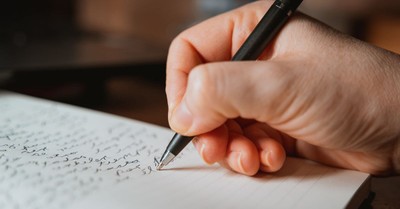
A high school student who took the preliminary SAT for college admittance confessed to the Wall Street Journal that “audible gasps broke out in the room” when students learned they would have to write a one-sentence statement certifying that all the work is the student’s own in cursive, or joined-up handwriting. “Cursive? Most students my age have only encountered this foreign language in letters from Grandma.”

Or as an article in The Guardian noted:

Schoolchildren are not the only ones who can no longer write or read cursive. Fewer and fewer of us put pen to paper to record our thoughts, correspond with friends, or even to jot down a grocery list. Instead of begging a celebrity for an autograph, we request a selfie. Many people no longer have the skill to do more than scrawl their name in an illegible script, and those who do will see that skill atrophy as they rely more on computers and smartphones. A newspaper in Toronto recorded the lament of a pastry instructor who realised that many of his culinary students couldn’t properly pipe an inscription in icing on a cake—their cursive writing was too shaky and indistinct to begin with.

So why be concerned? Chalk it up (if you can still do that with your hands and a piece of chalk) to one more aspect of human toil replaced with enabling technology.

Or is it?

As The Guardian continued:

But we lose something when handwriting disappears. We lose measurable cognitive skills, and we also lose the pleasure of using our hands and a writing implement in a process that, for thousands of years, has allowed humans to make our thoughts visible to one another. We lose the sensory experience of ink and paper and the visual pleasure of the handwritten word. We lose the ability to read the words of the dead.

But that’s not all.

Research has found that good handwriting isn’t merely an aid to communication. There is something about writing by hand, unlike tracing a letter or typing it, that primes the brain for its ability to learn how to read.

Psychologists Pam Mueller and Daniel Oppenheimer compared students taking notes by hand to students who took notes on a laptop computer or phone to test whether the medium mattered for overall student performance.

It did.

They found that there was “shallower processing.” In three different and distinct experiments, they found that students who used laptop computers performed worse on “conceptual questions” when compared to students who took notes by hand. In essence, when we type, we transcribe; when we write by hand, a slower enterprise, we tend to summarize.

Or as an article in the National Library of Medicine put it, handwriting “activates a broader network of brain regions involved in motor, sensory, and cognitive processing. Typing engages fewer neural circuits, resulting in more passive cognitive engagement.” So, despite the advantages of typing in terms of speed and convenience, “handwriting remains an important tool for learning and memory retention, particularly in educational contexts.”

As Christine Rosen, the author of the Guardian piece, concludes, the “researchers studying how technology transforms the way we write and learn are akin to ecologists who warn of species decline or environmental pollution.” Which means that facing a future without handwriting could lead “to any number of unforeseen negative consequences.”

There is, of course, another dynamic to the loss of handwriting, and it is the loss of personhood and personality. In the world of AI, it may be among the last things that marks something as truly human in origin. Someone’s handwriting is uniquely personal.

I think of how the apostle Paul signed off on his letter to the Galatians, “See what large letters I use as I write to you with my own hand!” (Gal. 6:11, NIV). It is widely felt that Paul had developed poor eyesight (cf. Gal. 4:13-15), and that he had dictated Galatians to a scribe. But then, at the end, Paul took up the pen in his own hand and finished writing the letter.

Without a doubt, it made the letter to the Galatians feel even more personal. All of the words to that point were his. But the “large letters” at the end made it clear that it wasn’t just the words and ideas of Paul, but rather from Paul himself.

So take up a pen and put it to paper and keep writing. Even in a day of typing and texting, dictating and tapping,

... it still matters.

James Emery White

Sources

Christine Rosen, “Signature Moves: Are We Losing the Ability to Write by Hand?” The Guardian, January 21, 2025, read online.

“The Neuroscience Behind Writing: Handwriting vs. Typing—Who Wins the Battle?” National Library of Medicine, February 22, 2025, read online.

Related Article

3 Ways Journaling Can Grow Your Faith

Photo Credit: ©Getty Images/Jacques Julien

The views expressed in this commentary do not necessarily reflect those of CrosswalkHeadlines.

James Emery White is the founding and senior pastor of Mecklenburg Community Church in Charlotte, NC, and a former professor of theology and culture at Gordon-Conwell Theological Seminary, where he also served as their fourth president. His latest book, Hybrid Church: Rethinking the Church for a Post-Christian Digital Age, is now available on Amazon or from your favorite bookseller. To enjoy a free subscription to the Church & Culture blog, visit churchandculture.org where you can view past blogs in our archive, read the latest church and culture news from around the world, and listen to the Church & Culture Podcast. Follow Dr. White on X, Facebook and Instagram at @JamesEmeryWhite.


 

Salem News Channel Today

Sponsored Links


September 26 - Phoenix, AZ
Scottsdale Center for the Performing Arts


November 2 - Detroit, MI
Zion Christian Church in Troy


October 6 - Los Angeles, CA
Pasadena Convention Center


November 5 - San Antonio, TX
Norris Centers – The Grand Red Oak Ballroom


October 8 - Sacramento, CA
William Jessup University


November 7 - Tampa, FL
The Palladium at St. Pete College


October 22 - Minneapolis, MN
Crowne Plaza AiRE


November 15 - San Francisco, CA
Fremont Marriott Silicon Valley


October 23 - Philadelphia, PA
Green Valley Country Club


November 16 - Denver, CO
CU South Denver - Formerly Wildlife Experience


November 2 - Chicago, IL
Chicago Westin Northwest in Itasca


November 21 - Cleveland, OH
Holiday Inn Rockside in Independence


Salem Radio Network Speakers

Larry Elder is an American lawyer, writer, and radio and television personality who calls himself the "Sage of South Central" a district of Los Angeles, Larry says his philosophy is to entertain, inform, provoke and to hopefully uplift. His calling card is "we have a country to save" and to him this means returning to the bedrock Constitutional principles of limited government and maximum personal responsibility. Elder's iconoclastic wit and intellectual agility makes him a particularly attractive voice in a nation that seems weary of traditional racial dialogue.” – Los Angeles Times.

Mike Gallagher Mike Gallagher began his broadcasting career in 1978 in Dayton, Ohio. Today, he is one of the most listened-to talk radio show hosts in America, recently having been ranked in the Talkers Magazine “Heavy Hundred” list – the 100 most important talk radio hosts in America. Prior to being launched into national syndication in 1998, Mike hosted the morning show on WABC-AM in New York City. Today, Talkers Magazine reports that his show is heard by over 3.75 million weekly listeners. Besides his radio work, Mike is seen on Fox News Channel as an on-air contributor, frequently appearing on the cable news giant.

Hugh Hewitt is one of the nation’s leading bloggers and a genuine media revolutionary. He brings that expertise, his wit and what The New Yorker magazine calls his “amiable but relentless manner” to his nationally syndicated show each day.

When Dr. Sebastian Gorka was growing up, he listened to talk radio under his pillow with a transistor radio, dreaming that one day he would be behind the microphone. Beginning New Year’s Day 2019, he got his wish. Gorka now hosts America First every weekday afternoon 3 to 6pm ET. Gorka’s unique story works well on the radio. He is national security analyst for the Fox News Channel and author of two books: "Why We Fight" and "Defeating Jihad." His latest book releasing this fall is “War For America’s Soul.” He is uniquely qualified to fight the culture war and stand up for what is great about America, his adopted home country.

Broadcasting from his home station of KRLA in Los Angeles, the Dennis Prager Show is heard across the country. Everything in life – from politics to religion to relationships – is grist for Dennis’ mill. If it’s interesting, if it affects your life, then Dennis will be talking about it – with passion, humor, insight and wisdom.

Sean Hannity is a conservative radio and television host, and one of the original primetime hosts on the Fox News Channel, where he has appeared since 1996. Sean Hannity began his radio career at a college station in California, before moving on to markets in the Southeast and New York. Today, he’s one of the most listened to on-air voices. Hannity’s radio program went into national syndication on September 10, 2001, and airs on more than 500 stations. Talkers Magazine estimates Hannity’s weekly radio audience at 13.5 million. In 1996 he was hired as one of the original hosts on Fox News Channel. As host of several popular Fox programs, Hannity has become the highest-paid news anchor on television.

Michelle Malkin is a mother, wife, blogger, conservative syndicated columnist, longtime cable TV news commentator, and best-selling author of six books. She started her newspaper journalism career at the Los Angeles Daily News in 1992, moved to the Seattle Times in 1995, and has been penning nationally syndicated newspaper columns for Creators Syndicate since 1999. She is founder of conservative Internet start-ups Hot Air and Twitchy.com. Malkin has received numerous awards for her investigative journalism, including the Council on Governmental Ethics Laws (COGEL) national award for outstanding service for the cause of governmental ethics and leadership (1998), the Reed Irvine Accuracy in Media Award for Investigative Journalism (2006), the Heritage Foundation and Franklin Center for Government & Public Integrity's Breitbart Award for Excellence in Journalism (2013), the Center for Immigration Studies' Eugene Katz Award for Excellence in the Coverage of Immigration Award (2016), and the Manhattan Film Festival's Film Heals Award (2018). Married for 26 years and the mother of two teenage children, she lives with her family in Colorado. Follow her at michellemalkin.com. (Photo reprinted with kind permission from Peter Duke Photography.)

Sponsored by:

Does Handwriting Still Matter?

Carbonatix Pre-Player Loader

Audio By Carbonatix

A high school student who took the preliminary SAT for college admittance confessed to the Wall Street Journal that “audible gasps broke out in the room” when students learned they would have to write a one-sentence statement certifying that all the work is the student’s own in cursive, or joined-up handwriting. “Cursive? Most students my age have only encountered this foreign language in letters from Grandma.”

Or as an article in The Guardian noted:

Schoolchildren are not the only ones who can no longer write or read cursive. Fewer and fewer of us put pen to paper to record our thoughts, correspond with friends, or even to jot down a grocery list. Instead of begging a celebrity for an autograph, we request a selfie. Many people no longer have the skill to do more than scrawl their name in an illegible script, and those who do will see that skill atrophy as they rely more on computers and smartphones. A newspaper in Toronto recorded the lament of a pastry instructor who realised that many of his culinary students couldn’t properly pipe an inscription in icing on a cake—their cursive writing was too shaky and indistinct to begin with.

So why be concerned? Chalk it up (if you can still do that with your hands and a piece of chalk) to one more aspect of human toil replaced with enabling technology.

Or is it?

As The Guardian continued:

But we lose something when handwriting disappears. We lose measurable cognitive skills, and we also lose the pleasure of using our hands and a writing implement in a process that, for thousands of years, has allowed humans to make our thoughts visible to one another. We lose the sensory experience of ink and paper and the visual pleasure of the handwritten word. We lose the ability to read the words of the dead.

But that’s not all.

Research has found that good handwriting isn’t merely an aid to communication. There is something about writing by hand, unlike tracing a letter or typing it, that primes the brain for its ability to learn how to read.

Psychologists Pam Mueller and Daniel Oppenheimer compared students taking notes by hand to students who took notes on a laptop computer or phone to test whether the medium mattered for overall student performance.

It did.

They found that there was “shallower processing.” In three different and distinct experiments, they found that students who used laptop computers performed worse on “conceptual questions” when compared to students who took notes by hand. In essence, when we type, we transcribe; when we write by hand, a slower enterprise, we tend to summarize.

Or as an article in the National Library of Medicine put it, handwriting “activates a broader network of brain regions involved in motor, sensory, and cognitive processing. Typing engages fewer neural circuits, resulting in more passive cognitive engagement.” So, despite the advantages of typing in terms of speed and convenience, “handwriting remains an important tool for learning and memory retention, particularly in educational contexts.”

As Christine Rosen, the author of the Guardian piece, concludes, the “researchers studying how technology transforms the way we write and learn are akin to ecologists who warn of species decline or environmental pollution.” Which means that facing a future without handwriting could lead “to any number of unforeseen negative consequences.”

There is, of course, another dynamic to the loss of handwriting, and it is the loss of personhood and personality. In the world of AI, it may be among the last things that marks something as truly human in origin. Someone’s handwriting is uniquely personal.

I think of how the apostle Paul signed off on his letter to the Galatians, “See what large letters I use as I write to you with my own hand!” (Gal. 6:11, NIV). It is widely felt that Paul had developed poor eyesight (cf. Gal. 4:13-15), and that he had dictated Galatians to a scribe. But then, at the end, Paul took up the pen in his own hand and finished writing the letter.

Without a doubt, it made the letter to the Galatians feel even more personal. All of the words to that point were his. But the “large letters” at the end made it clear that it wasn’t just the words and ideas of Paul, but rather from Paul himself.

So take up a pen and put it to paper and keep writing. Even in a day of typing and texting, dictating and tapping,

... it still matters.

James Emery White

Sources

Christine Rosen, “Signature Moves: Are We Losing the Ability to Write by Hand?” The Guardian, January 21, 2025, read online.

“The Neuroscience Behind Writing: Handwriting vs. Typing—Who Wins the Battle?” National Library of Medicine, February 22, 2025, read online.

Related Article

3 Ways Journaling Can Grow Your Faith

Photo Credit: ©Getty Images/Jacques Julien

The views expressed in this commentary do not necessarily reflect those of CrosswalkHeadlines.

James Emery White is the founding and senior pastor of Mecklenburg Community Church in Charlotte, NC, and a former professor of theology and culture at Gordon-Conwell Theological Seminary, where he also served as their fourth president. His latest book, Hybrid Church: Rethinking the Church for a Post-Christian Digital Age, is now available on Amazon or from your favorite bookseller. To enjoy a free subscription to the Church & Culture blog, visit churchandculture.org where you can view past blogs in our archive, read the latest church and culture news from around the world, and listen to the Church & Culture Podcast. Follow Dr. White on X, Facebook and Instagram at @JamesEmeryWhite.

 

Salem News Channel Today

Sponsored Links

On Air & Up Next

See the Full Program Guide