How American Churches Are Erasing Millions in Medical Debt—and Why It Matters

Carbonatix Pre-Player Loader

Audio By Carbonatix

Debt has been a problem for centuries, but did you know that the medical debt crisis in the U.S. has recently reached a breaking point?

According to the National Institutes of Health (NIH), this crisis impacts over 100 million Americans. Not only are high costs at stake, but these individuals have inadequate insurance, pop-up bills, and low coverage, often leading to financial ruin, delayed care, or even bankruptcy. KFF further reports that 1 in 6 Americans claims “debt,” just under half say it’s difficult to afford proper health care, and 36% say they’ve skipped or postponed getting health care they needed because of costs. Add the mess of prescription drugs into the mix, and one in five adults (21%) say they’ve not filled a prescription because of the cost.

In 2022, 4 in 10 reported debt due to mental or dental bills, but this number is only rising. And even those who are covered by health insurance aren’t immune to the burdens of these costs. But there is hope. Local churches aren’t just stepping up to proclaim goodwill towards men; they’re seeking to help individuals walk debt-free.

The Christian Daily reports that Spirit and Truth Church in Atlanta, Georgia, has cleared over $1.5 million in medical debt for those struggling in the community. Rev. Mark Moore Jr. explains that his Church is just one of several that have raised funds to help pay off medical debt over the years. As an inspiration to others, Moore notes, “Medical debt should never determine a family's future or rob individuals of dignity and peace. This Christmas, Spirit and Truth Church chose to respond with faith in action — lifting a burden that no one should have to carry alone.”

Today, other churches have joined this growing movement of biblical compassion and stewardship. Saint Andrew’s Episcopal Church in Omaha, Nebraska, Trinity Moravian Church in North Carolina, and Saint Andrew’s Parish in Saratoga, California, are just a few examples, each raising thousands to millions spanning numerous counties.

Millions of Americans are burdened by medical debt. This is a fact that causes a disproportionate impact on low-income families. After all, medical debt is a leading cause of financial stress in most homes. But the Church can play a role.

Beyond raising funds, churches like these have partnered with nonprofits like RIP Medical Debt and Undue Medical Debt. These organizations and partnerships make it easy for donors (Churches) to make a difference in the lives of those struggling with medical debt. These processes work by using donor funds to purchase medical bills from hospitals and collectors, and then forgiving them for people in hardship. Essentially, millions are erased through collective giving.

Not only are many churches partnering with organizations like these, but they are emphasizing community, dignity, and anonymity. Because the focus isn’t on the Church or even the giving, but on God who enables them to give. And just as Jesus has forgiven us our debt, why wouldn’t we choose to forgive and bless others financially as we’re able?

In Matthew 25:35-40, we read these words: “For I was hungry and you gave me something to eat, I was thirsty and you gave me something to drink, I was a stranger and you invited me in, I needed clothes and you clothed me, I was sick and you looked after me, I was in prison and you came to visit me.’ “Then the righteous will answer him, ‘Lord, when did we see you hungry and feed you, or thirsty and give you something to drink? When did we see you as a stranger and invite you in, or needing clothes and clothe you? When did we see you sick or in prison and go to visit you?’ “The King will reply, ‘Truly I tell you, whatever you did for one of the least of these brothers and sisters of mine, you did for me’ “ (NIV).

Notice that Jesus didn’t just mention food, money, or clothing. He mentioned all of it. Because we are whole people who require complex care. But in every statement, we see love, compassion, and generosity—three things we’re continually called to give away today.

Medical debt relief is one form of modern-day mercy ministry that individuals can partake in. It’s the church reclaiming its role in practical compassion and living faith out in action. Today, you might not be in a church that supports these types of funding. That’s okay. You can still pray, give, and advocate, for it’s always more blessed to give than to receive.

Related Article

Outgoing Kentucky Megachurch Pastor Launches Ministry to Feed Deer Jerky to Children

Photo Credit: ©Getty Images/Cyano66

amber ginter headshotAmber Ginter is a teacher-turned-author who loves Jesus, her husband Ben, and granola. Growing up Amber looked for faith and mental health resources and found none. Today, she offers hope for young Christians struggling with mental illness that goes beyond simply reading your Bible and praying more. Because you can love Jesus and still suffer from anxiety. You can download her top faith and mental health resources for free to help navigate books, podcasts, videos, and influencers from a faith lens perspective. Visit her website at amberginter.com.

 

Salem News Channel Today

Sponsored Links


September 26 - Phoenix, AZ
Scottsdale Center for the Performing Arts


November 2 - Detroit, MI
Zion Christian Church in Troy


October 6 - Los Angeles, CA
Pasadena Convention Center


November 5 - San Antonio, TX
Norris Centers – The Grand Red Oak Ballroom


October 8 - Sacramento, CA
William Jessup University


November 7 - Tampa, FL
The Palladium at St. Pete College


October 22 - Minneapolis, MN
Crowne Plaza AiRE


November 15 - San Francisco, CA
Fremont Marriott Silicon Valley


October 23 - Philadelphia, PA
Green Valley Country Club


November 16 - Denver, CO
CU South Denver - Formerly Wildlife Experience


November 2 - Chicago, IL
Chicago Westin Northwest in Itasca


November 21 - Cleveland, OH
Holiday Inn Rockside in Independence


Salem Radio Network Speakers

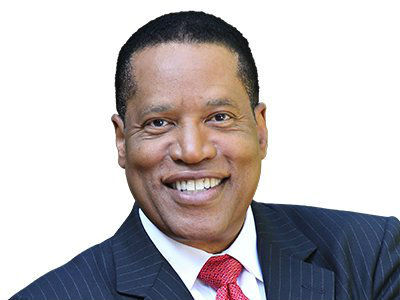
Larry Elder is an American lawyer, writer, and radio and television personality who calls himself the "Sage of South Central" a district of Los Angeles, Larry says his philosophy is to entertain, inform, provoke and to hopefully uplift. His calling card is "we have a country to save" and to him this means returning to the bedrock Constitutional principles of limited government and maximum personal responsibility. Elder's iconoclastic wit and intellectual agility makes him a particularly attractive voice in a nation that seems weary of traditional racial dialogue.” – Los Angeles Times.

Mike Gallagher Mike Gallagher began his broadcasting career in 1978 in Dayton, Ohio. Today, he is one of the most listened-to talk radio show hosts in America, recently having been ranked in the Talkers Magazine “Heavy Hundred” list – the 100 most important talk radio hosts in America. Prior to being launched into national syndication in 1998, Mike hosted the morning show on WABC-AM in New York City. Today, Talkers Magazine reports that his show is heard by over 3.75 million weekly listeners. Besides his radio work, Mike is seen on Fox News Channel as an on-air contributor, frequently appearing on the cable news giant.

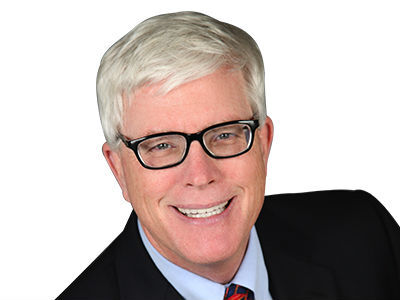
Hugh Hewitt is one of the nation’s leading bloggers and a genuine media revolutionary. He brings that expertise, his wit and what The New Yorker magazine calls his “amiable but relentless manner” to his nationally syndicated show each day.

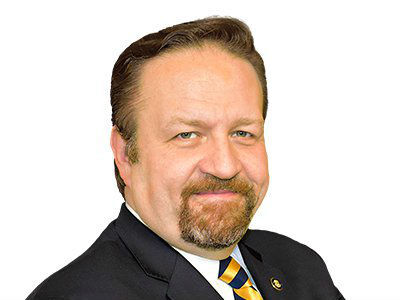
When Dr. Sebastian Gorka was growing up, he listened to talk radio under his pillow with a transistor radio, dreaming that one day he would be behind the microphone. Beginning New Year’s Day 2019, he got his wish. Gorka now hosts America First every weekday afternoon 3 to 6pm ET. Gorka’s unique story works well on the radio. He is national security analyst for the Fox News Channel and author of two books: "Why We Fight" and "Defeating Jihad." His latest book releasing this fall is “War For America’s Soul.” He is uniquely qualified to fight the culture war and stand up for what is great about America, his adopted home country.

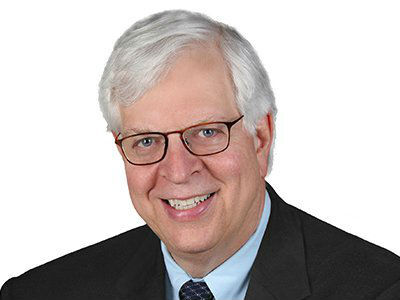
Broadcasting from his home station of KRLA in Los Angeles, the Dennis Prager Show is heard across the country. Everything in life – from politics to religion to relationships – is grist for Dennis’ mill. If it’s interesting, if it affects your life, then Dennis will be talking about it – with passion, humor, insight and wisdom.

Sean Hannity is a conservative radio and television host, and one of the original primetime hosts on the Fox News Channel, where he has appeared since 1996. Sean Hannity began his radio career at a college station in California, before moving on to markets in the Southeast and New York. Today, he’s one of the most listened to on-air voices. Hannity’s radio program went into national syndication on September 10, 2001, and airs on more than 500 stations. Talkers Magazine estimates Hannity’s weekly radio audience at 13.5 million. In 1996 he was hired as one of the original hosts on Fox News Channel. As host of several popular Fox programs, Hannity has become the highest-paid news anchor on television.

Michelle Malkin is a mother, wife, blogger, conservative syndicated columnist, longtime cable TV news commentator, and best-selling author of six books. She started her newspaper journalism career at the Los Angeles Daily News in 1992, moved to the Seattle Times in 1995, and has been penning nationally syndicated newspaper columns for Creators Syndicate since 1999. She is founder of conservative Internet start-ups Hot Air and Twitchy.com. Malkin has received numerous awards for her investigative journalism, including the Council on Governmental Ethics Laws (COGEL) national award for outstanding service for the cause of governmental ethics and leadership (1998), the Reed Irvine Accuracy in Media Award for Investigative Journalism (2006), the Heritage Foundation and Franklin Center for Government & Public Integrity's Breitbart Award for Excellence in Journalism (2013), the Center for Immigration Studies' Eugene Katz Award for Excellence in the Coverage of Immigration Award (2016), and the Manhattan Film Festival's Film Heals Award (2018). Married for 26 years and the mother of two teenage children, she lives with her family in Colorado. Follow her at michellemalkin.com. (Photo reprinted with kind permission from Peter Duke Photography.)

Sponsored by:

How American Churches Are Erasing Millions in Medical Debt—and Why It Matters

Carbonatix Pre-Player Loader

Audio By Carbonatix

Debt has been a problem for centuries, but did you know that the medical debt crisis in the U.S. has recently reached a breaking point?

According to the National Institutes of Health (NIH), this crisis impacts over 100 million Americans. Not only are high costs at stake, but these individuals have inadequate insurance, pop-up bills, and low coverage, often leading to financial ruin, delayed care, or even bankruptcy. KFF further reports that 1 in 6 Americans claims “debt,” just under half say it’s difficult to afford proper health care, and 36% say they’ve skipped or postponed getting health care they needed because of costs. Add the mess of prescription drugs into the mix, and one in five adults (21%) say they’ve not filled a prescription because of the cost.

In 2022, 4 in 10 reported debt due to mental or dental bills, but this number is only rising. And even those who are covered by health insurance aren’t immune to the burdens of these costs. But there is hope. Local churches aren’t just stepping up to proclaim goodwill towards men; they’re seeking to help individuals walk debt-free.

The Christian Daily reports that Spirit and Truth Church in Atlanta, Georgia, has cleared over $1.5 million in medical debt for those struggling in the community. Rev. Mark Moore Jr. explains that his Church is just one of several that have raised funds to help pay off medical debt over the years. As an inspiration to others, Moore notes, “Medical debt should never determine a family's future or rob individuals of dignity and peace. This Christmas, Spirit and Truth Church chose to respond with faith in action — lifting a burden that no one should have to carry alone.”

Today, other churches have joined this growing movement of biblical compassion and stewardship. Saint Andrew’s Episcopal Church in Omaha, Nebraska, Trinity Moravian Church in North Carolina, and Saint Andrew’s Parish in Saratoga, California, are just a few examples, each raising thousands to millions spanning numerous counties.

Millions of Americans are burdened by medical debt. This is a fact that causes a disproportionate impact on low-income families. After all, medical debt is a leading cause of financial stress in most homes. But the Church can play a role.

Beyond raising funds, churches like these have partnered with nonprofits like RIP Medical Debt and Undue Medical Debt. These organizations and partnerships make it easy for donors (Churches) to make a difference in the lives of those struggling with medical debt. These processes work by using donor funds to purchase medical bills from hospitals and collectors, and then forgiving them for people in hardship. Essentially, millions are erased through collective giving.

Not only are many churches partnering with organizations like these, but they are emphasizing community, dignity, and anonymity. Because the focus isn’t on the Church or even the giving, but on God who enables them to give. And just as Jesus has forgiven us our debt, why wouldn’t we choose to forgive and bless others financially as we’re able?

In Matthew 25:35-40, we read these words: “For I was hungry and you gave me something to eat, I was thirsty and you gave me something to drink, I was a stranger and you invited me in, I needed clothes and you clothed me, I was sick and you looked after me, I was in prison and you came to visit me.’ “Then the righteous will answer him, ‘Lord, when did we see you hungry and feed you, or thirsty and give you something to drink? When did we see you as a stranger and invite you in, or needing clothes and clothe you? When did we see you sick or in prison and go to visit you?’ “The King will reply, ‘Truly I tell you, whatever you did for one of the least of these brothers and sisters of mine, you did for me’ “ (NIV).

Notice that Jesus didn’t just mention food, money, or clothing. He mentioned all of it. Because we are whole people who require complex care. But in every statement, we see love, compassion, and generosity—three things we’re continually called to give away today.

Medical debt relief is one form of modern-day mercy ministry that individuals can partake in. It’s the church reclaiming its role in practical compassion and living faith out in action. Today, you might not be in a church that supports these types of funding. That’s okay. You can still pray, give, and advocate, for it’s always more blessed to give than to receive.

Related Article

Outgoing Kentucky Megachurch Pastor Launches Ministry to Feed Deer Jerky to Children

Photo Credit: ©Getty Images/Cyano66

amber ginter headshotAmber Ginter is a teacher-turned-author who loves Jesus, her husband Ben, and granola. Growing up Amber looked for faith and mental health resources and found none. Today, she offers hope for young Christians struggling with mental illness that goes beyond simply reading your Bible and praying more. Because you can love Jesus and still suffer from anxiety. You can download her top faith and mental health resources for free to help navigate books, podcasts, videos, and influencers from a faith lens perspective. Visit her website at amberginter.com.

 

Salem News Channel Today

Sponsored Links

On Air & Up Next

See the Full Program Guide