How the DEFIANCE Act Protects the Vulnerable in the Age of AI

Carbonatix Pre-Player Loader

Audio By Carbonatix

Brought to you by Christianity.com

Growing up, my parents warned me to never post photos on the internet. Before the days of social media, this was pretty easy and avoidable. As I grew older, however, and received an Instagram account, I learned that I could post photos, but they should always be appropriate. As we all know, once something hits cyberspace, it’s no longer “ours.” It can be found virtually anywhere, even if we delete it. 

Today, we live in a different world. With AI, social media, and technological advancements and obsessions, graphic images can easily be found anywhere. Even when we’re not looking for it, it often pops up. But imagine discovering explicit images of yourself online that you never took, consented to, or even knew existed. Scary, right?

According to Omny Miranda Martone, Founder and CEO of the Sexual Violence Prevention Association (S.V.P.A.), these trends have been growing for the past two years. Before this time, non-consensual AI deepfakes were more challenging to create and mass-promote. You needed a high-tech computer, skills in coding, and hundreds of photos of the victim’s face. While we may have seen bits and pieces of this abuse through public figures, this AI-generated deepfake pornography has spread to even ordinary, everyday individuals. Over 98% of deepfakes online are explicit. This isn’t just technology drama, but digital sexual violence, Martone believes, needs to be taken seriously. 

If every person bears God’s image, how should we respond when technology is used to distort, exploit, or weaponize that image — and what responsibility do we carry to advocate for laws that protect the vulnerable?

The Dangers of AI

First, we need to understand that while we shouldn’t throw around assumptions or mislabel the benefits of technology, AI tools are being used to create realistic images and videos (explicit ones) of real people without their consent. The victims have included women, men, teens, public figures, and now private citizens. But the worst part about these images is that they’re spreading rapidly and often anonymously, with no way to get them back or permanently take them down. 

As a result, the harm victims are having is wide and deep—emotional, relational, professional, and spiritual. Unlike traditional crimes, this violation feels invisible, but permanent. “Now, anyone can make these images in seconds, and they only need one or two images of the victim’s face,” said Martone. Getting images off of company websites, LinkedIn, and social sites, it’s evident that S.V.P.A.’s response isn’t prudishness or panic. This is about justice, rights, consent, dignity, respect, and protection. 

The Legal Gap

Currently, no clear federal civil recourse for victims of nonconsensual deepfake pornography exists. This is where S.V.P.A has sprung into action. Why? Because 1. victims struggle to remove content or seek justice themselves, and 2. the absence of consequences fuels the growth of the problem. With technologies on the rise, our laws are often too slow to follow. Vulnerable people are paying the price, but shouldn’t. 

In a plea for justice, S.V.P.A. begs individuals to tell Congress to pass the DEFIANCE Act. This act was drafted through work with victims and Congress to provide a civil right of action for victims, enabling them to seek justice. By definition, this Bipartisan legislation aims to deter the creation and distribution of nonconsensual deepfake pornography. And as of January 13th, 2026, it was passed unanimously in the Senate. The goal of this Act isn’t to restrict freedom of speech, creativity, or technology, but just the opposite: to protect those who use these means from digitally manufactured sexual exploitation.

Why Does This Matter to Me?

No matter who you are or what political position you hold, this issue matters because all people matter. Every individual is created in the image of God and bears His image (Genesis 1:27), but when people are exploited without consent, we need to realize that we’re abusing His gift of technological advancement. Our responsibility is to advocate for the weak and fight for laws that protect the vulnerable. This includes those harmed by AI pornography.

In Matthew 25:31-46, Jesus explains that whatever you do for the “least of these,” you do for Him. He lists the hungry, thirsty, naked, sick, imprisoned, and strangers, to name a few. But the message is clear: Humans are made in the image of God, and it’s our responsibility to help care for those in need. Our bodies are not commodities to be sold, mocked, or exploited. Consent reflects God’s design for dignity and agency, while sexual exploitation (physically or digitally) distorts God’s intent for honor and protection. 

Deepfake pornography might be a growing trend and tool, but it’s committing an age-old sin: stripping people of dignity for personal pleasure or gain. Christians, all Christians, young and old, Republican, or Democrat, or no political affiliation at all, are called to protect the vulnerable, advocate for justice, and speak when silence protects those who are being harmed. 

Today, consider the benefits and drawbacks of technology and AI in your life. While both can create beauty and progress, we must remember to safeguard them with moral guardrails and avoid exploitation at all costs. Laws like the Defiance Act won’t magically solve all of our problems. Pornography has been a generational issue for centuries. But it can lead to accountability that shapes behavior. This Act isn’t a complete solution, but it may present a necessary way to set a boundary. 

Quote from an article about AI pornography and deepfake images

Make a difference today by contacting your local representatives and lawmakers, praying for the victims (and those involved), and remembering not to disengage from policy discussions that affect human dignity. I’m not a huge fan of politics. I like to stay quiet and uninvolved. But when human lives are at risk, something has to change. 

“There’s an immense emotional impact of these acts. It’s a violation of the victim's autonomy, but it can also lead to sexual violence, a damaged reputation, and even trauma. Our goal is to address and prevent this pornography from being created and protect victims who are affected. We’ve had victims try to pursue legal help, but were told what was done to them was “legal,” and this is what led us to start taking action for justice and protecting their rights” (Martone, BBC News). 

So far, this legislation has been endorsed by: the National Women’s Law Center, National Center on Sexual Exploitation (NCOSE), Raven, Public Citizen, Sexual Violence Prevention Association, Democratic Women’s Caucus, UltraViolet, Joyful Heart Foundation, My Image My Choice, Reclaim Coalition, SIECUS: Sex Ed for Social Change, American Association of University Women (AAUW), End Rape on Campus, Foundation Ra, Explain the Asterisk, Protect America’s Daughters, Sexual Assault Response Coalition (SARC), Students Against Sexual Assault, What Were You Wearing, Rooting Movements, Recognize Violence, Change Culture (RVCC), and Street Grace.

Following the Senate’s approval, the bill is moving to the House for consideration in early 2026. If it passes, DEFIANCE will give survivors of image-based sexual abuse a federal way to hold criminals accountable—even those using AI behind the scenes. According to Microsoft CEO Satya Nadella, the bill can also be used to change our world for the better:

“It’s about global, societal convergence on certain norms, and we can do it, especially when you have law and law enforcement and tech platforms that can come together.”

Photo Credit: ©Pexels/its me neosiam

amber ginter headshotAmber Ginter is a teacher-turned-author who loves Jesus, her husband Ben, and granola. Growing up Amber looked for faith and mental health resources and found none. Today, she offers hope for young Christians struggling with mental illness that goes beyond simply reading your Bible and praying more. Because you can love Jesus and still suffer from anxiety. You can download her top faith and mental health resources for free to help navigate books, podcasts, videos, and influencers from a faith lens perspective. Visit her website at amberginter.com.

This article originally appeared on Christianity.com. For more faith-building resources, visit Christianity.com. Christianity.com
 

Salem News Channel Today

Sponsored Links


September 26 - Phoenix, AZ
Scottsdale Center for the Performing Arts


November 2 - Detroit, MI
Zion Christian Church in Troy


October 6 - Los Angeles, CA
Pasadena Convention Center


November 5 - San Antonio, TX
Norris Centers – The Grand Red Oak Ballroom


October 8 - Sacramento, CA
William Jessup University


November 7 - Tampa, FL
The Palladium at St. Pete College


October 22 - Minneapolis, MN
Crowne Plaza AiRE


November 15 - San Francisco, CA
Fremont Marriott Silicon Valley


October 23 - Philadelphia, PA
Green Valley Country Club


November 16 - Denver, CO
CU South Denver - Formerly Wildlife Experience


November 2 - Chicago, IL
Chicago Westin Northwest in Itasca


November 21 - Cleveland, OH
Holiday Inn Rockside in Independence


Salem Radio Network Speakers

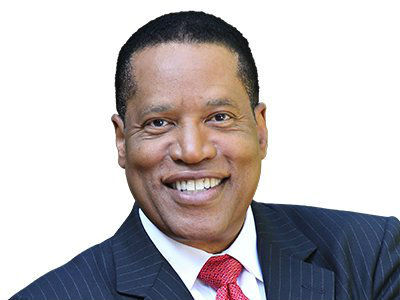
Larry Elder is an American lawyer, writer, and radio and television personality who calls himself the "Sage of South Central" a district of Los Angeles, Larry says his philosophy is to entertain, inform, provoke and to hopefully uplift. His calling card is "we have a country to save" and to him this means returning to the bedrock Constitutional principles of limited government and maximum personal responsibility. Elder's iconoclastic wit and intellectual agility makes him a particularly attractive voice in a nation that seems weary of traditional racial dialogue.” – Los Angeles Times.

Mike Gallagher Mike Gallagher began his broadcasting career in 1978 in Dayton, Ohio. Today, he is one of the most listened-to talk radio show hosts in America, recently having been ranked in the Talkers Magazine “Heavy Hundred” list – the 100 most important talk radio hosts in America. Prior to being launched into national syndication in 1998, Mike hosted the morning show on WABC-AM in New York City. Today, Talkers Magazine reports that his show is heard by over 3.75 million weekly listeners. Besides his radio work, Mike is seen on Fox News Channel as an on-air contributor, frequently appearing on the cable news giant.

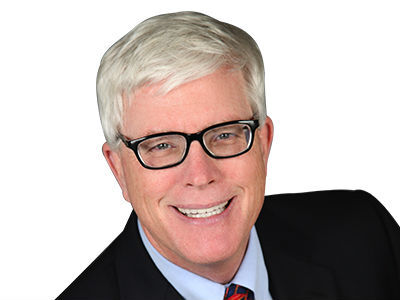
Hugh Hewitt is one of the nation’s leading bloggers and a genuine media revolutionary. He brings that expertise, his wit and what The New Yorker magazine calls his “amiable but relentless manner” to his nationally syndicated show each day.

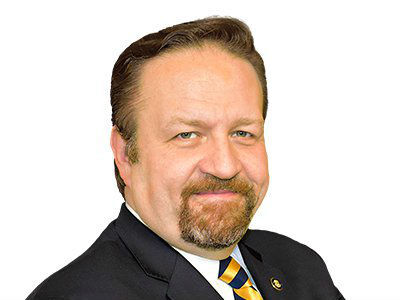
When Dr. Sebastian Gorka was growing up, he listened to talk radio under his pillow with a transistor radio, dreaming that one day he would be behind the microphone. Beginning New Year’s Day 2019, he got his wish. Gorka now hosts America First every weekday afternoon 3 to 6pm ET. Gorka’s unique story works well on the radio. He is national security analyst for the Fox News Channel and author of two books: "Why We Fight" and "Defeating Jihad." His latest book releasing this fall is “War For America’s Soul.” He is uniquely qualified to fight the culture war and stand up for what is great about America, his adopted home country.

Broadcasting from his home station of KRLA in Los Angeles, the Dennis Prager Show is heard across the country. Everything in life – from politics to religion to relationships – is grist for Dennis’ mill. If it’s interesting, if it affects your life, then Dennis will be talking about it – with passion, humor, insight and wisdom.

Sean Hannity is a conservative radio and television host, and one of the original primetime hosts on the Fox News Channel, where he has appeared since 1996. Sean Hannity began his radio career at a college station in California, before moving on to markets in the Southeast and New York. Today, he’s one of the most listened to on-air voices. Hannity’s radio program went into national syndication on September 10, 2001, and airs on more than 500 stations. Talkers Magazine estimates Hannity’s weekly radio audience at 13.5 million. In 1996 he was hired as one of the original hosts on Fox News Channel. As host of several popular Fox programs, Hannity has become the highest-paid news anchor on television.

Michelle Malkin is a mother, wife, blogger, conservative syndicated columnist, longtime cable TV news commentator, and best-selling author of six books. She started her newspaper journalism career at the Los Angeles Daily News in 1992, moved to the Seattle Times in 1995, and has been penning nationally syndicated newspaper columns for Creators Syndicate since 1999. She is founder of conservative Internet start-ups Hot Air and Twitchy.com. Malkin has received numerous awards for her investigative journalism, including the Council on Governmental Ethics Laws (COGEL) national award for outstanding service for the cause of governmental ethics and leadership (1998), the Reed Irvine Accuracy in Media Award for Investigative Journalism (2006), the Heritage Foundation and Franklin Center for Government & Public Integrity's Breitbart Award for Excellence in Journalism (2013), the Center for Immigration Studies' Eugene Katz Award for Excellence in the Coverage of Immigration Award (2016), and the Manhattan Film Festival's Film Heals Award (2018). Married for 26 years and the mother of two teenage children, she lives with her family in Colorado. Follow her at michellemalkin.com. (Photo reprinted with kind permission from Peter Duke Photography.)

Sponsored by:

How the DEFIANCE Act Protects the Vulnerable in the Age of AI

Carbonatix Pre-Player Loader

Audio By Carbonatix

Brought to you by Christianity.com

Growing up, my parents warned me to never post photos on the internet. Before the days of social media, this was pretty easy and avoidable. As I grew older, however, and received an Instagram account, I learned that I could post photos, but they should always be appropriate. As we all know, once something hits cyberspace, it’s no longer “ours.” It can be found virtually anywhere, even if we delete it. 

Today, we live in a different world. With AI, social media, and technological advancements and obsessions, graphic images can easily be found anywhere. Even when we’re not looking for it, it often pops up. But imagine discovering explicit images of yourself online that you never took, consented to, or even knew existed. Scary, right?

According to Omny Miranda Martone, Founder and CEO of the Sexual Violence Prevention Association (S.V.P.A.), these trends have been growing for the past two years. Before this time, non-consensual AI deepfakes were more challenging to create and mass-promote. You needed a high-tech computer, skills in coding, and hundreds of photos of the victim’s face. While we may have seen bits and pieces of this abuse through public figures, this AI-generated deepfake pornography has spread to even ordinary, everyday individuals. Over 98% of deepfakes online are explicit. This isn’t just technology drama, but digital sexual violence, Martone believes, needs to be taken seriously. 

If every person bears God’s image, how should we respond when technology is used to distort, exploit, or weaponize that image — and what responsibility do we carry to advocate for laws that protect the vulnerable?

The Dangers of AI

First, we need to understand that while we shouldn’t throw around assumptions or mislabel the benefits of technology, AI tools are being used to create realistic images and videos (explicit ones) of real people without their consent. The victims have included women, men, teens, public figures, and now private citizens. But the worst part about these images is that they’re spreading rapidly and often anonymously, with no way to get them back or permanently take them down. 

As a result, the harm victims are having is wide and deep—emotional, relational, professional, and spiritual. Unlike traditional crimes, this violation feels invisible, but permanent. “Now, anyone can make these images in seconds, and they only need one or two images of the victim’s face,” said Martone. Getting images off of company websites, LinkedIn, and social sites, it’s evident that S.V.P.A.’s response isn’t prudishness or panic. This is about justice, rights, consent, dignity, respect, and protection. 

The Legal Gap

Currently, no clear federal civil recourse for victims of nonconsensual deepfake pornography exists. This is where S.V.P.A has sprung into action. Why? Because 1. victims struggle to remove content or seek justice themselves, and 2. the absence of consequences fuels the growth of the problem. With technologies on the rise, our laws are often too slow to follow. Vulnerable people are paying the price, but shouldn’t. 

In a plea for justice, S.V.P.A. begs individuals to tell Congress to pass the DEFIANCE Act. This act was drafted through work with victims and Congress to provide a civil right of action for victims, enabling them to seek justice. By definition, this Bipartisan legislation aims to deter the creation and distribution of nonconsensual deepfake pornography. And as of January 13th, 2026, it was passed unanimously in the Senate. The goal of this Act isn’t to restrict freedom of speech, creativity, or technology, but just the opposite: to protect those who use these means from digitally manufactured sexual exploitation.

Why Does This Matter to Me?

No matter who you are or what political position you hold, this issue matters because all people matter. Every individual is created in the image of God and bears His image (Genesis 1:27), but when people are exploited without consent, we need to realize that we’re abusing His gift of technological advancement. Our responsibility is to advocate for the weak and fight for laws that protect the vulnerable. This includes those harmed by AI pornography.

In Matthew 25:31-46, Jesus explains that whatever you do for the “least of these,” you do for Him. He lists the hungry, thirsty, naked, sick, imprisoned, and strangers, to name a few. But the message is clear: Humans are made in the image of God, and it’s our responsibility to help care for those in need. Our bodies are not commodities to be sold, mocked, or exploited. Consent reflects God’s design for dignity and agency, while sexual exploitation (physically or digitally) distorts God’s intent for honor and protection. 

Deepfake pornography might be a growing trend and tool, but it’s committing an age-old sin: stripping people of dignity for personal pleasure or gain. Christians, all Christians, young and old, Republican, or Democrat, or no political affiliation at all, are called to protect the vulnerable, advocate for justice, and speak when silence protects those who are being harmed. 

Today, consider the benefits and drawbacks of technology and AI in your life. While both can create beauty and progress, we must remember to safeguard them with moral guardrails and avoid exploitation at all costs. Laws like the Defiance Act won’t magically solve all of our problems. Pornography has been a generational issue for centuries. But it can lead to accountability that shapes behavior. This Act isn’t a complete solution, but it may present a necessary way to set a boundary. 

Quote from an article about AI pornography and deepfake images

Make a difference today by contacting your local representatives and lawmakers, praying for the victims (and those involved), and remembering not to disengage from policy discussions that affect human dignity. I’m not a huge fan of politics. I like to stay quiet and uninvolved. But when human lives are at risk, something has to change. 

“There’s an immense emotional impact of these acts. It’s a violation of the victim's autonomy, but it can also lead to sexual violence, a damaged reputation, and even trauma. Our goal is to address and prevent this pornography from being created and protect victims who are affected. We’ve had victims try to pursue legal help, but were told what was done to them was “legal,” and this is what led us to start taking action for justice and protecting their rights” (Martone, BBC News). 

So far, this legislation has been endorsed by: the National Women’s Law Center, National Center on Sexual Exploitation (NCOSE), Raven, Public Citizen, Sexual Violence Prevention Association, Democratic Women’s Caucus, UltraViolet, Joyful Heart Foundation, My Image My Choice, Reclaim Coalition, SIECUS: Sex Ed for Social Change, American Association of University Women (AAUW), End Rape on Campus, Foundation Ra, Explain the Asterisk, Protect America’s Daughters, Sexual Assault Response Coalition (SARC), Students Against Sexual Assault, What Were You Wearing, Rooting Movements, Recognize Violence, Change Culture (RVCC), and Street Grace.

Following the Senate’s approval, the bill is moving to the House for consideration in early 2026. If it passes, DEFIANCE will give survivors of image-based sexual abuse a federal way to hold criminals accountable—even those using AI behind the scenes. According to Microsoft CEO Satya Nadella, the bill can also be used to change our world for the better:

“It’s about global, societal convergence on certain norms, and we can do it, especially when you have law and law enforcement and tech platforms that can come together.”

Photo Credit: ©Pexels/its me neosiam

amber ginter headshotAmber Ginter is a teacher-turned-author who loves Jesus, her husband Ben, and granola. Growing up Amber looked for faith and mental health resources and found none. Today, she offers hope for young Christians struggling with mental illness that goes beyond simply reading your Bible and praying more. Because you can love Jesus and still suffer from anxiety. You can download her top faith and mental health resources for free to help navigate books, podcasts, videos, and influencers from a faith lens perspective. Visit her website at amberginter.com.

This article originally appeared on Christianity.com. For more faith-building resources, visit Christianity.com. Christianity.com
 

Salem News Channel Today

Sponsored Links

On Air & Up Next

See the Full Program Guide