More States Ban Smartphones in Local Schools

Carbonatix Pre-Player Loader

Audio By Carbonatix

As a former high school English teacher, I saw it all the time: The impact smartphones and technology had on students’ learning. We started the day with Chromebooks, but I saw it in their eyes by the time they plugged in that slowly dying device; they were dying, too. With glazed eyes and the inability to focus, I knew something needed to change.

While cell phones have been a typical part of growing up, today’s teens and young adults don’t know what it’s like to live without them. Nor do they know how to write cursive with a pen and paper or take a test that’s not online. And that’s a problem.

According to the Education Week tracker, 32 states have now restricted or banned the use of cell phones during at least part of the school day. With stricter policies being enforced, 70% of teachers favor banning phones all day, as recorded by the 2020-2024 American Association of Educators survey.

What started as a post-COVID issue, relying exclusively on technology to continue learning online, has now escalated to U.S. courts in Michigan, where CBN notes a “bipartisan bill passed overwhelmingly in the state House and is currently under consideration in the state Senate” to permanently ban Smartphones in schools. This momentum has now also spread to Washington, where lawmakers are examining the impact of screens and technological devices on students' learning.

During the Washington hearing, Jared Horvath, a former teacher and cognitive neuroscientist, warned that technology in classrooms undermines learning, and lawmakers need to be aware: "When tech enters education, learning goes down," Horvath testified. "It doesn't matter if it's a phone, if it's a laptop, if it's a desktop, and it doesn't matter who bought it," Horvath said. "Is it school-sanctioned? Does it have the word 'education' stamped on it? It doesn't matter. All of these things are also going to hurt learning, which in turn hurts kids' cognitive development."

Technology is an incredible gift that’s brought much enhancement to modern-day education, but it often comes at a cost. Emily Cherkin, faculty at the University of Washington, also testified that while technology may appear to “make our lives easier and prepare our children for the future,” it doesn’t. "Occupational therapists tell me they have to teach young children how to turn the pages of a book," Cherkin said. "Preschool teachers report that toddlers don't like getting their hands dirty anymore. I know one teen so addicted to his phone he seals it into a Ziploc bag and brings it into the shower with him."

As debates on how these bans are going to be enforced in local schools, BBC reminds parents that even these bans won’t be enough to cut screen time alone. It’s a good start, but we must adopt a community-first approach to see lasting change in our students.

Related Article

Christian Schools with Strict Cell Phone Policies Report Better Student Mental Health: Study

Photo Credit: ©Unsplash/ ROBIN WORRALL

amber ginter headshotAmber Ginter is a teacher-turned-author who loves Jesus, her husband Ben, and granola. Growing up Amber looked for faith and mental health resources and found none. Today, she offers hope for young Christians struggling with mental illness that goes beyond simply reading your Bible and praying more. Because you can love Jesus and still suffer from anxiety. You can download her top faith and mental health resources for free to help navigate books, podcasts, videos, and influencers from a faith lens perspective. Visit her website at amberginter.com.

 

Salem News Channel Today

Sponsored Links


September 26 - Phoenix, AZ
Scottsdale Center for the Performing Arts


November 2 - Detroit, MI
Zion Christian Church in Troy


October 6 - Los Angeles, CA
Pasadena Convention Center


November 5 - San Antonio, TX
Norris Centers – The Grand Red Oak Ballroom


October 8 - Sacramento, CA
William Jessup University


November 7 - Tampa, FL
The Palladium at St. Pete College


October 22 - Minneapolis, MN
Crowne Plaza AiRE


November 15 - San Francisco, CA
Fremont Marriott Silicon Valley


October 23 - Philadelphia, PA
Green Valley Country Club


November 16 - Denver, CO
CU South Denver - Formerly Wildlife Experience


November 2 - Chicago, IL
Chicago Westin Northwest in Itasca


November 21 - Cleveland, OH
Holiday Inn Rockside in Independence


Salem Radio Network Speakers

Larry Elder is an American lawyer, writer, and radio and television personality who calls himself the "Sage of South Central" a district of Los Angeles, Larry says his philosophy is to entertain, inform, provoke and to hopefully uplift. His calling card is "we have a country to save" and to him this means returning to the bedrock Constitutional principles of limited government and maximum personal responsibility. Elder's iconoclastic wit and intellectual agility makes him a particularly attractive voice in a nation that seems weary of traditional racial dialogue.” – Los Angeles Times.

Mike Gallagher Mike Gallagher began his broadcasting career in 1978 in Dayton, Ohio. Today, he is one of the most listened-to talk radio show hosts in America, recently having been ranked in the Talkers Magazine “Heavy Hundred” list – the 100 most important talk radio hosts in America. Prior to being launched into national syndication in 1998, Mike hosted the morning show on WABC-AM in New York City. Today, Talkers Magazine reports that his show is heard by over 3.75 million weekly listeners. Besides his radio work, Mike is seen on Fox News Channel as an on-air contributor, frequently appearing on the cable news giant.

Hugh Hewitt is one of the nation’s leading bloggers and a genuine media revolutionary. He brings that expertise, his wit and what The New Yorker magazine calls his “amiable but relentless manner” to his nationally syndicated show each day.

When Dr. Sebastian Gorka was growing up, he listened to talk radio under his pillow with a transistor radio, dreaming that one day he would be behind the microphone. Beginning New Year’s Day 2019, he got his wish. Gorka now hosts America First every weekday afternoon 3 to 6pm ET. Gorka’s unique story works well on the radio. He is national security analyst for the Fox News Channel and author of two books: "Why We Fight" and "Defeating Jihad." His latest book releasing this fall is “War For America’s Soul.” He is uniquely qualified to fight the culture war and stand up for what is great about America, his adopted home country.

Broadcasting from his home station of KRLA in Los Angeles, the Dennis Prager Show is heard across the country. Everything in life – from politics to religion to relationships – is grist for Dennis’ mill. If it’s interesting, if it affects your life, then Dennis will be talking about it – with passion, humor, insight and wisdom.

Sean Hannity is a conservative radio and television host, and one of the original primetime hosts on the Fox News Channel, where he has appeared since 1996. Sean Hannity began his radio career at a college station in California, before moving on to markets in the Southeast and New York. Today, he’s one of the most listened to on-air voices. Hannity’s radio program went into national syndication on September 10, 2001, and airs on more than 500 stations. Talkers Magazine estimates Hannity’s weekly radio audience at 13.5 million. In 1996 he was hired as one of the original hosts on Fox News Channel. As host of several popular Fox programs, Hannity has become the highest-paid news anchor on television.

Michelle Malkin is a mother, wife, blogger, conservative syndicated columnist, longtime cable TV news commentator, and best-selling author of six books. She started her newspaper journalism career at the Los Angeles Daily News in 1992, moved to the Seattle Times in 1995, and has been penning nationally syndicated newspaper columns for Creators Syndicate since 1999. She is founder of conservative Internet start-ups Hot Air and Twitchy.com. Malkin has received numerous awards for her investigative journalism, including the Council on Governmental Ethics Laws (COGEL) national award for outstanding service for the cause of governmental ethics and leadership (1998), the Reed Irvine Accuracy in Media Award for Investigative Journalism (2006), the Heritage Foundation and Franklin Center for Government & Public Integrity's Breitbart Award for Excellence in Journalism (2013), the Center for Immigration Studies' Eugene Katz Award for Excellence in the Coverage of Immigration Award (2016), and the Manhattan Film Festival's Film Heals Award (2018). Married for 26 years and the mother of two teenage children, she lives with her family in Colorado. Follow her at michellemalkin.com. (Photo reprinted with kind permission from Peter Duke Photography.)

Sponsored by:

More States Ban Smartphones in Local Schools

Carbonatix Pre-Player Loader

Audio By Carbonatix

As a former high school English teacher, I saw it all the time: The impact smartphones and technology had on students’ learning. We started the day with Chromebooks, but I saw it in their eyes by the time they plugged in that slowly dying device; they were dying, too. With glazed eyes and the inability to focus, I knew something needed to change.

While cell phones have been a typical part of growing up, today’s teens and young adults don’t know what it’s like to live without them. Nor do they know how to write cursive with a pen and paper or take a test that’s not online. And that’s a problem.

According to the Education Week tracker, 32 states have now restricted or banned the use of cell phones during at least part of the school day. With stricter policies being enforced, 70% of teachers favor banning phones all day, as recorded by the 2020-2024 American Association of Educators survey.

What started as a post-COVID issue, relying exclusively on technology to continue learning online, has now escalated to U.S. courts in Michigan, where CBN notes a “bipartisan bill passed overwhelmingly in the state House and is currently under consideration in the state Senate” to permanently ban Smartphones in schools. This momentum has now also spread to Washington, where lawmakers are examining the impact of screens and technological devices on students' learning.

During the Washington hearing, Jared Horvath, a former teacher and cognitive neuroscientist, warned that technology in classrooms undermines learning, and lawmakers need to be aware: "When tech enters education, learning goes down," Horvath testified. "It doesn't matter if it's a phone, if it's a laptop, if it's a desktop, and it doesn't matter who bought it," Horvath said. "Is it school-sanctioned? Does it have the word 'education' stamped on it? It doesn't matter. All of these things are also going to hurt learning, which in turn hurts kids' cognitive development."

Technology is an incredible gift that’s brought much enhancement to modern-day education, but it often comes at a cost. Emily Cherkin, faculty at the University of Washington, also testified that while technology may appear to “make our lives easier and prepare our children for the future,” it doesn’t. "Occupational therapists tell me they have to teach young children how to turn the pages of a book," Cherkin said. "Preschool teachers report that toddlers don't like getting their hands dirty anymore. I know one teen so addicted to his phone he seals it into a Ziploc bag and brings it into the shower with him."

As debates on how these bans are going to be enforced in local schools, BBC reminds parents that even these bans won’t be enough to cut screen time alone. It’s a good start, but we must adopt a community-first approach to see lasting change in our students.

Related Article

Christian Schools with Strict Cell Phone Policies Report Better Student Mental Health: Study

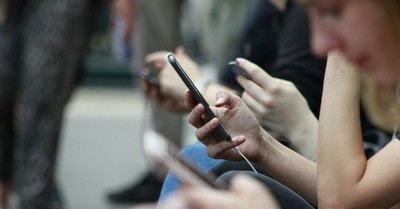
Photo Credit: ©Unsplash/ ROBIN WORRALL

amber ginter headshotAmber Ginter is a teacher-turned-author who loves Jesus, her husband Ben, and granola. Growing up Amber looked for faith and mental health resources and found none. Today, she offers hope for young Christians struggling with mental illness that goes beyond simply reading your Bible and praying more. Because you can love Jesus and still suffer from anxiety. You can download her top faith and mental health resources for free to help navigate books, podcasts, videos, and influencers from a faith lens perspective. Visit her website at amberginter.com.

 

Salem News Channel Today

Sponsored Links

On Air & Up Next

See the Full Program Guide