U.S. Church Urged to Stand with Suffering Sudanese Christians

Carbonatix Pre-Player Loader

Audio By Carbonatix

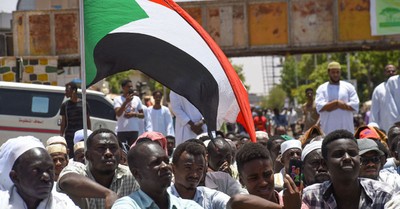
Sudanese Christians face immense challenges amidst the country's civil war, enduring both the general suffering caused by the war and targeted religious persecution as churches are destroyed and converts face threats of violence. Christian Solidarity International (CSI) has worked in Sudan for many decades and has freed over 160,000 slaves in South Sudan. According to Kamal Fahmi, who founded Set My People Free, despite many challenges, Sudan's Christians have shown "remarkable resilience." In a sit-down interview with Crosswalk Headlines, Deputy Director of Public Policy/Communications Abi McDougal explains the need for American Christians to know and understand the plight of their Sudanese Brother and Sisters in Christ. 

Crosswalk Headlines: What ministry work does Christian Solidarity International do? 
Abi McDougal: Christian Solidarity International is an NGO. This nonprofit organization is dedicated to promoting religious liberty and human dignity. We partner with local churches and Christian organizations in contexts facing persecution worldwide. CSI has partners in Syria, Pakistan, and Nigeria, and they tell us what they need and what they're already doing. We partner with them to help meet those needs and learn how to advocate for what's happening internationally. 

CWH: Do you operate as a connector between your partners and the local church? 
AM: Yes. We are the connection point; we have donors who support us through giving, praying, or speaking out on the issues. We serve as that bridge, and then churches or individuals in the US and other affiliate countries in Europe and South Korea join in being part of that global body of Christ. For example, what does it mean to say that when one part of the body suffers, the whole body suffers? What does that actually look like in practice? How do we follow Paul's admonition and really live that out? 

CWH: How long have you been with the organization?
AM: I've been with the organization for a little under a year. The organization started in Switzerland in the 1970s with prayer marches and vigils held in response to Soviet oppression. The organization was born because there was so much movement and because it seemed like the hand of God was working in that so much.

CWH: What is going on in Sudan?
AM: CSI has been connected with Sudan and the crises happening for Christians there since the 1990s, so actually 30 years ago. CSI collaborated with people who are now in South Sudan to help address the slave trading issue that was happening by Jihadist and Islamist groups coming from the north. Since then, we've been connected to the issue. And now, of course, South Sudan has been an independent country since 2011, but those tensions are still there. In Sudan right now, along the border with South Sudan, most of the Christians from the north have fled south to that border area to places called the Nuba Mountains, which is one place, and then along the Blue Nile. There are these refugee camps, these displacement camps. They're not refugees since they're still within the borders. These groups that have been displaced have all come trying to find a place to get away from the conflict. Often, their lands have been taken, and they have lost their homes and everything they have. They're in a crisis where the safe regions are becoming overcrowded, and because of climate change and less land and farming area to work, there's a lack of food. And so, really, the urgent need that we hear right now is for food.

CWH: What can American Christians do? 
AM: Always pray! Prayer is central and is part of God's hand moving in our mission, and the body of Christ standing as one, for various countries will put out prayer updates. It's not prayer in isolation, right? It's prayer in action. People in the US can give and support, and that supports the direct aid of directly getting food to people who need it, which also supports raising awareness of the issue internationally. They can also join that effort by just sharing the information, talking about it, raising it as a priority in their communities with the government, and contacting their representatives and politicians. There's so much room for change and for making a difference.
Photo Credit: ©Getty Images/MOHAMED EL-SHAHED/Contributor
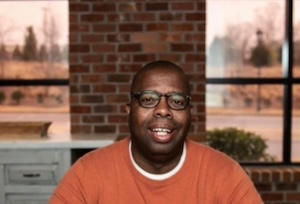
Maina Mwaura headshotMAINA MWAURA is a freelance writer and journalist who has interviewed over 800 influential leaders, including two US Presidents, three Vice-Presidents, and a variety of others. Maina, is also the author of the Influential Mentor, How the life and legacy of Howard Hendricks Equipped and Inspired a Generation of Leaders. Maina and his family reside in the Kennesaw, Georgia area.


 

Salem News Channel Today

Sponsored Links


September 26 - Phoenix, AZ
Scottsdale Center for the Performing Arts


November 2 - Detroit, MI
Zion Christian Church in Troy


October 6 - Los Angeles, CA
Pasadena Convention Center


November 5 - San Antonio, TX
Norris Centers – The Grand Red Oak Ballroom


October 8 - Sacramento, CA
William Jessup University


November 7 - Tampa, FL
The Palladium at St. Pete College


October 22 - Minneapolis, MN
Crowne Plaza AiRE


November 15 - San Francisco, CA
Fremont Marriott Silicon Valley


October 23 - Philadelphia, PA
Green Valley Country Club


November 16 - Denver, CO
CU South Denver - Formerly Wildlife Experience


November 2 - Chicago, IL
Chicago Westin Northwest in Itasca


November 21 - Cleveland, OH
Holiday Inn Rockside in Independence


Salem Radio Network Speakers

Larry Elder is an American lawyer, writer, and radio and television personality who calls himself the "Sage of South Central" a district of Los Angeles, Larry says his philosophy is to entertain, inform, provoke and to hopefully uplift. His calling card is "we have a country to save" and to him this means returning to the bedrock Constitutional principles of limited government and maximum personal responsibility. Elder's iconoclastic wit and intellectual agility makes him a particularly attractive voice in a nation that seems weary of traditional racial dialogue.” – Los Angeles Times.

Mike Gallagher Mike Gallagher began his broadcasting career in 1978 in Dayton, Ohio. Today, he is one of the most listened-to talk radio show hosts in America, recently having been ranked in the Talkers Magazine “Heavy Hundred” list – the 100 most important talk radio hosts in America. Prior to being launched into national syndication in 1998, Mike hosted the morning show on WABC-AM in New York City. Today, Talkers Magazine reports that his show is heard by over 3.75 million weekly listeners. Besides his radio work, Mike is seen on Fox News Channel as an on-air contributor, frequently appearing on the cable news giant.

Hugh Hewitt is one of the nation’s leading bloggers and a genuine media revolutionary. He brings that expertise, his wit and what The New Yorker magazine calls his “amiable but relentless manner” to his nationally syndicated show each day.

When Dr. Sebastian Gorka was growing up, he listened to talk radio under his pillow with a transistor radio, dreaming that one day he would be behind the microphone. Beginning New Year’s Day 2019, he got his wish. Gorka now hosts America First every weekday afternoon 3 to 6pm ET. Gorka’s unique story works well on the radio. He is national security analyst for the Fox News Channel and author of two books: "Why We Fight" and "Defeating Jihad." His latest book releasing this fall is “War For America’s Soul.” He is uniquely qualified to fight the culture war and stand up for what is great about America, his adopted home country.

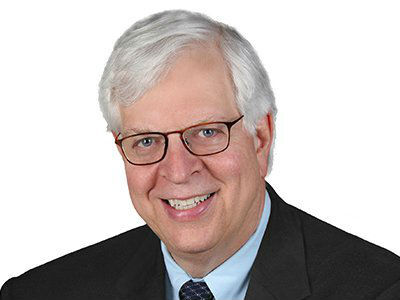
Broadcasting from his home station of KRLA in Los Angeles, the Dennis Prager Show is heard across the country. Everything in life – from politics to religion to relationships – is grist for Dennis’ mill. If it’s interesting, if it affects your life, then Dennis will be talking about it – with passion, humor, insight and wisdom.

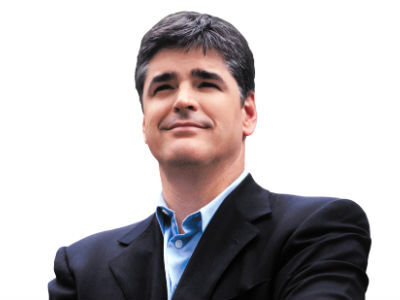
Sean Hannity is a conservative radio and television host, and one of the original primetime hosts on the Fox News Channel, where he has appeared since 1996. Sean Hannity began his radio career at a college station in California, before moving on to markets in the Southeast and New York. Today, he’s one of the most listened to on-air voices. Hannity’s radio program went into national syndication on September 10, 2001, and airs on more than 500 stations. Talkers Magazine estimates Hannity’s weekly radio audience at 13.5 million. In 1996 he was hired as one of the original hosts on Fox News Channel. As host of several popular Fox programs, Hannity has become the highest-paid news anchor on television.

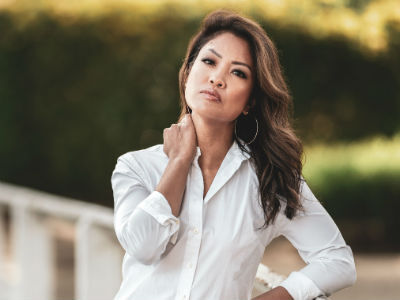
Michelle Malkin is a mother, wife, blogger, conservative syndicated columnist, longtime cable TV news commentator, and best-selling author of six books. She started her newspaper journalism career at the Los Angeles Daily News in 1992, moved to the Seattle Times in 1995, and has been penning nationally syndicated newspaper columns for Creators Syndicate since 1999. She is founder of conservative Internet start-ups Hot Air and Twitchy.com. Malkin has received numerous awards for her investigative journalism, including the Council on Governmental Ethics Laws (COGEL) national award for outstanding service for the cause of governmental ethics and leadership (1998), the Reed Irvine Accuracy in Media Award for Investigative Journalism (2006), the Heritage Foundation and Franklin Center for Government & Public Integrity's Breitbart Award for Excellence in Journalism (2013), the Center for Immigration Studies' Eugene Katz Award for Excellence in the Coverage of Immigration Award (2016), and the Manhattan Film Festival's Film Heals Award (2018). Married for 26 years and the mother of two teenage children, she lives with her family in Colorado. Follow her at michellemalkin.com. (Photo reprinted with kind permission from Peter Duke Photography.)

Sponsored by:

U.S. Church Urged to Stand with Suffering Sudanese Christians

Carbonatix Pre-Player Loader

Audio By Carbonatix

Sudanese Christians face immense challenges amidst the country's civil war, enduring both the general suffering caused by the war and targeted religious persecution as churches are destroyed and converts face threats of violence. Christian Solidarity International (CSI) has worked in Sudan for many decades and has freed over 160,000 slaves in South Sudan. According to Kamal Fahmi, who founded Set My People Free, despite many challenges, Sudan's Christians have shown "remarkable resilience." In a sit-down interview with Crosswalk Headlines, Deputy Director of Public Policy/Communications Abi McDougal explains the need for American Christians to know and understand the plight of their Sudanese Brother and Sisters in Christ. 

Crosswalk Headlines: What ministry work does Christian Solidarity International do? 
Abi McDougal: Christian Solidarity International is an NGO. This nonprofit organization is dedicated to promoting religious liberty and human dignity. We partner with local churches and Christian organizations in contexts facing persecution worldwide. CSI has partners in Syria, Pakistan, and Nigeria, and they tell us what they need and what they're already doing. We partner with them to help meet those needs and learn how to advocate for what's happening internationally. 

CWH: Do you operate as a connector between your partners and the local church? 
AM: Yes. We are the connection point; we have donors who support us through giving, praying, or speaking out on the issues. We serve as that bridge, and then churches or individuals in the US and other affiliate countries in Europe and South Korea join in being part of that global body of Christ. For example, what does it mean to say that when one part of the body suffers, the whole body suffers? What does that actually look like in practice? How do we follow Paul's admonition and really live that out? 

CWH: How long have you been with the organization?
AM: I've been with the organization for a little under a year. The organization started in Switzerland in the 1970s with prayer marches and vigils held in response to Soviet oppression. The organization was born because there was so much movement and because it seemed like the hand of God was working in that so much.

CWH: What is going on in Sudan?
AM: CSI has been connected with Sudan and the crises happening for Christians there since the 1990s, so actually 30 years ago. CSI collaborated with people who are now in South Sudan to help address the slave trading issue that was happening by Jihadist and Islamist groups coming from the north. Since then, we've been connected to the issue. And now, of course, South Sudan has been an independent country since 2011, but those tensions are still there. In Sudan right now, along the border with South Sudan, most of the Christians from the north have fled south to that border area to places called the Nuba Mountains, which is one place, and then along the Blue Nile. There are these refugee camps, these displacement camps. They're not refugees since they're still within the borders. These groups that have been displaced have all come trying to find a place to get away from the conflict. Often, their lands have been taken, and they have lost their homes and everything they have. They're in a crisis where the safe regions are becoming overcrowded, and because of climate change and less land and farming area to work, there's a lack of food. And so, really, the urgent need that we hear right now is for food.

CWH: What can American Christians do? 
AM: Always pray! Prayer is central and is part of God's hand moving in our mission, and the body of Christ standing as one, for various countries will put out prayer updates. It's not prayer in isolation, right? It's prayer in action. People in the US can give and support, and that supports the direct aid of directly getting food to people who need it, which also supports raising awareness of the issue internationally. They can also join that effort by just sharing the information, talking about it, raising it as a priority in their communities with the government, and contacting their representatives and politicians. There's so much room for change and for making a difference.
Photo Credit: ©Getty Images/MOHAMED EL-SHAHED/Contributor

Maina Mwaura headshotMAINA MWAURA is a freelance writer and journalist who has interviewed over 800 influential leaders, including two US Presidents, three Vice-Presidents, and a variety of others. Maina, is also the author of the Influential Mentor, How the life and legacy of Howard Hendricks Equipped and Inspired a Generation of Leaders. Maina and his family reside in the Kennesaw, Georgia area.

 

Salem News Channel Today

Sponsored Links

On Air & Up Next

See the Full Program Guide