Advent Poetry

Carbonatix Pre-Player Loader

Audio By Carbonatix

BreakPoint.org

About a third of the Bible could be described as poetry, including Job, Psalms, Proverbs, and the Song of Solomon. Today, Dr. Glenn Sunshine offers an encouragement to Christians to engage with poetry, especially during this season of Advent.

Poetry is important to God. The longest book in the Bible is a book of poems, and the prophetic books are full of poetry as well. Throughout history, cultures around the world recognized poetry as an important art form and the highest use of language.

Modern America is the exception. We are a left-brained, analytical culture that tends to see only the literal meaning of things. Metaphor, symbolism, and poetry are foreign to our way of thinking, and so we don’t tend to read or appreciate poetry.

This is too bad, because good poetry helps us see the world around us in new and fresh ways, to get past “the film of familiarity,” as poet Samuel Taylor Coleridge put it, and to see things as they really are. Because of this, poetry surrounding Advent and Christmas is a particularly valuable way to get past both the commercialization of the holiday and the sometimes too-familiar and sentimental images we have of the Nativity.

But in view of our lack of understanding poetry, it helps to have a guide. This is where Malcolm Guite comes in. Guite is a poet, an Anglican priest, a chaplain at Girton College, Cambridge, and a rock and roller. He is particularly interested in the intersection between religion and the arts, a theme we see in his books and sonnets. This makes him a brilliant guide to poetry, particularly as it relates to Christianity and the church year.

Guite’s book Waiting on the Word is, as its subtitle indicates, A poem a day for Advent, Christmas and Epiphany. (He has a similar volume, The Word in the Wilderness, which does the same for Lent and Easter.) Some are his own sonnets, but he also includes poems by George Herbert, John Donne, Edmund Spenser, John Keats, Alfred Lord Tennyson, G.K. Chesterton, Luci Shaw, and quite a few others. The poems cover a range of moods and verse styles, giving an overview of different types of English poetry.

But what makes this book so valuable is that Guite includes a commentary on each poem, explaining its connection to the theme of Advent and outlining what the poet is doing and how he or she is doing it. Guite’s commentaries help to understand the deeper meaning in the poems and how the poetic structures and techniques contribute to this. In the process, he helps us understand not just the poems, but what poetry itself is.

Too often, despite the best efforts of teachers, classes in poetry leave us with the impression that poetry is simply a matter of rhyme and meter. We may learn about other poetic devices and techniques, but we often don’t see that all these things are in service of the meaning of the poem, which comes to us obliquely rather than in a straightforward, literal way. Unlike our normal ways of viewing the world, poetry helps us see beyond the surface into the meaning embedded in the world around us and in our own lives and experiences.

That is the great value of poetry. We may live in a time where everything is reduced to the literal, but that’s not how Scripture sees the world. The Psalms point to the natural world and find spiritual truth in it. Jesus’ parables tell us that there are spiritual implications to everything from sowing seed to baking bread. Good poetry can help us learn to see the world this way, to find meaning, and to recover a more sacramental vision of the world.

Again, this is particularly appropriate for us in Advent and the Christmas season. Poetry can help get past the habitual ways of looking at Christmas and open new dimensions of what the Incarnation means. It can also give new perspectives on our own lives that we would miss if we simply followed the same well-trodden paths that we have followed every other year.

Like many other Advent devotionals, Waiting on the Word begins on December 1. There’s still plenty of time to get caught up.

Related Article

Advent: The Beautiful Meaning, Purpose, and Traditions Explained

Understanding the Meaning and Symbolism of the Advent Wreath & Candles

Photo Credit: iStock/Getty Images Plus/RomoloTavani


John Stonestreet is President of the Colson Center for Christian Worldview, and radio host of BreakPoint, a daily national radio program providing thought-provoking commentaries on current events and life issues from a biblical worldview. John holds degrees from Trinity Evangelical Divinity School (IL) and Bryan College (TN), and is the co-author of Making Sense of Your World: A Biblical Worldview.

The views expressed in this commentary do not necessarily reflect those of CrosswalkHeadlines.


BreakPoint is a program of the Colson Center for Christian Worldview. BreakPoint commentaries offer incisive content people can't find anywhere else; content that cuts through the fog of relativism and the news cycle with truth and compassion. Founded by Chuck Colson (1931 – 2012) in 1991 as a daily radio broadcast, BreakPoint provides a Christian perspective on today's news and trends. Today, you can get it in written and a variety of audio formats: on the web, the radio, or your favorite podcast app on the go.


 

Salem News Channel Today

Sponsored Links


September 26 - Phoenix, AZ
Scottsdale Center for the Performing Arts


November 2 - Detroit, MI
Zion Christian Church in Troy


October 6 - Los Angeles, CA
Pasadena Convention Center


November 5 - San Antonio, TX
Norris Centers – The Grand Red Oak Ballroom


October 8 - Sacramento, CA
William Jessup University


November 7 - Tampa, FL
The Palladium at St. Pete College


October 22 - Minneapolis, MN
Crowne Plaza AiRE


November 15 - San Francisco, CA
Fremont Marriott Silicon Valley


October 23 - Philadelphia, PA
Green Valley Country Club


November 16 - Denver, CO
CU South Denver - Formerly Wildlife Experience


November 2 - Chicago, IL
Chicago Westin Northwest in Itasca


November 21 - Cleveland, OH
Holiday Inn Rockside in Independence


Salem Radio Network Speakers

Larry Elder is an American lawyer, writer, and radio and television personality who calls himself the "Sage of South Central" a district of Los Angeles, Larry says his philosophy is to entertain, inform, provoke and to hopefully uplift. His calling card is "we have a country to save" and to him this means returning to the bedrock Constitutional principles of limited government and maximum personal responsibility. Elder's iconoclastic wit and intellectual agility makes him a particularly attractive voice in a nation that seems weary of traditional racial dialogue.” – Los Angeles Times.

Mike Gallagher Mike Gallagher began his broadcasting career in 1978 in Dayton, Ohio. Today, he is one of the most listened-to talk radio show hosts in America, recently having been ranked in the Talkers Magazine “Heavy Hundred” list – the 100 most important talk radio hosts in America. Prior to being launched into national syndication in 1998, Mike hosted the morning show on WABC-AM in New York City. Today, Talkers Magazine reports that his show is heard by over 3.75 million weekly listeners. Besides his radio work, Mike is seen on Fox News Channel as an on-air contributor, frequently appearing on the cable news giant.

Hugh Hewitt is one of the nation’s leading bloggers and a genuine media revolutionary. He brings that expertise, his wit and what The New Yorker magazine calls his “amiable but relentless manner” to his nationally syndicated show each day.

When Dr. Sebastian Gorka was growing up, he listened to talk radio under his pillow with a transistor radio, dreaming that one day he would be behind the microphone. Beginning New Year’s Day 2019, he got his wish. Gorka now hosts America First every weekday afternoon 3 to 6pm ET. Gorka’s unique story works well on the radio. He is national security analyst for the Fox News Channel and author of two books: "Why We Fight" and "Defeating Jihad." His latest book releasing this fall is “War For America’s Soul.” He is uniquely qualified to fight the culture war and stand up for what is great about America, his adopted home country.

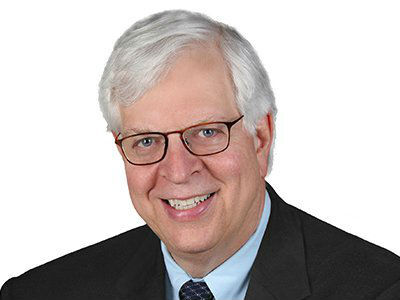
Broadcasting from his home station of KRLA in Los Angeles, the Dennis Prager Show is heard across the country. Everything in life – from politics to religion to relationships – is grist for Dennis’ mill. If it’s interesting, if it affects your life, then Dennis will be talking about it – with passion, humor, insight and wisdom.

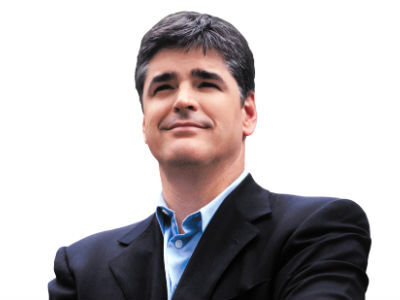
Sean Hannity is a conservative radio and television host, and one of the original primetime hosts on the Fox News Channel, where he has appeared since 1996. Sean Hannity began his radio career at a college station in California, before moving on to markets in the Southeast and New York. Today, he’s one of the most listened to on-air voices. Hannity’s radio program went into national syndication on September 10, 2001, and airs on more than 500 stations. Talkers Magazine estimates Hannity’s weekly radio audience at 13.5 million. In 1996 he was hired as one of the original hosts on Fox News Channel. As host of several popular Fox programs, Hannity has become the highest-paid news anchor on television.

Michelle Malkin is a mother, wife, blogger, conservative syndicated columnist, longtime cable TV news commentator, and best-selling author of six books. She started her newspaper journalism career at the Los Angeles Daily News in 1992, moved to the Seattle Times in 1995, and has been penning nationally syndicated newspaper columns for Creators Syndicate since 1999. She is founder of conservative Internet start-ups Hot Air and Twitchy.com. Malkin has received numerous awards for her investigative journalism, including the Council on Governmental Ethics Laws (COGEL) national award for outstanding service for the cause of governmental ethics and leadership (1998), the Reed Irvine Accuracy in Media Award for Investigative Journalism (2006), the Heritage Foundation and Franklin Center for Government & Public Integrity's Breitbart Award for Excellence in Journalism (2013), the Center for Immigration Studies' Eugene Katz Award for Excellence in the Coverage of Immigration Award (2016), and the Manhattan Film Festival's Film Heals Award (2018). Married for 26 years and the mother of two teenage children, she lives with her family in Colorado. Follow her at michellemalkin.com. (Photo reprinted with kind permission from Peter Duke Photography.)

Sponsored by:

Advent Poetry

Carbonatix Pre-Player Loader

Audio By Carbonatix

BreakPoint.org

About a third of the Bible could be described as poetry, including Job, Psalms, Proverbs, and the Song of Solomon. Today, Dr. Glenn Sunshine offers an encouragement to Christians to engage with poetry, especially during this season of Advent.

Poetry is important to God. The longest book in the Bible is a book of poems, and the prophetic books are full of poetry as well. Throughout history, cultures around the world recognized poetry as an important art form and the highest use of language.

Modern America is the exception. We are a left-brained, analytical culture that tends to see only the literal meaning of things. Metaphor, symbolism, and poetry are foreign to our way of thinking, and so we don’t tend to read or appreciate poetry.

This is too bad, because good poetry helps us see the world around us in new and fresh ways, to get past “the film of familiarity,” as poet Samuel Taylor Coleridge put it, and to see things as they really are. Because of this, poetry surrounding Advent and Christmas is a particularly valuable way to get past both the commercialization of the holiday and the sometimes too-familiar and sentimental images we have of the Nativity.

But in view of our lack of understanding poetry, it helps to have a guide. This is where Malcolm Guite comes in. Guite is a poet, an Anglican priest, a chaplain at Girton College, Cambridge, and a rock and roller. He is particularly interested in the intersection between religion and the arts, a theme we see in his books and sonnets. This makes him a brilliant guide to poetry, particularly as it relates to Christianity and the church year.

Guite’s book Waiting on the Word is, as its subtitle indicates, A poem a day for Advent, Christmas and Epiphany. (He has a similar volume, The Word in the Wilderness, which does the same for Lent and Easter.) Some are his own sonnets, but he also includes poems by George Herbert, John Donne, Edmund Spenser, John Keats, Alfred Lord Tennyson, G.K. Chesterton, Luci Shaw, and quite a few others. The poems cover a range of moods and verse styles, giving an overview of different types of English poetry.

But what makes this book so valuable is that Guite includes a commentary on each poem, explaining its connection to the theme of Advent and outlining what the poet is doing and how he or she is doing it. Guite’s commentaries help to understand the deeper meaning in the poems and how the poetic structures and techniques contribute to this. In the process, he helps us understand not just the poems, but what poetry itself is.

Too often, despite the best efforts of teachers, classes in poetry leave us with the impression that poetry is simply a matter of rhyme and meter. We may learn about other poetic devices and techniques, but we often don’t see that all these things are in service of the meaning of the poem, which comes to us obliquely rather than in a straightforward, literal way. Unlike our normal ways of viewing the world, poetry helps us see beyond the surface into the meaning embedded in the world around us and in our own lives and experiences.

That is the great value of poetry. We may live in a time where everything is reduced to the literal, but that’s not how Scripture sees the world. The Psalms point to the natural world and find spiritual truth in it. Jesus’ parables tell us that there are spiritual implications to everything from sowing seed to baking bread. Good poetry can help us learn to see the world this way, to find meaning, and to recover a more sacramental vision of the world.

Again, this is particularly appropriate for us in Advent and the Christmas season. Poetry can help get past the habitual ways of looking at Christmas and open new dimensions of what the Incarnation means. It can also give new perspectives on our own lives that we would miss if we simply followed the same well-trodden paths that we have followed every other year.

Like many other Advent devotionals, Waiting on the Word begins on December 1. There’s still plenty of time to get caught up.

Related Article

Advent: The Beautiful Meaning, Purpose, and Traditions Explained

Understanding the Meaning and Symbolism of the Advent Wreath & Candles

Photo Credit: iStock/Getty Images Plus/RomoloTavani


John Stonestreet is President of the Colson Center for Christian Worldview, and radio host of BreakPoint, a daily national radio program providing thought-provoking commentaries on current events and life issues from a biblical worldview. John holds degrees from Trinity Evangelical Divinity School (IL) and Bryan College (TN), and is the co-author of Making Sense of Your World: A Biblical Worldview.

The views expressed in this commentary do not necessarily reflect those of CrosswalkHeadlines.


BreakPoint is a program of the Colson Center for Christian Worldview. BreakPoint commentaries offer incisive content people can't find anywhere else; content that cuts through the fog of relativism and the news cycle with truth and compassion. Founded by Chuck Colson (1931 – 2012) in 1991 as a daily radio broadcast, BreakPoint provides a Christian perspective on today's news and trends. Today, you can get it in written and a variety of audio formats: on the web, the radio, or your favorite podcast app on the go.

 

Salem News Channel Today

Sponsored Links

On Air & Up Next

See the Full Program Guide