Colleges Closing and the Church’s Opportunity

Carbonatix Pre-Player Loader

Audio By Carbonatix

BreakPoint.org

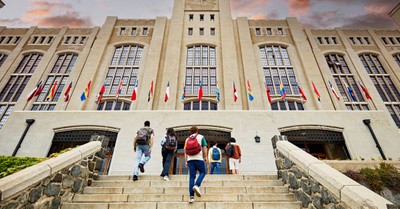
A few weeks ago, Trinity Christian College announced that it would be closing its doors after the spring 2026 semester. The Chicagoland school had served the Dutch Reformed community and others for almost 70 years, had a strong nursing program, and gave a priority to the Christian worldview.

Back in 2023, Trinity International University, the other Trinity in the Chicago area, announced that its undergraduate program would be moved online, with no residential option offered. A few months ago, its grad school, Trinity Evangelical Divinity School announced it would fold into another seminary in Vancouver. In July, The King’s College in New York City, which had been struggling for a while, announced it would permanently close. Many observers predict that there will be more announcements in the weeks and months to come.

Institutions of higher education face a perfect storm of factors.Enrollments have not kept up with expectations, leaving high debt and empty buildings. During Covid, students, staff, and administrators got used to “zoom classes,” especially how moving online avoids the trouble of feeding, housing, and entertaining students.

And, of course, too many educators are more interested in creating activists rather than educating students. What has long been an endemic reality at “secular” schools is also the case at many once-faithful Christian institutions that fell captive to the Critical Theory mood that pervades the rest of academic culture. Why would Christian parents spend thousands on an education that “progressed” beyond biblical authority and historic Christian morality when the education offered is indistinguishable from cheaper, secular options? Many parents have learned the hard way about mission drift at Christian colleges.

Though hard to accept, and not necessarily the case with the colleges already mentioned, the closure of some schools is an overdue blessing. Too many ostensibly Christian schools are institutional versions of “Christian merch,” no different than regular t-shirts but with a few “Jesus words” pressed on. If Christian schools do not offer anything unique, then there’s no point in having Christian schools in the first place.

This crisis is an opportunity. The Church has always been an innovative and redemptive force in education for the glory of God and the life of the world. The Church values learning because of what it knows about God, His world, and His image bearers. The entire Western educational system, in fact, is rooted in practices and customs flowing from the ideals and beliefs of Christianity.

These same ideals can animate new opportunities for educational excellence.After all, the contemporary educational system is struggling, too. We can neither abandon education nor compromise with a failed system. Rather, Christians should offer something better.

What C.S. Lewis wrote about books iGod in the Dockapplies just as much to higher education:  

What we want is not more little books about Christianity, but more little books by Christians on other subjects—with their Christianity latent. You can see this most easily if you look at it the other way round. Our Faith is not very likely to be shaken by any book on Hinduism. But if whenever we read an elementary book on Geology, Botany, Politics, or Astronomy, we found that its implications were Hindu, that would shake us. It is not the books written in direct defense of Materialism that make the modern man a materialist; it is the materialistic assumptions in all the other books. In the same way, it is not books on Christianity that will really trouble him. But he would be troubled if, whenever he wanted a cheap popular introduction to some science, the best work on the market was always by a Christian.

Our challenge and opportunity is to be better. What if, when a watching world was looking for a place to send their kids or find their employees, the best option on the market was by a Christian? Instead of fearing these closures as the end of an era, believers need to see this as a chance for a new start, clearing out the things that have failed while still building on what made Christian education great to begin with.

Photo Credit: ©Getty Images/xavierarnau

John Stonestreet is President of the Colson Center for Christian Worldview, and radio host of BreakPoint, a daily national radio program providing thought-provoking commentaries on current events and life issues from a biblical worldview. John holds degrees from Trinity Evangelical Divinity School (IL) and Bryan College (TN), and is the co-author of Making Sense of Your World: A Biblical Worldview.

The views expressed in this commentary do not necessarily reflect those of CrosswalkHeadlines.


BreakPoint is a program of the Colson Center for Christian Worldview. BreakPoint commentaries offer incisive content people can't find anywhere else; content that cuts through the fog of relativism and the news cycle with truth and compassion. Founded by Chuck Colson (1931 – 2012) in 1991 as a daily radio broadcast, BreakPoint provides a Christian perspective on today's news and trends. Today, you can get it in written and a variety of audio formats: on the web, the radio, or your favorite podcast app on the go.


 

Salem News Channel Today

Sponsored Links


September 26 - Phoenix, AZ
Scottsdale Center for the Performing Arts


November 2 - Detroit, MI
Zion Christian Church in Troy


October 6 - Los Angeles, CA
Pasadena Convention Center


November 5 - San Antonio, TX
Norris Centers – The Grand Red Oak Ballroom


October 8 - Sacramento, CA
William Jessup University


November 7 - Tampa, FL
The Palladium at St. Pete College


October 22 - Minneapolis, MN
Crowne Plaza AiRE


November 15 - San Francisco, CA
Fremont Marriott Silicon Valley


October 23 - Philadelphia, PA
Green Valley Country Club


November 16 - Denver, CO
CU South Denver - Formerly Wildlife Experience


November 2 - Chicago, IL
Chicago Westin Northwest in Itasca


November 21 - Cleveland, OH
Holiday Inn Rockside in Independence


Salem Radio Network Speakers

Larry Elder is an American lawyer, writer, and radio and television personality who calls himself the "Sage of South Central" a district of Los Angeles, Larry says his philosophy is to entertain, inform, provoke and to hopefully uplift. His calling card is "we have a country to save" and to him this means returning to the bedrock Constitutional principles of limited government and maximum personal responsibility. Elder's iconoclastic wit and intellectual agility makes him a particularly attractive voice in a nation that seems weary of traditional racial dialogue.” – Los Angeles Times.

Mike Gallagher Mike Gallagher began his broadcasting career in 1978 in Dayton, Ohio. Today, he is one of the most listened-to talk radio show hosts in America, recently having been ranked in the Talkers Magazine “Heavy Hundred” list – the 100 most important talk radio hosts in America. Prior to being launched into national syndication in 1998, Mike hosted the morning show on WABC-AM in New York City. Today, Talkers Magazine reports that his show is heard by over 3.75 million weekly listeners. Besides his radio work, Mike is seen on Fox News Channel as an on-air contributor, frequently appearing on the cable news giant.

Hugh Hewitt is one of the nation’s leading bloggers and a genuine media revolutionary. He brings that expertise, his wit and what The New Yorker magazine calls his “amiable but relentless manner” to his nationally syndicated show each day.

When Dr. Sebastian Gorka was growing up, he listened to talk radio under his pillow with a transistor radio, dreaming that one day he would be behind the microphone. Beginning New Year’s Day 2019, he got his wish. Gorka now hosts America First every weekday afternoon 3 to 6pm ET. Gorka’s unique story works well on the radio. He is national security analyst for the Fox News Channel and author of two books: "Why We Fight" and "Defeating Jihad." His latest book releasing this fall is “War For America’s Soul.” He is uniquely qualified to fight the culture war and stand up for what is great about America, his adopted home country.

Broadcasting from his home station of KRLA in Los Angeles, the Dennis Prager Show is heard across the country. Everything in life – from politics to religion to relationships – is grist for Dennis’ mill. If it’s interesting, if it affects your life, then Dennis will be talking about it – with passion, humor, insight and wisdom.

Sean Hannity is a conservative radio and television host, and one of the original primetime hosts on the Fox News Channel, where he has appeared since 1996. Sean Hannity began his radio career at a college station in California, before moving on to markets in the Southeast and New York. Today, he’s one of the most listened to on-air voices. Hannity’s radio program went into national syndication on September 10, 2001, and airs on more than 500 stations. Talkers Magazine estimates Hannity’s weekly radio audience at 13.5 million. In 1996 he was hired as one of the original hosts on Fox News Channel. As host of several popular Fox programs, Hannity has become the highest-paid news anchor on television.

Michelle Malkin is a mother, wife, blogger, conservative syndicated columnist, longtime cable TV news commentator, and best-selling author of six books. She started her newspaper journalism career at the Los Angeles Daily News in 1992, moved to the Seattle Times in 1995, and has been penning nationally syndicated newspaper columns for Creators Syndicate since 1999. She is founder of conservative Internet start-ups Hot Air and Twitchy.com. Malkin has received numerous awards for her investigative journalism, including the Council on Governmental Ethics Laws (COGEL) national award for outstanding service for the cause of governmental ethics and leadership (1998), the Reed Irvine Accuracy in Media Award for Investigative Journalism (2006), the Heritage Foundation and Franklin Center for Government & Public Integrity's Breitbart Award for Excellence in Journalism (2013), the Center for Immigration Studies' Eugene Katz Award for Excellence in the Coverage of Immigration Award (2016), and the Manhattan Film Festival's Film Heals Award (2018). Married for 26 years and the mother of two teenage children, she lives with her family in Colorado. Follow her at michellemalkin.com. (Photo reprinted with kind permission from Peter Duke Photography.)

Sponsored by:

Colleges Closing and the Church’s Opportunity

Carbonatix Pre-Player Loader

Audio By Carbonatix

BreakPoint.org

A few weeks ago, Trinity Christian College announced that it would be closing its doors after the spring 2026 semester. The Chicagoland school had served the Dutch Reformed community and others for almost 70 years, had a strong nursing program, and gave a priority to the Christian worldview.

Back in 2023, Trinity International University, the other Trinity in the Chicago area, announced that its undergraduate program would be moved online, with no residential option offered. A few months ago, its grad school, Trinity Evangelical Divinity School announced it would fold into another seminary in Vancouver. In July, The King’s College in New York City, which had been struggling for a while, announced it would permanently close. Many observers predict that there will be more announcements in the weeks and months to come.

Institutions of higher education face a perfect storm of factors.Enrollments have not kept up with expectations, leaving high debt and empty buildings. During Covid, students, staff, and administrators got used to “zoom classes,” especially how moving online avoids the trouble of feeding, housing, and entertaining students.

And, of course, too many educators are more interested in creating activists rather than educating students. What has long been an endemic reality at “secular” schools is also the case at many once-faithful Christian institutions that fell captive to the Critical Theory mood that pervades the rest of academic culture. Why would Christian parents spend thousands on an education that “progressed” beyond biblical authority and historic Christian morality when the education offered is indistinguishable from cheaper, secular options? Many parents have learned the hard way about mission drift at Christian colleges.

Though hard to accept, and not necessarily the case with the colleges already mentioned, the closure of some schools is an overdue blessing. Too many ostensibly Christian schools are institutional versions of “Christian merch,” no different than regular t-shirts but with a few “Jesus words” pressed on. If Christian schools do not offer anything unique, then there’s no point in having Christian schools in the first place.

This crisis is an opportunity. The Church has always been an innovative and redemptive force in education for the glory of God and the life of the world. The Church values learning because of what it knows about God, His world, and His image bearers. The entire Western educational system, in fact, is rooted in practices and customs flowing from the ideals and beliefs of Christianity.

These same ideals can animate new opportunities for educational excellence.After all, the contemporary educational system is struggling, too. We can neither abandon education nor compromise with a failed system. Rather, Christians should offer something better.

What C.S. Lewis wrote about books iGod in the Dockapplies just as much to higher education:  

What we want is not more little books about Christianity, but more little books by Christians on other subjects—with their Christianity latent. You can see this most easily if you look at it the other way round. Our Faith is not very likely to be shaken by any book on Hinduism. But if whenever we read an elementary book on Geology, Botany, Politics, or Astronomy, we found that its implications were Hindu, that would shake us. It is not the books written in direct defense of Materialism that make the modern man a materialist; it is the materialistic assumptions in all the other books. In the same way, it is not books on Christianity that will really trouble him. But he would be troubled if, whenever he wanted a cheap popular introduction to some science, the best work on the market was always by a Christian.

Our challenge and opportunity is to be better. What if, when a watching world was looking for a place to send their kids or find their employees, the best option on the market was by a Christian? Instead of fearing these closures as the end of an era, believers need to see this as a chance for a new start, clearing out the things that have failed while still building on what made Christian education great to begin with.

Photo Credit: ©Getty Images/xavierarnau

John Stonestreet is President of the Colson Center for Christian Worldview, and radio host of BreakPoint, a daily national radio program providing thought-provoking commentaries on current events and life issues from a biblical worldview. John holds degrees from Trinity Evangelical Divinity School (IL) and Bryan College (TN), and is the co-author of Making Sense of Your World: A Biblical Worldview.

The views expressed in this commentary do not necessarily reflect those of CrosswalkHeadlines.


BreakPoint is a program of the Colson Center for Christian Worldview. BreakPoint commentaries offer incisive content people can't find anywhere else; content that cuts through the fog of relativism and the news cycle with truth and compassion. Founded by Chuck Colson (1931 – 2012) in 1991 as a daily radio broadcast, BreakPoint provides a Christian perspective on today's news and trends. Today, you can get it in written and a variety of audio formats: on the web, the radio, or your favorite podcast app on the go.

 

Salem News Channel Today

Sponsored Links

On Air & Up Next

See the Full Program Guide