Decentralizing Education with Purpose

Carbonatix Pre-Player Loader

Audio By Carbonatix

BreakPoint.org

English poet John Milton, the author of Paradise Lostwrote that the purpose of education is to “repair the ruins of our first parents by regaining to know God aright, and out of that knowledge to love him, to imitate him, to be like him … by possessing our souls of true virtue.”

Today, that vision of education is largely absent. Yet, all education—whether clearly articulated or not—assumes some vision of life, with deep cultural and political implications. This reality helps explain why a recent announcement from the federal Department of Education drew such sharp reactions from across the political spectrum.

According to the announcement, the Department of Education will transfer several programs to other federal agencies through a series of interagency agreements. A senior department official quoted by ABC News said these moves represent a “major step forward” in downsizing the department and returning educational authority to the states.

The plan does not eliminate current programs but outsources a number of them. For example, sections of the Office of Postsecondary Education will now be jointly managed with the Department of Labor. Other offices, such as those overseeing civil rights complaints and federal student loans, will remain within the Department of Education. Secretary of Education Linda McMahon noted to CBS News that this “testing” process may help Congress determine how it might eventually codify these transitions in law, advancing the Trump Administration’s long-term goal of devolving education authority back to the states, or even closing the Department of Education.

Reducing government bureaucracy is a good thing. However, any attempt to minimize or eliminate the federal role in education without reclaiming the telos of education will fail. Returning authority to the states or improving testing outcomes is inadequate without this clarity about what education is truly for.

In fact, education without purpose can be dangerous. D.L. Moody warned, “If you take someone who steals railroad ties and give him an education, you’ve just taught him to steal the entire railroad next time.” Technical skill is insufficient. Education must be guided by moral and philosophical foundations.

Here, the Christian worldview offers both clarity and direction.

Theoretically, Christians can offer a clear and compelling vision of education as the transmission of wisdom, knowledge, and cultural inheritance to future generations. The purpose of education is to shape image bearers into who they were created to be. While Americans rightly maintain that liberty and learning go together, and that the success of republican government requires an educated citizenry, Christians understand that education has an even deeper purpose than career preparation or civic literacy.

At its core, education should help human beings learn about God and the purpose for which they were created. This provides both the foundation for knowing truth and stewarding that which is good and beautiful, as well as the limits that education desperately needs. As I wrote in Restoring All Things: God’s Audacious Plan to Change the World Through Everyday People, a truly Christian education will acknowledge both a created order and a moral order:

Throughout history, Christians not only have seen education as a common good but also could explain why it was a common good. To know about God’s world is to know about God Himself, and so learning is intrinsically good because it has a transcendent purpose. Further, from a Christian worldview, it can be clearly said that there is a moral order to the world. And so, for knowledge to be good, it must be properly ordered, with the technical understood in light of the moral. Indeed, the very first humans were corrupted by acquiring knowledge of something they were not made to know.

Practically, a Christian philosophy of education should motivate action. Periods of reform create opportunities for entrepreneurs and institutions to develop educational alternatives. The explosion of classical Christian schools, private Christian schools, homeschool cohorts, Christian institutes, church-based educational initiatives, and other innovations are powerful means by which to form students who understand their world, their purpose, and the God who made them. Put simply, such actions can place as the telos of education the first words of the Westminster Catechism: “to glorify God, and to enjoy Him forever.”

The Colson Educators program equips Christian educators to live with faithfulness and courage in this moment of incredible opportunity. These digital courses and the annual Rooted Educator’s Conference connect worldview formation with professional growth, for the purpose of the intellectual and moral development of students. Learn more about Colson Educators at courses.colsoneducation.org.

A move to curtail the power of the Department of Education is warranted. However, if there is to be a true recovery of education, there must be a recovery of the purpose for education. Christians have the opportunity and responsibility to articulate that purpose and to act upon it. Only then will we truly begin, in the words of John Milton, to “repair the ruins.”

This Breakpoint was co-authored by Andrew Carico.

Related Article

Trump Pledges Action to Defend the Right to Pray in Nation’s Schools

Photo Credit: ©Getty Images/TW Farlow

John Stonestreet is President of the Colson Center for Christian Worldview, and radio host of BreakPoint, a daily national radio program providing thought-provoking commentaries on current events and life issues from a biblical worldview. John holds degrees from Trinity Evangelical Divinity School (IL) and Bryan College (TN), and is the co-author of Making Sense of Your World: A Biblical Worldview.

The views expressed in this commentary do not necessarily reflect those of CrosswalkHeadlines.


BreakPoint is a program of the Colson Center for Christian Worldview. BreakPoint commentaries offer incisive content people can't find anywhere else; content that cuts through the fog of relativism and the news cycle with truth and compassion. Founded by Chuck Colson (1931 – 2012) in 1991 as a daily radio broadcast, BreakPoint provides a Christian perspective on today's news and trends. Today, you can get it in written and a variety of audio formats: on the web, the radio, or your favorite podcast app on the go.


 

Salem News Channel Today

Sponsored Links


September 26 - Phoenix, AZ
Scottsdale Center for the Performing Arts


November 2 - Detroit, MI
Zion Christian Church in Troy


October 6 - Los Angeles, CA
Pasadena Convention Center


November 5 - San Antonio, TX
Norris Centers – The Grand Red Oak Ballroom


October 8 - Sacramento, CA
William Jessup University


November 7 - Tampa, FL
The Palladium at St. Pete College


October 22 - Minneapolis, MN
Crowne Plaza AiRE


November 15 - San Francisco, CA
Fremont Marriott Silicon Valley


October 23 - Philadelphia, PA
Green Valley Country Club


November 16 - Denver, CO
CU South Denver - Formerly Wildlife Experience


November 2 - Chicago, IL
Chicago Westin Northwest in Itasca


November 21 - Cleveland, OH
Holiday Inn Rockside in Independence


Salem Radio Network Speakers

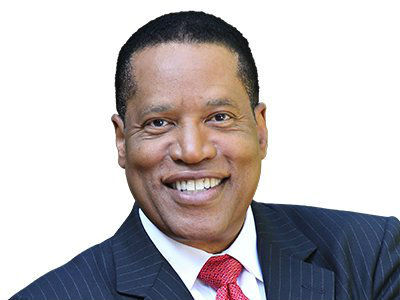
Larry Elder is an American lawyer, writer, and radio and television personality who calls himself the "Sage of South Central" a district of Los Angeles, Larry says his philosophy is to entertain, inform, provoke and to hopefully uplift. His calling card is "we have a country to save" and to him this means returning to the bedrock Constitutional principles of limited government and maximum personal responsibility. Elder's iconoclastic wit and intellectual agility makes him a particularly attractive voice in a nation that seems weary of traditional racial dialogue.” – Los Angeles Times.

Mike Gallagher Mike Gallagher began his broadcasting career in 1978 in Dayton, Ohio. Today, he is one of the most listened-to talk radio show hosts in America, recently having been ranked in the Talkers Magazine “Heavy Hundred” list – the 100 most important talk radio hosts in America. Prior to being launched into national syndication in 1998, Mike hosted the morning show on WABC-AM in New York City. Today, Talkers Magazine reports that his show is heard by over 3.75 million weekly listeners. Besides his radio work, Mike is seen on Fox News Channel as an on-air contributor, frequently appearing on the cable news giant.

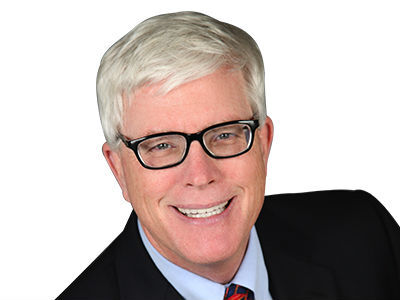
Hugh Hewitt is one of the nation’s leading bloggers and a genuine media revolutionary. He brings that expertise, his wit and what The New Yorker magazine calls his “amiable but relentless manner” to his nationally syndicated show each day.

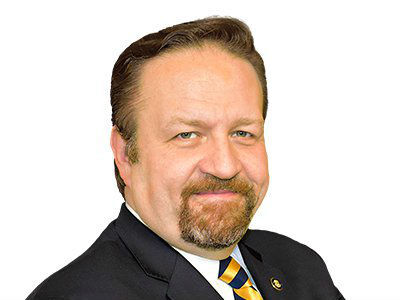
When Dr. Sebastian Gorka was growing up, he listened to talk radio under his pillow with a transistor radio, dreaming that one day he would be behind the microphone. Beginning New Year’s Day 2019, he got his wish. Gorka now hosts America First every weekday afternoon 3 to 6pm ET. Gorka’s unique story works well on the radio. He is national security analyst for the Fox News Channel and author of two books: "Why We Fight" and "Defeating Jihad." His latest book releasing this fall is “War For America’s Soul.” He is uniquely qualified to fight the culture war and stand up for what is great about America, his adopted home country.

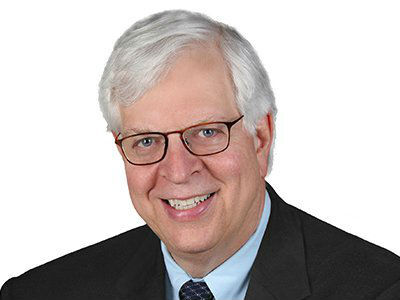
Broadcasting from his home station of KRLA in Los Angeles, the Dennis Prager Show is heard across the country. Everything in life – from politics to religion to relationships – is grist for Dennis’ mill. If it’s interesting, if it affects your life, then Dennis will be talking about it – with passion, humor, insight and wisdom.

Sean Hannity is a conservative radio and television host, and one of the original primetime hosts on the Fox News Channel, where he has appeared since 1996. Sean Hannity began his radio career at a college station in California, before moving on to markets in the Southeast and New York. Today, he’s one of the most listened to on-air voices. Hannity’s radio program went into national syndication on September 10, 2001, and airs on more than 500 stations. Talkers Magazine estimates Hannity’s weekly radio audience at 13.5 million. In 1996 he was hired as one of the original hosts on Fox News Channel. As host of several popular Fox programs, Hannity has become the highest-paid news anchor on television.

Michelle Malkin is a mother, wife, blogger, conservative syndicated columnist, longtime cable TV news commentator, and best-selling author of six books. She started her newspaper journalism career at the Los Angeles Daily News in 1992, moved to the Seattle Times in 1995, and has been penning nationally syndicated newspaper columns for Creators Syndicate since 1999. She is founder of conservative Internet start-ups Hot Air and Twitchy.com. Malkin has received numerous awards for her investigative journalism, including the Council on Governmental Ethics Laws (COGEL) national award for outstanding service for the cause of governmental ethics and leadership (1998), the Reed Irvine Accuracy in Media Award for Investigative Journalism (2006), the Heritage Foundation and Franklin Center for Government & Public Integrity's Breitbart Award for Excellence in Journalism (2013), the Center for Immigration Studies' Eugene Katz Award for Excellence in the Coverage of Immigration Award (2016), and the Manhattan Film Festival's Film Heals Award (2018). Married for 26 years and the mother of two teenage children, she lives with her family in Colorado. Follow her at michellemalkin.com. (Photo reprinted with kind permission from Peter Duke Photography.)

Sponsored by:

Decentralizing Education with Purpose

Carbonatix Pre-Player Loader

Audio By Carbonatix

BreakPoint.org

English poet John Milton, the author of Paradise Lostwrote that the purpose of education is to “repair the ruins of our first parents by regaining to know God aright, and out of that knowledge to love him, to imitate him, to be like him … by possessing our souls of true virtue.”

Today, that vision of education is largely absent. Yet, all education—whether clearly articulated or not—assumes some vision of life, with deep cultural and political implications. This reality helps explain why a recent announcement from the federal Department of Education drew such sharp reactions from across the political spectrum.

According to the announcement, the Department of Education will transfer several programs to other federal agencies through a series of interagency agreements. A senior department official quoted by ABC News said these moves represent a “major step forward” in downsizing the department and returning educational authority to the states.

The plan does not eliminate current programs but outsources a number of them. For example, sections of the Office of Postsecondary Education will now be jointly managed with the Department of Labor. Other offices, such as those overseeing civil rights complaints and federal student loans, will remain within the Department of Education. Secretary of Education Linda McMahon noted to CBS News that this “testing” process may help Congress determine how it might eventually codify these transitions in law, advancing the Trump Administration’s long-term goal of devolving education authority back to the states, or even closing the Department of Education.

Reducing government bureaucracy is a good thing. However, any attempt to minimize or eliminate the federal role in education without reclaiming the telos of education will fail. Returning authority to the states or improving testing outcomes is inadequate without this clarity about what education is truly for.

In fact, education without purpose can be dangerous. D.L. Moody warned, “If you take someone who steals railroad ties and give him an education, you’ve just taught him to steal the entire railroad next time.” Technical skill is insufficient. Education must be guided by moral and philosophical foundations.

Here, the Christian worldview offers both clarity and direction.

Theoretically, Christians can offer a clear and compelling vision of education as the transmission of wisdom, knowledge, and cultural inheritance to future generations. The purpose of education is to shape image bearers into who they were created to be. While Americans rightly maintain that liberty and learning go together, and that the success of republican government requires an educated citizenry, Christians understand that education has an even deeper purpose than career preparation or civic literacy.

At its core, education should help human beings learn about God and the purpose for which they were created. This provides both the foundation for knowing truth and stewarding that which is good and beautiful, as well as the limits that education desperately needs. As I wrote in Restoring All Things: God’s Audacious Plan to Change the World Through Everyday People, a truly Christian education will acknowledge both a created order and a moral order:

Throughout history, Christians not only have seen education as a common good but also could explain why it was a common good. To know about God’s world is to know about God Himself, and so learning is intrinsically good because it has a transcendent purpose. Further, from a Christian worldview, it can be clearly said that there is a moral order to the world. And so, for knowledge to be good, it must be properly ordered, with the technical understood in light of the moral. Indeed, the very first humans were corrupted by acquiring knowledge of something they were not made to know.

Practically, a Christian philosophy of education should motivate action. Periods of reform create opportunities for entrepreneurs and institutions to develop educational alternatives. The explosion of classical Christian schools, private Christian schools, homeschool cohorts, Christian institutes, church-based educational initiatives, and other innovations are powerful means by which to form students who understand their world, their purpose, and the God who made them. Put simply, such actions can place as the telos of education the first words of the Westminster Catechism: “to glorify God, and to enjoy Him forever.”

The Colson Educators program equips Christian educators to live with faithfulness and courage in this moment of incredible opportunity. These digital courses and the annual Rooted Educator’s Conference connect worldview formation with professional growth, for the purpose of the intellectual and moral development of students. Learn more about Colson Educators at courses.colsoneducation.org.

A move to curtail the power of the Department of Education is warranted. However, if there is to be a true recovery of education, there must be a recovery of the purpose for education. Christians have the opportunity and responsibility to articulate that purpose and to act upon it. Only then will we truly begin, in the words of John Milton, to “repair the ruins.”

This Breakpoint was co-authored by Andrew Carico.

Related Article

Trump Pledges Action to Defend the Right to Pray in Nation’s Schools

Photo Credit: ©Getty Images/TW Farlow

John Stonestreet is President of the Colson Center for Christian Worldview, and radio host of BreakPoint, a daily national radio program providing thought-provoking commentaries on current events and life issues from a biblical worldview. John holds degrees from Trinity Evangelical Divinity School (IL) and Bryan College (TN), and is the co-author of Making Sense of Your World: A Biblical Worldview.

The views expressed in this commentary do not necessarily reflect those of CrosswalkHeadlines.


BreakPoint is a program of the Colson Center for Christian Worldview. BreakPoint commentaries offer incisive content people can't find anywhere else; content that cuts through the fog of relativism and the news cycle with truth and compassion. Founded by Chuck Colson (1931 – 2012) in 1991 as a daily radio broadcast, BreakPoint provides a Christian perspective on today's news and trends. Today, you can get it in written and a variety of audio formats: on the web, the radio, or your favorite podcast app on the go.

 

Salem News Channel Today

Sponsored Links

On Air & Up Next

See the Full Program Guide