Early Church Ethics

Carbonatix Pre-Player Loader

Audio By Carbonatix

BreakPoint.org

Critics often argue that much of what Christians think of as biblical truth and morality are inventions of late twentieth century American conservatism. So, Christian sexual ethics are products of 1990s “purity culture.” Claims about the exclusivity of Christ are remnants of Western ideological imperialism. And the pro-life movement was invented by Jerry Falwell and Pat Robertson to get Ronald Reagan in office.

However, the first Christians were known and often attacked for many of the same practices that Christians are today, just without the lions. In fact, just as the creeds of the Early Church clarified what Christians must believe, there are other writings from that time that clarify how Christians should live.

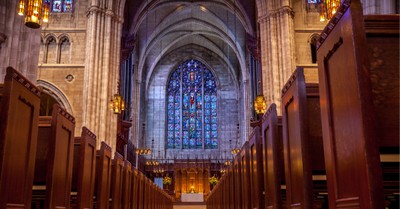
For example, Justin Martyr’s beautiful description of the Christian worship service would fit what most of us still experience each Sunday:

On the day called Sunday, all who live in cities or in the country gather together to one place, and the memoirs of the apostles or the writings of the prophets are read, as long as time permits; then when the reader has ceased, the president verbally instructs, and exhorts to the imitation of these good things. Then we all rise together and pray, and, as we before said, when our prayer is ended, bread and wine and water are brought, and the president in like manner offers prayers and thanksgivings, according to his ability, and the people assent, saying Amen.

The Epistle to Diognetus, written by a Christian to a non-believing friend in the second or third century, described the Christian’s way of life:

[Christians] dwell in their own countries, but simply as sojourners. As citizens, they share in all things with others, and yet endure all things as if foreigners. Every foreign land is to them as their native country, and every land of their birth as a land of strangers. They marry, as do all [others]; they beget children; but they do not destroy their offspring. They have a common table, but not a common bed.

Probably the clearest example is The Didache, a second-century summary of Christian moral teaching. It commanded the church, among other things, to be pro-life: “you shall not murder a child by abortion nor kill that which is born.”

A key reason for the explosive growth of the Early Church is that Christians lived by this ethical command. In the ancient Greco-Roman world, abortion and the killing of infants through a practice called “exposure” was considered legally and socially acceptable. Most of the babies left to die were little girls.

In his book, The Rise of Christianity, Rodney Stark described how Christians would search out and save little girls who were left to die by their pagan families. After a few decades of this life and death dynamic, there was a shortage of women for pagan young men to marry. So many ended up going to church to find wives. Also, because Christian women did not have abortions at the same rates as pagan women, a particularly brutal practice at the time, they also had higher fertility rates.

In the end, the explosive growth of Christianity across the empire was all about math. God used the obedience of early Christians to change the world. Of course, if we were to take a time machine back to speak to some of these baby rescuers, and ask if they realized how significant their obedience was going to be in the history of mankind, they’d be puzzled. “I don’t know anything about that,” they’d say. “I’m just hoping to help her.”

This is why the Christian life could never be reduced to random acts of kindness. God orchestrates history, and among the things He uses is the obedience of His people. Critics will tell us to “get with the times,” but it was precisely by being counter-cultural that Christianity rocked the Roman Empire. Ordinary people living out extraordinary faith are what transformed the world.

Related Article

What Can the Early Christians Teach Us about Tolerance Today?

Photo Credit: ©Getty Images/Ryasick

John Stonestreet is President of the Colson Center for Christian Worldview, and radio host of BreakPoint, a daily national radio program providing thought-provoking commentaries on current events and life issues from a biblical worldview. John holds degrees from Trinity Evangelical Divinity School (IL) and Bryan College (TN), and is the co-author of Making Sense of Your World: A Biblical Worldview.

The views expressed in this commentary do not necessarily reflect those of CrosswalkHeadlines.


BreakPoint is a program of the Colson Center for Christian Worldview. BreakPoint commentaries offer incisive content people can't find anywhere else; content that cuts through the fog of relativism and the news cycle with truth and compassion. Founded by Chuck Colson (1931 – 2012) in 1991 as a daily radio broadcast, BreakPoint provides a Christian perspective on today's news and trends. Today, you can get it in written and a variety of audio formats: on the web, the radio, or your favorite podcast app on the go.


 

Salem News Channel Today

Sponsored Links


September 26 - Phoenix, AZ
Scottsdale Center for the Performing Arts


November 2 - Detroit, MI
Zion Christian Church in Troy


October 6 - Los Angeles, CA
Pasadena Convention Center


November 5 - San Antonio, TX
Norris Centers – The Grand Red Oak Ballroom


October 8 - Sacramento, CA
William Jessup University


November 7 - Tampa, FL
The Palladium at St. Pete College


October 22 - Minneapolis, MN
Crowne Plaza AiRE


November 15 - San Francisco, CA
Fremont Marriott Silicon Valley


October 23 - Philadelphia, PA
Green Valley Country Club


November 16 - Denver, CO
CU South Denver - Formerly Wildlife Experience


November 2 - Chicago, IL
Chicago Westin Northwest in Itasca


November 21 - Cleveland, OH
Holiday Inn Rockside in Independence


Salem Radio Network Speakers

Larry Elder is an American lawyer, writer, and radio and television personality who calls himself the "Sage of South Central" a district of Los Angeles, Larry says his philosophy is to entertain, inform, provoke and to hopefully uplift. His calling card is "we have a country to save" and to him this means returning to the bedrock Constitutional principles of limited government and maximum personal responsibility. Elder's iconoclastic wit and intellectual agility makes him a particularly attractive voice in a nation that seems weary of traditional racial dialogue.” – Los Angeles Times.

Mike Gallagher Mike Gallagher began his broadcasting career in 1978 in Dayton, Ohio. Today, he is one of the most listened-to talk radio show hosts in America, recently having been ranked in the Talkers Magazine “Heavy Hundred” list – the 100 most important talk radio hosts in America. Prior to being launched into national syndication in 1998, Mike hosted the morning show on WABC-AM in New York City. Today, Talkers Magazine reports that his show is heard by over 3.75 million weekly listeners. Besides his radio work, Mike is seen on Fox News Channel as an on-air contributor, frequently appearing on the cable news giant.

Hugh Hewitt is one of the nation’s leading bloggers and a genuine media revolutionary. He brings that expertise, his wit and what The New Yorker magazine calls his “amiable but relentless manner” to his nationally syndicated show each day.

When Dr. Sebastian Gorka was growing up, he listened to talk radio under his pillow with a transistor radio, dreaming that one day he would be behind the microphone. Beginning New Year’s Day 2019, he got his wish. Gorka now hosts America First every weekday afternoon 3 to 6pm ET. Gorka’s unique story works well on the radio. He is national security analyst for the Fox News Channel and author of two books: "Why We Fight" and "Defeating Jihad." His latest book releasing this fall is “War For America’s Soul.” He is uniquely qualified to fight the culture war and stand up for what is great about America, his adopted home country.

Broadcasting from his home station of KRLA in Los Angeles, the Dennis Prager Show is heard across the country. Everything in life – from politics to religion to relationships – is grist for Dennis’ mill. If it’s interesting, if it affects your life, then Dennis will be talking about it – with passion, humor, insight and wisdom.

Sean Hannity is a conservative radio and television host, and one of the original primetime hosts on the Fox News Channel, where he has appeared since 1996. Sean Hannity began his radio career at a college station in California, before moving on to markets in the Southeast and New York. Today, he’s one of the most listened to on-air voices. Hannity’s radio program went into national syndication on September 10, 2001, and airs on more than 500 stations. Talkers Magazine estimates Hannity’s weekly radio audience at 13.5 million. In 1996 he was hired as one of the original hosts on Fox News Channel. As host of several popular Fox programs, Hannity has become the highest-paid news anchor on television.

Michelle Malkin is a mother, wife, blogger, conservative syndicated columnist, longtime cable TV news commentator, and best-selling author of six books. She started her newspaper journalism career at the Los Angeles Daily News in 1992, moved to the Seattle Times in 1995, and has been penning nationally syndicated newspaper columns for Creators Syndicate since 1999. She is founder of conservative Internet start-ups Hot Air and Twitchy.com. Malkin has received numerous awards for her investigative journalism, including the Council on Governmental Ethics Laws (COGEL) national award for outstanding service for the cause of governmental ethics and leadership (1998), the Reed Irvine Accuracy in Media Award for Investigative Journalism (2006), the Heritage Foundation and Franklin Center for Government & Public Integrity's Breitbart Award for Excellence in Journalism (2013), the Center for Immigration Studies' Eugene Katz Award for Excellence in the Coverage of Immigration Award (2016), and the Manhattan Film Festival's Film Heals Award (2018). Married for 26 years and the mother of two teenage children, she lives with her family in Colorado. Follow her at michellemalkin.com. (Photo reprinted with kind permission from Peter Duke Photography.)

Sponsored by:

Early Church Ethics

Carbonatix Pre-Player Loader

Audio By Carbonatix

BreakPoint.org

Critics often argue that much of what Christians think of as biblical truth and morality are inventions of late twentieth century American conservatism. So, Christian sexual ethics are products of 1990s “purity culture.” Claims about the exclusivity of Christ are remnants of Western ideological imperialism. And the pro-life movement was invented by Jerry Falwell and Pat Robertson to get Ronald Reagan in office.

However, the first Christians were known and often attacked for many of the same practices that Christians are today, just without the lions. In fact, just as the creeds of the Early Church clarified what Christians must believe, there are other writings from that time that clarify how Christians should live.

For example, Justin Martyr’s beautiful description of the Christian worship service would fit what most of us still experience each Sunday:

On the day called Sunday, all who live in cities or in the country gather together to one place, and the memoirs of the apostles or the writings of the prophets are read, as long as time permits; then when the reader has ceased, the president verbally instructs, and exhorts to the imitation of these good things. Then we all rise together and pray, and, as we before said, when our prayer is ended, bread and wine and water are brought, and the president in like manner offers prayers and thanksgivings, according to his ability, and the people assent, saying Amen.

The Epistle to Diognetus, written by a Christian to a non-believing friend in the second or third century, described the Christian’s way of life:

[Christians] dwell in their own countries, but simply as sojourners. As citizens, they share in all things with others, and yet endure all things as if foreigners. Every foreign land is to them as their native country, and every land of their birth as a land of strangers. They marry, as do all [others]; they beget children; but they do not destroy their offspring. They have a common table, but not a common bed.

Probably the clearest example is The Didache, a second-century summary of Christian moral teaching. It commanded the church, among other things, to be pro-life: “you shall not murder a child by abortion nor kill that which is born.”

A key reason for the explosive growth of the Early Church is that Christians lived by this ethical command. In the ancient Greco-Roman world, abortion and the killing of infants through a practice called “exposure” was considered legally and socially acceptable. Most of the babies left to die were little girls.

In his book, The Rise of Christianity, Rodney Stark described how Christians would search out and save little girls who were left to die by their pagan families. After a few decades of this life and death dynamic, there was a shortage of women for pagan young men to marry. So many ended up going to church to find wives. Also, because Christian women did not have abortions at the same rates as pagan women, a particularly brutal practice at the time, they also had higher fertility rates.

In the end, the explosive growth of Christianity across the empire was all about math. God used the obedience of early Christians to change the world. Of course, if we were to take a time machine back to speak to some of these baby rescuers, and ask if they realized how significant their obedience was going to be in the history of mankind, they’d be puzzled. “I don’t know anything about that,” they’d say. “I’m just hoping to help her.”

This is why the Christian life could never be reduced to random acts of kindness. God orchestrates history, and among the things He uses is the obedience of His people. Critics will tell us to “get with the times,” but it was precisely by being counter-cultural that Christianity rocked the Roman Empire. Ordinary people living out extraordinary faith are what transformed the world.

Related Article

What Can the Early Christians Teach Us about Tolerance Today?

Photo Credit: ©Getty Images/Ryasick

John Stonestreet is President of the Colson Center for Christian Worldview, and radio host of BreakPoint, a daily national radio program providing thought-provoking commentaries on current events and life issues from a biblical worldview. John holds degrees from Trinity Evangelical Divinity School (IL) and Bryan College (TN), and is the co-author of Making Sense of Your World: A Biblical Worldview.

The views expressed in this commentary do not necessarily reflect those of CrosswalkHeadlines.


BreakPoint is a program of the Colson Center for Christian Worldview. BreakPoint commentaries offer incisive content people can't find anywhere else; content that cuts through the fog of relativism and the news cycle with truth and compassion. Founded by Chuck Colson (1931 – 2012) in 1991 as a daily radio broadcast, BreakPoint provides a Christian perspective on today's news and trends. Today, you can get it in written and a variety of audio formats: on the web, the radio, or your favorite podcast app on the go.

 

Salem News Channel Today

Sponsored Links

On Air & Up Next

See the Full Program Guide