Getting the “Theism” Right in New Theism

Carbonatix Pre-Player Loader

Audio By Carbonatix

BreakPoint.org

Not that long ago, a collection of voices such as Sam Harris, Richard Dawkins, Christopher Hitchens, and Ayaan Hirsi Ali loudly proclaimed that God is a delusion and religion a poison. However, in a recent essay for the Claremont Review of Books, Matthew Schmitz argued that the New Atheism—which surged after 9/11 and decried religion as the source of conflict and cultural decline—has largely run its course. In its place, he contended, is a New Theism.

Schmitz highlighted two 2025 books as evidence. Ross Douthat’s Believe: Why Everyone Should Be Religious argues that faith is both plausible and personally necessary. Jonathan Rauch’s Cross Purposes: Christianity’s Broken Bargain with Democracy defends religion’s social utility in sustaining liberal democracy. To that list could be added Charles Murray’s Taking Religion Seriously, which offers an empirical case for religion’s significance, and Rod Dreher’s Living in Wonderwhich argues for the re-enchantment of secular society.

Taken together, these works represent an emerging theism which, though currently elite-driven, could have a broader cultural influence. The critical next question, of course, is which God are we talking about here? Dabbling with theism is not the same as encountering Yahweh, the God who actually exists.

C.S. Lewis once described his shock of encountering a living God after dabbling in vague spirituality:

But God Himself, alive, pulling at the other end of the cord . . . that is quite another matter. There comes a moment when the children who have been playing at burglars hush suddenly: was that a real footstep in the hall? . . .Supposing we really found Him? We never meant it to come to that! Worse still, supposing He had found us?

True faith is not merely belief in a “spiritual realm.” Rather, it is built on three baseline, eternal truths that ground the Christian worldview.

First, God exists. This assumption distinguishes theism from atheism, materialism, and agnosticism. Scripture begins with this assumption, that “in the beginning, God…” Beyond Scripture, a long line of thinkers—from Aquinas to Turretin to Shedd—have offered reasons to consider God’s existence.

Second, God is eternal and personal. This assumption distinguishes Christianity from pantheism, the idea that everything is ‘god,’ and polytheism, the idea that there are many gods. A ‘god’ that is a force is to be used, not known. If God is eternal and a person, His will is ultimate.

Third, God has chosen to reveal Himself, ultimately in Christ. This assumption distinguishes Christianity from all other religions, including other theistic religions. As Jesus prayed in John 17:3, “And this is eternal life, that they know you, the only true God, and Jesus Christ whom you have sent.”

True theism cannot be reduced to a ‘god’ of our making or who relates to us on our terms. Rather, it begins with God as He is. Thankfully, God is knowable, but that is only because He chose to make Himself known. It is to that revelation that we are primarily responsible. As Deuteronomy 29:29 teaches, “The secret things belong to the Lord our God, but the things that are revealed belong to us. . .” Or as the hymnist William Cowper wrote: “God is his own interpreter, And he will make it plain.”

Christianity affirms that God also reveals Himself in His Creation and through His Word. Paul wrote in Romans 1:19–20 that God’s eternal power and divine nature are clearly perceived through Creation from the beginning. Theologians call this “general revelation,” and according to Paul, it is robust and thorough. However, the same passage reveals the human tendency to suppress that knowledge in rebellion and wickedness.

Thus, God’s full and final revelation, as the author of Hebrews wrote, is in Jesus Christ, as Savior. We must respond to this “special revelation” to be saved. Thus, Christians affirm that both God’s created reality and His divine Word impose themselves on us, and we are without excuse for ignoring either.

Perhaps the most inspiring story of this “New Theism,” is that of Ayaan Hirsi Ali, who came to a powerful belief in Jesus Christ after rejecting Islam (a different theism) and atheism. Now, by Ali’s own admission, she is truly free in Christ. Her story is told in the film Truth Rising, with an even fuller account told in the new Truth Rising Study. Learn more at truthrising.com/colson.

There is good reason to hope that a New Theism is emerging and signaling a renewed openness to religion in American life. However, this is more of an opportunity and calling for those who know God beyond some vague spirituality or utilitarian appeal. We must use this moment to point to Jesus Christ, the fullness of God in bodily form and the only one who can, as the Bible tells us, “mak[e] all things new.”

This Breakpoint was co-authored by Andrew Carico.

Photo Credit: ©GettyImages/RobertCrum

John Stonestreet is President of the Colson Center for Christian Worldview, and radio host of BreakPoint, a daily national radio program providing thought-provoking commentaries on current events and life issues from a biblical worldview. John holds degrees from Trinity Evangelical Divinity School (IL) and Bryan College (TN), and is the co-author of Making Sense of Your World: A Biblical Worldview.

The views expressed in this commentary do not necessarily reflect those of CrosswalkHeadlines.


BreakPoint is a program of the Colson Center for Christian Worldview. BreakPoint commentaries offer incisive content people can't find anywhere else; content that cuts through the fog of relativism and the news cycle with truth and compassion. Founded by Chuck Colson (1931 – 2012) in 1991 as a daily radio broadcast, BreakPoint provides a Christian perspective on today's news and trends. Today, you can get it in written and a variety of audio formats: on the web, the radio, or your favorite podcast app on the go.


 

Salem News Channel Today

Sponsored Links


September 26 - Phoenix, AZ
Scottsdale Center for the Performing Arts


November 2 - Detroit, MI
Zion Christian Church in Troy


October 6 - Los Angeles, CA
Pasadena Convention Center


November 5 - San Antonio, TX
Norris Centers – The Grand Red Oak Ballroom


October 8 - Sacramento, CA
William Jessup University


November 7 - Tampa, FL
The Palladium at St. Pete College


October 22 - Minneapolis, MN
Crowne Plaza AiRE


November 15 - San Francisco, CA
Fremont Marriott Silicon Valley


October 23 - Philadelphia, PA
Green Valley Country Club


November 16 - Denver, CO
CU South Denver - Formerly Wildlife Experience


November 2 - Chicago, IL
Chicago Westin Northwest in Itasca


November 21 - Cleveland, OH
Holiday Inn Rockside in Independence


Salem Radio Network Speakers

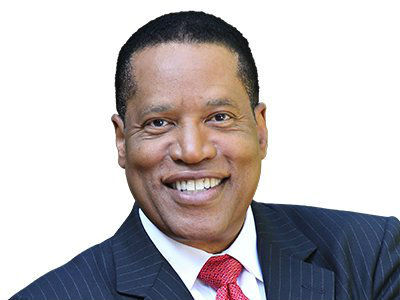
Larry Elder is an American lawyer, writer, and radio and television personality who calls himself the "Sage of South Central" a district of Los Angeles, Larry says his philosophy is to entertain, inform, provoke and to hopefully uplift. His calling card is "we have a country to save" and to him this means returning to the bedrock Constitutional principles of limited government and maximum personal responsibility. Elder's iconoclastic wit and intellectual agility makes him a particularly attractive voice in a nation that seems weary of traditional racial dialogue.” – Los Angeles Times.

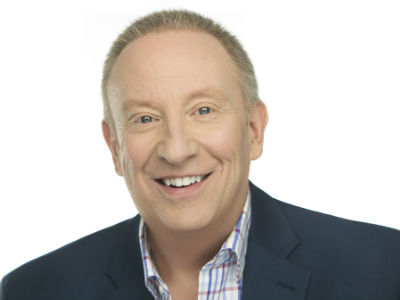
Mike Gallagher Mike Gallagher began his broadcasting career in 1978 in Dayton, Ohio. Today, he is one of the most listened-to talk radio show hosts in America, recently having been ranked in the Talkers Magazine “Heavy Hundred” list – the 100 most important talk radio hosts in America. Prior to being launched into national syndication in 1998, Mike hosted the morning show on WABC-AM in New York City. Today, Talkers Magazine reports that his show is heard by over 3.75 million weekly listeners. Besides his radio work, Mike is seen on Fox News Channel as an on-air contributor, frequently appearing on the cable news giant.

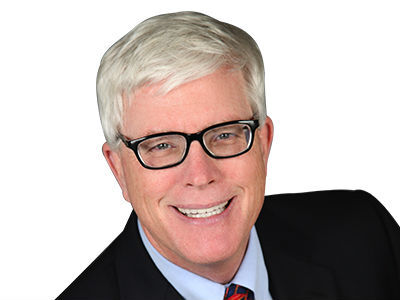
Hugh Hewitt is one of the nation’s leading bloggers and a genuine media revolutionary. He brings that expertise, his wit and what The New Yorker magazine calls his “amiable but relentless manner” to his nationally syndicated show each day.

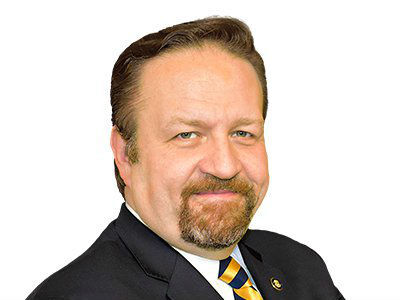
When Dr. Sebastian Gorka was growing up, he listened to talk radio under his pillow with a transistor radio, dreaming that one day he would be behind the microphone. Beginning New Year’s Day 2019, he got his wish. Gorka now hosts America First every weekday afternoon 3 to 6pm ET. Gorka’s unique story works well on the radio. He is national security analyst for the Fox News Channel and author of two books: "Why We Fight" and "Defeating Jihad." His latest book releasing this fall is “War For America’s Soul.” He is uniquely qualified to fight the culture war and stand up for what is great about America, his adopted home country.

Broadcasting from his home station of KRLA in Los Angeles, the Dennis Prager Show is heard across the country. Everything in life – from politics to religion to relationships – is grist for Dennis’ mill. If it’s interesting, if it affects your life, then Dennis will be talking about it – with passion, humor, insight and wisdom.

Sean Hannity is a conservative radio and television host, and one of the original primetime hosts on the Fox News Channel, where he has appeared since 1996. Sean Hannity began his radio career at a college station in California, before moving on to markets in the Southeast and New York. Today, he’s one of the most listened to on-air voices. Hannity’s radio program went into national syndication on September 10, 2001, and airs on more than 500 stations. Talkers Magazine estimates Hannity’s weekly radio audience at 13.5 million. In 1996 he was hired as one of the original hosts on Fox News Channel. As host of several popular Fox programs, Hannity has become the highest-paid news anchor on television.

Michelle Malkin is a mother, wife, blogger, conservative syndicated columnist, longtime cable TV news commentator, and best-selling author of six books. She started her newspaper journalism career at the Los Angeles Daily News in 1992, moved to the Seattle Times in 1995, and has been penning nationally syndicated newspaper columns for Creators Syndicate since 1999. She is founder of conservative Internet start-ups Hot Air and Twitchy.com. Malkin has received numerous awards for her investigative journalism, including the Council on Governmental Ethics Laws (COGEL) national award for outstanding service for the cause of governmental ethics and leadership (1998), the Reed Irvine Accuracy in Media Award for Investigative Journalism (2006), the Heritage Foundation and Franklin Center for Government & Public Integrity's Breitbart Award for Excellence in Journalism (2013), the Center for Immigration Studies' Eugene Katz Award for Excellence in the Coverage of Immigration Award (2016), and the Manhattan Film Festival's Film Heals Award (2018). Married for 26 years and the mother of two teenage children, she lives with her family in Colorado. Follow her at michellemalkin.com. (Photo reprinted with kind permission from Peter Duke Photography.)

Sponsored by:

Getting the “Theism” Right in New Theism

Carbonatix Pre-Player Loader

Audio By Carbonatix

BreakPoint.org

Not that long ago, a collection of voices such as Sam Harris, Richard Dawkins, Christopher Hitchens, and Ayaan Hirsi Ali loudly proclaimed that God is a delusion and religion a poison. However, in a recent essay for the Claremont Review of Books, Matthew Schmitz argued that the New Atheism—which surged after 9/11 and decried religion as the source of conflict and cultural decline—has largely run its course. In its place, he contended, is a New Theism.

Schmitz highlighted two 2025 books as evidence. Ross Douthat’s Believe: Why Everyone Should Be Religious argues that faith is both plausible and personally necessary. Jonathan Rauch’s Cross Purposes: Christianity’s Broken Bargain with Democracy defends religion’s social utility in sustaining liberal democracy. To that list could be added Charles Murray’s Taking Religion Seriously, which offers an empirical case for religion’s significance, and Rod Dreher’s Living in Wonderwhich argues for the re-enchantment of secular society.

Taken together, these works represent an emerging theism which, though currently elite-driven, could have a broader cultural influence. The critical next question, of course, is which God are we talking about here? Dabbling with theism is not the same as encountering Yahweh, the God who actually exists.

C.S. Lewis once described his shock of encountering a living God after dabbling in vague spirituality:

But God Himself, alive, pulling at the other end of the cord . . . that is quite another matter. There comes a moment when the children who have been playing at burglars hush suddenly: was that a real footstep in the hall? . . .Supposing we really found Him? We never meant it to come to that! Worse still, supposing He had found us?

True faith is not merely belief in a “spiritual realm.” Rather, it is built on three baseline, eternal truths that ground the Christian worldview.

First, God exists. This assumption distinguishes theism from atheism, materialism, and agnosticism. Scripture begins with this assumption, that “in the beginning, God…” Beyond Scripture, a long line of thinkers—from Aquinas to Turretin to Shedd—have offered reasons to consider God’s existence.

Second, God is eternal and personal. This assumption distinguishes Christianity from pantheism, the idea that everything is ‘god,’ and polytheism, the idea that there are many gods. A ‘god’ that is a force is to be used, not known. If God is eternal and a person, His will is ultimate.

Third, God has chosen to reveal Himself, ultimately in Christ. This assumption distinguishes Christianity from all other religions, including other theistic religions. As Jesus prayed in John 17:3, “And this is eternal life, that they know you, the only true God, and Jesus Christ whom you have sent.”

True theism cannot be reduced to a ‘god’ of our making or who relates to us on our terms. Rather, it begins with God as He is. Thankfully, God is knowable, but that is only because He chose to make Himself known. It is to that revelation that we are primarily responsible. As Deuteronomy 29:29 teaches, “The secret things belong to the Lord our God, but the things that are revealed belong to us. . .” Or as the hymnist William Cowper wrote: “God is his own interpreter, And he will make it plain.”

Christianity affirms that God also reveals Himself in His Creation and through His Word. Paul wrote in Romans 1:19–20 that God’s eternal power and divine nature are clearly perceived through Creation from the beginning. Theologians call this “general revelation,” and according to Paul, it is robust and thorough. However, the same passage reveals the human tendency to suppress that knowledge in rebellion and wickedness.

Thus, God’s full and final revelation, as the author of Hebrews wrote, is in Jesus Christ, as Savior. We must respond to this “special revelation” to be saved. Thus, Christians affirm that both God’s created reality and His divine Word impose themselves on us, and we are without excuse for ignoring either.

Perhaps the most inspiring story of this “New Theism,” is that of Ayaan Hirsi Ali, who came to a powerful belief in Jesus Christ after rejecting Islam (a different theism) and atheism. Now, by Ali’s own admission, she is truly free in Christ. Her story is told in the film Truth Rising, with an even fuller account told in the new Truth Rising Study. Learn more at truthrising.com/colson.

There is good reason to hope that a New Theism is emerging and signaling a renewed openness to religion in American life. However, this is more of an opportunity and calling for those who know God beyond some vague spirituality or utilitarian appeal. We must use this moment to point to Jesus Christ, the fullness of God in bodily form and the only one who can, as the Bible tells us, “mak[e] all things new.”

This Breakpoint was co-authored by Andrew Carico.

Photo Credit: ©GettyImages/RobertCrum

John Stonestreet is President of the Colson Center for Christian Worldview, and radio host of BreakPoint, a daily national radio program providing thought-provoking commentaries on current events and life issues from a biblical worldview. John holds degrees from Trinity Evangelical Divinity School (IL) and Bryan College (TN), and is the co-author of Making Sense of Your World: A Biblical Worldview.

The views expressed in this commentary do not necessarily reflect those of CrosswalkHeadlines.


BreakPoint is a program of the Colson Center for Christian Worldview. BreakPoint commentaries offer incisive content people can't find anywhere else; content that cuts through the fog of relativism and the news cycle with truth and compassion. Founded by Chuck Colson (1931 – 2012) in 1991 as a daily radio broadcast, BreakPoint provides a Christian perspective on today's news and trends. Today, you can get it in written and a variety of audio formats: on the web, the radio, or your favorite podcast app on the go.

 

Salem News Channel Today

Sponsored Links

On Air & Up Next

See the Full Program Guide