Is Sports Betting Okay?

Carbonatix Pre-Player Loader

Audio By Carbonatix

BreakPoint.org

Last month, the National Basketball Association was rocked by the arrests of players and coaches resulting from an FBI probe into sports gambling. The charges ranged from mafia-linked poker games to rigging basketball games, and more indictments are expected. This month, two Major League Baseball pitchers were arrested in connection with a pitch rigging scheme, also tied to sports betting.

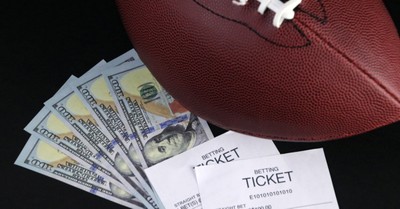
ESPN’s Michael Wilbon was dismissive, saying, “I don’t care.” But then, he put his finger on why the problem is so serious: “At the highest levels of the pyramid in this country, of this culture, everybody’s betting now.” Sports has long been plagued by gambling scandals, but today, sports gambling has been normalized and is pervasive in homes, high schools, and locker rooms across America.

A recent video in the What Would You Say? series discussed sports gambling and why it is such a big deal:

Betting on sports is nothing new, but since a 2018 Supreme Court case struck down a federal ban and paved the way for 38 states along with Washington, D.C., to allow sports gambling, it has exploded in popularity. So far, this national experiment has been a disaster for individuals and families.

The next time someone says, “Sports gambling is harmless fun. It shouldn’t be regulated,” remember these three things:

First, sports gambling is addictive and destroys lives. During the 2024 NFL season, $34 billion in bets were placed. That’s a third more than the prior year, and 100% more than six years ago, when sports gambling was re-legalized. During that time frame, sportsbooks have raked in over $300 billion. All that money isn’t coming from winners.

Most modern sports gambling is done through smartphone-based apps. Studies show that gambling on apps is even harder to stop than casino or other forms of gambling, and it attracts people to gamble who may have never otherwise tried it. Phone-based apps activate the same reward centers in the brain as drugs and alcohol, and are always available in users’ pockets, ready and waiting every time a game is on. Long gone are the days when fans had to visit seedy parts of town to place their bets. Now, eye-catching apps with flashy ads are never more than a tap away.

This increased access to betting has caused what one writer at The Atlantic described as “a wave of financial and familial misery,” which falls most on households least able to afford it. For every dollar spent on betting, household investing falls by an average of $2. In fact, since sports gambling was re-legalized, there has also been a notable increase in over-drafted bank accounts, maxed out credit cards, and debt delinquency. Sports gambling increases the likelihood that a family will go bankrupt by 25% to 30%. If it’s true that “the house always wins,” more households than ever are losing.

Second, sports gambling victimizes the innocent. One of the primary arguments for legalizing this kind of gambling is that it doesn’t harm anyone. So, why should the government tell people what they can do with their money? However, money problems and addiction are plagues on households, and sports gambling brings home the worst of both things. In the process, other social pathologies are made worse.

Research has found that an unexpected loss for an NFL team now correlates with a 10% spike in male domestic abuse. States with legalized sports gambling have seen an estimated 9% increase in violence against intimate partners. In other words, men who gamble on sports don’t just lose money. They lose their self-restraint and hurt innocent victims.

Sports gambling brings harm to those who don’t participate in it by causing financial ruin and fueling domestic violence. As one writer put it, this booming industry’s cost shouldn’t be measured in only dollars and cents. It should be measured in human lives, especially women and children who are dragged against their will into this destructive and addictive behavior.

Third, sports gambling corrupts sports. People play and watch sports for the athletic competition and team spirit. However, when gambling is introduced, athletes are incentivized to change or even degrade the way they play. Officials are tempted to cheat, and fans forget why they enjoyed a sport in the first place, focusing instead on financial gain.

Just last year, tennis players, Olympic competitors, and NBA referees were all caught fixing games and matches. In 2023, the NFL suspended five players for gambling-related violations, and one analysis found a 250% year-over-year increase in suspicious basketball matches. Far from improving sports, gambling has undermined trust, integrity, and all the other reasons athletes step onto the court or field. This will only get worse as sports gambling invades more franchises and fan bases.

The preoccupation with quick cash introduces another game, one that has nothing to do with athletics and everything to do with what the Bible calls “the love of money.” Paul said that the love of money is “the root of all evil.” The way that sports gambling has poisoned sports, addicted users, and wrecked households proves Paul was right. This national experiment with sports gambling has failed, and it’s time to end it. There’s nothing harmless about playing with people’s lives.

So, the next time someone says, “Sports gambling is harmless fun. It shouldn’t be regulated,” remember these three things: Sports gambling is addictive and destroys lives; sports gambling victimizes the innocent; sports gambling corrupts sports.

To see and share this video, visit the What Would You Say? channel on YouTube. You’ll also find dozens of other helpful videos on a variety of difficult topics.

Related Article

Professors Sound Alarm on Sports Gambling Among Young Men: ‘A Casino in Their Pocket’

Photo Credit: ©Getty Images/Seth Love

John Stonestreet is President of the Colson Center for Christian Worldview, and radio host of BreakPoint, a daily national radio program providing thought-provoking commentaries on current events and life issues from a biblical worldview. John holds degrees from Trinity Evangelical Divinity School (IL) and Bryan College (TN), and is the co-author of Making Sense of Your World: A Biblical Worldview.

The views expressed in this commentary do not necessarily reflect those of CrosswalkHeadlines.


BreakPoint is a program of the Colson Center for Christian Worldview. BreakPoint commentaries offer incisive content people can't find anywhere else; content that cuts through the fog of relativism and the news cycle with truth and compassion. Founded by Chuck Colson (1931 – 2012) in 1991 as a daily radio broadcast, BreakPoint provides a Christian perspective on today's news and trends. Today, you can get it in written and a variety of audio formats: on the web, the radio, or your favorite podcast app on the go.


 

Salem News Channel Today

Sponsored Links


September 26 - Phoenix, AZ
Scottsdale Center for the Performing Arts


November 2 - Detroit, MI
Zion Christian Church in Troy


October 6 - Los Angeles, CA
Pasadena Convention Center


November 5 - San Antonio, TX
Norris Centers – The Grand Red Oak Ballroom


October 8 - Sacramento, CA
William Jessup University


November 7 - Tampa, FL
The Palladium at St. Pete College


October 22 - Minneapolis, MN
Crowne Plaza AiRE


November 15 - San Francisco, CA
Fremont Marriott Silicon Valley


October 23 - Philadelphia, PA
Green Valley Country Club


November 16 - Denver, CO
CU South Denver - Formerly Wildlife Experience


November 2 - Chicago, IL
Chicago Westin Northwest in Itasca


November 21 - Cleveland, OH
Holiday Inn Rockside in Independence


Salem Radio Network Speakers

Larry Elder is an American lawyer, writer, and radio and television personality who calls himself the "Sage of South Central" a district of Los Angeles, Larry says his philosophy is to entertain, inform, provoke and to hopefully uplift. His calling card is "we have a country to save" and to him this means returning to the bedrock Constitutional principles of limited government and maximum personal responsibility. Elder's iconoclastic wit and intellectual agility makes him a particularly attractive voice in a nation that seems weary of traditional racial dialogue.” – Los Angeles Times.

Mike Gallagher Mike Gallagher began his broadcasting career in 1978 in Dayton, Ohio. Today, he is one of the most listened-to talk radio show hosts in America, recently having been ranked in the Talkers Magazine “Heavy Hundred” list – the 100 most important talk radio hosts in America. Prior to being launched into national syndication in 1998, Mike hosted the morning show on WABC-AM in New York City. Today, Talkers Magazine reports that his show is heard by over 3.75 million weekly listeners. Besides his radio work, Mike is seen on Fox News Channel as an on-air contributor, frequently appearing on the cable news giant.

Hugh Hewitt is one of the nation’s leading bloggers and a genuine media revolutionary. He brings that expertise, his wit and what The New Yorker magazine calls his “amiable but relentless manner” to his nationally syndicated show each day.

When Dr. Sebastian Gorka was growing up, he listened to talk radio under his pillow with a transistor radio, dreaming that one day he would be behind the microphone. Beginning New Year’s Day 2019, he got his wish. Gorka now hosts America First every weekday afternoon 3 to 6pm ET. Gorka’s unique story works well on the radio. He is national security analyst for the Fox News Channel and author of two books: "Why We Fight" and "Defeating Jihad." His latest book releasing this fall is “War For America’s Soul.” He is uniquely qualified to fight the culture war and stand up for what is great about America, his adopted home country.

Broadcasting from his home station of KRLA in Los Angeles, the Dennis Prager Show is heard across the country. Everything in life – from politics to religion to relationships – is grist for Dennis’ mill. If it’s interesting, if it affects your life, then Dennis will be talking about it – with passion, humor, insight and wisdom.

Sean Hannity is a conservative radio and television host, and one of the original primetime hosts on the Fox News Channel, where he has appeared since 1996. Sean Hannity began his radio career at a college station in California, before moving on to markets in the Southeast and New York. Today, he’s one of the most listened to on-air voices. Hannity’s radio program went into national syndication on September 10, 2001, and airs on more than 500 stations. Talkers Magazine estimates Hannity’s weekly radio audience at 13.5 million. In 1996 he was hired as one of the original hosts on Fox News Channel. As host of several popular Fox programs, Hannity has become the highest-paid news anchor on television.

Michelle Malkin is a mother, wife, blogger, conservative syndicated columnist, longtime cable TV news commentator, and best-selling author of six books. She started her newspaper journalism career at the Los Angeles Daily News in 1992, moved to the Seattle Times in 1995, and has been penning nationally syndicated newspaper columns for Creators Syndicate since 1999. She is founder of conservative Internet start-ups Hot Air and Twitchy.com. Malkin has received numerous awards for her investigative journalism, including the Council on Governmental Ethics Laws (COGEL) national award for outstanding service for the cause of governmental ethics and leadership (1998), the Reed Irvine Accuracy in Media Award for Investigative Journalism (2006), the Heritage Foundation and Franklin Center for Government & Public Integrity's Breitbart Award for Excellence in Journalism (2013), the Center for Immigration Studies' Eugene Katz Award for Excellence in the Coverage of Immigration Award (2016), and the Manhattan Film Festival's Film Heals Award (2018). Married for 26 years and the mother of two teenage children, she lives with her family in Colorado. Follow her at michellemalkin.com. (Photo reprinted with kind permission from Peter Duke Photography.)

Sponsored by:

Is Sports Betting Okay?

Carbonatix Pre-Player Loader

Audio By Carbonatix

BreakPoint.org

Last month, the National Basketball Association was rocked by the arrests of players and coaches resulting from an FBI probe into sports gambling. The charges ranged from mafia-linked poker games to rigging basketball games, and more indictments are expected. This month, two Major League Baseball pitchers were arrested in connection with a pitch rigging scheme, also tied to sports betting.

ESPN’s Michael Wilbon was dismissive, saying, “I don’t care.” But then, he put his finger on why the problem is so serious: “At the highest levels of the pyramid in this country, of this culture, everybody’s betting now.” Sports has long been plagued by gambling scandals, but today, sports gambling has been normalized and is pervasive in homes, high schools, and locker rooms across America.

A recent video in the What Would You Say? series discussed sports gambling and why it is such a big deal:

Betting on sports is nothing new, but since a 2018 Supreme Court case struck down a federal ban and paved the way for 38 states along with Washington, D.C., to allow sports gambling, it has exploded in popularity. So far, this national experiment has been a disaster for individuals and families.

The next time someone says, “Sports gambling is harmless fun. It shouldn’t be regulated,” remember these three things:

First, sports gambling is addictive and destroys lives. During the 2024 NFL season, $34 billion in bets were placed. That’s a third more than the prior year, and 100% more than six years ago, when sports gambling was re-legalized. During that time frame, sportsbooks have raked in over $300 billion. All that money isn’t coming from winners.

Most modern sports gambling is done through smartphone-based apps. Studies show that gambling on apps is even harder to stop than casino or other forms of gambling, and it attracts people to gamble who may have never otherwise tried it. Phone-based apps activate the same reward centers in the brain as drugs and alcohol, and are always available in users’ pockets, ready and waiting every time a game is on. Long gone are the days when fans had to visit seedy parts of town to place their bets. Now, eye-catching apps with flashy ads are never more than a tap away.

This increased access to betting has caused what one writer at The Atlantic described as “a wave of financial and familial misery,” which falls most on households least able to afford it. For every dollar spent on betting, household investing falls by an average of $2. In fact, since sports gambling was re-legalized, there has also been a notable increase in over-drafted bank accounts, maxed out credit cards, and debt delinquency. Sports gambling increases the likelihood that a family will go bankrupt by 25% to 30%. If it’s true that “the house always wins,” more households than ever are losing.

Second, sports gambling victimizes the innocent. One of the primary arguments for legalizing this kind of gambling is that it doesn’t harm anyone. So, why should the government tell people what they can do with their money? However, money problems and addiction are plagues on households, and sports gambling brings home the worst of both things. In the process, other social pathologies are made worse.

Research has found that an unexpected loss for an NFL team now correlates with a 10% spike in male domestic abuse. States with legalized sports gambling have seen an estimated 9% increase in violence against intimate partners. In other words, men who gamble on sports don’t just lose money. They lose their self-restraint and hurt innocent victims.

Sports gambling brings harm to those who don’t participate in it by causing financial ruin and fueling domestic violence. As one writer put it, this booming industry’s cost shouldn’t be measured in only dollars and cents. It should be measured in human lives, especially women and children who are dragged against their will into this destructive and addictive behavior.

Third, sports gambling corrupts sports. People play and watch sports for the athletic competition and team spirit. However, when gambling is introduced, athletes are incentivized to change or even degrade the way they play. Officials are tempted to cheat, and fans forget why they enjoyed a sport in the first place, focusing instead on financial gain.

Just last year, tennis players, Olympic competitors, and NBA referees were all caught fixing games and matches. In 2023, the NFL suspended five players for gambling-related violations, and one analysis found a 250% year-over-year increase in suspicious basketball matches. Far from improving sports, gambling has undermined trust, integrity, and all the other reasons athletes step onto the court or field. This will only get worse as sports gambling invades more franchises and fan bases.

The preoccupation with quick cash introduces another game, one that has nothing to do with athletics and everything to do with what the Bible calls “the love of money.” Paul said that the love of money is “the root of all evil.” The way that sports gambling has poisoned sports, addicted users, and wrecked households proves Paul was right. This national experiment with sports gambling has failed, and it’s time to end it. There’s nothing harmless about playing with people’s lives.

So, the next time someone says, “Sports gambling is harmless fun. It shouldn’t be regulated,” remember these three things: Sports gambling is addictive and destroys lives; sports gambling victimizes the innocent; sports gambling corrupts sports.

To see and share this video, visit the What Would You Say? channel on YouTube. You’ll also find dozens of other helpful videos on a variety of difficult topics.

Related Article

Professors Sound Alarm on Sports Gambling Among Young Men: ‘A Casino in Their Pocket’

Photo Credit: ©Getty Images/Seth Love

John Stonestreet is President of the Colson Center for Christian Worldview, and radio host of BreakPoint, a daily national radio program providing thought-provoking commentaries on current events and life issues from a biblical worldview. John holds degrees from Trinity Evangelical Divinity School (IL) and Bryan College (TN), and is the co-author of Making Sense of Your World: A Biblical Worldview.

The views expressed in this commentary do not necessarily reflect those of CrosswalkHeadlines.


BreakPoint is a program of the Colson Center for Christian Worldview. BreakPoint commentaries offer incisive content people can't find anywhere else; content that cuts through the fog of relativism and the news cycle with truth and compassion. Founded by Chuck Colson (1931 – 2012) in 1991 as a daily radio broadcast, BreakPoint provides a Christian perspective on today's news and trends. Today, you can get it in written and a variety of audio formats: on the web, the radio, or your favorite podcast app on the go.

 

Salem News Channel Today

Sponsored Links

On Air & Up Next

See the Full Program Guide