How the Bible Guides Our Prayers in Times of Global Conflict

Carbonatix Pre-Player Loader

Audio By Carbonatix

Over the past few days, we have witnessed remarkable upheaval in the Middle East. Sales data indicate that times of war and uncertainty usually drive a spike in Bible sales as people look to the Bible for answers and hope. So how do we respond? How should the Bible inform our prayers? I want to take you on a journey that may help answer these questions.

Recognize the Brokenness of This World

The Old Testament prophet Joel begins his prophecy with a question. “Hear this, you elders listen, all you inhabitants of the land. Has anything like this ever happened in your days or in the days of your ancestors?” (Joel 1:2). We are not the first to feel what we may be feeling, that we are seeing something that has never happened before. Joel expressed this feeling as he began his message to the people of Israel centuries ago. 

Joel was reminding his readers that we live in a broken world. You likely knew that true before the events of March 1, 2026. We can try to blame others for this world being broken, including Adam and Eve for their actions in the Garden. But the truth is, we all contribute to the brokenness of this world every day. James put it this way in the New Testament: “What is the source of wars and fights among you? Don’t they come from the passions that wage war within you? You desire and do not have. You murder and covet and cannot obtain. You fight and wage war” (James 4:1-2). 

James was writing to believers facing persecution, not pagans. We have the same passions and should be grieved by our own actions just as much as we are grieved by the actions of those we consider to be pagans. 

Hold on to Hope

Before we grow into despair, we need to go back to Joel. He followed his question to his readers with this statement: “Tell your children about it, and let your children tell their children, and their children the next generation.” (Joel 1:3). Joel expressed hope of a future generation that would not know the devastation faced at that time in the life of God’s people. A better day will come.  

We see the same kind of hope in Paul’s words later to the Thessalonians, who were grieving the death of loved ones. “We do not want you to be uninformed, brothers and sisters, concerning those who are asleep, so that you will not grieve like the rest, who have no hope” (1 Thessalonians 4:13). Believers have hope for a better day—a day characterized by peace. 

Pray for Peace

David expressed that same desire, calling on people to pray for peace in Jerusalem (Psalm 122:6). The rest of that psalm is a call to join David in worship of the one true God. 

But what we see now reminds us that we live in a time when there are wars and rumors of wars. We should not be surprised. Jesus told us as much, calling the wars and rumors of wars birth pangs in this part of history (Matthew 24:6-8). He told His disciples of signs that point to His return throughout that chapter. The passage ends with a call to be watchful, to be faithful until He returns, and to be good stewards (Matthew 24:45-47). 

We can certainly pray for both faithfulness and for Jesus to return. In fact, John ends Revelation voicing a prayer for the return. “He (Jesus) who testifies about these things says, ‘Yes, I am coming soon.’ Amen! Come, Lord Jesus! The grace of the Lord Jesus be with everyone. Amen” (Revelation 22:20-21). 

Share the Gospel

The last phrase in Revelation, “the grace of the Lord Jesus be with everyone,” reminds us why Jesus has been held back from returning—grace. Peter reminded his readers that God does not want any to perish but that “all come to repentance” (2 Peter 3:9-12). He explains that this is the reason Jesus is waiting. 

This passage serves as a wake-up call for believers to be not only faithful to Jesus but also to be faithful in sharing the gospel with others. And to share with urgency. 

Sharing the gospel is how we bring about peace in this broken world. The writer of Hebrews directed his readers to live lives of peace, pursuing it with passion (Hebrews 12:14). Paul called on the Romans to do the same, stating: “If possible, as far as it depends on you, live at peace with everyone. Friends, do not avenge yourselves; instead, leave room for God’s wrath, because it is written, Vengeance belongs to me; I will repay, says the Lord” (Romans 12:18-19).

Pray for Our Leaders

One way we can pursue peace is also by praying for our leaders. Paul wrote to Timothy: 

First of all, then, I urge that petitions, prayers, intercessions, and thanksgivings be made for everyone, for kings and all those who are in authority, so that we may lead a tranquil and quiet life in all godliness and dignity. This is good, and it pleases God our Savior,  who wants everyone to be saved and to come to the knowledge of the truth (1 Timothy 2:1-4). Notice that Paul did not call on Timothy to pray for selected leaders, but all leaders. 

Paul also echoed Peter’s teaching that God desires for everyone to come to Him through faith in Christ. The goal is not just peace but redemption of this broken world. 

Check Your Motives

That brings us back to James 4. He included a warning we need to keep in mind. “You ask and don’t receive because you ask with wrong motives, so that you may spend it on your pleasures” (James 4:3). We need to check our motives when praying in response to world events. 

So where does that leave us? We are to pray for peace, for comfort to those who are hurting, asking for the return of Jesus, that He will find us faithful, and that we will be urgently sharing Him with others. We can lift up world leaders, all world leaders, checking our motives to make sure our hearts are aligned with the heart of God. 

Come, Lord Jesus.

Photo Credit: ©Getty Images/WANAN YOSSINGKUM

Dwayne McCrary is a manager of adult ongoing Bible studies for Lifeway, a church leader, and the author of Marked by Prayer.


 

Salem News Channel Today

Sponsored Links


September 26 - Phoenix, AZ
Scottsdale Center for the Performing Arts


November 2 - Detroit, MI
Zion Christian Church in Troy


October 6 - Los Angeles, CA
Pasadena Convention Center


November 5 - San Antonio, TX
Norris Centers – The Grand Red Oak Ballroom


October 8 - Sacramento, CA
William Jessup University


November 7 - Tampa, FL
The Palladium at St. Pete College


October 22 - Minneapolis, MN
Crowne Plaza AiRE


November 15 - San Francisco, CA
Fremont Marriott Silicon Valley


October 23 - Philadelphia, PA
Green Valley Country Club


November 16 - Denver, CO
CU South Denver - Formerly Wildlife Experience


November 2 - Chicago, IL
Chicago Westin Northwest in Itasca


November 21 - Cleveland, OH
Holiday Inn Rockside in Independence


Salem Radio Network Speakers

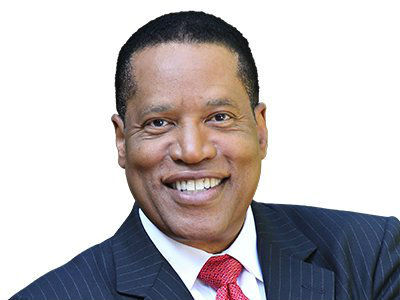
Larry Elder is an American lawyer, writer, and radio and television personality who calls himself the "Sage of South Central" a district of Los Angeles, Larry says his philosophy is to entertain, inform, provoke and to hopefully uplift. His calling card is "we have a country to save" and to him this means returning to the bedrock Constitutional principles of limited government and maximum personal responsibility. Elder's iconoclastic wit and intellectual agility makes him a particularly attractive voice in a nation that seems weary of traditional racial dialogue.” – Los Angeles Times.

Mike Gallagher Mike Gallagher began his broadcasting career in 1978 in Dayton, Ohio. Today, he is one of the most listened-to talk radio show hosts in America, recently having been ranked in the Talkers Magazine “Heavy Hundred” list – the 100 most important talk radio hosts in America. Prior to being launched into national syndication in 1998, Mike hosted the morning show on WABC-AM in New York City. Today, Talkers Magazine reports that his show is heard by over 3.75 million weekly listeners. Besides his radio work, Mike is seen on Fox News Channel as an on-air contributor, frequently appearing on the cable news giant.

Hugh Hewitt is one of the nation’s leading bloggers and a genuine media revolutionary. He brings that expertise, his wit and what The New Yorker magazine calls his “amiable but relentless manner” to his nationally syndicated show each day.

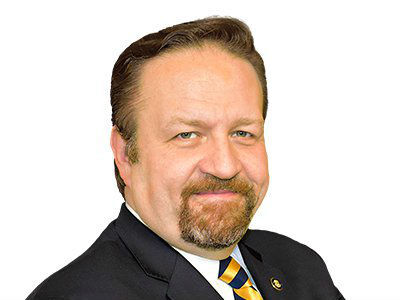
When Dr. Sebastian Gorka was growing up, he listened to talk radio under his pillow with a transistor radio, dreaming that one day he would be behind the microphone. Beginning New Year’s Day 2019, he got his wish. Gorka now hosts America First every weekday afternoon 3 to 6pm ET. Gorka’s unique story works well on the radio. He is national security analyst for the Fox News Channel and author of two books: "Why We Fight" and "Defeating Jihad." His latest book releasing this fall is “War For America’s Soul.” He is uniquely qualified to fight the culture war and stand up for what is great about America, his adopted home country.

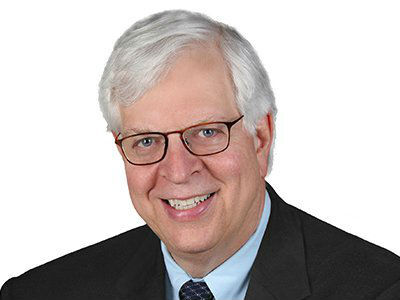
Broadcasting from his home station of KRLA in Los Angeles, the Dennis Prager Show is heard across the country. Everything in life – from politics to religion to relationships – is grist for Dennis’ mill. If it’s interesting, if it affects your life, then Dennis will be talking about it – with passion, humor, insight and wisdom.

Sean Hannity is a conservative radio and television host, and one of the original primetime hosts on the Fox News Channel, where he has appeared since 1996. Sean Hannity began his radio career at a college station in California, before moving on to markets in the Southeast and New York. Today, he’s one of the most listened to on-air voices. Hannity’s radio program went into national syndication on September 10, 2001, and airs on more than 500 stations. Talkers Magazine estimates Hannity’s weekly radio audience at 13.5 million. In 1996 he was hired as one of the original hosts on Fox News Channel. As host of several popular Fox programs, Hannity has become the highest-paid news anchor on television.

Michelle Malkin is a mother, wife, blogger, conservative syndicated columnist, longtime cable TV news commentator, and best-selling author of six books. She started her newspaper journalism career at the Los Angeles Daily News in 1992, moved to the Seattle Times in 1995, and has been penning nationally syndicated newspaper columns for Creators Syndicate since 1999. She is founder of conservative Internet start-ups Hot Air and Twitchy.com. Malkin has received numerous awards for her investigative journalism, including the Council on Governmental Ethics Laws (COGEL) national award for outstanding service for the cause of governmental ethics and leadership (1998), the Reed Irvine Accuracy in Media Award for Investigative Journalism (2006), the Heritage Foundation and Franklin Center for Government & Public Integrity's Breitbart Award for Excellence in Journalism (2013), the Center for Immigration Studies' Eugene Katz Award for Excellence in the Coverage of Immigration Award (2016), and the Manhattan Film Festival's Film Heals Award (2018). Married for 26 years and the mother of two teenage children, she lives with her family in Colorado. Follow her at michellemalkin.com. (Photo reprinted with kind permission from Peter Duke Photography.)

Sponsored by:

How the Bible Guides Our Prayers in Times of Global Conflict

Carbonatix Pre-Player Loader

Audio By Carbonatix

Over the past few days, we have witnessed remarkable upheaval in the Middle East. Sales data indicate that times of war and uncertainty usually drive a spike in Bible sales as people look to the Bible for answers and hope. So how do we respond? How should the Bible inform our prayers? I want to take you on a journey that may help answer these questions.

Recognize the Brokenness of This World

The Old Testament prophet Joel begins his prophecy with a question. “Hear this, you elders listen, all you inhabitants of the land. Has anything like this ever happened in your days or in the days of your ancestors?” (Joel 1:2). We are not the first to feel what we may be feeling, that we are seeing something that has never happened before. Joel expressed this feeling as he began his message to the people of Israel centuries ago. 

Joel was reminding his readers that we live in a broken world. You likely knew that true before the events of March 1, 2026. We can try to blame others for this world being broken, including Adam and Eve for their actions in the Garden. But the truth is, we all contribute to the brokenness of this world every day. James put it this way in the New Testament: “What is the source of wars and fights among you? Don’t they come from the passions that wage war within you? You desire and do not have. You murder and covet and cannot obtain. You fight and wage war” (James 4:1-2). 

James was writing to believers facing persecution, not pagans. We have the same passions and should be grieved by our own actions just as much as we are grieved by the actions of those we consider to be pagans. 

Hold on to Hope

Before we grow into despair, we need to go back to Joel. He followed his question to his readers with this statement: “Tell your children about it, and let your children tell their children, and their children the next generation.” (Joel 1:3). Joel expressed hope of a future generation that would not know the devastation faced at that time in the life of God’s people. A better day will come.  

We see the same kind of hope in Paul’s words later to the Thessalonians, who were grieving the death of loved ones. “We do not want you to be uninformed, brothers and sisters, concerning those who are asleep, so that you will not grieve like the rest, who have no hope” (1 Thessalonians 4:13). Believers have hope for a better day—a day characterized by peace. 

Pray for Peace

David expressed that same desire, calling on people to pray for peace in Jerusalem (Psalm 122:6). The rest of that psalm is a call to join David in worship of the one true God. 

But what we see now reminds us that we live in a time when there are wars and rumors of wars. We should not be surprised. Jesus told us as much, calling the wars and rumors of wars birth pangs in this part of history (Matthew 24:6-8). He told His disciples of signs that point to His return throughout that chapter. The passage ends with a call to be watchful, to be faithful until He returns, and to be good stewards (Matthew 24:45-47). 

We can certainly pray for both faithfulness and for Jesus to return. In fact, John ends Revelation voicing a prayer for the return. “He (Jesus) who testifies about these things says, ‘Yes, I am coming soon.’ Amen! Come, Lord Jesus! The grace of the Lord Jesus be with everyone. Amen” (Revelation 22:20-21). 

Share the Gospel

The last phrase in Revelation, “the grace of the Lord Jesus be with everyone,” reminds us why Jesus has been held back from returning—grace. Peter reminded his readers that God does not want any to perish but that “all come to repentance” (2 Peter 3:9-12). He explains that this is the reason Jesus is waiting. 

This passage serves as a wake-up call for believers to be not only faithful to Jesus but also to be faithful in sharing the gospel with others. And to share with urgency. 

Sharing the gospel is how we bring about peace in this broken world. The writer of Hebrews directed his readers to live lives of peace, pursuing it with passion (Hebrews 12:14). Paul called on the Romans to do the same, stating: “If possible, as far as it depends on you, live at peace with everyone. Friends, do not avenge yourselves; instead, leave room for God’s wrath, because it is written, Vengeance belongs to me; I will repay, says the Lord” (Romans 12:18-19).

Pray for Our Leaders

One way we can pursue peace is also by praying for our leaders. Paul wrote to Timothy: 

First of all, then, I urge that petitions, prayers, intercessions, and thanksgivings be made for everyone, for kings and all those who are in authority, so that we may lead a tranquil and quiet life in all godliness and dignity. This is good, and it pleases God our Savior,  who wants everyone to be saved and to come to the knowledge of the truth (1 Timothy 2:1-4). Notice that Paul did not call on Timothy to pray for selected leaders, but all leaders. 

Paul also echoed Peter’s teaching that God desires for everyone to come to Him through faith in Christ. The goal is not just peace but redemption of this broken world. 

Check Your Motives

That brings us back to James 4. He included a warning we need to keep in mind. “You ask and don’t receive because you ask with wrong motives, so that you may spend it on your pleasures” (James 4:3). We need to check our motives when praying in response to world events. 

So where does that leave us? We are to pray for peace, for comfort to those who are hurting, asking for the return of Jesus, that He will find us faithful, and that we will be urgently sharing Him with others. We can lift up world leaders, all world leaders, checking our motives to make sure our hearts are aligned with the heart of God. 

Come, Lord Jesus.

Photo Credit: ©Getty Images/WANAN YOSSINGKUM

Dwayne McCrary is a manager of adult ongoing Bible studies for Lifeway, a church leader, and the author of Marked by Prayer.

 

Salem News Channel Today

Sponsored Links

On Air & Up Next

See the Full Program Guide