5 Things to Know about the Women in the Easter Story

Carbonatix Pre-Player Loader

Audio By Carbonatix

The Bible gets a bad reputation in modern times for being chauvinistic or even oppressive toward women. On the one hand, the Bible isn’t written with modern feminism in mind. At the same time, the Bible contains several themes and principles that treat women with equality, respect, and affirmation, especially in its day (2,000 years ago).

For example, two books in the Old Testament are dedicated to the stories of women, Esther and Ruth. These accounts were extremely rare in those days and not the acts of a religion trying to dismiss women. Women are prophets, leaders, prophets, prophets, and heroes through the Old and New Testaments.

Women are incredibly central to the Easter narrative. They participated in the ministry of Jesus, people he counted as friends and treated as disciples. We see women on every page through the story of the death and resurrection of Jesus.

This Easter, take the time to revisit these amazing women. Here are five things to know about the women in the Easter story.

Photo Credit: ©GettyImages/rudall30
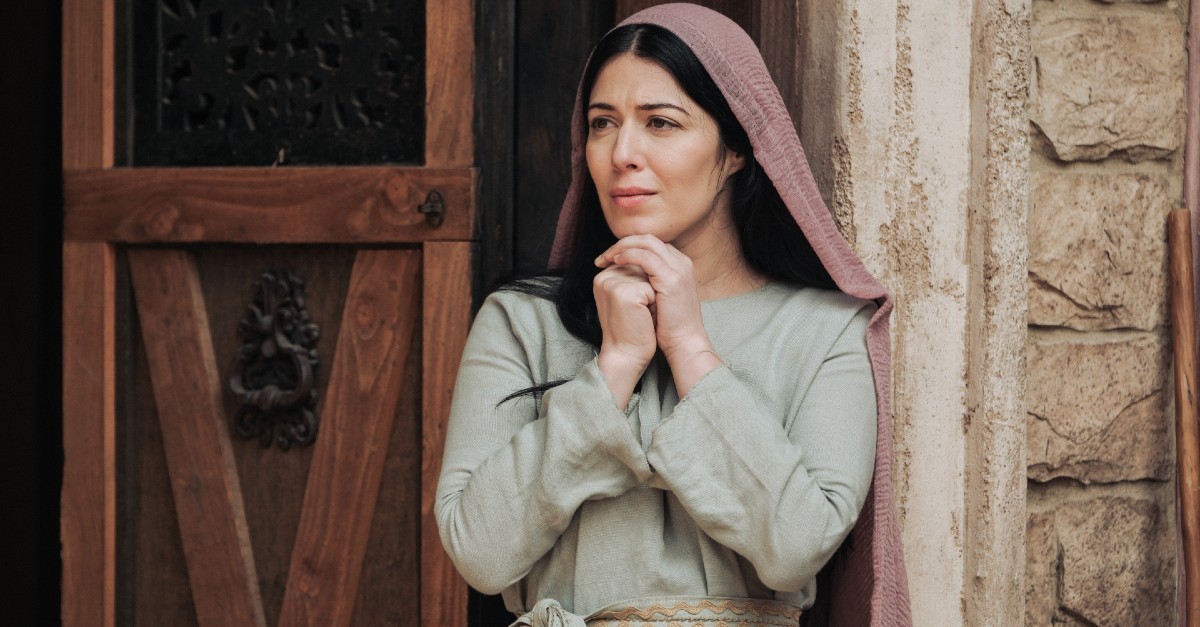
1. Women Were Present at the Cross

1. Women Were Present at the Cross

The cross is a brutal and heartbreaking visual about sin and the sacrifice necessary to provide a way for us to be redeemed and reconciled to the Father.

While we may remember how John was the only disciple there, the presence of the women at the foot of the cross highlights their unwavering devotion and courage in the face of immense suffering. John 19:25 records, “Near the cross of Jesus stood his mother, his mother’s sister, Mary the wife of Clopas, and Mary Magdalene.”

These women bore witness to Jesus’ agonizing death and offered him comfort and support in his darkest hour. Despite the danger and despair surrounding the crucifixion with both Jews and Rome threatened by Christ, these women remained steadfast, exemplifying profound loyalty and love for Jesus.

Their presence at the cross reminds us of women’s essential role in Jesus’ ministry and the early Christian community. Their steadfast faithfulness challenges traditional gender roles and affirms the equal importance of women in the proclamation of the Gospel message.

In reflecting on the women at the cross, we are inspired by their example of courage, devotion, and faithfulness, which continues to resonate through the ages as a testament to the enduring power of love and the transformative message of Easter.

Photo Credit: ©The Chosen

2. Women Discovered the Empty Tomb

2. Women Discovered the Empty Tomb

After watching Jesus die and his body taken from the cross, the women went the next day to the tomb to continue to take care of the body. While the male disciples hid, the women discovered the empty tomb.

According to the Gospels, it was Mary Magdalene, Mary the mother of James, and Salome who arrived at the tomb early on the first day of the week, intending to anoint Jesus’ body with spices and oils as part of the burial process to preserve and help with the smell. This body preparation was also part of Jewish culture, and since they couldn’t work on the Sabbath, Saturday, the women arrived on the first day of the week.

However, they were astonished to find the stone rolled away from the tomb and Jesus’ body missing.

Their discovery of the empty tomb is recorded in Mark 16:5-6:

“As they entered the tomb, they saw a young man dressed in a white robe sitting on the right side, and they were alarmed. ‘Don’t be alarmed,’ he said. 'You are looking for Jesus the Nazarene, who was crucified. He has risen! He is not here. See the place where they laid him.’”

This moment marks the first indication of Jesus’ resurrection. Despite societal norms that often marginalized women’s testimony, the Gospel writers highlighted their role as primary witnesses to the resurrection.
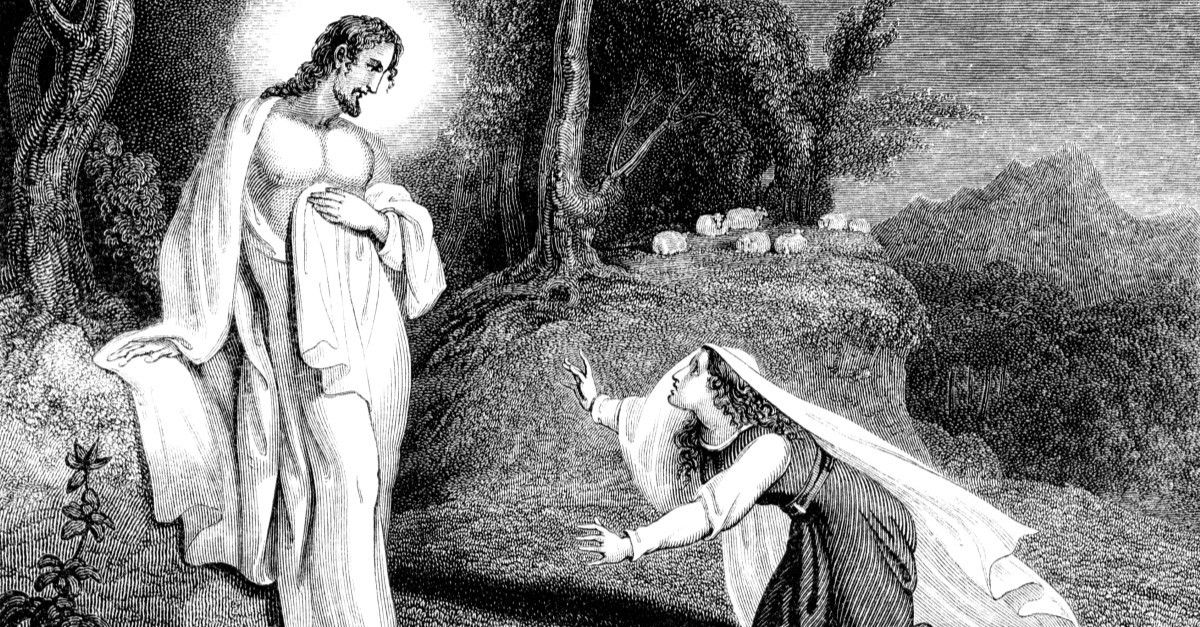
Photo Credit: ©iStock/Getty Images Plus/joshblake
3. Women Were the First to Witness the Resurrected Jesus

3. Women Were the First to Witness the Resurrected Jesus

The women watched Jesus die on the cross, discovered the empty tomb, and were also the first to witness the resurrected Jesus.

According to the Gospel accounts, Mary Magdalene and another Mary encountered Jesus nearby after discovering the empty tomb. “Suddenly Jesus met them. ‘Greetings,’ he said. They came to him, clasped his feet and worshiped him” (Matthew 28:9). This encounter marked the beginning of Jesus’ appearances to his followers after his resurrection.

Remember, the Gospel accounts record how Jesus told his male disciples, often in private, how he would die on the cross and be resurrected. Yet, during the actual event, they couldn’t witness what Jesus spoke.

In the patriarchal society of the time, women’s testimony was often considered less reliable than that of men. However, by choosing to reveal himself to women first, Jesus challenges societal norms and affirms women’s equal value and importance in his kingdom.

The women’s encounter with the resurrected Jesus underscores the transformative power of the resurrection. Their initial confusion and fear give way to joy and worship as they recognize Jesus’ presence among them. This moment marks the beginning of a new era of hope and redemption, in which all believers are invited to share in the victory of Christ over sin and death.

This act also highlights Jesus’ deep regard for women and his willingness to entrust them with the pivotal task of bearing witness to the resurrection.

Photo Credit:©GettyImages/TonyBaggett

4. Women Were the First to Spread the Resurrection News

4. Women Were the First to Spread the Resurrection News

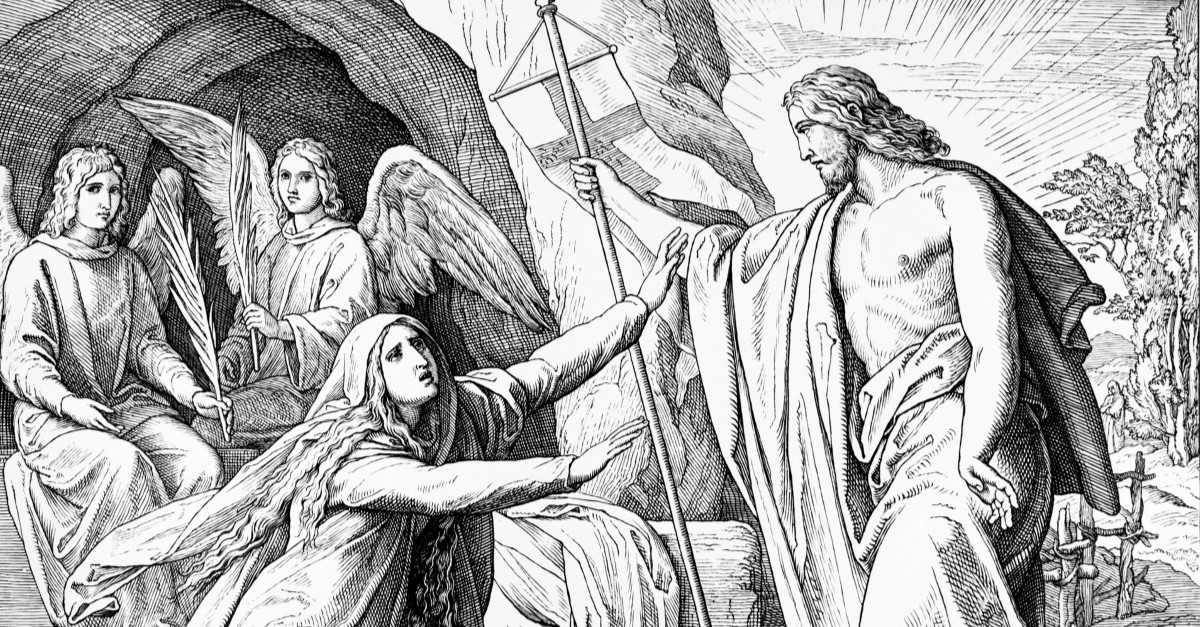
These women didn’t keep this amazing event to themselves. They ran to spread the good news. Jesus is alive!

Women were the first to spread the Gospel. Following their encounter with the resurrected Jesus, Mary Magdalene, Mary the mother of James, and Salome wasted no time sharing the astonishing news with the disciples and others. Matthew 28:8 says: “So the women hurried away from the tomb, afraid yet filled with joy, and ran to tell his disciples.” This sharing of the Good News marks the beginning of the proclamation that would eventually spread worldwide.

Later in Matthew, Jesus passes on the Great Commission, the mission to spread the Gospel to every creature and nation, to his eleven remaining apostles. However, the women obeyed the Commission before it was ever uttered. They did so from awe and excitement.

Furthermore, the women’s willingness to share the news of Jesus’ resurrection demonstrates their deep faith and commitment to Jesus as their Lord and Savior. They sat at his feet and learned from him, a place usually reserved for men. Jesus affirmed them as people and carriers of the Gospel even before his death. Despite the risks and potential backlash they may have faced, these women boldly proclaimed the reality of Jesus’ victory over death, inspiring others to believe in the transformative power of the resurrection.

Their testimony serves as a powerful reminder of women’s central role in spreading the Gospel message and fulfilling God’s redemptive plan.
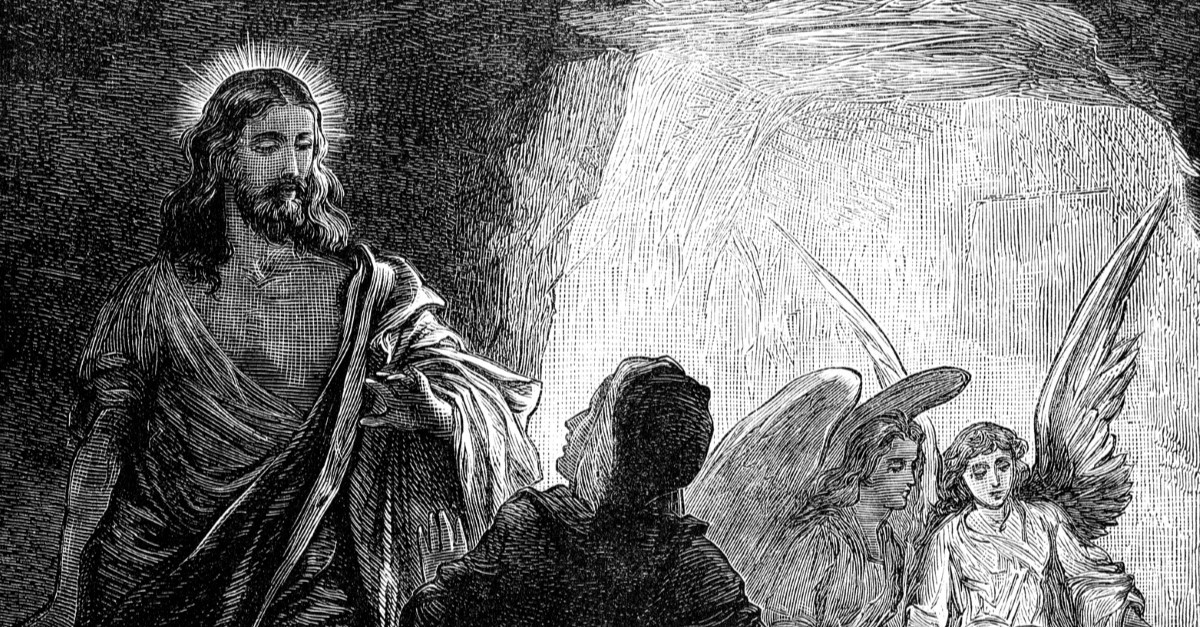
Photo credit: ©GettyImages/RomoloTavani
5. The Women’s Testimony was Valid

5. The Women’s Testimony was Valid

As we’ve mentioned, a crucial aspect of the Easter story is the validation and belief in the women's testimony. Despite the cultural norms of the time that often marginalized women’s voices, the Gospel accounts unequivocally affirm the credibility and centrality of their testimony.

In all four Gospels, the women are depicted as the primary witnesses to the empty tomb and the resurrected Jesus. For example, Luke 24:10-11 says: “It was Mary Magdalene, Joanna, Mary the mother of James, and the others with them who told this to the apostles. But they did not believe the women because their words seemed to them like nonsense.” This passage highlights both the women’s role as witnesses and the initial skepticism of the male disciples. Their skepticism may upset us today, but would have made sense in a culture where women were not trusted to give testimony in court. The fact that the male disciples came to believe the women underscores the authenticity of their testimony.

The fact that the Gospel writers chose to include the women’s testimony at all, in a culture when many readers would have found mentioning women strange, speaks volumes about the significance and validity attributed to their witness. Their testimony is not dismissed or disregarded out of hand. It is central to the Gospel narrative, serving as crucial evidence for the reality of Jesus’ resurrection. Luke, a Gentile, didn’t experience the ministry of Jesus firsthand. As a doctor and disciple of Paul, he researched testimony to write his Gospel and Acts. Those testimonies would have included Mary the Mother of Jesus, Mary and Martha, and these women during the Easter narrative, all affirming the role and importance of women in the Gospel.

Photo Credit: ©GettyImages/TonyBaggett 
What Can We Learn from the Women in the Easter Story Today?

What Can We Learn from the Women in the Easter Story Today?

As I mentioned in the introduction, the Bible doesn’t line up perfectly with modern ideas of feminism, and it isn’t meant to. Modern ideas aren’t the standard. We’d have a problem if they were. The New Testament teaches us to discern between the world’s philosophy and eternal truth. Today’s philosophies may have some value but are subject to change and adjustment. God’s truth is timeless, eternal, and something to build upon.

We don’t have to look far to see women’s important role in being heroes of the faith. Women are included in the hall of faith in Hebrews 11, from Rahab to Sarah. Not just people behind the scenes but real participants of faith. In the Easter narrative, we are told about how these amazing women comforted Christ during his death, weeping with him. Then, they were the first to witness the empty tomb and the resurrected Jesus, the first to spread the Gospel. Let us also not allow our ideas of male and female roles to minimize how God still uses both men and women to spread the Good News of Jesus.

Peace.

Related:

Why Is it Called 'Good Friday'?

What’s So Good about Good Friday?

A Prayer for Good Friday

5 Easter Crafts for the Entire Family

Hey Mom, Why Do They Call it Good Friday?

5 Unique Easter Traditions to Incorporate in Your Family’s Celebration This Year

Photo Credit:©GettyImages/gldburger

 

Salem News Channel Today

Sponsored Links


September 26 - Phoenix, AZ
Scottsdale Center for the Performing Arts


November 2 - Detroit, MI
Zion Christian Church in Troy


October 6 - Los Angeles, CA
Pasadena Convention Center


November 5 - San Antonio, TX
Norris Centers – The Grand Red Oak Ballroom


October 8 - Sacramento, CA
William Jessup University


November 7 - Tampa, FL
The Palladium at St. Pete College


October 22 - Minneapolis, MN
Crowne Plaza AiRE


November 15 - San Francisco, CA
Fremont Marriott Silicon Valley


October 23 - Philadelphia, PA
Green Valley Country Club


November 16 - Denver, CO
CU South Denver - Formerly Wildlife Experience


November 2 - Chicago, IL
Chicago Westin Northwest in Itasca


November 21 - Cleveland, OH
Holiday Inn Rockside in Independence


Salem Radio Network Speakers

Larry Elder is an American lawyer, writer, and radio and television personality who calls himself the "Sage of South Central" a district of Los Angeles, Larry says his philosophy is to entertain, inform, provoke and to hopefully uplift. His calling card is "we have a country to save" and to him this means returning to the bedrock Constitutional principles of limited government and maximum personal responsibility. Elder's iconoclastic wit and intellectual agility makes him a particularly attractive voice in a nation that seems weary of traditional racial dialogue.” – Los Angeles Times.

Mike Gallagher Mike Gallagher began his broadcasting career in 1978 in Dayton, Ohio. Today, he is one of the most listened-to talk radio show hosts in America, recently having been ranked in the Talkers Magazine “Heavy Hundred” list – the 100 most important talk radio hosts in America. Prior to being launched into national syndication in 1998, Mike hosted the morning show on WABC-AM in New York City. Today, Talkers Magazine reports that his show is heard by over 3.75 million weekly listeners. Besides his radio work, Mike is seen on Fox News Channel as an on-air contributor, frequently appearing on the cable news giant.

Hugh Hewitt is one of the nation’s leading bloggers and a genuine media revolutionary. He brings that expertise, his wit and what The New Yorker magazine calls his “amiable but relentless manner” to his nationally syndicated show each day.

When Dr. Sebastian Gorka was growing up, he listened to talk radio under his pillow with a transistor radio, dreaming that one day he would be behind the microphone. Beginning New Year’s Day 2019, he got his wish. Gorka now hosts America First every weekday afternoon 3 to 6pm ET. Gorka’s unique story works well on the radio. He is national security analyst for the Fox News Channel and author of two books: "Why We Fight" and "Defeating Jihad." His latest book releasing this fall is “War For America’s Soul.” He is uniquely qualified to fight the culture war and stand up for what is great about America, his adopted home country.

Broadcasting from his home station of KRLA in Los Angeles, the Dennis Prager Show is heard across the country. Everything in life – from politics to religion to relationships – is grist for Dennis’ mill. If it’s interesting, if it affects your life, then Dennis will be talking about it – with passion, humor, insight and wisdom.

Sean Hannity is a conservative radio and television host, and one of the original primetime hosts on the Fox News Channel, where he has appeared since 1996. Sean Hannity began his radio career at a college station in California, before moving on to markets in the Southeast and New York. Today, he’s one of the most listened to on-air voices. Hannity’s radio program went into national syndication on September 10, 2001, and airs on more than 500 stations. Talkers Magazine estimates Hannity’s weekly radio audience at 13.5 million. In 1996 he was hired as one of the original hosts on Fox News Channel. As host of several popular Fox programs, Hannity has become the highest-paid news anchor on television.

Michelle Malkin is a mother, wife, blogger, conservative syndicated columnist, longtime cable TV news commentator, and best-selling author of six books. She started her newspaper journalism career at the Los Angeles Daily News in 1992, moved to the Seattle Times in 1995, and has been penning nationally syndicated newspaper columns for Creators Syndicate since 1999. She is founder of conservative Internet start-ups Hot Air and Twitchy.com. Malkin has received numerous awards for her investigative journalism, including the Council on Governmental Ethics Laws (COGEL) national award for outstanding service for the cause of governmental ethics and leadership (1998), the Reed Irvine Accuracy in Media Award for Investigative Journalism (2006), the Heritage Foundation and Franklin Center for Government & Public Integrity's Breitbart Award for Excellence in Journalism (2013), the Center for Immigration Studies' Eugene Katz Award for Excellence in the Coverage of Immigration Award (2016), and the Manhattan Film Festival's Film Heals Award (2018). Married for 26 years and the mother of two teenage children, she lives with her family in Colorado. Follow her at michellemalkin.com. (Photo reprinted with kind permission from Peter Duke Photography.)

Sponsored by:

5 Things to Know about the Women in the Easter Story

Carbonatix Pre-Player Loader

Audio By Carbonatix

The Bible gets a bad reputation in modern times for being chauvinistic or even oppressive toward women. On the one hand, the Bible isn’t written with modern feminism in mind. At the same time, the Bible contains several themes and principles that treat women with equality, respect, and affirmation, especially in its day (2,000 years ago).

For example, two books in the Old Testament are dedicated to the stories of women, Esther and Ruth. These accounts were extremely rare in those days and not the acts of a religion trying to dismiss women. Women are prophets, leaders, prophets, prophets, and heroes through the Old and New Testaments.

Women are incredibly central to the Easter narrative. They participated in the ministry of Jesus, people he counted as friends and treated as disciples. We see women on every page through the story of the death and resurrection of Jesus.

This Easter, take the time to revisit these amazing women. Here are five things to know about the women in the Easter story.

Photo Credit: ©GettyImages/rudall30

1. Women Were Present at the Cross

1. Women Were Present at the Cross

The cross is a brutal and heartbreaking visual about sin and the sacrifice necessary to provide a way for us to be redeemed and reconciled to the Father.

While we may remember how John was the only disciple there, the presence of the women at the foot of the cross highlights their unwavering devotion and courage in the face of immense suffering. John 19:25 records, “Near the cross of Jesus stood his mother, his mother’s sister, Mary the wife of Clopas, and Mary Magdalene.”

These women bore witness to Jesus’ agonizing death and offered him comfort and support in his darkest hour. Despite the danger and despair surrounding the crucifixion with both Jews and Rome threatened by Christ, these women remained steadfast, exemplifying profound loyalty and love for Jesus.

Their presence at the cross reminds us of women’s essential role in Jesus’ ministry and the early Christian community. Their steadfast faithfulness challenges traditional gender roles and affirms the equal importance of women in the proclamation of the Gospel message.

In reflecting on the women at the cross, we are inspired by their example of courage, devotion, and faithfulness, which continues to resonate through the ages as a testament to the enduring power of love and the transformative message of Easter.

Photo Credit: ©The Chosen

2. Women Discovered the Empty Tomb

2. Women Discovered the Empty Tomb

After watching Jesus die and his body taken from the cross, the women went the next day to the tomb to continue to take care of the body. While the male disciples hid, the women discovered the empty tomb.

According to the Gospels, it was Mary Magdalene, Mary the mother of James, and Salome who arrived at the tomb early on the first day of the week, intending to anoint Jesus’ body with spices and oils as part of the burial process to preserve and help with the smell. This body preparation was also part of Jewish culture, and since they couldn’t work on the Sabbath, Saturday, the women arrived on the first day of the week.

However, they were astonished to find the stone rolled away from the tomb and Jesus’ body missing.

Their discovery of the empty tomb is recorded in Mark 16:5-6:

“As they entered the tomb, they saw a young man dressed in a white robe sitting on the right side, and they were alarmed. ‘Don’t be alarmed,’ he said. 'You are looking for Jesus the Nazarene, who was crucified. He has risen! He is not here. See the place where they laid him.’”

This moment marks the first indication of Jesus’ resurrection. Despite societal norms that often marginalized women’s testimony, the Gospel writers highlighted their role as primary witnesses to the resurrection.

Photo Credit: ©iStock/Getty Images Plus/joshblake
3. Women Were the First to Witness the Resurrected Jesus

3. Women Were the First to Witness the Resurrected Jesus

The women watched Jesus die on the cross, discovered the empty tomb, and were also the first to witness the resurrected Jesus.

According to the Gospel accounts, Mary Magdalene and another Mary encountered Jesus nearby after discovering the empty tomb. “Suddenly Jesus met them. ‘Greetings,’ he said. They came to him, clasped his feet and worshiped him” (Matthew 28:9). This encounter marked the beginning of Jesus’ appearances to his followers after his resurrection.

Remember, the Gospel accounts record how Jesus told his male disciples, often in private, how he would die on the cross and be resurrected. Yet, during the actual event, they couldn’t witness what Jesus spoke.

In the patriarchal society of the time, women’s testimony was often considered less reliable than that of men. However, by choosing to reveal himself to women first, Jesus challenges societal norms and affirms women’s equal value and importance in his kingdom.

The women’s encounter with the resurrected Jesus underscores the transformative power of the resurrection. Their initial confusion and fear give way to joy and worship as they recognize Jesus’ presence among them. This moment marks the beginning of a new era of hope and redemption, in which all believers are invited to share in the victory of Christ over sin and death.

This act also highlights Jesus’ deep regard for women and his willingness to entrust them with the pivotal task of bearing witness to the resurrection.

Photo Credit:©GettyImages/TonyBaggett

4. Women Were the First to Spread the Resurrection News

4. Women Were the First to Spread the Resurrection News

These women didn’t keep this amazing event to themselves. They ran to spread the good news. Jesus is alive!

Women were the first to spread the Gospel. Following their encounter with the resurrected Jesus, Mary Magdalene, Mary the mother of James, and Salome wasted no time sharing the astonishing news with the disciples and others. Matthew 28:8 says: “So the women hurried away from the tomb, afraid yet filled with joy, and ran to tell his disciples.” This sharing of the Good News marks the beginning of the proclamation that would eventually spread worldwide.

Later in Matthew, Jesus passes on the Great Commission, the mission to spread the Gospel to every creature and nation, to his eleven remaining apostles. However, the women obeyed the Commission before it was ever uttered. They did so from awe and excitement.

Furthermore, the women’s willingness to share the news of Jesus’ resurrection demonstrates their deep faith and commitment to Jesus as their Lord and Savior. They sat at his feet and learned from him, a place usually reserved for men. Jesus affirmed them as people and carriers of the Gospel even before his death. Despite the risks and potential backlash they may have faced, these women boldly proclaimed the reality of Jesus’ victory over death, inspiring others to believe in the transformative power of the resurrection.

Their testimony serves as a powerful reminder of women’s central role in spreading the Gospel message and fulfilling God’s redemptive plan.

Photo credit: ©GettyImages/RomoloTavani
5. The Women’s Testimony was Valid

5. The Women’s Testimony was Valid

As we’ve mentioned, a crucial aspect of the Easter story is the validation and belief in the women's testimony. Despite the cultural norms of the time that often marginalized women’s voices, the Gospel accounts unequivocally affirm the credibility and centrality of their testimony.

In all four Gospels, the women are depicted as the primary witnesses to the empty tomb and the resurrected Jesus. For example, Luke 24:10-11 says: “It was Mary Magdalene, Joanna, Mary the mother of James, and the others with them who told this to the apostles. But they did not believe the women because their words seemed to them like nonsense.” This passage highlights both the women’s role as witnesses and the initial skepticism of the male disciples. Their skepticism may upset us today, but would have made sense in a culture where women were not trusted to give testimony in court. The fact that the male disciples came to believe the women underscores the authenticity of their testimony.

The fact that the Gospel writers chose to include the women’s testimony at all, in a culture when many readers would have found mentioning women strange, speaks volumes about the significance and validity attributed to their witness. Their testimony is not dismissed or disregarded out of hand. It is central to the Gospel narrative, serving as crucial evidence for the reality of Jesus’ resurrection. Luke, a Gentile, didn’t experience the ministry of Jesus firsthand. As a doctor and disciple of Paul, he researched testimony to write his Gospel and Acts. Those testimonies would have included Mary the Mother of Jesus, Mary and Martha, and these women during the Easter narrative, all affirming the role and importance of women in the Gospel.

Photo Credit: ©GettyImages/TonyBaggett 

What Can We Learn from the Women in the Easter Story Today?

What Can We Learn from the Women in the Easter Story Today?

As I mentioned in the introduction, the Bible doesn’t line up perfectly with modern ideas of feminism, and it isn’t meant to. Modern ideas aren’t the standard. We’d have a problem if they were. The New Testament teaches us to discern between the world’s philosophy and eternal truth. Today’s philosophies may have some value but are subject to change and adjustment. God’s truth is timeless, eternal, and something to build upon.

We don’t have to look far to see women’s important role in being heroes of the faith. Women are included in the hall of faith in Hebrews 11, from Rahab to Sarah. Not just people behind the scenes but real participants of faith. In the Easter narrative, we are told about how these amazing women comforted Christ during his death, weeping with him. Then, they were the first to witness the empty tomb and the resurrected Jesus, the first to spread the Gospel. Let us also not allow our ideas of male and female roles to minimize how God still uses both men and women to spread the Good News of Jesus.

Peace.

Related:

Why Is it Called 'Good Friday'?

What’s So Good about Good Friday?

A Prayer for Good Friday

5 Easter Crafts for the Entire Family

Hey Mom, Why Do They Call it Good Friday?

5 Unique Easter Traditions to Incorporate in Your Family’s Celebration This Year

Photo Credit:©GettyImages/gldburger

 

Salem News Channel Today

Sponsored Links

On Air & Up Next

See the Full Program Guide