5 Ways to Know You're Not Settling for Marriage with the Wrong Person

Carbonatix Pre-Player Loader

Audio By Carbonatix

Today, with all the dating apps and sites available, individuals may feel like they’re settling when it comes to their choice of who to marry, thinking maybe they haven’t scoured the earth deep or far enough looking for “the one,” for the right person who checks off all the boxes on their list.

But settling doesn’t mean marrying someone who doesn’t meet all the qualities we’re hoping to find in a future spouse. There is much more at stake in who we marry than a few missing qualities. Settling involves marrying outside the will of God and forfeiting the blessings He bestows on a marriage that honors and submits to His ways.

Yet, in the world we live in today, how can we know and be assured that we’re not settling with the wrong person, entering into a lifelong covenant of marriage with another person that we aren’t sure is the right one?

The following are five ways to know, based on biblical truth, that you’re not settling for marriage with the wrong person.
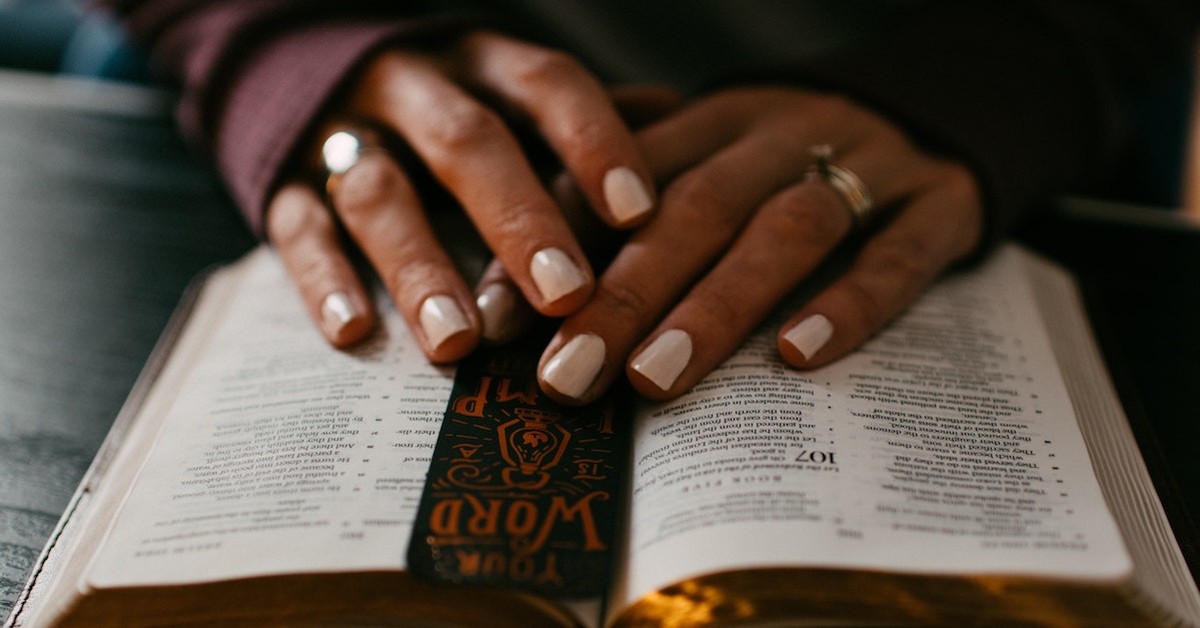
Photo credit: ©GettyImages/FG Trade
1. You’re not settling if you share the same faith.

1. You’re not settling if you share the same faith.

When it comes to who to marry, the most important verse in the Bible on the topic is found in 2 Corinthians 6:14, “Do not be yoked together with unbelievers. For what do righteousness and wickedness have in common? Or what fellowship can light have with darkness?”

If you’re marrying someone who has received Christ as their Savior, then they are not the wrong person because, in marrying them, you are in obedience with God. This alignment is of the utmost importance in who you marry, more than any other box to check off.

Marrying someone who shares your faith means you both believe and accept what the Bible says about marriage, meaning one man and one woman, which helps to guard your hearts from immorality and perversions by following God’s Word and standards for marriage. It matters to God who you marry, because by marrying someone who believes in Him, you are obeying His Word and trusting His will for your life, as Jesus warned in Mark 3:25, “If a house is divided against itself, that house cannot stand.”

Deuteronomy 7:3-6 explains more of God’s thoughts on being unequally yoked in marriage: “Do not intermarry with them. Do not give your daughters to their sons or take their daughters for your sons, because they will turn your sons away from following Me to serve other gods. Then the anger of the Lord will burn against you, and He will swiftly destroy you.”

The Apostle Paul agrees with and urges in 1 Corinthians 1:10, “I appeal to you, brothers and sisters, in the name of our Lord Jesus Christ, that all of you agree with one another in what you say and that there be no divisions among you, but that you be perfectly united in mind and thought.”

If you’re marrying another believer in Jesus Christ, then you’re not settling.

Photo credit: ©kellysikkema
2. You’re not settling if you are trusting God’s leadership.

2. You’re not settling if you are trusting God’s leadership.

When it comes to marriage, God’s plan is much more practical and beneficial to us than the hyped-up romantic, self-indulgent marriages taking place in our culture today.

God hasn’t called us to be someone’s end-all and to complete us, because that’s what He wants to be and do in our lives.

Through giving us someone to share this life with and create a family, God works through each of us to make us more like Him. Our marriage partner is not meant to replace our relationship with God in our lives, but to help transform us more into His likeness.

Paul wrote, “Husbands, love your wives, just as Christ loved the church and gave Himself up for her to make her holy, cleansing her by the washing with water through the word, and to present her to Himself as a radiant church, without stain or wrinkle or any other blemish, but holy and blameless.” (Ephesians 5:25-27)

Marriage on earth is a picture of what’s to come—the Church, Christ’s Bride, presented to and united as one with Jesus. And even though earthly marriages are imperfect, our heavenly marriage will be perfect.

Ephesians 5:31-32 explains further, “’For this reason a man will leave his father and mother and be united to his wife, and the two will become one flesh.’ This is a profound mystery—but I am talking about Christ and the church.”

When we are united with Christ, our imperfections will be made perfect in Him, as Hebrews 10:14 describes, “For by one sacrifice He has made perfect forever those who are being made holy.”

Although the marriage of the Church to Jesus may be difficult to understand for some, it’s why earthly marriages are only temporal on earth and don’t continue in heaven, as some may believe. Matthew 22:30 explains that, at the resurrection, people will be like angels, not married to each other.

If you’re marrying to fulfill God’s purpose in marriage, then you’re not settling.

Photo credit: ©GettyImages/AzmanJaka
3. You’re not settling if your family and friends are supportive.

3. You’re not settling if your family and friends are supportive.

Many of us may have known a person who was engaged to marry someone whom friends and family believed was not a good match for a number of reasons.

Most close friends and family want to see us marry someone who is a good match for us. They sometimes know us better than we know ourselves and can see where the person we’re serious about as a future spouse may not be God’s will for us.

Rather than ignoring their counsel, it’s wise for us to prayerfully consider and seek God's guidance when they have concerns. A good indicator that we’re not settling for marriage with the wrong person is when our friends and family are supportive and give their blessings to our union. Sometimes others, like acquaintances, co-workers, and casual friends, may see issues but don’t want to get involved and will refrain from speaking to us about what they’re seeing. However, close friends and family, those who know us best and love us the most, will often go out on a limb to voice their concerns.

It’s wise for us to listen, because God will often give our families and friends insight that is helpful to us. In Genesis 24:2-4, we read how Abraham was very concerned about who his son would marry, giving very specific directions to his servant: “He said to the senior servant in his household, the one in charge of all that he had, 'Put your hand under my thigh. I want you to swear by the Lord, the God of heaven and the God of earth, that you will not get a wife for my son from the daughters of the Canaanites, among whom I am living, but will go to my country and my own relatives and get a wife for my son Isaac.’”

If you have the support of family and friends, then you’re not settling.

Photo credit: ©GettyImages/Catherine Falls Commercial
4. You’re not settling if you are committed to being a helpmate to your spouse.

4. You’re not settling if you are committed to being a helpmate to your spouse.

Eve was not fashioned by God to take His place in Adam’s life, but to be a helpmate, as Genesis 2:18 explains, “The Lord God said, ‘It is not good for the man to be alone. I will make a helper suitable for him.”

Along with being a helpmate, God also designed Eve to be a delight and pleasure to Adam, as recorded in the joy he expressed at first meeting Eve, “The man said, “This is now bone of my bones and flesh of my flesh; she shall be called ‘woman,’ for she was taken out of man” (Genesis 2:23).

Sadly, culture has been at work to distort marriage into ungodly forms, leading people away from God rather than towards Him, trying to thwart His purpose and plan for this holy union. Groups and individuals have tried to lessen the sacredness of marriage, making it about a selfish pursuit to find the perfect-looking mate, looking to satisfy lustful and selfish physical desires. Others have made it a financial partnership, set on becoming a power couple to gain worldwide influence. Tragically, some believers have jumped on the bandwagon following these worldly, distorted unions.

If you’re marrying to be a helpmate, or to have a helpmate, then you’re not settling.

Photo Credit: ©Getty Images/ Morsa Images
5. You’re not settling if you are staying true to your personal convictions in marrying.

5. You’re not settling if you are staying true to your personal convictions in marrying.

If you believe you’re crossing a line of personal conviction in who you’re marrying, it may cause you distress and ongoing problems in your marriage.

Some people have it in their hearts to marry someone who hasn’t been married before, but, under the pressure of growing older (or for other reasons), may start compromising and going against their own conscience. Going against personal conviction in marriage often leads to heartache, overriding one’s beliefs, and beginning marriage with serious reservations and doubts. With these hesitations comes the risk of being unable to reconcile living with your decision.

Although you know family and friends who have veered from their personal convictions concerning a marriage partner, it doesn’t mean you’ll be able to accept abandoning your own conviction in the situation. As James 4:17 warns, “If anyone, then, knows the good they ought to do and doesn’t do it, it is sin for them.”

It’s also not loving to marry a person knowing you may have serious doubts or issues with something about them, such as their past, that they are unable to change. 

It’s wise to remember what Paul urges in Romans 12:2, “Do not conform to the pattern of this world, but be transformed by the renewing of your mind. Then you will be able to test and approve what God’s will is—His good, pleasing and perfect will.”

Be careful not to let others talk you into or out of something you’ve long held as a belief, keeping in mind what Proverbs 22:3 warns, “The prudent see danger and take refuge, but the simple keep going and pay the penalty.” If you stay true to your heartfelt convictions for marriage, then you’re not settling.

Related:

I've Fallen in Love - But How Do I Know if I Should Marry Them?

Marriage Readiness: 27 Signs You're Prepared for the Big Leap!

If God Doesn't Make Soulmates, How Do I Know They're "The One"?

Photo credit: ©GettyImages/Tom Werner
 

Salem News Channel Today

Sponsored Links


September 26 - Phoenix, AZ
Scottsdale Center for the Performing Arts


November 2 - Detroit, MI
Zion Christian Church in Troy


October 6 - Los Angeles, CA
Pasadena Convention Center


November 5 - San Antonio, TX
Norris Centers – The Grand Red Oak Ballroom


October 8 - Sacramento, CA
William Jessup University


November 7 - Tampa, FL
The Palladium at St. Pete College


October 22 - Minneapolis, MN
Crowne Plaza AiRE


November 15 - San Francisco, CA
Fremont Marriott Silicon Valley


October 23 - Philadelphia, PA
Green Valley Country Club


November 16 - Denver, CO
CU South Denver - Formerly Wildlife Experience


November 2 - Chicago, IL
Chicago Westin Northwest in Itasca


November 21 - Cleveland, OH
Holiday Inn Rockside in Independence


Salem Radio Network Speakers

Larry Elder is an American lawyer, writer, and radio and television personality who calls himself the "Sage of South Central" a district of Los Angeles, Larry says his philosophy is to entertain, inform, provoke and to hopefully uplift. His calling card is "we have a country to save" and to him this means returning to the bedrock Constitutional principles of limited government and maximum personal responsibility. Elder's iconoclastic wit and intellectual agility makes him a particularly attractive voice in a nation that seems weary of traditional racial dialogue.” – Los Angeles Times.

Mike Gallagher Mike Gallagher began his broadcasting career in 1978 in Dayton, Ohio. Today, he is one of the most listened-to talk radio show hosts in America, recently having been ranked in the Talkers Magazine “Heavy Hundred” list – the 100 most important talk radio hosts in America. Prior to being launched into national syndication in 1998, Mike hosted the morning show on WABC-AM in New York City. Today, Talkers Magazine reports that his show is heard by over 3.75 million weekly listeners. Besides his radio work, Mike is seen on Fox News Channel as an on-air contributor, frequently appearing on the cable news giant.

Hugh Hewitt is one of the nation’s leading bloggers and a genuine media revolutionary. He brings that expertise, his wit and what The New Yorker magazine calls his “amiable but relentless manner” to his nationally syndicated show each day.

When Dr. Sebastian Gorka was growing up, he listened to talk radio under his pillow with a transistor radio, dreaming that one day he would be behind the microphone. Beginning New Year’s Day 2019, he got his wish. Gorka now hosts America First every weekday afternoon 3 to 6pm ET. Gorka’s unique story works well on the radio. He is national security analyst for the Fox News Channel and author of two books: "Why We Fight" and "Defeating Jihad." His latest book releasing this fall is “War For America’s Soul.” He is uniquely qualified to fight the culture war and stand up for what is great about America, his adopted home country.

Broadcasting from his home station of KRLA in Los Angeles, the Dennis Prager Show is heard across the country. Everything in life – from politics to religion to relationships – is grist for Dennis’ mill. If it’s interesting, if it affects your life, then Dennis will be talking about it – with passion, humor, insight and wisdom.

Sean Hannity is a conservative radio and television host, and one of the original primetime hosts on the Fox News Channel, where he has appeared since 1996. Sean Hannity began his radio career at a college station in California, before moving on to markets in the Southeast and New York. Today, he’s one of the most listened to on-air voices. Hannity’s radio program went into national syndication on September 10, 2001, and airs on more than 500 stations. Talkers Magazine estimates Hannity’s weekly radio audience at 13.5 million. In 1996 he was hired as one of the original hosts on Fox News Channel. As host of several popular Fox programs, Hannity has become the highest-paid news anchor on television.

Michelle Malkin is a mother, wife, blogger, conservative syndicated columnist, longtime cable TV news commentator, and best-selling author of six books. She started her newspaper journalism career at the Los Angeles Daily News in 1992, moved to the Seattle Times in 1995, and has been penning nationally syndicated newspaper columns for Creators Syndicate since 1999. She is founder of conservative Internet start-ups Hot Air and Twitchy.com. Malkin has received numerous awards for her investigative journalism, including the Council on Governmental Ethics Laws (COGEL) national award for outstanding service for the cause of governmental ethics and leadership (1998), the Reed Irvine Accuracy in Media Award for Investigative Journalism (2006), the Heritage Foundation and Franklin Center for Government & Public Integrity's Breitbart Award for Excellence in Journalism (2013), the Center for Immigration Studies' Eugene Katz Award for Excellence in the Coverage of Immigration Award (2016), and the Manhattan Film Festival's Film Heals Award (2018). Married for 26 years and the mother of two teenage children, she lives with her family in Colorado. Follow her at michellemalkin.com. (Photo reprinted with kind permission from Peter Duke Photography.)

Sponsored by:

5 Ways to Know You're Not Settling for Marriage with the Wrong Person

Carbonatix Pre-Player Loader

Audio By Carbonatix

Today, with all the dating apps and sites available, individuals may feel like they’re settling when it comes to their choice of who to marry, thinking maybe they haven’t scoured the earth deep or far enough looking for “the one,” for the right person who checks off all the boxes on their list.

But settling doesn’t mean marrying someone who doesn’t meet all the qualities we’re hoping to find in a future spouse. There is much more at stake in who we marry than a few missing qualities. Settling involves marrying outside the will of God and forfeiting the blessings He bestows on a marriage that honors and submits to His ways.

Yet, in the world we live in today, how can we know and be assured that we’re not settling with the wrong person, entering into a lifelong covenant of marriage with another person that we aren’t sure is the right one?

The following are five ways to know, based on biblical truth, that you’re not settling for marriage with the wrong person.

Photo credit: ©GettyImages/FG Trade
1. You’re not settling if you share the same faith.

1. You’re not settling if you share the same faith.

When it comes to who to marry, the most important verse in the Bible on the topic is found in 2 Corinthians 6:14, “Do not be yoked together with unbelievers. For what do righteousness and wickedness have in common? Or what fellowship can light have with darkness?”

If you’re marrying someone who has received Christ as their Savior, then they are not the wrong person because, in marrying them, you are in obedience with God. This alignment is of the utmost importance in who you marry, more than any other box to check off.

Marrying someone who shares your faith means you both believe and accept what the Bible says about marriage, meaning one man and one woman, which helps to guard your hearts from immorality and perversions by following God’s Word and standards for marriage. It matters to God who you marry, because by marrying someone who believes in Him, you are obeying His Word and trusting His will for your life, as Jesus warned in Mark 3:25, “If a house is divided against itself, that house cannot stand.”

Deuteronomy 7:3-6 explains more of God’s thoughts on being unequally yoked in marriage: “Do not intermarry with them. Do not give your daughters to their sons or take their daughters for your sons, because they will turn your sons away from following Me to serve other gods. Then the anger of the Lord will burn against you, and He will swiftly destroy you.”

The Apostle Paul agrees with and urges in 1 Corinthians 1:10, “I appeal to you, brothers and sisters, in the name of our Lord Jesus Christ, that all of you agree with one another in what you say and that there be no divisions among you, but that you be perfectly united in mind and thought.”

If you’re marrying another believer in Jesus Christ, then you’re not settling.

Photo credit: ©kellysikkema
2. You’re not settling if you are trusting God’s leadership.

2. You’re not settling if you are trusting God’s leadership.

When it comes to marriage, God’s plan is much more practical and beneficial to us than the hyped-up romantic, self-indulgent marriages taking place in our culture today.

God hasn’t called us to be someone’s end-all and to complete us, because that’s what He wants to be and do in our lives.

Through giving us someone to share this life with and create a family, God works through each of us to make us more like Him. Our marriage partner is not meant to replace our relationship with God in our lives, but to help transform us more into His likeness.

Paul wrote, “Husbands, love your wives, just as Christ loved the church and gave Himself up for her to make her holy, cleansing her by the washing with water through the word, and to present her to Himself as a radiant church, without stain or wrinkle or any other blemish, but holy and blameless.” (Ephesians 5:25-27)

Marriage on earth is a picture of what’s to come—the Church, Christ’s Bride, presented to and united as one with Jesus. And even though earthly marriages are imperfect, our heavenly marriage will be perfect.

Ephesians 5:31-32 explains further, “’For this reason a man will leave his father and mother and be united to his wife, and the two will become one flesh.’ This is a profound mystery—but I am talking about Christ and the church.”

When we are united with Christ, our imperfections will be made perfect in Him, as Hebrews 10:14 describes, “For by one sacrifice He has made perfect forever those who are being made holy.”

Although the marriage of the Church to Jesus may be difficult to understand for some, it’s why earthly marriages are only temporal on earth and don’t continue in heaven, as some may believe. Matthew 22:30 explains that, at the resurrection, people will be like angels, not married to each other.

If you’re marrying to fulfill God’s purpose in marriage, then you’re not settling.

Photo credit: ©GettyImages/AzmanJaka
3. You’re not settling if your family and friends are supportive.

3. You’re not settling if your family and friends are supportive.

Many of us may have known a person who was engaged to marry someone whom friends and family believed was not a good match for a number of reasons.

Most close friends and family want to see us marry someone who is a good match for us. They sometimes know us better than we know ourselves and can see where the person we’re serious about as a future spouse may not be God’s will for us.

Rather than ignoring their counsel, it’s wise for us to prayerfully consider and seek God's guidance when they have concerns. A good indicator that we’re not settling for marriage with the wrong person is when our friends and family are supportive and give their blessings to our union. Sometimes others, like acquaintances, co-workers, and casual friends, may see issues but don’t want to get involved and will refrain from speaking to us about what they’re seeing. However, close friends and family, those who know us best and love us the most, will often go out on a limb to voice their concerns.

It’s wise for us to listen, because God will often give our families and friends insight that is helpful to us. In Genesis 24:2-4, we read how Abraham was very concerned about who his son would marry, giving very specific directions to his servant: “He said to the senior servant in his household, the one in charge of all that he had, 'Put your hand under my thigh. I want you to swear by the Lord, the God of heaven and the God of earth, that you will not get a wife for my son from the daughters of the Canaanites, among whom I am living, but will go to my country and my own relatives and get a wife for my son Isaac.’”

If you have the support of family and friends, then you’re not settling.

Photo credit: ©GettyImages/Catherine Falls Commercial
4. You’re not settling if you are committed to being a helpmate to your spouse.

4. You’re not settling if you are committed to being a helpmate to your spouse.

Eve was not fashioned by God to take His place in Adam’s life, but to be a helpmate, as Genesis 2:18 explains, “The Lord God said, ‘It is not good for the man to be alone. I will make a helper suitable for him.”

Along with being a helpmate, God also designed Eve to be a delight and pleasure to Adam, as recorded in the joy he expressed at first meeting Eve, “The man said, “This is now bone of my bones and flesh of my flesh; she shall be called ‘woman,’ for she was taken out of man” (Genesis 2:23).

Sadly, culture has been at work to distort marriage into ungodly forms, leading people away from God rather than towards Him, trying to thwart His purpose and plan for this holy union. Groups and individuals have tried to lessen the sacredness of marriage, making it about a selfish pursuit to find the perfect-looking mate, looking to satisfy lustful and selfish physical desires. Others have made it a financial partnership, set on becoming a power couple to gain worldwide influence. Tragically, some believers have jumped on the bandwagon following these worldly, distorted unions.

If you’re marrying to be a helpmate, or to have a helpmate, then you’re not settling.

Photo Credit: ©Getty Images/ Morsa Images
5. You’re not settling if you are staying true to your personal convictions in marrying.

5. You’re not settling if you are staying true to your personal convictions in marrying.

If you believe you’re crossing a line of personal conviction in who you’re marrying, it may cause you distress and ongoing problems in your marriage.

Some people have it in their hearts to marry someone who hasn’t been married before, but, under the pressure of growing older (or for other reasons), may start compromising and going against their own conscience. Going against personal conviction in marriage often leads to heartache, overriding one’s beliefs, and beginning marriage with serious reservations and doubts. With these hesitations comes the risk of being unable to reconcile living with your decision.

Although you know family and friends who have veered from their personal convictions concerning a marriage partner, it doesn’t mean you’ll be able to accept abandoning your own conviction in the situation. As James 4:17 warns, “If anyone, then, knows the good they ought to do and doesn’t do it, it is sin for them.”

It’s also not loving to marry a person knowing you may have serious doubts or issues with something about them, such as their past, that they are unable to change. 

It’s wise to remember what Paul urges in Romans 12:2, “Do not conform to the pattern of this world, but be transformed by the renewing of your mind. Then you will be able to test and approve what God’s will is—His good, pleasing and perfect will.”

Be careful not to let others talk you into or out of something you’ve long held as a belief, keeping in mind what Proverbs 22:3 warns, “The prudent see danger and take refuge, but the simple keep going and pay the penalty.” If you stay true to your heartfelt convictions for marriage, then you’re not settling.

Related:

I've Fallen in Love - But How Do I Know if I Should Marry Them?

Marriage Readiness: 27 Signs You're Prepared for the Big Leap!

If God Doesn't Make Soulmates, How Do I Know They're "The One"?

Photo credit: ©GettyImages/Tom Werner
 

Salem News Channel Today

Sponsored Links

On Air & Up Next

See the Full Program Guide