3 Tips for Talking to Your Children about Pornography

Carbonatix Pre-Player Loader

Audio By Carbonatix

As Christian parents, most of us have spent years raising and rearing our children, intentionally working on meeting not only their physical needs but also their mental, emotional, and spiritual needs. Before our babies were even born, we started safeguarding our homes and preparing a space that they could thrive in. As our little ones began to crawl, we removed choking hazards and items that they could pull down on themselves. We put safety locks on cabinets and outlets and hid away anything that could be potentially dangerous.

As our children develop and grow, so does our plan to keep them safe. In each conversation about proper knife skills, making toast without burning down the house, or why we don't dart into the street after a ball, we teach our children how to connect with and approach this world. In many of these circumstances, the conversations that we're having with our children are quite literally keeping them alive. The conversation around pornography needs to be no different.

Recently, I was encouraged by a friend to begin having conversations with my 10-year-old son around this very topic. Every cell in my body was squeamish as I approached what felt like the most uncomfortable and awkward discussion I never wanted to have. I protested against my friend's encouragement, "but we have passcodes and parental controls on every device; there's no way that he's being exposed to that."

It was only then that I learned just how easy it is to access pornography these days. My friend helped me understand that while we may be providing safety in our home, the moment our children step outside of our homes, the possibility of exposure multiplies, and so, whether we like it or not, as parents, we need to get brave, do our homework, and start having these conversations with our children.

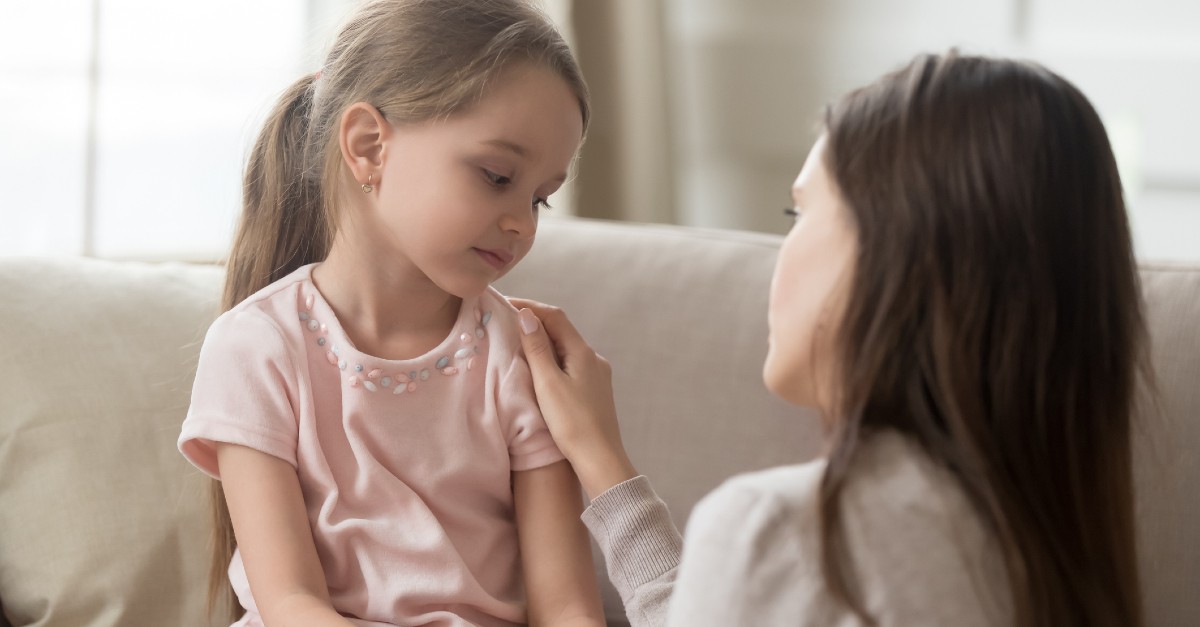
Photo credit: Getty Images/Kirill Greshnov
1. These Conversations Need to Take Place Early and Often

1. These Conversations Need to Take Place Early and Often

I cringed as I sat with my son and started what I believed would be an awkward conversation. Initially, I assumed that the best way to tackle a discussion centered around pornography would be to handle it head-on, however after connecting with a long-time friend, Daniel Garcia, who serves as the Director of Messaging at Exodus Cry—an organization that seeks to bring awareness around the issue of pornography and sex trafficking—I learned that perhaps one of the ways to tackle this topic can be by discussing healthy media habits and what potentially harmful messaging can be found in our digital world.

Garcia's recommendation was to start the conversation early and to have it with our little ones often. He explained that this is not a one-and-done conversation but rather a lifelong open dialogue that evolves as our children develop. If we begin by first understanding the genuine dangers behind pornography and discussing that with our children in age-appropriate ways, we then have the opportunity to demystify porn before it becomes some sort of forbidden temptation.

When it comes to the accessibility of pornography, he explained that parents who are not porn consumers often don't realize just how easy it is to access it. Unfortunately, many devices—including school-issued computers—often do not come with safety measures activated. What's worse is that many porn sites are free to consumers without the need for age verification.

As parents, we need to be diligent when it comes to our own homes and the media consumption within, but even more, we need to be teaching our children what's at stake when it comes to dangerous and unhealthy digital images. Garcia pointed me in the direction of Good Pictures Bad Pictures by author Kristen A. Jenson to get the conversation started.

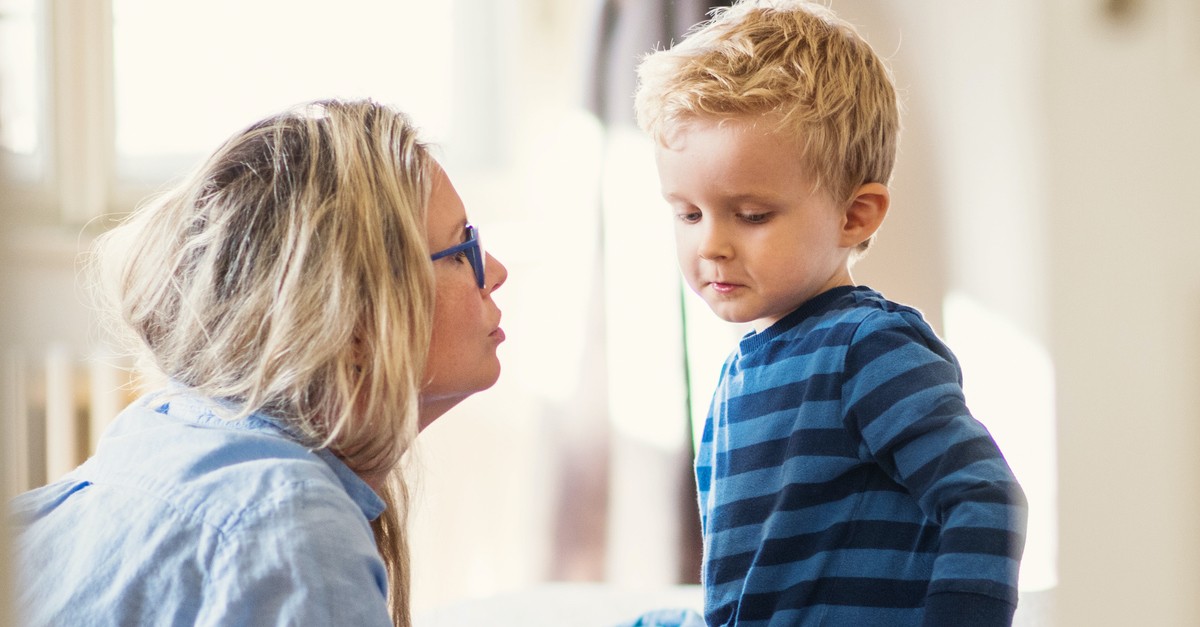
Photo credit: ©GettyImages/fizkes
2. We Need to Remove Shame from the Equation

2. We Need to Remove Shame from the Equation

Understanding that what starts with curiosity often may lead to addiction can help parents tackle the issue of pornography in a shame-free manner. Research has found that 60% of children's exposure to pornography is often unintentional. A simple google search can land a child right in the thick of a porn site that specifically targets young minds.

Shame might be one of the largest reasons kids don't want to talk about porn or sexuality with their parents, leading children to seek answers through other individuals. This causes children to talk to friends or find a "safe place" elsewhere. Perhaps sex education should begin in the home, and conversations around porn should be a part of that education.

It's not a matter of "if" but "when" a child will be exposed to pornography: Kids will be exposed to language around sexuality—even softcore pornography—through basic media and advertising. I've personally witnessed my own children being exposed to softcore images that promote sexuality and objectify the female body just by taking a drive on the freeway.

As parents, we need to understand that pornography can rewire a child's brain. Porn conditions the mind and fuses sex and aggression or violence together. What porn has done is taken something beautiful and natural inside of us and manipulated it. Being aware of how sexuality has been influenced by porn and how that can create a feeling of deep shame within children and young people can be paramount. Breaking the stigma and allowing our children to feel safe to have those seemingly uncomfortable conversations is one step towards prevention.

Photo credit: Getty Images/Halfpoint

3. Help Children Understand the Cost

3. Help Children Understand the Cost

When it comes to the accessibility of pornography, we have to assume the worst. As adults, we need to have a fair understanding of the stakes and how to teach this to our children in age-appropriate ways. According to a 2019 UK study commissioned by the British Board of Film Classification (BBFC), 62% of 11-13-year-old children who had seen pornography reported that their first exposure to it was unintentional.

While these stats may seem shocking, the reality is that as our children age and have more access to digital content, these numbers increase. Additionally, a fair amount of pornography that is easily accessed for free borders on the line of criminal. A large majority of the content hosted on sites like Porn Hub was found to be criminal and non-consensual; after a 2020 New York Times article by journalist Nicholas Kristof titled "The Children of Pornhub," Pornhub dumped massive amounts of digital content that fell into this category.

Helping our children understand that a digital image is forever can thwart them from becoming victims of illegal pornography themselves. Even if you can trust someone for a season, you can't really trust someone with nudes or violating images. We live in a predatory society. We need to teach kids to be skeptical, to protect themselves from being victims of pornography and from viewing it altogether.

"The good news is that even if we can't get porn websites to have the proper age verification, I think that knowing that we have so much power to educate our kids and that as parents, we can have so many great conversations around this issue," Garcia encouraged, "we can win those battles by being attentive and being attuned to the world that they are already immersed in."

While this might feel like an uphill battle for most parents, creating a safe space for conversation, demystifying the topic, and leading in love rather than shame can help prepare our children for the world they are living in. Our job, as parents, is to raise adults who have a firm grip on what is healthy for them. We teach our children how to eat healthily, treat others well, and what healthy love looks like. Giving our children the tools to protect themselves from the onslaught of harmful digital content is just as loving as feeding them healthy food, tucking them in at night, and praying over them. While the conversation may still feel uncomfortable and awkward, for you—and possibly for your child as well—it is entirely worthwhile.

If you'd like additional resources before engaging in this conversation, please take a look at the links below:

Good Pictures Bad Pictures by Kristen A. Jenson

Protect Children, Not Porn

Raised on Porn Documentary

The Children of Pornhub by Nicholas Kristof

Photo credit: ©GettyImages/imtmphoto

 

Salem News Channel Today

Sponsored Links


September 26 - Phoenix, AZ
Scottsdale Center for the Performing Arts


November 2 - Detroit, MI
Zion Christian Church in Troy


October 6 - Los Angeles, CA
Pasadena Convention Center


November 5 - San Antonio, TX
Norris Centers – The Grand Red Oak Ballroom


October 8 - Sacramento, CA
William Jessup University


November 7 - Tampa, FL
The Palladium at St. Pete College


October 22 - Minneapolis, MN
Crowne Plaza AiRE


November 15 - San Francisco, CA
Fremont Marriott Silicon Valley


October 23 - Philadelphia, PA
Green Valley Country Club


November 16 - Denver, CO
CU South Denver - Formerly Wildlife Experience


November 2 - Chicago, IL
Chicago Westin Northwest in Itasca


November 21 - Cleveland, OH
Holiday Inn Rockside in Independence


Salem Radio Network Speakers

Larry Elder is an American lawyer, writer, and radio and television personality who calls himself the "Sage of South Central" a district of Los Angeles, Larry says his philosophy is to entertain, inform, provoke and to hopefully uplift. His calling card is "we have a country to save" and to him this means returning to the bedrock Constitutional principles of limited government and maximum personal responsibility. Elder's iconoclastic wit and intellectual agility makes him a particularly attractive voice in a nation that seems weary of traditional racial dialogue.” – Los Angeles Times.

Mike Gallagher Mike Gallagher began his broadcasting career in 1978 in Dayton, Ohio. Today, he is one of the most listened-to talk radio show hosts in America, recently having been ranked in the Talkers Magazine “Heavy Hundred” list – the 100 most important talk radio hosts in America. Prior to being launched into national syndication in 1998, Mike hosted the morning show on WABC-AM in New York City. Today, Talkers Magazine reports that his show is heard by over 3.75 million weekly listeners. Besides his radio work, Mike is seen on Fox News Channel as an on-air contributor, frequently appearing on the cable news giant.

Hugh Hewitt is one of the nation’s leading bloggers and a genuine media revolutionary. He brings that expertise, his wit and what The New Yorker magazine calls his “amiable but relentless manner” to his nationally syndicated show each day.

When Dr. Sebastian Gorka was growing up, he listened to talk radio under his pillow with a transistor radio, dreaming that one day he would be behind the microphone. Beginning New Year’s Day 2019, he got his wish. Gorka now hosts America First every weekday afternoon 3 to 6pm ET. Gorka’s unique story works well on the radio. He is national security analyst for the Fox News Channel and author of two books: "Why We Fight" and "Defeating Jihad." His latest book releasing this fall is “War For America’s Soul.” He is uniquely qualified to fight the culture war and stand up for what is great about America, his adopted home country.

Broadcasting from his home station of KRLA in Los Angeles, the Dennis Prager Show is heard across the country. Everything in life – from politics to religion to relationships – is grist for Dennis’ mill. If it’s interesting, if it affects your life, then Dennis will be talking about it – with passion, humor, insight and wisdom.

Sean Hannity is a conservative radio and television host, and one of the original primetime hosts on the Fox News Channel, where he has appeared since 1996. Sean Hannity began his radio career at a college station in California, before moving on to markets in the Southeast and New York. Today, he’s one of the most listened to on-air voices. Hannity’s radio program went into national syndication on September 10, 2001, and airs on more than 500 stations. Talkers Magazine estimates Hannity’s weekly radio audience at 13.5 million. In 1996 he was hired as one of the original hosts on Fox News Channel. As host of several popular Fox programs, Hannity has become the highest-paid news anchor on television.

Michelle Malkin is a mother, wife, blogger, conservative syndicated columnist, longtime cable TV news commentator, and best-selling author of six books. She started her newspaper journalism career at the Los Angeles Daily News in 1992, moved to the Seattle Times in 1995, and has been penning nationally syndicated newspaper columns for Creators Syndicate since 1999. She is founder of conservative Internet start-ups Hot Air and Twitchy.com. Malkin has received numerous awards for her investigative journalism, including the Council on Governmental Ethics Laws (COGEL) national award for outstanding service for the cause of governmental ethics and leadership (1998), the Reed Irvine Accuracy in Media Award for Investigative Journalism (2006), the Heritage Foundation and Franklin Center for Government & Public Integrity's Breitbart Award for Excellence in Journalism (2013), the Center for Immigration Studies' Eugene Katz Award for Excellence in the Coverage of Immigration Award (2016), and the Manhattan Film Festival's Film Heals Award (2018). Married for 26 years and the mother of two teenage children, she lives with her family in Colorado. Follow her at michellemalkin.com. (Photo reprinted with kind permission from Peter Duke Photography.)

Sponsored by:

3 Tips for Talking to Your Children about Pornography

Carbonatix Pre-Player Loader

Audio By Carbonatix

As Christian parents, most of us have spent years raising and rearing our children, intentionally working on meeting not only their physical needs but also their mental, emotional, and spiritual needs. Before our babies were even born, we started safeguarding our homes and preparing a space that they could thrive in. As our little ones began to crawl, we removed choking hazards and items that they could pull down on themselves. We put safety locks on cabinets and outlets and hid away anything that could be potentially dangerous.

As our children develop and grow, so does our plan to keep them safe. In each conversation about proper knife skills, making toast without burning down the house, or why we don't dart into the street after a ball, we teach our children how to connect with and approach this world. In many of these circumstances, the conversations that we're having with our children are quite literally keeping them alive. The conversation around pornography needs to be no different.

Recently, I was encouraged by a friend to begin having conversations with my 10-year-old son around this very topic. Every cell in my body was squeamish as I approached what felt like the most uncomfortable and awkward discussion I never wanted to have. I protested against my friend's encouragement, "but we have passcodes and parental controls on every device; there's no way that he's being exposed to that."

It was only then that I learned just how easy it is to access pornography these days. My friend helped me understand that while we may be providing safety in our home, the moment our children step outside of our homes, the possibility of exposure multiplies, and so, whether we like it or not, as parents, we need to get brave, do our homework, and start having these conversations with our children.

Photo credit: Getty Images/Kirill Greshnov

1. These Conversations Need to Take Place Early and Often

1. These Conversations Need to Take Place Early and Often

I cringed as I sat with my son and started what I believed would be an awkward conversation. Initially, I assumed that the best way to tackle a discussion centered around pornography would be to handle it head-on, however after connecting with a long-time friend, Daniel Garcia, who serves as the Director of Messaging at Exodus Cry—an organization that seeks to bring awareness around the issue of pornography and sex trafficking—I learned that perhaps one of the ways to tackle this topic can be by discussing healthy media habits and what potentially harmful messaging can be found in our digital world.

Garcia's recommendation was to start the conversation early and to have it with our little ones often. He explained that this is not a one-and-done conversation but rather a lifelong open dialogue that evolves as our children develop. If we begin by first understanding the genuine dangers behind pornography and discussing that with our children in age-appropriate ways, we then have the opportunity to demystify porn before it becomes some sort of forbidden temptation.

When it comes to the accessibility of pornography, he explained that parents who are not porn consumers often don't realize just how easy it is to access it. Unfortunately, many devices—including school-issued computers—often do not come with safety measures activated. What's worse is that many porn sites are free to consumers without the need for age verification.

As parents, we need to be diligent when it comes to our own homes and the media consumption within, but even more, we need to be teaching our children what's at stake when it comes to dangerous and unhealthy digital images. Garcia pointed me in the direction of Good Pictures Bad Pictures by author Kristen A. Jenson to get the conversation started.

Photo credit: ©GettyImages/fizkes

2. We Need to Remove Shame from the Equation

2. We Need to Remove Shame from the Equation

Understanding that what starts with curiosity often may lead to addiction can help parents tackle the issue of pornography in a shame-free manner. Research has found that 60% of children's exposure to pornography is often unintentional. A simple google search can land a child right in the thick of a porn site that specifically targets young minds.

Shame might be one of the largest reasons kids don't want to talk about porn or sexuality with their parents, leading children to seek answers through other individuals. This causes children to talk to friends or find a "safe place" elsewhere. Perhaps sex education should begin in the home, and conversations around porn should be a part of that education.

It's not a matter of "if" but "when" a child will be exposed to pornography: Kids will be exposed to language around sexuality—even softcore pornography—through basic media and advertising. I've personally witnessed my own children being exposed to softcore images that promote sexuality and objectify the female body just by taking a drive on the freeway.

As parents, we need to understand that pornography can rewire a child's brain. Porn conditions the mind and fuses sex and aggression or violence together. What porn has done is taken something beautiful and natural inside of us and manipulated it. Being aware of how sexuality has been influenced by porn and how that can create a feeling of deep shame within children and young people can be paramount. Breaking the stigma and allowing our children to feel safe to have those seemingly uncomfortable conversations is one step towards prevention.

Photo credit: Getty Images/Halfpoint

3. Help Children Understand the Cost

3. Help Children Understand the Cost

When it comes to the accessibility of pornography, we have to assume the worst. As adults, we need to have a fair understanding of the stakes and how to teach this to our children in age-appropriate ways. According to a 2019 UK study commissioned by the British Board of Film Classification (BBFC), 62% of 11-13-year-old children who had seen pornography reported that their first exposure to it was unintentional.

While these stats may seem shocking, the reality is that as our children age and have more access to digital content, these numbers increase. Additionally, a fair amount of pornography that is easily accessed for free borders on the line of criminal. A large majority of the content hosted on sites like Porn Hub was found to be criminal and non-consensual; after a 2020 New York Times article by journalist Nicholas Kristof titled "The Children of Pornhub," Pornhub dumped massive amounts of digital content that fell into this category.

Helping our children understand that a digital image is forever can thwart them from becoming victims of illegal pornography themselves. Even if you can trust someone for a season, you can't really trust someone with nudes or violating images. We live in a predatory society. We need to teach kids to be skeptical, to protect themselves from being victims of pornography and from viewing it altogether.

"The good news is that even if we can't get porn websites to have the proper age verification, I think that knowing that we have so much power to educate our kids and that as parents, we can have so many great conversations around this issue," Garcia encouraged, "we can win those battles by being attentive and being attuned to the world that they are already immersed in."

While this might feel like an uphill battle for most parents, creating a safe space for conversation, demystifying the topic, and leading in love rather than shame can help prepare our children for the world they are living in. Our job, as parents, is to raise adults who have a firm grip on what is healthy for them. We teach our children how to eat healthily, treat others well, and what healthy love looks like. Giving our children the tools to protect themselves from the onslaught of harmful digital content is just as loving as feeding them healthy food, tucking them in at night, and praying over them. While the conversation may still feel uncomfortable and awkward, for you—and possibly for your child as well—it is entirely worthwhile.

If you'd like additional resources before engaging in this conversation, please take a look at the links below:

Good Pictures Bad Pictures by Kristen A. Jenson

Protect Children, Not Porn

Raised on Porn Documentary

The Children of Pornhub by Nicholas Kristof

Photo credit: ©GettyImages/imtmphoto

 

Salem News Channel Today

Sponsored Links

On Air & Up Next

See the Full Program Guide