8 Things Christian Zionism Is Not

Carbonatix Pre-Player Loader

Audio By Carbonatix

Brought to you by Christianity.com

Over time, efforts to delegitimize Israel have also attempted to discredit Christian Zionism. Opponents have claimed it is a new movement that is a politicalization of Scripture, heretical, and is only about Armageddon. The Jewish community has been told the movement has ulterior motives and cannot be trusted. It is important to unpack a few of these false claims and clarify, as Anglican priest and theologian Gerald McDermott says, what Christian Zionism is not.[1]

Photo Credit: ©Unsplash/Dmitry Ratushny
[1] Gerald R. McDermott, Ed. The New Christian Zionism: Fresh Perspectives on Israel and the Land (Downers Grove, IL: InterVarsity Press, 2016), 15–24.

1. Christian Zionism Is Not Dispensationalism

1. Christian Zionism Is Not Dispensationalism

Dispensationalism is a theology originating in the nineteenth century by Nelson Darby and made popular through the notes of the Scofield version of the King James Bible. It puts Israel and the church on two different tracks throughout history with an elaborate scheme of end-time events. While dispensationalists are pro-Israel, most Christian Zionists today do not adhere to this interpretation of Scripture. Christian Zionism does not hold to such a specific schedule of dispensations or end-time events and predates Dispensationalism by about 18 centuries![1]

[1] McDermott, The New Christian Zionism, 15.
Photo Credit: ©iStock/Getty Images Plus/fcscafeine

2. Christian Zionism Is Not a Push for an End-Time Scenario

2. Christian Zionism Is Not a Push for an End-Time Scenario

Christian Zionism is not based on prophecy and should not be seen as an attempt to accelerate an apocalyptic timeline. Christian Zionism is based on God’s promises—those spoken to Abraham, made part of the Mosaic covenant, then confirmed by the Hebrew prophets. While the prophecies will most certainly come to pass, predicting how they will occur involves a good degree of speculation. The firm foundation of Christian Zionism is the very promises of God found in His covenants with Israel[1] and His faithfulness to fulfill those promises—not speculation.

[1] Malcolm Hedding, “The Great Covenants of the Bible,” Biblical Zionism Study Series, International Christian Embassy Jerusalem, 48.
Photo Credit: ©GettyImages/ronniechua

3. Christian Zionism Is Not Heresy

3. Christian Zionism Is Not Heresy

The accusation that Christian Zionism is a heresy recently went viral when spoken by a well-known media personality who had only recently read the Bible for the first time and obviously did not know much Christian history as well. Some of the greatest and most respected Evangelicals in history were what might today be called Christian Zionists: Jonathan Edwards, John and Charles Wesley, Charles Haddon Spurgeon, Bishop Ryle of Liverpool, Professor Jacob Janeway of the Scottish National Church, and many others. The only difference between them and today’s Christian Zionists is that they looked forward in hope to a future event; today’s Christian Zionists—numbering in the hundreds of millions—have witnessed the return of the Jews to their homeland and actively support a current reality.

Photo Credit: ©iStock/Getty Images Plus/ALLVISIONN 

4. Christian Zionism Is Not Nationalism

4. Christian Zionism Is Not Nationalism

Some detractors claim that Zionism is just one of many nationalist movements of the late eighteenth and nineteenth centuries. Though the Zionist movement did benefit from this wave of nationalism, it long predated it.[1] Christian Zionism views the Zionist movement of the late eighteenth century as a necessary political effort to realize the return of the Jewish people to Zion in fulfillment of God’s plans and purposes. He is sovereign and used nationalism to fulfill the longing to return to Zion, evident in the daily prayers of the Jewish people throughout their 2,000 years of exile.

It is also important to note that not all Jews were in exile, and generations have lived in the land of Israel for 3,000 years. Zionism is deeply connected to ancient, divine land promises, a consistent Jewish presence in the land, and centuries of Jewish longing to return home for those living outside it.

[1] McDermott, The New Christian Zionism, 15.
Photo Credit: ©iStock/Getty Images Plus/Luke_Franzen
5. Christian Zionism Is Not Condoning Stolen Land

5. Christian Zionism Is Not Condoning Stolen Land

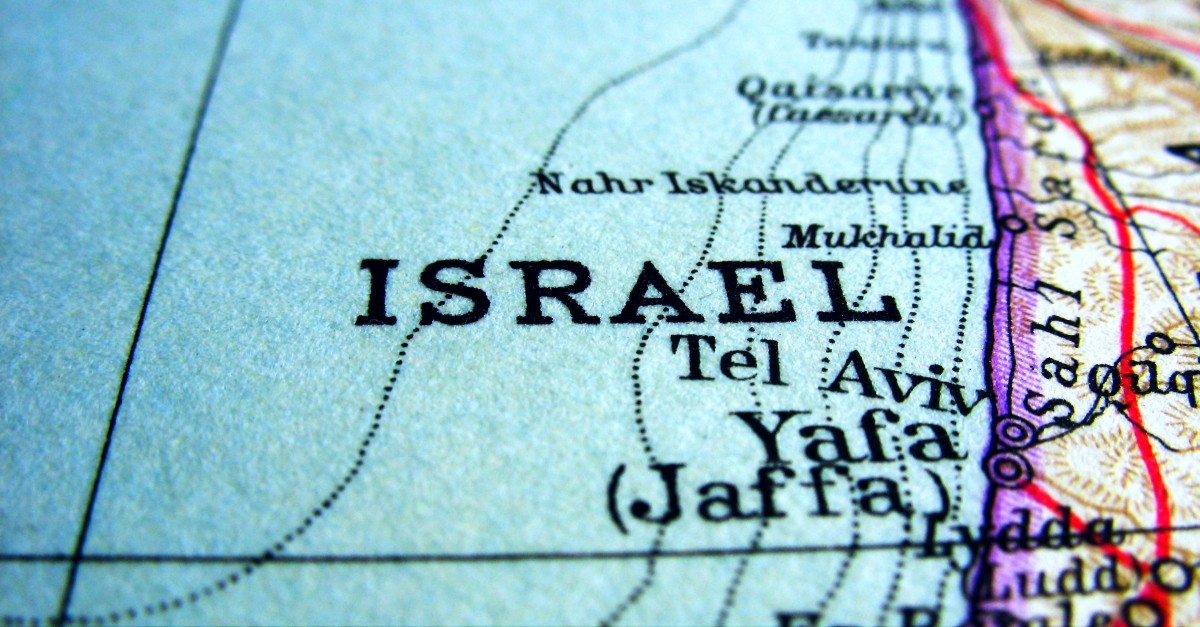
Israel’s detractors have tried to rewrite history in such a way that Israel is a colonialist aggressor founded on stolen land. If that were true, then Christians would be guilty of supporting theft of land.[1] It is important to establish that these claims are false. Though Jewish connection to the land spans some 4,000 years, modern Jewish immigration to then Palestine began with land purchases there in the late nineteenth and early twentieth centuries and the creation of agricultural communities. When Israel declared independence in 1948, there was a transfer of public lands previously held by the British Mandate.

The new Israeli government invited Arabs living inside its borders to remain as citizens. However, the surrounding Arab nations responded by declaring war on the infant nation, displacing hundreds of thousands of Arabs and Jews. But Arab states failed to absorb the Palestinian Arab refugees, while Israel absorbed the Jewish refugees expelled from Arab nations. Vacated Arab properties were absorbed by Israel, just as vacated Jewish properties were absorbed by the Arab countries in which they had resided. While some grievances do exist, the overwhelming historical, legal, and demographic evidence affirms that Israel’s establishment was lawful and legitimate.

[1] McDermott, The New Christian Zionism, 20-21.
Photo Credit: ©iStock/Getty Images Plus/ Pontuse

6. Christian Zionism Is Not Racist

6. Christian Zionism Is Not Racist

Another tactic Israel’s enemies use is to blame the Jewish State for being racist. Nothing could be further from the truth, but due to the effectiveness of this campaign, we must address it, or else Christian Zionism could be considered racist as well. When it comes to Israel’s treatment of the Arab people, one need only look to its Arab citizens to see that Israel is clearly not a racist state. The charge of apartheid (racial segregation) is based on the previous dismantling of the real apartheid regime in South Africa in the mid-90s; it is being used to isolate Israel internationally and bring about her de-mise through boycotts, divestments, and sanctions (BDS)

Photo Credit:©Unsplash/Malik Shibly 

7. Christian Zionism Is Not Anti-Arab

7. Christian Zionism Is Not Anti-Arab

Another accusation thrown at Christian Zionists is one of being anti-Arab, whereas Christians should love all people. A Christian approach to the Arab-Israeli conflict must be one not only grounded in love for all the people involved, but one that is biblically founded and discerns between what is historical fact and politically motivated mistruths. One will then understand that the greatest blessing for the Arab people is found in God’s covenant with the people of Israel. It is because of God’s love for the world that He brought into existence the nation of Israel through whom He would bring about His plan to redeem that world. His intention was not to bless the Jewish people to the exclusion of the rest of the world, but that through them, He would “bless all the families of the earth” (Genesis 12:3). Therefore, it is absolutely pro-Arab to be pro-Israel.

Photo Credit: ©Unsplash/Levi Meir Clancy

8. Christian Zionism Is Not Encouraging Injustice

8. Christian Zionism Is Not Encouraging Injustice

The issue of justice is critical. Israel is required to treat aliens in the land well and not to oppress them (Exodus 22:21). If Israel is guilty of oppression or injustice, then her Christian supporters would be guilty of encouraging sin. So let’s look at Israel’s treatment of aliens, starting with the 2 million Arabs living in Israel. They have citizenship, can vote (including women), have freedom of speech, have their own political parties, serve in the Knesset, serve on the Supreme Court, and can even be “Miss Israel.” Israel is the only country in the whole Middle East in which the Christian Arab population is growing. Why aren’t the Christian Arabs fleeing Israel like they are the Muslim world? Obviously, they have found more justice in Israel than in any Arab country. That seems like pretty convincing proof that Israel is not an unjust or repressive country.

The Palestinian people living in Judea and Samaria (also called the West Bank) under the Palestinian Authority and in Gaza under Hamas do have more difficult circumstances and do not have the freedom of movement necessary to develop businesses, find jobs, or even get to a hospital sometimes. But to blame Israel for the tight borders and checkpoints without ever mentioning why they are needed is disingenuous. Decades of terrorism, suicide bombers, car rammings, and war necessitate them.

The real culprits here are the corrupt Palestinian leaders who have not only filled their own bank accounts instead of bettering the people’s lives but have refused to sit down at the negotiating table and hammer out a better life for their people. This is because of their Islamic ideology—not Zionism.

Photo Credit: ©Getty Images/Amir Levy/Stringer

Why the Misconceptions about Christian Zionism Matter

Why the Misconceptions about Christian Zionism Matter

Many criticisms of Christian Zionism are based on misunderstandings, which, unfortunately, often give rise to misleading narratives that distort biblical truth and harm the global Jewish community. Christian Zionism is not a newer, heretical movement, nor is it motivated by political opportunism or hostility toward Arabs. Christian Zionism seeks justice and loves all people—recognizing that blessing Israel is part of God’s broader plan to bring redemption to the world.

For this reason, all Christians must separate fact from fiction and understand what Christian Zionism is not so they can accurately convey its true beliefs and intentions to others. 

Photo Credit: ©Unsplash/ Clay Banks

This article originally appeared on Christianity.com. For more faith-building resources, visit Christianity.com. Christianity.com
 

Salem News Channel Today

Sponsored Links


September 26 - Phoenix, AZ
Scottsdale Center for the Performing Arts


November 2 - Detroit, MI
Zion Christian Church in Troy


October 6 - Los Angeles, CA
Pasadena Convention Center


November 5 - San Antonio, TX
Norris Centers – The Grand Red Oak Ballroom


October 8 - Sacramento, CA
William Jessup University


November 7 - Tampa, FL
The Palladium at St. Pete College


October 22 - Minneapolis, MN
Crowne Plaza AiRE


November 15 - San Francisco, CA
Fremont Marriott Silicon Valley


October 23 - Philadelphia, PA
Green Valley Country Club


November 16 - Denver, CO
CU South Denver - Formerly Wildlife Experience


November 2 - Chicago, IL
Chicago Westin Northwest in Itasca


November 21 - Cleveland, OH
Holiday Inn Rockside in Independence


Salem Radio Network Speakers

Larry Elder is an American lawyer, writer, and radio and television personality who calls himself the "Sage of South Central" a district of Los Angeles, Larry says his philosophy is to entertain, inform, provoke and to hopefully uplift. His calling card is "we have a country to save" and to him this means returning to the bedrock Constitutional principles of limited government and maximum personal responsibility. Elder's iconoclastic wit and intellectual agility makes him a particularly attractive voice in a nation that seems weary of traditional racial dialogue.” – Los Angeles Times.

Mike Gallagher Mike Gallagher began his broadcasting career in 1978 in Dayton, Ohio. Today, he is one of the most listened-to talk radio show hosts in America, recently having been ranked in the Talkers Magazine “Heavy Hundred” list – the 100 most important talk radio hosts in America. Prior to being launched into national syndication in 1998, Mike hosted the morning show on WABC-AM in New York City. Today, Talkers Magazine reports that his show is heard by over 3.75 million weekly listeners. Besides his radio work, Mike is seen on Fox News Channel as an on-air contributor, frequently appearing on the cable news giant.

Hugh Hewitt is one of the nation’s leading bloggers and a genuine media revolutionary. He brings that expertise, his wit and what The New Yorker magazine calls his “amiable but relentless manner” to his nationally syndicated show each day.

When Dr. Sebastian Gorka was growing up, he listened to talk radio under his pillow with a transistor radio, dreaming that one day he would be behind the microphone. Beginning New Year’s Day 2019, he got his wish. Gorka now hosts America First every weekday afternoon 3 to 6pm ET. Gorka’s unique story works well on the radio. He is national security analyst for the Fox News Channel and author of two books: "Why We Fight" and "Defeating Jihad." His latest book releasing this fall is “War For America’s Soul.” He is uniquely qualified to fight the culture war and stand up for what is great about America, his adopted home country.

Broadcasting from his home station of KRLA in Los Angeles, the Dennis Prager Show is heard across the country. Everything in life – from politics to religion to relationships – is grist for Dennis’ mill. If it’s interesting, if it affects your life, then Dennis will be talking about it – with passion, humor, insight and wisdom.

Sean Hannity is a conservative radio and television host, and one of the original primetime hosts on the Fox News Channel, where he has appeared since 1996. Sean Hannity began his radio career at a college station in California, before moving on to markets in the Southeast and New York. Today, he’s one of the most listened to on-air voices. Hannity’s radio program went into national syndication on September 10, 2001, and airs on more than 500 stations. Talkers Magazine estimates Hannity’s weekly radio audience at 13.5 million. In 1996 he was hired as one of the original hosts on Fox News Channel. As host of several popular Fox programs, Hannity has become the highest-paid news anchor on television.

Michelle Malkin is a mother, wife, blogger, conservative syndicated columnist, longtime cable TV news commentator, and best-selling author of six books. She started her newspaper journalism career at the Los Angeles Daily News in 1992, moved to the Seattle Times in 1995, and has been penning nationally syndicated newspaper columns for Creators Syndicate since 1999. She is founder of conservative Internet start-ups Hot Air and Twitchy.com. Malkin has received numerous awards for her investigative journalism, including the Council on Governmental Ethics Laws (COGEL) national award for outstanding service for the cause of governmental ethics and leadership (1998), the Reed Irvine Accuracy in Media Award for Investigative Journalism (2006), the Heritage Foundation and Franklin Center for Government & Public Integrity's Breitbart Award for Excellence in Journalism (2013), the Center for Immigration Studies' Eugene Katz Award for Excellence in the Coverage of Immigration Award (2016), and the Manhattan Film Festival's Film Heals Award (2018). Married for 26 years and the mother of two teenage children, she lives with her family in Colorado. Follow her at michellemalkin.com. (Photo reprinted with kind permission from Peter Duke Photography.)

Sponsored by:

8 Things Christian Zionism Is Not

Carbonatix Pre-Player Loader

Audio By Carbonatix

Brought to you by Christianity.com

Over time, efforts to delegitimize Israel have also attempted to discredit Christian Zionism. Opponents have claimed it is a new movement that is a politicalization of Scripture, heretical, and is only about Armageddon. The Jewish community has been told the movement has ulterior motives and cannot be trusted. It is important to unpack a few of these false claims and clarify, as Anglican priest and theologian Gerald McDermott says, what Christian Zionism is not.[1]

Photo Credit: ©Unsplash/Dmitry Ratushny
[1] Gerald R. McDermott, Ed. The New Christian Zionism: Fresh Perspectives on Israel and the Land (Downers Grove, IL: InterVarsity Press, 2016), 15–24.

1. Christian Zionism Is Not Dispensationalism

1. Christian Zionism Is Not Dispensationalism

Dispensationalism is a theology originating in the nineteenth century by Nelson Darby and made popular through the notes of the Scofield version of the King James Bible. It puts Israel and the church on two different tracks throughout history with an elaborate scheme of end-time events. While dispensationalists are pro-Israel, most Christian Zionists today do not adhere to this interpretation of Scripture. Christian Zionism does not hold to such a specific schedule of dispensations or end-time events and predates Dispensationalism by about 18 centuries![1]

[1] McDermott, The New Christian Zionism, 15.
Photo Credit: ©iStock/Getty Images Plus/fcscafeine

2. Christian Zionism Is Not a Push for an End-Time Scenario

2. Christian Zionism Is Not a Push for an End-Time Scenario

Christian Zionism is not based on prophecy and should not be seen as an attempt to accelerate an apocalyptic timeline. Christian Zionism is based on God’s promises—those spoken to Abraham, made part of the Mosaic covenant, then confirmed by the Hebrew prophets. While the prophecies will most certainly come to pass, predicting how they will occur involves a good degree of speculation. The firm foundation of Christian Zionism is the very promises of God found in His covenants with Israel[1] and His faithfulness to fulfill those promises—not speculation.

[1] Malcolm Hedding, “The Great Covenants of the Bible,” Biblical Zionism Study Series, International Christian Embassy Jerusalem, 48.
Photo Credit: ©GettyImages/ronniechua

3. Christian Zionism Is Not Heresy

3. Christian Zionism Is Not Heresy

The accusation that Christian Zionism is a heresy recently went viral when spoken by a well-known media personality who had only recently read the Bible for the first time and obviously did not know much Christian history as well. Some of the greatest and most respected Evangelicals in history were what might today be called Christian Zionists: Jonathan Edwards, John and Charles Wesley, Charles Haddon Spurgeon, Bishop Ryle of Liverpool, Professor Jacob Janeway of the Scottish National Church, and many others. The only difference between them and today’s Christian Zionists is that they looked forward in hope to a future event; today’s Christian Zionists—numbering in the hundreds of millions—have witnessed the return of the Jews to their homeland and actively support a current reality.

Photo Credit: ©iStock/Getty Images Plus/ALLVISIONN 

4. Christian Zionism Is Not Nationalism

4. Christian Zionism Is Not Nationalism

Some detractors claim that Zionism is just one of many nationalist movements of the late eighteenth and nineteenth centuries. Though the Zionist movement did benefit from this wave of nationalism, it long predated it.[1] Christian Zionism views the Zionist movement of the late eighteenth century as a necessary political effort to realize the return of the Jewish people to Zion in fulfillment of God’s plans and purposes. He is sovereign and used nationalism to fulfill the longing to return to Zion, evident in the daily prayers of the Jewish people throughout their 2,000 years of exile.

It is also important to note that not all Jews were in exile, and generations have lived in the land of Israel for 3,000 years. Zionism is deeply connected to ancient, divine land promises, a consistent Jewish presence in the land, and centuries of Jewish longing to return home for those living outside it.

[1] McDermott, The New Christian Zionism, 15.
Photo Credit: ©iStock/Getty Images Plus/Luke_Franzen

5. Christian Zionism Is Not Condoning Stolen Land

5. Christian Zionism Is Not Condoning Stolen Land

Israel’s detractors have tried to rewrite history in such a way that Israel is a colonialist aggressor founded on stolen land. If that were true, then Christians would be guilty of supporting theft of land.[1] It is important to establish that these claims are false. Though Jewish connection to the land spans some 4,000 years, modern Jewish immigration to then Palestine began with land purchases there in the late nineteenth and early twentieth centuries and the creation of agricultural communities. When Israel declared independence in 1948, there was a transfer of public lands previously held by the British Mandate.

The new Israeli government invited Arabs living inside its borders to remain as citizens. However, the surrounding Arab nations responded by declaring war on the infant nation, displacing hundreds of thousands of Arabs and Jews. But Arab states failed to absorb the Palestinian Arab refugees, while Israel absorbed the Jewish refugees expelled from Arab nations. Vacated Arab properties were absorbed by Israel, just as vacated Jewish properties were absorbed by the Arab countries in which they had resided. While some grievances do exist, the overwhelming historical, legal, and demographic evidence affirms that Israel’s establishment was lawful and legitimate.

[1] McDermott, The New Christian Zionism, 20-21.
Photo Credit: ©iStock/Getty Images Plus/ Pontuse

6. Christian Zionism Is Not Racist

6. Christian Zionism Is Not Racist

Another tactic Israel’s enemies use is to blame the Jewish State for being racist. Nothing could be further from the truth, but due to the effectiveness of this campaign, we must address it, or else Christian Zionism could be considered racist as well. When it comes to Israel’s treatment of the Arab people, one need only look to its Arab citizens to see that Israel is clearly not a racist state. The charge of apartheid (racial segregation) is based on the previous dismantling of the real apartheid regime in South Africa in the mid-90s; it is being used to isolate Israel internationally and bring about her de-mise through boycotts, divestments, and sanctions (BDS)

Photo Credit:©Unsplash/Malik Shibly 

7. Christian Zionism Is Not Anti-Arab

7. Christian Zionism Is Not Anti-Arab

Another accusation thrown at Christian Zionists is one of being anti-Arab, whereas Christians should love all people. A Christian approach to the Arab-Israeli conflict must be one not only grounded in love for all the people involved, but one that is biblically founded and discerns between what is historical fact and politically motivated mistruths. One will then understand that the greatest blessing for the Arab people is found in God’s covenant with the people of Israel. It is because of God’s love for the world that He brought into existence the nation of Israel through whom He would bring about His plan to redeem that world. His intention was not to bless the Jewish people to the exclusion of the rest of the world, but that through them, He would “bless all the families of the earth” (Genesis 12:3). Therefore, it is absolutely pro-Arab to be pro-Israel.

Photo Credit: ©Unsplash/Levi Meir Clancy

8. Christian Zionism Is Not Encouraging Injustice

8. Christian Zionism Is Not Encouraging Injustice

The issue of justice is critical. Israel is required to treat aliens in the land well and not to oppress them (Exodus 22:21). If Israel is guilty of oppression or injustice, then her Christian supporters would be guilty of encouraging sin. So let’s look at Israel’s treatment of aliens, starting with the 2 million Arabs living in Israel. They have citizenship, can vote (including women), have freedom of speech, have their own political parties, serve in the Knesset, serve on the Supreme Court, and can even be “Miss Israel.” Israel is the only country in the whole Middle East in which the Christian Arab population is growing. Why aren’t the Christian Arabs fleeing Israel like they are the Muslim world? Obviously, they have found more justice in Israel than in any Arab country. That seems like pretty convincing proof that Israel is not an unjust or repressive country.

The Palestinian people living in Judea and Samaria (also called the West Bank) under the Palestinian Authority and in Gaza under Hamas do have more difficult circumstances and do not have the freedom of movement necessary to develop businesses, find jobs, or even get to a hospital sometimes. But to blame Israel for the tight borders and checkpoints without ever mentioning why they are needed is disingenuous. Decades of terrorism, suicide bombers, car rammings, and war necessitate them.

The real culprits here are the corrupt Palestinian leaders who have not only filled their own bank accounts instead of bettering the people’s lives but have refused to sit down at the negotiating table and hammer out a better life for their people. This is because of their Islamic ideology—not Zionism.

Photo Credit: ©Getty Images/Amir Levy/Stringer

Why the Misconceptions about Christian Zionism Matter

Why the Misconceptions about Christian Zionism Matter

Many criticisms of Christian Zionism are based on misunderstandings, which, unfortunately, often give rise to misleading narratives that distort biblical truth and harm the global Jewish community. Christian Zionism is not a newer, heretical movement, nor is it motivated by political opportunism or hostility toward Arabs. Christian Zionism seeks justice and loves all people—recognizing that blessing Israel is part of God’s broader plan to bring redemption to the world.

For this reason, all Christians must separate fact from fiction and understand what Christian Zionism is not so they can accurately convey its true beliefs and intentions to others. 

Photo Credit: ©Unsplash/ Clay Banks

This article originally appeared on Christianity.com. For more faith-building resources, visit Christianity.com. Christianity.com
 

Salem News Channel Today

Sponsored Links

On Air & Up Next

See the Full Program Guide