6 Earth Day Activities to Do with Your Grandchildren

Carbonatix Pre-Player Loader

Audio By Carbonatix

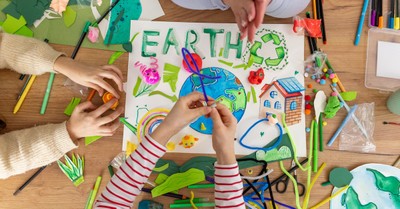
Earth Day is coming up soon. On this day, people raise awareness of environmental issues, promote sustainability, and rally for collaboration to save our planet. The first Earth Day was in 1970, started by Senator Gaylord Nelson in response to growing concerns about pollution and environmental degradation. Here are some ideas to do with your grandkids this Earth Day.

1. Exploring Nature Walks: Discover Local Flora and Fauna

Taking a nature walk is a great way to celebrate Earth Day. Regardless of the terrain you’re on, whether it be a local park or a nearby wetland, you can see different plants and animals on your walk. Nature walks promote exercise and help your grandkids sharpen their observation skills, relax, and develop a deeper appreciation of our ecosystem.

Nature walks are great for everyone’s well-being, promoting reduced stress, improved mood, and mindfulness. There are many places you can take a nature walk, including community parks, botanical gardens, nature reserves, and forest preserves.

Start by observing the flora—the plant life in your local area. Observe trees, wildflowers, ground plants, shrubs, and vines. Next, observe the fauna, including birds, insects, and pollinators (such as bees), mammals (rabbits, deer, squirrels), reptiles, amphibians, and aquatic animals if there is a pond, stream, or marsh nearby.

Some tips for observation are:

-Walk slowly and quietly

-Listen

-Use your eyes at different levels (ground, trees, sky)

-Download a plant or bird app to help with identification

-Take notes and pictures

-Return regularly to explore in different seasons.

Photo credit: ©GettyImages/Dusan Stankovic
2. Gardening Together: Planting for a Greener Future

2. Gardening Together: Planting for a Greener Future

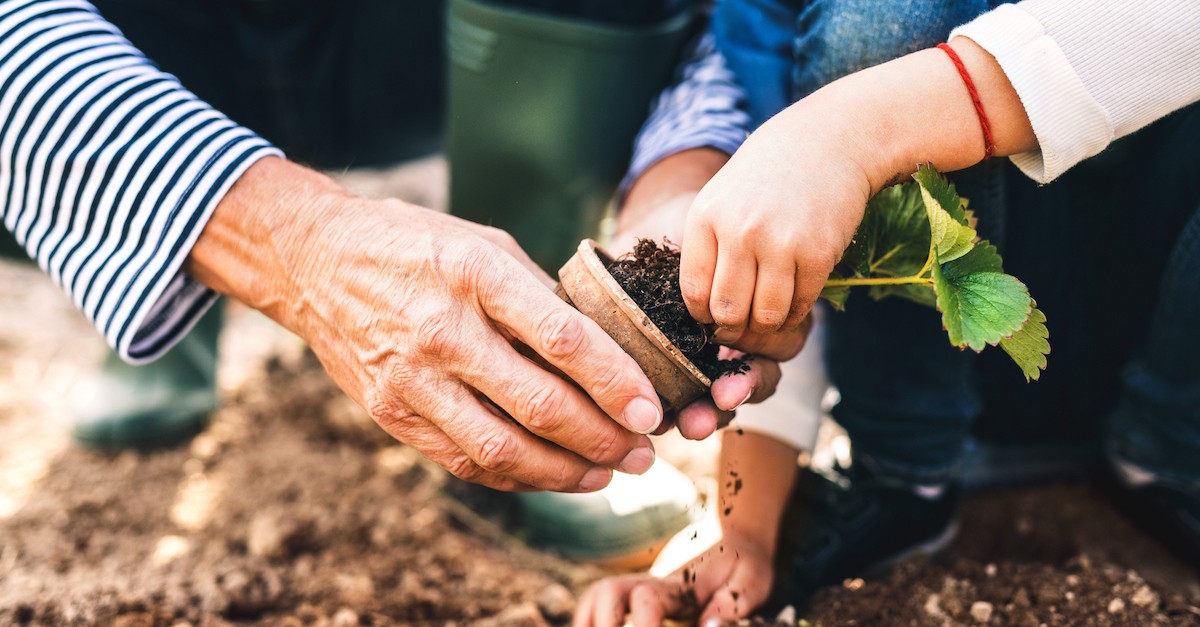
Gardening together is a great way to teach your grandkids about plants, life cycles, and how to start and grow their own garden. They will learn skills like cooperation, patience, and responsibility, and also produce tangible results that kids can enjoy. Who doesn’t love picking berries with their grandparents? You can also teach them about pollinators like bees and set up your garden to be useful to them by planting native flowers and avoiding harsh chemicals. Other things you can teach kids are about soil and water conservation. A garden is a fantastic learning experience for kids.

3. Creative Recycling Projects: Turning Trash into Treasure

When we think of recycling, we think about sorting aluminum, plastic, and paper into the right bin in our garages. However, creative recycling takes things a step further by transforming discarded materials into something useful, beautiful, and sometimes something new. This shows that trash can become a treasure with a little imagination.

Why Does Creative Recycling Matter?

Each year, we discard numerous items that could be used for alternative purposes. Creative recycling addresses this issue by:

-Reducing the amount of waste sent to landfills

-Saving money by reusing materials instead of buying new ones

-Encouraging sustainable habits

-Inspiring creativity and problem-solving

-Creating unique, handmade items with personal character

Ideas for Creative Recycling Projects

-Glass Jar Lanterns

-Tin Can Organizers

-Cardboard Drawer Dividers

-Old T-shirt Tote Bags

-Bottle Cap Magnets

-Egg Carton Flowers

-Newspaper papier-mâché bowls

DIY Bird Feeders: Attracting Wildlife in Your Backyard

Making homemade bird feeders is cost-effective, customizable, educational, eco-friendly, and creative. Before you get started, do a little research about the birds in your area and what they need during the colder months and winter.

Common types of bird food include sunflower seeds, Nyjer seed, peanuts, suet, fruit, and mealworms. Common offerings that are harmful to birds include salted snacks, bread, and anything spoiled or moldy.

Some ideas for bird feeders include pinecone bird feeders, recycled bottle feeders, orange half feeders, wooden platform feeders, and mason jar feeders.
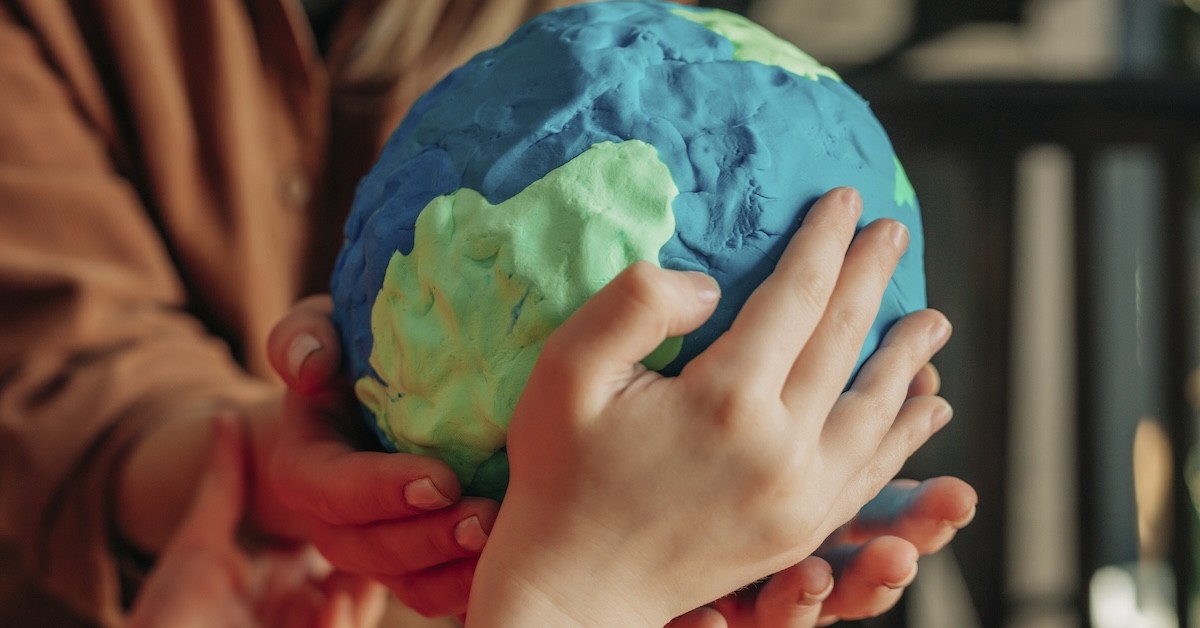
Photo credit: ©GettyImages/Halfpoint
4. Eco-Friendly Crafts: Fun Projects Using Recycled Materials

4. Eco-Friendly Crafts: Fun Projects Using Recycled Materials

Why Choose Eco-Friendly Crafts?

Crafting with recycled materials has more benefits than just creativity. Other benefits include;

-Repurposing items instead of throwing them away helps to reduce household waste.

-Saving money by using items you already have

-Teaching your grandkids about sustainability

-Encouraging creativity by problem-solving and reuse

-Creating pieces that are one-of-a-kind, just like your grandkids

These kinds of crafts are also a great introduction to upcycling, which means turning unwanted materials into something of a higher value or usefulness.

Materials to Save for Craft Projects

Here are some great things to save for doing crafts with your grandkids.

-Cardboard boxes

-Toilet paper and paper towel rolls

-Glass jars

-Tin cans

-Old clothes

-Old newspapers and magazines

-Scrap fabric

-Bottle caps

-Plastic bottles

-Broken jewelry or buttons

-Leftover string, ribbon, and wrapping paper

Craft Ideas

-Paper Roll Animals

-Toilet Paper Roll Binoculars

-Cardboard Box Robots

-Egg Carton Caterpillars

-Newspaper Hats

-Plastic Bottle Bird Feeders

Tips for Successful Crafting

-Wash and dry materials before use

-Sort items by type so they are easily accessible

-Use safe tools that are age-appropriate

-Consider the item's durability if you will handle it often.

-Combine materials for a polished look

-Reuse leftovers from one project for another.

Outdoor Clean-Up: Teaching Responsibility for Our Planet

Cleaning up outdoors isn’t just about picking up trash; it’s also a great way to teach your grandkids about taking responsibility for our planet. By taking part in a clean-up effort, kids can see how polluted our highways, parks, sidewalks, and other areas are.

Why Does Outdoor Clean Up Matter?

Litter and waste are signs of environmental neglect. Things like paper wrappers, plastic bottles, and cans may seem like a small issue, but they can lead to more serious problems, such as clogged drains, harm to animals, contamination of our soil and water, and making public places much less enjoyable.

Teaching Responsibility through Action

One of the best ways to teach your grandkids is to let them do some hands-on learning. Outdoor clean-up projects let them take meaningful action. For example, when they pick up trash on their playground, they will learn their choices matter. They will notice how easily and fast trash can pile up and defile a place that should be beautiful and enjoyable for both kids and their parents. This will also develop character traits like accountability, teamwork, respect, empathy, and consistency. There are also many educational benefits, such as expanding vocabulary and learning about unfamiliar concepts like recycling, pollution, conservation, and sustainability by seeing these concepts in action. Some examples of this include:

-Counting and categorizing the trash they collect

-Discussing what is recyclable and non-recyclable

-Researching how litter affects wildlife

The things that kids learn during outdoor clean-up projects can instill habits that last a lifetime.

Photo credit: ©GettyImages/Westend61
5. Nature Scavenger Hunt: A Fun Way to Appreciate the Outdoors

5. Nature Scavenger Hunt: A Fun Way to Appreciate the Outdoors

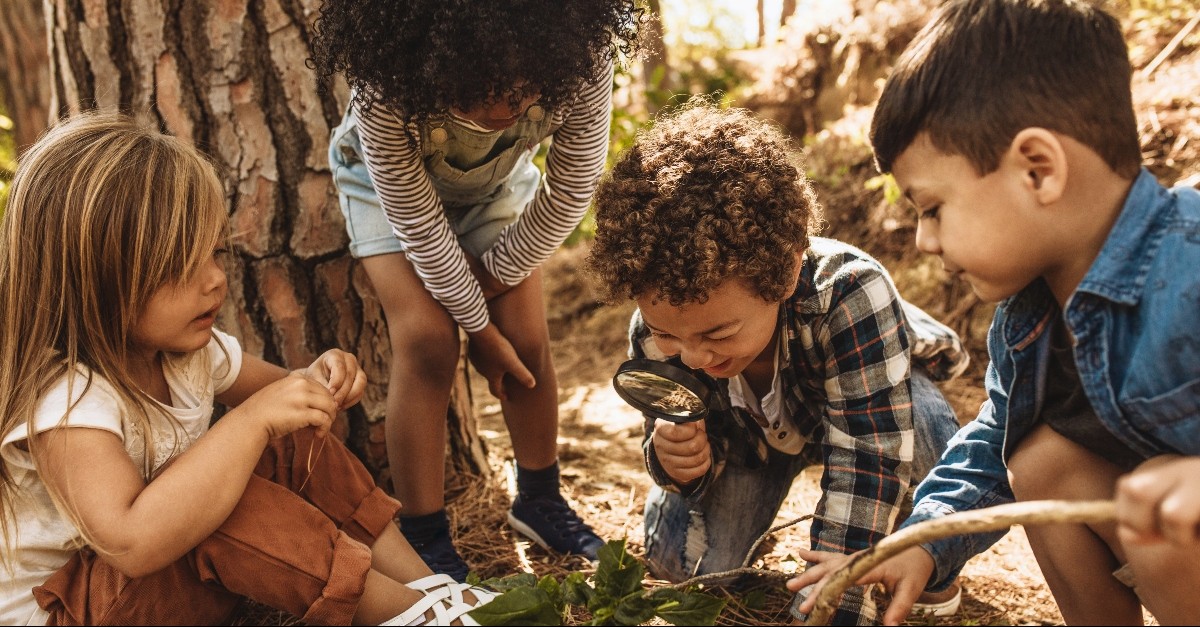
A scavenger hunt is an outdoor activity in which people look for specific natural objects, features, or signs of wildlife. Some things your grandkids may look for are a smooth rock, a bird feather, or a pinecone. Kids can check off what they found on a list rather than disturbing the environment.

This activity benefits your grandkids in various ways.

-Encouraging observation skills

-Making outdoor time more engaging

-Supporting learning

-Promoting mindfulness and relaxation

-Helping build an appreciation for the environment

Fun themes for scavenger hunts include picture scavenger hunts, color scavenger hunts, sensory scavenger hunts, and seasonal scavenger hunts.

Planning a Scavenger Hunt

-Choose a location

-Decide on a theme

-Create the list

-Set rules for safety and respect

Learning About Endangered Species: A Virtual Zoo Tour

If your grandkids love animals, taking a virtual zoo tour is a significant Earth Day activity. Through videos, interactive exhibits, live webcams, and educational resources, they are a great way to teach them about endangered species of animals.

What Does Endangered Mean?

An endangered species is an animal or plant that has a high probability of becoming extinct in the wild. When something becomes extinct, it disappears forever. Many factors, such as habitat loss, pollution, climate change, hunting, invasive species, or disease, can endanger species.

Scientists and conservative organizations study species closely to determine how endangered they are. This matters because every species plays a role in our ecosystem. If one species disappears, it affects the food chains, plant growth, and the balance of nature.

Why Virtual Zoo Tours Are Valuable

Virtual zoo tours are valuable not only for their convenience but also for making wildlife education accessible, raising awareness, supporting learning at home, and encouraging action.

Kids can also learn how they can help endangered species.

Photo Credit: ©iStock/Getty Images Plus/jacoblund
6. Creating Earth Day Art: Expressing Love for the Planet

6. Creating Earth Day Art: Expressing Love for the Planet

Earth Day is an accessible way for kids to learn about environmental care. Earth Day art can bring people together to protect the environment.

Getting Started with Earth Day Art

-Choose a theme like nature’s beauty, protecting the earth, climate and change, reuse and reimagine, hope for the future, or human connection to nature.

-Choose the right medium, like drawing and painting, collage, sculpture, murals and posters, and mixed media.

Earth Day Art Ideas

-Recycled material animals

-Handprint Earth Poster

-Nature Collage

-Scenes from before and after, illustrating a polluted environment compared to a clean one.

-Tree of Hope: Create a painting or drawing of a tree, then incorporate your hopes, promises, and actions for the planet.

-Earth Day Mandala (Create art using natural elements)

-Ocean Protection Artwork

There are all kinds of activities you can do on Earth Day with your grandchildren. Talk with them about what matters most to them, and plan crafts and activities to help them learn about and actively protect the planet.

Related:

What Does it Mean to Celebrate Earth Day From a Christian Perspective?

Earth Day: Celebrating God’s Creation with Your Children

Photo credit: ©GettyImages/Westend61
 

Salem News Channel Today

Sponsored Links


September 26 - Phoenix, AZ
Scottsdale Center for the Performing Arts


November 2 - Detroit, MI
Zion Christian Church in Troy


October 6 - Los Angeles, CA
Pasadena Convention Center


November 5 - San Antonio, TX
Norris Centers – The Grand Red Oak Ballroom


October 8 - Sacramento, CA
William Jessup University


November 7 - Tampa, FL
The Palladium at St. Pete College


October 22 - Minneapolis, MN
Crowne Plaza AiRE


November 15 - San Francisco, CA
Fremont Marriott Silicon Valley


October 23 - Philadelphia, PA
Green Valley Country Club


November 16 - Denver, CO
CU South Denver - Formerly Wildlife Experience


November 2 - Chicago, IL
Chicago Westin Northwest in Itasca


November 21 - Cleveland, OH
Holiday Inn Rockside in Independence


Salem Radio Network Speakers

Larry Elder is an American lawyer, writer, and radio and television personality who calls himself the "Sage of South Central" a district of Los Angeles, Larry says his philosophy is to entertain, inform, provoke and to hopefully uplift. His calling card is "we have a country to save" and to him this means returning to the bedrock Constitutional principles of limited government and maximum personal responsibility. Elder's iconoclastic wit and intellectual agility makes him a particularly attractive voice in a nation that seems weary of traditional racial dialogue.” – Los Angeles Times.

Mike Gallagher Mike Gallagher began his broadcasting career in 1978 in Dayton, Ohio. Today, he is one of the most listened-to talk radio show hosts in America, recently having been ranked in the Talkers Magazine “Heavy Hundred” list – the 100 most important talk radio hosts in America. Prior to being launched into national syndication in 1998, Mike hosted the morning show on WABC-AM in New York City. Today, Talkers Magazine reports that his show is heard by over 3.75 million weekly listeners. Besides his radio work, Mike is seen on Fox News Channel as an on-air contributor, frequently appearing on the cable news giant.

Hugh Hewitt is one of the nation’s leading bloggers and a genuine media revolutionary. He brings that expertise, his wit and what The New Yorker magazine calls his “amiable but relentless manner” to his nationally syndicated show each day.

When Dr. Sebastian Gorka was growing up, he listened to talk radio under his pillow with a transistor radio, dreaming that one day he would be behind the microphone. Beginning New Year’s Day 2019, he got his wish. Gorka now hosts America First every weekday afternoon 3 to 6pm ET. Gorka’s unique story works well on the radio. He is national security analyst for the Fox News Channel and author of two books: "Why We Fight" and "Defeating Jihad." His latest book releasing this fall is “War For America’s Soul.” He is uniquely qualified to fight the culture war and stand up for what is great about America, his adopted home country.

Broadcasting from his home station of KRLA in Los Angeles, the Dennis Prager Show is heard across the country. Everything in life – from politics to religion to relationships – is grist for Dennis’ mill. If it’s interesting, if it affects your life, then Dennis will be talking about it – with passion, humor, insight and wisdom.

Sean Hannity is a conservative radio and television host, and one of the original primetime hosts on the Fox News Channel, where he has appeared since 1996. Sean Hannity began his radio career at a college station in California, before moving on to markets in the Southeast and New York. Today, he’s one of the most listened to on-air voices. Hannity’s radio program went into national syndication on September 10, 2001, and airs on more than 500 stations. Talkers Magazine estimates Hannity’s weekly radio audience at 13.5 million. In 1996 he was hired as one of the original hosts on Fox News Channel. As host of several popular Fox programs, Hannity has become the highest-paid news anchor on television.

Michelle Malkin is a mother, wife, blogger, conservative syndicated columnist, longtime cable TV news commentator, and best-selling author of six books. She started her newspaper journalism career at the Los Angeles Daily News in 1992, moved to the Seattle Times in 1995, and has been penning nationally syndicated newspaper columns for Creators Syndicate since 1999. She is founder of conservative Internet start-ups Hot Air and Twitchy.com. Malkin has received numerous awards for her investigative journalism, including the Council on Governmental Ethics Laws (COGEL) national award for outstanding service for the cause of governmental ethics and leadership (1998), the Reed Irvine Accuracy in Media Award for Investigative Journalism (2006), the Heritage Foundation and Franklin Center for Government & Public Integrity's Breitbart Award for Excellence in Journalism (2013), the Center for Immigration Studies' Eugene Katz Award for Excellence in the Coverage of Immigration Award (2016), and the Manhattan Film Festival's Film Heals Award (2018). Married for 26 years and the mother of two teenage children, she lives with her family in Colorado. Follow her at michellemalkin.com. (Photo reprinted with kind permission from Peter Duke Photography.)

Sponsored by:

6 Earth Day Activities to Do with Your Grandchildren

Carbonatix Pre-Player Loader

Audio By Carbonatix

Earth Day is coming up soon. On this day, people raise awareness of environmental issues, promote sustainability, and rally for collaboration to save our planet. The first Earth Day was in 1970, started by Senator Gaylord Nelson in response to growing concerns about pollution and environmental degradation. Here are some ideas to do with your grandkids this Earth Day.

1. Exploring Nature Walks: Discover Local Flora and Fauna

Taking a nature walk is a great way to celebrate Earth Day. Regardless of the terrain you’re on, whether it be a local park or a nearby wetland, you can see different plants and animals on your walk. Nature walks promote exercise and help your grandkids sharpen their observation skills, relax, and develop a deeper appreciation of our ecosystem.

Nature walks are great for everyone’s well-being, promoting reduced stress, improved mood, and mindfulness. There are many places you can take a nature walk, including community parks, botanical gardens, nature reserves, and forest preserves.

Start by observing the flora—the plant life in your local area. Observe trees, wildflowers, ground plants, shrubs, and vines. Next, observe the fauna, including birds, insects, and pollinators (such as bees), mammals (rabbits, deer, squirrels), reptiles, amphibians, and aquatic animals if there is a pond, stream, or marsh nearby.

Some tips for observation are:

-Walk slowly and quietly

-Listen

-Use your eyes at different levels (ground, trees, sky)

-Download a plant or bird app to help with identification

-Take notes and pictures

-Return regularly to explore in different seasons.

Photo credit: ©GettyImages/Dusan Stankovic

2. Gardening Together: Planting for a Greener Future

2. Gardening Together: Planting for a Greener Future

Gardening together is a great way to teach your grandkids about plants, life cycles, and how to start and grow their own garden. They will learn skills like cooperation, patience, and responsibility, and also produce tangible results that kids can enjoy. Who doesn’t love picking berries with their grandparents? You can also teach them about pollinators like bees and set up your garden to be useful to them by planting native flowers and avoiding harsh chemicals. Other things you can teach kids are about soil and water conservation. A garden is a fantastic learning experience for kids.

3. Creative Recycling Projects: Turning Trash into Treasure

When we think of recycling, we think about sorting aluminum, plastic, and paper into the right bin in our garages. However, creative recycling takes things a step further by transforming discarded materials into something useful, beautiful, and sometimes something new. This shows that trash can become a treasure with a little imagination.

Why Does Creative Recycling Matter?

Each year, we discard numerous items that could be used for alternative purposes. Creative recycling addresses this issue by:

-Reducing the amount of waste sent to landfills

-Saving money by reusing materials instead of buying new ones

-Encouraging sustainable habits

-Inspiring creativity and problem-solving

-Creating unique, handmade items with personal character

Ideas for Creative Recycling Projects

-Glass Jar Lanterns

-Tin Can Organizers

-Cardboard Drawer Dividers

-Old T-shirt Tote Bags

-Bottle Cap Magnets

-Egg Carton Flowers

-Newspaper papier-mâché bowls

DIY Bird Feeders: Attracting Wildlife in Your Backyard

Making homemade bird feeders is cost-effective, customizable, educational, eco-friendly, and creative. Before you get started, do a little research about the birds in your area and what they need during the colder months and winter.

Common types of bird food include sunflower seeds, Nyjer seed, peanuts, suet, fruit, and mealworms. Common offerings that are harmful to birds include salted snacks, bread, and anything spoiled or moldy.

Some ideas for bird feeders include pinecone bird feeders, recycled bottle feeders, orange half feeders, wooden platform feeders, and mason jar feeders.

Photo credit: ©GettyImages/Halfpoint
4. Eco-Friendly Crafts: Fun Projects Using Recycled Materials

4. Eco-Friendly Crafts: Fun Projects Using Recycled Materials

Why Choose Eco-Friendly Crafts?

Crafting with recycled materials has more benefits than just creativity. Other benefits include;

-Repurposing items instead of throwing them away helps to reduce household waste.

-Saving money by using items you already have

-Teaching your grandkids about sustainability

-Encouraging creativity by problem-solving and reuse

-Creating pieces that are one-of-a-kind, just like your grandkids

These kinds of crafts are also a great introduction to upcycling, which means turning unwanted materials into something of a higher value or usefulness.

Materials to Save for Craft Projects

Here are some great things to save for doing crafts with your grandkids.

-Cardboard boxes

-Toilet paper and paper towel rolls

-Glass jars

-Tin cans

-Old clothes

-Old newspapers and magazines

-Scrap fabric

-Bottle caps

-Plastic bottles

-Broken jewelry or buttons

-Leftover string, ribbon, and wrapping paper

Craft Ideas

-Paper Roll Animals

-Toilet Paper Roll Binoculars

-Cardboard Box Robots

-Egg Carton Caterpillars

-Newspaper Hats

-Plastic Bottle Bird Feeders

Tips for Successful Crafting

-Wash and dry materials before use

-Sort items by type so they are easily accessible

-Use safe tools that are age-appropriate

-Consider the item's durability if you will handle it often.

-Combine materials for a polished look

-Reuse leftovers from one project for another.

Outdoor Clean-Up: Teaching Responsibility for Our Planet

Cleaning up outdoors isn’t just about picking up trash; it’s also a great way to teach your grandkids about taking responsibility for our planet. By taking part in a clean-up effort, kids can see how polluted our highways, parks, sidewalks, and other areas are.

Why Does Outdoor Clean Up Matter?

Litter and waste are signs of environmental neglect. Things like paper wrappers, plastic bottles, and cans may seem like a small issue, but they can lead to more serious problems, such as clogged drains, harm to animals, contamination of our soil and water, and making public places much less enjoyable.

Teaching Responsibility through Action

One of the best ways to teach your grandkids is to let them do some hands-on learning. Outdoor clean-up projects let them take meaningful action. For example, when they pick up trash on their playground, they will learn their choices matter. They will notice how easily and fast trash can pile up and defile a place that should be beautiful and enjoyable for both kids and their parents. This will also develop character traits like accountability, teamwork, respect, empathy, and consistency. There are also many educational benefits, such as expanding vocabulary and learning about unfamiliar concepts like recycling, pollution, conservation, and sustainability by seeing these concepts in action. Some examples of this include:

-Counting and categorizing the trash they collect

-Discussing what is recyclable and non-recyclable

-Researching how litter affects wildlife

The things that kids learn during outdoor clean-up projects can instill habits that last a lifetime.

Photo credit: ©GettyImages/Westend61

5. Nature Scavenger Hunt: A Fun Way to Appreciate the Outdoors

5. Nature Scavenger Hunt: A Fun Way to Appreciate the Outdoors

A scavenger hunt is an outdoor activity in which people look for specific natural objects, features, or signs of wildlife. Some things your grandkids may look for are a smooth rock, a bird feather, or a pinecone. Kids can check off what they found on a list rather than disturbing the environment.

This activity benefits your grandkids in various ways.

-Encouraging observation skills

-Making outdoor time more engaging

-Supporting learning

-Promoting mindfulness and relaxation

-Helping build an appreciation for the environment

Fun themes for scavenger hunts include picture scavenger hunts, color scavenger hunts, sensory scavenger hunts, and seasonal scavenger hunts.

Planning a Scavenger Hunt

-Choose a location

-Decide on a theme

-Create the list

-Set rules for safety and respect

Learning About Endangered Species: A Virtual Zoo Tour

If your grandkids love animals, taking a virtual zoo tour is a significant Earth Day activity. Through videos, interactive exhibits, live webcams, and educational resources, they are a great way to teach them about endangered species of animals.

What Does Endangered Mean?

An endangered species is an animal or plant that has a high probability of becoming extinct in the wild. When something becomes extinct, it disappears forever. Many factors, such as habitat loss, pollution, climate change, hunting, invasive species, or disease, can endanger species.

Scientists and conservative organizations study species closely to determine how endangered they are. This matters because every species plays a role in our ecosystem. If one species disappears, it affects the food chains, plant growth, and the balance of nature.

Why Virtual Zoo Tours Are Valuable

Virtual zoo tours are valuable not only for their convenience but also for making wildlife education accessible, raising awareness, supporting learning at home, and encouraging action.

Kids can also learn how they can help endangered species.

Photo Credit: ©iStock/Getty Images Plus/jacoblund
6. Creating Earth Day Art: Expressing Love for the Planet

6. Creating Earth Day Art: Expressing Love for the Planet

Earth Day is an accessible way for kids to learn about environmental care. Earth Day art can bring people together to protect the environment.

Getting Started with Earth Day Art

-Choose a theme like nature’s beauty, protecting the earth, climate and change, reuse and reimagine, hope for the future, or human connection to nature.

-Choose the right medium, like drawing and painting, collage, sculpture, murals and posters, and mixed media.

Earth Day Art Ideas

-Recycled material animals

-Handprint Earth Poster

-Nature Collage

-Scenes from before and after, illustrating a polluted environment compared to a clean one.

-Tree of Hope: Create a painting or drawing of a tree, then incorporate your hopes, promises, and actions for the planet.

-Earth Day Mandala (Create art using natural elements)

-Ocean Protection Artwork

There are all kinds of activities you can do on Earth Day with your grandchildren. Talk with them about what matters most to them, and plan crafts and activities to help them learn about and actively protect the planet.

Related:

What Does it Mean to Celebrate Earth Day From a Christian Perspective?

Earth Day: Celebrating God’s Creation with Your Children

Photo credit: ©GettyImages/Westend61
 

Salem News Channel Today

Sponsored Links

On Air & Up Next

See the Full Program Guide