10 Things Your Adult Children Wish You’d Say to Your Grandkids

Carbonatix Pre-Player Loader

Audio By Carbonatix

Think back to your childhood. I bet you can repeat (probably verbatim and with all the right inflections) some of the “wise words” you heard your grandparents say. 

My grandmother was a Portuguese immigrant who loved coffee, cake, and laughter. She raised chickens, crocheted doilies, and made the most amazing Portuguese doughnuts. She dropped out of school after the fourth grade to work in the textile mills in Rhode Island, but she loved to read and encouraged me to do the same. 

Her favorite maxims included: “You may not be rich, but you can be clean,” "Hard work never hurt anyone," and “Don’t spend what you haven’t earned.”

Granny’s wholehearted commitment to her grandchildren enriched our lives in many ways. It blessed my parents, too, because they knew we were safe in Granny’s care. Not only did she create a physically safe environment, she fostered an emotionally safe one, too.

Now that I’m a grandmother, I want to follow her example and bless my adult children by the way I interact with my grandchildren. I know from my grandmother’s example that the words I say are important.

If you share my desire to be a blessing, here are 10 things your adult children wish you’d say to your grandchildren.

Photo credit: ©GettyImages/Tom Merton
1. "Your mom and dad aren’t your enemies. They’re on your side.”

1. "Your mom and dad aren’t your enemies. They’re on your side.”

Clashes happen between parents and children, and it’s tempting to take your grandchildren’s side when they pour their grievances into your sympathetic ear and earn some brownie points.

Everyone needs a safe place to vent, and we can be that place. Once the tide of emotion has stemmed, though, it’s important to remind them their mom and dad aren’t their enemies.

It’s easy to join in the parent bashing, but in the long run, failing to support your adult children’s decisions can undermine their authority. This can have serious consequences later in your grandchild’s life and in your relationship with your children.

If you disagree with a decision your adult child makes and feel it’s important enough to address, speak to them in private. In public, remind your grandchildren that mom and dad aren’t their enemies, and that they love them very much.

2. “That’s something you should ask your mom or dad about.”

Children have much to learn, and grandparents have a boatload of life experience and wisdom to share. While we may be comfortable sharing our insight on most topics, certain questions are best answered by a parent.

Just because we’re confident we know the answer doesn’t mean we’re the best people to share the answer.

I guarantee your children have thought long and hard about how they’re going to approach topics like sex, abortion, gender confusion, and other sensitive topics.

Wise grandparents respect their adult children’s role as parents and don’t overstep their boundaries by speaking out of turn.

©GettyImages/Sam Edwards
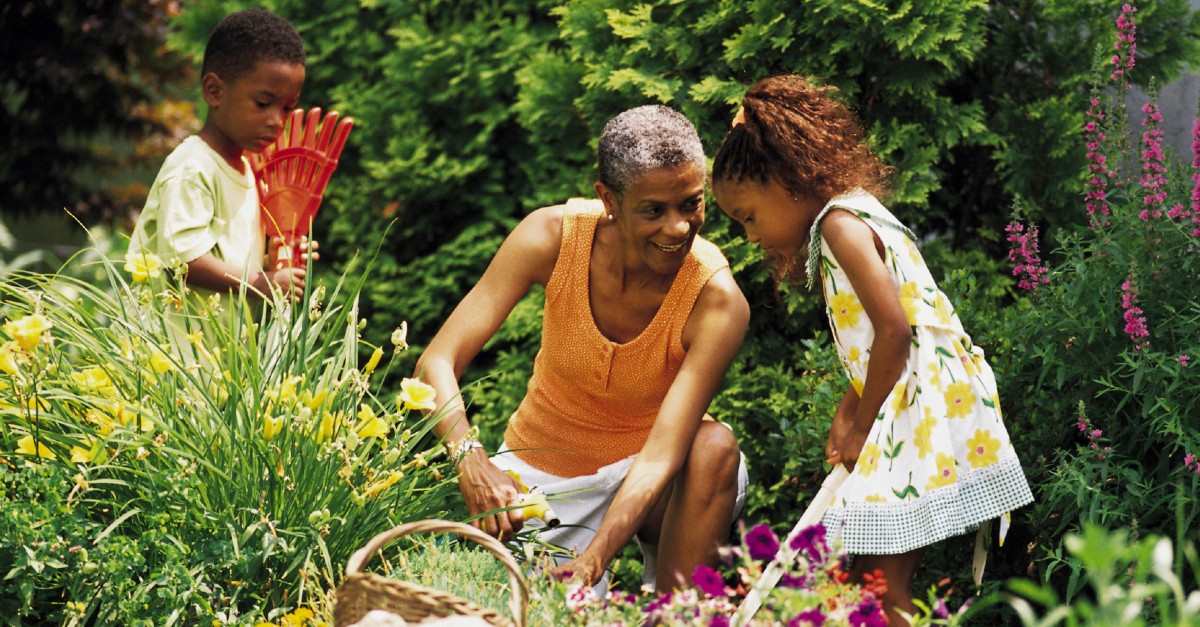
3. “The person you are is more important than what you accomplish.”

3. “The person you are is more important than what you accomplish.”

When I was expecting my first child, I gave my mom a gift—a photo album big enough to hold lots of pictures of the baby. On the cover, it said, Grandma’s Brag Book.

If you ask today’s grandparents about their grandkids, they’re more likely to whip out their iPhone and start scrolling. Regardless of what means they use, grandparents love to brag on their grandchildren’s accomplishments.

It’s wonderful to recognize and celebrate their achievements, but we must be careful to remind our grandchildren that who they are is much more important than what they do.

To reinforce this, commend them for kind deeds, thoughtful gestures, and unselfish acts. Praise them in public and in private when you “catch” them doing something that honors God or others.

When they attempt something and fail, acknowledge their efforts, and talk about the life lessons they learned in the process.

4. “There are rules at Grandma’s house.”

Many grandparents admit they struggle to find the balance between being too strict and too lenient with their grandchildren.

Some have so many rules that a visit to their house is as much fun as a trip to an art museum. Others have no rules, looking the other way while their precious cherubs run wild and wreak havoc.

Most understand that special privileges, food, and activities are part of what make visits to grandma’s house so fun. At the same time, children need to learn proper behavior in different settings.

Your adult children will thank you when you explain and enforce reasonable expectations, because it reinforces what they’re (hopefully) training their children to do.

If they’re teaching the kids to clean up after themselves, and you let them pull every game out of the closet and not put any away, you undermine their training. If rules at home don’t allow them to jump on the furniture, and you allow them to use your couch as a trampoline, you make Mom and Dad’s job that much harder.

At our house we have a few basic rules: Clean up your mess. Treat Gigi and Papa’s things respectfully. Be thankful and kind.

This helps ensure that the grandkids understand that the world is full of rules that are for their own good, instead of thinking of Mom and Dad's as the boring place and Gigi and Papa's as the fun place.

Photo Credit: ©GettyImages/Comstock
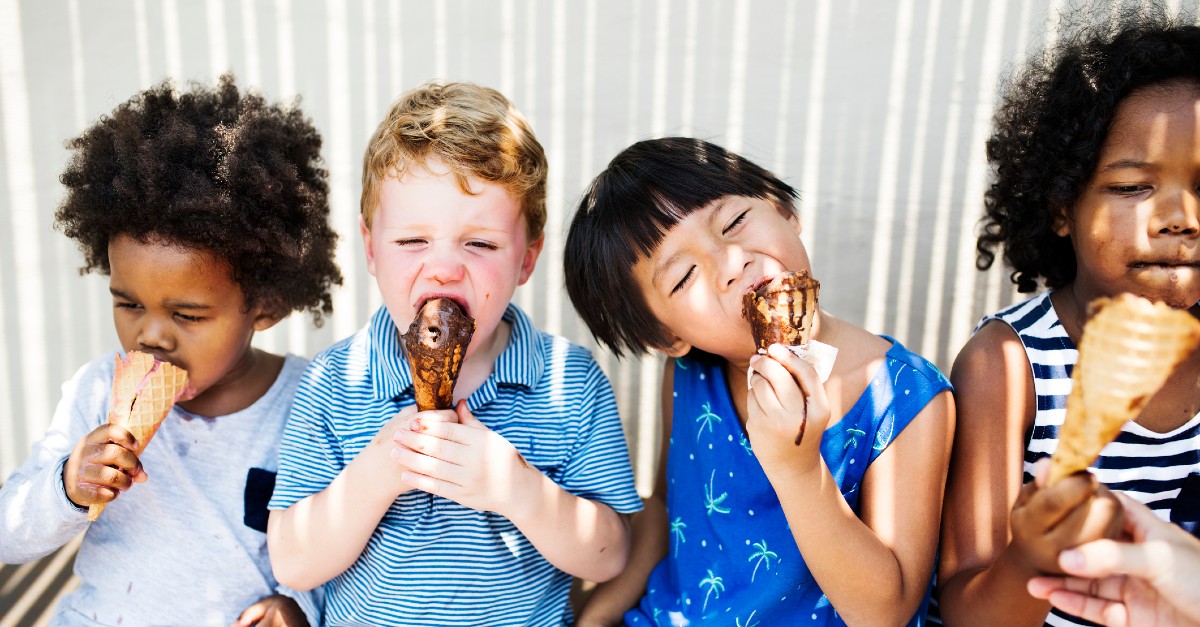
5. “Too much______ isn’t good for you.”

5. “Too much______ isn’t good for you.”

This saying naturally follows the previous one, because many grandparents feel their role grants them cart blanche to indulge their grandchildren with special food or privileges.

While no one likes to remind a child to eat their vegetables before they eat dessert, kids need to learn to make healthy food choices. Limiting the amount of sugar and junk food available at your house helps them do this and reinforces the lessons their parents (hopefully) are teaching them.

The same is true for other “treats.” Setting limits on screen time, TV time, and other indulgences maintains a proper balance and makes room for healthier pursuits.

When we switch off the television after 30 minutes, our grandchildren are much more open to playing board games, reading books, and going outdoors. We build memories and earn points with our adult children at the same time.

6. “You don’t have to give me a kiss or a hug if you don’t want to.”

Because it’s important to teach children authority over their bodies, we never want to force affection on our grandchildren.

Everyone remembers that icky uncle or scary aunt’s unwanted overtures during family gatherings. While it’s natural and healthy to smother our babies and toddlers with kisses and hugs, we should take our cues from older children’s reactions and adjust our responses accordingly.

It may seem unnatural to ask permission to display affection toward our grandchildren, but respecting their wishes honors them. It also demonstrates what healthy, appropriate physical interaction looks like.

Photo Credit: ©GettyImages/Rawpixel
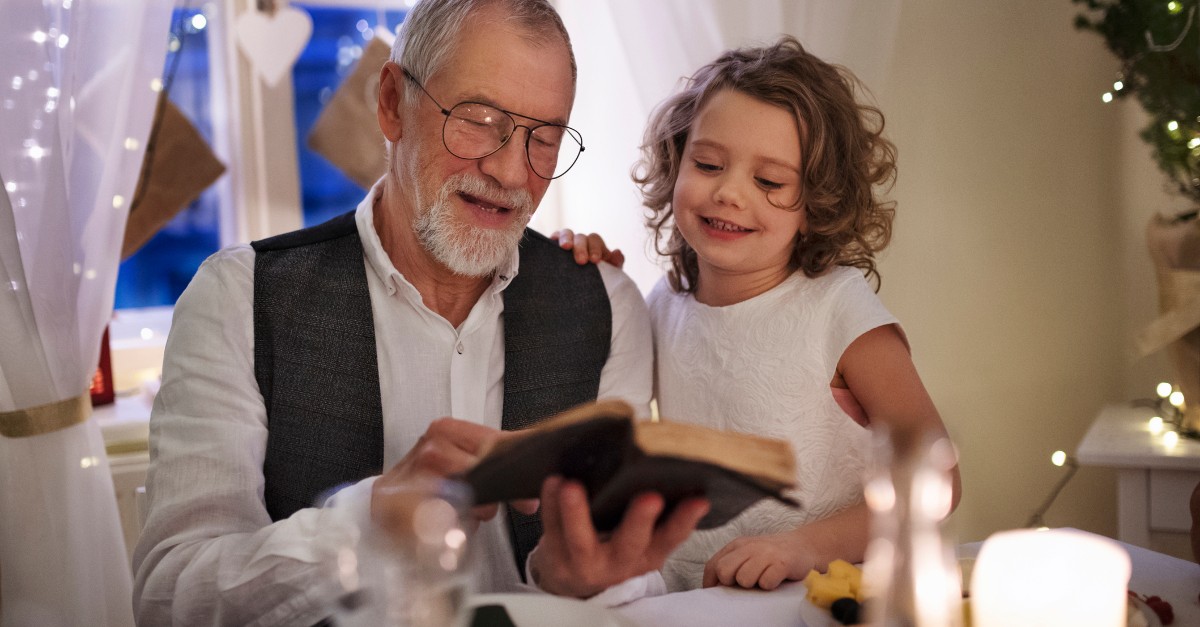
7. “What does the Bible say about it?”

7. “What does the Bible say about it?”

Pointing your grandchildren to biblical truth whenever they have a decision to make, a trial to navigate, or a problem to solve will reinforce the fact that God’s Word is relevant and trustworthy.

We can do this casually, in the natural flow of conversation, by sharing times when we didn’t know what to do but found answers in the Scripture. Remember to share stories about when you failed to consult God’s Word, too, and how that worked out. Positive and negative examples are powerful teaching tools.

If your adult children are believers, they’ll hug your neck every time you point their children to God’s Word for answers. And you'll feel confident that you are leaving a powerful legacy.

8. “Treat people the way you want to be treated.”

A modern rendition of the Golden Rule (Matthew 7:12), this approach to life is one of the greatest gifts you can give your grandchildren.

Say it to toddlers to reinforce sharing with others and not biting or hitting. Use it to remind elementary age children to be kind and unselfish, helping them learn to be a good friend. Speak it to older children and teens as a call to rise above the “eye for an eye and tooth for a tooth” approach of middle school and high school.

Your adult children get tired of breaking up selfish fights and will sigh in gratitude whenever they hear you reminding their children of one of Jesus’ most important rules for how to treat others.

Photo Credit: ©GettyImages/Halfpoint

9. “I pray for you every day.”

9. “I pray for you every day.”

Grandparents are one step removed from the day to day activities of their grandchildren. Even if we live nearby, we seldom see them every day. When we remind our grandkids we’re praying for them—and then actually do it, what a blessing we become.

Prayer gives us the opportunity to partner with God’s work in our grandchildren’s lives.

Every morning my husband and I pray for our grandchildren by name. We pray for God to call them to Himself in salvation; help them grow in their faith, and protect them physically, emotionally, and spiritually.

As our grandchildren have gotten older, we’ve asked them to share specific prayer requests, and we follow up with them to see how God answered.

10. “God will never leave you nor forsake you.”

This powerful promise, lifted from the pages of Scripture (Hebrews 13:5), is the anchor our grandchildren need in this troubled world. It’s also the thread your believing children are trying their best to weave through the fabric of their family’s life.

The more you reinforce it by sharing stories of God’s faithfulness to you, the more real God will become to your grandchildren.

As you tell them how God pursued you, saved you, transformed you, and provided for you, your testimony of God’s grace will make them yearn for that kind of a relationship. Your stories will make trusting Christ the simplest and most natural thing to do.

Why wouldn’t they want to surrender their lives to God when He has been so near and so dear to their beloved parents and grandparents?

Positive or negative, our grandchildren will remember the words we say. Let’s make every one count—for their good, the good of their parents, and the good of the Kingdom.

May God richly bless you as you seek to honor Him in your calling as a grandparent.

What do you think? Are there things your kids have asked you to say (or withhold) from your grandchildren? Join the conversation with other grandparents on Crosswalk Forums.

Related Resource: The 7 Biggest Reasons Gen Z is Leaving the Faith

Studies show that a majority of kids raised in Christian homes are leaving the faith when they leave the nest. It is vital that we understand the primary reasons why young people no longer believe if we want to help them return to the faith. Catherine offers some helpful resources to consult if a child you know has embraced one of these false claims about Christianity, and she and Laurie also offer some helpful resources for discipling younger kids in the faith. If this episode helps you be a more thoughtful parent or grandparent, be sure to subscribe to Christian Parent, Crazy World on Apple or Spotify so you never miss an episode!

Photo Credit: ©Getty Images/Zinkevych

 

Salem News Channel Today

Sponsored Links


September 26 - Phoenix, AZ
Scottsdale Center for the Performing Arts


November 2 - Detroit, MI
Zion Christian Church in Troy


October 6 - Los Angeles, CA
Pasadena Convention Center


November 5 - San Antonio, TX
Norris Centers – The Grand Red Oak Ballroom


October 8 - Sacramento, CA
William Jessup University


November 7 - Tampa, FL
The Palladium at St. Pete College


October 22 - Minneapolis, MN
Crowne Plaza AiRE


November 15 - San Francisco, CA
Fremont Marriott Silicon Valley


October 23 - Philadelphia, PA
Green Valley Country Club


November 16 - Denver, CO
CU South Denver - Formerly Wildlife Experience


November 2 - Chicago, IL
Chicago Westin Northwest in Itasca


November 21 - Cleveland, OH
Holiday Inn Rockside in Independence


Salem Radio Network Speakers

Larry Elder is an American lawyer, writer, and radio and television personality who calls himself the "Sage of South Central" a district of Los Angeles, Larry says his philosophy is to entertain, inform, provoke and to hopefully uplift. His calling card is "we have a country to save" and to him this means returning to the bedrock Constitutional principles of limited government and maximum personal responsibility. Elder's iconoclastic wit and intellectual agility makes him a particularly attractive voice in a nation that seems weary of traditional racial dialogue.” – Los Angeles Times.

Mike Gallagher Mike Gallagher began his broadcasting career in 1978 in Dayton, Ohio. Today, he is one of the most listened-to talk radio show hosts in America, recently having been ranked in the Talkers Magazine “Heavy Hundred” list – the 100 most important talk radio hosts in America. Prior to being launched into national syndication in 1998, Mike hosted the morning show on WABC-AM in New York City. Today, Talkers Magazine reports that his show is heard by over 3.75 million weekly listeners. Besides his radio work, Mike is seen on Fox News Channel as an on-air contributor, frequently appearing on the cable news giant.

Hugh Hewitt is one of the nation’s leading bloggers and a genuine media revolutionary. He brings that expertise, his wit and what The New Yorker magazine calls his “amiable but relentless manner” to his nationally syndicated show each day.

When Dr. Sebastian Gorka was growing up, he listened to talk radio under his pillow with a transistor radio, dreaming that one day he would be behind the microphone. Beginning New Year’s Day 2019, he got his wish. Gorka now hosts America First every weekday afternoon 3 to 6pm ET. Gorka’s unique story works well on the radio. He is national security analyst for the Fox News Channel and author of two books: "Why We Fight" and "Defeating Jihad." His latest book releasing this fall is “War For America’s Soul.” He is uniquely qualified to fight the culture war and stand up for what is great about America, his adopted home country.

Broadcasting from his home station of KRLA in Los Angeles, the Dennis Prager Show is heard across the country. Everything in life – from politics to religion to relationships – is grist for Dennis’ mill. If it’s interesting, if it affects your life, then Dennis will be talking about it – with passion, humor, insight and wisdom.

Sean Hannity is a conservative radio and television host, and one of the original primetime hosts on the Fox News Channel, where he has appeared since 1996. Sean Hannity began his radio career at a college station in California, before moving on to markets in the Southeast and New York. Today, he’s one of the most listened to on-air voices. Hannity’s radio program went into national syndication on September 10, 2001, and airs on more than 500 stations. Talkers Magazine estimates Hannity’s weekly radio audience at 13.5 million. In 1996 he was hired as one of the original hosts on Fox News Channel. As host of several popular Fox programs, Hannity has become the highest-paid news anchor on television.

Michelle Malkin is a mother, wife, blogger, conservative syndicated columnist, longtime cable TV news commentator, and best-selling author of six books. She started her newspaper journalism career at the Los Angeles Daily News in 1992, moved to the Seattle Times in 1995, and has been penning nationally syndicated newspaper columns for Creators Syndicate since 1999. She is founder of conservative Internet start-ups Hot Air and Twitchy.com. Malkin has received numerous awards for her investigative journalism, including the Council on Governmental Ethics Laws (COGEL) national award for outstanding service for the cause of governmental ethics and leadership (1998), the Reed Irvine Accuracy in Media Award for Investigative Journalism (2006), the Heritage Foundation and Franklin Center for Government & Public Integrity's Breitbart Award for Excellence in Journalism (2013), the Center for Immigration Studies' Eugene Katz Award for Excellence in the Coverage of Immigration Award (2016), and the Manhattan Film Festival's Film Heals Award (2018). Married for 26 years and the mother of two teenage children, she lives with her family in Colorado. Follow her at michellemalkin.com. (Photo reprinted with kind permission from Peter Duke Photography.)

Sponsored by:

10 Things Your Adult Children Wish You’d Say to Your Grandkids

Carbonatix Pre-Player Loader

Audio By Carbonatix

Think back to your childhood. I bet you can repeat (probably verbatim and with all the right inflections) some of the “wise words” you heard your grandparents say. 

My grandmother was a Portuguese immigrant who loved coffee, cake, and laughter. She raised chickens, crocheted doilies, and made the most amazing Portuguese doughnuts. She dropped out of school after the fourth grade to work in the textile mills in Rhode Island, but she loved to read and encouraged me to do the same. 

Her favorite maxims included: “You may not be rich, but you can be clean,” "Hard work never hurt anyone," and “Don’t spend what you haven’t earned.”

Granny’s wholehearted commitment to her grandchildren enriched our lives in many ways. It blessed my parents, too, because they knew we were safe in Granny’s care. Not only did she create a physically safe environment, she fostered an emotionally safe one, too.

Now that I’m a grandmother, I want to follow her example and bless my adult children by the way I interact with my grandchildren. I know from my grandmother’s example that the words I say are important.

If you share my desire to be a blessing, here are 10 things your adult children wish you’d say to your grandchildren.

Photo credit: ©GettyImages/Tom Merton
1. "Your mom and dad aren’t your enemies. They’re on your side.”

1. "Your mom and dad aren’t your enemies. They’re on your side.”

Clashes happen between parents and children, and it’s tempting to take your grandchildren’s side when they pour their grievances into your sympathetic ear and earn some brownie points.

Everyone needs a safe place to vent, and we can be that place. Once the tide of emotion has stemmed, though, it’s important to remind them their mom and dad aren’t their enemies.

It’s easy to join in the parent bashing, but in the long run, failing to support your adult children’s decisions can undermine their authority. This can have serious consequences later in your grandchild’s life and in your relationship with your children.

If you disagree with a decision your adult child makes and feel it’s important enough to address, speak to them in private. In public, remind your grandchildren that mom and dad aren’t their enemies, and that they love them very much.

2. “That’s something you should ask your mom or dad about.”

Children have much to learn, and grandparents have a boatload of life experience and wisdom to share. While we may be comfortable sharing our insight on most topics, certain questions are best answered by a parent.

Just because we’re confident we know the answer doesn’t mean we’re the best people to share the answer.

I guarantee your children have thought long and hard about how they’re going to approach topics like sex, abortion, gender confusion, and other sensitive topics.

Wise grandparents respect their adult children’s role as parents and don’t overstep their boundaries by speaking out of turn.

©GettyImages/Sam Edwards

3. “The person you are is more important than what you accomplish.”

3. “The person you are is more important than what you accomplish.”

When I was expecting my first child, I gave my mom a gift—a photo album big enough to hold lots of pictures of the baby. On the cover, it said, Grandma’s Brag Book.

If you ask today’s grandparents about their grandkids, they’re more likely to whip out their iPhone and start scrolling. Regardless of what means they use, grandparents love to brag on their grandchildren’s accomplishments.

It’s wonderful to recognize and celebrate their achievements, but we must be careful to remind our grandchildren that who they are is much more important than what they do.

To reinforce this, commend them for kind deeds, thoughtful gestures, and unselfish acts. Praise them in public and in private when you “catch” them doing something that honors God or others.

When they attempt something and fail, acknowledge their efforts, and talk about the life lessons they learned in the process.

4. “There are rules at Grandma’s house.”

Many grandparents admit they struggle to find the balance between being too strict and too lenient with their grandchildren.

Some have so many rules that a visit to their house is as much fun as a trip to an art museum. Others have no rules, looking the other way while their precious cherubs run wild and wreak havoc.

Most understand that special privileges, food, and activities are part of what make visits to grandma’s house so fun. At the same time, children need to learn proper behavior in different settings.

Your adult children will thank you when you explain and enforce reasonable expectations, because it reinforces what they’re (hopefully) training their children to do.

If they’re teaching the kids to clean up after themselves, and you let them pull every game out of the closet and not put any away, you undermine their training. If rules at home don’t allow them to jump on the furniture, and you allow them to use your couch as a trampoline, you make Mom and Dad’s job that much harder.

At our house we have a few basic rules: Clean up your mess. Treat Gigi and Papa’s things respectfully. Be thankful and kind.

This helps ensure that the grandkids understand that the world is full of rules that are for their own good, instead of thinking of Mom and Dad's as the boring place and Gigi and Papa's as the fun place.

Photo Credit: ©GettyImages/Comstock

5. “Too much______ isn’t good for you.”

5. “Too much______ isn’t good for you.”

This saying naturally follows the previous one, because many grandparents feel their role grants them cart blanche to indulge their grandchildren with special food or privileges.

While no one likes to remind a child to eat their vegetables before they eat dessert, kids need to learn to make healthy food choices. Limiting the amount of sugar and junk food available at your house helps them do this and reinforces the lessons their parents (hopefully) are teaching them.

The same is true for other “treats.” Setting limits on screen time, TV time, and other indulgences maintains a proper balance and makes room for healthier pursuits.

When we switch off the television after 30 minutes, our grandchildren are much more open to playing board games, reading books, and going outdoors. We build memories and earn points with our adult children at the same time.

6. “You don’t have to give me a kiss or a hug if you don’t want to.”

Because it’s important to teach children authority over their bodies, we never want to force affection on our grandchildren.

Everyone remembers that icky uncle or scary aunt’s unwanted overtures during family gatherings. While it’s natural and healthy to smother our babies and toddlers with kisses and hugs, we should take our cues from older children’s reactions and adjust our responses accordingly.

It may seem unnatural to ask permission to display affection toward our grandchildren, but respecting their wishes honors them. It also demonstrates what healthy, appropriate physical interaction looks like.

Photo Credit: ©GettyImages/Rawpixel

7. “What does the Bible say about it?”

7. “What does the Bible say about it?”

Pointing your grandchildren to biblical truth whenever they have a decision to make, a trial to navigate, or a problem to solve will reinforce the fact that God’s Word is relevant and trustworthy.

We can do this casually, in the natural flow of conversation, by sharing times when we didn’t know what to do but found answers in the Scripture. Remember to share stories about when you failed to consult God’s Word, too, and how that worked out. Positive and negative examples are powerful teaching tools.

If your adult children are believers, they’ll hug your neck every time you point their children to God’s Word for answers. And you'll feel confident that you are leaving a powerful legacy.

8. “Treat people the way you want to be treated.”

A modern rendition of the Golden Rule (Matthew 7:12), this approach to life is one of the greatest gifts you can give your grandchildren.

Say it to toddlers to reinforce sharing with others and not biting or hitting. Use it to remind elementary age children to be kind and unselfish, helping them learn to be a good friend. Speak it to older children and teens as a call to rise above the “eye for an eye and tooth for a tooth” approach of middle school and high school.

Your adult children get tired of breaking up selfish fights and will sigh in gratitude whenever they hear you reminding their children of one of Jesus’ most important rules for how to treat others.

Photo Credit: ©GettyImages/Halfpoint

9. “I pray for you every day.”

9. “I pray for you every day.”

Grandparents are one step removed from the day to day activities of their grandchildren. Even if we live nearby, we seldom see them every day. When we remind our grandkids we’re praying for them—and then actually do it, what a blessing we become.

Prayer gives us the opportunity to partner with God’s work in our grandchildren’s lives.

Every morning my husband and I pray for our grandchildren by name. We pray for God to call them to Himself in salvation; help them grow in their faith, and protect them physically, emotionally, and spiritually.

As our grandchildren have gotten older, we’ve asked them to share specific prayer requests, and we follow up with them to see how God answered.

10. “God will never leave you nor forsake you.”

This powerful promise, lifted from the pages of Scripture (Hebrews 13:5), is the anchor our grandchildren need in this troubled world. It’s also the thread your believing children are trying their best to weave through the fabric of their family’s life.

The more you reinforce it by sharing stories of God’s faithfulness to you, the more real God will become to your grandchildren.

As you tell them how God pursued you, saved you, transformed you, and provided for you, your testimony of God’s grace will make them yearn for that kind of a relationship. Your stories will make trusting Christ the simplest and most natural thing to do.

Why wouldn’t they want to surrender their lives to God when He has been so near and so dear to their beloved parents and grandparents?

Positive or negative, our grandchildren will remember the words we say. Let’s make every one count—for their good, the good of their parents, and the good of the Kingdom.

May God richly bless you as you seek to honor Him in your calling as a grandparent.

What do you think? Are there things your kids have asked you to say (or withhold) from your grandchildren? Join the conversation with other grandparents on Crosswalk Forums.

Related Resource: The 7 Biggest Reasons Gen Z is Leaving the Faith

Studies show that a majority of kids raised in Christian homes are leaving the faith when they leave the nest. It is vital that we understand the primary reasons why young people no longer believe if we want to help them return to the faith. Catherine offers some helpful resources to consult if a child you know has embraced one of these false claims about Christianity, and she and Laurie also offer some helpful resources for discipling younger kids in the faith. If this episode helps you be a more thoughtful parent or grandparent, be sure to subscribe to Christian Parent, Crazy World on Apple or Spotify so you never miss an episode!

Photo Credit: ©Getty Images/Zinkevych

 

Salem News Channel Today

Sponsored Links

On Air & Up Next

See the Full Program Guide