Why Is There So Much Pain in the World?

Carbonatix Pre-Player Loader

Audio By Carbonatix

Brought to you by Christianity.com

While listening to a podcast one day, I heard a prominent Christian discuss his experience of dealing with the death of his child. I had tuned into the podcast hoping to listen to an honest discussion about the problem of evil and suffering in the world, as my own experience of losing my mother brought this topic close to home for me. So, when this man said that it was God’s will for his child to die and, in effect, that it was good, I recoiled. How could he say that the good and loving Lord wanted his child to die when death is an evil that God will one day destroy? To my disappointment, the podcast host, an apologist, made no attempt to bring more nuance to the topic.  

Too often, we hear theologians and pastors make sweeping claims about the problem of pain in the world. They emphasize God’s sovereignty to the extreme of neglecting human free will and the reality of living in a sinful world. Or they depict the Lord as a powerless God who is unable to interfere on behalf of hurting people. Teachings like these lead many believers to ask faith-shaking questions. Someone may ask: “I have a chronic illness, and I pray for healing, but I am still suffering. Does God not care? Is He not powerful enough to heal me?” Another person could raise an issue with death: “Did God want my loved one to die (from disease, in a car wreck, from a shooting, by being murdered, etc.)?”  

When we look at the Bible, we do not find neatly packed answers to our questions, despite how many theologians and pastors choose to depict these issues. The issue of pain in the world is complex. We must consider the wider teaching of Scripture when thinking of individual and widespread suffering.  

And as we do, we need to hold loosely the manmade theological systems that we so easily cling to, submitting ourselves to the Bible.   

Why Does Pain Exist in a World God Created to Be Good?

After a painful experience, individuals often shake their fists at the sky. Even Christians can grow angry. They know that God is in control of all things and that He is all-powerful. Why would He allow such terrible suffering? As easy as it is to blame God, pain is not His fault. Neither is death, evil, and disease.  

God created the universe and everything in it, declaring it “very good” (Genesis 1:31, NIV). Animals and people did not die. Floods did not devastate lands. There was no disease to cause long-term pain. He had made everything good and walked with the first humans, Adam and Eve, in perfect harmony.  

But He had given a command – not to eat the fruit of the tree of the knowledge of good and evil (Genesis 2:17). This command was related to human free will. Adam and Eve could choose to love the Lord and follow Him or turn away from Him into rebellion and pride. They chose the latter option. As a result, sin and death entered the world, marring the relationship between Adam and Eve, as well as their relationship with the Lord. They both died spiritually that day and would eventually die and return to the dust from which they were created (Genesis 3:19).  

The poison of sin seeped into everything. Where plants once flourished, now they would be choked with thorns and thistles. Easy harvest was replaced with back-breaking labor (Genesis 3:17-18). Animals began devouring each other. Inequality would plague women, as they would be subjected to man and bear children in pain (Genesis 3:16). As a result of sin, all creation groans (Romans 8:22). 

So, when we hear about catastrophic hurricanes or wildfires, children being trafficked for slavery, and people dying from preventable diseases, we should not so quickly raise a fist but take a more sober look at the world around us. None of this was part of what God originally designed. Adam and Eve made a choice, which led to a sin-infected world filled with evil and pain. That is the reason individuals suffer from chronic illnesses. And yes, that is why all people die. While God knows the number of our days, He does not cause our deaths (Job 14:5). We die because we are sons and daughters of Adam, and “in Adam all die” (1 Corinthians 15:22, NIV).            

How Free Will Opens the Door to Sin and Suffering  

Not only are we born with a sinful nature, but all of us choose to sin. Like Adam and Eve, each of us has free will, and though not always to the same degree, we also all choose to go astray like our first parents (Romans 3:23). And the choices that each of us makes impact others.  

Throughout the Bible, we read about the consequences of people’s sins, which bring suffering to others. Cain chose to murder his brother Abel. Jacob knowingly deceived his brother and his father-in-law. David committed adultery and murder. Amnon raped his half-sister, Tamar. Judas betrayed the Son of God.    

The Lord did not approve of any of these actions, but still, they happened. Individuals were exercising their free will by choosing to do evil, and pain resulted. We could argue that God could have stopped or forced them to do right. Yet that would mean He would have to do away with their volition. We could no longer do wrong, but we could also no longer freely choose to love and follow the Lord. He has given us free will, which people use to do evil.  

We can say that God allows these things in His general will since He gave us the ability to choose. But morally, evil is not within God’s will. When people steal, kill, oppress, abuse, assault, and cause pain to others, they are not acting within His holy and perfect will. He is holy and righteous, “and there is no darkness in him at all” (1 John 1:5, NIV). So much pain in the world happens because of sinful humankind. 
the ultimate testimony to His goodness is the awesome mystery that He would send His Son to save us.

God Entered Our Pain to Bring Redemption and Hope

When we experience painful events, we often assume the Lord is punishing us for our sins or trying to strengthen an area of our faith. God certainly can use bad circumstances for our good (Romans 8:28; Genesis 50:20). However, we should not assume pain occurs in our life because God is inflicting us or standing over us like a sergeant demanding we do better. We live in a fallen world infected by sin. Sometimes, that is the only reason we have for our suffering.  

Our Lord, though, cares about our pain. He did not sit back and watch the world decay, powerless to change anything. After Adam and Eve sinned, He clothed them in animal skins, covering their sin and nakedness (Genesis 3:21). This act foreshadowed what the Lord later did by sending His Son into the world to save us (John 3:16).  

God the Son took on human flesh and lived in this sinful world. He knows what it is like to mourn the loss of a loved one, to go hungry, and to experience pain. In love, He entered our suffering and bore our sins on the cross. The One who endured the most pain is the One who brought our healing (Isaiah 53:5; 1 Peter 2:24). He redeems us through His death and resurrection, bringing new life to all who believe. And this redemption will one day soon impact all creation when all things are made new (Revelation 21:5). 

In response to all the suffering and evil in the world, God gave us Himself. He could have stood far off and left us to our sinful fate. However, He chose to enter our world and take on human flesh, dying in our place to provide forgiveness for sins. Whenever we are reminded of the immense pain in the world, we need to turn our eyes to the cross. There, we find a nail-scarred Savior who carried all the world’s sins to bring hope and healing to all who believe. Pain is a reality, but so is the truth that our Lord cares and has overcome.     

Finding Hope in the Mystery of God’s Ways

An aspect of the question of pain that many of us are not as comfortable grappling with is mystery. We desire systematic answers that explain exactly why events happen. But many situations in life are not so easily grasped, and neither are the ways of the Lord (Isaiah 55:8-9).   

Perhaps this is complicated further because of the predominance of prosperity teachings in America. For example, prosperity teachers advocate that following God brings blessings (in the form of material goods and health), while disobedience brings punishment. Such logic defies Scriptural teaching and what we see in the world. Why, then, do we hear about evil people prospering? Or why is it that some individuals live in comfort and ease while others suffer in poverty and oppression? The teachings that so often infiltrate our churches fail to contend with mystery.  

What we can know is that the living Lord is good, loving, and just. We see evidence of His goodness and power in creation, as He showed Job (Job 38-41). Central to Job’s story is the problem of evil and suffering, yet nowhere in the book does the Lord provide a systematic answer to Job’s pain. His power and presence are the closest we come to a response since Job never learns of Satan’s involvement or why God allowed the pain.  

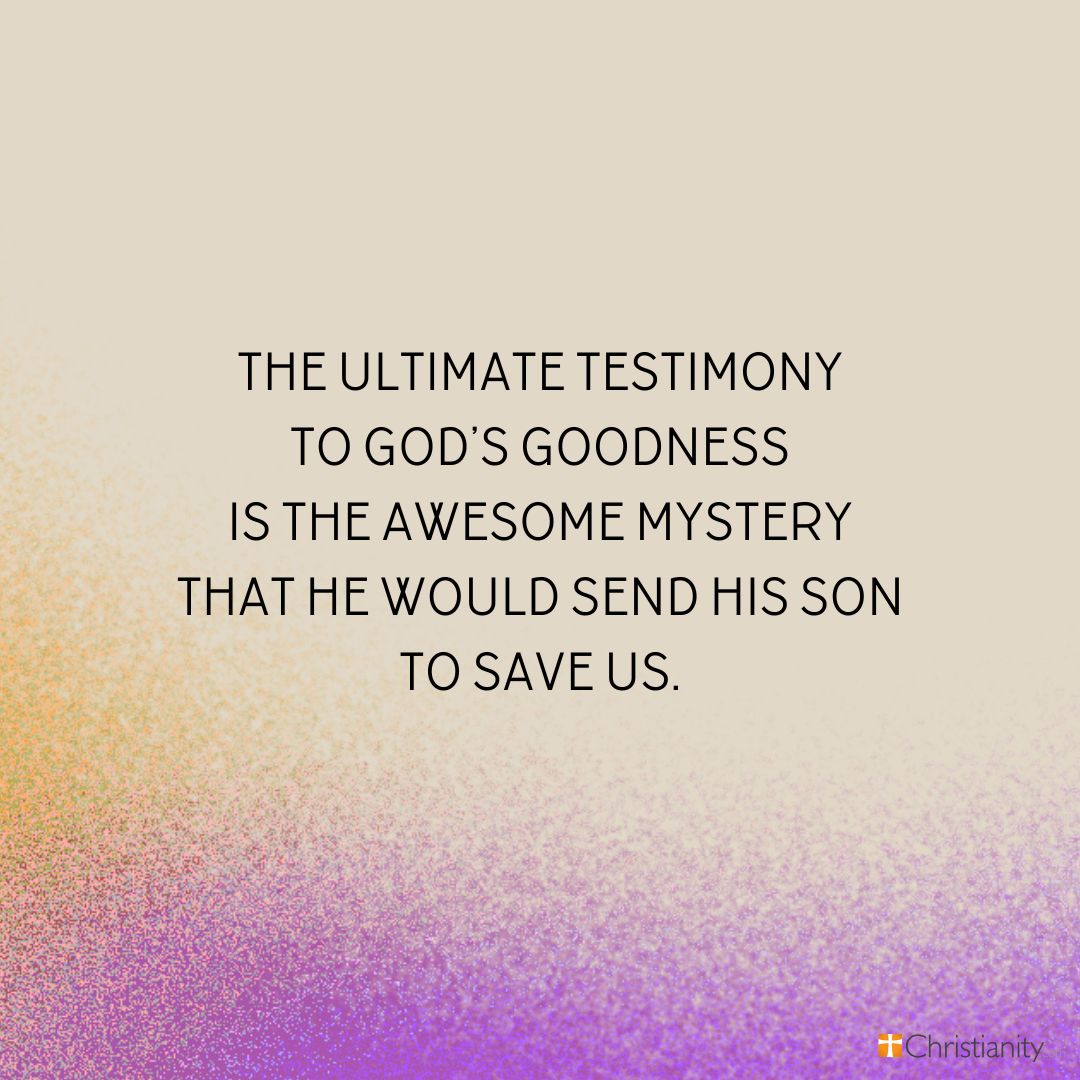
Like Job, we also are not usually shown why pain occurs in our lives or the world. But still, we have evidence of God’s power and love around us. For amid the evil present on the earth, there are examples of His grace – the provision of rain, food, and the ability to experience joy (Acts 14:17). And the ultimate testimony to His goodness is the awesome mystery that He would send His Son to save us.  

In His loving character, we can find hope even as we embrace the mystery of God’s ways and work. 

Related Resource: Finding Hope in the Midst of Suffering: A Guide to Biblical Lament

Throughout the episode, Nicole discusses the four key steps of lament as seen in scripture: turning towards God, complaining, asking for His mercy and deliverance, and ultimately trusting in Him. She encourages listeners to be transparent with God, inviting Jesus into their sorrow and discomfort. By engaging in lament, individuals can confront their complicated emotions, such as anger, despair, and disappointment, and bring them before God for healing and comfort. This episode is part of our How to Study the Bible Podcast, a show that brings life back to reading the Bible and helps you understand even the hardest parts of Scripture. If this episode helps you know and love God more, be sure to follow the How to Study the Bible Podcast on Apple or Spotify so you never miss an episode!

Photo Credit: ©iStock/Getty Images Plus/Anetlanda


Sophia BrickerSophia Bricker is a writer. Her mission is to help others grow in their relationship with Jesus through thoughtful articles, devotionals, and stories. She completed a BA and MA in Christian ministry which included extensive study of the Bible and theology, as well as an MFA in creative writing. You can read her thoughts about literature and faith at The Cross, a Pen, and a Page Substack, or visit the discipleship-based site  Cultivate, where she writes with her sister.

This article originally appeared on Christianity.com. For more faith-building resources, visit Christianity.com. Christianity.com
 

Salem News Channel Today

Sponsored Links


September 26 - Phoenix, AZ
Scottsdale Center for the Performing Arts


November 2 - Detroit, MI
Zion Christian Church in Troy


October 6 - Los Angeles, CA
Pasadena Convention Center


November 5 - San Antonio, TX
Norris Centers – The Grand Red Oak Ballroom


October 8 - Sacramento, CA
William Jessup University


November 7 - Tampa, FL
The Palladium at St. Pete College


October 22 - Minneapolis, MN
Crowne Plaza AiRE


November 15 - San Francisco, CA
Fremont Marriott Silicon Valley


October 23 - Philadelphia, PA
Green Valley Country Club


November 16 - Denver, CO
CU South Denver - Formerly Wildlife Experience


November 2 - Chicago, IL
Chicago Westin Northwest in Itasca


November 21 - Cleveland, OH
Holiday Inn Rockside in Independence


Salem Radio Network Speakers

Larry Elder is an American lawyer, writer, and radio and television personality who calls himself the "Sage of South Central" a district of Los Angeles, Larry says his philosophy is to entertain, inform, provoke and to hopefully uplift. His calling card is "we have a country to save" and to him this means returning to the bedrock Constitutional principles of limited government and maximum personal responsibility. Elder's iconoclastic wit and intellectual agility makes him a particularly attractive voice in a nation that seems weary of traditional racial dialogue.” – Los Angeles Times.

Mike Gallagher Mike Gallagher began his broadcasting career in 1978 in Dayton, Ohio. Today, he is one of the most listened-to talk radio show hosts in America, recently having been ranked in the Talkers Magazine “Heavy Hundred” list – the 100 most important talk radio hosts in America. Prior to being launched into national syndication in 1998, Mike hosted the morning show on WABC-AM in New York City. Today, Talkers Magazine reports that his show is heard by over 3.75 million weekly listeners. Besides his radio work, Mike is seen on Fox News Channel as an on-air contributor, frequently appearing on the cable news giant.

Hugh Hewitt is one of the nation’s leading bloggers and a genuine media revolutionary. He brings that expertise, his wit and what The New Yorker magazine calls his “amiable but relentless manner” to his nationally syndicated show each day.

When Dr. Sebastian Gorka was growing up, he listened to talk radio under his pillow with a transistor radio, dreaming that one day he would be behind the microphone. Beginning New Year’s Day 2019, he got his wish. Gorka now hosts America First every weekday afternoon 3 to 6pm ET. Gorka’s unique story works well on the radio. He is national security analyst for the Fox News Channel and author of two books: "Why We Fight" and "Defeating Jihad." His latest book releasing this fall is “War For America’s Soul.” He is uniquely qualified to fight the culture war and stand up for what is great about America, his adopted home country.

Broadcasting from his home station of KRLA in Los Angeles, the Dennis Prager Show is heard across the country. Everything in life – from politics to religion to relationships – is grist for Dennis’ mill. If it’s interesting, if it affects your life, then Dennis will be talking about it – with passion, humor, insight and wisdom.

Sean Hannity is a conservative radio and television host, and one of the original primetime hosts on the Fox News Channel, where he has appeared since 1996. Sean Hannity began his radio career at a college station in California, before moving on to markets in the Southeast and New York. Today, he’s one of the most listened to on-air voices. Hannity’s radio program went into national syndication on September 10, 2001, and airs on more than 500 stations. Talkers Magazine estimates Hannity’s weekly radio audience at 13.5 million. In 1996 he was hired as one of the original hosts on Fox News Channel. As host of several popular Fox programs, Hannity has become the highest-paid news anchor on television.

Michelle Malkin is a mother, wife, blogger, conservative syndicated columnist, longtime cable TV news commentator, and best-selling author of six books. She started her newspaper journalism career at the Los Angeles Daily News in 1992, moved to the Seattle Times in 1995, and has been penning nationally syndicated newspaper columns for Creators Syndicate since 1999. She is founder of conservative Internet start-ups Hot Air and Twitchy.com. Malkin has received numerous awards for her investigative journalism, including the Council on Governmental Ethics Laws (COGEL) national award for outstanding service for the cause of governmental ethics and leadership (1998), the Reed Irvine Accuracy in Media Award for Investigative Journalism (2006), the Heritage Foundation and Franklin Center for Government & Public Integrity's Breitbart Award for Excellence in Journalism (2013), the Center for Immigration Studies' Eugene Katz Award for Excellence in the Coverage of Immigration Award (2016), and the Manhattan Film Festival's Film Heals Award (2018). Married for 26 years and the mother of two teenage children, she lives with her family in Colorado. Follow her at michellemalkin.com. (Photo reprinted with kind permission from Peter Duke Photography.)

Sponsored by:

Why Is There So Much Pain in the World?

Carbonatix Pre-Player Loader

Audio By Carbonatix

Brought to you by Christianity.com

While listening to a podcast one day, I heard a prominent Christian discuss his experience of dealing with the death of his child. I had tuned into the podcast hoping to listen to an honest discussion about the problem of evil and suffering in the world, as my own experience of losing my mother brought this topic close to home for me. So, when this man said that it was God’s will for his child to die and, in effect, that it was good, I recoiled. How could he say that the good and loving Lord wanted his child to die when death is an evil that God will one day destroy? To my disappointment, the podcast host, an apologist, made no attempt to bring more nuance to the topic.  

Too often, we hear theologians and pastors make sweeping claims about the problem of pain in the world. They emphasize God’s sovereignty to the extreme of neglecting human free will and the reality of living in a sinful world. Or they depict the Lord as a powerless God who is unable to interfere on behalf of hurting people. Teachings like these lead many believers to ask faith-shaking questions. Someone may ask: “I have a chronic illness, and I pray for healing, but I am still suffering. Does God not care? Is He not powerful enough to heal me?” Another person could raise an issue with death: “Did God want my loved one to die (from disease, in a car wreck, from a shooting, by being murdered, etc.)?”  

When we look at the Bible, we do not find neatly packed answers to our questions, despite how many theologians and pastors choose to depict these issues. The issue of pain in the world is complex. We must consider the wider teaching of Scripture when thinking of individual and widespread suffering.  

And as we do, we need to hold loosely the manmade theological systems that we so easily cling to, submitting ourselves to the Bible.   

Why Does Pain Exist in a World God Created to Be Good?

After a painful experience, individuals often shake their fists at the sky. Even Christians can grow angry. They know that God is in control of all things and that He is all-powerful. Why would He allow such terrible suffering? As easy as it is to blame God, pain is not His fault. Neither is death, evil, and disease.  

God created the universe and everything in it, declaring it “very good” (Genesis 1:31, NIV). Animals and people did not die. Floods did not devastate lands. There was no disease to cause long-term pain. He had made everything good and walked with the first humans, Adam and Eve, in perfect harmony.  

But He had given a command – not to eat the fruit of the tree of the knowledge of good and evil (Genesis 2:17). This command was related to human free will. Adam and Eve could choose to love the Lord and follow Him or turn away from Him into rebellion and pride. They chose the latter option. As a result, sin and death entered the world, marring the relationship between Adam and Eve, as well as their relationship with the Lord. They both died spiritually that day and would eventually die and return to the dust from which they were created (Genesis 3:19).  

The poison of sin seeped into everything. Where plants once flourished, now they would be choked with thorns and thistles. Easy harvest was replaced with back-breaking labor (Genesis 3:17-18). Animals began devouring each other. Inequality would plague women, as they would be subjected to man and bear children in pain (Genesis 3:16). As a result of sin, all creation groans (Romans 8:22). 

So, when we hear about catastrophic hurricanes or wildfires, children being trafficked for slavery, and people dying from preventable diseases, we should not so quickly raise a fist but take a more sober look at the world around us. None of this was part of what God originally designed. Adam and Eve made a choice, which led to a sin-infected world filled with evil and pain. That is the reason individuals suffer from chronic illnesses. And yes, that is why all people die. While God knows the number of our days, He does not cause our deaths (Job 14:5). We die because we are sons and daughters of Adam, and “in Adam all die” (1 Corinthians 15:22, NIV).            

How Free Will Opens the Door to Sin and Suffering  

Not only are we born with a sinful nature, but all of us choose to sin. Like Adam and Eve, each of us has free will, and though not always to the same degree, we also all choose to go astray like our first parents (Romans 3:23). And the choices that each of us makes impact others.  

Throughout the Bible, we read about the consequences of people’s sins, which bring suffering to others. Cain chose to murder his brother Abel. Jacob knowingly deceived his brother and his father-in-law. David committed adultery and murder. Amnon raped his half-sister, Tamar. Judas betrayed the Son of God.    

The Lord did not approve of any of these actions, but still, they happened. Individuals were exercising their free will by choosing to do evil, and pain resulted. We could argue that God could have stopped or forced them to do right. Yet that would mean He would have to do away with their volition. We could no longer do wrong, but we could also no longer freely choose to love and follow the Lord. He has given us free will, which people use to do evil.  

We can say that God allows these things in His general will since He gave us the ability to choose. But morally, evil is not within God’s will. When people steal, kill, oppress, abuse, assault, and cause pain to others, they are not acting within His holy and perfect will. He is holy and righteous, “and there is no darkness in him at all” (1 John 1:5, NIV). So much pain in the world happens because of sinful humankind. 

the ultimate testimony to His goodness is the awesome mystery that He would send His Son to save us.

God Entered Our Pain to Bring Redemption and Hope

When we experience painful events, we often assume the Lord is punishing us for our sins or trying to strengthen an area of our faith. God certainly can use bad circumstances for our good (Romans 8:28; Genesis 50:20). However, we should not assume pain occurs in our life because God is inflicting us or standing over us like a sergeant demanding we do better. We live in a fallen world infected by sin. Sometimes, that is the only reason we have for our suffering.  

Our Lord, though, cares about our pain. He did not sit back and watch the world decay, powerless to change anything. After Adam and Eve sinned, He clothed them in animal skins, covering their sin and nakedness (Genesis 3:21). This act foreshadowed what the Lord later did by sending His Son into the world to save us (John 3:16).  

God the Son took on human flesh and lived in this sinful world. He knows what it is like to mourn the loss of a loved one, to go hungry, and to experience pain. In love, He entered our suffering and bore our sins on the cross. The One who endured the most pain is the One who brought our healing (Isaiah 53:5; 1 Peter 2:24). He redeems us through His death and resurrection, bringing new life to all who believe. And this redemption will one day soon impact all creation when all things are made new (Revelation 21:5). 

In response to all the suffering and evil in the world, God gave us Himself. He could have stood far off and left us to our sinful fate. However, He chose to enter our world and take on human flesh, dying in our place to provide forgiveness for sins. Whenever we are reminded of the immense pain in the world, we need to turn our eyes to the cross. There, we find a nail-scarred Savior who carried all the world’s sins to bring hope and healing to all who believe. Pain is a reality, but so is the truth that our Lord cares and has overcome.     

Finding Hope in the Mystery of God’s Ways

An aspect of the question of pain that many of us are not as comfortable grappling with is mystery. We desire systematic answers that explain exactly why events happen. But many situations in life are not so easily grasped, and neither are the ways of the Lord (Isaiah 55:8-9).   

Perhaps this is complicated further because of the predominance of prosperity teachings in America. For example, prosperity teachers advocate that following God brings blessings (in the form of material goods and health), while disobedience brings punishment. Such logic defies Scriptural teaching and what we see in the world. Why, then, do we hear about evil people prospering? Or why is it that some individuals live in comfort and ease while others suffer in poverty and oppression? The teachings that so often infiltrate our churches fail to contend with mystery.  

What we can know is that the living Lord is good, loving, and just. We see evidence of His goodness and power in creation, as He showed Job (Job 38-41). Central to Job’s story is the problem of evil and suffering, yet nowhere in the book does the Lord provide a systematic answer to Job’s pain. His power and presence are the closest we come to a response since Job never learns of Satan’s involvement or why God allowed the pain.  

Like Job, we also are not usually shown why pain occurs in our lives or the world. But still, we have evidence of God’s power and love around us. For amid the evil present on the earth, there are examples of His grace – the provision of rain, food, and the ability to experience joy (Acts 14:17). And the ultimate testimony to His goodness is the awesome mystery that He would send His Son to save us.  

In His loving character, we can find hope even as we embrace the mystery of God’s ways and work. 

Related Resource: Finding Hope in the Midst of Suffering: A Guide to Biblical Lament

Throughout the episode, Nicole discusses the four key steps of lament as seen in scripture: turning towards God, complaining, asking for His mercy and deliverance, and ultimately trusting in Him. She encourages listeners to be transparent with God, inviting Jesus into their sorrow and discomfort. By engaging in lament, individuals can confront their complicated emotions, such as anger, despair, and disappointment, and bring them before God for healing and comfort. This episode is part of our How to Study the Bible Podcast, a show that brings life back to reading the Bible and helps you understand even the hardest parts of Scripture. If this episode helps you know and love God more, be sure to follow the How to Study the Bible Podcast on Apple or Spotify so you never miss an episode!

Photo Credit: ©iStock/Getty Images Plus/Anetlanda


Sophia BrickerSophia Bricker is a writer. Her mission is to help others grow in their relationship with Jesus through thoughtful articles, devotionals, and stories. She completed a BA and MA in Christian ministry which included extensive study of the Bible and theology, as well as an MFA in creative writing. You can read her thoughts about literature and faith at The Cross, a Pen, and a Page Substack, or visit the discipleship-based site  Cultivate, where she writes with her sister.

This article originally appeared on Christianity.com. For more faith-building resources, visit Christianity.com. Christianity.com
 

Salem News Channel Today

Sponsored Links

On Air & Up Next

See the Full Program Guide