5 Things Jesus Did in the Days Leading Up to His Crucifixion

Carbonatix Pre-Player Loader

Audio By Carbonatix

As a pastor, I’ve had the opportunity of being around several people as they are dying. I can tell you that in these moments, if they are cognizant, their words and actions have a profound significance.

One could argue that Jesus was always intentional. Yet, there seems to be added significance to events leading up to His death. He was fully aware of the impending culmination of His earthly ministry, and these actions often held deep symbolism and theological importance.

There were many things Jesus did in the days leading up to His crucifixion. Here are five which hold great significance.

Photo credit: ©Getty Images/Wheatfield

1. Cleansing of the Temple and Cursing the Fig Tree

1. Cleansing of the Temple and Cursing the Fig Tree

Matthew 21:1-22; Mark 11:1-26; Luke 19:28-48

You might call this the triumphal entry, but the way the gospel writers frame this, it seems like anything but triumphal. If you read the Psalm of Solomon, Jewish apocryphal literature, you get a glimpse at the Messianic expectation. This is what they expected the Messiah to do when he takes the throne of his kingdom:

“Behold, O Lord, and raise up unto them their king, the son of David, at the time known to you, O God, in order that he may reign over Israel your servant. And gird him with strength, that he may shatter unrighteous rulers, and that he may purge Jerusalem from gentiles who trample (her) down to destruction. Wisely, righteously he shall thrust out sinners from (the) inheritance; he shall destroy the arrogance of the sinner as a potter's jar. With a rod of iron he shall shatter all their substance; he shall destroy the godless nations with the word of his mouth.”

Jesus, in contrast, comes riding in on a donkey. In Mark’s account it is incredibly anti-climactic. Jesus gets there and nobody is in town. They leave for the morning. Then his first action is to curse a fig tree. Shortly after, he clears the temple of all the money-changers. It’s shocking because the Messiah was supposed to rid the kingdom of the godless pagans. Why is he going after the religious leaders? 

The cursing of the fig tree is connected to the temple cleansing. Both are indictments against the temple system and the corrupt religious leaders. The fig tree was advertising fruitfulness but it was in reality good for nothing. The temple system, Jesus is showing us, was similar — outwardly beautiful, inwardly rotten to the core. 

One of Jesus’ final actions was to symbolically turn his back to the religious leaders of the day and the temple system. What should have brought life was crushing people and shutting the doors of the kingdom in the face of others. Jesus would have none of it.

Photo credit: ©Getty Images/Valentyn Volkov

2. The Anointing at Bethany

2. The Anointing at Bethany

Matthew 26:6-13; Mark 14:3-9; John 12:1-8

This isn’t technically something that Jesus did but more what was done to Him. In Bethany, a woman (identified as Mary in John's Gospel) anointed Jesus with expensive perfume. This act of extravagant devotion was met with criticism by some disciples, but Jesus defended her, recognizing it as a preparation for His burial (Matthew 26:12).

The gospel writers also intentionally have the religious leaders lurking in the background. It’s a beautiful contrast. Mary breaks up this jar of expensive perfume. It would have been her most valuable possession — but she has now found One who is more valuable. She busts up her treasure in order to give it to Jesus.

But the religious leaders are the opposite. They are plotting to kill Jesus. Just as that alabaster jar is burst upon the floor, so the religious leaders wish they could do to Jesus. And that is what the idolatrous heart will always do — it will sacrifice Jesus for the idol. The redeemed heart does the opposite — it sacrifices the idol for the sake of Jesus.

There is an action here on the part of Jesus. He is accepting worship. That is profound. Worship was reserved for God alone. By allowing this expression of worship, Jesus is taking His rightful place as the object of our affection.

Photo credit: ©Getty Images/Madeleine_Steinbach
3. The Last Supper

3. The Last Supper

Matthew 26:17-30; Mark 14:12-26; Luke 22:7-23; John 13:1-17

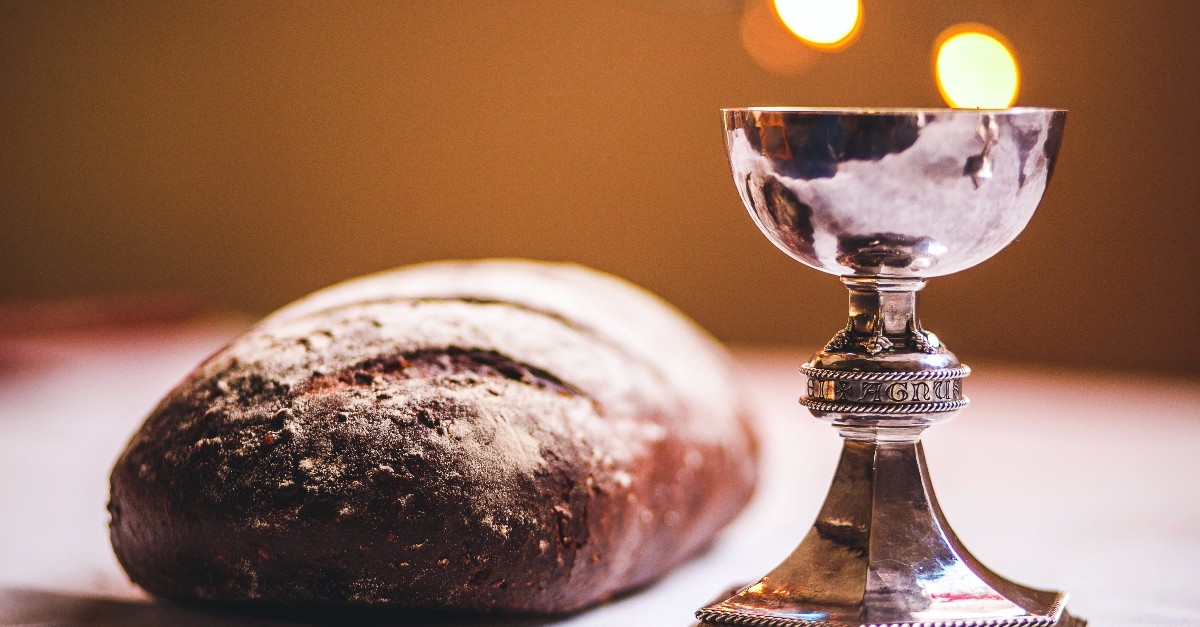
N.T. Wright once said, “When Jesus himself wanted to explain to his disciples what his forthcoming death was all about, he didn’t give them a theory, he gave them a meal.”

It’s amazing to me that in Luke, Jesus says, “I have earnestly desired to eat this Passover with you before I suffer.” Earnestly desired is an expression of intense longing. It’s his last night. And he wants to be with his friends. Certainly, we see his humanity here. He loves these men that he has spent this time with. And Passover was a picture, a celebration, of God’s rescue.

Jesus would have sat around this table with the disciples whom he loved dearly. Certainly, the Son who would have been present at the original Passover, now sees the fulfillment. It’s no longer in shadow form but now the Lamb of God would spill his blood for humanity — pictured in the very disciples around the table.

‌This is why He is excited. Yes, it is a time for suffering. But this is the time for the good news. It is because of the joy set before Him that he’ll endure this brutal cross.

I also can’t help but think about those men who are around the table. Jesus knows their future. In only a few moments, they’ll fall asleep at Jesus’ time of great need. He knows that Peter is only hours from betraying Him. The other disciples will walk away. He will be abandoned by the very ones that will share this meal.

‌He knows all the ups and downs of their muddy obedience. Peter will be a hypocrite. But he’ll also have times when he totally “gets it.” He will see all the failures and falls and boneheaded things they will do until the point of their death. But this isn’t his focus in that moment. It’s on the meal. The significance of this meal will overcome all their weakness and rebellion.

Photo credit: Unsplash/jhc

4. The Farewell Discourse and High Priestly Prayer

4. The Farewell Discourse and High Priestly Prayer

John 14-17

After the Last Supper, Jesus shares an intimate moment with his disciples. In the Gospel of John, this is known as the Farewell Discourse and it culminates in Jesus’ prayer for them — and ultimately for us. This might be one of the most intimate moments in all of Jesus’ ministry.

The discourse itself is rich in theology and pastoral care. Most see the discourse as having several distinct parts. The first part focuses upon his departure and their sorrow. Here he gives them assurance of His love and continued dedication to them. He will give them “the Comforter.” Jesus then moves to a metaphor of “abiding in the vine.” It is a call to obedience and pointing to Jesus as the source of their continued life. After this part of the discourse, Jesus circles back to the promise of the Spirit, but now the Spirit will help them with coming persecution. Here there is a contrast between the world and their love for one another.

The farewell discourse closes with Jesus’ prayer for the disciples as well as those of us who would become disciples through their ministry. Jesus intercedes for the disciples and for all future believers, asking the Father to protect them from evil, to sanctify them in the truth, and to unify them as one. In this prayer we see Jesus’ heart for His followers and His hopes for their future.

The heart of the Good Shepherd is on full display here. One of the last things Jesus did was assure the disciples and encourage them. He then prays for them. Even in his final moments Jesus was thinking of others.

Photo credit: ©Getty Images/Olga Chetvergova

5. The Agony in the Garden and Betrayal

5. The Agony in the Garden and Betrayal

Matthew 26:36-56; Mark 14:32-52; Luke 22:39-53; John 18:1-12

Luke tells us that in the Garden of Gethsemane, Jesus is in such anguish that He is sweating blood. It is not the physical suffering that has Jesus so worked up. It isn’t even His death. What is causing the anguish is the prospect of drinking the cup of God’s wrath. Jonathan Edwards says it well:

“Christ was going to be cast into a dreadful furnace of wrath, and it was not proper that he should plunge himself into it blindfold, as not knowing how dreadful the furnace was. Therefore that he might not do so, God first brought him and set him at the mouth of the furnace, that he might look in, and stand and view its fierce and raging flames, and might see where he was going, and might voluntarily enter into it and bear it for sinners, as knowing what it was. This view Christ had in his agony. Then God brought the cup that he was to drink, and set it down before him, that he might have a full view of it, and see what it was before he took it and drank it.”

In this moment of distress, Jesus looks to His disciples for companionship. But they fall asleep. This foreshadows their most substantial abandonment that will soon come. The greater point, though, is that Jesus must face the anguish of Gethsemane, and the cross, alone. He alone can drink the cup of staggering.

Jesus’ humanity is on full display in the Garden. If we can point to Christ having a “weak” moment it would be this one. He remains sinless, yet at this point is experiencing in His body the fullness of what it truly means to take upon our sin. It is here that He will experience our grief. At the Garden will be the onslaught of temptation which no human has faced since. It is fitting to say that He was tempted in every way. Viewing this cup is what causes Jesus to pray, “if it is possible take this cup from me.” 

Can you hear Jesus’ prayer

“Abba, you can do anything! Can you take this cup from me? Is it possible to redeem sinners and yet not suffer estrangement from you? Is it possible to redeem them in any way other than me being the sin-bearer.” 

No, he didn’t say exactly those words. But that is the appeal. That is why He is asking if it is possible for the cup to pass. 

He appeals. 

Silence. 

He appeals a second time. 

Silence. 

He appeals a third time. 

Silence. 

Why silence? Because there is no other way. God could have chosen not to sacrifice His Son in our place. He could have left us to our just reward. But because He had purposed before the foundation of the world to redeem us —it wasn’t possible. As John Stott has said, “God’s purpose of love was to save sinners, and to save them righteously; but this would be impossible without the sin-bearing death of the Savior.”

These final actions before the crucifixion show Jesus’ love for humanity and His dedication to the Father. As we reflect upon them, may we remember anew what Christ has accomplished on our behalf.

RELATED PRAYER:

Photo credit: ©Getty Images/rudall30

 

Salem News Channel Today

Sponsored Links


September 26 - Phoenix, AZ
Scottsdale Center for the Performing Arts


November 2 - Detroit, MI
Zion Christian Church in Troy


October 6 - Los Angeles, CA
Pasadena Convention Center


November 5 - San Antonio, TX
Norris Centers – The Grand Red Oak Ballroom


October 8 - Sacramento, CA
William Jessup University


November 7 - Tampa, FL
The Palladium at St. Pete College


October 22 - Minneapolis, MN
Crowne Plaza AiRE


November 15 - San Francisco, CA
Fremont Marriott Silicon Valley


October 23 - Philadelphia, PA
Green Valley Country Club


November 16 - Denver, CO
CU South Denver - Formerly Wildlife Experience


November 2 - Chicago, IL
Chicago Westin Northwest in Itasca


November 21 - Cleveland, OH
Holiday Inn Rockside in Independence


Salem Radio Network Speakers

Larry Elder is an American lawyer, writer, and radio and television personality who calls himself the "Sage of South Central" a district of Los Angeles, Larry says his philosophy is to entertain, inform, provoke and to hopefully uplift. His calling card is "we have a country to save" and to him this means returning to the bedrock Constitutional principles of limited government and maximum personal responsibility. Elder's iconoclastic wit and intellectual agility makes him a particularly attractive voice in a nation that seems weary of traditional racial dialogue.” – Los Angeles Times.

Mike Gallagher Mike Gallagher began his broadcasting career in 1978 in Dayton, Ohio. Today, he is one of the most listened-to talk radio show hosts in America, recently having been ranked in the Talkers Magazine “Heavy Hundred” list – the 100 most important talk radio hosts in America. Prior to being launched into national syndication in 1998, Mike hosted the morning show on WABC-AM in New York City. Today, Talkers Magazine reports that his show is heard by over 3.75 million weekly listeners. Besides his radio work, Mike is seen on Fox News Channel as an on-air contributor, frequently appearing on the cable news giant.

Hugh Hewitt is one of the nation’s leading bloggers and a genuine media revolutionary. He brings that expertise, his wit and what The New Yorker magazine calls his “amiable but relentless manner” to his nationally syndicated show each day.

When Dr. Sebastian Gorka was growing up, he listened to talk radio under his pillow with a transistor radio, dreaming that one day he would be behind the microphone. Beginning New Year’s Day 2019, he got his wish. Gorka now hosts America First every weekday afternoon 3 to 6pm ET. Gorka’s unique story works well on the radio. He is national security analyst for the Fox News Channel and author of two books: "Why We Fight" and "Defeating Jihad." His latest book releasing this fall is “War For America’s Soul.” He is uniquely qualified to fight the culture war and stand up for what is great about America, his adopted home country.

Broadcasting from his home station of KRLA in Los Angeles, the Dennis Prager Show is heard across the country. Everything in life – from politics to religion to relationships – is grist for Dennis’ mill. If it’s interesting, if it affects your life, then Dennis will be talking about it – with passion, humor, insight and wisdom.

Sean Hannity is a conservative radio and television host, and one of the original primetime hosts on the Fox News Channel, where he has appeared since 1996. Sean Hannity began his radio career at a college station in California, before moving on to markets in the Southeast and New York. Today, he’s one of the most listened to on-air voices. Hannity’s radio program went into national syndication on September 10, 2001, and airs on more than 500 stations. Talkers Magazine estimates Hannity’s weekly radio audience at 13.5 million. In 1996 he was hired as one of the original hosts on Fox News Channel. As host of several popular Fox programs, Hannity has become the highest-paid news anchor on television.

Michelle Malkin is a mother, wife, blogger, conservative syndicated columnist, longtime cable TV news commentator, and best-selling author of six books. She started her newspaper journalism career at the Los Angeles Daily News in 1992, moved to the Seattle Times in 1995, and has been penning nationally syndicated newspaper columns for Creators Syndicate since 1999. She is founder of conservative Internet start-ups Hot Air and Twitchy.com. Malkin has received numerous awards for her investigative journalism, including the Council on Governmental Ethics Laws (COGEL) national award for outstanding service for the cause of governmental ethics and leadership (1998), the Reed Irvine Accuracy in Media Award for Investigative Journalism (2006), the Heritage Foundation and Franklin Center for Government & Public Integrity's Breitbart Award for Excellence in Journalism (2013), the Center for Immigration Studies' Eugene Katz Award for Excellence in the Coverage of Immigration Award (2016), and the Manhattan Film Festival's Film Heals Award (2018). Married for 26 years and the mother of two teenage children, she lives with her family in Colorado. Follow her at michellemalkin.com. (Photo reprinted with kind permission from Peter Duke Photography.)

Sponsored by:

5 Things Jesus Did in the Days Leading Up to His Crucifixion

Carbonatix Pre-Player Loader

Audio By Carbonatix

As a pastor, I’ve had the opportunity of being around several people as they are dying. I can tell you that in these moments, if they are cognizant, their words and actions have a profound significance.

One could argue that Jesus was always intentional. Yet, there seems to be added significance to events leading up to His death. He was fully aware of the impending culmination of His earthly ministry, and these actions often held deep symbolism and theological importance.

There were many things Jesus did in the days leading up to His crucifixion. Here are five which hold great significance.

Photo credit: ©Getty Images/Wheatfield

1. Cleansing of the Temple and Cursing the Fig Tree

1. Cleansing of the Temple and Cursing the Fig Tree

Matthew 21:1-22; Mark 11:1-26; Luke 19:28-48

You might call this the triumphal entry, but the way the gospel writers frame this, it seems like anything but triumphal. If you read the Psalm of Solomon, Jewish apocryphal literature, you get a glimpse at the Messianic expectation. This is what they expected the Messiah to do when he takes the throne of his kingdom:

“Behold, O Lord, and raise up unto them their king, the son of David, at the time known to you, O God, in order that he may reign over Israel your servant. And gird him with strength, that he may shatter unrighteous rulers, and that he may purge Jerusalem from gentiles who trample (her) down to destruction. Wisely, righteously he shall thrust out sinners from (the) inheritance; he shall destroy the arrogance of the sinner as a potter's jar. With a rod of iron he shall shatter all their substance; he shall destroy the godless nations with the word of his mouth.”

Jesus, in contrast, comes riding in on a donkey. In Mark’s account it is incredibly anti-climactic. Jesus gets there and nobody is in town. They leave for the morning. Then his first action is to curse a fig tree. Shortly after, he clears the temple of all the money-changers. It’s shocking because the Messiah was supposed to rid the kingdom of the godless pagans. Why is he going after the religious leaders? 

The cursing of the fig tree is connected to the temple cleansing. Both are indictments against the temple system and the corrupt religious leaders. The fig tree was advertising fruitfulness but it was in reality good for nothing. The temple system, Jesus is showing us, was similar — outwardly beautiful, inwardly rotten to the core. 

One of Jesus’ final actions was to symbolically turn his back to the religious leaders of the day and the temple system. What should have brought life was crushing people and shutting the doors of the kingdom in the face of others. Jesus would have none of it.

Photo credit: ©Getty Images/Valentyn Volkov

2. The Anointing at Bethany

2. The Anointing at Bethany

Matthew 26:6-13; Mark 14:3-9; John 12:1-8

This isn’t technically something that Jesus did but more what was done to Him. In Bethany, a woman (identified as Mary in John's Gospel) anointed Jesus with expensive perfume. This act of extravagant devotion was met with criticism by some disciples, but Jesus defended her, recognizing it as a preparation for His burial (Matthew 26:12).

The gospel writers also intentionally have the religious leaders lurking in the background. It’s a beautiful contrast. Mary breaks up this jar of expensive perfume. It would have been her most valuable possession — but she has now found One who is more valuable. She busts up her treasure in order to give it to Jesus.

But the religious leaders are the opposite. They are plotting to kill Jesus. Just as that alabaster jar is burst upon the floor, so the religious leaders wish they could do to Jesus. And that is what the idolatrous heart will always do — it will sacrifice Jesus for the idol. The redeemed heart does the opposite — it sacrifices the idol for the sake of Jesus.

There is an action here on the part of Jesus. He is accepting worship. That is profound. Worship was reserved for God alone. By allowing this expression of worship, Jesus is taking His rightful place as the object of our affection.

Photo credit: ©Getty Images/Madeleine_Steinbach

3. The Last Supper

3. The Last Supper

Matthew 26:17-30; Mark 14:12-26; Luke 22:7-23; John 13:1-17

N.T. Wright once said, “When Jesus himself wanted to explain to his disciples what his forthcoming death was all about, he didn’t give them a theory, he gave them a meal.”

It’s amazing to me that in Luke, Jesus says, “I have earnestly desired to eat this Passover with you before I suffer.” Earnestly desired is an expression of intense longing. It’s his last night. And he wants to be with his friends. Certainly, we see his humanity here. He loves these men that he has spent this time with. And Passover was a picture, a celebration, of God’s rescue.

Jesus would have sat around this table with the disciples whom he loved dearly. Certainly, the Son who would have been present at the original Passover, now sees the fulfillment. It’s no longer in shadow form but now the Lamb of God would spill his blood for humanity — pictured in the very disciples around the table.

‌This is why He is excited. Yes, it is a time for suffering. But this is the time for the good news. It is because of the joy set before Him that he’ll endure this brutal cross.

I also can’t help but think about those men who are around the table. Jesus knows their future. In only a few moments, they’ll fall asleep at Jesus’ time of great need. He knows that Peter is only hours from betraying Him. The other disciples will walk away. He will be abandoned by the very ones that will share this meal.

‌He knows all the ups and downs of their muddy obedience. Peter will be a hypocrite. But he’ll also have times when he totally “gets it.” He will see all the failures and falls and boneheaded things they will do until the point of their death. But this isn’t his focus in that moment. It’s on the meal. The significance of this meal will overcome all their weakness and rebellion.

Photo credit: Unsplash/jhc

4. The Farewell Discourse and High Priestly Prayer

4. The Farewell Discourse and High Priestly Prayer

John 14-17

After the Last Supper, Jesus shares an intimate moment with his disciples. In the Gospel of John, this is known as the Farewell Discourse and it culminates in Jesus’ prayer for them — and ultimately for us. This might be one of the most intimate moments in all of Jesus’ ministry.

The discourse itself is rich in theology and pastoral care. Most see the discourse as having several distinct parts. The first part focuses upon his departure and their sorrow. Here he gives them assurance of His love and continued dedication to them. He will give them “the Comforter.” Jesus then moves to a metaphor of “abiding in the vine.” It is a call to obedience and pointing to Jesus as the source of their continued life. After this part of the discourse, Jesus circles back to the promise of the Spirit, but now the Spirit will help them with coming persecution. Here there is a contrast between the world and their love for one another.

The farewell discourse closes with Jesus’ prayer for the disciples as well as those of us who would become disciples through their ministry. Jesus intercedes for the disciples and for all future believers, asking the Father to protect them from evil, to sanctify them in the truth, and to unify them as one. In this prayer we see Jesus’ heart for His followers and His hopes for their future.

The heart of the Good Shepherd is on full display here. One of the last things Jesus did was assure the disciples and encourage them. He then prays for them. Even in his final moments Jesus was thinking of others.

Photo credit: ©Getty Images/Olga Chetvergova

5. The Agony in the Garden and Betrayal

5. The Agony in the Garden and Betrayal

Matthew 26:36-56; Mark 14:32-52; Luke 22:39-53; John 18:1-12

Luke tells us that in the Garden of Gethsemane, Jesus is in such anguish that He is sweating blood. It is not the physical suffering that has Jesus so worked up. It isn’t even His death. What is causing the anguish is the prospect of drinking the cup of God’s wrath. Jonathan Edwards says it well:

“Christ was going to be cast into a dreadful furnace of wrath, and it was not proper that he should plunge himself into it blindfold, as not knowing how dreadful the furnace was. Therefore that he might not do so, God first brought him and set him at the mouth of the furnace, that he might look in, and stand and view its fierce and raging flames, and might see where he was going, and might voluntarily enter into it and bear it for sinners, as knowing what it was. This view Christ had in his agony. Then God brought the cup that he was to drink, and set it down before him, that he might have a full view of it, and see what it was before he took it and drank it.”

In this moment of distress, Jesus looks to His disciples for companionship. But they fall asleep. This foreshadows their most substantial abandonment that will soon come. The greater point, though, is that Jesus must face the anguish of Gethsemane, and the cross, alone. He alone can drink the cup of staggering.

Jesus’ humanity is on full display in the Garden. If we can point to Christ having a “weak” moment it would be this one. He remains sinless, yet at this point is experiencing in His body the fullness of what it truly means to take upon our sin. It is here that He will experience our grief. At the Garden will be the onslaught of temptation which no human has faced since. It is fitting to say that He was tempted in every way. Viewing this cup is what causes Jesus to pray, “if it is possible take this cup from me.” 

Can you hear Jesus’ prayer

“Abba, you can do anything! Can you take this cup from me? Is it possible to redeem sinners and yet not suffer estrangement from you? Is it possible to redeem them in any way other than me being the sin-bearer.” 

No, he didn’t say exactly those words. But that is the appeal. That is why He is asking if it is possible for the cup to pass. 

He appeals. 

Silence. 

He appeals a second time. 

Silence. 

He appeals a third time. 

Silence. 

Why silence? Because there is no other way. God could have chosen not to sacrifice His Son in our place. He could have left us to our just reward. But because He had purposed before the foundation of the world to redeem us —it wasn’t possible. As John Stott has said, “God’s purpose of love was to save sinners, and to save them righteously; but this would be impossible without the sin-bearing death of the Savior.”

These final actions before the crucifixion show Jesus’ love for humanity and His dedication to the Father. As we reflect upon them, may we remember anew what Christ has accomplished on our behalf.

RELATED PRAYER:

Photo credit: ©Getty Images/rudall30

 

Salem News Channel Today

Sponsored Links

On Air & Up Next

See the Full Program Guide