3 Things to Know about the Persecution of Nigerian Christians

Carbonatix Pre-Player Loader

Audio By Carbonatix

Did you know that Nigeria is one of the deadliest countries for Christians? With thousands killed in recent years amid ongoing violence and religious tension, television host and comedian Bill Maher notes that what's been happening is considered mass "genocide." If you're unfamiliar with the term, "genocide" refers to the mass extermination of a people group. It was most commonly coined during Hitler's persecution of the Jews or during Joseph Stalin's Russian Revolution. Sadly, genocide is far from being eradicated in today's society; it just goes under wraps more than we'd like to admit.

Today, Christian persecution is sweeping the headlines. Experts emphasize that the increasing crisis has not only involved religion, but also politics, poverty, and security. In the mess of news stories and interviews, how can we clarify what's really happening? More importantly, what should we as fellow brothers and sisters in Christ understand beyond the headlines? For months, politicians in Washington have protested that Islamist militants were systematically targeting Christians in Nigeria.

According to the BBC, recent threats have been the last straw. President Trump hasn't just issued a threat to the Nigerian government if they continue to allow the "killing of Christians," but that he pledged to "do things to Nigeria that Nigeria is not going to be happy about" and "go into that now-disgraced country guns-a-blazing." Scripturally, we know that more violence is never the solution to violence (Matthew 26:52). However, these recent affairs call for justice and action.

Photo credit: ©Getty Images/Nabil Kamara

Here are three things to know about the recent persecution of Nigerian Christians:
1. The Violence Is Real, but the Causes Are Complex

1. The Violence Is Real, but the Causes Are Complex

While I wish I could write that the persecution isn't true, I can't. Christian persecution isn't just happening, but it's occurring rapidly and in mass accounts. According to reports on the Boko Harum Group, Nigeria has killed over 100,000 Christians since 2009 and burned 18,000 churches. Many of these accounts have been reported, but it's also suspected that many cases of persecution also go undetected.

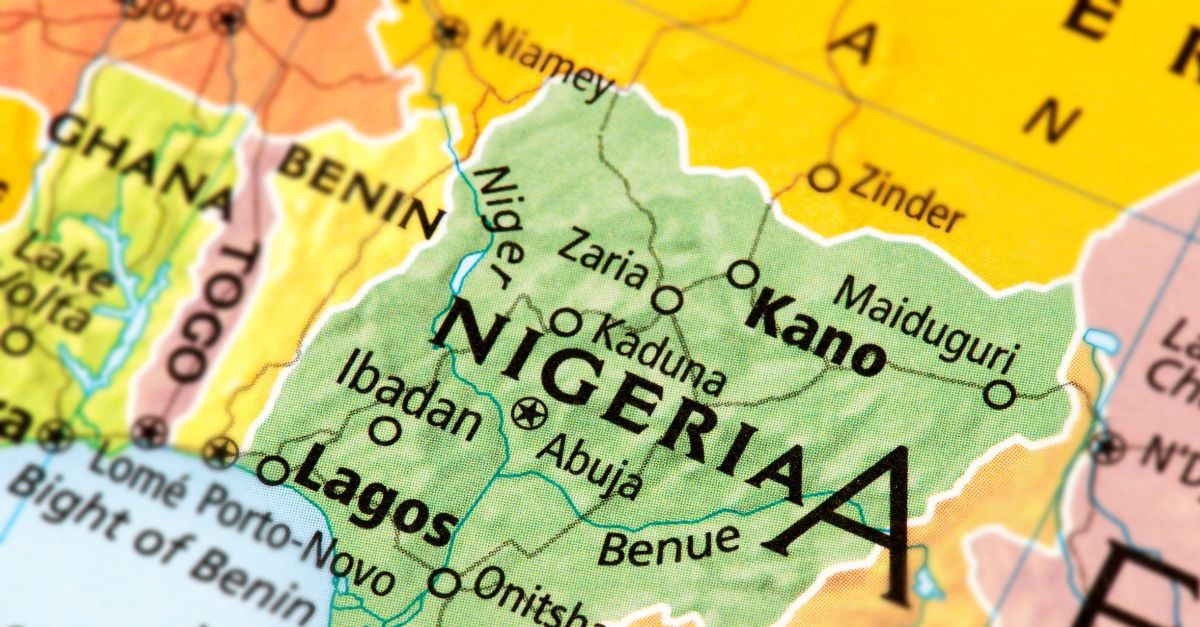
In many northern and central regions of Nigeria, Christians have suffered deadly attacks. From church burnings to kidnappings and murders, states like Kaduna, Plateau, and Benue are at the top of the list. Sadly, this violence isn't just driven by religion, but by ethnic and resource tensions between largely Muslim Fulani herders and predominantly Christian farming communities. The competition over land and grazing rights has reached new heights, worsened by climate change, population growth, and weak governance.

Confidence McHarry, a senior security analyst at Africa-focussed consultancy SBM Intelligence, explains this tension well: "It might be ethnic in nature - they're seeking to grab lands, they're seeking to expand territory, but the more they displace communities and the more they attack worship centres, the more these things tend to get looked at in that light.”

With the addition and role of extremist groups like the Boko Haram and ISWAP added to this fire, groups that explicitly target Christians, but operate alongside other local conflicts, Christians are in danger: “Christianity is facing an existential threat in Nigeria," said Trump, but other groups are at risk as well. It's not simply a matter of one group versus the other, but a tangled mess of ethnic, economic, and political issues. Amid the web, one thing is certain: Calling this crisis "religious" doesn't just oversimplify the issue, but should draw our attention to it further.

Photo credit: ©Getty Images/Ugochukwu Odom
2. The Nigerian Government Denies Religious Persecution

2. The Nigerian Government Denies Religious Persecution

Despite the claims and confident accusations, PBS NewsHour flashes back to Trump's administrative coverage in 2020, claiming that Nigeria was targeting Christians. Nigerian Government officials haven't just rejected this accusation, but asserted that violence affects all communities. Noting that the state is doing everything it can to contain insecurity, doubts have arisen. Nigerian President Bola Ahmed Tinubu reports that the Nigerian government is committed to combating violent extremism regardless of who is being persecuted. In a statement issued by the Foreign Ministry, Tinubu added that they've never had any form of policy targeting any group based on religion and that the government is cautious about acknowledging religious persecution towards any group. This is because doing so could affect international reputation, aid, and internal unity.

On the flip side, human rights organizations like Open Doors and Amnesty International beg to differ, reporting a disproportionate number of Christian casualties. Christian leaders and observers like these argue that the denial doesn't just sting, but it allows the violence to be swept under the rug. If these actions continue, the violence will remain unchecked. Is Nigeria's government in the right to resist "religious persecution" as a label? Even for the sake of accountability or global responses?

Photo credit: ©Getty Images/Omersukrugoksu

3. Global Awareness Is Rising, but Action Is Slow

3. Global Awareness Is Rising, but Action Is Slow

According to Open Door's World Watch List for Christian persecution, Nigeria tops the list, ranking at number 7. How are these Christians specifically persecuted? Islamic oppression, ethno-religious hostility, dictatorial paranoia, and organized corruption and crime, to name a few. But while international faith and advocacy groups have taken a stand and both U.S. and U.K. organizations have pressured Nigeria to improve protection for religious minorities, limited aid and intervention remain.

Between conflicting news channels and sources, media narratives differ. Western coverage highlights Christian genocide, but local sources highlight banditry and terrorism. Sadly, several attacks are unreported, and victims often go unnamed. This is common not just with Christian persecution, but persecution and violence in general. Think about human trafficking, for instance. Hundreds of cases go unknown until it's too late. When will society learn to take a stand?

If we want to see change, we must learn to act not out of defensiveness, but with dignity for all human rights. This is what Bulama, a human rights advocate, notes. In his response, Bulama believes the Nigerian government can address Trump’s criticism by “moving beyond defensiveness. It should meet misinformation with data,” he suggested, adding that “this moment calls for candor, not posturing. Constructive dialogue, not social-media outrage, will best serve Nigeria’s interests — and the cause of peace,” he advised. Maybe we should all strive for a bit more moments of peace in our conversations? A little less of the news and a little more of constructive dialogue with our neighbors?

Photo Credit: ©iStock/Getty Images Plus/Dmytro Yarmolin
A Call to Action

A Call to Action

Today, the global Church's role in addressing persecution is twofold: to raise awareness and to support peacebuilding, relief, and advocacy for all. The violence many around the world are facing is real and complex. Government agencies are complicated, and when one denies religious persecution, it can be challenging to get a foot forward. Likewise, international awareness might be growing, but it's slow to translate into actual, practical change.

So, what can we do? We can acknowledge the pain of our brothers and sisters in Christ, but we can also pray for them. We can pray for God to soften the hearts of Nigerian leaders and be open to protecting those of all religions who are facing immense persecution. We can also advocate, take a stand, and stay informed beyond simplified or biased narratives. The threat of so many Christians is terrifying, but it's also a bold testimony to their faith. Let us take a stand against the darkness, even when darkness is eager to persist.

Related Resource: Could Peace in the Middle East Set the Stage for End Times?

Could the world be closer to the events foretold in Revelation than ever before? In this timely episode of The Greg Laurie Show, Pastor Greg talks with end-times scholar and pastor Dr. Mark Hitchcock to take us inside one of the Bible’s most misunderstood—and most essential—books: Revelation. If you enjoy this conversation, be sure to follow The Greg Laurie Show on Apple or Spotify so you never miss an episode!

Photo Credit: ©iStock/Getty Images Plus/WDnet

 

Salem News Channel Today

Sponsored Links


September 26 - Phoenix, AZ
Scottsdale Center for the Performing Arts


November 2 - Detroit, MI
Zion Christian Church in Troy


October 6 - Los Angeles, CA
Pasadena Convention Center


November 5 - San Antonio, TX
Norris Centers – The Grand Red Oak Ballroom


October 8 - Sacramento, CA
William Jessup University


November 7 - Tampa, FL
The Palladium at St. Pete College


October 22 - Minneapolis, MN
Crowne Plaza AiRE


November 15 - San Francisco, CA
Fremont Marriott Silicon Valley


October 23 - Philadelphia, PA
Green Valley Country Club


November 16 - Denver, CO
CU South Denver - Formerly Wildlife Experience


November 2 - Chicago, IL
Chicago Westin Northwest in Itasca


November 21 - Cleveland, OH
Holiday Inn Rockside in Independence


Salem Radio Network Speakers

Larry Elder is an American lawyer, writer, and radio and television personality who calls himself the "Sage of South Central" a district of Los Angeles, Larry says his philosophy is to entertain, inform, provoke and to hopefully uplift. His calling card is "we have a country to save" and to him this means returning to the bedrock Constitutional principles of limited government and maximum personal responsibility. Elder's iconoclastic wit and intellectual agility makes him a particularly attractive voice in a nation that seems weary of traditional racial dialogue.” – Los Angeles Times.

Mike Gallagher Mike Gallagher began his broadcasting career in 1978 in Dayton, Ohio. Today, he is one of the most listened-to talk radio show hosts in America, recently having been ranked in the Talkers Magazine “Heavy Hundred” list – the 100 most important talk radio hosts in America. Prior to being launched into national syndication in 1998, Mike hosted the morning show on WABC-AM in New York City. Today, Talkers Magazine reports that his show is heard by over 3.75 million weekly listeners. Besides his radio work, Mike is seen on Fox News Channel as an on-air contributor, frequently appearing on the cable news giant.

Hugh Hewitt is one of the nation’s leading bloggers and a genuine media revolutionary. He brings that expertise, his wit and what The New Yorker magazine calls his “amiable but relentless manner” to his nationally syndicated show each day.

When Dr. Sebastian Gorka was growing up, he listened to talk radio under his pillow with a transistor radio, dreaming that one day he would be behind the microphone. Beginning New Year’s Day 2019, he got his wish. Gorka now hosts America First every weekday afternoon 3 to 6pm ET. Gorka’s unique story works well on the radio. He is national security analyst for the Fox News Channel and author of two books: "Why We Fight" and "Defeating Jihad." His latest book releasing this fall is “War For America’s Soul.” He is uniquely qualified to fight the culture war and stand up for what is great about America, his adopted home country.

Broadcasting from his home station of KRLA in Los Angeles, the Dennis Prager Show is heard across the country. Everything in life – from politics to religion to relationships – is grist for Dennis’ mill. If it’s interesting, if it affects your life, then Dennis will be talking about it – with passion, humor, insight and wisdom.

Sean Hannity is a conservative radio and television host, and one of the original primetime hosts on the Fox News Channel, where he has appeared since 1996. Sean Hannity began his radio career at a college station in California, before moving on to markets in the Southeast and New York. Today, he’s one of the most listened to on-air voices. Hannity’s radio program went into national syndication on September 10, 2001, and airs on more than 500 stations. Talkers Magazine estimates Hannity’s weekly radio audience at 13.5 million. In 1996 he was hired as one of the original hosts on Fox News Channel. As host of several popular Fox programs, Hannity has become the highest-paid news anchor on television.

Michelle Malkin is a mother, wife, blogger, conservative syndicated columnist, longtime cable TV news commentator, and best-selling author of six books. She started her newspaper journalism career at the Los Angeles Daily News in 1992, moved to the Seattle Times in 1995, and has been penning nationally syndicated newspaper columns for Creators Syndicate since 1999. She is founder of conservative Internet start-ups Hot Air and Twitchy.com. Malkin has received numerous awards for her investigative journalism, including the Council on Governmental Ethics Laws (COGEL) national award for outstanding service for the cause of governmental ethics and leadership (1998), the Reed Irvine Accuracy in Media Award for Investigative Journalism (2006), the Heritage Foundation and Franklin Center for Government & Public Integrity's Breitbart Award for Excellence in Journalism (2013), the Center for Immigration Studies' Eugene Katz Award for Excellence in the Coverage of Immigration Award (2016), and the Manhattan Film Festival's Film Heals Award (2018). Married for 26 years and the mother of two teenage children, she lives with her family in Colorado. Follow her at michellemalkin.com. (Photo reprinted with kind permission from Peter Duke Photography.)

Sponsored by:

3 Things to Know about the Persecution of Nigerian Christians

Carbonatix Pre-Player Loader

Audio By Carbonatix

Did you know that Nigeria is one of the deadliest countries for Christians? With thousands killed in recent years amid ongoing violence and religious tension, television host and comedian Bill Maher notes that what's been happening is considered mass "genocide." If you're unfamiliar with the term, "genocide" refers to the mass extermination of a people group. It was most commonly coined during Hitler's persecution of the Jews or during Joseph Stalin's Russian Revolution. Sadly, genocide is far from being eradicated in today's society; it just goes under wraps more than we'd like to admit.

Today, Christian persecution is sweeping the headlines. Experts emphasize that the increasing crisis has not only involved religion, but also politics, poverty, and security. In the mess of news stories and interviews, how can we clarify what's really happening? More importantly, what should we as fellow brothers and sisters in Christ understand beyond the headlines? For months, politicians in Washington have protested that Islamist militants were systematically targeting Christians in Nigeria.

According to the BBC, recent threats have been the last straw. President Trump hasn't just issued a threat to the Nigerian government if they continue to allow the "killing of Christians," but that he pledged to "do things to Nigeria that Nigeria is not going to be happy about" and "go into that now-disgraced country guns-a-blazing." Scripturally, we know that more violence is never the solution to violence (Matthew 26:52). However, these recent affairs call for justice and action.

Photo credit: ©Getty Images/Nabil Kamara

Here are three things to know about the recent persecution of Nigerian Christians:

1. The Violence Is Real, but the Causes Are Complex

1. The Violence Is Real, but the Causes Are Complex

While I wish I could write that the persecution isn't true, I can't. Christian persecution isn't just happening, but it's occurring rapidly and in mass accounts. According to reports on the Boko Harum Group, Nigeria has killed over 100,000 Christians since 2009 and burned 18,000 churches. Many of these accounts have been reported, but it's also suspected that many cases of persecution also go undetected.

In many northern and central regions of Nigeria, Christians have suffered deadly attacks. From church burnings to kidnappings and murders, states like Kaduna, Plateau, and Benue are at the top of the list. Sadly, this violence isn't just driven by religion, but by ethnic and resource tensions between largely Muslim Fulani herders and predominantly Christian farming communities. The competition over land and grazing rights has reached new heights, worsened by climate change, population growth, and weak governance.

Confidence McHarry, a senior security analyst at Africa-focussed consultancy SBM Intelligence, explains this tension well: "It might be ethnic in nature - they're seeking to grab lands, they're seeking to expand territory, but the more they displace communities and the more they attack worship centres, the more these things tend to get looked at in that light.”

With the addition and role of extremist groups like the Boko Haram and ISWAP added to this fire, groups that explicitly target Christians, but operate alongside other local conflicts, Christians are in danger: “Christianity is facing an existential threat in Nigeria," said Trump, but other groups are at risk as well. It's not simply a matter of one group versus the other, but a tangled mess of ethnic, economic, and political issues. Amid the web, one thing is certain: Calling this crisis "religious" doesn't just oversimplify the issue, but should draw our attention to it further.

Photo credit: ©Getty Images/Ugochukwu Odom

2. The Nigerian Government Denies Religious Persecution

2. The Nigerian Government Denies Religious Persecution

Despite the claims and confident accusations, PBS NewsHour flashes back to Trump's administrative coverage in 2020, claiming that Nigeria was targeting Christians. Nigerian Government officials haven't just rejected this accusation, but asserted that violence affects all communities. Noting that the state is doing everything it can to contain insecurity, doubts have arisen. Nigerian President Bola Ahmed Tinubu reports that the Nigerian government is committed to combating violent extremism regardless of who is being persecuted. In a statement issued by the Foreign Ministry, Tinubu added that they've never had any form of policy targeting any group based on religion and that the government is cautious about acknowledging religious persecution towards any group. This is because doing so could affect international reputation, aid, and internal unity.

On the flip side, human rights organizations like Open Doors and Amnesty International beg to differ, reporting a disproportionate number of Christian casualties. Christian leaders and observers like these argue that the denial doesn't just sting, but it allows the violence to be swept under the rug. If these actions continue, the violence will remain unchecked. Is Nigeria's government in the right to resist "religious persecution" as a label? Even for the sake of accountability or global responses?

Photo credit: ©Getty Images/Omersukrugoksu

3. Global Awareness Is Rising, but Action Is Slow

3. Global Awareness Is Rising, but Action Is Slow

According to Open Door's World Watch List for Christian persecution, Nigeria tops the list, ranking at number 7. How are these Christians specifically persecuted? Islamic oppression, ethno-religious hostility, dictatorial paranoia, and organized corruption and crime, to name a few. But while international faith and advocacy groups have taken a stand and both U.S. and U.K. organizations have pressured Nigeria to improve protection for religious minorities, limited aid and intervention remain.

Between conflicting news channels and sources, media narratives differ. Western coverage highlights Christian genocide, but local sources highlight banditry and terrorism. Sadly, several attacks are unreported, and victims often go unnamed. This is common not just with Christian persecution, but persecution and violence in general. Think about human trafficking, for instance. Hundreds of cases go unknown until it's too late. When will society learn to take a stand?

If we want to see change, we must learn to act not out of defensiveness, but with dignity for all human rights. This is what Bulama, a human rights advocate, notes. In his response, Bulama believes the Nigerian government can address Trump’s criticism by “moving beyond defensiveness. It should meet misinformation with data,” he suggested, adding that “this moment calls for candor, not posturing. Constructive dialogue, not social-media outrage, will best serve Nigeria’s interests — and the cause of peace,” he advised. Maybe we should all strive for a bit more moments of peace in our conversations? A little less of the news and a little more of constructive dialogue with our neighbors?

Photo Credit: ©iStock/Getty Images Plus/Dmytro Yarmolin

A Call to Action

A Call to Action

Today, the global Church's role in addressing persecution is twofold: to raise awareness and to support peacebuilding, relief, and advocacy for all. The violence many around the world are facing is real and complex. Government agencies are complicated, and when one denies religious persecution, it can be challenging to get a foot forward. Likewise, international awareness might be growing, but it's slow to translate into actual, practical change.

So, what can we do? We can acknowledge the pain of our brothers and sisters in Christ, but we can also pray for them. We can pray for God to soften the hearts of Nigerian leaders and be open to protecting those of all religions who are facing immense persecution. We can also advocate, take a stand, and stay informed beyond simplified or biased narratives. The threat of so many Christians is terrifying, but it's also a bold testimony to their faith. Let us take a stand against the darkness, even when darkness is eager to persist.

Related Resource: Could Peace in the Middle East Set the Stage for End Times?

Could the world be closer to the events foretold in Revelation than ever before? In this timely episode of The Greg Laurie Show, Pastor Greg talks with end-times scholar and pastor Dr. Mark Hitchcock to take us inside one of the Bible’s most misunderstood—and most essential—books: Revelation. If you enjoy this conversation, be sure to follow The Greg Laurie Show on Apple or Spotify so you never miss an episode!

Photo Credit: ©iStock/Getty Images Plus/WDnet

 

Salem News Channel Today

Sponsored Links

On Air & Up Next

See the Full Program Guide