6 Ways Social Media Promotes Loneliness Rather Than Connection

Carbonatix Pre-Player Loader

Audio By Carbonatix

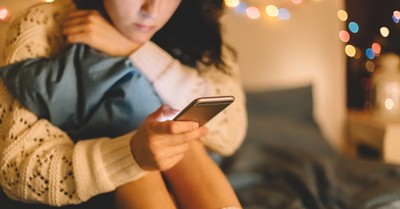
While the purpose of social media is to connect with others more easily, it appears to be having the opposite effect. We may think we’re being social and sensing “togetherness” with others in our online activities, but the very nature of scrolling through social media is increasing our isolation and our intimacy with our electronic devices and making us more lonely. 

Repeat studies have shown screen activities are linked to more loneliness, and non-screen activities are linked to less loneliness. A recent study of adults found that the more people used a social media site (or several), the lower their mental health and life satisfaction at the next assessment. However, after they interacted with their friends in person, their mental health and life satisfaction improved. Furthermore, it continues to be found that those who take a regular break from social media sites are happier, less lonely, and less depressed than those who continue to use social media sites as usual (Source: Jean M. Twenge, IGen: Why Today’s Super-Connected Kids Are Growing Up Less Rebellious, More Tolerant, Less Happy—and Completely Unprepared for Adulthood (New York: Arria, 2017). 

In my book, The New Loneliness, I point out that our electronic devices—and our growing relationship with our screens—cannot take the place of human-to-human interaction. Our reliance on social media is one of the reasons we are experiencing less touch, less human interaction, and less “togetherness” with our friends. 

While social media can help us connect online with those we otherwise wouldn’t be able to see often, it can also keep us from connecting in ways that we used to: Picking up the phone and calling a friend or family member we haven’t seen in a while in order to catch up on a one-to-one basis. When social media began, you may have heard others say, “If you want to know what’s going on in my life, get on Facebook.” It became a way for us to easily “be informed” about more people, but in reality, we now keep in personal touch with far fewer. 

Here are six ways social media promotes loneliness rather than connection and how to remedy the situation.

Photo Credit: ©Getty Images/Martin DM 

1. It keeps you from spending time in the physical presence of others.

1. It keeps you from spending time in the physical presence of others.

Most people don’t scroll through social media with someone else or as a group.  The very act of scrolling is an isolated activity that involves you and your phone. And anytime we are absorbed in our phones, we are neglecting others who may be right there in our physical presence. If you are spending more time on social media than in actual social settings with other people, then that activity of scrolling through others’ profiles has become a distraction to personal interaction, which can leave you feeling lonely.

True connection is not sitting next to someone—or across the dinner table from them—while absorbed in the contents of your phone. True connection involves eye contact, human touch, and being genuinely interested in the people around you or in front of you. Talk (not type) with those around you, and don’t neglect one who is in your physical presence by focusing on the virtual presence of others or their stories via a screen.

Photo Credit: ©GettyImages/Antonio_Diaz 
2. It increases your FOMO and feelings of rejection.

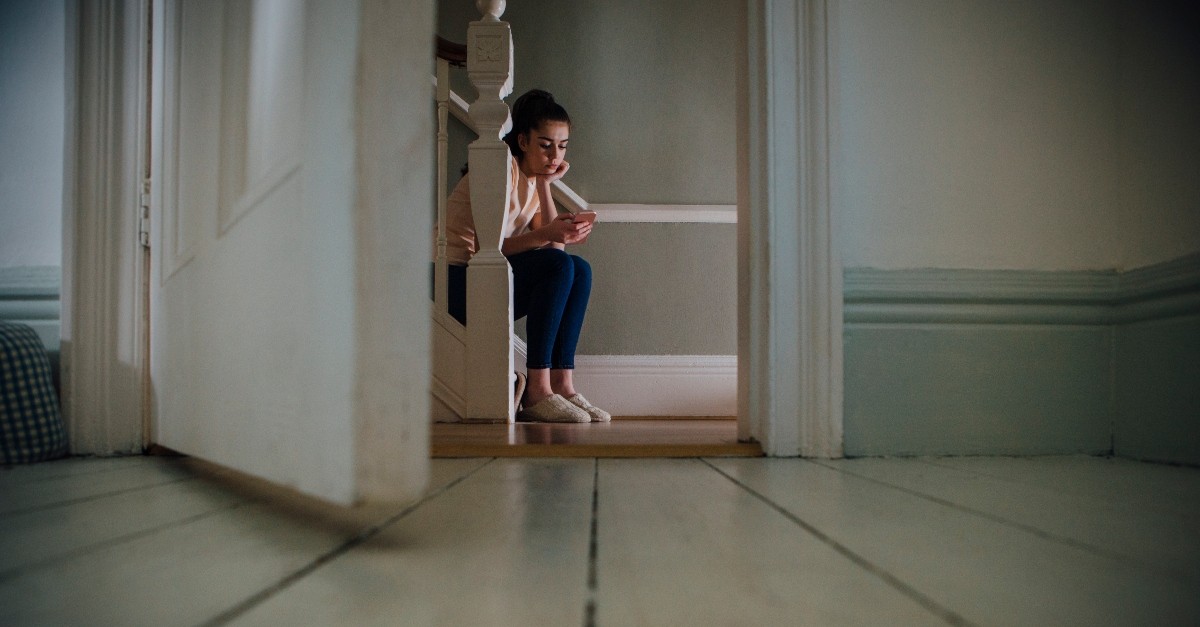
2. It increases your FOMO and feelings of rejection.

The fear of missing out—dubbed FOMO—didn’t become a thing until the advent of social media. Now, with others’ highlight reels and victory posts in front of us, we are constantly being made aware of what others have, are achieving, and are experiencing, and how our lives seem lonelier, more inadequate, and more disappointing by comparison. Those feelings can lead to a deeper sense of loneliness as we entertain thoughts like Why don’t I have that? or I wonder why I wasn’t invited to that gathering? 

In a good old-fashioned friendship where we sit across the table from a friend or talk with them on the phone and hear the context behind their “highlights” in life, we can more easily rejoice with those who rejoice and mourn with those who mourn, rather than reading a post, making a judgment (or feeling a sad or competitive reaction), and then moving on. Relationships take work, yet we can reap the benefits of that work. Scrolling through social media doesn’t involve effort, except to try to keep from feeling jealous, rejected, or left out.

Photo Credit: © Getty Images/DGLimages 
3. It stirs up feelings of jealousy from others which may harm your relationships.

3. It stirs up feelings of jealousy from others which may harm your relationships.

Have you ever had a friend or family member tell you they felt left out when you posted pics of your party or outing with a select few? People have always felt left out when they weren’t invited to something, but now it’s even more prevalent as we tend to post our social events and tag those who were included and often don’t realize who else will see it and react negatively or be hurt by it. It can create feelings of resentment when we feel left out or feelings of disdain, when we are told we unintentionally, hurt someone else by bragging about our fun times that didn’t include them. 

Think about the reasons behind your posts. Do you want to let someone in particular know how much you are enjoying life without them? Perhaps you simply want an online record of your memories. It’s true some people are more hurt and offended than others, but do your best to make sure your social media use encourages rather than discourages others. That might mean filtering what you announce more carefully so you don’t have fewer friends in the long run.

Photo Credit: ©Getty Images/Oscar Wong 
4. It makes you less content with your own life which leads to deeper loneliness.

4. It makes you less content with your own life which leads to deeper loneliness.

When you and I scroll through someone’s “highlight reels,” we are seeing only a moment in their life, or a selective collage, not the actual reality of their life, which consists of both ups and downs like everyone else’s. Therefore, this false impression of the wonderful life everyone else is experiencing leaves us with feelings of not just jealousy of someone else’s life, but a lack of contentment with our own. 

1 Timothy 6:6 tells us, “Godliness with contentment is great gain” (KJV). 1 Thessalonians 5:18 tells us to be thankful in all things, and social media can tempt us to complain or resent our circumstances rather than constantly being grateful to God for what we do have. When we are grateful and content with what we have, that draws us closer to our Maker, which helps us more readily reach out to others. Choose contentment, rather than competitiveness or comparison. When you read of others’ accomplishments online, pray for those people, thank God for what He has given them, and then thank God for what He is doing in your life, whether it’s post-worthy or not.

Photo Credit: © Getty Images/Candy Retriever 

5. It keeps us further away from the possibility of human touch.

5. It keeps us further away from the possibility of human touch.

A scientific study of young people by Dartmouth Medical School (called “Hardwired to Connect”), found that from the moment a baby is born, his or her brain is physically, biologically, and chemically hardwired to connect with others in relationships. That shouldn’t be surprising to us, as believers, because we were created in the image of a relational God for the purpose of relationships. 

You may feel connected with someone else by typing words over a keyboard or receiving their smiley face or heart emoji on a story or comment you posted. But you and I will remain empty and truly lonely if we don’t have physical touch in our lives and engage our five senses when it comes to being in a real-life, transparent, and vulnerable relationship with others. We might tend to keep ourselves at a distance from others, believing online relationships are emotionally safer, but by doing so, we are robbing ourselves of genuine and fulfilling relationships God intended us to experience. We are hardwired by our Creator to connect physically with one another in a friendship or relationship in which all five senses are engaged, not just the sensation of touch from your isolated fingertips on a keyboard or cold, hard screen.

Photo Credit: ©GettyImages/MangoStar-Studio 
6. It makes us believe we’re connected personally, when in reality we are not.

6. It makes us believe we’re connected personally, when in reality we are not.

When we continue to socialize online more than in person, we can begin to believe we are truly connecting with others, emotionally and physically, when we haven’t been around them or gone beyond the surface of the image-polished acquaintance. A friend of mine told me she recently attended a retirement party in which she saw several people she hadn’t talked to in decades. Yet because she often saw their posts about their children, grandchildren, and various milestones in their lives, she was under the false impression she had seen them and talked with them regularly through the years. She then realized she was merely watching and reading about their life from a distance, yet not interacting personally with them. She also became disturbed at realizing she had somehow become content with that level of separation and distance. 

How subtle social media is in making us believe we really have kept in touch when the word touch (and, in many cases, talk) was completely lacking. Think of someone you haven’t really connected with in quite a while and pick up the phone and talk with them. Let them know of your desire to get back in physical—rather than digital—touch.  Social media is another way we are robbed of human touch, but you don’t have to let it rob you too.

How can you make sure you’re not becoming more lonely by your use of social media? Challenge yourself to scroll through online feeds only to encourage others, not to judge, correct, feel jealous or inferior, or even to try to affirm yourself. When you feel you need a pick-me-up, pick up the phone to call a friend or two instead, seeking to encourage them. When you and I take the initiative to help someone else become less lonely, we will find ourselves less lonely just by making the effort. The more you initiate genuine connection, the greater your chances of actually experiencing it. 

For more on connecting more closely with God and others, see Cindi’s book, The New Loneliness: Nurturing Meaningful Connections When You Feel Isolated.

Related Resource: Navigating the Mental Load in Relationships

In this conversation, Shaunti and Jeff Feldhahn discuss the concept of the mental load in relationships with Dr. Morgan Cutlip. They explore how feelings of unfairness and resentment can arise when one partner feels overwhelmed by invisible tasks and emotional labor. The discussion emphasizes the importance of communication, appreciation, and understanding the dynamics of emotional labor in marriage. Dr. Cutlip provides practical strategies for couples to navigate these challenges, including the need to make the invisible visible and to frame the mental load as a shared enemy. The conversation highlights the significance of regular discussions about responsibilities and the unique pressures faced by both partners in family life. Like what you hear? Be sure to follow I Wish You Could Hear This on Apple or Spotify so you never miss an episode!

Photo Credit: ©Getty Images/Marchmeena29

 

Salem News Channel Today

Sponsored Links


September 26 - Phoenix, AZ
Scottsdale Center for the Performing Arts


November 2 - Detroit, MI
Zion Christian Church in Troy


October 6 - Los Angeles, CA
Pasadena Convention Center


November 5 - San Antonio, TX
Norris Centers – The Grand Red Oak Ballroom


October 8 - Sacramento, CA
William Jessup University


November 7 - Tampa, FL
The Palladium at St. Pete College


October 22 - Minneapolis, MN
Crowne Plaza AiRE


November 15 - San Francisco, CA
Fremont Marriott Silicon Valley


October 23 - Philadelphia, PA
Green Valley Country Club


November 16 - Denver, CO
CU South Denver - Formerly Wildlife Experience


November 2 - Chicago, IL
Chicago Westin Northwest in Itasca


November 21 - Cleveland, OH
Holiday Inn Rockside in Independence


Salem Radio Network Speakers

Larry Elder is an American lawyer, writer, and radio and television personality who calls himself the "Sage of South Central" a district of Los Angeles, Larry says his philosophy is to entertain, inform, provoke and to hopefully uplift. His calling card is "we have a country to save" and to him this means returning to the bedrock Constitutional principles of limited government and maximum personal responsibility. Elder's iconoclastic wit and intellectual agility makes him a particularly attractive voice in a nation that seems weary of traditional racial dialogue.” – Los Angeles Times.

Mike Gallagher Mike Gallagher began his broadcasting career in 1978 in Dayton, Ohio. Today, he is one of the most listened-to talk radio show hosts in America, recently having been ranked in the Talkers Magazine “Heavy Hundred” list – the 100 most important talk radio hosts in America. Prior to being launched into national syndication in 1998, Mike hosted the morning show on WABC-AM in New York City. Today, Talkers Magazine reports that his show is heard by over 3.75 million weekly listeners. Besides his radio work, Mike is seen on Fox News Channel as an on-air contributor, frequently appearing on the cable news giant.

Hugh Hewitt is one of the nation’s leading bloggers and a genuine media revolutionary. He brings that expertise, his wit and what The New Yorker magazine calls his “amiable but relentless manner” to his nationally syndicated show each day.

When Dr. Sebastian Gorka was growing up, he listened to talk radio under his pillow with a transistor radio, dreaming that one day he would be behind the microphone. Beginning New Year’s Day 2019, he got his wish. Gorka now hosts America First every weekday afternoon 3 to 6pm ET. Gorka’s unique story works well on the radio. He is national security analyst for the Fox News Channel and author of two books: "Why We Fight" and "Defeating Jihad." His latest book releasing this fall is “War For America’s Soul.” He is uniquely qualified to fight the culture war and stand up for what is great about America, his adopted home country.

Broadcasting from his home station of KRLA in Los Angeles, the Dennis Prager Show is heard across the country. Everything in life – from politics to religion to relationships – is grist for Dennis’ mill. If it’s interesting, if it affects your life, then Dennis will be talking about it – with passion, humor, insight and wisdom.

Sean Hannity is a conservative radio and television host, and one of the original primetime hosts on the Fox News Channel, where he has appeared since 1996. Sean Hannity began his radio career at a college station in California, before moving on to markets in the Southeast and New York. Today, he’s one of the most listened to on-air voices. Hannity’s radio program went into national syndication on September 10, 2001, and airs on more than 500 stations. Talkers Magazine estimates Hannity’s weekly radio audience at 13.5 million. In 1996 he was hired as one of the original hosts on Fox News Channel. As host of several popular Fox programs, Hannity has become the highest-paid news anchor on television.

Michelle Malkin is a mother, wife, blogger, conservative syndicated columnist, longtime cable TV news commentator, and best-selling author of six books. She started her newspaper journalism career at the Los Angeles Daily News in 1992, moved to the Seattle Times in 1995, and has been penning nationally syndicated newspaper columns for Creators Syndicate since 1999. She is founder of conservative Internet start-ups Hot Air and Twitchy.com. Malkin has received numerous awards for her investigative journalism, including the Council on Governmental Ethics Laws (COGEL) national award for outstanding service for the cause of governmental ethics and leadership (1998), the Reed Irvine Accuracy in Media Award for Investigative Journalism (2006), the Heritage Foundation and Franklin Center for Government & Public Integrity's Breitbart Award for Excellence in Journalism (2013), the Center for Immigration Studies' Eugene Katz Award for Excellence in the Coverage of Immigration Award (2016), and the Manhattan Film Festival's Film Heals Award (2018). Married for 26 years and the mother of two teenage children, she lives with her family in Colorado. Follow her at michellemalkin.com. (Photo reprinted with kind permission from Peter Duke Photography.)

Sponsored by:

6 Ways Social Media Promotes Loneliness Rather Than Connection

Carbonatix Pre-Player Loader

Audio By Carbonatix

While the purpose of social media is to connect with others more easily, it appears to be having the opposite effect. We may think we’re being social and sensing “togetherness” with others in our online activities, but the very nature of scrolling through social media is increasing our isolation and our intimacy with our electronic devices and making us more lonely. 

Repeat studies have shown screen activities are linked to more loneliness, and non-screen activities are linked to less loneliness. A recent study of adults found that the more people used a social media site (or several), the lower their mental health and life satisfaction at the next assessment. However, after they interacted with their friends in person, their mental health and life satisfaction improved. Furthermore, it continues to be found that those who take a regular break from social media sites are happier, less lonely, and less depressed than those who continue to use social media sites as usual (Source: Jean M. Twenge, IGen: Why Today’s Super-Connected Kids Are Growing Up Less Rebellious, More Tolerant, Less Happy—and Completely Unprepared for Adulthood (New York: Arria, 2017). 

In my book, The New Loneliness, I point out that our electronic devices—and our growing relationship with our screens—cannot take the place of human-to-human interaction. Our reliance on social media is one of the reasons we are experiencing less touch, less human interaction, and less “togetherness” with our friends. 

While social media can help us connect online with those we otherwise wouldn’t be able to see often, it can also keep us from connecting in ways that we used to: Picking up the phone and calling a friend or family member we haven’t seen in a while in order to catch up on a one-to-one basis. When social media began, you may have heard others say, “If you want to know what’s going on in my life, get on Facebook.” It became a way for us to easily “be informed” about more people, but in reality, we now keep in personal touch with far fewer. 

Here are six ways social media promotes loneliness rather than connection and how to remedy the situation.

Photo Credit: ©Getty Images/Martin DM 

1. It keeps you from spending time in the physical presence of others.

1. It keeps you from spending time in the physical presence of others.

Most people don’t scroll through social media with someone else or as a group.  The very act of scrolling is an isolated activity that involves you and your phone. And anytime we are absorbed in our phones, we are neglecting others who may be right there in our physical presence. If you are spending more time on social media than in actual social settings with other people, then that activity of scrolling through others’ profiles has become a distraction to personal interaction, which can leave you feeling lonely.

True connection is not sitting next to someone—or across the dinner table from them—while absorbed in the contents of your phone. True connection involves eye contact, human touch, and being genuinely interested in the people around you or in front of you. Talk (not type) with those around you, and don’t neglect one who is in your physical presence by focusing on the virtual presence of others or their stories via a screen.

Photo Credit: ©GettyImages/Antonio_Diaz 

2. It increases your FOMO and feelings of rejection.

2. It increases your FOMO and feelings of rejection.

The fear of missing out—dubbed FOMO—didn’t become a thing until the advent of social media. Now, with others’ highlight reels and victory posts in front of us, we are constantly being made aware of what others have, are achieving, and are experiencing, and how our lives seem lonelier, more inadequate, and more disappointing by comparison. Those feelings can lead to a deeper sense of loneliness as we entertain thoughts like Why don’t I have that? or I wonder why I wasn’t invited to that gathering? 

In a good old-fashioned friendship where we sit across the table from a friend or talk with them on the phone and hear the context behind their “highlights” in life, we can more easily rejoice with those who rejoice and mourn with those who mourn, rather than reading a post, making a judgment (or feeling a sad or competitive reaction), and then moving on. Relationships take work, yet we can reap the benefits of that work. Scrolling through social media doesn’t involve effort, except to try to keep from feeling jealous, rejected, or left out.

Photo Credit: © Getty Images/DGLimages 

3. It stirs up feelings of jealousy from others which may harm your relationships.

3. It stirs up feelings of jealousy from others which may harm your relationships.

Have you ever had a friend or family member tell you they felt left out when you posted pics of your party or outing with a select few? People have always felt left out when they weren’t invited to something, but now it’s even more prevalent as we tend to post our social events and tag those who were included and often don’t realize who else will see it and react negatively or be hurt by it. It can create feelings of resentment when we feel left out or feelings of disdain, when we are told we unintentionally, hurt someone else by bragging about our fun times that didn’t include them. 

Think about the reasons behind your posts. Do you want to let someone in particular know how much you are enjoying life without them? Perhaps you simply want an online record of your memories. It’s true some people are more hurt and offended than others, but do your best to make sure your social media use encourages rather than discourages others. That might mean filtering what you announce more carefully so you don’t have fewer friends in the long run.

Photo Credit: ©Getty Images/Oscar Wong 

4. It makes you less content with your own life which leads to deeper loneliness.

4. It makes you less content with your own life which leads to deeper loneliness.

When you and I scroll through someone’s “highlight reels,” we are seeing only a moment in their life, or a selective collage, not the actual reality of their life, which consists of both ups and downs like everyone else’s. Therefore, this false impression of the wonderful life everyone else is experiencing leaves us with feelings of not just jealousy of someone else’s life, but a lack of contentment with our own. 

1 Timothy 6:6 tells us, “Godliness with contentment is great gain” (KJV). 1 Thessalonians 5:18 tells us to be thankful in all things, and social media can tempt us to complain or resent our circumstances rather than constantly being grateful to God for what we do have. When we are grateful and content with what we have, that draws us closer to our Maker, which helps us more readily reach out to others. Choose contentment, rather than competitiveness or comparison. When you read of others’ accomplishments online, pray for those people, thank God for what He has given them, and then thank God for what He is doing in your life, whether it’s post-worthy or not.

Photo Credit: © Getty Images/Candy Retriever 

5. It keeps us further away from the possibility of human touch.

5. It keeps us further away from the possibility of human touch.

A scientific study of young people by Dartmouth Medical School (called “Hardwired to Connect”), found that from the moment a baby is born, his or her brain is physically, biologically, and chemically hardwired to connect with others in relationships. That shouldn’t be surprising to us, as believers, because we were created in the image of a relational God for the purpose of relationships. 

You may feel connected with someone else by typing words over a keyboard or receiving their smiley face or heart emoji on a story or comment you posted. But you and I will remain empty and truly lonely if we don’t have physical touch in our lives and engage our five senses when it comes to being in a real-life, transparent, and vulnerable relationship with others. We might tend to keep ourselves at a distance from others, believing online relationships are emotionally safer, but by doing so, we are robbing ourselves of genuine and fulfilling relationships God intended us to experience. We are hardwired by our Creator to connect physically with one another in a friendship or relationship in which all five senses are engaged, not just the sensation of touch from your isolated fingertips on a keyboard or cold, hard screen.

Photo Credit: ©GettyImages/MangoStar-Studio 

6. It makes us believe we’re connected personally, when in reality we are not.

6. It makes us believe we’re connected personally, when in reality we are not.

When we continue to socialize online more than in person, we can begin to believe we are truly connecting with others, emotionally and physically, when we haven’t been around them or gone beyond the surface of the image-polished acquaintance. A friend of mine told me she recently attended a retirement party in which she saw several people she hadn’t talked to in decades. Yet because she often saw their posts about their children, grandchildren, and various milestones in their lives, she was under the false impression she had seen them and talked with them regularly through the years. She then realized she was merely watching and reading about their life from a distance, yet not interacting personally with them. She also became disturbed at realizing she had somehow become content with that level of separation and distance. 

How subtle social media is in making us believe we really have kept in touch when the word touch (and, in many cases, talk) was completely lacking. Think of someone you haven’t really connected with in quite a while and pick up the phone and talk with them. Let them know of your desire to get back in physical—rather than digital—touch.  Social media is another way we are robbed of human touch, but you don’t have to let it rob you too.

How can you make sure you’re not becoming more lonely by your use of social media? Challenge yourself to scroll through online feeds only to encourage others, not to judge, correct, feel jealous or inferior, or even to try to affirm yourself. When you feel you need a pick-me-up, pick up the phone to call a friend or two instead, seeking to encourage them. When you and I take the initiative to help someone else become less lonely, we will find ourselves less lonely just by making the effort. The more you initiate genuine connection, the greater your chances of actually experiencing it. 

For more on connecting more closely with God and others, see Cindi’s book, The New Loneliness: Nurturing Meaningful Connections When You Feel Isolated.

Related Resource: Navigating the Mental Load in Relationships

In this conversation, Shaunti and Jeff Feldhahn discuss the concept of the mental load in relationships with Dr. Morgan Cutlip. They explore how feelings of unfairness and resentment can arise when one partner feels overwhelmed by invisible tasks and emotional labor. The discussion emphasizes the importance of communication, appreciation, and understanding the dynamics of emotional labor in marriage. Dr. Cutlip provides practical strategies for couples to navigate these challenges, including the need to make the invisible visible and to frame the mental load as a shared enemy. The conversation highlights the significance of regular discussions about responsibilities and the unique pressures faced by both partners in family life. Like what you hear? Be sure to follow I Wish You Could Hear This on Apple or Spotify so you never miss an episode!

Photo Credit: ©Getty Images/Marchmeena29

 

Salem News Channel Today

Sponsored Links

On Air & Up Next

See the Full Program Guide