Why Don’t Catholics Eat Meat on Fridays During Lent?

Carbonatix Pre-Player Loader

Audio By Carbonatix

Brought to you by Christianity.com

Many of us notice restaurants and diners that serve fish, typically fried fish, as a special on Fridays. I have many memories of my father ordering the fish special with hushpuppies on those Friday nights. 

What many of us may not know, especially if we are Protestant Christians, is that the tradition of eating fish instead of other meats on Fridays originates from a Catholic tradition. Until 1966, American Catholics were required to abstain from meat (flesh) every Friday of the year as an act of penance. However, after the decision of the National Conference of Catholic Bishops in 1966, abstaining from meat on Fridays is no longer binding, though the church continues to recommend the practice. Other forms of penance can be done instead of fasting.  

Despite this change, abstaining from meat on Fridays during Lent is still a requirement for Roman Catholics. The reasons behind the requirement expand into the discussion about having a year-round fast on Fridays but are more significantly related to the period of Lent.  

Why Don't Catholics Eat Meat on Fridays During Lent?

Catholics do not eat meat on Fridays during Lent because it is an obligation set forth by the Catholic Church. According to the United States Conference of Catholic Bishops, “Fridays during Lent are obligatory days of abstinence,” and “The norms concerning abstinence from meat are binding upon members of the Latin Catholic Church from age 14 onwards.” Those who knowingly do not follow the obligatory days of abstinence are guilty of mortal sin.   

From the early period of church tradition, Christians fasted on certain days. For example, the Didache, a guidebook of the early church, instructed believers to fast on Wednesdays and Fridays. The practice of fasting and abstinence on certain days, thus, has a long tradition in church history.  

Catholics today continue that tradition by observing Lent and abstaining from eating meat on Fridays. They may eat fish and products from animals, such as milk and eggs, but not “flesh” meat like beef, pork, or poultry. For many, following meatless Fridays is an identifying mark of being a Catholic and affirms their connection to the Catholic Church.  

1. Catholics Don't Eat Meat on Fridays during Lent to Remember That Jesus Gave His Body 

Another reason Catholics abstain from meat on Fridays during Lent is to remember Jesus’ sacrificial death. He gave His body (flesh) to save us (Luke 22:19; John 10:11, 18). On that Friday in history, Christ was nailed to the cross and died in our place. 

Removing meat from the menu on Fridays during Lent transforms that day of the week into a regular reminder of what Jesus did to save us. As a person follows the rhythm of the weeks during Lent, the physical act of abstinence encourages thoughtful meditation on Holy Week and Easter events. By observing the pattern, individuals better prepare their hearts and minds for Easter.  

As Catholics make a small sacrifice by abstaining from the flesh, they remember that Jesus gave His flesh. Such a simple act of abstinence remembers the greatest act of sacrifice.  

2. Catholics Don't Eat Meat on Fridays during Lent to Live More Simply 

In addition to following the tradition of the church and remembering Jesus’ sacrificial death, Catholics also follow meatless Fridays during Lent to live more simply. Historically, the act of fasting in the Roman Catholic Church encouraged Christians to deny themselves. They believe that self-denial in the form of obligatory fasting adheres to Jesus’ teaching about the need for disciples to take up their crosses and follow Him (Matthew 16:24).  

Today, many in the Catholic Church in America think the act of denying oneself meat on Fridays can combat the effects of materialism in modern society. Many people around the world have no regular access to meat. For them, having beef or chicken is a privilege and a sign of wealth. Their lack stands in striking contrast to people of wealthier nations, such as America, who have more than enough access to meat. Catholics can fight against this excessiveness in American culture by taking time to live more simply.  

The theme of simple living aligns with the purpose of Lent. Individuals are removing something from their lives, loosening the binding cords of activities and mindsets that enslave them to focus on Christ. Catholics believe they engage in an important spiritual practice by abstaining from meat on certain days.  

3. Catholics Don't Eat Meat on Fridays during Lent for Penance and Make Reparation  

Catholics also do not eat meat on Fridays during Lent because they view it as an act of penance to make reparation for sins. In Catholic terms, penance is an act, usually prescribed by a priest at confession, to make amends for a sin committed and restore a person’s relationship with God and others. For them, fasting and abstaining from meat serve as a penance.  

The entire season of Lent, not just Fridays, is supposed to be a time of penance. As Loyola Press states in their article, “Fasting and Abstaining from Eating Meat as a Sign of Penance,” Lent should include participating in almsgiving, “special efforts to make amends for our sinfulness (penance), and [curbing] our physical desires by restricting our intake of food.” The entire preparation period for Easter should promote acts to make up for sinfulness, according to the Catholic church.   

Of course, there are many acts of penance within Catholic tradition. Those who cannot fast or abstain from meat due to health problems or pregnancy are encouraged to do other acts. For instance, they may engage in prayers or give more to help those in need. They are not excluded from penance but are required to engage in other forms in place of abstinence and fasting.    

What Does the Bible Say About Abstaining from Meat?

Catholics have varied reasons for not eating meat on Fridays during Lent. Some of these relate to Scripture. However, not all are supported by the Bible.    

Nowhere in Scripture does Jesus say we must fast on certain days or adhere to rules about abstaining from meat. The Bible teaches that we are not defiled by what we eat but by the sinfulness inside us (Matthew 15:11). Through this statement, Christ declared all foods clean (Mark 7:19). Believers have the freedom to eat any meat if it is received with thanksgiving (1 Timothy 4:3). 

We also cannot pay or make amends for our sins by abstaining from meat on Fridays or doing any other acts. Instead, we receive salvation and forgiveness by eating from the Bread of Life. Jesus said, “Whoever eats my flesh and drinks my blood has eternal life, and I will raise them up at the last day” (John 6:54, NIV). We partake in His flesh and blood by trusting in Jesus’ sacrificial death and resurrection for salvation. He paid our sins in full, as His sacrifice is fully sufficient (Hebrews 10:10; 1 Peter 3:18). We cannot add anything to his suffering and sacrifice.  

Although the Roman Catholic Church requires individuals to abstain from meat on Fridays during the Lenten season, Scripture does not command this. We need to be careful not to confuse traditional practices with what is required in the Bible.  

Keeping Our Focus on Christ During Lent

On Fridays during Lent, you will not find Catholics eating meat such as beef, pork, or poultry. Instead, they will likely enjoy fish or another meatless Friday option. Their reason for doing so is not because they prefer fish or dislike meat, but because abstaining from meat on Fridays during Lent is a requirement of the Roman Catholic Church. Catholic teaching associates the sacrifice of meat with Jesus’ sacrifice and as a way of denying themselves. Fasting and abstinence are important forms of penance during the Lenten season.  

Jesus has not commanded certain days of fasting or abstaining from food, so each Christian can choose to participate in Lenten fasting. Regardless, we need to remember that we are saved and forgiven by Jesus’ work on the cross and through His resurrection, not through our works.  

Let us keep our focus on Christ, whether we choose to eat meat or not on Fridays during Lent.   

Photo Courtesy: ©Pexels/The Castlebar
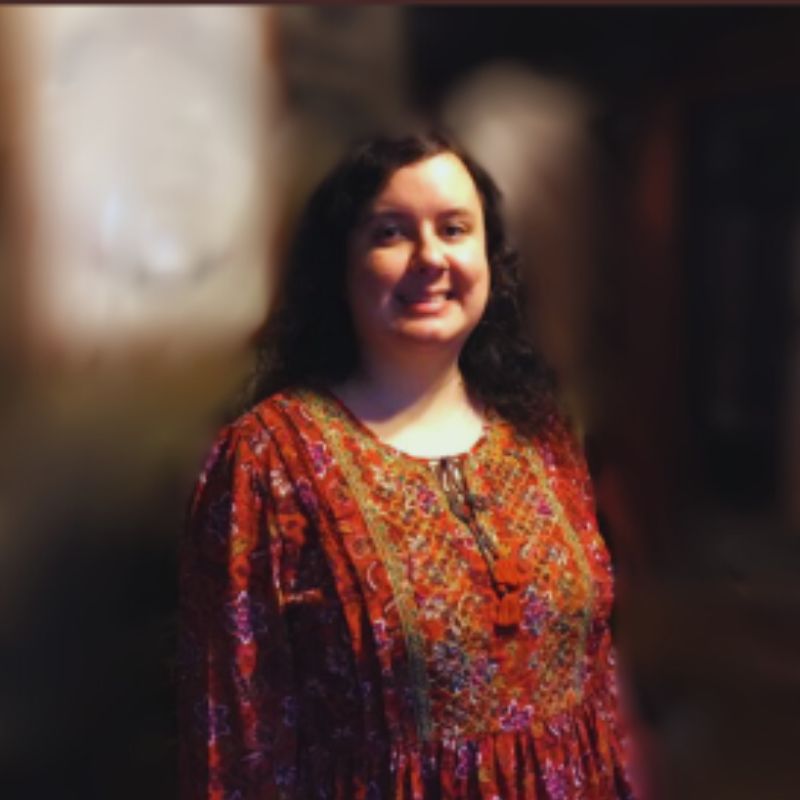

Sophia BrickerSophia Bricker is a writer. Her mission is to help others grow in their relationship with Jesus through thoughtful articles, devotionals, and stories. She completed a BA and MA in Christian ministry which included extensive study of the Bible and theology, as well as an MFA in creative writing. You can read her thoughts about literature and faith at The Cross, a Pen, and a Page Substack, or visit the discipleship-based site  Cultivate, where she writes with her sister.

This article originally appeared on Christianity.com. For more faith-building resources, visit Christianity.com. Christianity.com
 

Salem News Channel Today

Sponsored Links


September 26 - Phoenix, AZ
Scottsdale Center for the Performing Arts


November 2 - Detroit, MI
Zion Christian Church in Troy


October 6 - Los Angeles, CA
Pasadena Convention Center


November 5 - San Antonio, TX
Norris Centers – The Grand Red Oak Ballroom


October 8 - Sacramento, CA
William Jessup University


November 7 - Tampa, FL
The Palladium at St. Pete College


October 22 - Minneapolis, MN
Crowne Plaza AiRE


November 15 - San Francisco, CA
Fremont Marriott Silicon Valley


October 23 - Philadelphia, PA
Green Valley Country Club


November 16 - Denver, CO
CU South Denver - Formerly Wildlife Experience


November 2 - Chicago, IL
Chicago Westin Northwest in Itasca


November 21 - Cleveland, OH
Holiday Inn Rockside in Independence


Salem Radio Network Speakers

Larry Elder is an American lawyer, writer, and radio and television personality who calls himself the "Sage of South Central" a district of Los Angeles, Larry says his philosophy is to entertain, inform, provoke and to hopefully uplift. His calling card is "we have a country to save" and to him this means returning to the bedrock Constitutional principles of limited government and maximum personal responsibility. Elder's iconoclastic wit and intellectual agility makes him a particularly attractive voice in a nation that seems weary of traditional racial dialogue.” – Los Angeles Times.

Mike Gallagher Mike Gallagher began his broadcasting career in 1978 in Dayton, Ohio. Today, he is one of the most listened-to talk radio show hosts in America, recently having been ranked in the Talkers Magazine “Heavy Hundred” list – the 100 most important talk radio hosts in America. Prior to being launched into national syndication in 1998, Mike hosted the morning show on WABC-AM in New York City. Today, Talkers Magazine reports that his show is heard by over 3.75 million weekly listeners. Besides his radio work, Mike is seen on Fox News Channel as an on-air contributor, frequently appearing on the cable news giant.

Hugh Hewitt is one of the nation’s leading bloggers and a genuine media revolutionary. He brings that expertise, his wit and what The New Yorker magazine calls his “amiable but relentless manner” to his nationally syndicated show each day.

When Dr. Sebastian Gorka was growing up, he listened to talk radio under his pillow with a transistor radio, dreaming that one day he would be behind the microphone. Beginning New Year’s Day 2019, he got his wish. Gorka now hosts America First every weekday afternoon 3 to 6pm ET. Gorka’s unique story works well on the radio. He is national security analyst for the Fox News Channel and author of two books: "Why We Fight" and "Defeating Jihad." His latest book releasing this fall is “War For America’s Soul.” He is uniquely qualified to fight the culture war and stand up for what is great about America, his adopted home country.

Broadcasting from his home station of KRLA in Los Angeles, the Dennis Prager Show is heard across the country. Everything in life – from politics to religion to relationships – is grist for Dennis’ mill. If it’s interesting, if it affects your life, then Dennis will be talking about it – with passion, humor, insight and wisdom.

Sean Hannity is a conservative radio and television host, and one of the original primetime hosts on the Fox News Channel, where he has appeared since 1996. Sean Hannity began his radio career at a college station in California, before moving on to markets in the Southeast and New York. Today, he’s one of the most listened to on-air voices. Hannity’s radio program went into national syndication on September 10, 2001, and airs on more than 500 stations. Talkers Magazine estimates Hannity’s weekly radio audience at 13.5 million. In 1996 he was hired as one of the original hosts on Fox News Channel. As host of several popular Fox programs, Hannity has become the highest-paid news anchor on television.

Michelle Malkin is a mother, wife, blogger, conservative syndicated columnist, longtime cable TV news commentator, and best-selling author of six books. She started her newspaper journalism career at the Los Angeles Daily News in 1992, moved to the Seattle Times in 1995, and has been penning nationally syndicated newspaper columns for Creators Syndicate since 1999. She is founder of conservative Internet start-ups Hot Air and Twitchy.com. Malkin has received numerous awards for her investigative journalism, including the Council on Governmental Ethics Laws (COGEL) national award for outstanding service for the cause of governmental ethics and leadership (1998), the Reed Irvine Accuracy in Media Award for Investigative Journalism (2006), the Heritage Foundation and Franklin Center for Government & Public Integrity's Breitbart Award for Excellence in Journalism (2013), the Center for Immigration Studies' Eugene Katz Award for Excellence in the Coverage of Immigration Award (2016), and the Manhattan Film Festival's Film Heals Award (2018). Married for 26 years and the mother of two teenage children, she lives with her family in Colorado. Follow her at michellemalkin.com. (Photo reprinted with kind permission from Peter Duke Photography.)

Sponsored by:

Why Don’t Catholics Eat Meat on Fridays During Lent?

Carbonatix Pre-Player Loader

Audio By Carbonatix

Brought to you by Christianity.com

Many of us notice restaurants and diners that serve fish, typically fried fish, as a special on Fridays. I have many memories of my father ordering the fish special with hushpuppies on those Friday nights. 

What many of us may not know, especially if we are Protestant Christians, is that the tradition of eating fish instead of other meats on Fridays originates from a Catholic tradition. Until 1966, American Catholics were required to abstain from meat (flesh) every Friday of the year as an act of penance. However, after the decision of the National Conference of Catholic Bishops in 1966, abstaining from meat on Fridays is no longer binding, though the church continues to recommend the practice. Other forms of penance can be done instead of fasting.  

Despite this change, abstaining from meat on Fridays during Lent is still a requirement for Roman Catholics. The reasons behind the requirement expand into the discussion about having a year-round fast on Fridays but are more significantly related to the period of Lent.  

Why Don't Catholics Eat Meat on Fridays During Lent?

Catholics do not eat meat on Fridays during Lent because it is an obligation set forth by the Catholic Church. According to the United States Conference of Catholic Bishops, “Fridays during Lent are obligatory days of abstinence,” and “The norms concerning abstinence from meat are binding upon members of the Latin Catholic Church from age 14 onwards.” Those who knowingly do not follow the obligatory days of abstinence are guilty of mortal sin.   

From the early period of church tradition, Christians fasted on certain days. For example, the Didache, a guidebook of the early church, instructed believers to fast on Wednesdays and Fridays. The practice of fasting and abstinence on certain days, thus, has a long tradition in church history.  

Catholics today continue that tradition by observing Lent and abstaining from eating meat on Fridays. They may eat fish and products from animals, such as milk and eggs, but not “flesh” meat like beef, pork, or poultry. For many, following meatless Fridays is an identifying mark of being a Catholic and affirms their connection to the Catholic Church.  

1. Catholics Don't Eat Meat on Fridays during Lent to Remember That Jesus Gave His Body 

Another reason Catholics abstain from meat on Fridays during Lent is to remember Jesus’ sacrificial death. He gave His body (flesh) to save us (Luke 22:19; John 10:11, 18). On that Friday in history, Christ was nailed to the cross and died in our place. 

Removing meat from the menu on Fridays during Lent transforms that day of the week into a regular reminder of what Jesus did to save us. As a person follows the rhythm of the weeks during Lent, the physical act of abstinence encourages thoughtful meditation on Holy Week and Easter events. By observing the pattern, individuals better prepare their hearts and minds for Easter.  

As Catholics make a small sacrifice by abstaining from the flesh, they remember that Jesus gave His flesh. Such a simple act of abstinence remembers the greatest act of sacrifice.  

2. Catholics Don't Eat Meat on Fridays during Lent to Live More Simply 

In addition to following the tradition of the church and remembering Jesus’ sacrificial death, Catholics also follow meatless Fridays during Lent to live more simply. Historically, the act of fasting in the Roman Catholic Church encouraged Christians to deny themselves. They believe that self-denial in the form of obligatory fasting adheres to Jesus’ teaching about the need for disciples to take up their crosses and follow Him (Matthew 16:24).  

Today, many in the Catholic Church in America think the act of denying oneself meat on Fridays can combat the effects of materialism in modern society. Many people around the world have no regular access to meat. For them, having beef or chicken is a privilege and a sign of wealth. Their lack stands in striking contrast to people of wealthier nations, such as America, who have more than enough access to meat. Catholics can fight against this excessiveness in American culture by taking time to live more simply.  

The theme of simple living aligns with the purpose of Lent. Individuals are removing something from their lives, loosening the binding cords of activities and mindsets that enslave them to focus on Christ. Catholics believe they engage in an important spiritual practice by abstaining from meat on certain days.  

3. Catholics Don't Eat Meat on Fridays during Lent for Penance and Make Reparation  

Catholics also do not eat meat on Fridays during Lent because they view it as an act of penance to make reparation for sins. In Catholic terms, penance is an act, usually prescribed by a priest at confession, to make amends for a sin committed and restore a person’s relationship with God and others. For them, fasting and abstaining from meat serve as a penance.  

The entire season of Lent, not just Fridays, is supposed to be a time of penance. As Loyola Press states in their article, “Fasting and Abstaining from Eating Meat as a Sign of Penance,” Lent should include participating in almsgiving, “special efforts to make amends for our sinfulness (penance), and [curbing] our physical desires by restricting our intake of food.” The entire preparation period for Easter should promote acts to make up for sinfulness, according to the Catholic church.   

Of course, there are many acts of penance within Catholic tradition. Those who cannot fast or abstain from meat due to health problems or pregnancy are encouraged to do other acts. For instance, they may engage in prayers or give more to help those in need. They are not excluded from penance but are required to engage in other forms in place of abstinence and fasting.    

What Does the Bible Say About Abstaining from Meat?

Catholics have varied reasons for not eating meat on Fridays during Lent. Some of these relate to Scripture. However, not all are supported by the Bible.    

Nowhere in Scripture does Jesus say we must fast on certain days or adhere to rules about abstaining from meat. The Bible teaches that we are not defiled by what we eat but by the sinfulness inside us (Matthew 15:11). Through this statement, Christ declared all foods clean (Mark 7:19). Believers have the freedom to eat any meat if it is received with thanksgiving (1 Timothy 4:3). 

We also cannot pay or make amends for our sins by abstaining from meat on Fridays or doing any other acts. Instead, we receive salvation and forgiveness by eating from the Bread of Life. Jesus said, “Whoever eats my flesh and drinks my blood has eternal life, and I will raise them up at the last day” (John 6:54, NIV). We partake in His flesh and blood by trusting in Jesus’ sacrificial death and resurrection for salvation. He paid our sins in full, as His sacrifice is fully sufficient (Hebrews 10:10; 1 Peter 3:18). We cannot add anything to his suffering and sacrifice.  

Although the Roman Catholic Church requires individuals to abstain from meat on Fridays during the Lenten season, Scripture does not command this. We need to be careful not to confuse traditional practices with what is required in the Bible.  

Keeping Our Focus on Christ During Lent

On Fridays during Lent, you will not find Catholics eating meat such as beef, pork, or poultry. Instead, they will likely enjoy fish or another meatless Friday option. Their reason for doing so is not because they prefer fish or dislike meat, but because abstaining from meat on Fridays during Lent is a requirement of the Roman Catholic Church. Catholic teaching associates the sacrifice of meat with Jesus’ sacrifice and as a way of denying themselves. Fasting and abstinence are important forms of penance during the Lenten season.  

Jesus has not commanded certain days of fasting or abstaining from food, so each Christian can choose to participate in Lenten fasting. Regardless, we need to remember that we are saved and forgiven by Jesus’ work on the cross and through His resurrection, not through our works.  

Let us keep our focus on Christ, whether we choose to eat meat or not on Fridays during Lent.   

Photo Courtesy: ©Pexels/The Castlebar


Sophia BrickerSophia Bricker is a writer. Her mission is to help others grow in their relationship with Jesus through thoughtful articles, devotionals, and stories. She completed a BA and MA in Christian ministry which included extensive study of the Bible and theology, as well as an MFA in creative writing. You can read her thoughts about literature and faith at The Cross, a Pen, and a Page Substack, or visit the discipleship-based site  Cultivate, where she writes with her sister.

This article originally appeared on Christianity.com. For more faith-building resources, visit Christianity.com. Christianity.com
 

Salem News Channel Today

Sponsored Links

On Air & Up Next

See the Full Program Guide