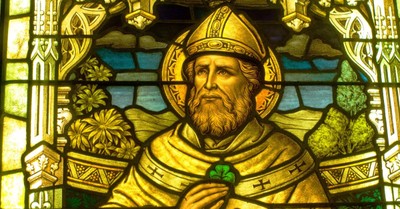
Who Was St. Patrick, and Why Should Christians Celebrate St. Patrick's Day?

Carbonatix Pre-Player Loader

Audio By Carbonatix

St. Patrick lived his years as a great example for us today. But he didn't live it out simply by "the luck of the Irish," as some may say, for one theme shines through it all: God’s Presence and Sovereignty are powerful.

He was an unlikely saint with an extraordinary story (involving pirates-- read on!) yet the Lord became real to him early in his adulthood and changed his life and legacy forever.

St. Patrick shares in writings that he prayed many prayers through the day, and even into the night. He shared these words of his time in captivity, "and the faith grew in me, and the spirit was roused, so that, in a single day, I have said as many as a hundred prayers, and in the night nearly the same, so that whilst in the woods and on the mountain, even before the dawn, I was roused to prayer..."

St. Patrick went on to write prayers many Christians still echo today, and his influence on the world is worth remembering and celebrating.

We can learn much from studying this amazing man's life. It wasn't about leprechauns, 4 leaf clovers, wearing green, or about luck.His life was simply about the amazing Sovereignty and blessing of God, about obedience to His call, about prayer and faithfulness.

May the example of this godly man from years ago, spur us onward even today.

Photo credit: Flickr-ThadZajdowicz
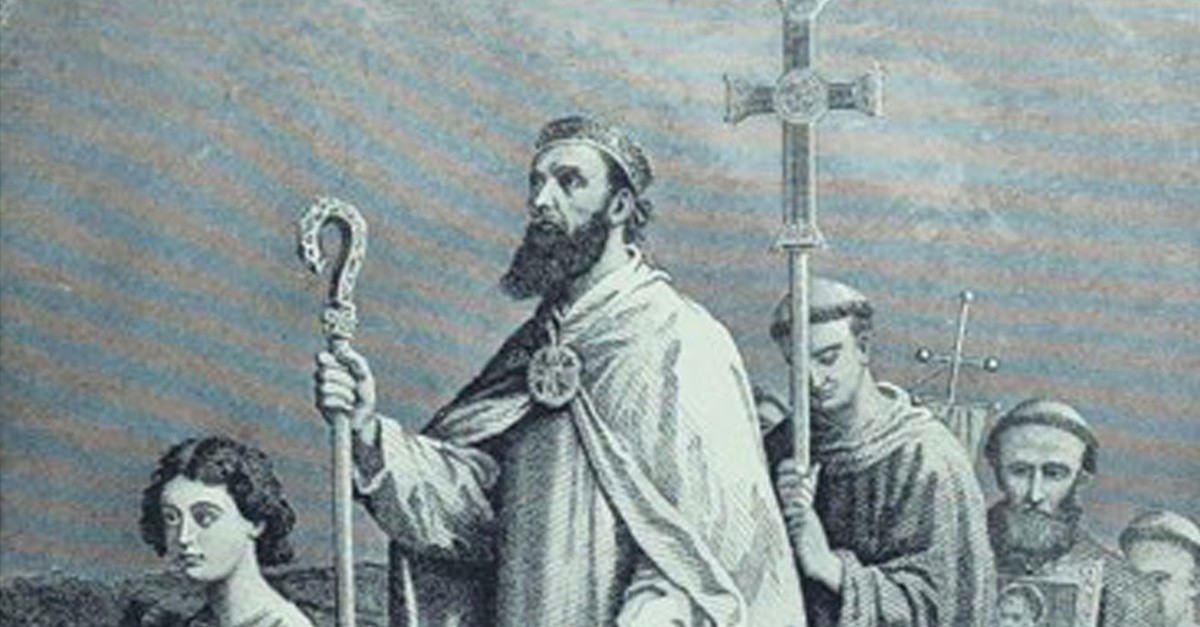
Who Was Saint Patrick?

Who Was Saint Patrick?

It is a question whether Patrick was born in Scotland, at a place called Kirkpatrick, near the river Clyde, or in France, near Boulogne. But wherever it may have been, his birth took place about the year 387. His father was a deacon of the church, his grandfather was a presbyter, and thus Patrick had the opportunities of a religious training from his infancy. He did not, however, use these opportunities so well as he might have done; but it pleased God to bring him to a better mind by the way of affliction.

When Patrick was about sixteen years old, he was carried off by some pirates (or sea-robbers), and was sold to a heathen prince in Ireland, where he was set to keep cattle, and had to bear great hardships.

But "there," says he, "it was that the Lord brought me to a sense of the unbelief of my heart, that I might call my sins to remembrance, and turn with all my heart to the Lord, who regarded my low estate, and, taking pity on my youth and ignorance, watched over me before I knew Him or had sense to discern between good and evil, and counselled me and comforted me as a father does a son. I was employed every day in feeding cattle, and often in the day I used to betake myself to prayer; and the love of God thus grew stronger and stronger, and His faith and fear increased in me, so that in a single day I could utter as many as a hundred prayers, and in the night almost as many, and I used to remain in the woods and on the mountains, and would rise for prayer before daylight, in the midst of snow and ice and rain, and I felt no harm from it, nor was I ever unwilling, because my heart was hot within me. I was not from my childhood a believer in the only God, but continued in death and in unbelief until I was severely chastened; and in truth I have been humbled by hunger and nakedness, and it was my lot to go about in Ireland every day sore against my will, until I was almost worn out. But this proved rather a blessing to me, because by means of it I have been corrected of the Lord, and He has fitted me for being what it once seemed unlikely that I should be, so that I should concern myself about the salvation of others, whereas I used to have no such thoughts even for myself."

Photo credit: ©Getty Images/Camp Willow Lake

What Was St. Patrick's Theology?

What Was St. Patrick's Theology?

Patrick's story as a bishop to the Irish began oddly: kidnapped by pirates at age 16, he was taken from Britain to Ireland. Sold into slavery, he spent six years as a shepherd. According to Thomas Cahill, he had two constant companions: nakedness and hunger. It was under these harsh conditions that Patrick learned to pray constantly.  One night he heard a mysterious voice telling him it was time to leave Ireland, and after walking to a seaport, he miraculously found passage away from Ireland, and eventually, back to Britain.

Because of his captivity, Patrick missed a formal education. He later spent time training for the priesthood, but he lacked the classical training of his contemporaries. As a consequence, when he finally went back to Ireland, he had to rely on skills other than classical oration or philosophical theology to work with the Irish people.

His lack of training became a strength. When he came up against Druidic shaman and pagan kings, it was Patrick's prayer life that impressed them and not his rhetorical skill.

Patrick's belief that all the world belonged to God became part of his power. An example of his confidence in God's world was his legendary use of nature to teach about the Holy Trinity. According to legend, Patrick would take up a three-leaf clover and ask, "Does it have one leaf or three?" Those listening would respond, "both."  Patrick then explained, "And so it is with the Trinity - Father, Son, and Spirit are one God. Three persons in one."

Patrick's ability to see God in nature paralleled both Paul and the Psalmist. In Romans chapter one, Paul declared that God provided the world with knowledge about Himself through His creation. Attributed to David, Psalm 19 proclaimed that the sun's movement through the heavens declared God's glory.

Patrick's practical emphasis on the Trinity extended beyond the shamrock. During the 19th century, a 10th century manuscript translation in Dublin included a hymn called "St. Patrick's Breastplate." Though it was impossible to tell if Patrick actually wrote the hymn, he still received credit for it.

Photo credit: ©Getty Images/Black Quetzal
St. Patrick's Breastplate: A Protective Prayer

St. Patrick's Breastplate: A Protective Prayer

"St. Patrick's Breastplate" was a protective prayer. Celtic monks used it to start their day.

The prayer began:

"I bind unto myself today

The strong Name of the Trinity

By invocation of the same,

The Three in One and One in Three"

The hymn was several stanzas long, and the last two stanzas were especially memorable and moving:

"Christ be with me, Christ within me,
Christ behind me, Christ before me,
Christ beside me, Christ to win me,
Christ to comfort and restore me.
Christ beneath me, Christ above me,
Christ in quiet, Christ in danger,
Christ in hearts of all that love me,
Christ in mouth of friend and stranger."
"I bind unto myself the Name,
The strong Name of the Trinity;
By invocation of the same.
The Three in One, and One in Three,
Of Whom all nature hath creation,
Eternal Father, Spirit, Word:
Praise to the Lord of my salvation,
Salvation is of Christ the Lord."

SEE ALSO: What Evangelicals Can Learn from St. Patrick

Photo Credit: ©Getty Images/Estellez

What Is the History of St. Patrick's Day?

What Is the History of St. Patrick's Day?

St. Patrick's Day is celebrated annually on March 17-- the anniversary of St. Patrick's death in the fifth century.

In Ireland, St. Patrick's Day is observed as a religious holiday, with Christian families attending church in the morning and celebrating in the afternoon. According to history.com, since St. Patrick's Day falls during the season of Lent, all prohibitions were waived for the holiday, allowing the Irish to dance, drink, and feast.

"Since around the ninth or 10th century, people in Ireland have been observing the Roman Catholic feast day of St. Patrick on March 17," writes History.com in the article History of St. Patrick's Day. "Interestingly, however, the first parade held to honor St. Patrick’s Day took place not in Ireland but in the United States. On March 17, 1762, Irish soldiers serving in the English military marched through New York City. Along with their music, the parade helped the soldiers reconnect with their Irish roots, as well as with fellow Irishmen serving in the English army."

Photo credit: ©Unsplash/aboodi vesakaran
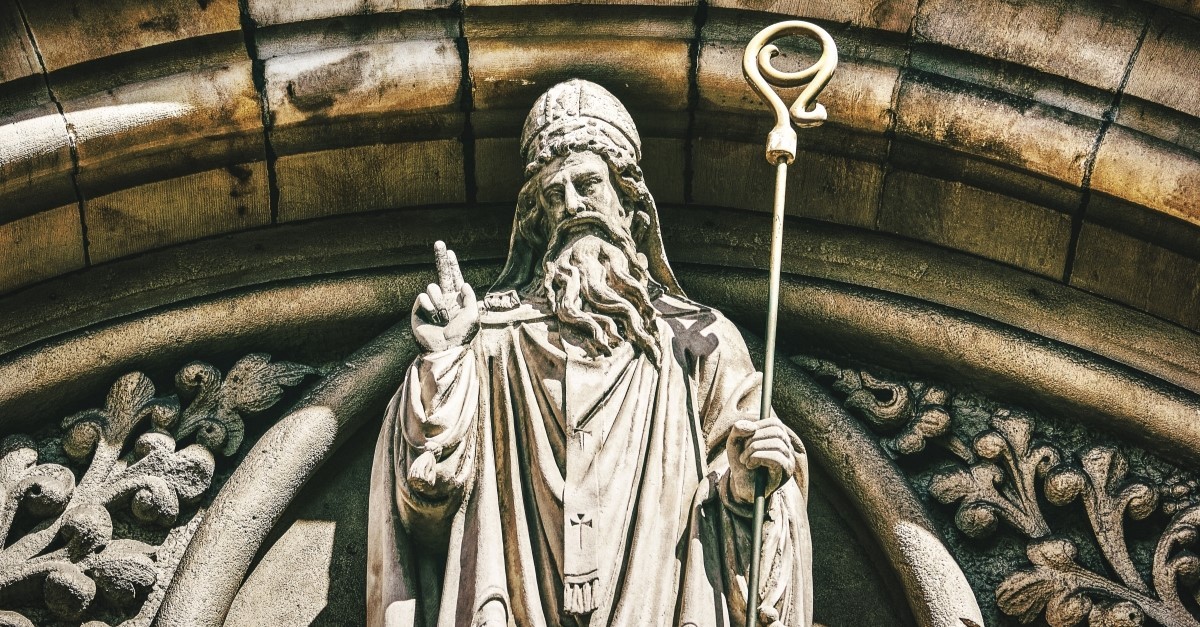
What St. Patrick's Life Reminds Us

What St. Patrick's Life Reminds Us

  1. We can trust God with our days. “My times are in your hands…” Ps. 31:15
  2. We can trust that He will bring purpose through even the darkest of times. "And we know that in all things God works for the good of those who love him, who have been called according to his purpose." Rom. 8:28
  3. We can trust His Sovereignty and Power over all. "For you bless the righteous, O Lord; you cover him with favor as with a shield." Ps. 5:12
  4. We can be assured God's presence is always with us and His plans for us are good. "For the Lord God is a sun and shield; the Lord bestows favor and honor; no good thing does He withhold from those who walk uprightly." Ps. 84:11

SEE ALSO: How to Honor St. Patrick This Weekend

Photo credit: ©K. Mitch Hodge/Unsplash

How St. Patrick's Life Shows Us the Power of Prayer

How St. Patrick's Life Shows Us the Power of Prayer

  1. Love for God is the best motivation to pray. It was love that fueled Patrick’s prayer life – not a desire to convince God to give him something, not a sense of obligation to fulfill, not an attempt to earn good standing with God, and not a plan to impress other people. Patrick simply wanted to spend time communicating with God because he loved being in God’s company.
  2. It's always a good time to pray. Patrick incorporated prayer into every part of his life, praying in all sorts of situations, from the mundane (such as before going to sleep) to the dramatic (when he was in danger). 
  3. Prayer empowers us to win spiritual warfare. When Patrick courageously moved forward with his work for God’s kingdom, he was hit by intense opposition from evil. People tried to kill him several times because they saw the Gospel message he preached as a threat to their power as pagan leaders. Once, while Patrick was praying on top of a mountain, a large group of demons manifested in physical form around him. They appeared as a dense cloud of birds of prey that was trying to distract and intimidate him. But Patrick called on the Holy Spirit for help as he prayed, and eventually the demonic birds scattered and faded away.
  4. We can expect God to really answer our prayers. When Patrick prayed, he didn’t just recite a list of requests and hope that maybe something good would happen afterward. Patrick really expected God to answer his prayers, so he prayed with real trust and excited anticipation. Sometimes God answered quietly in the midst of everyday life. At other times, God answered dramatically. (Read more about one example here!)
  5. We should be open to God's answers, even if they're surprising. Patrick made a habit of searching for and listening to God’s messages, however they came to him. He opened his mind up to be alert and receptive to whatever God wanted to communicate.


Content for this article was adapted from the following resources:

"5 Ways St. Patrick's Life Shows the Power of Prayer"

"What We Can Learn from St. Patrick's Life: God's Presence is Real"

"Saint Patrick: Practical Theologian, Social Activist"

History of Scotland and Ireland

Photo Credit: ©iStock/Getty Images Plus/PeopleImages
 

Salem News Channel Today

Sponsored Links


September 26 - Phoenix, AZ
Scottsdale Center for the Performing Arts


November 2 - Detroit, MI
Zion Christian Church in Troy


October 6 - Los Angeles, CA
Pasadena Convention Center


November 5 - San Antonio, TX
Norris Centers – The Grand Red Oak Ballroom


October 8 - Sacramento, CA
William Jessup University


November 7 - Tampa, FL
The Palladium at St. Pete College


October 22 - Minneapolis, MN
Crowne Plaza AiRE


November 15 - San Francisco, CA
Fremont Marriott Silicon Valley


October 23 - Philadelphia, PA
Green Valley Country Club


November 16 - Denver, CO
CU South Denver - Formerly Wildlife Experience


November 2 - Chicago, IL
Chicago Westin Northwest in Itasca


November 21 - Cleveland, OH
Holiday Inn Rockside in Independence


Salem Radio Network Speakers

Larry Elder is an American lawyer, writer, and radio and television personality who calls himself the "Sage of South Central" a district of Los Angeles, Larry says his philosophy is to entertain, inform, provoke and to hopefully uplift. His calling card is "we have a country to save" and to him this means returning to the bedrock Constitutional principles of limited government and maximum personal responsibility. Elder's iconoclastic wit and intellectual agility makes him a particularly attractive voice in a nation that seems weary of traditional racial dialogue.” – Los Angeles Times.

Mike Gallagher Mike Gallagher began his broadcasting career in 1978 in Dayton, Ohio. Today, he is one of the most listened-to talk radio show hosts in America, recently having been ranked in the Talkers Magazine “Heavy Hundred” list – the 100 most important talk radio hosts in America. Prior to being launched into national syndication in 1998, Mike hosted the morning show on WABC-AM in New York City. Today, Talkers Magazine reports that his show is heard by over 3.75 million weekly listeners. Besides his radio work, Mike is seen on Fox News Channel as an on-air contributor, frequently appearing on the cable news giant.

Hugh Hewitt is one of the nation’s leading bloggers and a genuine media revolutionary. He brings that expertise, his wit and what The New Yorker magazine calls his “amiable but relentless manner” to his nationally syndicated show each day.

When Dr. Sebastian Gorka was growing up, he listened to talk radio under his pillow with a transistor radio, dreaming that one day he would be behind the microphone. Beginning New Year’s Day 2019, he got his wish. Gorka now hosts America First every weekday afternoon 3 to 6pm ET. Gorka’s unique story works well on the radio. He is national security analyst for the Fox News Channel and author of two books: "Why We Fight" and "Defeating Jihad." His latest book releasing this fall is “War For America’s Soul.” He is uniquely qualified to fight the culture war and stand up for what is great about America, his adopted home country.

Broadcasting from his home station of KRLA in Los Angeles, the Dennis Prager Show is heard across the country. Everything in life – from politics to religion to relationships – is grist for Dennis’ mill. If it’s interesting, if it affects your life, then Dennis will be talking about it – with passion, humor, insight and wisdom.

Sean Hannity is a conservative radio and television host, and one of the original primetime hosts on the Fox News Channel, where he has appeared since 1996. Sean Hannity began his radio career at a college station in California, before moving on to markets in the Southeast and New York. Today, he’s one of the most listened to on-air voices. Hannity’s radio program went into national syndication on September 10, 2001, and airs on more than 500 stations. Talkers Magazine estimates Hannity’s weekly radio audience at 13.5 million. In 1996 he was hired as one of the original hosts on Fox News Channel. As host of several popular Fox programs, Hannity has become the highest-paid news anchor on television.

Michelle Malkin is a mother, wife, blogger, conservative syndicated columnist, longtime cable TV news commentator, and best-selling author of six books. She started her newspaper journalism career at the Los Angeles Daily News in 1992, moved to the Seattle Times in 1995, and has been penning nationally syndicated newspaper columns for Creators Syndicate since 1999. She is founder of conservative Internet start-ups Hot Air and Twitchy.com. Malkin has received numerous awards for her investigative journalism, including the Council on Governmental Ethics Laws (COGEL) national award for outstanding service for the cause of governmental ethics and leadership (1998), the Reed Irvine Accuracy in Media Award for Investigative Journalism (2006), the Heritage Foundation and Franklin Center for Government & Public Integrity's Breitbart Award for Excellence in Journalism (2013), the Center for Immigration Studies' Eugene Katz Award for Excellence in the Coverage of Immigration Award (2016), and the Manhattan Film Festival's Film Heals Award (2018). Married for 26 years and the mother of two teenage children, she lives with her family in Colorado. Follow her at michellemalkin.com. (Photo reprinted with kind permission from Peter Duke Photography.)

Sponsored by:

Who Was St. Patrick, and Why Should Christians Celebrate St. Patrick's Day?

Carbonatix Pre-Player Loader

Audio By Carbonatix

St. Patrick lived his years as a great example for us today. But he didn't live it out simply by "the luck of the Irish," as some may say, for one theme shines through it all: God’s Presence and Sovereignty are powerful.

He was an unlikely saint with an extraordinary story (involving pirates-- read on!) yet the Lord became real to him early in his adulthood and changed his life and legacy forever.

St. Patrick shares in writings that he prayed many prayers through the day, and even into the night. He shared these words of his time in captivity, "and the faith grew in me, and the spirit was roused, so that, in a single day, I have said as many as a hundred prayers, and in the night nearly the same, so that whilst in the woods and on the mountain, even before the dawn, I was roused to prayer..."

St. Patrick went on to write prayers many Christians still echo today, and his influence on the world is worth remembering and celebrating.

We can learn much from studying this amazing man's life. It wasn't about leprechauns, 4 leaf clovers, wearing green, or about luck.His life was simply about the amazing Sovereignty and blessing of God, about obedience to His call, about prayer and faithfulness.

May the example of this godly man from years ago, spur us onward even today.

Photo credit: Flickr-ThadZajdowicz

Who Was Saint Patrick?

Who Was Saint Patrick?

It is a question whether Patrick was born in Scotland, at a place called Kirkpatrick, near the river Clyde, or in France, near Boulogne. But wherever it may have been, his birth took place about the year 387. His father was a deacon of the church, his grandfather was a presbyter, and thus Patrick had the opportunities of a religious training from his infancy. He did not, however, use these opportunities so well as he might have done; but it pleased God to bring him to a better mind by the way of affliction.

When Patrick was about sixteen years old, he was carried off by some pirates (or sea-robbers), and was sold to a heathen prince in Ireland, where he was set to keep cattle, and had to bear great hardships.

But "there," says he, "it was that the Lord brought me to a sense of the unbelief of my heart, that I might call my sins to remembrance, and turn with all my heart to the Lord, who regarded my low estate, and, taking pity on my youth and ignorance, watched over me before I knew Him or had sense to discern between good and evil, and counselled me and comforted me as a father does a son. I was employed every day in feeding cattle, and often in the day I used to betake myself to prayer; and the love of God thus grew stronger and stronger, and His faith and fear increased in me, so that in a single day I could utter as many as a hundred prayers, and in the night almost as many, and I used to remain in the woods and on the mountains, and would rise for prayer before daylight, in the midst of snow and ice and rain, and I felt no harm from it, nor was I ever unwilling, because my heart was hot within me. I was not from my childhood a believer in the only God, but continued in death and in unbelief until I was severely chastened; and in truth I have been humbled by hunger and nakedness, and it was my lot to go about in Ireland every day sore against my will, until I was almost worn out. But this proved rather a blessing to me, because by means of it I have been corrected of the Lord, and He has fitted me for being what it once seemed unlikely that I should be, so that I should concern myself about the salvation of others, whereas I used to have no such thoughts even for myself."

Photo credit: ©Getty Images/Camp Willow Lake

What Was St. Patrick's Theology?

What Was St. Patrick's Theology?

Patrick's story as a bishop to the Irish began oddly: kidnapped by pirates at age 16, he was taken from Britain to Ireland. Sold into slavery, he spent six years as a shepherd. According to Thomas Cahill, he had two constant companions: nakedness and hunger. It was under these harsh conditions that Patrick learned to pray constantly.  One night he heard a mysterious voice telling him it was time to leave Ireland, and after walking to a seaport, he miraculously found passage away from Ireland, and eventually, back to Britain.

Because of his captivity, Patrick missed a formal education. He later spent time training for the priesthood, but he lacked the classical training of his contemporaries. As a consequence, when he finally went back to Ireland, he had to rely on skills other than classical oration or philosophical theology to work with the Irish people.

His lack of training became a strength. When he came up against Druidic shaman and pagan kings, it was Patrick's prayer life that impressed them and not his rhetorical skill.

Patrick's belief that all the world belonged to God became part of his power. An example of his confidence in God's world was his legendary use of nature to teach about the Holy Trinity. According to legend, Patrick would take up a three-leaf clover and ask, "Does it have one leaf or three?" Those listening would respond, "both."  Patrick then explained, "And so it is with the Trinity - Father, Son, and Spirit are one God. Three persons in one."

Patrick's ability to see God in nature paralleled both Paul and the Psalmist. In Romans chapter one, Paul declared that God provided the world with knowledge about Himself through His creation. Attributed to David, Psalm 19 proclaimed that the sun's movement through the heavens declared God's glory.

Patrick's practical emphasis on the Trinity extended beyond the shamrock. During the 19th century, a 10th century manuscript translation in Dublin included a hymn called "St. Patrick's Breastplate." Though it was impossible to tell if Patrick actually wrote the hymn, he still received credit for it.

Photo credit: ©Getty Images/Black Quetzal

St. Patrick's Breastplate: A Protective Prayer

St. Patrick's Breastplate: A Protective Prayer

"St. Patrick's Breastplate" was a protective prayer. Celtic monks used it to start their day.

The prayer began:

"I bind unto myself today

The strong Name of the Trinity

By invocation of the same,

The Three in One and One in Three"

The hymn was several stanzas long, and the last two stanzas were especially memorable and moving:

"Christ be with me, Christ within me,
Christ behind me, Christ before me,
Christ beside me, Christ to win me,
Christ to comfort and restore me.
Christ beneath me, Christ above me,
Christ in quiet, Christ in danger,
Christ in hearts of all that love me,
Christ in mouth of friend and stranger."
"I bind unto myself the Name,
The strong Name of the Trinity;
By invocation of the same.
The Three in One, and One in Three,
Of Whom all nature hath creation,
Eternal Father, Spirit, Word:
Praise to the Lord of my salvation,
Salvation is of Christ the Lord."

SEE ALSO: What Evangelicals Can Learn from St. Patrick

Photo Credit: ©Getty Images/Estellez

What Is the History of St. Patrick's Day?

What Is the History of St. Patrick's Day?

St. Patrick's Day is celebrated annually on March 17-- the anniversary of St. Patrick's death in the fifth century.

In Ireland, St. Patrick's Day is observed as a religious holiday, with Christian families attending church in the morning and celebrating in the afternoon. According to history.com, since St. Patrick's Day falls during the season of Lent, all prohibitions were waived for the holiday, allowing the Irish to dance, drink, and feast.

"Since around the ninth or 10th century, people in Ireland have been observing the Roman Catholic feast day of St. Patrick on March 17," writes History.com in the article History of St. Patrick's Day. "Interestingly, however, the first parade held to honor St. Patrick’s Day took place not in Ireland but in the United States. On March 17, 1762, Irish soldiers serving in the English military marched through New York City. Along with their music, the parade helped the soldiers reconnect with their Irish roots, as well as with fellow Irishmen serving in the English army."

Photo credit: ©Unsplash/aboodi vesakaran

What St. Patrick's Life Reminds Us

What St. Patrick's Life Reminds Us

  1. We can trust God with our days. “My times are in your hands…” Ps. 31:15
  2. We can trust that He will bring purpose through even the darkest of times. "And we know that in all things God works for the good of those who love him, who have been called according to his purpose." Rom. 8:28
  3. We can trust His Sovereignty and Power over all. "For you bless the righteous, O Lord; you cover him with favor as with a shield." Ps. 5:12
  4. We can be assured God's presence is always with us and His plans for us are good. "For the Lord God is a sun and shield; the Lord bestows favor and honor; no good thing does He withhold from those who walk uprightly." Ps. 84:11

SEE ALSO: How to Honor St. Patrick This Weekend

Photo credit: ©K. Mitch Hodge/Unsplash

How St. Patrick's Life Shows Us the Power of Prayer

How St. Patrick's Life Shows Us the Power of Prayer

  1. Love for God is the best motivation to pray. It was love that fueled Patrick’s prayer life – not a desire to convince God to give him something, not a sense of obligation to fulfill, not an attempt to earn good standing with God, and not a plan to impress other people. Patrick simply wanted to spend time communicating with God because he loved being in God’s company.
  2. It's always a good time to pray. Patrick incorporated prayer into every part of his life, praying in all sorts of situations, from the mundane (such as before going to sleep) to the dramatic (when he was in danger). 
  3. Prayer empowers us to win spiritual warfare. When Patrick courageously moved forward with his work for God’s kingdom, he was hit by intense opposition from evil. People tried to kill him several times because they saw the Gospel message he preached as a threat to their power as pagan leaders. Once, while Patrick was praying on top of a mountain, a large group of demons manifested in physical form around him. They appeared as a dense cloud of birds of prey that was trying to distract and intimidate him. But Patrick called on the Holy Spirit for help as he prayed, and eventually the demonic birds scattered and faded away.
  4. We can expect God to really answer our prayers. When Patrick prayed, he didn’t just recite a list of requests and hope that maybe something good would happen afterward. Patrick really expected God to answer his prayers, so he prayed with real trust and excited anticipation. Sometimes God answered quietly in the midst of everyday life. At other times, God answered dramatically. (Read more about one example here!)
  5. We should be open to God's answers, even if they're surprising. Patrick made a habit of searching for and listening to God’s messages, however they came to him. He opened his mind up to be alert and receptive to whatever God wanted to communicate.


Content for this article was adapted from the following resources:

"5 Ways St. Patrick's Life Shows the Power of Prayer"

"What We Can Learn from St. Patrick's Life: God's Presence is Real"

"Saint Patrick: Practical Theologian, Social Activist"

History of Scotland and Ireland

Photo Credit: ©iStock/Getty Images Plus/PeopleImages
 

Salem News Channel Today

Sponsored Links

On Air & Up Next

See the Full Program Guide