Can Positive Experiences Reverse the Damage of Childhood Trauma?

Carbonatix Pre-Player Loader

Audio By Carbonatix

In the early 90s, researchers embarked on a landmark study of over 17,000 individuals and asked them about negative experiences in childhood and their current physical and mental health. They found was that when children are exposed to toxic stress hormones like cortisol and adrenaline, this can have a dramatic impact on their minds, brains and bodies. This study later became known as the Adverse Childhood Experiences or ACE study.

Adverse Childhood Experiences (ACEs) are traumatic events that children may be exposed to while growing up that include abuse, neglect, domestic violence, substance misuse or mental illness. Long-term exposure to childhood trauma has been linked to everything from heart disease and diabetes to alcoholism, depression, and suicide.

While there is no denying the reality and impact of adverse childhood experiences on our mental and physical health, just focusing just on the negative alone, or the bad that happened to us, may actually slow the process of our healing down. Research on the mind-brain-body network shows that an overly negative focus without balancing with the positive can distort our perceptions and potentially hamstring our ability to work through what we have gone through in a way that doesn’t keep us trapped in the past.  

Why? The mind-brain-body network is all about balance, and restoring balance when it is upset. Focusing only on the negative will add to an already overloaded amount of toxic stress from the adverse experience. This is why it is important that while we do the work to find the root causes of our distress and process and reconceptualize what has happened to us, we also make sure we have some positive, balancing checkpoints in place on our healing journey or we risk the danger of getting stuck in a cycle of pain and victimhood. 

In fact, there is exciting research that shows that positive childhood experiences (PCEs) can actually help buffer against the negative health effects caused by exposure to ACEs. PCEs can also promote healing and recovery through activating our resilience. This shows that all of a child’s experiences—positive and negative—matter, so we shouldn’t just be considering the bad of what has happened to us but also the good, and how all these experiences affect our mental health as adults. Some research even shows that people with some exposure to ACEs, if they reported 3 to 5 positive childhood experiences, had 50% lower odds of adulthood depression or poor mental health, and those who reported 6 to 7 PCE’s had a 72% lower chance of adult mental health challenges. These findings demonstrate that positive childhood experiences can have a cumulative effect on life-long mental health outcomes, and play an important role in our healing. 

Although we definitely need to work on what we experienced growing up, at the same time we need to leave room for the positive, and a great way to do this is what I call the “3:1 thought ratio”.  This is one technique I often use this to balance myself, and find it extremely helpful when things seem overwhelming. All you have to do is to intentionally focus on the positive to balance out the negative in a 3:1 ratio. And this can be used for any negative situation, not just for ACEs. For every negative thought that comes to mind, along with its emotions, behaviors, and perspectives, counter it with three positive thoughts. This will help to maintain a balance in energy (quantum) waves in the brain so you can think clearly, build your resilience, and rewire healthy thought patterns!  

When you practice the 3:1 ratio, this means that each time you have a negative thought, you don't suppress it, but rather use it as a prompt to think of three positive childhood experiences. This doesn���t mean you are ignoring what has happened to you; rather, you are maintaining the balance of your mind, brain and body so that you can heal what has happened to you rather than remaining trapped in the past. You are essentially using the negative thought as a habit loop trigger to help you recognize what to change WHILE “padding” or mitigating the effects this negative event has on your overall wellbeing. This is not swapping the negative for the positive. It is using the positive to help us face and overcome the negative.

For more on managing the effect adverse childhood experiences have on your health and wellbeing, listen to my podcast (episode #590). If you enjoy listening to my podcast, please consider leaving a 5-star review and subscribing. And keep sharing episodes with friends and family and on social media. (Don’t forget to tag me so I can see your posts!).        


Originally published by Dr. Caroline Leaf. Used with permission. 

Do you have a story of healing to share? Comment and share your thoughts and testimony at Crosswalk Forums! Click HERE.

Photo Credit: ©GettyImages/ Erica Shires

 

Salem News Channel Today

Sponsored Links


September 26 - Phoenix, AZ
Scottsdale Center for the Performing Arts


November 2 - Detroit, MI
Zion Christian Church in Troy


October 6 - Los Angeles, CA
Pasadena Convention Center


November 5 - San Antonio, TX
Norris Centers – The Grand Red Oak Ballroom


October 8 - Sacramento, CA
William Jessup University


November 7 - Tampa, FL
The Palladium at St. Pete College


October 22 - Minneapolis, MN
Crowne Plaza AiRE


November 15 - San Francisco, CA
Fremont Marriott Silicon Valley


October 23 - Philadelphia, PA
Green Valley Country Club


November 16 - Denver, CO
CU South Denver - Formerly Wildlife Experience


November 2 - Chicago, IL
Chicago Westin Northwest in Itasca


November 21 - Cleveland, OH
Holiday Inn Rockside in Independence


Salem Radio Network Speakers

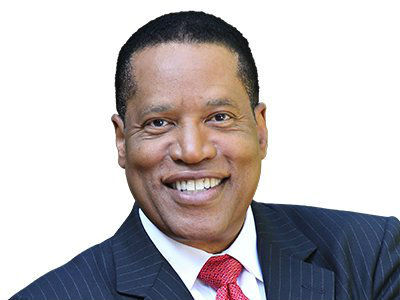
Larry Elder is an American lawyer, writer, and radio and television personality who calls himself the "Sage of South Central" a district of Los Angeles, Larry says his philosophy is to entertain, inform, provoke and to hopefully uplift. His calling card is "we have a country to save" and to him this means returning to the bedrock Constitutional principles of limited government and maximum personal responsibility. Elder's iconoclastic wit and intellectual agility makes him a particularly attractive voice in a nation that seems weary of traditional racial dialogue.” – Los Angeles Times.

Mike Gallagher Mike Gallagher began his broadcasting career in 1978 in Dayton, Ohio. Today, he is one of the most listened-to talk radio show hosts in America, recently having been ranked in the Talkers Magazine “Heavy Hundred” list – the 100 most important talk radio hosts in America. Prior to being launched into national syndication in 1998, Mike hosted the morning show on WABC-AM in New York City. Today, Talkers Magazine reports that his show is heard by over 3.75 million weekly listeners. Besides his radio work, Mike is seen on Fox News Channel as an on-air contributor, frequently appearing on the cable news giant.

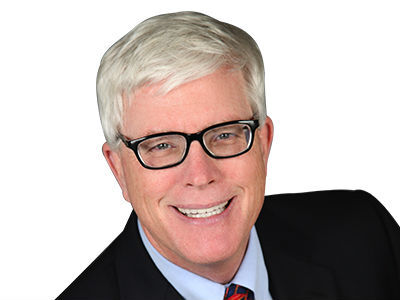
Hugh Hewitt is one of the nation’s leading bloggers and a genuine media revolutionary. He brings that expertise, his wit and what The New Yorker magazine calls his “amiable but relentless manner” to his nationally syndicated show each day.

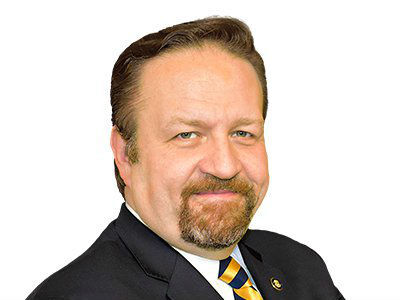
When Dr. Sebastian Gorka was growing up, he listened to talk radio under his pillow with a transistor radio, dreaming that one day he would be behind the microphone. Beginning New Year’s Day 2019, he got his wish. Gorka now hosts America First every weekday afternoon 3 to 6pm ET. Gorka’s unique story works well on the radio. He is national security analyst for the Fox News Channel and author of two books: "Why We Fight" and "Defeating Jihad." His latest book releasing this fall is “War For America’s Soul.” He is uniquely qualified to fight the culture war and stand up for what is great about America, his adopted home country.

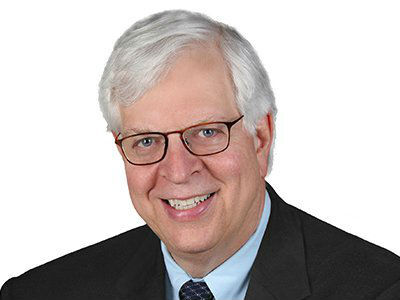
Broadcasting from his home station of KRLA in Los Angeles, the Dennis Prager Show is heard across the country. Everything in life – from politics to religion to relationships – is grist for Dennis’ mill. If it’s interesting, if it affects your life, then Dennis will be talking about it – with passion, humor, insight and wisdom.

Sean Hannity is a conservative radio and television host, and one of the original primetime hosts on the Fox News Channel, where he has appeared since 1996. Sean Hannity began his radio career at a college station in California, before moving on to markets in the Southeast and New York. Today, he’s one of the most listened to on-air voices. Hannity’s radio program went into national syndication on September 10, 2001, and airs on more than 500 stations. Talkers Magazine estimates Hannity’s weekly radio audience at 13.5 million. In 1996 he was hired as one of the original hosts on Fox News Channel. As host of several popular Fox programs, Hannity has become the highest-paid news anchor on television.

Michelle Malkin is a mother, wife, blogger, conservative syndicated columnist, longtime cable TV news commentator, and best-selling author of six books. She started her newspaper journalism career at the Los Angeles Daily News in 1992, moved to the Seattle Times in 1995, and has been penning nationally syndicated newspaper columns for Creators Syndicate since 1999. She is founder of conservative Internet start-ups Hot Air and Twitchy.com. Malkin has received numerous awards for her investigative journalism, including the Council on Governmental Ethics Laws (COGEL) national award for outstanding service for the cause of governmental ethics and leadership (1998), the Reed Irvine Accuracy in Media Award for Investigative Journalism (2006), the Heritage Foundation and Franklin Center for Government & Public Integrity's Breitbart Award for Excellence in Journalism (2013), the Center for Immigration Studies' Eugene Katz Award for Excellence in the Coverage of Immigration Award (2016), and the Manhattan Film Festival's Film Heals Award (2018). Married for 26 years and the mother of two teenage children, she lives with her family in Colorado. Follow her at michellemalkin.com. (Photo reprinted with kind permission from Peter Duke Photography.)

Sponsored by:

Can Positive Experiences Reverse the Damage of Childhood Trauma?

Carbonatix Pre-Player Loader

Audio By Carbonatix

In the early 90s, researchers embarked on a landmark study of over 17,000 individuals and asked them about negative experiences in childhood and their current physical and mental health. They found was that when children are exposed to toxic stress hormones like cortisol and adrenaline, this can have a dramatic impact on their minds, brains and bodies. This study later became known as the Adverse Childhood Experiences or ACE study.

Adverse Childhood Experiences (ACEs) are traumatic events that children may be exposed to while growing up that include abuse, neglect, domestic violence, substance misuse or mental illness. Long-term exposure to childhood trauma has been linked to everything from heart disease and diabetes to alcoholism, depression, and suicide.

While there is no denying the reality and impact of adverse childhood experiences on our mental and physical health, just focusing just on the negative alone, or the bad that happened to us, may actually slow the process of our healing down. Research on the mind-brain-body network shows that an overly negative focus without balancing with the positive can distort our perceptions and potentially hamstring our ability to work through what we have gone through in a way that doesn’t keep us trapped in the past.  

Why? The mind-brain-body network is all about balance, and restoring balance when it is upset. Focusing only on the negative will add to an already overloaded amount of toxic stress from the adverse experience. This is why it is important that while we do the work to find the root causes of our distress and process and reconceptualize what has happened to us, we also make sure we have some positive, balancing checkpoints in place on our healing journey or we risk the danger of getting stuck in a cycle of pain and victimhood. 

In fact, there is exciting research that shows that positive childhood experiences (PCEs) can actually help buffer against the negative health effects caused by exposure to ACEs. PCEs can also promote healing and recovery through activating our resilience. This shows that all of a child’s experiences—positive and negative—matter, so we shouldn’t just be considering the bad of what has happened to us but also the good, and how all these experiences affect our mental health as adults. Some research even shows that people with some exposure to ACEs, if they reported 3 to 5 positive childhood experiences, had 50% lower odds of adulthood depression or poor mental health, and those who reported 6 to 7 PCE’s had a 72% lower chance of adult mental health challenges. These findings demonstrate that positive childhood experiences can have a cumulative effect on life-long mental health outcomes, and play an important role in our healing. 

Although we definitely need to work on what we experienced growing up, at the same time we need to leave room for the positive, and a great way to do this is what I call the “3:1 thought ratio”.  This is one technique I often use this to balance myself, and find it extremely helpful when things seem overwhelming. All you have to do is to intentionally focus on the positive to balance out the negative in a 3:1 ratio. And this can be used for any negative situation, not just for ACEs. For every negative thought that comes to mind, along with its emotions, behaviors, and perspectives, counter it with three positive thoughts. This will help to maintain a balance in energy (quantum) waves in the brain so you can think clearly, build your resilience, and rewire healthy thought patterns!  

When you practice the 3:1 ratio, this means that each time you have a negative thought, you don't suppress it, but rather use it as a prompt to think of three positive childhood experiences. This doesn’t mean you are ignoring what has happened to you; rather, you are maintaining the balance of your mind, brain and body so that you can heal what has happened to you rather than remaining trapped in the past. You are essentially using the negative thought as a habit loop trigger to help you recognize what to change WHILE “padding” or mitigating the effects this negative event has on your overall wellbeing. This is not swapping the negative for the positive. It is using the positive to help us face and overcome the negative.

For more on managing the effect adverse childhood experiences have on your health and wellbeing, listen to my podcast (episode #590). If you enjoy listening to my podcast, please consider leaving a 5-star review and subscribing. And keep sharing episodes with friends and family and on social media. (Don’t forget to tag me so I can see your posts!).        


Originally published by Dr. Caroline Leaf. Used with permission. 

Do you have a story of healing to share? Comment and share your thoughts and testimony at Crosswalk Forums! Click HERE.

Photo Credit: ©GettyImages/ Erica Shires

 

Salem News Channel Today

Sponsored Links

On Air & Up Next

See the Full Program Guide