Sometimes It's Okay to Walk Away - Crosswalk Couples Devotional - April 26

Carbonatix Pre-Player Loader

Audio By Carbonatix

Updated Crosswalk Couples Devotional Header

Sometimes It's Okay to Walk Away
By Jen Ferguson

“Let your speech always be gracious, seasoned with salt, so that you may know how you ought to answer each person.” - Colossians 4:6, ESV

In the earlier years of our marriage, Craig and I discovered we had two very different ways of processing information. While I’d like to say we came to the conclusion right away that he is an internal processor and I am an external processor and that we made the appropriate accommodations for each other, that would not be true.

In fact, when Craig would say he needed time to think, I would take it as abandonment, as though he didn’t want to talk with me about the subject ever. I had watched my own parents come to a stalemate and then just stew in resentment. Arguing turned to silence and very few things seemed to end in resolution or reconciliation. I was afraid for him to leave a conversation because my fear was if we didn’t resolve it now, it would never get resolved. I had learned to hate silence.

From Craig’s perspective, he would find himself sometimes quickly getting angry about things I said while we were processing through a certain subject. He didn’t understand at the time that just because I said something, didn’t mean I truly believed it or that it was my final conclusion.

For me to get to what I actually think, I have to throw out all possible options so I can get down to the final answer. If I don’t, I get lost in my own head and end up just thinking in circles.

After enough arguments, we began to understand how we process differently and how to accommodate each other so that we could both have some measure of peace as we worked things out.

Craig has learned to listen as I talked and to hold his questions until I finished. He tries to keep himself from formulating solutions in his head and doesn’t assume that just because I am telling him something that I need help. Many times, outwardly processing events helps me process the emotions that go with them and that the retelling keeps resentment, bitterness, and anger from growing. He has also learned not to take my first response or reaction as absolute truth and gives me space to find what I truly believe as I weave through the conversation. When he needs time to process alone, he tells me when he will circle back with me and allows me to keep him accountable to that timeline.

I have learned that when he asks for time to be alone with his thoughts, it’s not because he doesn’t love me, value the conversation, or wants to fight for resolution. It’s because for him to understand what he truly thinks and get clarity, he has let the thoughts roll around in his head and process alone. It’s helpful for him to step away in order to get his emotions under control, and I’ve learned that I actually get my feelings hurt less if I allow him to blow off steam in the privacy of his own space. In the waiting, I’ve learned how to talk to God or, if necessary, go to a trusted friend who will listen objectively and help me fight for my marriage instead of husband-bashing.

There is naturally some give and take in our communication. I can’t always process out loud and he can’t always disappear into a hidey-hole when he wants to be alone with his thoughts. But we learn to ebb and flow with each other, to prioritize whosever’s need is greatest in that moment. And by all means, sometimes it’s still messy and we need to press pause and remember how God made us.

Although having different communication styles has presented some obstacles in our marriage, it has helped us tremendously in our relationships with other people. Understanding how we process differently allows us to have so much more patience and grace with others. And we can use our differences to our advantage, especially as we try to help other couples who are in the midst of their own marital struggles. Be looking for ways that God desires to use your differences to complement each other!


Jen Ferguson is a wife, author, and speaker who is passionate about helping couples thrive in their marriages. She and her husband, Craig, have shared their own hard story in their book, Pure Eyes, Clean Heart: A Couple’s Journey to Freedom from Pornography. Jen is also a mama to two girls and two high-maintenance dogs, which is probably why she runs. A lot. Even in the Texas heat.

Related Resource: The Five Languages of Apology, with Dr. Gary Chapman

In this insightful episode, Shaunti and Jeff Feldhahn sit down with Dr. Gary Chapman, renowned author of The Five Love Languages and The Five Languages of Apology. Together, they explore how understanding both love and apology languages can radically improve relationships. Dr. Chapman unpacks the five core ways people express and receive love—and explains how offering sincere, well-matched apologies can be just as vital to healing and connection. The conversation highlights the power of empathy, emotional communication, and forgiveness in maintaining strong, healthy relationships. Whether you're married, dating, or simply want to love others well, this episode offers powerful tools to deepen your relational bonds. Like what you hear? Be sure to follow I Wish You Could Hear This on Apple or Spotify so you never miss an episode!


 

Salem News Channel Today

Sponsored Links


September 26 - Phoenix, AZ
Scottsdale Center for the Performing Arts


November 2 - Detroit, MI
Zion Christian Church in Troy


October 6 - Los Angeles, CA
Pasadena Convention Center


November 5 - San Antonio, TX
Norris Centers – The Grand Red Oak Ballroom


October 8 - Sacramento, CA
William Jessup University


November 7 - Tampa, FL
The Palladium at St. Pete College


October 22 - Minneapolis, MN
Crowne Plaza AiRE


November 15 - San Francisco, CA
Fremont Marriott Silicon Valley


October 23 - Philadelphia, PA
Green Valley Country Club


November 16 - Denver, CO
CU South Denver - Formerly Wildlife Experience


November 2 - Chicago, IL
Chicago Westin Northwest in Itasca


November 21 - Cleveland, OH
Holiday Inn Rockside in Independence


Salem Radio Network Speakers

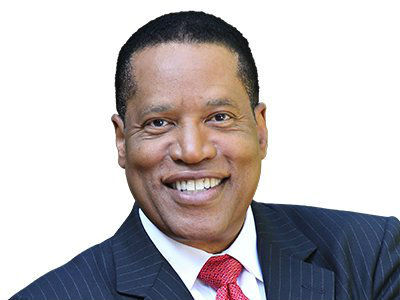
Larry Elder is an American lawyer, writer, and radio and television personality who calls himself the "Sage of South Central" a district of Los Angeles, Larry says his philosophy is to entertain, inform, provoke and to hopefully uplift. His calling card is "we have a country to save" and to him this means returning to the bedrock Constitutional principles of limited government and maximum personal responsibility. Elder's iconoclastic wit and intellectual agility makes him a particularly attractive voice in a nation that seems weary of traditional racial dialogue.” – Los Angeles Times.

Mike Gallagher Mike Gallagher began his broadcasting career in 1978 in Dayton, Ohio. Today, he is one of the most listened-to talk radio show hosts in America, recently having been ranked in the Talkers Magazine “Heavy Hundred” list – the 100 most important talk radio hosts in America. Prior to being launched into national syndication in 1998, Mike hosted the morning show on WABC-AM in New York City. Today, Talkers Magazine reports that his show is heard by over 3.75 million weekly listeners. Besides his radio work, Mike is seen on Fox News Channel as an on-air contributor, frequently appearing on the cable news giant.

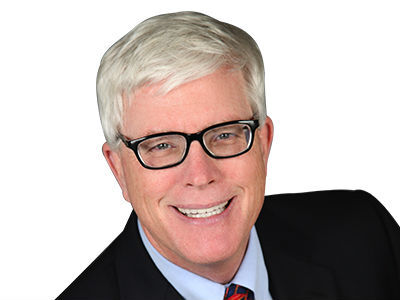
Hugh Hewitt is one of the nation’s leading bloggers and a genuine media revolutionary. He brings that expertise, his wit and what The New Yorker magazine calls his “amiable but relentless manner” to his nationally syndicated show each day.

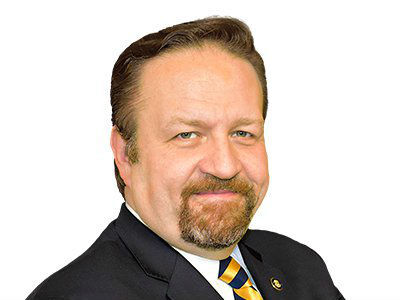
When Dr. Sebastian Gorka was growing up, he listened to talk radio under his pillow with a transistor radio, dreaming that one day he would be behind the microphone. Beginning New Year’s Day 2019, he got his wish. Gorka now hosts America First every weekday afternoon 3 to 6pm ET. Gorka’s unique story works well on the radio. He is national security analyst for the Fox News Channel and author of two books: "Why We Fight" and "Defeating Jihad." His latest book releasing this fall is “War For America’s Soul.” He is uniquely qualified to fight the culture war and stand up for what is great about America, his adopted home country.

Broadcasting from his home station of KRLA in Los Angeles, the Dennis Prager Show is heard across the country. Everything in life – from politics to religion to relationships – is grist for Dennis’ mill. If it’s interesting, if it affects your life, then Dennis will be talking about it – with passion, humor, insight and wisdom.

Sean Hannity is a conservative radio and television host, and one of the original primetime hosts on the Fox News Channel, where he has appeared since 1996. Sean Hannity began his radio career at a college station in California, before moving on to markets in the Southeast and New York. Today, he’s one of the most listened to on-air voices. Hannity’s radio program went into national syndication on September 10, 2001, and airs on more than 500 stations. Talkers Magazine estimates Hannity’s weekly radio audience at 13.5 million. In 1996 he was hired as one of the original hosts on Fox News Channel. As host of several popular Fox programs, Hannity has become the highest-paid news anchor on television.

Michelle Malkin is a mother, wife, blogger, conservative syndicated columnist, longtime cable TV news commentator, and best-selling author of six books. She started her newspaper journalism career at the Los Angeles Daily News in 1992, moved to the Seattle Times in 1995, and has been penning nationally syndicated newspaper columns for Creators Syndicate since 1999. She is founder of conservative Internet start-ups Hot Air and Twitchy.com. Malkin has received numerous awards for her investigative journalism, including the Council on Governmental Ethics Laws (COGEL) national award for outstanding service for the cause of governmental ethics and leadership (1998), the Reed Irvine Accuracy in Media Award for Investigative Journalism (2006), the Heritage Foundation and Franklin Center for Government & Public Integrity's Breitbart Award for Excellence in Journalism (2013), the Center for Immigration Studies' Eugene Katz Award for Excellence in the Coverage of Immigration Award (2016), and the Manhattan Film Festival's Film Heals Award (2018). Married for 26 years and the mother of two teenage children, she lives with her family in Colorado. Follow her at michellemalkin.com. (Photo reprinted with kind permission from Peter Duke Photography.)

Sponsored by:

Sometimes It's Okay to Walk Away - Crosswalk Couples Devotional - April 26

Carbonatix Pre-Player Loader

Audio By Carbonatix

Updated Crosswalk Couples Devotional Header

Sometimes It's Okay to Walk Away
By Jen Ferguson

“Let your speech always be gracious, seasoned with salt, so that you may know how you ought to answer each person.” - Colossians 4:6, ESV

In the earlier years of our marriage, Craig and I discovered we had two very different ways of processing information. While I’d like to say we came to the conclusion right away that he is an internal processor and I am an external processor and that we made the appropriate accommodations for each other, that would not be true.

In fact, when Craig would say he needed time to think, I would take it as abandonment, as though he didn’t want to talk with me about the subject ever. I had watched my own parents come to a stalemate and then just stew in resentment. Arguing turned to silence and very few things seemed to end in resolution or reconciliation. I was afraid for him to leave a conversation because my fear was if we didn’t resolve it now, it would never get resolved. I had learned to hate silence.

From Craig’s perspective, he would find himself sometimes quickly getting angry about things I said while we were processing through a certain subject. He didn’t understand at the time that just because I said something, didn’t mean I truly believed it or that it was my final conclusion.

For me to get to what I actually think, I have to throw out all possible options so I can get down to the final answer. If I don’t, I get lost in my own head and end up just thinking in circles.

After enough arguments, we began to understand how we process differently and how to accommodate each other so that we could both have some measure of peace as we worked things out.

Craig has learned to listen as I talked and to hold his questions until I finished. He tries to keep himself from formulating solutions in his head and doesn’t assume that just because I am telling him something that I need help. Many times, outwardly processing events helps me process the emotions that go with them and that the retelling keeps resentment, bitterness, and anger from growing. He has also learned not to take my first response or reaction as absolute truth and gives me space to find what I truly believe as I weave through the conversation. When he needs time to process alone, he tells me when he will circle back with me and allows me to keep him accountable to that timeline.

I have learned that when he asks for time to be alone with his thoughts, it’s not because he doesn’t love me, value the conversation, or wants to fight for resolution. It’s because for him to understand what he truly thinks and get clarity, he has let the thoughts roll around in his head and process alone. It’s helpful for him to step away in order to get his emotions under control, and I’ve learned that I actually get my feelings hurt less if I allow him to blow off steam in the privacy of his own space. In the waiting, I’ve learned how to talk to God or, if necessary, go to a trusted friend who will listen objectively and help me fight for my marriage instead of husband-bashing.

There is naturally some give and take in our communication. I can’t always process out loud and he can’t always disappear into a hidey-hole when he wants to be alone with his thoughts. But we learn to ebb and flow with each other, to prioritize whosever’s need is greatest in that moment. And by all means, sometimes it’s still messy and we need to press pause and remember how God made us.

Although having different communication styles has presented some obstacles in our marriage, it has helped us tremendously in our relationships with other people. Understanding how we process differently allows us to have so much more patience and grace with others. And we can use our differences to our advantage, especially as we try to help other couples who are in the midst of their own marital struggles. Be looking for ways that God desires to use your differences to complement each other!


Jen Ferguson is a wife, author, and speaker who is passionate about helping couples thrive in their marriages. She and her husband, Craig, have shared their own hard story in their book, Pure Eyes, Clean Heart: A Couple’s Journey to Freedom from Pornography. Jen is also a mama to two girls and two high-maintenance dogs, which is probably why she runs. A lot. Even in the Texas heat.

Related Resource: The Five Languages of Apology, with Dr. Gary Chapman

In this insightful episode, Shaunti and Jeff Feldhahn sit down with Dr. Gary Chapman, renowned author of The Five Love Languages and The Five Languages of Apology. Together, they explore how understanding both love and apology languages can radically improve relationships. Dr. Chapman unpacks the five core ways people express and receive love—and explains how offering sincere, well-matched apologies can be just as vital to healing and connection. The conversation highlights the power of empathy, emotional communication, and forgiveness in maintaining strong, healthy relationships. Whether you're married, dating, or simply want to love others well, this episode offers powerful tools to deepen your relational bonds. Like what you hear? Be sure to follow I Wish You Could Hear This on Apple or Spotify so you never miss an episode!

 

Salem News Channel Today

Sponsored Links

On Air & Up Next

See the Full Program Guide