Relevance - Today's Insight - March 16, 2026

Carbonatix Pre-Player Loader

Audio By Carbonatix

Today's Insight from Chuck Swindoll

 “But don’t be afraid of those who threaten you. For the time is coming when everything that is covered will be revealed, and all that is secret will be made known to all. What I tell you now in the darkness, shout abroad when daybreak comes. What I whisper in your ear, shout from the housetops for all to hear!” (Matthew 10:26–27)

He was a hated man. He was therefore maligned, threatened, publicly criticized, and privately rebuked. By his own admission he struggled vigorously with sins of the flesh. Especially outrageous anger. His debating disposition, wrote one biographer, caused his writings to “smell of powder; his words are battles; he overwhelms his opponents with a roaring cannonade of argument, eloquence, passion, and abuse.” Sarcasm dripped from his pen.

He insulted a colleague by deliberately and repeatedly misspelling his name. He piled such vulgarity on him that one reputable historian said he could not translate its meaning into decent English. “One massive thunderclap” is an apt description of the man’s style.

You may be surprised to know he was a Christian. He was, in fact, clergy. Once he admitted:

I never work better than when I am inspired of anger; when I am angry I can write, pray and preach well.

His maverick spirit led to his being excommunicated by the Pope when he was only thirty-eight. Rubbing salt into the ecclesiastical wound, he married a nun (in the sixteenth century, no less!) and became the talk of every monastery in Europe. Unintimidated, he stood alone like a bull in a blizzard . . . but silent he wasn’t.

As is true of all such notorious characters, exaggeration and extravagance swarm around his story. It is difficult to filter out myth from truth, but one thing is for certain, Martin Luther was not irrelevant. Irreverent, yes; irrelevant, no. Out of step, yes; out of touch, no. Off base, yes; off target, no. Insulting and offensive, yes; impertinent and tedious, no.

With all his faults, Luther could never be criticized for being dull and distant. His philosophy could be summed up in his own timely words:

If you preach the gospel in all aspects with the exception of the issues which deal specifically with your time—you are not preaching the gospel at all.

Don’t misunderstand, he wasn’t advocating a “social gospel,” but rather a word from God that contains the solid ring of relevance. The gospel isn’t to be changed. It is not ours to tamper with. But it is to cut into each generation like a flashing sword, sharpened on the stone of Scripture, tempered in the furnace of reality and need.

Of all the reactions a person may have to the gospel, I can think of none worse than a yawn . . . a sleepy “So what?” A bored “Who cares?”

I find it refreshing that Jesus Christ met people where they were. His words touched nerves. There was a lot more here-and-now than then-and-there in His talks. His attack on the hypocrisy and prejudice of religious phonies came through loud and clear. He met people as they were, not as they “ought to” be. Angry young men, blind beggars, proud politicians, loose-living street-walkers, ignorant fishermen, naked victims of demonism, and grieving parents were as clearly in His focus as the Twelve who hung on His every word.

His enemies misunderstood Him, but couldn’t ignore Him. They hated Him, but were never bored around Him. Jesus was the epitome of relevance. Still is.

It is we who have hauled the cross back out of sight. It is we who have left the impression that it belongs only in the cloistered halls of a seminary or beneath the soft shadows of stained glass and marble statues. George MacLeod, who wrote the following piece, expresses my firm conviction.

I simply argue that the cross be raised again
at the center of the market place
as well as on the steeple of the church,

I am recovering the claim that
Jesus was not crucified in a cathedral
between two candles:

But on a cross between two thieves;
on a town garbage heap;
At a crossroad of politics so cosmopolitan
that they had to write His title
in Hebrew and in Latin and in Greek . . .

And at the kind of place where cynics talk smut,
and thieves curse and soldiers gamble.

Because that is where He died,
and that is what He died about.
And that is where Christ’s men ought to be,
and what church people ought to be about.

Copyright © 1985, 1988, 1994 by Charles R. Swindoll, Inc.

Born to Die

Used with permission. All rights reserved.

Listen to today's broadcast of Insight for Living with Chuck Swindoll at OnePlace.com.
Visit the Bible-teaching ministry of Chuck Swindoll at www.insight.org.

 

Salem News Channel Today

Sponsored Links


September 26 - Phoenix, AZ
Scottsdale Center for the Performing Arts


November 2 - Detroit, MI
Zion Christian Church in Troy


October 6 - Los Angeles, CA
Pasadena Convention Center


November 5 - San Antonio, TX
Norris Centers – The Grand Red Oak Ballroom


October 8 - Sacramento, CA
William Jessup University


November 7 - Tampa, FL
The Palladium at St. Pete College


October 22 - Minneapolis, MN
Crowne Plaza AiRE


November 15 - San Francisco, CA
Fremont Marriott Silicon Valley


October 23 - Philadelphia, PA
Green Valley Country Club


November 16 - Denver, CO
CU South Denver - Formerly Wildlife Experience


November 2 - Chicago, IL
Chicago Westin Northwest in Itasca


November 21 - Cleveland, OH
Holiday Inn Rockside in Independence


Salem Radio Network Speakers

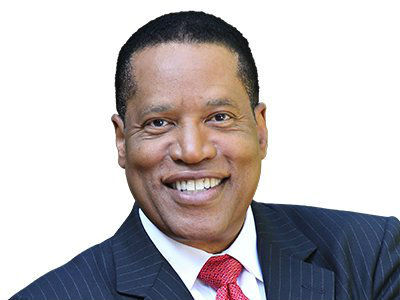
Larry Elder is an American lawyer, writer, and radio and television personality who calls himself the "Sage of South Central" a district of Los Angeles, Larry says his philosophy is to entertain, inform, provoke and to hopefully uplift. His calling card is "we have a country to save" and to him this means returning to the bedrock Constitutional principles of limited government and maximum personal responsibility. Elder's iconoclastic wit and intellectual agility makes him a particularly attractive voice in a nation that seems weary of traditional racial dialogue.” – Los Angeles Times.

Mike Gallagher Mike Gallagher began his broadcasting career in 1978 in Dayton, Ohio. Today, he is one of the most listened-to talk radio show hosts in America, recently having been ranked in the Talkers Magazine “Heavy Hundred” list – the 100 most important talk radio hosts in America. Prior to being launched into national syndication in 1998, Mike hosted the morning show on WABC-AM in New York City. Today, Talkers Magazine reports that his show is heard by over 3.75 million weekly listeners. Besides his radio work, Mike is seen on Fox News Channel as an on-air contributor, frequently appearing on the cable news giant.

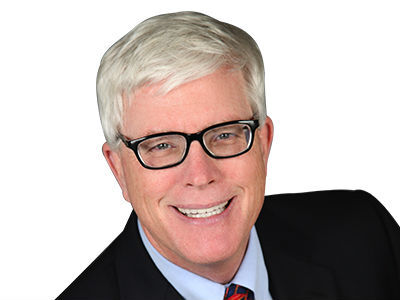
Hugh Hewitt is one of the nation’s leading bloggers and a genuine media revolutionary. He brings that expertise, his wit and what The New Yorker magazine calls his “amiable but relentless manner” to his nationally syndicated show each day.

When Dr. Sebastian Gorka was growing up, he listened to talk radio under his pillow with a transistor radio, dreaming that one day he would be behind the microphone. Beginning New Year’s Day 2019, he got his wish. Gorka now hosts America First every weekday afternoon 3 to 6pm ET. Gorka’s unique story works well on the radio. He is national security analyst for the Fox News Channel and author of two books: "Why We Fight" and "Defeating Jihad." His latest book releasing this fall is “War For America’s Soul.” He is uniquely qualified to fight the culture war and stand up for what is great about America, his adopted home country.

Broadcasting from his home station of KRLA in Los Angeles, the Dennis Prager Show is heard across the country. Everything in life – from politics to religion to relationships – is grist for Dennis’ mill. If it’s interesting, if it affects your life, then Dennis will be talking about it – with passion, humor, insight and wisdom.

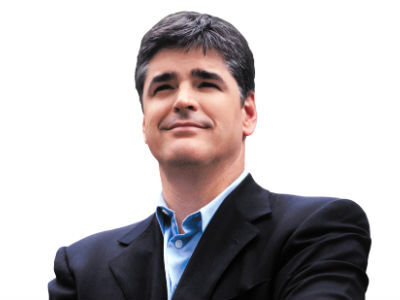
Sean Hannity is a conservative radio and television host, and one of the original primetime hosts on the Fox News Channel, where he has appeared since 1996. Sean Hannity began his radio career at a college station in California, before moving on to markets in the Southeast and New York. Today, he’s one of the most listened to on-air voices. Hannity’s radio program went into national syndication on September 10, 2001, and airs on more than 500 stations. Talkers Magazine estimates Hannity’s weekly radio audience at 13.5 million. In 1996 he was hired as one of the original hosts on Fox News Channel. As host of several popular Fox programs, Hannity has become the highest-paid news anchor on television.

Michelle Malkin is a mother, wife, blogger, conservative syndicated columnist, longtime cable TV news commentator, and best-selling author of six books. She started her newspaper journalism career at the Los Angeles Daily News in 1992, moved to the Seattle Times in 1995, and has been penning nationally syndicated newspaper columns for Creators Syndicate since 1999. She is founder of conservative Internet start-ups Hot Air and Twitchy.com. Malkin has received numerous awards for her investigative journalism, including the Council on Governmental Ethics Laws (COGEL) national award for outstanding service for the cause of governmental ethics and leadership (1998), the Reed Irvine Accuracy in Media Award for Investigative Journalism (2006), the Heritage Foundation and Franklin Center for Government & Public Integrity's Breitbart Award for Excellence in Journalism (2013), the Center for Immigration Studies' Eugene Katz Award for Excellence in the Coverage of Immigration Award (2016), and the Manhattan Film Festival's Film Heals Award (2018). Married for 26 years and the mother of two teenage children, she lives with her family in Colorado. Follow her at michellemalkin.com. (Photo reprinted with kind permission from Peter Duke Photography.)

Sponsored by:

Relevance - Today's Insight - March 16, 2026

Carbonatix Pre-Player Loader

Audio By Carbonatix

Today's Insight from Chuck Swindoll

 “But don’t be afraid of those who threaten you. For the time is coming when everything that is covered will be revealed, and all that is secret will be made known to all. What I tell you now in the darkness, shout abroad when daybreak comes. What I whisper in your ear, shout from the housetops for all to hear!” (Matthew 10:26–27)

He was a hated man. He was therefore maligned, threatened, publicly criticized, and privately rebuked. By his own admission he struggled vigorously with sins of the flesh. Especially outrageous anger. His debating disposition, wrote one biographer, caused his writings to “smell of powder; his words are battles; he overwhelms his opponents with a roaring cannonade of argument, eloquence, passion, and abuse.” Sarcasm dripped from his pen.

He insulted a colleague by deliberately and repeatedly misspelling his name. He piled such vulgarity on him that one reputable historian said he could not translate its meaning into decent English. “One massive thunderclap” is an apt description of the man’s style.

You may be surprised to know he was a Christian. He was, in fact, clergy. Once he admitted:

I never work better than when I am inspired of anger; when I am angry I can write, pray and preach well.

His maverick spirit led to his being excommunicated by the Pope when he was only thirty-eight. Rubbing salt into the ecclesiastical wound, he married a nun (in the sixteenth century, no less!) and became the talk of every monastery in Europe. Unintimidated, he stood alone like a bull in a blizzard . . . but silent he wasn’t.

As is true of all such notorious characters, exaggeration and extravagance swarm around his story. It is difficult to filter out myth from truth, but one thing is for certain, Martin Luther was not irrelevant. Irreverent, yes; irrelevant, no. Out of step, yes; out of touch, no. Off base, yes; off target, no. Insulting and offensive, yes; impertinent and tedious, no.

With all his faults, Luther could never be criticized for being dull and distant. His philosophy could be summed up in his own timely words:

If you preach the gospel in all aspects with the exception of the issues which deal specifically with your time—you are not preaching the gospel at all.

Don’t misunderstand, he wasn’t advocating a “social gospel,” but rather a word from God that contains the solid ring of relevance. The gospel isn’t to be changed. It is not ours to tamper with. But it is to cut into each generation like a flashing sword, sharpened on the stone of Scripture, tempered in the furnace of reality and need.

Of all the reactions a person may have to the gospel, I can think of none worse than a yawn . . . a sleepy “So what?” A bored “Who cares?”

I find it refreshing that Jesus Christ met people where they were. His words touched nerves. There was a lot more here-and-now than then-and-there in His talks. His attack on the hypocrisy and prejudice of religious phonies came through loud and clear. He met people as they were, not as they “ought to” be. Angry young men, blind beggars, proud politicians, loose-living street-walkers, ignorant fishermen, naked victims of demonism, and grieving parents were as clearly in His focus as the Twelve who hung on His every word.

His enemies misunderstood Him, but couldn’t ignore Him. They hated Him, but were never bored around Him. Jesus was the epitome of relevance. Still is.

It is we who have hauled the cross back out of sight. It is we who have left the impression that it belongs only in the cloistered halls of a seminary or beneath the soft shadows of stained glass and marble statues. George MacLeod, who wrote the following piece, expresses my firm conviction.

I simply argue that the cross be raised again
at the center of the market place
as well as on the steeple of the church,

I am recovering the claim that
Jesus was not crucified in a cathedral
between two candles:

But on a cross between two thieves;
on a town garbage heap;
At a crossroad of politics so cosmopolitan
that they had to write His title
in Hebrew and in Latin and in Greek . . .

And at the kind of place where cynics talk smut,
and thieves curse and soldiers gamble.

Because that is where He died,
and that is what He died about.
And that is where Christ’s men ought to be,
and what church people ought to be about.

Copyright © 1985, 1988, 1994 by Charles R. Swindoll, Inc.

Born to Die

Used with permission. All rights reserved.

Listen to today's broadcast of Insight for Living with Chuck Swindoll at OnePlace.com.
Visit the Bible-teaching ministry of Chuck Swindoll at www.insight.org.

 

Salem News Channel Today

Sponsored Links

On Air & Up Next

See the Full Program Guide