Hope for Survival - Today's Insight - March 23, 2026

Carbonatix Pre-Player Loader

Audio By Carbonatix

Today's Insight from Chuck Swindoll

 All the believers were united in heart and mind. And they felt that what they owned was not their own, so they shared everything they had. (Acts 4:32)

A certain fascinating social phenomenon occurred in American history. Understand, I wasn’t living back then, but from what I read, this actually happened. It occurred when “Go west, young man!” was the challenge of America . . . when squatter’s rights seemed the most advantageous way to pry families loose and dare them to brave the elements via the covered wagon.

Out they came, exchanging the crowded, soot-choked industrial cities back East for the open plains, clear skies, and fertile, albeit rugged, farmland of the West.

Predictably, those early settlers built their cabins or sod huts smack dab in the middle of their homestead, acres (often miles) from the nearest family. Strong, sturdy fences marked property lines as pride of ownership became the badge of courage. Words like independence and private property were common table talk as the young were taught how to fight for survival.

But as time passed all that began to change. As it was put to the test, isolationism proved to be a far cry from ideal. When photographers returned from those lonely houses, they showed pictures of wild-eyed women, stooped, gaunt, prematurely old men, and haunted-looking children. Life was hard making it on their own, especially through bitter winters and fighting off disease and starvation.

More and more settlers learned that they had a better chance of making it if they would build their houses near each other, in the corner of their property rather than in the center. Four families could survive much easier if they loosened their grip on independence, built a gate in their fence, and relinquished their overstated emphasis on privacy. Enduring winter’s blast or a lengthy illness wasn’t nearly so frightful if you had three other families within walking distance. It proved to be much more fun coming together instead of living lonely, separate, touch-me-not lives of isolation.

From all this emerged a proverb:

“Shared joy is a double joy, shared sorrow is half a sorrow.”

Seasons of the year became more colorful, more hopeful. Farming, harvesting, canning, and slaughtering became group projects. Weddings and worship, gains and losses, births and deaths became shared experiences as mere existence was exchanged for real living . . . entering into each other’s joys as well as sorrows, neighbors becoming friends (then relatives!) . . . sharers in the many-faceted jewel called “living.”

Those old settlers learned what we seem to have forgotten today: pulling closer together is better than existing so far apart. Sharing is still to be preferred to staying aloof. The risks and periodic hassles notwithstanding, four in a corner are better than one in the middle. I’m confident that’s the whole point of Ecclesiastes 4:9–10, 12 (MSG):

It’s better to have a partner than go it alone.
Share the work, share the wealth.
And if one falls down, the other helps,
But if there’s no one to help, tough! . . .

By yourself you’re unprotected.
With a friend you can face the worst.
Can you round up a third?
A three-stranded rope isn’t easily snapped.

A lot of us Western folk come from pioneering stock. The myth of “rugged individualism” dies a hard and bitter death. Our credo says:

“I can handle it.”
“I’ll tough it out somehow.”
“I don’t need to lean on anyone.”
“I’ll just hole up and lick my wounds; no one really cares anyway.”

That may be good Western mythology, but it’s rotten biblical theology. Chase the phrase “one another” through the last half of your New Testament and you’ll see what I mean. We really do need each other. More profoundly, more desperately than we even begin to realize. As a matter of fact, we were given to one another by the Lord of the Body—because each one of us has a unique something to contribute—a piece of the divine puzzle no one else on earth can supply (see Ephesians 4).

Where is your sod hut? Out in the middle of some lonely, windswept acres? How long has it been since you’ve had some significant, openhearted, fences-down interaction with folks in a local Body? Too long? Maybe it’s time you moved your hut to the corner of your field. Maybe it’s time you installed a gate in that high, forbidding fence. It could make a big difference in your life.

For some of you, it may even mean survival.

Copyright © 1985, 1988, 1994 by Charles R. Swindoll, Inc. 
Born to Die

Used with permission. All rights reserved.

Listen to today's broadcast of Insight for Living with Chuck Swindoll at OnePlace.com.
Visit the Bible-teaching ministry of Chuck Swindoll at www.insight.org.

 

Salem News Channel Today

Sponsored Links


September 26 - Phoenix, AZ
Scottsdale Center for the Performing Arts


November 2 - Detroit, MI
Zion Christian Church in Troy


October 6 - Los Angeles, CA
Pasadena Convention Center


November 5 - San Antonio, TX
Norris Centers – The Grand Red Oak Ballroom


October 8 - Sacramento, CA
William Jessup University


November 7 - Tampa, FL
The Palladium at St. Pete College


October 22 - Minneapolis, MN
Crowne Plaza AiRE


November 15 - San Francisco, CA
Fremont Marriott Silicon Valley


October 23 - Philadelphia, PA
Green Valley Country Club


November 16 - Denver, CO
CU South Denver - Formerly Wildlife Experience


November 2 - Chicago, IL
Chicago Westin Northwest in Itasca


November 21 - Cleveland, OH
Holiday Inn Rockside in Independence


Salem Radio Network Speakers

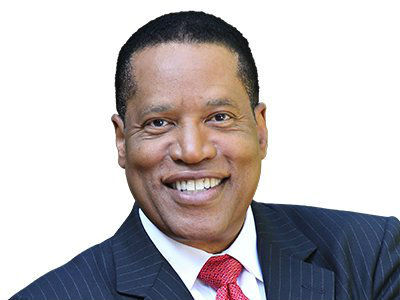
Larry Elder is an American lawyer, writer, and radio and television personality who calls himself the "Sage of South Central" a district of Los Angeles, Larry says his philosophy is to entertain, inform, provoke and to hopefully uplift. His calling card is "we have a country to save" and to him this means returning to the bedrock Constitutional principles of limited government and maximum personal responsibility. Elder's iconoclastic wit and intellectual agility makes him a particularly attractive voice in a nation that seems weary of traditional racial dialogue.” – Los Angeles Times.

Mike Gallagher Mike Gallagher began his broadcasting career in 1978 in Dayton, Ohio. Today, he is one of the most listened-to talk radio show hosts in America, recently having been ranked in the Talkers Magazine “Heavy Hundred” list – the 100 most important talk radio hosts in America. Prior to being launched into national syndication in 1998, Mike hosted the morning show on WABC-AM in New York City. Today, Talkers Magazine reports that his show is heard by over 3.75 million weekly listeners. Besides his radio work, Mike is seen on Fox News Channel as an on-air contributor, frequently appearing on the cable news giant.

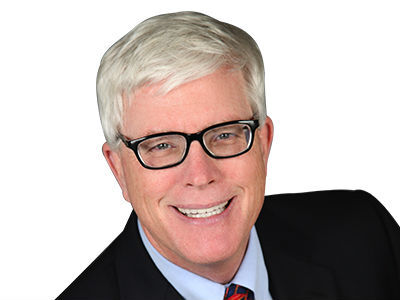
Hugh Hewitt is one of the nation’s leading bloggers and a genuine media revolutionary. He brings that expertise, his wit and what The New Yorker magazine calls his “amiable but relentless manner” to his nationally syndicated show each day.

When Dr. Sebastian Gorka was growing up, he listened to talk radio under his pillow with a transistor radio, dreaming that one day he would be behind the microphone. Beginning New Year’s Day 2019, he got his wish. Gorka now hosts America First every weekday afternoon 3 to 6pm ET. Gorka’s unique story works well on the radio. He is national security analyst for the Fox News Channel and author of two books: "Why We Fight" and "Defeating Jihad." His latest book releasing this fall is “War For America’s Soul.” He is uniquely qualified to fight the culture war and stand up for what is great about America, his adopted home country.

Broadcasting from his home station of KRLA in Los Angeles, the Dennis Prager Show is heard across the country. Everything in life – from politics to religion to relationships – is grist for Dennis’ mill. If it’s interesting, if it affects your life, then Dennis will be talking about it – with passion, humor, insight and wisdom.

Sean Hannity is a conservative radio and television host, and one of the original primetime hosts on the Fox News Channel, where he has appeared since 1996. Sean Hannity began his radio career at a college station in California, before moving on to markets in the Southeast and New York. Today, he’s one of the most listened to on-air voices. Hannity’s radio program went into national syndication on September 10, 2001, and airs on more than 500 stations. Talkers Magazine estimates Hannity’s weekly radio audience at 13.5 million. In 1996 he was hired as one of the original hosts on Fox News Channel. As host of several popular Fox programs, Hannity has become the highest-paid news anchor on television.

Michelle Malkin is a mother, wife, blogger, conservative syndicated columnist, longtime cable TV news commentator, and best-selling author of six books. She started her newspaper journalism career at the Los Angeles Daily News in 1992, moved to the Seattle Times in 1995, and has been penning nationally syndicated newspaper columns for Creators Syndicate since 1999. She is founder of conservative Internet start-ups Hot Air and Twitchy.com. Malkin has received numerous awards for her investigative journalism, including the Council on Governmental Ethics Laws (COGEL) national award for outstanding service for the cause of governmental ethics and leadership (1998), the Reed Irvine Accuracy in Media Award for Investigative Journalism (2006), the Heritage Foundation and Franklin Center for Government & Public Integrity's Breitbart Award for Excellence in Journalism (2013), the Center for Immigration Studies' Eugene Katz Award for Excellence in the Coverage of Immigration Award (2016), and the Manhattan Film Festival's Film Heals Award (2018). Married for 26 years and the mother of two teenage children, she lives with her family in Colorado. Follow her at michellemalkin.com. (Photo reprinted with kind permission from Peter Duke Photography.)

Sponsored by:

Hope for Survival - Today's Insight - March 23, 2026

Carbonatix Pre-Player Loader

Audio By Carbonatix

Today's Insight from Chuck Swindoll

 All the believers were united in heart and mind. And they felt that what they owned was not their own, so they shared everything they had. (Acts 4:32)

A certain fascinating social phenomenon occurred in American history. Understand, I wasn’t living back then, but from what I read, this actually happened. It occurred when “Go west, young man!” was the challenge of America . . . when squatter’s rights seemed the most advantageous way to pry families loose and dare them to brave the elements via the covered wagon.

Out they came, exchanging the crowded, soot-choked industrial cities back East for the open plains, clear skies, and fertile, albeit rugged, farmland of the West.

Predictably, those early settlers built their cabins or sod huts smack dab in the middle of their homestead, acres (often miles) from the nearest family. Strong, sturdy fences marked property lines as pride of ownership became the badge of courage. Words like independence and private property were common table talk as the young were taught how to fight for survival.

But as time passed all that began to change. As it was put to the test, isolationism proved to be a far cry from ideal. When photographers returned from those lonely houses, they showed pictures of wild-eyed women, stooped, gaunt, prematurely old men, and haunted-looking children. Life was hard making it on their own, especially through bitter winters and fighting off disease and starvation.

More and more settlers learned that they had a better chance of making it if they would build their houses near each other, in the corner of their property rather than in the center. Four families could survive much easier if they loosened their grip on independence, built a gate in their fence, and relinquished their overstated emphasis on privacy. Enduring winter’s blast or a lengthy illness wasn’t nearly so frightful if you had three other families within walking distance. It proved to be much more fun coming together instead of living lonely, separate, touch-me-not lives of isolation.

From all this emerged a proverb:

“Shared joy is a double joy, shared sorrow is half a sorrow.”

Seasons of the year became more colorful, more hopeful. Farming, harvesting, canning, and slaughtering became group projects. Weddings and worship, gains and losses, births and deaths became shared experiences as mere existence was exchanged for real living . . . entering into each other’s joys as well as sorrows, neighbors becoming friends (then relatives!) . . . sharers in the many-faceted jewel called “living.”

Those old settlers learned what we seem to have forgotten today: pulling closer together is better than existing so far apart. Sharing is still to be preferred to staying aloof. The risks and periodic hassles notwithstanding, four in a corner are better than one in the middle. I’m confident that’s the whole point of Ecclesiastes 4:9–10, 12 (MSG):

It’s better to have a partner than go it alone.
Share the work, share the wealth.
And if one falls down, the other helps,
But if there’s no one to help, tough! . . .

By yourself you’re unprotected.
With a friend you can face the worst.
Can you round up a third?
A three-stranded rope isn’t easily snapped.

A lot of us Western folk come from pioneering stock. The myth of “rugged individualism” dies a hard and bitter death. Our credo says:

“I can handle it.”
“I’ll tough it out somehow.”
“I don’t need to lean on anyone.”
“I’ll just hole up and lick my wounds; no one really cares anyway.”

That may be good Western mythology, but it’s rotten biblical theology. Chase the phrase “one another” through the last half of your New Testament and you’ll see what I mean. We really do need each other. More profoundly, more desperately than we even begin to realize. As a matter of fact, we were given to one another by the Lord of the Body—because each one of us has a unique something to contribute—a piece of the divine puzzle no one else on earth can supply (see Ephesians 4).

Where is your sod hut? Out in the middle of some lonely, windswept acres? How long has it been since you’ve had some significant, openhearted, fences-down interaction with folks in a local Body? Too long? Maybe it’s time you moved your hut to the corner of your field. Maybe it’s time you installed a gate in that high, forbidding fence. It could make a big difference in your life.

For some of you, it may even mean survival.

Copyright © 1985, 1988, 1994 by Charles R. Swindoll, Inc. 

Born to Die

Used with permission. All rights reserved.

Listen to today's broadcast of Insight for Living with Chuck Swindoll at OnePlace.com.
Visit the Bible-teaching ministry of Chuck Swindoll at www.insight.org.

 

Salem News Channel Today

Sponsored Links

On Air & Up Next

See the Full Program Guide