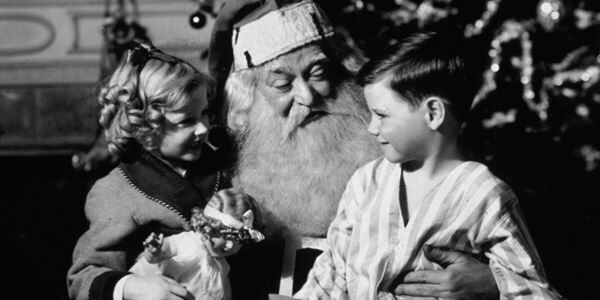
10 old-school Christmas traditions that are no longer practiced

Camerique Archive // Getty Images
Carbonatix Pre-Player Loader

Audio By Carbonatix

Leaving out cookies for Santa, caroling in the snow, and drinking hot cocoa are all familiar ways to herald the Christmas season. But what about hiding pickles, telling ghost stories, or crowning a lord of mischief?

Christmas is a blended event that mixes traditions from pagan winter festivals, the Christian commemoration of the birth of Christ, and the legend of Santa Claus. As a result, Christmas traditions are as diverse as the people who practice them. Political and religious changes in society render some traditions obsolete over time, and many rituals go in and out of vogue as popular culture cycles through embracing the new and reclaiming the old.

As church attendance continues to decline in the general population, many Christian rituals have evolved to make meaning for a changing demographic of those who celebrate. While Christmas trees, sweets and treats, and gift-giving have remained mainstays of the celebration, America still loves to reinvent and innovate traditions to capitalize on a season so ubiquitously celebrated. Less than 20 years ago, no one had even heard of "The Elf on the Shelf."

Using various sources, Stacker found 10 Christmas traditions that are the stuff of history today. Do any of these traditions deserve to be revived at your Christmas celebration this year?

Yule logs
Crackling fireplaces are common themes in Christmas imagery. The symbolism of the roaring fire traces back to the yule log ritual, which originated from a pagan practice predating Christianity.

The winter solstice in late December is the longest night of the year. For many ancient societies, darkness and uncertainty about the future plagued this time of year, and Germanic and Scandinavian pagans celebrated yule to pray for the sun's return. The burning of the yule log comes from Scandinavian tradition intended to banish darkness and evil and bring good fortune. Families would burn the yule log in the fireplace for days or even weeks.

With technology such as central heating, burning a log in the fireplace for an extended period is impractical and unsafe for most. Nowadays, people are more likely to pull up the crackling fireplace on TV or bake a yule log dessert to celebrate the tradition.

The 12 Days of Christmas
Nowadays, the Christmas season starts as soon as October and ends as soon as the New Year's decorations come out in stores. But early Christians celebrated Christmas from Dec. 25 to Jan. 6: The Christian calendar observes the 12 days that the Three Wise Men traveled to follow the star of Bethlehem and find Jesus after his birth. On the 12th day of Christmas, Christians traditionally celebrate Epiphany or Three Kings Day.

Today, the catchy Christmas carol describing the quirky and exponentially increasing array of gifts has seemingly outshined the Christian roots of the 12 days in the public imagination, leaving only Christmas Day (and perhaps Christmas Eve) to celebrate.

Homemade candy
Before sweets were mass-marketed, homemade treats of all kinds around the holidays were a common indulgence. Famous homemade Christmas goodies include fudge, gingerbread, peanut brittle, and everything peppermint.

Candy canes enjoy a privileged spot in the Christmas candy lineup, but their start is shrouded in legend: A persistent origin story is that a choirmaster in Germany handed out hard candy in the shape of a shepherd's hook to keep rowdy children quiet at church. However, it is probably more likely that candy canes got their form to serve a dual purpose as a treat and a Christmas tree ornament.

As industrial changes have made candy and sweets widespread year-round, traditions around sweets have changed, too. Today, people typically purchase Christmas candy or pick up a candy cane from their trip to see Santa.

Ghost stories
Long before "The Nightmare Before Christmas" combined the spooky with the sentimental for popular entertainment, people bonded around eerie stories at Christmastime. This custom is not just a way to build togetherness over a crackling fire; it most likely has a connection to the many monsters of legend associated with Christmas as well.

Puritan settlers disapproved of any Christmas traditions based on the supernatural or extravagant, and the spooky elements faded from the general backdrop of Christmas customs in the early United States.

Although "A Christmas Carol" (written in 1843 by Charles Dickens) was an immediate bestseller in the United States and beloved throughout time, Christmas in the United States grew mainly as a holiday rooted in the sentimental rather than spooky. The likely reason? As the Scottish and Irish immigrated en masse to the United States, Halloween arrived, and with it, the American spooky season became firmly established in October instead.

Hiding a pickle in the Christmas tree
People can't seem to agree where the mysterious Christmas pickle tradition originates. The practice is simple: The first person who finds the pickle ornament in the tree gets to open the first gift or may get an extra one. Although the custom was thought to be from Germany, polling in that country found that 91% of Germans have no idea what it is. And the legends get weirder from there.

Another theory stems from the Civil War: As legend goes, an imprisoned Union soldier begged for a pickle from a prison guard. The soldier survived (yes, likely thanks to the pickle) and began hanging a pickle on the Christmas tree to remember the benevolent guard. In another story, St. Nicholas saves two boys after being trapped in a jar of pickles by an evil innkeeper.

Most people today are still scratching their heads at the why and how of the Christmas pickle tradition. Perhaps that's why the tradition has stayed mostly in lore rather than practice today. Though, it's not totally uncommon to see a pickle ornament made of glass or metal.

Creepy Christmas cards
Holiday cards usually contain a modicum of cheer and well wishes, but this was not true during the Victorian era. At the time, cards showing Santa kidnapping children or snowmen with murder in mind were run-of-the-mill Christmas fare.

"In the 19th century, the iconography of Christmas had not been fully developed as it is now," Penne Restad, author of "Christmas in America," told History. The idea of Christmas celebrations didn't take until the mid-1800s and the first Christmas card was commissioned only in 1843. As exchanging cards grew more popular, Victorians sought designs to kickstart conversations. After all, cards weren't just cardstock but were displayed at Victorian parlors and kept as mementos.

Nowadays, holiday cards have become less morbid and more festive, but perhaps to society's loss. After all, what's a celebration without some pathos reminding us that dark things may just be lurking around the corner?

Sugarplums
Visions of sugarplums have long danced in our heads at Christmastime, although the definition of the candy (pastry? fruit?) is anything but clear.

Sugarplums have become a catch-all term for a variety of sweet treats dating back to 16th-century England. Sugarplums have been described as fruits, seeds, nuts, candies, spices, or any combination of these items. They are just as diverse in process, texture, and taste. The broad idea of sugarplums has been consistently associated with Christmas through poetry and song (one of the most memorable elements of Tchaikovsky's "The Nutcracker" is the Sugarplum Fairy).

If sugarplums have such an enduring relationship with Christmas, why are we dreaming of sugarplums instead of snacking on them? Most likely because we still don't know what they are.

Placing candles on the tree
Placing lit candles on Christmas trees dates back to 17th-century Germany. However, the festive trees were the source of several deadly fires. The fire risk was so great that insurance companies stopped covering Christmas tree fires by 1908.

The invention of light bulbs ushered in a new, safer era in Christmas tree lighting. In 1882, a couple of years after Thomas Edison patented the lightbulb, Edward Johnson, a friend of Edison's, hand-wired light bulbs around his Christmas tree in New York City. The beauty and innovation of the display made the papers.

It took a little longer for Americans to embrace electrical lighting: Lights were expensive and required the services of an electrician. It wasn't until the 1920s that everyday people could afford strings of electric lights. However, as electric lighting increased in affordability and usability, the practice of candle-lighting trees declined.

Cooking the Christmas goose
From Charles Dickens to "The Twelve Days of Christmas," geese have been long associated with Christmas, but today, people rarely see them on the dinner table. In Victorian England, cooking a Christmas goose was a natural option for most people who couldn't afford to butcher a hen or cow for Christmas dinner: Geese only lay eggs in warmer months and provide less daily value for families than chickens or cows.

The Christmas goose tradition never really took off in the United States. It faded in the English practice as well. There are a couple of explanations for why the Christmas turkey took over the dinner table in popular culture. A prevailing theory is that the Dickens scene where Scrooge brings a prize turkey to replace the poor Cratchit family's goose forever stamped the goose dinner as a poor man's option and elevated the turkey.

Turkeys are also native to the Americas, are easier to raise, and became more readily available in Europe after the growth of industrial farming. Today, commercial goose farms are few and far between in the United States and a rare sight on the Christmas dinner table.

Lord of Misrule
In medieval Europe, Christmas was a time to take part in mischief and misbehavior—and even a little anarchy. This tradition originates from the Roman holiday Saturnalia in mid-December.

Saturnalia is a holiday honoring the agricultural god Saturn, and the ancient Romans celebrated not only by drinking, feasting, and gambling but also by relaxing the social norms that governed their lives. Dress codes became more lax, gifts were exchanged, and social order was temporarily upended: People who were enslaved were even invited to the parties thrown by their enslavers.

The growth of Christianity in Europe brought new ways to express the spirit of Saturnalia in the context of the medieval church. In the spirit of social inversion, a practice in 15th-century Europe involved a choirboy assuming the bishop's duties for the day.

In the court of Henry VIII (1485-1509) a servant or minor official was crowned "the Lord of Misrule" and presided over anarchy, insults, pranks, and general mischief for the Christmas festivities. Around the mid-1500s, George Ferrer was appointed the Lord of Misrule and took the role to new heights, entering the city with an entourage that included six councilors, a jester, jugglers, tumblers, a poet, friars, two gentleman ushers, and more.

The changing role of the monarchy and the general social order diminished the meaning of some of these rituals as the Middle Ages progressed into eras of Enlightenment and self-government.

Story editing by Carren Jao. Copy editing by Kristen Wegrzyn.

 

Salem News Channel Today

Sponsored Links


September 26 - Phoenix, AZ
Scottsdale Center for the Performing Arts


November 2 - Detroit, MI
Zion Christian Church in Troy


October 6 - Los Angeles, CA
Pasadena Convention Center


November 5 - San Antonio, TX
Norris Centers – The Grand Red Oak Ballroom


October 8 - Sacramento, CA
William Jessup University


November 7 - Tampa, FL
The Palladium at St. Pete College


October 22 - Minneapolis, MN
Crowne Plaza AiRE


November 15 - San Francisco, CA
Fremont Marriott Silicon Valley


October 23 - Philadelphia, PA
Green Valley Country Club


November 16 - Denver, CO
CU South Denver - Formerly Wildlife Experience


November 2 - Chicago, IL
Chicago Westin Northwest in Itasca


November 21 - Cleveland, OH
Holiday Inn Rockside in Independence


Salem Radio Network Speakers

Larry Elder is an American lawyer, writer, and radio and television personality who calls himself the "Sage of South Central" a district of Los Angeles, Larry says his philosophy is to entertain, inform, provoke and to hopefully uplift. His calling card is "we have a country to save" and to him this means returning to the bedrock Constitutional principles of limited government and maximum personal responsibility. Elder's iconoclastic wit and intellectual agility makes him a particularly attractive voice in a nation that seems weary of traditional racial dialogue.” – Los Angeles Times.

Mike Gallagher Mike Gallagher began his broadcasting career in 1978 in Dayton, Ohio. Today, he is one of the most listened-to talk radio show hosts in America, recently having been ranked in the Talkers Magazine “Heavy Hundred” list – the 100 most important talk radio hosts in America. Prior to being launched into national syndication in 1998, Mike hosted the morning show on WABC-AM in New York City. Today, Talkers Magazine reports that his show is heard by over 3.75 million weekly listeners. Besides his radio work, Mike is seen on Fox News Channel as an on-air contributor, frequently appearing on the cable news giant.

Hugh Hewitt is one of the nation’s leading bloggers and a genuine media revolutionary. He brings that expertise, his wit and what The New Yorker magazine calls his “amiable but relentless manner” to his nationally syndicated show each day.

When Dr. Sebastian Gorka was growing up, he listened to talk radio under his pillow with a transistor radio, dreaming that one day he would be behind the microphone. Beginning New Year’s Day 2019, he got his wish. Gorka now hosts America First every weekday afternoon 3 to 6pm ET. Gorka’s unique story works well on the radio. He is national security analyst for the Fox News Channel and author of two books: "Why We Fight" and "Defeating Jihad." His latest book releasing this fall is “War For America’s Soul.” He is uniquely qualified to fight the culture war and stand up for what is great about America, his adopted home country.

Broadcasting from his home station of KRLA in Los Angeles, the Dennis Prager Show is heard across the country. Everything in life – from politics to religion to relationships – is grist for Dennis’ mill. If it’s interesting, if it affects your life, then Dennis will be talking about it – with passion, humor, insight and wisdom.

Sean Hannity is a conservative radio and television host, and one of the original primetime hosts on the Fox News Channel, where he has appeared since 1996. Sean Hannity began his radio career at a college station in California, before moving on to markets in the Southeast and New York. Today, he’s one of the most listened to on-air voices. Hannity’s radio program went into national syndication on September 10, 2001, and airs on more than 500 stations. Talkers Magazine estimates Hannity’s weekly radio audience at 13.5 million. In 1996 he was hired as one of the original hosts on Fox News Channel. As host of several popular Fox programs, Hannity has become the highest-paid news anchor on television.

Michelle Malkin is a mother, wife, blogger, conservative syndicated columnist, longtime cable TV news commentator, and best-selling author of six books. She started her newspaper journalism career at the Los Angeles Daily News in 1992, moved to the Seattle Times in 1995, and has been penning nationally syndicated newspaper columns for Creators Syndicate since 1999. She is founder of conservative Internet start-ups Hot Air and Twitchy.com. Malkin has received numerous awards for her investigative journalism, including the Council on Governmental Ethics Laws (COGEL) national award for outstanding service for the cause of governmental ethics and leadership (1998), the Reed Irvine Accuracy in Media Award for Investigative Journalism (2006), the Heritage Foundation and Franklin Center for Government & Public Integrity's Breitbart Award for Excellence in Journalism (2013), the Center for Immigration Studies' Eugene Katz Award for Excellence in the Coverage of Immigration Award (2016), and the Manhattan Film Festival's Film Heals Award (2018). Married for 26 years and the mother of two teenage children, she lives with her family in Colorado. Follow her at michellemalkin.com. (Photo reprinted with kind permission from Peter Duke Photography.)

Sponsored by:

10 old-school Christmas traditions that are no longer practiced

Camerique Archive // Getty Images
Carbonatix Pre-Player Loader

Audio By Carbonatix

Leaving out cookies for Santa, caroling in the snow, and drinking hot cocoa are all familiar ways to herald the Christmas season. But what about hiding pickles, telling ghost stories, or crowning a lord of mischief?

Christmas is a blended event that mixes traditions from pagan winter festivals, the Christian commemoration of the birth of Christ, and the legend of Santa Claus. As a result, Christmas traditions are as diverse as the people who practice them. Political and religious changes in society render some traditions obsolete over time, and many rituals go in and out of vogue as popular culture cycles through embracing the new and reclaiming the old.

As church attendance continues to decline in the general population, many Christian rituals have evolved to make meaning for a changing demographic of those who celebrate. While Christmas trees, sweets and treats, and gift-giving have remained mainstays of the celebration, America still loves to reinvent and innovate traditions to capitalize on a season so ubiquitously celebrated. Less than 20 years ago, no one had even heard of "The Elf on the Shelf."

Using various sources, Stacker found 10 Christmas traditions that are the stuff of history today. Do any of these traditions deserve to be revived at your Christmas celebration this year?

Yule logs
Crackling fireplaces are common themes in Christmas imagery. The symbolism of the roaring fire traces back to the yule log ritual, which originated from a pagan practice predating Christianity.

The winter solstice in late December is the longest night of the year. For many ancient societies, darkness and uncertainty about the future plagued this time of year, and Germanic and Scandinavian pagans celebrated yule to pray for the sun's return. The burning of the yule log comes from Scandinavian tradition intended to banish darkness and evil and bring good fortune. Families would burn the yule log in the fireplace for days or even weeks.

With technology such as central heating, burning a log in the fireplace for an extended period is impractical and unsafe for most. Nowadays, people are more likely to pull up the crackling fireplace on TV or bake a yule log dessert to celebrate the tradition.

The 12 Days of Christmas
Nowadays, the Christmas season starts as soon as October and ends as soon as the New Year's decorations come out in stores. But early Christians celebrated Christmas from Dec. 25 to Jan. 6: The Christian calendar observes the 12 days that the Three Wise Men traveled to follow the star of Bethlehem and find Jesus after his birth. On the 12th day of Christmas, Christians traditionally celebrate Epiphany or Three Kings Day.

Today, the catchy Christmas carol describing the quirky and exponentially increasing array of gifts has seemingly outshined the Christian roots of the 12 days in the public imagination, leaving only Christmas Day (and perhaps Christmas Eve) to celebrate.

Homemade candy
Before sweets were mass-marketed, homemade treats of all kinds around the holidays were a common indulgence. Famous homemade Christmas goodies include fudge, gingerbread, peanut brittle, and everything peppermint.

Candy canes enjoy a privileged spot in the Christmas candy lineup, but their start is shrouded in legend: A persistent origin story is that a choirmaster in Germany handed out hard candy in the shape of a shepherd's hook to keep rowdy children quiet at church. However, it is probably more likely that candy canes got their form to serve a dual purpose as a treat and a Christmas tree ornament.

As industrial changes have made candy and sweets widespread year-round, traditions around sweets have changed, too. Today, people typically purchase Christmas candy or pick up a candy cane from their trip to see Santa.

Ghost stories
Long before "The Nightmare Before Christmas" combined the spooky with the sentimental for popular entertainment, people bonded around eerie stories at Christmastime. This custom is not just a way to build togetherness over a crackling fire; it most likely has a connection to the many monsters of legend associated with Christmas as well.

Puritan settlers disapproved of any Christmas traditions based on the supernatural or extravagant, and the spooky elements faded from the general backdrop of Christmas customs in the early United States.

Although "A Christmas Carol" (written in 1843 by Charles Dickens) was an immediate bestseller in the United States and beloved throughout time, Christmas in the United States grew mainly as a holiday rooted in the sentimental rather than spooky. The likely reason? As the Scottish and Irish immigrated en masse to the United States, Halloween arrived, and with it, the American spooky season became firmly established in October instead.

Hiding a pickle in the Christmas tree
People can't seem to agree where the mysterious Christmas pickle tradition originates. The practice is simple: The first person who finds the pickle ornament in the tree gets to open the first gift or may get an extra one. Although the custom was thought to be from Germany, polling in that country found that 91% of Germans have no idea what it is. And the legends get weirder from there.

Another theory stems from the Civil War: As legend goes, an imprisoned Union soldier begged for a pickle from a prison guard. The soldier survived (yes, likely thanks to the pickle) and began hanging a pickle on the Christmas tree to remember the benevolent guard. In another story, St. Nicholas saves two boys after being trapped in a jar of pickles by an evil innkeeper.

Most people today are still scratching their heads at the why and how of the Christmas pickle tradition. Perhaps that's why the tradition has stayed mostly in lore rather than practice today. Though, it's not totally uncommon to see a pickle ornament made of glass or metal.

Creepy Christmas cards
Holiday cards usually contain a modicum of cheer and well wishes, but this was not true during the Victorian era. At the time, cards showing Santa kidnapping children or snowmen with murder in mind were run-of-the-mill Christmas fare.

"In the 19th century, the iconography of Christmas had not been fully developed as it is now," Penne Restad, author of "Christmas in America," told History. The idea of Christmas celebrations didn't take until the mid-1800s and the first Christmas card was commissioned only in 1843. As exchanging cards grew more popular, Victorians sought designs to kickstart conversations. After all, cards weren't just cardstock but were displayed at Victorian parlors and kept as mementos.

Nowadays, holiday cards have become less morbid and more festive, but perhaps to society's loss. After all, what's a celebration without some pathos reminding us that dark things may just be lurking around the corner?

Sugarplums
Visions of sugarplums have long danced in our heads at Christmastime, although the definition of the candy (pastry? fruit?) is anything but clear.

Sugarplums have become a catch-all term for a variety of sweet treats dating back to 16th-century England. Sugarplums have been described as fruits, seeds, nuts, candies, spices, or any combination of these items. They are just as diverse in process, texture, and taste. The broad idea of sugarplums has been consistently associated with Christmas through poetry and song (one of the most memorable elements of Tchaikovsky's "The Nutcracker" is the Sugarplum Fairy).

If sugarplums have such an enduring relationship with Christmas, why are we dreaming of sugarplums instead of snacking on them? Most likely because we still don't know what they are.

Placing candles on the tree
Placing lit candles on Christmas trees dates back to 17th-century Germany. However, the festive trees were the source of several deadly fires. The fire risk was so great that insurance companies stopped covering Christmas tree fires by 1908.

The invention of light bulbs ushered in a new, safer era in Christmas tree lighting. In 1882, a couple of years after Thomas Edison patented the lightbulb, Edward Johnson, a friend of Edison's, hand-wired light bulbs around his Christmas tree in New York City. The beauty and innovation of the display made the papers.

It took a little longer for Americans to embrace electrical lighting: Lights were expensive and required the services of an electrician. It wasn't until the 1920s that everyday people could afford strings of electric lights. However, as electric lighting increased in affordability and usability, the practice of candle-lighting trees declined.

Cooking the Christmas goose
From Charles Dickens to "The Twelve Days of Christmas," geese have been long associated with Christmas, but today, people rarely see them on the dinner table. In Victorian England, cooking a Christmas goose was a natural option for most people who couldn't afford to butcher a hen or cow for Christmas dinner: Geese only lay eggs in warmer months and provide less daily value for families than chickens or cows.

The Christmas goose tradition never really took off in the United States. It faded in the English practice as well. There are a couple of explanations for why the Christmas turkey took over the dinner table in popular culture. A prevailing theory is that the Dickens scene where Scrooge brings a prize turkey to replace the poor Cratchit family's goose forever stamped the goose dinner as a poor man's option and elevated the turkey.

Turkeys are also native to the Americas, are easier to raise, and became more readily available in Europe after the growth of industrial farming. Today, commercial goose farms are few and far between in the United States and a rare sight on the Christmas dinner table.

Lord of Misrule
In medieval Europe, Christmas was a time to take part in mischief and misbehavior—and even a little anarchy. This tradition originates from the Roman holiday Saturnalia in mid-December.

Saturnalia is a holiday honoring the agricultural god Saturn, and the ancient Romans celebrated not only by drinking, feasting, and gambling but also by relaxing the social norms that governed their lives. Dress codes became more lax, gifts were exchanged, and social order was temporarily upended: People who were enslaved were even invited to the parties thrown by their enslavers.

The growth of Christianity in Europe brought new ways to express the spirit of Saturnalia in the context of the medieval church. In the spirit of social inversion, a practice in 15th-century Europe involved a choirboy assuming the bishop's duties for the day.

In the court of Henry VIII (1485-1509) a servant or minor official was crowned "the Lord of Misrule" and presided over anarchy, insults, pranks, and general mischief for the Christmas festivities. Around the mid-1500s, George Ferrer was appointed the Lord of Misrule and took the role to new heights, entering the city with an entourage that included six councilors, a jester, jugglers, tumblers, a poet, friars, two gentleman ushers, and more.

The changing role of the monarchy and the general social order diminished the meaning of some of these rituals as the Middle Ages progressed into eras of Enlightenment and self-government.

Story editing by Carren Jao. Copy editing by Kristen Wegrzyn.

 

Salem News Channel Today

Sponsored Links

On Air & Up Next

See the Full Program Guide