4 Things Family Members Get Wrong about Recovery from Addiction

Carbonatix Pre-Player Loader

Audio By Carbonatix

“If my loved one would just stop drinking or using drugs, then our family could breathe again.”

Their addiction is ruining our lives.”

Does this sound familiar?

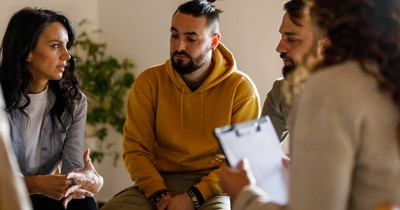
Addiction doesn’t just impact one person. It ripples through the whole home, even shaking generations. It can change the way you talk at dinner. The way you sleep (or not). The way you celebrate holidays. The way you brace your heart every time your phone rings.

When I was struggling with drug addiction as a teen, my family had no idea what to do. They felt like I was doing this to them. That something was wrong with our family and me. It caused immense shame, and my parents did not reach out for help, though they tried to get me the help I needed by connecting me with treatment and counseling.

Thankfully, we know today that there are evidence-based ways that families can support loved ones struggling with addiction, and importantly, what kind of support exists for the family as a whole. It’s part of why I advocate as an addiction expert and write books to help support families. Addiction is treatable, and it is a common condition.

Today, millions of families around the world are impacted by addiction. Millions are also impacted by recovery. Yet, despite the prevalence and the insights we have today, too many struggle to know how to help and support their loved ones.

What Loved Ones Often Get Wrong about Addiction

Here are four of the main things that affected family members get wrong about addiction, followed by ways to help our loved ones from research and biblically-based information.

1. “Once they quit, they’ll be cured.”

When I went to inpatient treatment as a teen, my parents thought that when I came home, I’d be cured. One and done. The truth is that 40-60% of people in early recovery have a recurrence of use or relapse. The research shows that it can take time to get sober and stay that way.

Recovery usually includes sobriety, but it also takes time to learn new coping skills, address trauma, and rebuild trust. Our loved ones may need different addiction treatment approaches and an array of services after formal treatment.

2. “We can’t talk about it, it’s too embarrassing.”

I remember my mother telling me she didn’t want to tell anyone in our family about my addiction because she was ashamed. She didn’t know how people would react. She thought silence would protect us. But silence is isolating and can cause even more harm to families.

When families share with trusted people (including those at church), they often discover what most of us eventually learn: almost everyone knows someone impacted by addiction. The stigma feels unique, but the pain is common.

What’s true: Safe, honest conversation breaks shame’s power. As scripture shares: “Therefore confess your sins to each other and pray for each other so that you may be healed. The prayer of a righteous person is powerful and effective” (James 5:16). When we live in the light and families share their struggles, healing can happen.

3. “If we just control it harder, we can stop it.”

When addiction threatens your home, control feels like love. Checking phones. Tracking locations. Interrogating stories. Managing money. Covering consequences.

Sometimes those actions come from real fear, and sometimes they increase secrecy and isolation.

What’s true: You can’t control someone into healing. But you can create conditions that make healing more likely: safety, truth, boundaries, support. We can hope, pray, and take positive actions. We can also trust that “The Lord is close to the brokenhearted and saves those who are crushed in spirit” (Ps. 34:18).

4. “If we support them, we’re enabling.”

This is where many families panic. This is also where I think much harm has been done, causing greater shame for families.

You’ve heard it for decades: “Don’t help them; they need to hit rock bottom.” That advice is archaic and, I would add, harmful. It’s often handed down as a universal rule, and families end up paralyzed by fear. It can also lead families to want to isolate more because they are worried that they are doing—or not doing—the wrong things.

What’s true: You can love someone without funding their addiction. You can offer compassion without removing every consequence. You can create support without surrendering your peace. No one needs to hit rock bottom before they are worthy of the grace that God gives freely. “Above all, love each other deeply, because love covers over a multitude of sins” (1 Peter 4:8).

What Really Helps

For many people, substances started as a solution, a coping strategy for pain, trauma, anxiety, loneliness, or untreated mental health struggles.

When you lead with curiosity, you don’t “approve” of addiction. You open a door to honesty, and this is where recovery begins. We can ask open-ended questions, provide basic needs, and have support options ready when they are.

Yes, addiction recovery is a family affair. It is through the family that God heals people. He sets the lonely in families and leads those imprisoned by addiction into freedom through fellowship (Ps. 68:6). Love is strongest when it’s honest, wise, and supported.

If you’re walking on eggshells, second-guessing every word, terrified of relapse, or drowning while trying to save someone else — hear me:

You are not alone. Healing is possible. And there are simple steps you can take right now.

If you love someone struggling with addiction:

  • Choose one safe person and tell the truth this week.
  • Write down one boundary you can keep with love.
  • And take one step toward support for you.

If you’re ready for a clear, faith-grounded path forward, read Caroline’s new book, apply the guidance, and start the journey to recovery together.

WHEN YOU LOVE SOMEONE IN RECOVERY is a lifeline for families navigating the pain and uncertainty of addiction. With empathy, clarity, and deep professional insight, author and recovery expert Caroline Beidler offers a powerful redefinition of recovery—not as a destination marked by sobriety, but as a shared journey of connection, faith, and renewal for the entire family. In a world overwhelmed by loneliness and disconnection, Beidler’s message brings healing and the reminder that no one has to walk this road alone.

Many of us know someone walking through addiction recovery—but few of us truly understand what that journey means. Drawing from her own journey of sustained recovery and her years of professional experience in the field, Beidler reimagines the complex and often painful realities of recovery into simple, shareable wisdom for those in recovery and the people who love them. Challenging traditional approaches like “tough love” she instead champions a compassionate path built on four key principles: hope, wellness, community, and service.

WHEN YOU LOVE SOMEONE IN RECOVERY speaks to one of the most pressing questions families face: How can we support our loved one if they are struggling in active addiction?  Beidler guides readers to transform fear into understanding, frustration into compassion, and despair into enduring hope. She reminds us that recovery isn’t only about what we release—but also what we receive: deeper connection, renewed purpose, and the strength to heal together. Readers will walk away with a refreshed sense of hope and energy to walk alongside their loved ones in recovery—trusting God to bring lasting healing to even the most broken places.

Related:

5 Pitfalls on the Road to Addiction Recovery

Related Resource: Generational Trauma, Epigenetics, and Family Healing with Gina Birkemeier: How to Break the Cycle

“Silence isn’t honor.”

Think about that phrase for a second. How many times have we believed the opposite, or been led to believe the opposite? Those words come from Gina Birkemeier. Gina is a licensed professional counselor, speaker, and the author of Generations Deep, one of the best books you'll ever read on breaking generational trauma. She’s also someone who has lived through—and broken—the very cycles we often feel trapped by.

In this important episode of the Confessions of a Christian Alcoholic podcast, we explore how trauma gets passed down through our genes (it does in a fascinating way!), how to recognize those inherited wounds, and how to actually start the healing process—both for yourself and the generations after you. We dive deep into epigenetics, legacy burdens, and the truth behind phrases like "generational curses" and even "blood is thicker than water." (Did you realize that phrase doesn't mean what you think it means?) We also talk about how men and women often deal with trauma differently, why emotionally corrective experiences matter so much, and how to hold compassion and boundaries at the same time.

This episode is especially helpful for anyone who has experienced the same traumas or addictions popping up in their family tree time and time again. (And for those who want to be cycle-breakers.) If you or someone you love is struggling with addiction, share this podcast or follow Confessions of a Christian Alcoholic on Apple or Spotify so you never miss an episode!

Photo credit: ©GettyImages/fotostorm

Caroline Beidler, MSW, is an author, speaker, and managing editor of Recovery.com, where she combines research and expert insight on addiction and mental health. Drawing from her own recovery journey, she is the founder of the Women's Recovery Leadership Foundation and helps others find healing through her newsletter and podcast, Circle of Chairs, which reaches thousands weekly. Caroline’s next book, When You Love Someone in Recovery, a compassionate and practical guide to understanding addiction and supporting loved ones through recovery, hits shelves April 2026. She lives in eastern Tennessee with her husband and seven-year-old twins.


 

Salem News Channel Today

Sponsored Links


September 26 - Phoenix, AZ
Scottsdale Center for the Performing Arts


November 2 - Detroit, MI
Zion Christian Church in Troy


October 6 - Los Angeles, CA
Pasadena Convention Center


November 5 - San Antonio, TX
Norris Centers – The Grand Red Oak Ballroom


October 8 - Sacramento, CA
William Jessup University


November 7 - Tampa, FL
The Palladium at St. Pete College


October 22 - Minneapolis, MN
Crowne Plaza AiRE


November 15 - San Francisco, CA
Fremont Marriott Silicon Valley


October 23 - Philadelphia, PA
Green Valley Country Club


November 16 - Denver, CO
CU South Denver - Formerly Wildlife Experience


November 2 - Chicago, IL
Chicago Westin Northwest in Itasca


November 21 - Cleveland, OH
Holiday Inn Rockside in Independence


Salem Radio Network Speakers

Larry Elder is an American lawyer, writer, and radio and television personality who calls himself the "Sage of South Central" a district of Los Angeles, Larry says his philosophy is to entertain, inform, provoke and to hopefully uplift. His calling card is "we have a country to save" and to him this means returning to the bedrock Constitutional principles of limited government and maximum personal responsibility. Elder's iconoclastic wit and intellectual agility makes him a particularly attractive voice in a nation that seems weary of traditional racial dialogue.” – Los Angeles Times.

Mike Gallagher Mike Gallagher began his broadcasting career in 1978 in Dayton, Ohio. Today, he is one of the most listened-to talk radio show hosts in America, recently having been ranked in the Talkers Magazine “Heavy Hundred” list – the 100 most important talk radio hosts in America. Prior to being launched into national syndication in 1998, Mike hosted the morning show on WABC-AM in New York City. Today, Talkers Magazine reports that his show is heard by over 3.75 million weekly listeners. Besides his radio work, Mike is seen on Fox News Channel as an on-air contributor, frequently appearing on the cable news giant.

Hugh Hewitt is one of the nation’s leading bloggers and a genuine media revolutionary. He brings that expertise, his wit and what The New Yorker magazine calls his “amiable but relentless manner” to his nationally syndicated show each day.

When Dr. Sebastian Gorka was growing up, he listened to talk radio under his pillow with a transistor radio, dreaming that one day he would be behind the microphone. Beginning New Year’s Day 2019, he got his wish. Gorka now hosts America First every weekday afternoon 3 to 6pm ET. Gorka’s unique story works well on the radio. He is national security analyst for the Fox News Channel and author of two books: "Why We Fight" and "Defeating Jihad." His latest book releasing this fall is “War For America’s Soul.” He is uniquely qualified to fight the culture war and stand up for what is great about America, his adopted home country.

Broadcasting from his home station of KRLA in Los Angeles, the Dennis Prager Show is heard across the country. Everything in life – from politics to religion to relationships – is grist for Dennis’ mill. If it’s interesting, if it affects your life, then Dennis will be talking about it – with passion, humor, insight and wisdom.

Sean Hannity is a conservative radio and television host, and one of the original primetime hosts on the Fox News Channel, where he has appeared since 1996. Sean Hannity began his radio career at a college station in California, before moving on to markets in the Southeast and New York. Today, he’s one of the most listened to on-air voices. Hannity’s radio program went into national syndication on September 10, 2001, and airs on more than 500 stations. Talkers Magazine estimates Hannity’s weekly radio audience at 13.5 million. In 1996 he was hired as one of the original hosts on Fox News Channel. As host of several popular Fox programs, Hannity has become the highest-paid news anchor on television.

Michelle Malkin is a mother, wife, blogger, conservative syndicated columnist, longtime cable TV news commentator, and best-selling author of six books. She started her newspaper journalism career at the Los Angeles Daily News in 1992, moved to the Seattle Times in 1995, and has been penning nationally syndicated newspaper columns for Creators Syndicate since 1999. She is founder of conservative Internet start-ups Hot Air and Twitchy.com. Malkin has received numerous awards for her investigative journalism, including the Council on Governmental Ethics Laws (COGEL) national award for outstanding service for the cause of governmental ethics and leadership (1998), the Reed Irvine Accuracy in Media Award for Investigative Journalism (2006), the Heritage Foundation and Franklin Center for Government & Public Integrity's Breitbart Award for Excellence in Journalism (2013), the Center for Immigration Studies' Eugene Katz Award for Excellence in the Coverage of Immigration Award (2016), and the Manhattan Film Festival's Film Heals Award (2018). Married for 26 years and the mother of two teenage children, she lives with her family in Colorado. Follow her at michellemalkin.com. (Photo reprinted with kind permission from Peter Duke Photography.)

Sponsored by:

4 Things Family Members Get Wrong about Recovery from Addiction

Carbonatix Pre-Player Loader

Audio By Carbonatix

“If my loved one would just stop drinking or using drugs, then our family could breathe again.”

Their addiction is ruining our lives.”

Does this sound familiar?

Addiction doesn’t just impact one person. It ripples through the whole home, even shaking generations. It can change the way you talk at dinner. The way you sleep (or not). The way you celebrate holidays. The way you brace your heart every time your phone rings.

When I was struggling with drug addiction as a teen, my family had no idea what to do. They felt like I was doing this to them. That something was wrong with our family and me. It caused immense shame, and my parents did not reach out for help, though they tried to get me the help I needed by connecting me with treatment and counseling.

Thankfully, we know today that there are evidence-based ways that families can support loved ones struggling with addiction, and importantly, what kind of support exists for the family as a whole. It’s part of why I advocate as an addiction expert and write books to help support families. Addiction is treatable, and it is a common condition.

Today, millions of families around the world are impacted by addiction. Millions are also impacted by recovery. Yet, despite the prevalence and the insights we have today, too many struggle to know how to help and support their loved ones.

What Loved Ones Often Get Wrong about Addiction

Here are four of the main things that affected family members get wrong about addiction, followed by ways to help our loved ones from research and biblically-based information.

1. “Once they quit, they’ll be cured.”

When I went to inpatient treatment as a teen, my parents thought that when I came home, I’d be cured. One and done. The truth is that 40-60% of people in early recovery have a recurrence of use or relapse. The research shows that it can take time to get sober and stay that way.

Recovery usually includes sobriety, but it also takes time to learn new coping skills, address trauma, and rebuild trust. Our loved ones may need different addiction treatment approaches and an array of services after formal treatment.

2. “We can’t talk about it, it’s too embarrassing.”

I remember my mother telling me she didn’t want to tell anyone in our family about my addiction because she was ashamed. She didn’t know how people would react. She thought silence would protect us. But silence is isolating and can cause even more harm to families.

When families share with trusted people (including those at church), they often discover what most of us eventually learn: almost everyone knows someone impacted by addiction. The stigma feels unique, but the pain is common.

What’s true: Safe, honest conversation breaks shame’s power. As scripture shares: “Therefore confess your sins to each other and pray for each other so that you may be healed. The prayer of a righteous person is powerful and effective” (James 5:16). When we live in the light and families share their struggles, healing can happen.

3. “If we just control it harder, we can stop it.”

When addiction threatens your home, control feels like love. Checking phones. Tracking locations. Interrogating stories. Managing money. Covering consequences.

Sometimes those actions come from real fear, and sometimes they increase secrecy and isolation.

What’s true: You can’t control someone into healing. But you can create conditions that make healing more likely: safety, truth, boundaries, support. We can hope, pray, and take positive actions. We can also trust that “The Lord is close to the brokenhearted and saves those who are crushed in spirit” (Ps. 34:18).

4. “If we support them, we’re enabling.”

This is where many families panic. This is also where I think much harm has been done, causing greater shame for families.

You’ve heard it for decades: “Don’t help them; they need to hit rock bottom.” That advice is archaic and, I would add, harmful. It’s often handed down as a universal rule, and families end up paralyzed by fear. It can also lead families to want to isolate more because they are worried that they are doing—or not doing—the wrong things.

What’s true: You can love someone without funding their addiction. You can offer compassion without removing every consequence. You can create support without surrendering your peace. No one needs to hit rock bottom before they are worthy of the grace that God gives freely. “Above all, love each other deeply, because love covers over a multitude of sins” (1 Peter 4:8).

What Really Helps

For many people, substances started as a solution, a coping strategy for pain, trauma, anxiety, loneliness, or untreated mental health struggles.

When you lead with curiosity, you don’t “approve” of addiction. You open a door to honesty, and this is where recovery begins. We can ask open-ended questions, provide basic needs, and have support options ready when they are.

Yes, addiction recovery is a family affair. It is through the family that God heals people. He sets the lonely in families and leads those imprisoned by addiction into freedom through fellowship (Ps. 68:6). Love is strongest when it’s honest, wise, and supported.

If you’re walking on eggshells, second-guessing every word, terrified of relapse, or drowning while trying to save someone else — hear me:

You are not alone. Healing is possible. And there are simple steps you can take right now.

If you love someone struggling with addiction:

  • Choose one safe person and tell the truth this week.
  • Write down one boundary you can keep with love.
  • And take one step toward support for you.

If you’re ready for a clear, faith-grounded path forward, read Caroline’s new book, apply the guidance, and start the journey to recovery together.

WHEN YOU LOVE SOMEONE IN RECOVERY is a lifeline for families navigating the pain and uncertainty of addiction. With empathy, clarity, and deep professional insight, author and recovery expert Caroline Beidler offers a powerful redefinition of recovery—not as a destination marked by sobriety, but as a shared journey of connection, faith, and renewal for the entire family. In a world overwhelmed by loneliness and disconnection, Beidler’s message brings healing and the reminder that no one has to walk this road alone.

Many of us know someone walking through addiction recovery—but few of us truly understand what that journey means. Drawing from her own journey of sustained recovery and her years of professional experience in the field, Beidler reimagines the complex and often painful realities of recovery into simple, shareable wisdom for those in recovery and the people who love them. Challenging traditional approaches like “tough love” she instead champions a compassionate path built on four key principles: hope, wellness, community, and service.

WHEN YOU LOVE SOMEONE IN RECOVERY speaks to one of the most pressing questions families face: How can we support our loved one if they are struggling in active addiction?  Beidler guides readers to transform fear into understanding, frustration into compassion, and despair into enduring hope. She reminds us that recovery isn’t only about what we release—but also what we receive: deeper connection, renewed purpose, and the strength to heal together. Readers will walk away with a refreshed sense of hope and energy to walk alongside their loved ones in recovery—trusting God to bring lasting healing to even the most broken places.

Related:

5 Pitfalls on the Road to Addiction Recovery

Related Resource: Generational Trauma, Epigenetics, and Family Healing with Gina Birkemeier: How to Break the Cycle

“Silence isn’t honor.”

Think about that phrase for a second. How many times have we believed the opposite, or been led to believe the opposite? Those words come from Gina Birkemeier. Gina is a licensed professional counselor, speaker, and the author of Generations Deep, one of the best books you'll ever read on breaking generational trauma. She’s also someone who has lived through—and broken—the very cycles we often feel trapped by.

In this important episode of the Confessions of a Christian Alcoholic podcast, we explore how trauma gets passed down through our genes (it does in a fascinating way!), how to recognize those inherited wounds, and how to actually start the healing process—both for yourself and the generations after you. We dive deep into epigenetics, legacy burdens, and the truth behind phrases like "generational curses" and even "blood is thicker than water." (Did you realize that phrase doesn't mean what you think it means?) We also talk about how men and women often deal with trauma differently, why emotionally corrective experiences matter so much, and how to hold compassion and boundaries at the same time.

This episode is especially helpful for anyone who has experienced the same traumas or addictions popping up in their family tree time and time again. (And for those who want to be cycle-breakers.) If you or someone you love is struggling with addiction, share this podcast or follow Confessions of a Christian Alcoholic on Apple or Spotify so you never miss an episode!

Photo credit: ©GettyImages/fotostorm

Caroline Beidler, MSW, is an author, speaker, and managing editor of Recovery.com, where she combines research and expert insight on addiction and mental health. Drawing from her own recovery journey, she is the founder of the Women's Recovery Leadership Foundation and helps others find healing through her newsletter and podcast, Circle of Chairs, which reaches thousands weekly. Caroline’s next book, When You Love Someone in Recovery, a compassionate and practical guide to understanding addiction and supporting loved ones through recovery, hits shelves April 2026. She lives in eastern Tennessee with her husband and seven-year-old twins.

 

Salem News Channel Today

Sponsored Links

On Air & Up Next

See the Full Program Guide