How to Know Whether You Are Practicing Stewardship or Control

Carbonatix Pre-Player Loader

Audio By Carbonatix

The biblical mandate of stewardship requires believers to treat everything they have with responsibility. But is it possible to become too responsible with what we’ve been given?

Matthew 25:14-20 reveals the heart of God in regard to stewardship. In this passage, Jesus tells a parable of three servants, each given different amounts of money (or talents). The first two acted responsibly, increasing what they’d been given; they are held up as examples of good stewards.

The third servant is not a good steward. Why? On the surface, the answer might be that he was irresponsible. However, irresponsibility would look like spending all the money and giving the master nothing back when he returns. That’s not what this servant did. I think the third servant was reprimanded because he acted too responsibly.

In other words, he acted like he was in control.

Fear Leads to Control

The third servant hid the master’s money away. Using it was out of the question. Investing in it was too much of a risk. Why? Because he was afraid. And fear is always closely linked with control.

Let’s put ourselves in the third servant’s shoes. It’s easier than you might think. Here we are, given a responsibility by our boss who’s going out of town. It’s his to take care of, but he’s passing the baton to us, for now. What an honor. A make-or-break moment for us.

Emphasis on the “break it.”

Because no sooner has the boss left than the “what ifs” start creeping in. We’ve got ideas of what to do with this responsibility — good ones that would make the boss happy. But … What if we do it all wrong? What if an accident happens? What if we take a chance and lose everything? What if we fail?

Nope. Better to hold on. Better to hide. Better to control this situation, mitigate the risks, and protect what we’ve been given so nothing bad can happen. Sounds familiar. And according to this passage, it’s the opposite of good stewardship.

Faith Leads to Stewardship

In a recent podcast, theologian Joel Muddamalle points out the fine line between stewardship and control. “Stewardship is this sense that God, who is in total control, has given us responsibility and vocation … Stewardship allows us to do what we can with what we have, in the means that we have. Anything that is outside of our means or things we don't have are things that we're not required to be stewards over, so we have to be really careful with that.”

In other words, we’re responsible for what we’ve been given. Nothing more, nothing less. We’re not responsible for what’s outside of our control. We can’t predict all the bad things that might happen in the future. We’re responsible to be wise with what we’ve been given and trust God with the rest.

I think that’s what Jesus wants us to see in this parable in the first place: the link between faith and stewardship. The first two servants trusted that the master had given them this responsibility for a reason, and they acted accordingly. The third servant couldn’t see beyond his fear, and he acted accordingly. To be good stewards, we have to have faith in the goodness, grace, and ultimate control of our heavenly Master. 

Muddamalle continues, “The more that we try to [control] things that are outside of our means, that end result is not peace; it's anxiety. And so you might say, ‘What are some things in my life that I'm trying to control that are actually not even mine to control? And what are some things that I actually ought to steward that I might be neglecting?’”

In that spirit of self-examination, let’s consider what it might look like to steward rather than control two specific areas of our lives. 

Money

An attitude of control might begin by tithing a percentage out of obligation, because “it’s the right thing to do.” It might look like overspending on luxury and underspending on other people. With a Scrooge-like heart, control might look at money as “mine” and look down on those who may not be as “blessed.” Or, with a nervous heart, control might look like trying to manipulate our way into provisions rather than trusting the Provider.  

An attitude of stewardship, in contrast, might begin with a prayerful tithe and look for other opportunities to offer generosity. It might look like budgeting and wise spending, not with the heart of a miser but with the heart of excited expectation for how God will provide next. With a Spirit-led focus, stewardship looks at money as God’s and trusts Him to provide for us and others as He wills. 

Time

An attitude of control might begin by checking the box of going to church, maybe even going to Sunday School or Bible Study — because it’s expected. It might look like writing a check to a non-profit when what they really need are volunteers. Conversely, it might look like filling our schedule with church functions to be “seen”, while ignoring God’s prompting to help a neighbor.  

An attitude of stewardship, on the other hand, might begin with a prayerful consideration of how to balance church, family, work, ministry, and play. It might take into account our current life stages with realistic humility, knowing that some seasons have more time to give than others. At its heart, stewardship might choose to look at each day purposefully and reassess calendars based on the priorities God’s impressed on us in the moment.

Leaving Control to the Master

Money and time are two of the most common areas where Christians are taught to practice stewardship. But in reality, an attitude of stewardship should inform every area of our lives. There are many ways in which we try to take control, when we only have the means to be taking responsibility.

  • We cannot always control our career path, but we can take responsibility for developing our talents.
  • We cannot control our health, but we can steward our body by making healthy choices.
  • We cannot control how our children behave, but we can steward our relationship with them in a way that influences them toward godliness.
  • We cannot control how people act toward us, but we can take responsibility over our own boundaries.
  • We cannot control the things that happen to us, but we can take responsibility for the way we think about and respond to those things.

Ultimately, stewardship is a gift. It’s freeing to live like the first two servants, knowing that our master has trusted us with something only for a short while. It’s a burden to live like the third servant, fearfully taking control as if everything depends on us.

God never intended us to be in control — that’s His job. We don’t have the capacity for it, as much as we’d like to think we do. Let’s focus instead on control-free stewardship.

Because in the end, when we meet our Master, oh what joy it will be to hear: “Well done, my good and faithful servant.” (Matthew 25:21)

Photo Credit:  ©GettyImages/Shutter2U

Melissa Richeson is a freelance writer and editor for Medi-Share, based in Central Florida. Her work has been featured in places like The Washington Post, Florida Today, Sunlight Press, BiggerPockets Wealth Magazine, WDW Magazine, and many other outlets. As a Medi-Share member, she shares regularly about her positive CCM experience over the past decade. Melissa can often be found in real life at the beach, or virtually on her freelance website.

 

Salem News Channel Today

Sponsored Links


September 26 - Phoenix, AZ
Scottsdale Center for the Performing Arts


November 2 - Detroit, MI
Zion Christian Church in Troy


October 6 - Los Angeles, CA
Pasadena Convention Center


November 5 - San Antonio, TX
Norris Centers – The Grand Red Oak Ballroom


October 8 - Sacramento, CA
William Jessup University


November 7 - Tampa, FL
The Palladium at St. Pete College


October 22 - Minneapolis, MN
Crowne Plaza AiRE


November 15 - San Francisco, CA
Fremont Marriott Silicon Valley


October 23 - Philadelphia, PA
Green Valley Country Club


November 16 - Denver, CO
CU South Denver - Formerly Wildlife Experience


November 2 - Chicago, IL
Chicago Westin Northwest in Itasca


November 21 - Cleveland, OH
Holiday Inn Rockside in Independence


Salem Radio Network Speakers

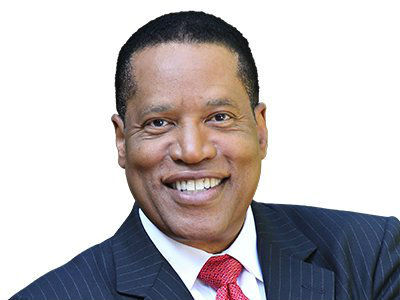
Larry Elder is an American lawyer, writer, and radio and television personality who calls himself the "Sage of South Central" a district of Los Angeles, Larry says his philosophy is to entertain, inform, provoke and to hopefully uplift. His calling card is "we have a country to save" and to him this means returning to the bedrock Constitutional principles of limited government and maximum personal responsibility. Elder's iconoclastic wit and intellectual agility makes him a particularly attractive voice in a nation that seems weary of traditional racial dialogue.” – Los Angeles Times.

Mike Gallagher Mike Gallagher began his broadcasting career in 1978 in Dayton, Ohio. Today, he is one of the most listened-to talk radio show hosts in America, recently having been ranked in the Talkers Magazine “Heavy Hundred” list – the 100 most important talk radio hosts in America. Prior to being launched into national syndication in 1998, Mike hosted the morning show on WABC-AM in New York City. Today, Talkers Magazine reports that his show is heard by over 3.75 million weekly listeners. Besides his radio work, Mike is seen on Fox News Channel as an on-air contributor, frequently appearing on the cable news giant.

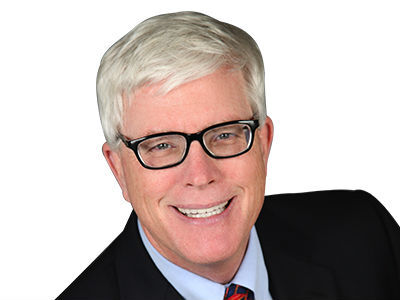
Hugh Hewitt is one of the nation’s leading bloggers and a genuine media revolutionary. He brings that expertise, his wit and what The New Yorker magazine calls his “amiable but relentless manner” to his nationally syndicated show each day.

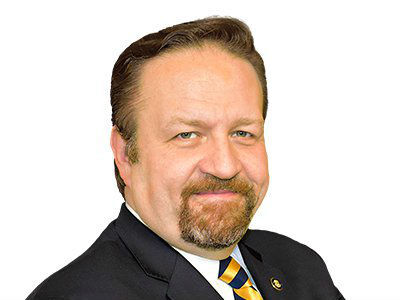
When Dr. Sebastian Gorka was growing up, he listened to talk radio under his pillow with a transistor radio, dreaming that one day he would be behind the microphone. Beginning New Year’s Day 2019, he got his wish. Gorka now hosts America First every weekday afternoon 3 to 6pm ET. Gorka’s unique story works well on the radio. He is national security analyst for the Fox News Channel and author of two books: "Why We Fight" and "Defeating Jihad." His latest book releasing this fall is “War For America’s Soul.” He is uniquely qualified to fight the culture war and stand up for what is great about America, his adopted home country.

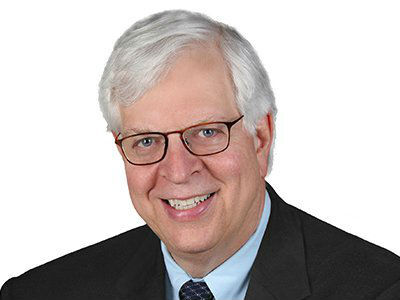
Broadcasting from his home station of KRLA in Los Angeles, the Dennis Prager Show is heard across the country. Everything in life – from politics to religion to relationships – is grist for Dennis’ mill. If it’s interesting, if it affects your life, then Dennis will be talking about it – with passion, humor, insight and wisdom.

Sean Hannity is a conservative radio and television host, and one of the original primetime hosts on the Fox News Channel, where he has appeared since 1996. Sean Hannity began his radio career at a college station in California, before moving on to markets in the Southeast and New York. Today, he’s one of the most listened to on-air voices. Hannity’s radio program went into national syndication on September 10, 2001, and airs on more than 500 stations. Talkers Magazine estimates Hannity’s weekly radio audience at 13.5 million. In 1996 he was hired as one of the original hosts on Fox News Channel. As host of several popular Fox programs, Hannity has become the highest-paid news anchor on television.

Michelle Malkin is a mother, wife, blogger, conservative syndicated columnist, longtime cable TV news commentator, and best-selling author of six books. She started her newspaper journalism career at the Los Angeles Daily News in 1992, moved to the Seattle Times in 1995, and has been penning nationally syndicated newspaper columns for Creators Syndicate since 1999. She is founder of conservative Internet start-ups Hot Air and Twitchy.com. Malkin has received numerous awards for her investigative journalism, including the Council on Governmental Ethics Laws (COGEL) national award for outstanding service for the cause of governmental ethics and leadership (1998), the Reed Irvine Accuracy in Media Award for Investigative Journalism (2006), the Heritage Foundation and Franklin Center for Government & Public Integrity's Breitbart Award for Excellence in Journalism (2013), the Center for Immigration Studies' Eugene Katz Award for Excellence in the Coverage of Immigration Award (2016), and the Manhattan Film Festival's Film Heals Award (2018). Married for 26 years and the mother of two teenage children, she lives with her family in Colorado. Follow her at michellemalkin.com. (Photo reprinted with kind permission from Peter Duke Photography.)

Sponsored by:

How to Know Whether You Are Practicing Stewardship or Control

Carbonatix Pre-Player Loader

Audio By Carbonatix

The biblical mandate of stewardship requires believers to treat everything they have with responsibility. But is it possible to become too responsible with what we’ve been given?

Matthew 25:14-20 reveals the heart of God in regard to stewardship. In this passage, Jesus tells a parable of three servants, each given different amounts of money (or talents). The first two acted responsibly, increasing what they’d been given; they are held up as examples of good stewards.

The third servant is not a good steward. Why? On the surface, the answer might be that he was irresponsible. However, irresponsibility would look like spending all the money and giving the master nothing back when he returns. That’s not what this servant did. I think the third servant was reprimanded because he acted too responsibly.

In other words, he acted like he was in control.

Fear Leads to Control

The third servant hid the master’s money away. Using it was out of the question. Investing in it was too much of a risk. Why? Because he was afraid. And fear is always closely linked with control.

Let’s put ourselves in the third servant’s shoes. It’s easier than you might think. Here we are, given a responsibility by our boss who’s going out of town. It’s his to take care of, but he’s passing the baton to us, for now. What an honor. A make-or-break moment for us.

Emphasis on the “break it.”

Because no sooner has the boss left than the “what ifs” start creeping in. We’ve got ideas of what to do with this responsibility — good ones that would make the boss happy. But … What if we do it all wrong? What if an accident happens? What if we take a chance and lose everything? What if we fail?

Nope. Better to hold on. Better to hide. Better to control this situation, mitigate the risks, and protect what we’ve been given so nothing bad can happen. Sounds familiar. And according to this passage, it’s the opposite of good stewardship.

Faith Leads to Stewardship

In a recent podcast, theologian Joel Muddamalle points out the fine line between stewardship and control. “Stewardship is this sense that God, who is in total control, has given us responsibility and vocation … Stewardship allows us to do what we can with what we have, in the means that we have. Anything that is outside of our means or things we don't have are things that we're not required to be stewards over, so we have to be really careful with that.”

In other words, we’re responsible for what we’ve been given. Nothing more, nothing less. We’re not responsible for what’s outside of our control. We can’t predict all the bad things that might happen in the future. We’re responsible to be wise with what we’ve been given and trust God with the rest.

I think that’s what Jesus wants us to see in this parable in the first place: the link between faith and stewardship. The first two servants trusted that the master had given them this responsibility for a reason, and they acted accordingly. The third servant couldn’t see beyond his fear, and he acted accordingly. To be good stewards, we have to have faith in the goodness, grace, and ultimate control of our heavenly Master. 

Muddamalle continues, “The more that we try to [control] things that are outside of our means, that end result is not peace; it's anxiety. And so you might say, ‘What are some things in my life that I'm trying to control that are actually not even mine to control? And what are some things that I actually ought to steward that I might be neglecting?’”

In that spirit of self-examination, let’s consider what it might look like to steward rather than control two specific areas of our lives. 

Money

An attitude of control might begin by tithing a percentage out of obligation, because “it’s the right thing to do.” It might look like overspending on luxury and underspending on other people. With a Scrooge-like heart, control might look at money as “mine” and look down on those who may not be as “blessed.” Or, with a nervous heart, control might look like trying to manipulate our way into provisions rather than trusting the Provider.  

An attitude of stewardship, in contrast, might begin with a prayerful tithe and look for other opportunities to offer generosity. It might look like budgeting and wise spending, not with the heart of a miser but with the heart of excited expectation for how God will provide next. With a Spirit-led focus, stewardship looks at money as God’s and trusts Him to provide for us and others as He wills. 

Time

An attitude of control might begin by checking the box of going to church, maybe even going to Sunday School or Bible Study — because it’s expected. It might look like writing a check to a non-profit when what they really need are volunteers. Conversely, it might look like filling our schedule with church functions to be “seen”, while ignoring God’s prompting to help a neighbor.  

An attitude of stewardship, on the other hand, might begin with a prayerful consideration of how to balance church, family, work, ministry, and play. It might take into account our current life stages with realistic humility, knowing that some seasons have more time to give than others. At its heart, stewardship might choose to look at each day purposefully and reassess calendars based on the priorities God’s impressed on us in the moment.

Leaving Control to the Master

Money and time are two of the most common areas where Christians are taught to practice stewardship. But in reality, an attitude of stewardship should inform every area of our lives. There are many ways in which we try to take control, when we only have the means to be taking responsibility.

  • We cannot always control our career path, but we can take responsibility for developing our talents.
  • We cannot control our health, but we can steward our body by making healthy choices.
  • We cannot control how our children behave, but we can steward our relationship with them in a way that influences them toward godliness.
  • We cannot control how people act toward us, but we can take responsibility over our own boundaries.
  • We cannot control the things that happen to us, but we can take responsibility for the way we think about and respond to those things.

Ultimately, stewardship is a gift. It’s freeing to live like the first two servants, knowing that our master has trusted us with something only for a short while. It’s a burden to live like the third servant, fearfully taking control as if everything depends on us.

God never intended us to be in control — that’s His job. We don’t have the capacity for it, as much as we’d like to think we do. Let’s focus instead on control-free stewardship.

Because in the end, when we meet our Master, oh what joy it will be to hear: “Well done, my good and faithful servant.” (Matthew 25:21)

Photo Credit:  ©GettyImages/Shutter2U

Melissa Richeson is a freelance writer and editor for Medi-Share, based in Central Florida. Her work has been featured in places like The Washington Post, Florida Today, Sunlight Press, BiggerPockets Wealth Magazine, WDW Magazine, and many other outlets. As a Medi-Share member, she shares regularly about her positive CCM experience over the past decade. Melissa can often be found in real life at the beach, or virtually on her freelance website.

 

Salem News Channel Today

Sponsored Links

On Air & Up Next

See the Full Program Guide