3 Ways for Pastors to Promote Peace in Their Churches

Carbonatix Pre-Player Loader

Audio By Carbonatix

The 3 Thieves of Peace

Before we address the solution, it's crucial to understand the nature of the issue at hand. What robs us of peace in our church communities? There are a multiplicity of reasons, and yet almost all of them revolve around three thieves: fear, worry, and doubt. These emotions seem to be deeply ingrained in the human heart, and yet are not seen as a part of God's good plan for human flourishing. 

Fear may be the easiest to point out as something counter to God's desire for people. The most common command in the Bible is some version of "Don't be afraid."  This isn't an irresponsible call to be nonchalant in the face of danger, but rather a reminder to trust God in all circumstances regardless of the outcome.

What this often looks like in the church is a lack of understanding. Fear often happens when people don't know the why, what, how, or when of things. They don't need to necessarily know all of these, but even one or two can be helpful. People fear what they don't understand, like leaders they don't know well enough, changes in the church without communicated purpose, or even the absence of someone they know and love in the church.

Worry, on the other hand, may be less obvious as a thief of peace. Yet, chronic worrying can lead to anxiety and stress, which can greatly impact one's mental health and interaction with others. It also distracts people from fully trusting in God and his plans for our lives. Jesus told His disciples not to worry in Matthew 6:25-34, and the Apostle Paul did the same with the church in Philippi:

Do not be anxious about anything, but in everything by prayer and supplication with thanksgiving let your requests be made known to God. And the peace of God, which surpasses all understanding, will guard your hearts and your minds in Christ Jesus. - Philippians 4:6-7 

In the church, this is often experienced through a lack of gratitude. When leaders, volunteers, and people aren't thankful for the opportunities, people, gifts, time, etc., that God has given them, they often look for what God hasn't provided yet. People often have worries that will never happen, and yet they play on repeat in people's minds, robbing them of the gratitude they could be showing to God and others for what has already been provided.

Lastly, doubt, while seemingly innocent at first glance, can quickly become a major barrier to peace within the church. When members begin to doubt the intentions or actions of their leaders or fellow churchgoers, it can create tension and division among the congregation. Additionally, doubt in one's own faith can lead to feelings of uncertainty and insecurity about God.

When a wave of doubt grows within the church, it's often experienced through a lack of trust. People may question the vision and direction of the church, be on guard about the motives of others, or take charge themselves in ways God hasn't intended because they don't have confidence or faith in others. Leaders go rogue, volunteers don't follow, and factions within the congregation are created. 

Every Pastor has experienced some version of each of these, and probably all of them at the same time. So, what can Pastors, the foremost leaders and shepherds in the church do to combat these?

Now that we have identified the three thieves, how can pastors actively work towards promoting peace within their churches? Here are three key ways:

Photo Credit: ©Pexels/Nathan Cowley 

1. Give concise, empathetic communication before it's needed or asked for.

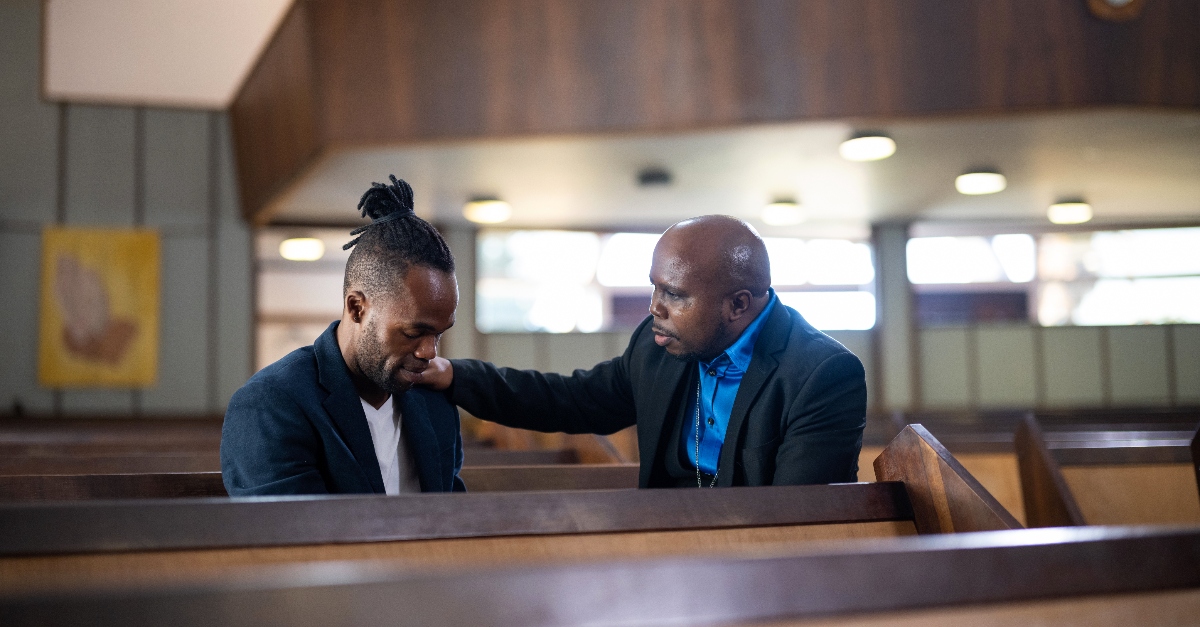
Conflicts often arise because of misunderstandings or miscommunication. By encouraging clear and concise communication among church members, staff, and guests, Pastors can help address issues before they escalate and promote a culture of understanding and acceptance. The keys to clear and concise communicate are: Timing (before it's needed or asked for), approach (how you say it, not just what you're saying), and amount (not too much, not too little). 

People need all of these. When Pastors give their staff, volunteers, and the church each of these three things in their communication, they can often alleviate fears before they grow. People won't always accept or go along with decisions, change, or a response to something pressing within the church; but they never will if we don't give them the opportunity to understand the why behind them. 

Next Step: Think about something challenging you need to communicate to one person, a group of people, or even to your congregation. Write down the what, why, how, and when of the information you’re giving. Then, try to think of questions they may be asking or fears they may have that you can alleviate or at least address. Lastly, schedule a day and time to communicate before people have heard about it. Try it out on someone else before you communicate to the person/group of people to see what feedback they may have.

Photo Credit: ©iStock/Getty Images Plus/PixelCatchers 


2. Foster a community of gratitude publicly and often.

By creating a culture of thankfulness and appreciation, Pastors can help combat worry and anxiety among their congregation. This can be done through regular expressions of gratitude during services, highlighting the contributions of individuals within the church, and reminding people to focus on what they have rather than what they lack. 

To think about it another way, gratitude helps point people in the church to a severely overlooked Christian attitude: that of contentment. It is extremely challenging not to have peace when someone has everything they need. If they don't, we should work diligently to provide it for them. When they do, we need to help people realize how thankful we should be that God has provided. Saying thank you costs us nothing, but pays huge dividends when it comes to peace. 

Next Step: Practice saying thank you to just one person in every meeting, on every Sunday morning, and in every training or opportunity you have with people in your church. Tell them what you appreciate about them, share a story of the impact they’ve had on you, or simply thank them for their service in front of others. You can and should also give credit to God for equipping them and inspiring them to serve, give, or however they’ve impacted people in the church.

Photo Credit: ©Sparrowstock 


3. Stack up small wins before you go for a big one.

You can't win people's trust if you haven't won at anything. This may seem like an odd one, but people often doubt church leadership or one another when they haven't seen results. How do they know we can teach well? How do they know we're good leaders? How do they know God is behind our church? Why should they invest their time, talent, and treasure?

There is nothing that will rob a church of peace faster than a lack of trust in their leadership. Nothing gets done, morale dips sharply, people gossip, and the church drifts into irrelevancy. But a church with leaders who others want and actively follow is one on the move. Big projects get funded, people love being there, they invite their friends, and the church booms into God-honoring momentum. 

Leaders need to not just be honored in their position, but to earn people's trust by delivering on what they say they'll do. Quick, small wins help people invest their trust over time in the leadership of the church. Someday, leaders will need to ask for big things from their people, but before then, they need to deliver on a bunch of small things. Leaders who win big and small drive doubt in their leadership away, and help establish peace by being trustworthy, effective leaders their people want to follow. 

Next Step: This one is a common but effective practice: make a list of four people you want to win within the next four weeks. Meet with them, listen to them, solve something for them, communicate with them.

Photo Credit: ©GettyImages/DGLimages 


In Christ, Our Peace

Ultimately, as pastors and congregants, we are called to be peacemakers, and peacekeepers. Our peace with God through Jesus Christ compels us to share that peace with those around us. It's not a passive peace that avoids conflict, but an active peace that confronts it with love and seeks resolution through understanding, gratitude and trust.

The pursuit of peace within the church is not easy. It requires patience, perseverance, and a willingness to engage in difficult conversations, decisions, and leading people where they may not want to go. But as we look to the Prince of Peace for our example, we find that the rewards of peace—joy, unity, and a palpable sense of God's presence—are well worth the effort.

Peace in the church is not a static state. It is a continuous process, an ongoing transformation of hearts and minds. It is something bestowed on us by Christ, and it is our solemn duty to uphold it as Pastors by pushing away fear, worry, and doubt. May we, as leaders of the body of Christ, work tirelessly to cultivate peace within our churches, enabling people to rest in and seek the peace found only in Christ by being leaders who follow and uphold Christ’s commands ourselves.

Photo Credit: ©Getty Images/Drew Buzz 

 

Salem News Channel Today

Sponsored Links


September 26 - Phoenix, AZ
Scottsdale Center for the Performing Arts


November 2 - Detroit, MI
Zion Christian Church in Troy


October 6 - Los Angeles, CA
Pasadena Convention Center


November 5 - San Antonio, TX
Norris Centers – The Grand Red Oak Ballroom


October 8 - Sacramento, CA
William Jessup University


November 7 - Tampa, FL
The Palladium at St. Pete College


October 22 - Minneapolis, MN
Crowne Plaza AiRE


November 15 - San Francisco, CA
Fremont Marriott Silicon Valley


October 23 - Philadelphia, PA
Green Valley Country Club


November 16 - Denver, CO
CU South Denver - Formerly Wildlife Experience


November 2 - Chicago, IL
Chicago Westin Northwest in Itasca


November 21 - Cleveland, OH
Holiday Inn Rockside in Independence


Salem Radio Network Speakers

Larry Elder is an American lawyer, writer, and radio and television personality who calls himself the "Sage of South Central" a district of Los Angeles, Larry says his philosophy is to entertain, inform, provoke and to hopefully uplift. His calling card is "we have a country to save" and to him this means returning to the bedrock Constitutional principles of limited government and maximum personal responsibility. Elder's iconoclastic wit and intellectual agility makes him a particularly attractive voice in a nation that seems weary of traditional racial dialogue.” – Los Angeles Times.

Mike Gallagher Mike Gallagher began his broadcasting career in 1978 in Dayton, Ohio. Today, he is one of the most listened-to talk radio show hosts in America, recently having been ranked in the Talkers Magazine “Heavy Hundred” list – the 100 most important talk radio hosts in America. Prior to being launched into national syndication in 1998, Mike hosted the morning show on WABC-AM in New York City. Today, Talkers Magazine reports that his show is heard by over 3.75 million weekly listeners. Besides his radio work, Mike is seen on Fox News Channel as an on-air contributor, frequently appearing on the cable news giant.

Hugh Hewitt is one of the nation’s leading bloggers and a genuine media revolutionary. He brings that expertise, his wit and what The New Yorker magazine calls his “amiable but relentless manner” to his nationally syndicated show each day.

When Dr. Sebastian Gorka was growing up, he listened to talk radio under his pillow with a transistor radio, dreaming that one day he would be behind the microphone. Beginning New Year’s Day 2019, he got his wish. Gorka now hosts America First every weekday afternoon 3 to 6pm ET. Gorka’s unique story works well on the radio. He is national security analyst for the Fox News Channel and author of two books: "Why We Fight" and "Defeating Jihad." His latest book releasing this fall is “War For America’s Soul.” He is uniquely qualified to fight the culture war and stand up for what is great about America, his adopted home country.

Broadcasting from his home station of KRLA in Los Angeles, the Dennis Prager Show is heard across the country. Everything in life – from politics to religion to relationships – is grist for Dennis’ mill. If it’s interesting, if it affects your life, then Dennis will be talking about it – with passion, humor, insight and wisdom.

Sean Hannity is a conservative radio and television host, and one of the original primetime hosts on the Fox News Channel, where he has appeared since 1996. Sean Hannity began his radio career at a college station in California, before moving on to markets in the Southeast and New York. Today, he’s one of the most listened to on-air voices. Hannity’s radio program went into national syndication on September 10, 2001, and airs on more than 500 stations. Talkers Magazine estimates Hannity’s weekly radio audience at 13.5 million. In 1996 he was hired as one of the original hosts on Fox News Channel. As host of several popular Fox programs, Hannity has become the highest-paid news anchor on television.

Michelle Malkin is a mother, wife, blogger, conservative syndicated columnist, longtime cable TV news commentator, and best-selling author of six books. She started her newspaper journalism career at the Los Angeles Daily News in 1992, moved to the Seattle Times in 1995, and has been penning nationally syndicated newspaper columns for Creators Syndicate since 1999. She is founder of conservative Internet start-ups Hot Air and Twitchy.com. Malkin has received numerous awards for her investigative journalism, including the Council on Governmental Ethics Laws (COGEL) national award for outstanding service for the cause of governmental ethics and leadership (1998), the Reed Irvine Accuracy in Media Award for Investigative Journalism (2006), the Heritage Foundation and Franklin Center for Government & Public Integrity's Breitbart Award for Excellence in Journalism (2013), the Center for Immigration Studies' Eugene Katz Award for Excellence in the Coverage of Immigration Award (2016), and the Manhattan Film Festival's Film Heals Award (2018). Married for 26 years and the mother of two teenage children, she lives with her family in Colorado. Follow her at michellemalkin.com. (Photo reprinted with kind permission from Peter Duke Photography.)

Sponsored by:

3 Ways for Pastors to Promote Peace in Their Churches

Carbonatix Pre-Player Loader

Audio By Carbonatix

The 3 Thieves of Peace

Before we address the solution, it's crucial to understand the nature of the issue at hand. What robs us of peace in our church communities? There are a multiplicity of reasons, and yet almost all of them revolve around three thieves: fear, worry, and doubt. These emotions seem to be deeply ingrained in the human heart, and yet are not seen as a part of God's good plan for human flourishing. 

Fear may be the easiest to point out as something counter to God's desire for people. The most common command in the Bible is some version of "Don't be afraid."  This isn't an irresponsible call to be nonchalant in the face of danger, but rather a reminder to trust God in all circumstances regardless of the outcome.

What this often looks like in the church is a lack of understanding. Fear often happens when people don't know the why, what, how, or when of things. They don't need to necessarily know all of these, but even one or two can be helpful. People fear what they don't understand, like leaders they don't know well enough, changes in the church without communicated purpose, or even the absence of someone they know and love in the church.

Worry, on the other hand, may be less obvious as a thief of peace. Yet, chronic worrying can lead to anxiety and stress, which can greatly impact one's mental health and interaction with others. It also distracts people from fully trusting in God and his plans for our lives. Jesus told His disciples not to worry in Matthew 6:25-34, and the Apostle Paul did the same with the church in Philippi:

Do not be anxious about anything, but in everything by prayer and supplication with thanksgiving let your requests be made known to God. And the peace of God, which surpasses all understanding, will guard your hearts and your minds in Christ Jesus. - Philippians 4:6-7 

In the church, this is often experienced through a lack of gratitude. When leaders, volunteers, and people aren't thankful for the opportunities, people, gifts, time, etc., that God has given them, they often look for what God hasn't provided yet. People often have worries that will never happen, and yet they play on repeat in people's minds, robbing them of the gratitude they could be showing to God and others for what has already been provided.

Lastly, doubt, while seemingly innocent at first glance, can quickly become a major barrier to peace within the church. When members begin to doubt the intentions or actions of their leaders or fellow churchgoers, it can create tension and division among the congregation. Additionally, doubt in one's own faith can lead to feelings of uncertainty and insecurity about God.

When a wave of doubt grows within the church, it's often experienced through a lack of trust. People may question the vision and direction of the church, be on guard about the motives of others, or take charge themselves in ways God hasn't intended because they don't have confidence or faith in others. Leaders go rogue, volunteers don't follow, and factions within the congregation are created. 

Every Pastor has experienced some version of each of these, and probably all of them at the same time. So, what can Pastors, the foremost leaders and shepherds in the church do to combat these?

Now that we have identified the three thieves, how can pastors actively work towards promoting peace within their churches? Here are three key ways:

Photo Credit: ©Pexels/Nathan Cowley 


1. Give concise, empathetic communication before it's needed or asked for.

Conflicts often arise because of misunderstandings or miscommunication. By encouraging clear and concise communication among church members, staff, and guests, Pastors can help address issues before they escalate and promote a culture of understanding and acceptance. The keys to clear and concise communicate are: Timing (before it's needed or asked for), approach (how you say it, not just what you're saying), and amount (not too much, not too little). 

People need all of these. When Pastors give their staff, volunteers, and the church each of these three things in their communication, they can often alleviate fears before they grow. People won't always accept or go along with decisions, change, or a response to something pressing within the church; but they never will if we don't give them the opportunity to understand the why behind them. 

Next Step: Think about something challenging you need to communicate to one person, a group of people, or even to your congregation. Write down the what, why, how, and when of the information you’re giving. Then, try to think of questions they may be asking or fears they may have that you can alleviate or at least address. Lastly, schedule a day and time to communicate before people have heard about it. Try it out on someone else before you communicate to the person/group of people to see what feedback they may have.

Photo Credit: ©iStock/Getty Images Plus/PixelCatchers 


2. Foster a community of gratitude publicly and often.

By creating a culture of thankfulness and appreciation, Pastors can help combat worry and anxiety among their congregation. This can be done through regular expressions of gratitude during services, highlighting the contributions of individuals within the church, and reminding people to focus on what they have rather than what they lack. 

To think about it another way, gratitude helps point people in the church to a severely overlooked Christian attitude: that of contentment. It is extremely challenging not to have peace when someone has everything they need. If they don't, we should work diligently to provide it for them. When they do, we need to help people realize how thankful we should be that God has provided. Saying thank you costs us nothing, but pays huge dividends when it comes to peace. 

Next Step: Practice saying thank you to just one person in every meeting, on every Sunday morning, and in every training or opportunity you have with people in your church. Tell them what you appreciate about them, share a story of the impact they’ve had on you, or simply thank them for their service in front of others. You can and should also give credit to God for equipping them and inspiring them to serve, give, or however they’ve impacted people in the church.

Photo Credit: ©Sparrowstock 


3. Stack up small wins before you go for a big one.

You can't win people's trust if you haven't won at anything. This may seem like an odd one, but people often doubt church leadership or one another when they haven't seen results. How do they know we can teach well? How do they know we're good leaders? How do they know God is behind our church? Why should they invest their time, talent, and treasure?

There is nothing that will rob a church of peace faster than a lack of trust in their leadership. Nothing gets done, morale dips sharply, people gossip, and the church drifts into irrelevancy. But a church with leaders who others want and actively follow is one on the move. Big projects get funded, people love being there, they invite their friends, and the church booms into God-honoring momentum. 

Leaders need to not just be honored in their position, but to earn people's trust by delivering on what they say they'll do. Quick, small wins help people invest their trust over time in the leadership of the church. Someday, leaders will need to ask for big things from their people, but before then, they need to deliver on a bunch of small things. Leaders who win big and small drive doubt in their leadership away, and help establish peace by being trustworthy, effective leaders their people want to follow. 

Next Step: This one is a common but effective practice: make a list of four people you want to win within the next four weeks. Meet with them, listen to them, solve something for them, communicate with them.

Photo Credit: ©GettyImages/DGLimages 


In Christ, Our Peace

Ultimately, as pastors and congregants, we are called to be peacemakers, and peacekeepers. Our peace with God through Jesus Christ compels us to share that peace with those around us. It's not a passive peace that avoids conflict, but an active peace that confronts it with love and seeks resolution through understanding, gratitude and trust.

The pursuit of peace within the church is not easy. It requires patience, perseverance, and a willingness to engage in difficult conversations, decisions, and leading people where they may not want to go. But as we look to the Prince of Peace for our example, we find that the rewards of peace—joy, unity, and a palpable sense of God's presence—are well worth the effort.

Peace in the church is not a static state. It is a continuous process, an ongoing transformation of hearts and minds. It is something bestowed on us by Christ, and it is our solemn duty to uphold it as Pastors by pushing away fear, worry, and doubt. May we, as leaders of the body of Christ, work tirelessly to cultivate peace within our churches, enabling people to rest in and seek the peace found only in Christ by being leaders who follow and uphold Christ’s commands ourselves.

Photo Credit: ©Getty Images/Drew Buzz 

 

Salem News Channel Today

Sponsored Links

On Air & Up Next

See the Full Program Guide