



















5 emerging digital ID trends in 2026 that could redefine your online persona

Carbonatix Pre-Player Loader

Audio By Carbonatix

5 emerging digital ID trends in 2026 that could redefine your online persona

Identification has always been a priority for modern society — a way to instill trust in others that a person is who they say they are. Today, IDs are used for everything from applying for a library card to preventing financial fraud. Without them, personal accountability, security, and authenticity can become lost.

With more aspects of individuals’ lives going online, digital identification has emerged as a necessity for verifying someone’s identity. What started as entering a simple password has evolved into facial and fingerprint recognition. Today, these methods have progressed even further into complex identification systems like advanced biometrics.

To keep you up to date with the latest trends, Spokeo covers what you need to know in the digital ID space in 2026, including the death of passwords and the rise of decentralized identification.

1. Goodbye passwords, hello passkeys

The days of password books and locked-out accounts are over. Passkeys are a way to access all of your accounts with a single tap. They are a standard-based technology that relies on WebAuthn to verify authentication.

As described by Apple, they work through public key cryptography. This is a form of encryption in which a public key is stored server-side and a private key is stored device-side. When these two keys come together, they “unlock” the account. There are several benefits to this technology over regular passwords, including convenience for the user and resistance to common cybersecurity attacks like brute-force.

The acceptance of passkeys is growing. A 2025 study by the FIDO Alliance found that 75% of survey respondents are now aware of passkeys, with 53% believing they offer greater security and 54% believing they offer greater convenience. Respondents were sourced from three million survey takers on SurveyMonkey. Data was weighted for age, sex, education, and geography.

2. Mobile driver’s licenses and digital wallets

Driver’s licenses have often been the gold standard of identification and are used for verification in a range of industries. There is now a shift towards mobile driver’s licenses, stored in digital wallets on smartphones. Nineteen states and Puerto Rico are now participating in mobile driver’s license programs, although physical IDs are still required when traveling.

The National Cybersecurity Center of Excellence is currently collaborating with these states to roll out pilot programs for mDLs in the financial sector. This will make it easier for consumers to comply with authentication requests.

3. Behavioral biometrics might know you better than you know yourself

Once the stuff of sci-fi films, biometrics have found their way into people’s everyday lives. In 2026, these biometrics are advancing beyond simple facial recognition and fingerprints. They’re now analyzing unique, personal behavior in a new form called behavioral biometrics.

In the physical world, behavioral biometrics are used by law enforcement to create identity profiles based on observed characteristics like gait. Most behavioral biometrics, however, are used in the digital world. They analyze unique traits like mouse movement, typing speed, and IP addresses to create an easily-verified identity.

According to the Biometrics Institute, applications are adopting this form of digital identification where ongoing ID verification is necessary, such as in online banking sessions.

4. Deepfake defense is becoming urgent

In a June 2024 study by The Alan Turing Institute, researchers found that 90% of people are concerned about deepfakes. While most concern was about misinformation and online content, biometric identity verification is also an increasing worry. In November 2024, the Financial Crimes Enforcement Network issued an alert of fraud schemes using AI and deepfakes to circumvent identity verification in financial institutions.

To combat this, many technology companies are creating deepfake defense software. Solutions like McAfee’s Deepfake Detector utilize “transformer-based deep neural network models” to spot patterns in the audio of a video that suggest it is created or altered by AI. The FIDO Alliance has also created a certification program for biometric devices, creating a new standard for identity verification companies to implement deepfake detection into their systems.

5. Securing digital IDs with decentralized networks

One main issue with digital identification credentials is that they’re stored in one place. For example, using an Apple Wallet to store an mDL means that all of the information that’s on this license is kept in Apple’s servers. With sensitive data breaches becoming more common, consumers and technologists are concerned about how accessible identity data is to attackers.

To resolve this issue, decentralized identity networks are growing in popularity. Dimension Market Research expects the DID industry to grow at an 81.2% annual rate, reaching a value of $103.3 billion by 2035.

With DID, identity and access management is spread across multiple environments. Okta explains how, by using blockchain technology, users can provide credential keys from their digital wallets to a verifier, who then confirms the identity claims via cryptography. The benefit is that no single third-party has access to all identity information for an individual. The individual can decide what and with whom they’d like to share their credentials.

Decentralized identity is one of the three core pillars in the self-sovereign identity model, which is based on giving individuals full control and democracy over their identity data.

The future of IDs: Secure, digital infrastructure

Identity verification is not going anywhere, but the way it’s achieved certainly is. There has never been a greater need for digital ID solutions that are as secure as they are convenient. Technologies like passkeys, mDLs, behavioral biometrics, deepfake defense, and DID are leading this charge.

In the end, the adoption of these emerging technologies ensures that identities can be accurately digitally verified and that people’s private information is kept out of the wrong hands. Through constant technological progress and innovation, digital ID verification is becoming more secure and more user-friendly than ever before.

This story was produced by Spokeo and reviewed and distributed by Stacker.


Salem News Channel Today

Sponsored Links


September 26 - Phoenix, AZ
Scottsdale Center for the Performing Arts


November 2 - Detroit, MI
Zion Christian Church in Troy


October 6 - Los Angeles, CA
Pasadena Convention Center


November 5 - San Antonio, TX
Norris Centers – The Grand Red Oak Ballroom


October 8 - Sacramento, CA
William Jessup University


November 7 - Tampa, FL
The Palladium at St. Pete College


October 22 - Minneapolis, MN
Crowne Plaza AiRE


November 15 - San Francisco, CA
Fremont Marriott Silicon Valley


October 23 - Philadelphia, PA
Green Valley Country Club


November 16 - Denver, CO
CU South Denver - Formerly Wildlife Experience


November 2 - Chicago, IL
Chicago Westin Northwest in Itasca


November 21 - Cleveland, OH
Holiday Inn Rockside in Independence


Salem Radio Network Speakers
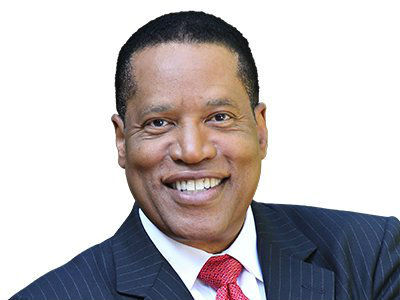
Larry Elder is an American lawyer, writer, and radio and television personality who calls himself the "Sage of South Central" a district of Los Angeles, Larry says his philosophy is to entertain, inform, provoke and to hopefully uplift. His calling card is "we have a country to save" and to him this means returning to the bedrock Constitutional principles of limited government and maximum personal responsibility. Elder's iconoclastic wit and intellectual agility makes him a particularly attractive voice in a nation that seems weary of traditional racial dialogue.” – Los Angeles Times.

Mike Gallagher Mike Gallagher began his broadcasting career in 1978 in Dayton, Ohio. Today, he is one of the most listened-to talk radio show hosts in America, recently having been ranked in the Talkers Magazine “Heavy Hundred” list – the 100 most important talk radio hosts in America. Prior to being launched into national syndication in 1998, Mike hosted the morning show on WABC-AM in New York City. Today, Talkers Magazine reports that his show is heard by over 3.75 million weekly listeners. Besides his radio work, Mike is seen on Fox News Channel as an on-air contributor, frequently appearing on the cable news giant.
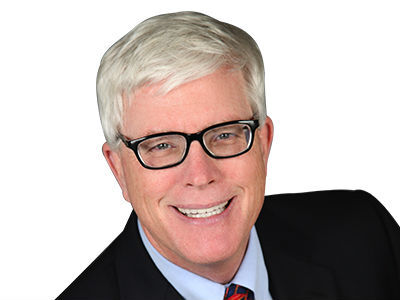
Hugh Hewitt is one of the nation’s leading bloggers and a genuine media revolutionary. He brings that expertise, his wit and what The New Yorker magazine calls his “amiable but relentless manner” to his nationally syndicated show each day.

When Dr. Sebastian Gorka was growing up, he listened to talk radio under his pillow with a transistor radio, dreaming that one day he would be behind the microphone. Beginning New Year’s Day 2019, he got his wish. Gorka now hosts America First every weekday afternoon 3 to 6pm ET. Gorka’s unique story works well on the radio. He is national security analyst for the Fox News Channel and author of two books: "Why We Fight" and "Defeating Jihad." His latest book releasing this fall is “War For America’s Soul.” He is uniquely qualified to fight the culture war and stand up for what is great about America, his adopted home country.

Broadcasting from his home station of KRLA in Los Angeles, the Dennis Prager Show is heard across the country. Everything in life – from politics to religion to relationships – is grist for Dennis’ mill. If it’s interesting, if it affects your life, then Dennis will be talking about it – with passion, humor, insight and wisdom.
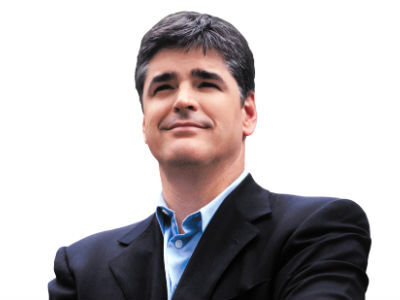
Sean Hannity is a conservative radio and television host, and one of the original primetime hosts on the Fox News Channel, where he has appeared since 1996. Sean Hannity began his radio career at a college station in California, before moving on to markets in the Southeast and New York. Today, he’s one of the most listened to on-air voices. Hannity’s radio program went into national syndication on September 10, 2001, and airs on more than 500 stations. Talkers Magazine estimates Hannity’s weekly radio audience at 13.5 million. In 1996 he was hired as one of the original hosts on Fox News Channel. As host of several popular Fox programs, Hannity has become the highest-paid news anchor on television.

Michelle Malkin is a mother, wife, blogger, conservative syndicated columnist, longtime cable TV news commentator, and best-selling author of six books. She started her newspaper journalism career at the Los Angeles Daily News in 1992, moved to the Seattle Times in 1995, and has been penning nationally syndicated newspaper columns for Creators Syndicate since 1999. She is founder of conservative Internet start-ups Hot Air and Twitchy.com. Malkin has received numerous awards for her investigative journalism, including the Council on Governmental Ethics Laws (COGEL) national award for outstanding service for the cause of governmental ethics and leadership (1998), the Reed Irvine Accuracy in Media Award for Investigative Journalism (2006), the Heritage Foundation and Franklin Center for Government & Public Integrity's Breitbart Award for Excellence in Journalism (2013), the Center for Immigration Studies' Eugene Katz Award for Excellence in the Coverage of Immigration Award (2016), and the Manhattan Film Festival's Film Heals Award (2018). Married for 26 years and the mother of two teenage children, she lives with her family in Colorado. Follow her at michellemalkin.com. (Photo reprinted with kind permission from Peter Duke Photography.)

Sponsored by:

5 emerging digital ID trends in 2026 that could redefine your online persona

Carbonatix Pre-Player Loader

Audio By Carbonatix

5 emerging digital ID trends in 2026 that could redefine your online persona

Identification has always been a priority for modern society — a way to instill trust in others that a person is who they say they are. Today, IDs are used for everything from applying for a library card to preventing financial fraud. Without them, personal accountability, security, and authenticity can become lost.

With more aspects of individuals’ lives going online, digital identification has emerged as a necessity for verifying someone’s identity. What started as entering a simple password has evolved into facial and fingerprint recognition. Today, these methods have progressed even further into complex identification systems like advanced biometrics.

To keep you up to date with the latest trends, Spokeo covers what you need to know in the digital ID space in 2026, including the death of passwords and the rise of decentralized identification.

1. Goodbye passwords, hello passkeys

The days of password books and locked-out accounts are over. Passkeys are a way to access all of your accounts with a single tap. They are a standard-based technology that relies on WebAuthn to verify authentication.

As described by Apple, they work through public key cryptography. This is a form of encryption in which a public key is stored server-side and a private key is stored device-side. When these two keys come together, they “unlock” the account. There are several benefits to this technology over regular passwords, including convenience for the user and resistance to common cybersecurity attacks like brute-force.

The acceptance of passkeys is growing. A 2025 study by the FIDO Alliance found that 75% of survey respondents are now aware of passkeys, with 53% believing they offer greater security and 54% believing they offer greater convenience. Respondents were sourced from three million survey takers on SurveyMonkey. Data was weighted for age, sex, education, and geography.

2. Mobile driver’s licenses and digital wallets

Driver’s licenses have often been the gold standard of identification and are used for verification in a range of industries. There is now a shift towards mobile driver’s licenses, stored in digital wallets on smartphones. Nineteen states and Puerto Rico are now participating in mobile driver’s license programs, although physical IDs are still required when traveling.

The National Cybersecurity Center of Excellence is currently collaborating with these states to roll out pilot programs for mDLs in the financial sector. This will make it easier for consumers to comply with authentication requests.

3. Behavioral biometrics might know you better than you know yourself

Once the stuff of sci-fi films, biometrics have found their way into people’s everyday lives. In 2026, these biometrics are advancing beyond simple facial recognition and fingerprints. They’re now analyzing unique, personal behavior in a new form called behavioral biometrics.

In the physical world, behavioral biometrics are used by law enforcement to create identity profiles based on observed characteristics like gait. Most behavioral biometrics, however, are used in the digital world. They analyze unique traits like mouse movement, typing speed, and IP addresses to create an easily-verified identity.

According to the Biometrics Institute, applications are adopting this form of digital identification where ongoing ID verification is necessary, such as in online banking sessions.

4. Deepfake defense is becoming urgent

In a June 2024 study by The Alan Turing Institute, researchers found that 90% of people are concerned about deepfakes. While most concern was about misinformation and online content, biometric identity verification is also an increasing worry. In November 2024, the Financial Crimes Enforcement Network issued an alert of fraud schemes using AI and deepfakes to circumvent identity verification in financial institutions.

To combat this, many technology companies are creating deepfake defense software. Solutions like McAfee’s Deepfake Detector utilize “transformer-based deep neural network models” to spot patterns in the audio of a video that suggest it is created or altered by AI. The FIDO Alliance has also created a certification program for biometric devices, creating a new standard for identity verification companies to implement deepfake detection into their systems.

5. Securing digital IDs with decentralized networks

One main issue with digital identification credentials is that they’re stored in one place. For example, using an Apple Wallet to store an mDL means that all of the information that’s on this license is kept in Apple’s servers. With sensitive data breaches becoming more common, consumers and technologists are concerned about how accessible identity data is to attackers.

To resolve this issue, decentralized identity networks are growing in popularity. Dimension Market Research expects the DID industry to grow at an 81.2% annual rate, reaching a value of $103.3 billion by 2035.

With DID, identity and access management is spread across multiple environments. Okta explains how, by using blockchain technology, users can provide credential keys from their digital wallets to a verifier, who then confirms the identity claims via cryptography. The benefit is that no single third-party has access to all identity information for an individual. The individual can decide what and with whom they’d like to share their credentials.

Decentralized identity is one of the three core pillars in the self-sovereign identity model, which is based on giving individuals full control and democracy over their identity data.

The future of IDs: Secure, digital infrastructure

Identity verification is not going anywhere, but the way it’s achieved certainly is. There has never been a greater need for digital ID solutions that are as secure as they are convenient. Technologies like passkeys, mDLs, behavioral biometrics, deepfake defense, and DID are leading this charge.

In the end, the adoption of these emerging technologies ensures that identities can be accurately digitally verified and that people’s private information is kept out of the wrong hands. Through constant technological progress and innovation, digital ID verification is becoming more secure and more user-friendly than ever before.

This story was produced by Spokeo and reviewed and distributed by Stacker.


Salem News Channel Today

Sponsored Links

On Air & Up Next

See the Full Program Guide