














5 ways Gen Z is defining themselves differently online in 2026

Carbonatix Pre-Player Loader

Audio By Carbonatix

5 ways Gen Z is defining themselves differently online in 2026

For millennials and Gen X, the internet was once a place to build a personal brand using real names, consistent usernames, and polished profiles. These would often serve as signs of credibility and ambition. Gen Z, however, has taken a different approach. As true digital natives, this generation is reshaping how online personas work, opting to reject visibility, permanence, and a polished front in favor of flexibility, privacy and aesthetic control.

Across various platforms, Gen Z has begun to treat names, handles, and even email addresses as design choices rather than fixed identifiers. AnyWho has gathered data from leading sources including McKinsey, The Atlantic, The Guardian, and more in order to highlight how Gen Z has shifted the concept of digital identity.

1. The return to anonymity: Pseudonyms and username privacy

Whereas older generators leaned into recognizability, Gen Z is moving in the opposite direction. Pseudonyms, abstract usernames, and handles that have no obvious link to a real name are increasingly common, even on platforms that once encouraged real name usage. This is less about hiding and more about controlling exposure. Education data gathered by Fluid Focus, a firm focused on helping people reduce screentime, now estimates that members of Gen Z will spend 25 years of their life glued to their phones.

Growing up in an era rife with data breaches, doxxing and algorithmic surveillance, Gen Z sees anonymity as a form of digital literacy. Privacy itself has become a kind of personal branding, signaling awareness, boundaries and autonomy rather than secrecy.

2. Lowercase everything: The anti-capitalization movement

From usernames to display names to bios, another emerging trend is Gen Z’s preference for lowercase text. The reasons are both aesthetic and ideological. Lowercase reads as casual, unpolished and emotionally neutral. A report by The Guardian in early 2025 posits that a calm and friendly tone resonates more with Gen Z, as opposed to the loud and assertive feelings that capital letters can often convey.

3. Aesthetic username construction: Dots, underscores and visual flow

Gen Z usernames are often designed less for readability and more for visual rhythm. Dots, underscores, repeated letters, and more can all turn handles into graphic elements rather than simple identifiers like a first and last name. This reflects that a username isn’t just your name but is rather a part of the visual texture of many social media platforms. Influenced heavily by TikTok aesthetics and design-first platforms, many members of Gen Z treat naming as a form of micro-branding.

4. Email address simplicity: The "How did you get that?" phenomenon

If millennials accepted that their name plus numbers was the price of adulthood, Gen Z took a different approach. Younger users are increasingly securing uncomplicated email addresses (firstname.lastname@gmail.com, for example), not for the simplicity but instead for the appeal of being asked how they managed to secure such a scarce email address. Gen Z sees email not as a formal means of identification but as infrastructure. Simplicity can convey control, longevity, and freedom from the cluttered naming conventions that older users normalized.

5. Multiple account strategy: The death of the "finsta"

Millennials were the first to popularize the idea of “finsta” or “fake Instagram” during the mid-2010s, creating secondary accounts where they essentially posted more private thoughts and photos to only select followers. Gen Z has moved away from this. Instead, many of them maintain multiple parallel accounts that are themed, such as having one for close friends, one for aesthetics, one for public discovery, and more. Their online activity is less split into “real” and “fake” and is instead more modular.

The future of Gen Z social media

Gen Z is redefining how people are perceived online. Where previous generations sought visibility, permanence and recognition, Gen Z places more emphasis on control, adaptability and emotional resonance. For this generation, names are no longer fixed anchors but rather tools that express an intentional design. As platforms, workspaces and digital systems continue to evolve, the second youngest generation’s approach offers a clear signal: The future of online activity won’t be louder or more polished. Instead, it will be quieter and more intentional, at least until Gen Alpha populates social media and upends the trends again.

This story was produced by AnyWho and reviewed and distributed by Stacker.


Salem News Channel Today

Sponsored Links


September 26 - Phoenix, AZ
Scottsdale Center for the Performing Arts


November 2 - Detroit, MI
Zion Christian Church in Troy


October 6 - Los Angeles, CA
Pasadena Convention Center


November 5 - San Antonio, TX
Norris Centers – The Grand Red Oak Ballroom


October 8 - Sacramento, CA
William Jessup University


November 7 - Tampa, FL
The Palladium at St. Pete College


October 22 - Minneapolis, MN
Crowne Plaza AiRE


November 15 - San Francisco, CA
Fremont Marriott Silicon Valley


October 23 - Philadelphia, PA
Green Valley Country Club


November 16 - Denver, CO
CU South Denver - Formerly Wildlife Experience


November 2 - Chicago, IL
Chicago Westin Northwest in Itasca


November 21 - Cleveland, OH
Holiday Inn Rockside in Independence


Salem Radio Network Speakers
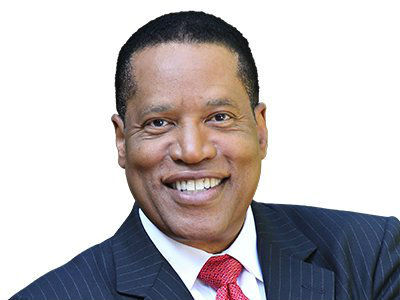
Larry Elder is an American lawyer, writer, and radio and television personality who calls himself the "Sage of South Central" a district of Los Angeles, Larry says his philosophy is to entertain, inform, provoke and to hopefully uplift. His calling card is "we have a country to save" and to him this means returning to the bedrock Constitutional principles of limited government and maximum personal responsibility. Elder's iconoclastic wit and intellectual agility makes him a particularly attractive voice in a nation that seems weary of traditional racial dialogue.” – Los Angeles Times.
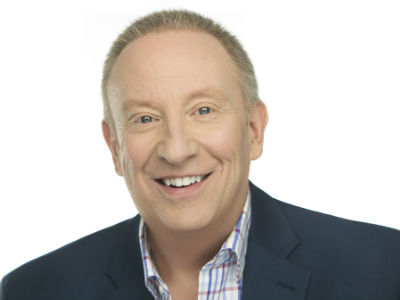
Mike Gallagher Mike Gallagher began his broadcasting career in 1978 in Dayton, Ohio. Today, he is one of the most listened-to talk radio show hosts in America, recently having been ranked in the Talkers Magazine “Heavy Hundred” list – the 100 most important talk radio hosts in America. Prior to being launched into national syndication in 1998, Mike hosted the morning show on WABC-AM in New York City. Today, Talkers Magazine reports that his show is heard by over 3.75 million weekly listeners. Besides his radio work, Mike is seen on Fox News Channel as an on-air contributor, frequently appearing on the cable news giant.
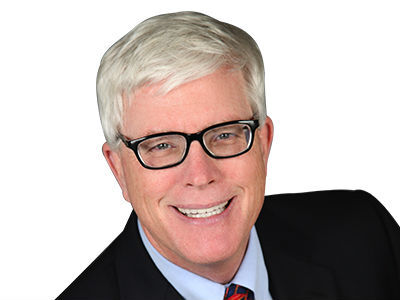
Hugh Hewitt is one of the nation’s leading bloggers and a genuine media revolutionary. He brings that expertise, his wit and what The New Yorker magazine calls his “amiable but relentless manner” to his nationally syndicated show each day.
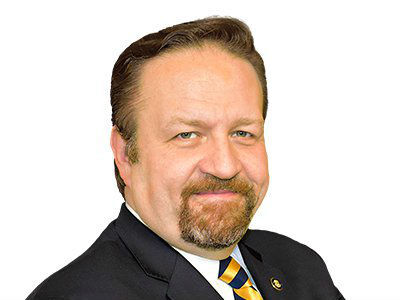
When Dr. Sebastian Gorka was growing up, he listened to talk radio under his pillow with a transistor radio, dreaming that one day he would be behind the microphone. Beginning New Year’s Day 2019, he got his wish. Gorka now hosts America First every weekday afternoon 3 to 6pm ET. Gorka’s unique story works well on the radio. He is national security analyst for the Fox News Channel and author of two books: "Why We Fight" and "Defeating Jihad." His latest book releasing this fall is “War For America’s Soul.” He is uniquely qualified to fight the culture war and stand up for what is great about America, his adopted home country.
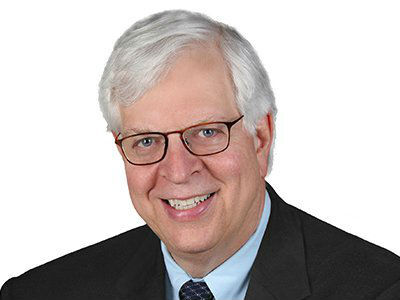
Broadcasting from his home station of KRLA in Los Angeles, the Dennis Prager Show is heard across the country. Everything in life – from politics to religion to relationships – is grist for Dennis’ mill. If it’s interesting, if it affects your life, then Dennis will be talking about it – with passion, humor, insight and wisdom.
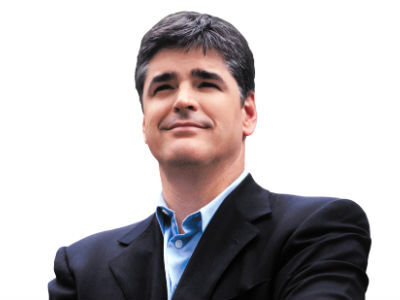
Sean Hannity is a conservative radio and television host, and one of the original primetime hosts on the Fox News Channel, where he has appeared since 1996. Sean Hannity began his radio career at a college station in California, before moving on to markets in the Southeast and New York. Today, he’s one of the most listened to on-air voices. Hannity’s radio program went into national syndication on September 10, 2001, and airs on more than 500 stations. Talkers Magazine estimates Hannity’s weekly radio audience at 13.5 million. In 1996 he was hired as one of the original hosts on Fox News Channel. As host of several popular Fox programs, Hannity has become the highest-paid news anchor on television.
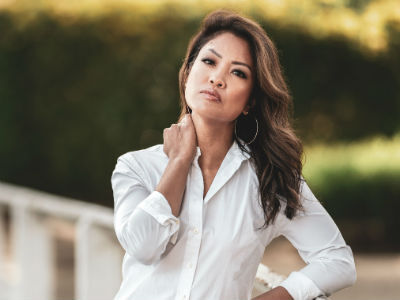
Michelle Malkin is a mother, wife, blogger, conservative syndicated columnist, longtime cable TV news commentator, and best-selling author of six books. She started her newspaper journalism career at the Los Angeles Daily News in 1992, moved to the Seattle Times in 1995, and has been penning nationally syndicated newspaper columns for Creators Syndicate since 1999. She is founder of conservative Internet start-ups Hot Air and Twitchy.com. Malkin has received numerous awards for her investigative journalism, including the Council on Governmental Ethics Laws (COGEL) national award for outstanding service for the cause of governmental ethics and leadership (1998), the Reed Irvine Accuracy in Media Award for Investigative Journalism (2006), the Heritage Foundation and Franklin Center for Government & Public Integrity's Breitbart Award for Excellence in Journalism (2013), the Center for Immigration Studies' Eugene Katz Award for Excellence in the Coverage of Immigration Award (2016), and the Manhattan Film Festival's Film Heals Award (2018). Married for 26 years and the mother of two teenage children, she lives with her family in Colorado. Follow her at michellemalkin.com. (Photo reprinted with kind permission from Peter Duke Photography.)

Sponsored by:

5 ways Gen Z is defining themselves differently online in 2026

Carbonatix Pre-Player Loader

Audio By Carbonatix

5 ways Gen Z is defining themselves differently online in 2026

For millennials and Gen X, the internet was once a place to build a personal brand using real names, consistent usernames, and polished profiles. These would often serve as signs of credibility and ambition. Gen Z, however, has taken a different approach. As true digital natives, this generation is reshaping how online personas work, opting to reject visibility, permanence, and a polished front in favor of flexibility, privacy and aesthetic control.

Across various platforms, Gen Z has begun to treat names, handles, and even email addresses as design choices rather than fixed identifiers. AnyWho has gathered data from leading sources including McKinsey, The Atlantic, The Guardian, and more in order to highlight how Gen Z has shifted the concept of digital identity.

1. The return to anonymity: Pseudonyms and username privacy

Whereas older generators leaned into recognizability, Gen Z is moving in the opposite direction. Pseudonyms, abstract usernames, and handles that have no obvious link to a real name are increasingly common, even on platforms that once encouraged real name usage. This is less about hiding and more about controlling exposure. Education data gathered by Fluid Focus, a firm focused on helping people reduce screentime, now estimates that members of Gen Z will spend 25 years of their life glued to their phones.

Growing up in an era rife with data breaches, doxxing and algorithmic surveillance, Gen Z sees anonymity as a form of digital literacy. Privacy itself has become a kind of personal branding, signaling awareness, boundaries and autonomy rather than secrecy.

2. Lowercase everything: The anti-capitalization movement

From usernames to display names to bios, another emerging trend is Gen Z’s preference for lowercase text. The reasons are both aesthetic and ideological. Lowercase reads as casual, unpolished and emotionally neutral. A report by The Guardian in early 2025 posits that a calm and friendly tone resonates more with Gen Z, as opposed to the loud and assertive feelings that capital letters can often convey.

3. Aesthetic username construction: Dots, underscores and visual flow

Gen Z usernames are often designed less for readability and more for visual rhythm. Dots, underscores, repeated letters, and more can all turn handles into graphic elements rather than simple identifiers like a first and last name. This reflects that a username isn’t just your name but is rather a part of the visual texture of many social media platforms. Influenced heavily by TikTok aesthetics and design-first platforms, many members of Gen Z treat naming as a form of micro-branding.

4. Email address simplicity: The "How did you get that?" phenomenon

If millennials accepted that their name plus numbers was the price of adulthood, Gen Z took a different approach. Younger users are increasingly securing uncomplicated email addresses (firstname.lastname@gmail.com, for example), not for the simplicity but instead for the appeal of being asked how they managed to secure such a scarce email address. Gen Z sees email not as a formal means of identification but as infrastructure. Simplicity can convey control, longevity, and freedom from the cluttered naming conventions that older users normalized.

5. Multiple account strategy: The death of the "finsta"

Millennials were the first to popularize the idea of “finsta” or “fake Instagram” during the mid-2010s, creating secondary accounts where they essentially posted more private thoughts and photos to only select followers. Gen Z has moved away from this. Instead, many of them maintain multiple parallel accounts that are themed, such as having one for close friends, one for aesthetics, one for public discovery, and more. Their online activity is less split into “real” and “fake” and is instead more modular.

The future of Gen Z social media

Gen Z is redefining how people are perceived online. Where previous generations sought visibility, permanence and recognition, Gen Z places more emphasis on control, adaptability and emotional resonance. For this generation, names are no longer fixed anchors but rather tools that express an intentional design. As platforms, workspaces and digital systems continue to evolve, the second youngest generation’s approach offers a clear signal: The future of online activity won’t be louder or more polished. Instead, it will be quieter and more intentional, at least until Gen Alpha populates social media and upends the trends again.

This story was produced by AnyWho and reviewed and distributed by Stacker.


Salem News Channel Today

Sponsored Links

On Air & Up Next

See the Full Program Guide