


















7 email address practices that say more about you than you think

Carbonatix Pre-Player Loader

Audio By Carbonatix

7 email address practices that say more about you than you think

At first glance, your email address might seem like a completely neutral piece of contact information. However, it conveys subtle social cues that can shape how others perceive you. From a hiring manager’s first impression to a client’s quiet assumptions, your inbox handle can offer up hints about your age, digital habits, and even how seriously you take your profession. Spokeo has compiled seven hidden messages your email handle might inadvertently be revealing about you.

Handle habits

Avoid unintentionally giving away too much information about yourself with your email handle by learning the following seven tells:

1. Including your birth year: An unintentional age disclosure

Many people opt to include their birth year following their first name when the combination of their first and last name is unavailable as an address. This happens to be one of the most common (and revealing) email quirks. It may seem harmless, but it unintentionally discloses your age to employers, clients, or acquaintances who may subconsciously judge you based on the generation you are a part of.

As Seltzer Fontaine, a top legal search and recruiting firm, points out, hiring managers will often use subtle cues like your email address to assess professionalism. Adding your birth year can signal that you’ve been using the same address since it was created.

2. The AOL address: From stigma to accidental status symbol

Interestingly, using an AOL address has evolved in recent years. Historically, this address suggested that a person was technologically behind since more modern platforms like Gmail and Outlook have been released. Cultural perception today, though, has turned, and an AOL handle can evoke feelings of nostalgia or even a retro charm. If you’re applying to jobs or networking, however, it’s still best to use a modern domain to avoid seeming outdated.

3. Nickname handles: When ‘cutesy’ kills credibility

There’s a major difference between having a fun screen name among friends and a professional email address. Having interests is to be expected when applying to jobs, but including references to sports, video games, or other common tags can undermine your credibility. Even if your email nickname has sentimental value, it’s best to save it for personal use only.

4. Random number strings: The spam flag

Similar to the first item on this list, when a person’s first and last name combination is taken, they will sometimes resort to a string of numbers that only have meaning to them. These numeric strings can often resemble spam or bot accounts to strangers, though. In certain cases, this can cause your email to be filtered out of a person’s inbox entirely. To avoid this, the social media marketing platform HubSpot recommends adding a middle initial, dots, or a short location tag instead of random digits.

5. Yahoo and Hotmail: The ‘out-of-touch’ domain dilemma

Similar to AOL but without the nostalgic charm, Yahoo and Hotmail tend to signal a lack of tech awareness, whether that’s an earned reputation or not. While once email giants, business communication migrated more toward Gmail, Outlook, and custom domains, causing these older providers to feel outdated. As with anything, though, stigma will vary depending on the context. For creative or freelance platforms, a Yahoo domain can convey a sense of permanence in the field, whereas for job seekers or entrepreneurs, switching to a modern domain can make a significant difference in first impressions.

6. Periods vs. underscores: Subtle professionalism cues

While a small design choice, opting for periods instead of underscores can make a difference in readability. Periods tend to be clean and intentional, whereas underscores can be harder to read, particularly on mobile devices. Some systems even run the risk of misinterpreting underscores as spaces or formatting errors. While periods can sometimes be missed entirely when writing out an email from scratch, they still tend to be more visually pleasing.

7. All lowercase vs. capitalization: The readability factor

Technically, capitalization won’t affect whether or not your message is delivered, as email systems aren’t case-sensitive. It does affect how your email looks written out, though. For personal branding purposes, think about the visual rhythm of your email address when printed on business cards, signatures, or even a portfolio. Since recipients can’t always tell when capitalization is intentional, lowercase tends to be the safest and most modern choice unless you are trying to create emphasis.

Reconsider the message of your digital signature

Your email handle is more than a simple line of text. It's a tiny mode of expression that tells the world about your habits, history, and how you navigate the digital world. A thoughtful update doesn’t just modernize your contact information; it also refines how others get a read on you before you’ve even said your first word to them. Whether you’re rocking a nostalgic email domain, revealing your birth year unintentionally, or hiding behind a random string of numbers, the fix is simple: Choose a clear, consistent, and intentional option that conveys the message you want others to have as a first impression.

This story was produced by Spokeo and reviewed and distributed by Stacker.


Salem News Channel Today

Sponsored Links


September 26 - Phoenix, AZ
Scottsdale Center for the Performing Arts


November 2 - Detroit, MI
Zion Christian Church in Troy


October 6 - Los Angeles, CA
Pasadena Convention Center


November 5 - San Antonio, TX
Norris Centers – The Grand Red Oak Ballroom


October 8 - Sacramento, CA
William Jessup University


November 7 - Tampa, FL
The Palladium at St. Pete College


October 22 - Minneapolis, MN
Crowne Plaza AiRE


November 15 - San Francisco, CA
Fremont Marriott Silicon Valley


October 23 - Philadelphia, PA
Green Valley Country Club


November 16 - Denver, CO
CU South Denver - Formerly Wildlife Experience


November 2 - Chicago, IL
Chicago Westin Northwest in Itasca


November 21 - Cleveland, OH
Holiday Inn Rockside in Independence


Salem Radio Network Speakers
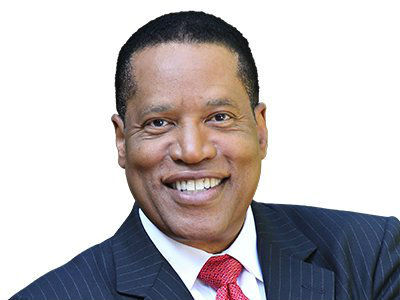
Larry Elder is an American lawyer, writer, and radio and television personality who calls himself the "Sage of South Central" a district of Los Angeles, Larry says his philosophy is to entertain, inform, provoke and to hopefully uplift. His calling card is "we have a country to save" and to him this means returning to the bedrock Constitutional principles of limited government and maximum personal responsibility. Elder's iconoclastic wit and intellectual agility makes him a particularly attractive voice in a nation that seems weary of traditional racial dialogue.” – Los Angeles Times.

Mike Gallagher Mike Gallagher began his broadcasting career in 1978 in Dayton, Ohio. Today, he is one of the most listened-to talk radio show hosts in America, recently having been ranked in the Talkers Magazine “Heavy Hundred” list – the 100 most important talk radio hosts in America. Prior to being launched into national syndication in 1998, Mike hosted the morning show on WABC-AM in New York City. Today, Talkers Magazine reports that his show is heard by over 3.75 million weekly listeners. Besides his radio work, Mike is seen on Fox News Channel as an on-air contributor, frequently appearing on the cable news giant.
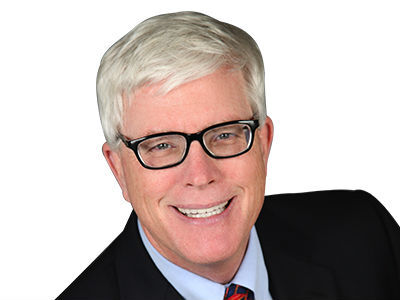
Hugh Hewitt is one of the nation’s leading bloggers and a genuine media revolutionary. He brings that expertise, his wit and what The New Yorker magazine calls his “amiable but relentless manner” to his nationally syndicated show each day.

When Dr. Sebastian Gorka was growing up, he listened to talk radio under his pillow with a transistor radio, dreaming that one day he would be behind the microphone. Beginning New Year’s Day 2019, he got his wish. Gorka now hosts America First every weekday afternoon 3 to 6pm ET. Gorka’s unique story works well on the radio. He is national security analyst for the Fox News Channel and author of two books: "Why We Fight" and "Defeating Jihad." His latest book releasing this fall is “War For America’s Soul.” He is uniquely qualified to fight the culture war and stand up for what is great about America, his adopted home country.

Broadcasting from his home station of KRLA in Los Angeles, the Dennis Prager Show is heard across the country. Everything in life – from politics to religion to relationships – is grist for Dennis’ mill. If it’s interesting, if it affects your life, then Dennis will be talking about it – with passion, humor, insight and wisdom.
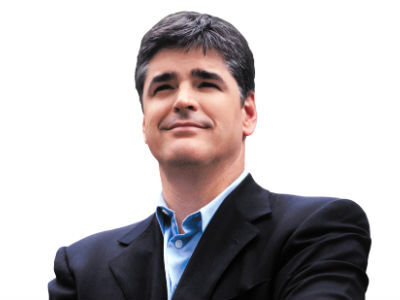
Sean Hannity is a conservative radio and television host, and one of the original primetime hosts on the Fox News Channel, where he has appeared since 1996. Sean Hannity began his radio career at a college station in California, before moving on to markets in the Southeast and New York. Today, he’s one of the most listened to on-air voices. Hannity’s radio program went into national syndication on September 10, 2001, and airs on more than 500 stations. Talkers Magazine estimates Hannity’s weekly radio audience at 13.5 million. In 1996 he was hired as one of the original hosts on Fox News Channel. As host of several popular Fox programs, Hannity has become the highest-paid news anchor on television.

Michelle Malkin is a mother, wife, blogger, conservative syndicated columnist, longtime cable TV news commentator, and best-selling author of six books. She started her newspaper journalism career at the Los Angeles Daily News in 1992, moved to the Seattle Times in 1995, and has been penning nationally syndicated newspaper columns for Creators Syndicate since 1999. She is founder of conservative Internet start-ups Hot Air and Twitchy.com. Malkin has received numerous awards for her investigative journalism, including the Council on Governmental Ethics Laws (COGEL) national award for outstanding service for the cause of governmental ethics and leadership (1998), the Reed Irvine Accuracy in Media Award for Investigative Journalism (2006), the Heritage Foundation and Franklin Center for Government & Public Integrity's Breitbart Award for Excellence in Journalism (2013), the Center for Immigration Studies' Eugene Katz Award for Excellence in the Coverage of Immigration Award (2016), and the Manhattan Film Festival's Film Heals Award (2018). Married for 26 years and the mother of two teenage children, she lives with her family in Colorado. Follow her at michellemalkin.com. (Photo reprinted with kind permission from Peter Duke Photography.)

Sponsored by:

7 email address practices that say more about you than you think

Carbonatix Pre-Player Loader

Audio By Carbonatix

7 email address practices that say more about you than you think

At first glance, your email address might seem like a completely neutral piece of contact information. However, it conveys subtle social cues that can shape how others perceive you. From a hiring manager’s first impression to a client’s quiet assumptions, your inbox handle can offer up hints about your age, digital habits, and even how seriously you take your profession. Spokeo has compiled seven hidden messages your email handle might inadvertently be revealing about you.

Handle habits

Avoid unintentionally giving away too much information about yourself with your email handle by learning the following seven tells:

1. Including your birth year: An unintentional age disclosure

Many people opt to include their birth year following their first name when the combination of their first and last name is unavailable as an address. This happens to be one of the most common (and revealing) email quirks. It may seem harmless, but it unintentionally discloses your age to employers, clients, or acquaintances who may subconsciously judge you based on the generation you are a part of.

As Seltzer Fontaine, a top legal search and recruiting firm, points out, hiring managers will often use subtle cues like your email address to assess professionalism. Adding your birth year can signal that you’ve been using the same address since it was created.

2. The AOL address: From stigma to accidental status symbol

Interestingly, using an AOL address has evolved in recent years. Historically, this address suggested that a person was technologically behind since more modern platforms like Gmail and Outlook have been released. Cultural perception today, though, has turned, and an AOL handle can evoke feelings of nostalgia or even a retro charm. If you’re applying to jobs or networking, however, it’s still best to use a modern domain to avoid seeming outdated.

3. Nickname handles: When ‘cutesy’ kills credibility

There’s a major difference between having a fun screen name among friends and a professional email address. Having interests is to be expected when applying to jobs, but including references to sports, video games, or other common tags can undermine your credibility. Even if your email nickname has sentimental value, it’s best to save it for personal use only.

4. Random number strings: The spam flag

Similar to the first item on this list, when a person’s first and last name combination is taken, they will sometimes resort to a string of numbers that only have meaning to them. These numeric strings can often resemble spam or bot accounts to strangers, though. In certain cases, this can cause your email to be filtered out of a person’s inbox entirely. To avoid this, the social media marketing platform HubSpot recommends adding a middle initial, dots, or a short location tag instead of random digits.

5. Yahoo and Hotmail: The ‘out-of-touch’ domain dilemma

Similar to AOL but without the nostalgic charm, Yahoo and Hotmail tend to signal a lack of tech awareness, whether that’s an earned reputation or not. While once email giants, business communication migrated more toward Gmail, Outlook, and custom domains, causing these older providers to feel outdated. As with anything, though, stigma will vary depending on the context. For creative or freelance platforms, a Yahoo domain can convey a sense of permanence in the field, whereas for job seekers or entrepreneurs, switching to a modern domain can make a significant difference in first impressions.

6. Periods vs. underscores: Subtle professionalism cues

While a small design choice, opting for periods instead of underscores can make a difference in readability. Periods tend to be clean and intentional, whereas underscores can be harder to read, particularly on mobile devices. Some systems even run the risk of misinterpreting underscores as spaces or formatting errors. While periods can sometimes be missed entirely when writing out an email from scratch, they still tend to be more visually pleasing.

7. All lowercase vs. capitalization: The readability factor

Technically, capitalization won’t affect whether or not your message is delivered, as email systems aren’t case-sensitive. It does affect how your email looks written out, though. For personal branding purposes, think about the visual rhythm of your email address when printed on business cards, signatures, or even a portfolio. Since recipients can’t always tell when capitalization is intentional, lowercase tends to be the safest and most modern choice unless you are trying to create emphasis.

Reconsider the message of your digital signature

Your email handle is more than a simple line of text. It's a tiny mode of expression that tells the world about your habits, history, and how you navigate the digital world. A thoughtful update doesn’t just modernize your contact information; it also refines how others get a read on you before you’ve even said your first word to them. Whether you’re rocking a nostalgic email domain, revealing your birth year unintentionally, or hiding behind a random string of numbers, the fix is simple: Choose a clear, consistent, and intentional option that conveys the message you want others to have as a first impression.

This story was produced by Spokeo and reviewed and distributed by Stacker.


Salem News Channel Today

Sponsored Links

On Air & Up Next

See the Full Program Guide