Everything you need to know about sweating during workouts and exercise

Carbonatix Pre-Player Loader

Audio By Carbonatix

Everything you need to know about sweating during workouts and exercise

You know that sensation of sweat dripping on your body when you’re doing a run, dance class, or strength training? Some believe that sweat is a sign of a good workout. Others might wonder if it’s a signal of fat burning, or if you could sweat too much. Degree explains what’s really going on.

Why you sweat so much when you work out

Sweat is your internal cooling system, so it makes sense that it would show up when you’re exercising. This is when your body heats up, so it kicks into action to help regulate your temperature.

Some people are surprised to know that those who are fitter tend to sweat more, not less. This is because your body gets better at cooling itself as your fitness levels increase. Sweating starts earlier and more heavily during workouts. You see this with top athletes too. They tend to sweat more and more quickly than people who are less active.

Why sweating during a workout is good for you

Sweating is a good indicator that your body is doing what it’s meant to do. It’s regulating your body during times when you’re challenging your cardiovascular system and building endurance.

One common myth worth clearing up is that sweating is not linked to fat burning. Sweat loss is temporary water loss, not fat. Your efforts in cardio, HIIT, and strength work classes may lead to fat burn over time, but the sweat itself is just your body keeping cool. Beyond that cooling benefit, there are a few upsides to exercise worth knowing about:

  • You’re supporting your heart health and building cardiovascular endurance.
  • Your body releases endorphins, which can boost your mood and reduce stress.
  • An increase in blood flow gives your skin that post-gym glow.
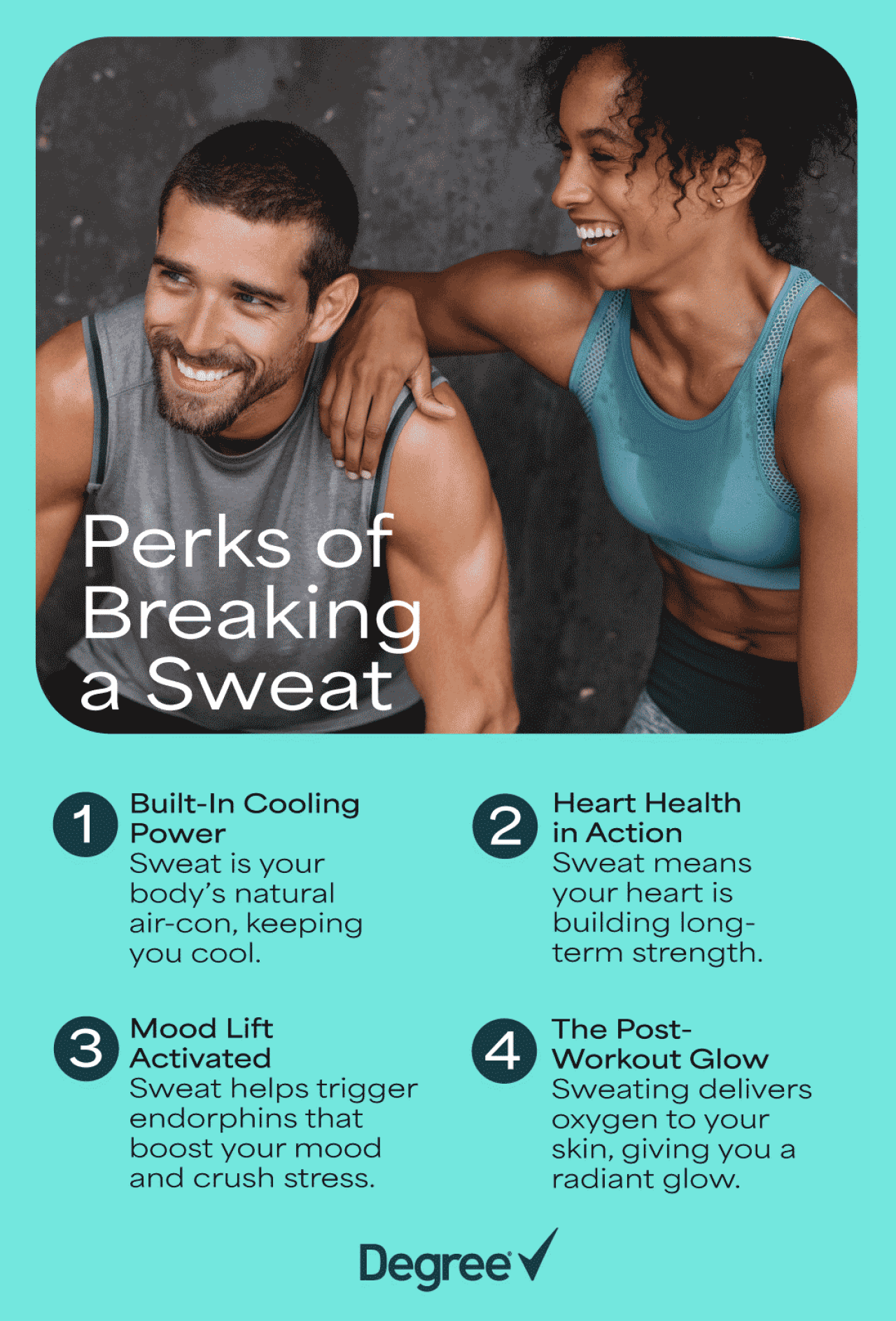
An infographic on the perks of breaking a sweat.
Degree


What determines how much you sweat?

You know that feeling: you’re drenched after spin class, but the person next to you barely looks flushed. Matt Annecharico, a R&D scientist at Unilever, explains why that happens: "The amount of sweat that an individual produces varies from person to person. This can be due to a number of factors like the environmental temperature, physical effort, emotional stress, and their fitness level."

Genetics also plays a role, and some people are simply built to sweat more than others. Age can influence it too, as your sweat glands become less active over time.

What does it mean if you're not sweating during a workout?

Not sweating during exercise is something you want to take note of. The most common reason is dehydration, because without enough fluids, your body isn’t able to regulate its temperature through sweating.

There are also other factors like cool weather, a low-intensity workout, or your age. So don’t let sweat be the only indication of a good workout. Pay attention to your heart rate, how much stronger you feel, and how much further you can push yourself with each session.

Make sure you’re drinking enough water before, during, and after your workout.

Does sweating a lot mean something is wrong?

Heavy sweating is usually a normal response to exercising. But there is a distinction between heavy sweating and having a medical condition. As Annecharico explains, “Hyperhidrosis is a medical condition that affects roughly 5% of the U.S. population, who suffer from very excessive sweat on hands, feet, and underarms. Other folks may consider themselves ‘heavy sweaters’ who do not have a medical condition but are very aware of their sweating and look for extra protection from products like antiperspirants.”

If you sweat excessively when you’re not exercising, or you notice that you’re dizzy and tired, make sure to speak to a healthcare professional.

How can I manage sweating during exercise?

If your confidence is taking a knock during exercise because you feel like your sweat is excessive, try a few practical tips:

Choose an antiperspirant to reduce sweat at the source. "The most effective way to apply an antiperspirant is in the evening, before bed,” explains Annecharico. “This allows ample time for the antiperspirant gel plug to form in the sweat duct, as there is less movement and sweating during sleep."

Choose your workout gear well. "Clothing doesn't just absorb sweat, it directly determines how much your body sweats," adds Annecharico. “Breathable fabrics and natural fibers allow for more evaporation." Go for lightweight, moisture-wicking fabrics for exercise.

Time your workouts to cooler times of the day. Early mornings or evenings can help your body regulate its temperature.

Take time to cool down after your workout session. Let your heart rate reduce gradually so that you can return to your resting state.

Stay hydrated by drinking enough water before, during, and after exercise. If you’re doing intense sessions, electrolyte drinks can help replace minerals lost through sweat.

Sweating during a workout is a sign that your body is working optimally to cool you down. You might end your workout soaked or lightly flushed, but what matters most is that you’re gaining benefits from moving your body regularly.

This story was produced by Degree and reviewed and distributed by Stacker.

 

Salem News Channel Today

Sponsored Links


September 26 - Phoenix, AZ
Scottsdale Center for the Performing Arts


November 2 - Detroit, MI
Zion Christian Church in Troy


October 6 - Los Angeles, CA
Pasadena Convention Center


November 5 - San Antonio, TX
Norris Centers – The Grand Red Oak Ballroom


October 8 - Sacramento, CA
William Jessup University


November 7 - Tampa, FL
The Palladium at St. Pete College


October 22 - Minneapolis, MN
Crowne Plaza AiRE


November 15 - San Francisco, CA
Fremont Marriott Silicon Valley


October 23 - Philadelphia, PA
Green Valley Country Club


November 16 - Denver, CO
CU South Denver - Formerly Wildlife Experience


November 2 - Chicago, IL
Chicago Westin Northwest in Itasca


November 21 - Cleveland, OH
Holiday Inn Rockside in Independence


Salem Radio Network Speakers

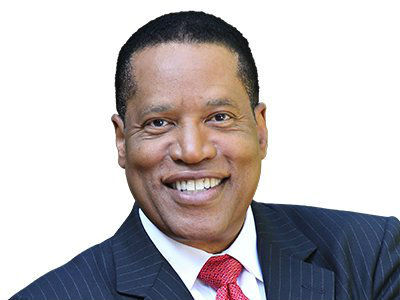
Larry Elder is an American lawyer, writer, and radio and television personality who calls himself the "Sage of South Central" a district of Los Angeles, Larry says his philosophy is to entertain, inform, provoke and to hopefully uplift. His calling card is "we have a country to save" and to him this means returning to the bedrock Constitutional principles of limited government and maximum personal responsibility. Elder's iconoclastic wit and intellectual agility makes him a particularly attractive voice in a nation that seems weary of traditional racial dialogue.” – Los Angeles Times.

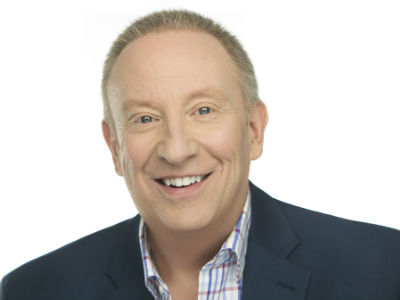
Mike Gallagher Mike Gallagher began his broadcasting career in 1978 in Dayton, Ohio. Today, he is one of the most listened-to talk radio show hosts in America, recently having been ranked in the Talkers Magazine “Heavy Hundred” list – the 100 most important talk radio hosts in America. Prior to being launched into national syndication in 1998, Mike hosted the morning show on WABC-AM in New York City. Today, Talkers Magazine reports that his show is heard by over 3.75 million weekly listeners. Besides his radio work, Mike is seen on Fox News Channel as an on-air contributor, frequently appearing on the cable news giant.

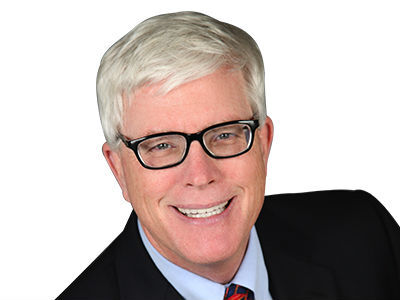
Hugh Hewitt is one of the nation’s leading bloggers and a genuine media revolutionary. He brings that expertise, his wit and what The New Yorker magazine calls his “amiable but relentless manner” to his nationally syndicated show each day.

When Dr. Sebastian Gorka was growing up, he listened to talk radio under his pillow with a transistor radio, dreaming that one day he would be behind the microphone. Beginning New Year’s Day 2019, he got his wish. Gorka now hosts America First every weekday afternoon 3 to 6pm ET. Gorka’s unique story works well on the radio. He is national security analyst for the Fox News Channel and author of two books: "Why We Fight" and "Defeating Jihad." His latest book releasing this fall is “War For America’s Soul.” He is uniquely qualified to fight the culture war and stand up for what is great about America, his adopted home country.

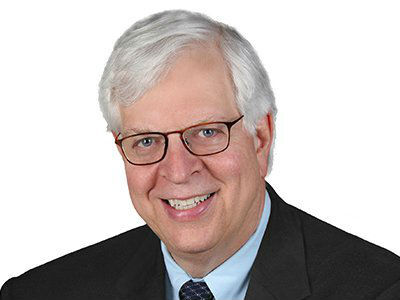
Broadcasting from his home station of KRLA in Los Angeles, the Dennis Prager Show is heard across the country. Everything in life – from politics to religion to relationships – is grist for Dennis’ mill. If it’s interesting, if it affects your life, then Dennis will be talking about it – with passion, humor, insight and wisdom.

Sean Hannity is a conservative radio and television host, and one of the original primetime hosts on the Fox News Channel, where he has appeared since 1996. Sean Hannity began his radio career at a college station in California, before moving on to markets in the Southeast and New York. Today, he’s one of the most listened to on-air voices. Hannity’s radio program went into national syndication on September 10, 2001, and airs on more than 500 stations. Talkers Magazine estimates Hannity’s weekly radio audience at 13.5 million. In 1996 he was hired as one of the original hosts on Fox News Channel. As host of several popular Fox programs, Hannity has become the highest-paid news anchor on television.

Michelle Malkin is a mother, wife, blogger, conservative syndicated columnist, longtime cable TV news commentator, and best-selling author of six books. She started her newspaper journalism career at the Los Angeles Daily News in 1992, moved to the Seattle Times in 1995, and has been penning nationally syndicated newspaper columns for Creators Syndicate since 1999. She is founder of conservative Internet start-ups Hot Air and Twitchy.com. Malkin has received numerous awards for her investigative journalism, including the Council on Governmental Ethics Laws (COGEL) national award for outstanding service for the cause of governmental ethics and leadership (1998), the Reed Irvine Accuracy in Media Award for Investigative Journalism (2006), the Heritage Foundation and Franklin Center for Government & Public Integrity's Breitbart Award for Excellence in Journalism (2013), the Center for Immigration Studies' Eugene Katz Award for Excellence in the Coverage of Immigration Award (2016), and the Manhattan Film Festival's Film Heals Award (2018). Married for 26 years and the mother of two teenage children, she lives with her family in Colorado. Follow her at michellemalkin.com. (Photo reprinted with kind permission from Peter Duke Photography.)

Sponsored by:

Everything you need to know about sweating during workouts and exercise

Carbonatix Pre-Player Loader

Audio By Carbonatix

Everything you need to know about sweating during workouts and exercise

You know that sensation of sweat dripping on your body when you’re doing a run, dance class, or strength training? Some believe that sweat is a sign of a good workout. Others might wonder if it’s a signal of fat burning, or if you could sweat too much. Degree explains what’s really going on.

Why you sweat so much when you work out

Sweat is your internal cooling system, so it makes sense that it would show up when you’re exercising. This is when your body heats up, so it kicks into action to help regulate your temperature.

Some people are surprised to know that those who are fitter tend to sweat more, not less. This is because your body gets better at cooling itself as your fitness levels increase. Sweating starts earlier and more heavily during workouts. You see this with top athletes too. They tend to sweat more and more quickly than people who are less active.

Why sweating during a workout is good for you

Sweating is a good indicator that your body is doing what it’s meant to do. It’s regulating your body during times when you’re challenging your cardiovascular system and building endurance.

One common myth worth clearing up is that sweating is not linked to fat burning. Sweat loss is temporary water loss, not fat. Your efforts in cardio, HIIT, and strength work classes may lead to fat burn over time, but the sweat itself is just your body keeping cool. Beyond that cooling benefit, there are a few upsides to exercise worth knowing about:

  • You’re supporting your heart health and building cardiovascular endurance.
  • Your body releases endorphins, which can boost your mood and reduce stress.
  • An increase in blood flow gives your skin that post-gym glow.
An infographic on the perks of breaking a sweat.
Degree


What determines how much you sweat?

You know that feeling: you’re drenched after spin class, but the person next to you barely looks flushed. Matt Annecharico, a R&D scientist at Unilever, explains why that happens: "The amount of sweat that an individual produces varies from person to person. This can be due to a number of factors like the environmental temperature, physical effort, emotional stress, and their fitness level."

Genetics also plays a role, and some people are simply built to sweat more than others. Age can influence it too, as your sweat glands become less active over time.

What does it mean if you're not sweating during a workout?

Not sweating during exercise is something you want to take note of. The most common reason is dehydration, because without enough fluids, your body isn’t able to regulate its temperature through sweating.

There are also other factors like cool weather, a low-intensity workout, or your age. So don’t let sweat be the only indication of a good workout. Pay attention to your heart rate, how much stronger you feel, and how much further you can push yourself with each session.

Make sure you’re drinking enough water before, during, and after your workout.

Does sweating a lot mean something is wrong?

Heavy sweating is usually a normal response to exercising. But there is a distinction between heavy sweating and having a medical condition. As Annecharico explains, “Hyperhidrosis is a medical condition that affects roughly 5% of the U.S. population, who suffer from very excessive sweat on hands, feet, and underarms. Other folks may consider themselves ‘heavy sweaters’ who do not have a medical condition but are very aware of their sweating and look for extra protection from products like antiperspirants.”

If you sweat excessively when you’re not exercising, or you notice that you’re dizzy and tired, make sure to speak to a healthcare professional.

How can I manage sweating during exercise?

If your confidence is taking a knock during exercise because you feel like your sweat is excessive, try a few practical tips:

Choose an antiperspirant to reduce sweat at the source. "The most effective way to apply an antiperspirant is in the evening, before bed,” explains Annecharico. “This allows ample time for the antiperspirant gel plug to form in the sweat duct, as there is less movement and sweating during sleep."

Choose your workout gear well. "Clothing doesn't just absorb sweat, it directly determines how much your body sweats," adds Annecharico. “Breathable fabrics and natural fibers allow for more evaporation." Go for lightweight, moisture-wicking fabrics for exercise.

Time your workouts to cooler times of the day. Early mornings or evenings can help your body regulate its temperature.

Take time to cool down after your workout session. Let your heart rate reduce gradually so that you can return to your resting state.

Stay hydrated by drinking enough water before, during, and after exercise. If you’re doing intense sessions, electrolyte drinks can help replace minerals lost through sweat.

Sweating during a workout is a sign that your body is working optimally to cool you down. You might end your workout soaked or lightly flushed, but what matters most is that you’re gaining benefits from moving your body regularly.

This story was produced by Degree and reviewed and distributed by Stacker.

 

Salem News Channel Today

Sponsored Links

On Air & Up Next

See the Full Program Guide