
















Five ways to give your kids a financial head start this holiday season

Carbonatix Pre-Player Loader

Audio By Carbonatix

Five ways to give your kids a financial head start this holiday season

We’re fast entering the season of giving, with the year-end calendar crammed with one holiday after another. But in an uncertain economy, it’s important to get your giving right.

That means avoiding the usual waste, like plastic toys that will get ignored or broken or discarded within days. In fact, last year Americans spent more than $10 billion on unwanted gifts, according to a survey by Finder.

Instead, think about a gift with a more durable future: Something with the potential to grow, to be used for an important life goal down the line, and to teach valuable lessons along the way.

In other words, money.

Not the most sentimental of gifts, sure. But if you can use the holidays to teach young adults about how to handle money – saving, spending, budgeting, investing – you are equipping them with skills they will be able to use for the rest of their lives.

To really impart some financial lessons, it’s going to need to be more than a throwaway gesture like $20 from Grandma’s purse. So what’s the best way to pass along lasting money smarts? Current, a consumer fintech banking platform, shares a few ideas:

Open their first accounts. If they don’t have accounts already, this kind of basic financial infrastructure is where you need to start. Ideally you’re looking for a spending account that won’t sock them with charges — so seek out those with no annual fees, no overdraft fees, no minimum balance requirements, and an extensive ATM network. Since young adults don’t have much of a credit record yet, look for an account that also has a credit building feature

Youth IRAs. You might not realize it, but it is possible for young adults to open a Roth IRA. Getting an early jump on saving might not seem like a big deal now, but fast forward to their own retirement years, and the difference could mean hundreds of thousands of dollars.

“I often recommend using a Roth IRA to teach teenagers the process of saving,” says Brian Cody of Cody Financial Advisors in Gillette, N.J. “The teens can spend some of what they earn over the summer, while the parents match those earnings with a Roth IRA contribution. It’s one of the most effective ways I’ve seen to get young people excited about working, saving, and developing lifelong financial habits.”

The rule here is to open such an account, they have to have some earned income: That could be from part-time or summer work that issues them W-2s or 1099s, or it could be from more informal arrangements, like babysitting or mowing lawns (keep records in case the IRS wants it).

College savings. The holidays are an ideal time to top up kids’ 529 plans — not just for parents, but grandparents as well. According to the College Board, average annual tuition for four-year public in-state colleges is now $11,950; out-of-state rises to $31,880; and private to $45,000. So you want to start as early as possible (think: delivery room) so that money has sufficient time to grow from investment.

The added bonus for relatives is the state tax break, which often can be quite substantial. For New York State, for example, you can erase up to $10,000 from your taxable income for a married couple filing jointly. (Research your own state here.)

Regular savings. Admittedly, retirement may be a far-off goal that young adults have a hard time wrapping their minds around. But here’s something that’s a little more immediate for them: A savings account for nearer-term goals.

That might be for a down payment on their first car, or to move out into their own rental apartment (which often requires an up-front lump sum for the first month, last month, and security deposit). With holiday contributions from them as well as relatives, and then juiced by interest from a high-yielding account, those goals of independence can start looking a lot more realistic. Consider looking at an online or mobile only bank, many of which offer savings rates significantly higher than traditional banks.

Charitable giving. The holiday season isn’t just about getting, it’s about giving. In fact, it’s the time of year when many families make contributions to the causes that matter most to them — not just to help others, but to lock in the tax deduction by the end of the tax year.

Involving teens in those discussions can be an ideal way to get the focus off themselves, and to start them thinking about how to deploy money to create the most impact in their community. “Don’t forget the power of giving back,” says Jamie Bosse, a financial planner with CGN Advisors in Manhattan, Kansas. “Do something charitable together this season, to show them what generosity looks like in action.”

This story was produced by Current and reviewed and distributed by Stacker.


Salem News Channel Today

Sponsored Links


September 26 - Phoenix, AZ
Scottsdale Center for the Performing Arts


November 2 - Detroit, MI
Zion Christian Church in Troy


October 6 - Los Angeles, CA
Pasadena Convention Center


November 5 - San Antonio, TX
Norris Centers – The Grand Red Oak Ballroom


October 8 - Sacramento, CA
William Jessup University


November 7 - Tampa, FL
The Palladium at St. Pete College


October 22 - Minneapolis, MN
Crowne Plaza AiRE


November 15 - San Francisco, CA
Fremont Marriott Silicon Valley


October 23 - Philadelphia, PA
Green Valley Country Club


November 16 - Denver, CO
CU South Denver - Formerly Wildlife Experience


November 2 - Chicago, IL
Chicago Westin Northwest in Itasca


November 21 - Cleveland, OH
Holiday Inn Rockside in Independence


Salem Radio Network Speakers
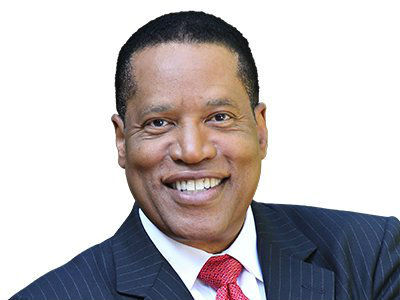
Larry Elder is an American lawyer, writer, and radio and television personality who calls himself the "Sage of South Central" a district of Los Angeles, Larry says his philosophy is to entertain, inform, provoke and to hopefully uplift. His calling card is "we have a country to save" and to him this means returning to the bedrock Constitutional principles of limited government and maximum personal responsibility. Elder's iconoclastic wit and intellectual agility makes him a particularly attractive voice in a nation that seems weary of traditional racial dialogue.” – Los Angeles Times.

Mike Gallagher Mike Gallagher began his broadcasting career in 1978 in Dayton, Ohio. Today, he is one of the most listened-to talk radio show hosts in America, recently having been ranked in the Talkers Magazine “Heavy Hundred” list – the 100 most important talk radio hosts in America. Prior to being launched into national syndication in 1998, Mike hosted the morning show on WABC-AM in New York City. Today, Talkers Magazine reports that his show is heard by over 3.75 million weekly listeners. Besides his radio work, Mike is seen on Fox News Channel as an on-air contributor, frequently appearing on the cable news giant.

Hugh Hewitt is one of the nation’s leading bloggers and a genuine media revolutionary. He brings that expertise, his wit and what The New Yorker magazine calls his “amiable but relentless manner” to his nationally syndicated show each day.

When Dr. Sebastian Gorka was growing up, he listened to talk radio under his pillow with a transistor radio, dreaming that one day he would be behind the microphone. Beginning New Year’s Day 2019, he got his wish. Gorka now hosts America First every weekday afternoon 3 to 6pm ET. Gorka’s unique story works well on the radio. He is national security analyst for the Fox News Channel and author of two books: "Why We Fight" and "Defeating Jihad." His latest book releasing this fall is “War For America’s Soul.” He is uniquely qualified to fight the culture war and stand up for what is great about America, his adopted home country.

Broadcasting from his home station of KRLA in Los Angeles, the Dennis Prager Show is heard across the country. Everything in life – from politics to religion to relationships – is grist for Dennis’ mill. If it’s interesting, if it affects your life, then Dennis will be talking about it – with passion, humor, insight and wisdom.

Sean Hannity is a conservative radio and television host, and one of the original primetime hosts on the Fox News Channel, where he has appeared since 1996. Sean Hannity began his radio career at a college station in California, before moving on to markets in the Southeast and New York. Today, he’s one of the most listened to on-air voices. Hannity’s radio program went into national syndication on September 10, 2001, and airs on more than 500 stations. Talkers Magazine estimates Hannity’s weekly radio audience at 13.5 million. In 1996 he was hired as one of the original hosts on Fox News Channel. As host of several popular Fox programs, Hannity has become the highest-paid news anchor on television.

Michelle Malkin is a mother, wife, blogger, conservative syndicated columnist, longtime cable TV news commentator, and best-selling author of six books. She started her newspaper journalism career at the Los Angeles Daily News in 1992, moved to the Seattle Times in 1995, and has been penning nationally syndicated newspaper columns for Creators Syndicate since 1999. She is founder of conservative Internet start-ups Hot Air and Twitchy.com. Malkin has received numerous awards for her investigative journalism, including the Council on Governmental Ethics Laws (COGEL) national award for outstanding service for the cause of governmental ethics and leadership (1998), the Reed Irvine Accuracy in Media Award for Investigative Journalism (2006), the Heritage Foundation and Franklin Center for Government & Public Integrity's Breitbart Award for Excellence in Journalism (2013), the Center for Immigration Studies' Eugene Katz Award for Excellence in the Coverage of Immigration Award (2016), and the Manhattan Film Festival's Film Heals Award (2018). Married for 26 years and the mother of two teenage children, she lives with her family in Colorado. Follow her at michellemalkin.com. (Photo reprinted with kind permission from Peter Duke Photography.)

Sponsored by:

Five ways to give your kids a financial head start this holiday season

Carbonatix Pre-Player Loader

Audio By Carbonatix

Five ways to give your kids a financial head start this holiday season

We’re fast entering the season of giving, with the year-end calendar crammed with one holiday after another. But in an uncertain economy, it’s important to get your giving right.

That means avoiding the usual waste, like plastic toys that will get ignored or broken or discarded within days. In fact, last year Americans spent more than $10 billion on unwanted gifts, according to a survey by Finder.

Instead, think about a gift with a more durable future: Something with the potential to grow, to be used for an important life goal down the line, and to teach valuable lessons along the way.

In other words, money.

Not the most sentimental of gifts, sure. But if you can use the holidays to teach young adults about how to handle money – saving, spending, budgeting, investing – you are equipping them with skills they will be able to use for the rest of their lives.

To really impart some financial lessons, it’s going to need to be more than a throwaway gesture like $20 from Grandma’s purse. So what’s the best way to pass along lasting money smarts? Current, a consumer fintech banking platform, shares a few ideas:

Open their first accounts. If they don’t have accounts already, this kind of basic financial infrastructure is where you need to start. Ideally you’re looking for a spending account that won’t sock them with charges — so seek out those with no annual fees, no overdraft fees, no minimum balance requirements, and an extensive ATM network. Since young adults don’t have much of a credit record yet, look for an account that also has a credit building feature

Youth IRAs. You might not realize it, but it is possible for young adults to open a Roth IRA. Getting an early jump on saving might not seem like a big deal now, but fast forward to their own retirement years, and the difference could mean hundreds of thousands of dollars.

“I often recommend using a Roth IRA to teach teenagers the process of saving,” says Brian Cody of Cody Financial Advisors in Gillette, N.J. “The teens can spend some of what they earn over the summer, while the parents match those earnings with a Roth IRA contribution. It’s one of the most effective ways I’ve seen to get young people excited about working, saving, and developing lifelong financial habits.”

The rule here is to open such an account, they have to have some earned income: That could be from part-time or summer work that issues them W-2s or 1099s, or it could be from more informal arrangements, like babysitting or mowing lawns (keep records in case the IRS wants it).

College savings. The holidays are an ideal time to top up kids’ 529 plans — not just for parents, but grandparents as well. According to the College Board, average annual tuition for four-year public in-state colleges is now $11,950; out-of-state rises to $31,880; and private to $45,000. So you want to start as early as possible (think: delivery room) so that money has sufficient time to grow from investment.

The added bonus for relatives is the state tax break, which often can be quite substantial. For New York State, for example, you can erase up to $10,000 from your taxable income for a married couple filing jointly. (Research your own state here.)

Regular savings. Admittedly, retirement may be a far-off goal that young adults have a hard time wrapping their minds around. But here’s something that’s a little more immediate for them: A savings account for nearer-term goals.

That might be for a down payment on their first car, or to move out into their own rental apartment (which often requires an up-front lump sum for the first month, last month, and security deposit). With holiday contributions from them as well as relatives, and then juiced by interest from a high-yielding account, those goals of independence can start looking a lot more realistic. Consider looking at an online or mobile only bank, many of which offer savings rates significantly higher than traditional banks.

Charitable giving. The holiday season isn’t just about getting, it’s about giving. In fact, it’s the time of year when many families make contributions to the causes that matter most to them — not just to help others, but to lock in the tax deduction by the end of the tax year.

Involving teens in those discussions can be an ideal way to get the focus off themselves, and to start them thinking about how to deploy money to create the most impact in their community. “Don’t forget the power of giving back,” says Jamie Bosse, a financial planner with CGN Advisors in Manhattan, Kansas. “Do something charitable together this season, to show them what generosity looks like in action.”

This story was produced by Current and reviewed and distributed by Stacker.


Salem News Channel Today

Sponsored Links

On Air & Up Next

See the Full Program Guide