






Hanukkah celebrations have changed dramatically, but the same is true of Christmas

Carbonatix Pre-Player Loader

Audio By Carbonatix

Hanukkah celebrations have changed dramatically — but the same is true of Christmas

Hanukkah is not the Jewish Christmas. Articles and op-eds in newspapers remind readers of that fact every year, lamenting that the Jewish Festival of Lights has almost become an imitation of the Christian holiday.

These pieces exist for a reason. Hanukkah is a minor festival in the Jewish liturgical year, which is marked by major holidays in the fall and spring — the High Holidays and Passover, respectively. Because of its proximity to Christmas, however, Hanukkah has been culturally elevated into a major celebration, Samira Mehta, a professor of women and gender studies and Jewish studies at the University of Colorado Boulder, writes for The Conversation.

American shops and schools nod to diversity by putting up menorahs next to Christmas trees or including the dreidel song in the “holiday concert” alongside Santa, Rudolph or the Christ child. Even Chabad, an Orthodox Jewish movement, holds public menorah lightings that look remarkably like public Christmas tree lightings.

Store windows, doctors’ offices and college dining halls display Christmas trees and menorahs side by side, though the latter is a ritual object, not merely a decoration. A menorah, or “hanukkiah,” is lit in a specific way, on specific days, with accompanying prayers — more akin to a Christian Advent wreath than to the holly decking the halls.

These issues can be especially tricky for interfaith families. Jewish Americans are worried about Hanukkah growing too similar to Christmas — but the history of both holidays is more complicated than these comparisons let on.

Black-and-white photo four boys of a Jewish family lighting a menorah during Hanukkah, Brookline, Massachusetts, 1971.
Spencer Grant // Getty Images


Ancient revolt

There’s a deep irony, of course, in seeing Hanukkah as a prime example of assimilation: The festival itself celebrates a victory against assimilation.

In 168 B.C.E., Antiochus IV Epiphanes, king of the Seleucid Empire, sent his army to conquer Jerusalem. He outlawed Jewish holidays, Shabbat observance and practices such as circumcision. His troops set up altars to the Greek gods in the Jewish temple, dedicating it to Zeus.

The Maccabees, a Jewish resistance movement led by a priestly family, opposed both Antiochus and Jews who assimilated into the conquering Greek culture. Hanukkah celebrates the rebels’ victory over the Seleucid army.

In the temple, the Jews kept an eternal flame burning — as synagogues do today. When the Maccabees reclaimed the temple, however, there was only enough oil to last for one day. Miraculously, the story says it lasted for a week: enough time to bring in more oil.

Traditional holiday celebrations, therefore, include lighting the menorah each night for eight days and eating food cooked in oil. Spinning dreidel games are also traditional, as are songs like “Maoz Tzur.”

Fried foods on a table with a blue and white tablecloth at a Hannukah Party.
Lisa J Goodman // Getty Images


Hanukkah bushes” topped with a Star of David, extravagant presents, community menorah lightings in the park, blue and white lights on houses and Hanukkah Advent calendars? Not traditional, if “traditional” means things that have happened for hundreds of years.

Carols and carousing

Assimilation to the United States’ Christian-majority culture has played a role in Hanukkah’s modern transformation. That said, the story of how Hanukkah came to have the commercial, kids-and-gifts focus that it has in the U.S. today is a bit more complicated.

When people worry that Hanukkah is simply a Jewish adaptation to the Christmas gift season,they may imagine that Christmas itself has always been as most Americans today know it — with the presents, the tree and the family togetherness. But, in fact, both contemporary Christmas and contemporary Hanukkah grew up together in response to the Industrial Revolution.

Before the Industrial Revolution, both Europe and North America were primarily agrarian societies. When the harvest was completed, the entire Advent season took on an air of revelry — there was caroling in the streets and a certain amount of drunken carousing. For the more wealthy, it was a season of parties and balls. Sometimes, there would be class-based conflict — like vandalism or other crimes — between the wealthy partygoers and the working-class street parties.

A historic postcard drawing of Christmas celebrations in London in 1810.
Hulton Archive // Getty Images


The highlight of the season was New Year’s rather than Christmas. Gifts, if any, were small and usually handmade. The wealthy gave end-of-the-year bonuses to servants and tradespeople. All in all, the season was as much about friends as family, and celebrated in public as much or more than in private.

For a variety of reasons, social campaigners in the early 19th century looked to make Christmas into the domestic celebration of consumption that it is today. The shift from seasonal farm work to round-the-clock factory work made the evenings of carousing problematic, for example — hungover workers are not good workers — and moving the celebration to a single day solved that problem. Meanwhile, religious voices tried to emphasize Christmas as a celebration of Christ in Christian homes.

But more to the point, the Industrial Revolution created a huge market of relatively affordable goods that needed a market. Christmas provided an abundant market. And so did Hanukkah.

New needs, new traditions

Jews received the same advertisements for gifts and festive foods as their Christian neighbors, and it was hard to resist the pull of the celebratory season. However, the late American studies scholar Dianne Ashton’s book “Hanukkah in America: A History” suggests that Hanukkah did not take its current form only because American Jews were imitating Christmas in some sort of religious version of keeping up with the Joneses.

Hanukkah, which is celebrated mostly in the home, gave Jewish women a place to shine — much like a domestic Christmas gave such opportunities to Christian women. It allowed Jews to focus on the family bonds, which often felt fragile and precious in the shadow of immigration and relatives left behind.

A small group of pre-schoolers from Gan HaYeled learn how to light a Hanukkah menorah from Rabbi Sarah Krinsky at Adas Israel Congregation.
Alex Wong // Getty Images


And focusing on children, such as by having them light the candles — a job traditionally done by adult men — offered a way to engage the next generation in a time and place where being Jewish felt like a choice.

In America, Jews were full citizens, free from the laws that had previously kept their communities isolated in many parts of Europe. That freedom also made it easier for each individual to choose how much to engage with the Jewish community, if at all. In America, you could leave your Judaism behind without converting to Christianity — and many Jews did. Hanukkah was a fun way to build attachments to the holiday.

American Jews adapted Hanukkah to their own needs, emphasizing aspects of the religion that made it work in this new environment. One can see that as assimilation, sure, but it was also adaptation for survival. Joining in the “holiday season” did mitigate the feeling of being an outsider and a minority, at the holidays. But it also allowed for the creation of a new way to engage with Judaism in a new space and time.

This story was produced by The Conversation and reviewed and distributed by Stacker.


Salem News Channel Today

Sponsored Links


September 26 - Phoenix, AZ
Scottsdale Center for the Performing Arts


November 2 - Detroit, MI
Zion Christian Church in Troy


October 6 - Los Angeles, CA
Pasadena Convention Center


November 5 - San Antonio, TX
Norris Centers – The Grand Red Oak Ballroom


October 8 - Sacramento, CA
William Jessup University


November 7 - Tampa, FL
The Palladium at St. Pete College


October 22 - Minneapolis, MN
Crowne Plaza AiRE


November 15 - San Francisco, CA
Fremont Marriott Silicon Valley


October 23 - Philadelphia, PA
Green Valley Country Club


November 16 - Denver, CO
CU South Denver - Formerly Wildlife Experience


November 2 - Chicago, IL
Chicago Westin Northwest in Itasca


November 21 - Cleveland, OH
Holiday Inn Rockside in Independence


Salem Radio Network Speakers
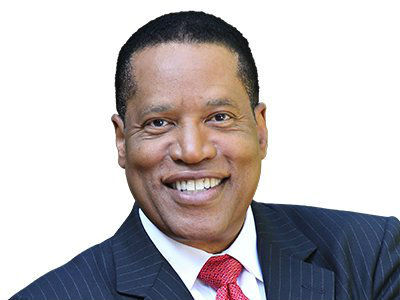
Larry Elder is an American lawyer, writer, and radio and television personality who calls himself the "Sage of South Central" a district of Los Angeles, Larry says his philosophy is to entertain, inform, provoke and to hopefully uplift. His calling card is "we have a country to save" and to him this means returning to the bedrock Constitutional principles of limited government and maximum personal responsibility. Elder's iconoclastic wit and intellectual agility makes him a particularly attractive voice in a nation that seems weary of traditional racial dialogue.” – Los Angeles Times.

Mike Gallagher Mike Gallagher began his broadcasting career in 1978 in Dayton, Ohio. Today, he is one of the most listened-to talk radio show hosts in America, recently having been ranked in the Talkers Magazine “Heavy Hundred” list – the 100 most important talk radio hosts in America. Prior to being launched into national syndication in 1998, Mike hosted the morning show on WABC-AM in New York City. Today, Talkers Magazine reports that his show is heard by over 3.75 million weekly listeners. Besides his radio work, Mike is seen on Fox News Channel as an on-air contributor, frequently appearing on the cable news giant.
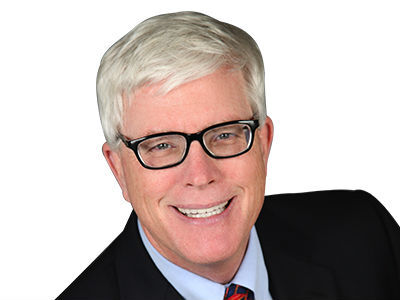
Hugh Hewitt is one of the nation’s leading bloggers and a genuine media revolutionary. He brings that expertise, his wit and what The New Yorker magazine calls his “amiable but relentless manner” to his nationally syndicated show each day.
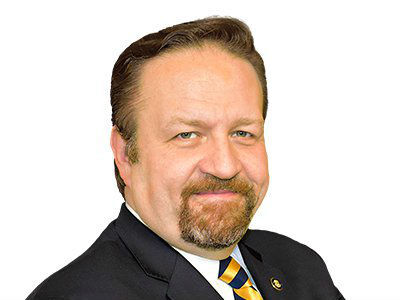
When Dr. Sebastian Gorka was growing up, he listened to talk radio under his pillow with a transistor radio, dreaming that one day he would be behind the microphone. Beginning New Year’s Day 2019, he got his wish. Gorka now hosts America First every weekday afternoon 3 to 6pm ET. Gorka’s unique story works well on the radio. He is national security analyst for the Fox News Channel and author of two books: "Why We Fight" and "Defeating Jihad." His latest book releasing this fall is “War For America’s Soul.” He is uniquely qualified to fight the culture war and stand up for what is great about America, his adopted home country.
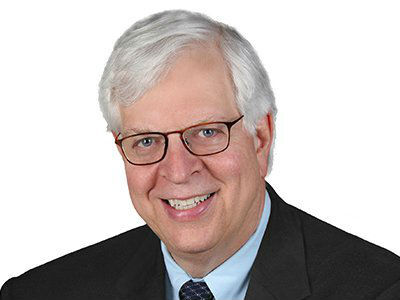
Broadcasting from his home station of KRLA in Los Angeles, the Dennis Prager Show is heard across the country. Everything in life – from politics to religion to relationships – is grist for Dennis’ mill. If it’s interesting, if it affects your life, then Dennis will be talking about it – with passion, humor, insight and wisdom.
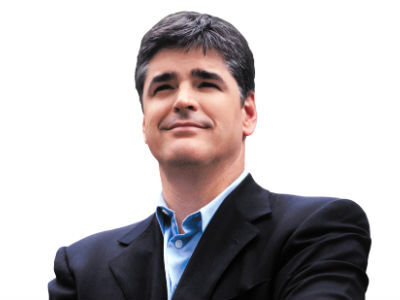
Sean Hannity is a conservative radio and television host, and one of the original primetime hosts on the Fox News Channel, where he has appeared since 1996. Sean Hannity began his radio career at a college station in California, before moving on to markets in the Southeast and New York. Today, he’s one of the most listened to on-air voices. Hannity’s radio program went into national syndication on September 10, 2001, and airs on more than 500 stations. Talkers Magazine estimates Hannity’s weekly radio audience at 13.5 million. In 1996 he was hired as one of the original hosts on Fox News Channel. As host of several popular Fox programs, Hannity has become the highest-paid news anchor on television.
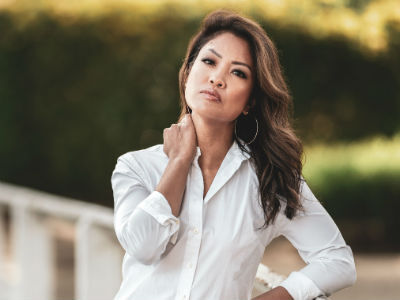
Michelle Malkin is a mother, wife, blogger, conservative syndicated columnist, longtime cable TV news commentator, and best-selling author of six books. She started her newspaper journalism career at the Los Angeles Daily News in 1992, moved to the Seattle Times in 1995, and has been penning nationally syndicated newspaper columns for Creators Syndicate since 1999. She is founder of conservative Internet start-ups Hot Air and Twitchy.com. Malkin has received numerous awards for her investigative journalism, including the Council on Governmental Ethics Laws (COGEL) national award for outstanding service for the cause of governmental ethics and leadership (1998), the Reed Irvine Accuracy in Media Award for Investigative Journalism (2006), the Heritage Foundation and Franklin Center for Government & Public Integrity's Breitbart Award for Excellence in Journalism (2013), the Center for Immigration Studies' Eugene Katz Award for Excellence in the Coverage of Immigration Award (2016), and the Manhattan Film Festival's Film Heals Award (2018). Married for 26 years and the mother of two teenage children, she lives with her family in Colorado. Follow her at michellemalkin.com. (Photo reprinted with kind permission from Peter Duke Photography.)

Sponsored by:

Hanukkah celebrations have changed dramatically, but the same is true of Christmas

Carbonatix Pre-Player Loader

Audio By Carbonatix

Hanukkah celebrations have changed dramatically — but the same is true of Christmas

Hanukkah is not the Jewish Christmas. Articles and op-eds in newspapers remind readers of that fact every year, lamenting that the Jewish Festival of Lights has almost become an imitation of the Christian holiday.

These pieces exist for a reason. Hanukkah is a minor festival in the Jewish liturgical year, which is marked by major holidays in the fall and spring — the High Holidays and Passover, respectively. Because of its proximity to Christmas, however, Hanukkah has been culturally elevated into a major celebration, Samira Mehta, a professor of women and gender studies and Jewish studies at the University of Colorado Boulder, writes for The Conversation.

American shops and schools nod to diversity by putting up menorahs next to Christmas trees or including the dreidel song in the “holiday concert” alongside Santa, Rudolph or the Christ child. Even Chabad, an Orthodox Jewish movement, holds public menorah lightings that look remarkably like public Christmas tree lightings.

Store windows, doctors’ offices and college dining halls display Christmas trees and menorahs side by side, though the latter is a ritual object, not merely a decoration. A menorah, or “hanukkiah,” is lit in a specific way, on specific days, with accompanying prayers — more akin to a Christian Advent wreath than to the holly decking the halls.

These issues can be especially tricky for interfaith families. Jewish Americans are worried about Hanukkah growing too similar to Christmas — but the history of both holidays is more complicated than these comparisons let on.

Black-and-white photo four boys of a Jewish family lighting a menorah during Hanukkah, Brookline, Massachusetts, 1971.
Spencer Grant // Getty Images


Ancient revolt

There’s a deep irony, of course, in seeing Hanukkah as a prime example of assimilation: The festival itself celebrates a victory against assimilation.

In 168 B.C.E., Antiochus IV Epiphanes, king of the Seleucid Empire, sent his army to conquer Jerusalem. He outlawed Jewish holidays, Shabbat observance and practices such as circumcision. His troops set up altars to the Greek gods in the Jewish temple, dedicating it to Zeus.

The Maccabees, a Jewish resistance movement led by a priestly family, opposed both Antiochus and Jews who assimilated into the conquering Greek culture. Hanukkah celebrates the rebels’ victory over the Seleucid army.

In the temple, the Jews kept an eternal flame burning — as synagogues do today. When the Maccabees reclaimed the temple, however, there was only enough oil to last for one day. Miraculously, the story says it lasted for a week: enough time to bring in more oil.

Traditional holiday celebrations, therefore, include lighting the menorah each night for eight days and eating food cooked in oil. Spinning dreidel games are also traditional, as are songs like “Maoz Tzur.”

Fried foods on a table with a blue and white tablecloth at a Hannukah Party.
Lisa J Goodman // Getty Images


Hanukkah bushes” topped with a Star of David, extravagant presents, community menorah lightings in the park, blue and white lights on houses and Hanukkah Advent calendars? Not traditional, if “traditional” means things that have happened for hundreds of years.

Carols and carousing

Assimilation to the United States’ Christian-majority culture has played a role in Hanukkah’s modern transformation. That said, the story of how Hanukkah came to have the commercial, kids-and-gifts focus that it has in the U.S. today is a bit more complicated.

When people worry that Hanukkah is simply a Jewish adaptation to the Christmas gift season,they may imagine that Christmas itself has always been as most Americans today know it — with the presents, the tree and the family togetherness. But, in fact, both contemporary Christmas and contemporary Hanukkah grew up together in response to the Industrial Revolution.

Before the Industrial Revolution, both Europe and North America were primarily agrarian societies. When the harvest was completed, the entire Advent season took on an air of revelry — there was caroling in the streets and a certain amount of drunken carousing. For the more wealthy, it was a season of parties and balls. Sometimes, there would be class-based conflict — like vandalism or other crimes — between the wealthy partygoers and the working-class street parties.

A historic postcard drawing of Christmas celebrations in London in 1810.
Hulton Archive // Getty Images


The highlight of the season was New Year’s rather than Christmas. Gifts, if any, were small and usually handmade. The wealthy gave end-of-the-year bonuses to servants and tradespeople. All in all, the season was as much about friends as family, and celebrated in public as much or more than in private.

For a variety of reasons, social campaigners in the early 19th century looked to make Christmas into the domestic celebration of consumption that it is today. The shift from seasonal farm work to round-the-clock factory work made the evenings of carousing problematic, for example — hungover workers are not good workers — and moving the celebration to a single day solved that problem. Meanwhile, religious voices tried to emphasize Christmas as a celebration of Christ in Christian homes.

But more to the point, the Industrial Revolution created a huge market of relatively affordable goods that needed a market. Christmas provided an abundant market. And so did Hanukkah.

New needs, new traditions

Jews received the same advertisements for gifts and festive foods as their Christian neighbors, and it was hard to resist the pull of the celebratory season. However, the late American studies scholar Dianne Ashton’s book “Hanukkah in America: A History” suggests that Hanukkah did not take its current form only because American Jews were imitating Christmas in some sort of religious version of keeping up with the Joneses.

Hanukkah, which is celebrated mostly in the home, gave Jewish women a place to shine — much like a domestic Christmas gave such opportunities to Christian women. It allowed Jews to focus on the family bonds, which often felt fragile and precious in the shadow of immigration and relatives left behind.

A small group of pre-schoolers from Gan HaYeled learn how to light a Hanukkah menorah from Rabbi Sarah Krinsky at Adas Israel Congregation.
Alex Wong // Getty Images


And focusing on children, such as by having them light the candles — a job traditionally done by adult men — offered a way to engage the next generation in a time and place where being Jewish felt like a choice.

In America, Jews were full citizens, free from the laws that had previously kept their communities isolated in many parts of Europe. That freedom also made it easier for each individual to choose how much to engage with the Jewish community, if at all. In America, you could leave your Judaism behind without converting to Christianity — and many Jews did. Hanukkah was a fun way to build attachments to the holiday.

American Jews adapted Hanukkah to their own needs, emphasizing aspects of the religion that made it work in this new environment. One can see that as assimilation, sure, but it was also adaptation for survival. Joining in the “holiday season” did mitigate the feeling of being an outsider and a minority, at the holidays. But it also allowed for the creation of a new way to engage with Judaism in a new space and time.

This story was produced by The Conversation and reviewed and distributed by Stacker.


Salem News Channel Today

Sponsored Links

On Air & Up Next

See the Full Program Guide