



















Respectful dating due diligence: 10 quick checks to do before you meet IRL

Carbonatix Pre-Player Loader

Audio By Carbonatix

Respectful dating due diligence: 10 quick checks to do before you meet IRL

Meeting someone new for the first time can be an exciting experience but also a nerve-racking one. In the digital age, where many connections first begin online, a bit of premeet verification has become a matter of both common sense and common courtesy. Despite common belief, taking the time to research someone before meeting in real life is not about distrusting the other person. It's about ensuring that all parties feel safe, confident, and genuinely ready to enjoy a date.

Spokeo assembled 10 premeet checklist items developed by reviewing data from Rape, Abuse & Incest National Network, Business Insider, and other top sources to ensure you stay safe while having fun.

Premeet checklist

Staying safe when meeting a new person requires both due diligence and communication, two focus areas aided by the following 10 tips:

1. Start with social media verification (3-5 days before)

Before the first date, it’s perfectly acceptable to do a quick social media scan to confirm whether the person you’re chatting with matches who they say they are. When looking across different platforms—including Instagram, Facebook, X, and even LinkedIn—try to find consistent details such as names, photos, and mutual connections that verify what you already know.

This step can not only help you feel more confident but also give you a chance to spot potential red flags. Try not to snoop too far and stick to just verifying the basics to give yourself peace of mind.

2. Request a brief video or phone call (2-3 days before)

Scheduling a short video chat ahead of a meetup is an easy and effective way to confirm a person’s authenticity, as well as gauge your chemistry with them. This natural step is something that most people welcome, as it typically takes no longer than five minutes. Aim to keep it casual to confirm that your match is genuine and to get a quick read on their energy.

3. Ask for their last name (if not already shared)

Exchanging last names before a first meetup is normal, not nosy, yet it’s a step many people fail to take. Even though you may be able to find it on your own by researching, asking shows strong communication and will allow you to confirm their identity with more certainty. You can keep things simple with a light, “By the way, I just realized I haven’t caught your last name yet. What is it?” If someone seems hesitant to share their last name even after meaningful conversations, it could be a sign to pause.

4. Confirm the venue and time (the day before)

The day before your date, send a brief message confirming both the time and place. This polite follow-up message will allow the other person to see your enthusiasm while also remaining confident that you aren’t going to ghost them. It also gives both of you the opportunity to adjust the plan if something unexpected happens at the last minute.

5. Share your plans with someone you trust (the day of)

Before heading out on a first date, it’s always recommended to tell a friend or family member where you’re going and who you’re meeting. RAINN, the largest anti-sexual assault organization in the United States, even goes so far as to recommend sharing your date’s name and when you are expecting to return as well. Perhaps even use a live location-sharing feature through your phone so your friends and family can track your movement.

6. Keep private details private until you build trust

While it can be tempting to overshare with someone early on, especially if you feel a strong connection, maintaining privacy is part of self-care. Avoid sharing your exact date of birth or detailed schedule until you’ve built a little bit of trust over time. Boundaries will protect both parties and create room for curiosity to unfold naturally.

7. Verify basic public information without overstepping

There’s a very fine middle ground between doing no research and going full internet detective on a potential love interest. Light verification, such as checking someone’s profession or general location if available online, can ensure safety without invading privacy. If your curiosity is rooted in anxiety, a short video chat to have an honest conversation could help quell your nerves.

8. Set clear boundaries for the first meeting

Ahead of the meeting, communicate with your date about your comfort level and boundaries, including topics such as meeting in a public space, splitting the bill, or leaving after a certain amount of time. Boundaries will help both parties relax and remove many unknowns that can lead to anxiety on the first date. Pairing clarity with kindness is always a good rule of thumb when setting these boundaries. In practice, this could be as simple as stating, “I’m super excited to see you! I love to have a coffee date as the first meetup; it’s a low-key way to get to know each other.”

9. Have a conversation-starter list ready (the day before)

If you’re one of the many individuals who get nervous at the idea of small talk on a first date, consider any of Business Insider’s five common questions to ask ahead of time, according to dating coaches:

  1. What’s your last name?
  2. If you had 24 hours to do anything, what would you do?
  3. What’s been keeping you busy these days?
  4. Can we set up a predate phone call?
  5. What’s one local activity you’ve always wanted to try?

10. Confirm transportation and exit strategy (the day of)

Before heading out, always plan how you will arrive and leave. If driving, park in a well-lit area. When using rideshare services, always double-check the license plate before hopping in. It’s also perfectly acceptable to plan an exit cue, such as having plans with friends afterward or just setting a time to leave, regardless of how the date goes. This can help you to stay relaxed and in control throughout the night.

Fostering confidence through courtesy

What is actually appropriate to verify before a first date? Generally speaking, names, location, and online social presence are fair game—essentially anything that is publicly available and related to safety. It’s never rude to ask someone to verify they are who they claim to be, especially when dating online. With that said, keep the verification and sleuthing to only what’s necessary, as digging into intimate topics or private information before meeting can be viewed as disrespectful. By balancing your curiosity with courtesy, you can meet new people with both safety and sincerity.

This story was produced by Spokeo and reviewed and distributed by Stacker.


Salem News Channel Today

Sponsored Links


September 26 - Phoenix, AZ
Scottsdale Center for the Performing Arts


November 2 - Detroit, MI
Zion Christian Church in Troy


October 6 - Los Angeles, CA
Pasadena Convention Center


November 5 - San Antonio, TX
Norris Centers – The Grand Red Oak Ballroom


October 8 - Sacramento, CA
William Jessup University


November 7 - Tampa, FL
The Palladium at St. Pete College


October 22 - Minneapolis, MN
Crowne Plaza AiRE


November 15 - San Francisco, CA
Fremont Marriott Silicon Valley


October 23 - Philadelphia, PA
Green Valley Country Club


November 16 - Denver, CO
CU South Denver - Formerly Wildlife Experience


November 2 - Chicago, IL
Chicago Westin Northwest in Itasca


November 21 - Cleveland, OH
Holiday Inn Rockside in Independence


Salem Radio Network Speakers
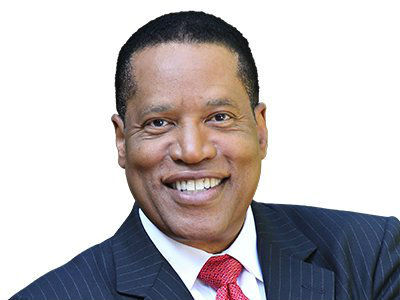
Larry Elder is an American lawyer, writer, and radio and television personality who calls himself the "Sage of South Central" a district of Los Angeles, Larry says his philosophy is to entertain, inform, provoke and to hopefully uplift. His calling card is "we have a country to save" and to him this means returning to the bedrock Constitutional principles of limited government and maximum personal responsibility. Elder's iconoclastic wit and intellectual agility makes him a particularly attractive voice in a nation that seems weary of traditional racial dialogue.” – Los Angeles Times.

Mike Gallagher Mike Gallagher began his broadcasting career in 1978 in Dayton, Ohio. Today, he is one of the most listened-to talk radio show hosts in America, recently having been ranked in the Talkers Magazine “Heavy Hundred” list – the 100 most important talk radio hosts in America. Prior to being launched into national syndication in 1998, Mike hosted the morning show on WABC-AM in New York City. Today, Talkers Magazine reports that his show is heard by over 3.75 million weekly listeners. Besides his radio work, Mike is seen on Fox News Channel as an on-air contributor, frequently appearing on the cable news giant.

Hugh Hewitt is one of the nation’s leading bloggers and a genuine media revolutionary. He brings that expertise, his wit and what The New Yorker magazine calls his “amiable but relentless manner” to his nationally syndicated show each day.

When Dr. Sebastian Gorka was growing up, he listened to talk radio under his pillow with a transistor radio, dreaming that one day he would be behind the microphone. Beginning New Year’s Day 2019, he got his wish. Gorka now hosts America First every weekday afternoon 3 to 6pm ET. Gorka’s unique story works well on the radio. He is national security analyst for the Fox News Channel and author of two books: "Why We Fight" and "Defeating Jihad." His latest book releasing this fall is “War For America’s Soul.” He is uniquely qualified to fight the culture war and stand up for what is great about America, his adopted home country.

Broadcasting from his home station of KRLA in Los Angeles, the Dennis Prager Show is heard across the country. Everything in life – from politics to religion to relationships – is grist for Dennis’ mill. If it’s interesting, if it affects your life, then Dennis will be talking about it – with passion, humor, insight and wisdom.

Sean Hannity is a conservative radio and television host, and one of the original primetime hosts on the Fox News Channel, where he has appeared since 1996. Sean Hannity began his radio career at a college station in California, before moving on to markets in the Southeast and New York. Today, he’s one of the most listened to on-air voices. Hannity’s radio program went into national syndication on September 10, 2001, and airs on more than 500 stations. Talkers Magazine estimates Hannity’s weekly radio audience at 13.5 million. In 1996 he was hired as one of the original hosts on Fox News Channel. As host of several popular Fox programs, Hannity has become the highest-paid news anchor on television.

Michelle Malkin is a mother, wife, blogger, conservative syndicated columnist, longtime cable TV news commentator, and best-selling author of six books. She started her newspaper journalism career at the Los Angeles Daily News in 1992, moved to the Seattle Times in 1995, and has been penning nationally syndicated newspaper columns for Creators Syndicate since 1999. She is founder of conservative Internet start-ups Hot Air and Twitchy.com. Malkin has received numerous awards for her investigative journalism, including the Council on Governmental Ethics Laws (COGEL) national award for outstanding service for the cause of governmental ethics and leadership (1998), the Reed Irvine Accuracy in Media Award for Investigative Journalism (2006), the Heritage Foundation and Franklin Center for Government & Public Integrity's Breitbart Award for Excellence in Journalism (2013), the Center for Immigration Studies' Eugene Katz Award for Excellence in the Coverage of Immigration Award (2016), and the Manhattan Film Festival's Film Heals Award (2018). Married for 26 years and the mother of two teenage children, she lives with her family in Colorado. Follow her at michellemalkin.com. (Photo reprinted with kind permission from Peter Duke Photography.)

Sponsored by:

Respectful dating due diligence: 10 quick checks to do before you meet IRL

Carbonatix Pre-Player Loader

Audio By Carbonatix

Respectful dating due diligence: 10 quick checks to do before you meet IRL

Meeting someone new for the first time can be an exciting experience but also a nerve-racking one. In the digital age, where many connections first begin online, a bit of premeet verification has become a matter of both common sense and common courtesy. Despite common belief, taking the time to research someone before meeting in real life is not about distrusting the other person. It's about ensuring that all parties feel safe, confident, and genuinely ready to enjoy a date.

Spokeo assembled 10 premeet checklist items developed by reviewing data from Rape, Abuse & Incest National Network, Business Insider, and other top sources to ensure you stay safe while having fun.

Premeet checklist

Staying safe when meeting a new person requires both due diligence and communication, two focus areas aided by the following 10 tips:

1. Start with social media verification (3-5 days before)

Before the first date, it’s perfectly acceptable to do a quick social media scan to confirm whether the person you’re chatting with matches who they say they are. When looking across different platforms—including Instagram, Facebook, X, and even LinkedIn—try to find consistent details such as names, photos, and mutual connections that verify what you already know.

This step can not only help you feel more confident but also give you a chance to spot potential red flags. Try not to snoop too far and stick to just verifying the basics to give yourself peace of mind.

2. Request a brief video or phone call (2-3 days before)

Scheduling a short video chat ahead of a meetup is an easy and effective way to confirm a person’s authenticity, as well as gauge your chemistry with them. This natural step is something that most people welcome, as it typically takes no longer than five minutes. Aim to keep it casual to confirm that your match is genuine and to get a quick read on their energy.

3. Ask for their last name (if not already shared)

Exchanging last names before a first meetup is normal, not nosy, yet it’s a step many people fail to take. Even though you may be able to find it on your own by researching, asking shows strong communication and will allow you to confirm their identity with more certainty. You can keep things simple with a light, “By the way, I just realized I haven’t caught your last name yet. What is it?” If someone seems hesitant to share their last name even after meaningful conversations, it could be a sign to pause.

4. Confirm the venue and time (the day before)

The day before your date, send a brief message confirming both the time and place. This polite follow-up message will allow the other person to see your enthusiasm while also remaining confident that you aren’t going to ghost them. It also gives both of you the opportunity to adjust the plan if something unexpected happens at the last minute.

5. Share your plans with someone you trust (the day of)

Before heading out on a first date, it’s always recommended to tell a friend or family member where you’re going and who you’re meeting. RAINN, the largest anti-sexual assault organization in the United States, even goes so far as to recommend sharing your date’s name and when you are expecting to return as well. Perhaps even use a live location-sharing feature through your phone so your friends and family can track your movement.

6. Keep private details private until you build trust

While it can be tempting to overshare with someone early on, especially if you feel a strong connection, maintaining privacy is part of self-care. Avoid sharing your exact date of birth or detailed schedule until you’ve built a little bit of trust over time. Boundaries will protect both parties and create room for curiosity to unfold naturally.

7. Verify basic public information without overstepping

There’s a very fine middle ground between doing no research and going full internet detective on a potential love interest. Light verification, such as checking someone’s profession or general location if available online, can ensure safety without invading privacy. If your curiosity is rooted in anxiety, a short video chat to have an honest conversation could help quell your nerves.

8. Set clear boundaries for the first meeting

Ahead of the meeting, communicate with your date about your comfort level and boundaries, including topics such as meeting in a public space, splitting the bill, or leaving after a certain amount of time. Boundaries will help both parties relax and remove many unknowns that can lead to anxiety on the first date. Pairing clarity with kindness is always a good rule of thumb when setting these boundaries. In practice, this could be as simple as stating, “I’m super excited to see you! I love to have a coffee date as the first meetup; it’s a low-key way to get to know each other.”

9. Have a conversation-starter list ready (the day before)

If you’re one of the many individuals who get nervous at the idea of small talk on a first date, consider any of Business Insider’s five common questions to ask ahead of time, according to dating coaches:

  1. What’s your last name?
  2. If you had 24 hours to do anything, what would you do?
  3. What’s been keeping you busy these days?
  4. Can we set up a predate phone call?
  5. What’s one local activity you’ve always wanted to try?

10. Confirm transportation and exit strategy (the day of)

Before heading out, always plan how you will arrive and leave. If driving, park in a well-lit area. When using rideshare services, always double-check the license plate before hopping in. It’s also perfectly acceptable to plan an exit cue, such as having plans with friends afterward or just setting a time to leave, regardless of how the date goes. This can help you to stay relaxed and in control throughout the night.

Fostering confidence through courtesy

What is actually appropriate to verify before a first date? Generally speaking, names, location, and online social presence are fair game—essentially anything that is publicly available and related to safety. It’s never rude to ask someone to verify they are who they claim to be, especially when dating online. With that said, keep the verification and sleuthing to only what’s necessary, as digging into intimate topics or private information before meeting can be viewed as disrespectful. By balancing your curiosity with courtesy, you can meet new people with both safety and sincerity.

This story was produced by Spokeo and reviewed and distributed by Stacker.


Salem News Channel Today

Sponsored Links

On Air & Up Next

See the Full Program Guide