



















The curse of the New Year’s resolution: Why January is the worst time to set a goal

Carbonatix Pre-Player Loader

Audio By Carbonatix

The curse of the New Year’s resolution: Why January is the worst time to set a goal

The psychological appeal of the fresh start is a well-documented driver of human behavior. Temporal landmarks, such as the New Year, birthdays, or even the start of a new week, are often perceived as powerful catalysts for change. These landmarks allow individuals to perform a mental accounting trick: They relegate past failures to a former self and approach the future with a clean slate.

An infographic showing month-by-month retention rates of students averaged over 2021-2024.
Skoove


Research, including a 2015 study published by the U.S. National Institutes of Health, confirms that people are significantly more likely to initiate life-altering habits, such as a new diet or a fitness regimen, on dates that feel like the beginning of a "new era."

This impulse is culturally pervasive. As we entered 2026, more than 1 in 3 Germans reported making New Year’s resolutions, according to Statista Consumer Insights, with YouGov polls showing Americans and Britons following close behind.

While health-related goals (exercise, nutrition, sleep) dominate the landscape, the New Year is also a primary driver for cognitive and creative skill acquisition, such as professional development or learning a new instrument.

A data bar chart showing percentage of people who made New Year resolutions for 2026 (by country).
Skoove


However, there is a stark divergence between the symbolic act of beginning and the mechanical reality of persistence. While temporal landmarks are excellent at triggering an initial action, they may actually be poor predictors of long-term habit integration.

To investigate this, the piano-learning app Skoove teamed up with Berlin-based data studio DataPulse Research to conduct a large-scale behavioral study.

Based on the enrollment data of over 1.1 million users between 2021 and 2024, the analysis provides an exclusive peek into the reality of long-term skill acquisition as observed through the behavior of piano learners.

Looking at the “fresh start effect” through observed longitudinal behavior (and not through self-reported intentions or Jan. 1 optimism), the data uncovers a fundamental paradox in skill acquisition: The periods of highest initial motivation often correlate with the lowest rates of sustained habit formation.

In other words: The fresh start of the New Year may actually be the worst time to ensure a new skill actually sticks.

Tracking the Rhythm of Retention

While the fresh start effect explains why people begin, it does not guarantee they will continue. To understand this better, the researchers looked into where motivation converts into a lasting habit, and which months can dramatically improve the likelihood of building a lasting practice.

To measure this sustained commitment, they utilized a longitudinal dataset of 1,137,446 anonymized users who enrolled on the Skoove platform over a four-year period spanning 2021 to 2024.

As a first step, the researchers looked at when enrollment was the highest. As expected, the data confirms that the turn of the calendar year is a massive catalyst for action. Roughly one-quarter of all annual enrollments occur in the narrow window of December and January alone. This influx is driven by the turn of the year acting as a universal magnet for aspiration, where the concept of a future self takes the lead over current routines.

A data bar chart showing piano student enrollment rates in a typical year (by start date).
Skoove


Why Timing Trumps New Year Energy

Next, the researchers analyzed retention rates over six months, with users grouped into monthly cohorts based on their initial start date. This methodology allows for a precise comparison of how the time of year influences the likelihood of a student reaching the half-year milestone.

The analysis of the data reveals a striking inverse relationship between enrollment volume and long-term commitment. While the transition into the New Year triggers a massive surge in activity, it simultaneously marks the period of lowest retention.

The heatmap below visualizes this six-month retention by start-month cohort. It shows that the highest retention rates occur in the second quarter of the year, with the best retention rates for learners who started in the month of May, followed by June and April.

A data chart showing how long students keep playing the piano based on the month they start.
Skoove


Impulse vs. Intentionality

This behavioral gap suggests that the fresh start impulse may actually be counterproductive to long-term skill acquisition. High-volume periods in December and January are often fueled by aspirational identities, the person we want to be on paper, which often lack a foundation in existing daily routines. Lumping a complex skill like piano, which requires frequent practice over long time periods, into a list of vague self-improvement goals creates a resolution overload that is difficult to sustain.

In contrast, learners who begin in late spring and early summer, particularly May, June, and July, demonstrate consistently stronger retention over the following six months. These cohorts are more likely to represent the power of intentional starts. These learners begin when cultural pressure is low and internal capacity is likely higher.

This suggests that for habit formation to take root, the internal capacity for consistency is far more critical than the symbolic weight of the starting date, which is clearly illustrated by the data:

  • The cohorts driven by New Year’s resolutions demonstrate the lowest levels of sustained effort. Those who begin their journey in December show retention rates 28% below the cross-year average.
  • January participants perform only marginally better at 21% below average, confirming that New Year energy is a volatile and short-lived fuel.
  • In contrast, a persistence peak emerges in the second quarter of the year. Learners who bypass the seasonal noise of January and begin in April, May, or June exhibit significantly higher stability, with retention rates ranging from 18% to 23% above the average.
  • The May cohort is the most successful, showing a 23% higher likelihood of reaching the six-month milestone compared to their counterparts in December.

This data confirms a fundamental truth about learning: A New Year's resolution is often an attempt to change an identity overnight, while long-term success comes from fitting the piano into the life a student already has. In the second quarter, learners are typically not chasing a new self; instead, they are making a conscious, quiet choice to practice. The resulting lack of external pressure is exactly what allows the habit to take root.

A data bar chart showing that starting in the second quarter of the year improves likelihood of sticking with playing the piano.
Skoove


The Decay of New Year’s Resolutions

The Skoove dataset serves as a high-fidelity mirror for a broader cultural phenomenon: the collapse of New Year’s resolutions. The trend of high-volume drop-outs is corroborated by external research.

In 2024, data from Pew Research indicated that 41% of Americans had abandoned all or some of their resolutions by mid-January of that year. A similar YouGov poll in 2017 found that 22% of people in the United Kingdom who had made resolutions failed to keep to all of them just six days into the year.

A data pie chart showing results on adult New Year resolutions retention (US respondents).
Skoove


Other longer-term surveys speak to the difficulty of sustaining resolutions. The 2017 YouGov survey found that only 27% of Britons kept their resolutions for the entirety of that year.

The conclusion is clear: The piano is not an outlier. Whether it is health, finance, or music, the fresh start mindset provides the spark to begin, but the data suggests it rarely provides the stamina to finish.

Beyond the Calendar: Three Pillars of a Sustainable Habit

A January start does not predestine a learner to quit. Rather, the data highlights a common failure to transition from a symbolic milestone to a functional routine. The challenge of acquiring a new skill, be it music, fitness, or a language, is systemic.

Fender CEO Andy Mooney noted in a 2019 interview that while approximately 50% of the company's guitars are sold to first-time players, roughly 90% of those beginners abandon the instrument within the first 12 months.

This suggests that the beginner’s wall is a universal hurdle in skill building, where the technical difficulty of the early stages frequently outpaces the initial burst of motivation.

For those determined to make their 2026 resolutions stick, the study suggests three essential strategies to bridge the gap between intent and mastery:

  • Practice music that is intrinsically enjoyable. Learning favorite songs will improve concentration and motivation.
  • Set short, medium and long-term goals. This tactic helps students tackle just a few challenges at a time, allowing them to practice things that are difficult — but not too difficult.
  • Focus on consistency. Small manageable practice sessions on a regular basis will yield better results than infrequent marathon sessions.

Success in skill acquisition is tied less to the fresh start moment and more to the deliberate transition from aspirational intent to habit formation.

For any learner, regardless of their enrollment month, the primary indicator of longevity is not the day they begin, but the infrastructure they build to sustain progress once the New Year energy inevitably fades.

Methodology

The analysis is based on Skoove user retention data extracted from Mixpanel’s retention report. Users enrolled on the platform between January 2021 and December 2024 were analyzed in cohorts based on the month they began.

Retention was determined by tracking users over a period of six months. The retention rate for each cohort of users was calculated by dividing the number of users at month 1, 2, 3, etc. by the original number of users at month 0. A total of 1,137,446 users were analyzed across all cohorts.

To get the typical retention rate for each cohort, we averaged the four years’ retention rates. (For instance, the January cohort retention rate is the average of the retention rates of new users in January 2021, January 2022, January 2023, and January 2024.)

In order to compare each cohort against the others, researchers first found the lowest retention rate at month six (December cohort). They then calculated the percent difference between the December cohort and each of the other 11 cohorts.

Trends over time are based on the average retention rate for all users at each month in their progress. The researchers found the percent difference between each cohort and the average user at one-month intervals (up to month six). For instance, to see if the December cohort is above or below average retention at the sixth month, they calculated the percent difference between December cohort retention (at month six) and all users’ average retention (at month six).

This story originally appeared on Skoove, was produced in collaboration with DataPulse Research, and was reviewed and distributed by Stacker.


Salem News Channel Today

Sponsored Links


September 26 - Phoenix, AZ
Scottsdale Center for the Performing Arts


November 2 - Detroit, MI
Zion Christian Church in Troy


October 6 - Los Angeles, CA
Pasadena Convention Center


November 5 - San Antonio, TX
Norris Centers – The Grand Red Oak Ballroom


October 8 - Sacramento, CA
William Jessup University


November 7 - Tampa, FL
The Palladium at St. Pete College


October 22 - Minneapolis, MN
Crowne Plaza AiRE


November 15 - San Francisco, CA
Fremont Marriott Silicon Valley


October 23 - Philadelphia, PA
Green Valley Country Club


November 16 - Denver, CO
CU South Denver - Formerly Wildlife Experience


November 2 - Chicago, IL
Chicago Westin Northwest in Itasca


November 21 - Cleveland, OH
Holiday Inn Rockside in Independence


Salem Radio Network Speakers
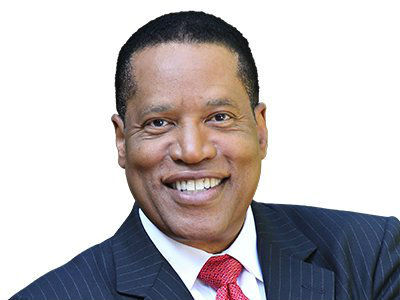
Larry Elder is an American lawyer, writer, and radio and television personality who calls himself the "Sage of South Central" a district of Los Angeles, Larry says his philosophy is to entertain, inform, provoke and to hopefully uplift. His calling card is "we have a country to save" and to him this means returning to the bedrock Constitutional principles of limited government and maximum personal responsibility. Elder's iconoclastic wit and intellectual agility makes him a particularly attractive voice in a nation that seems weary of traditional racial dialogue.” – Los Angeles Times.

Mike Gallagher Mike Gallagher began his broadcasting career in 1978 in Dayton, Ohio. Today, he is one of the most listened-to talk radio show hosts in America, recently having been ranked in the Talkers Magazine “Heavy Hundred” list – the 100 most important talk radio hosts in America. Prior to being launched into national syndication in 1998, Mike hosted the morning show on WABC-AM in New York City. Today, Talkers Magazine reports that his show is heard by over 3.75 million weekly listeners. Besides his radio work, Mike is seen on Fox News Channel as an on-air contributor, frequently appearing on the cable news giant.
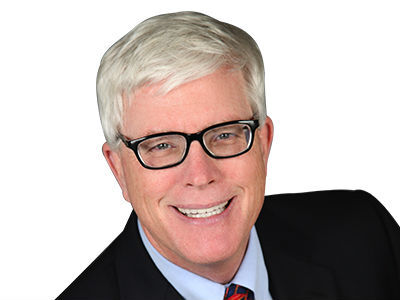
Hugh Hewitt is one of the nation’s leading bloggers and a genuine media revolutionary. He brings that expertise, his wit and what The New Yorker magazine calls his “amiable but relentless manner” to his nationally syndicated show each day.

When Dr. Sebastian Gorka was growing up, he listened to talk radio under his pillow with a transistor radio, dreaming that one day he would be behind the microphone. Beginning New Year’s Day 2019, he got his wish. Gorka now hosts America First every weekday afternoon 3 to 6pm ET. Gorka’s unique story works well on the radio. He is national security analyst for the Fox News Channel and author of two books: "Why We Fight" and "Defeating Jihad." His latest book releasing this fall is “War For America’s Soul.” He is uniquely qualified to fight the culture war and stand up for what is great about America, his adopted home country.
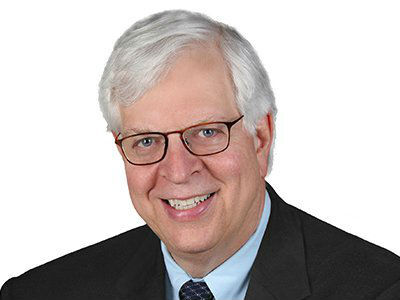
Broadcasting from his home station of KRLA in Los Angeles, the Dennis Prager Show is heard across the country. Everything in life – from politics to religion to relationships – is grist for Dennis’ mill. If it’s interesting, if it affects your life, then Dennis will be talking about it – with passion, humor, insight and wisdom.
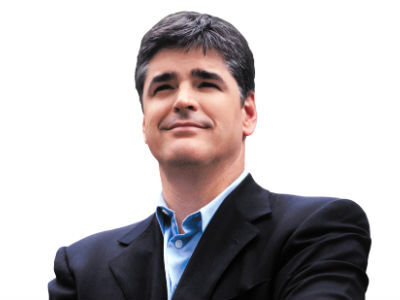
Sean Hannity is a conservative radio and television host, and one of the original primetime hosts on the Fox News Channel, where he has appeared since 1996. Sean Hannity began his radio career at a college station in California, before moving on to markets in the Southeast and New York. Today, he’s one of the most listened to on-air voices. Hannity’s radio program went into national syndication on September 10, 2001, and airs on more than 500 stations. Talkers Magazine estimates Hannity’s weekly radio audience at 13.5 million. In 1996 he was hired as one of the original hosts on Fox News Channel. As host of several popular Fox programs, Hannity has become the highest-paid news anchor on television.

Michelle Malkin is a mother, wife, blogger, conservative syndicated columnist, longtime cable TV news commentator, and best-selling author of six books. She started her newspaper journalism career at the Los Angeles Daily News in 1992, moved to the Seattle Times in 1995, and has been penning nationally syndicated newspaper columns for Creators Syndicate since 1999. She is founder of conservative Internet start-ups Hot Air and Twitchy.com. Malkin has received numerous awards for her investigative journalism, including the Council on Governmental Ethics Laws (COGEL) national award for outstanding service for the cause of governmental ethics and leadership (1998), the Reed Irvine Accuracy in Media Award for Investigative Journalism (2006), the Heritage Foundation and Franklin Center for Government & Public Integrity's Breitbart Award for Excellence in Journalism (2013), the Center for Immigration Studies' Eugene Katz Award for Excellence in the Coverage of Immigration Award (2016), and the Manhattan Film Festival's Film Heals Award (2018). Married for 26 years and the mother of two teenage children, she lives with her family in Colorado. Follow her at michellemalkin.com. (Photo reprinted with kind permission from Peter Duke Photography.)

Sponsored by:

The curse of the New Year’s resolution: Why January is the worst time to set a goal

Carbonatix Pre-Player Loader

Audio By Carbonatix

The curse of the New Year’s resolution: Why January is the worst time to set a goal

The psychological appeal of the fresh start is a well-documented driver of human behavior. Temporal landmarks, such as the New Year, birthdays, or even the start of a new week, are often perceived as powerful catalysts for change. These landmarks allow individuals to perform a mental accounting trick: They relegate past failures to a former self and approach the future with a clean slate.

An infographic showing month-by-month retention rates of students averaged over 2021-2024.
Skoove


Research, including a 2015 study published by the U.S. National Institutes of Health, confirms that people are significantly more likely to initiate life-altering habits, such as a new diet or a fitness regimen, on dates that feel like the beginning of a "new era."

This impulse is culturally pervasive. As we entered 2026, more than 1 in 3 Germans reported making New Year’s resolutions, according to Statista Consumer Insights, with YouGov polls showing Americans and Britons following close behind.

While health-related goals (exercise, nutrition, sleep) dominate the landscape, the New Year is also a primary driver for cognitive and creative skill acquisition, such as professional development or learning a new instrument.

A data bar chart showing percentage of people who made New Year resolutions for 2026 (by country).
Skoove


However, there is a stark divergence between the symbolic act of beginning and the mechanical reality of persistence. While temporal landmarks are excellent at triggering an initial action, they may actually be poor predictors of long-term habit integration.

To investigate this, the piano-learning app Skoove teamed up with Berlin-based data studio DataPulse Research to conduct a large-scale behavioral study.

Based on the enrollment data of over 1.1 million users between 2021 and 2024, the analysis provides an exclusive peek into the reality of long-term skill acquisition as observed through the behavior of piano learners.

Looking at the “fresh start effect” through observed longitudinal behavior (and not through self-reported intentions or Jan. 1 optimism), the data uncovers a fundamental paradox in skill acquisition: The periods of highest initial motivation often correlate with the lowest rates of sustained habit formation.

In other words: The fresh start of the New Year may actually be the worst time to ensure a new skill actually sticks.

Tracking the Rhythm of Retention

While the fresh start effect explains why people begin, it does not guarantee they will continue. To understand this better, the researchers looked into where motivation converts into a lasting habit, and which months can dramatically improve the likelihood of building a lasting practice.

To measure this sustained commitment, they utilized a longitudinal dataset of 1,137,446 anonymized users who enrolled on the Skoove platform over a four-year period spanning 2021 to 2024.

As a first step, the researchers looked at when enrollment was the highest. As expected, the data confirms that the turn of the calendar year is a massive catalyst for action. Roughly one-quarter of all annual enrollments occur in the narrow window of December and January alone. This influx is driven by the turn of the year acting as a universal magnet for aspiration, where the concept of a future self takes the lead over current routines.

A data bar chart showing piano student enrollment rates in a typical year (by start date).
Skoove


Why Timing Trumps New Year Energy

Next, the researchers analyzed retention rates over six months, with users grouped into monthly cohorts based on their initial start date. This methodology allows for a precise comparison of how the time of year influences the likelihood of a student reaching the half-year milestone.

The analysis of the data reveals a striking inverse relationship between enrollment volume and long-term commitment. While the transition into the New Year triggers a massive surge in activity, it simultaneously marks the period of lowest retention.

The heatmap below visualizes this six-month retention by start-month cohort. It shows that the highest retention rates occur in the second quarter of the year, with the best retention rates for learners who started in the month of May, followed by June and April.

A data chart showing how long students keep playing the piano based on the month they start.
Skoove


Impulse vs. Intentionality

This behavioral gap suggests that the fresh start impulse may actually be counterproductive to long-term skill acquisition. High-volume periods in December and January are often fueled by aspirational identities, the person we want to be on paper, which often lack a foundation in existing daily routines. Lumping a complex skill like piano, which requires frequent practice over long time periods, into a list of vague self-improvement goals creates a resolution overload that is difficult to sustain.

In contrast, learners who begin in late spring and early summer, particularly May, June, and July, demonstrate consistently stronger retention over the following six months. These cohorts are more likely to represent the power of intentional starts. These learners begin when cultural pressure is low and internal capacity is likely higher.

This suggests that for habit formation to take root, the internal capacity for consistency is far more critical than the symbolic weight of the starting date, which is clearly illustrated by the data:

  • The cohorts driven by New Year’s resolutions demonstrate the lowest levels of sustained effort. Those who begin their journey in December show retention rates 28% below the cross-year average.
  • January participants perform only marginally better at 21% below average, confirming that New Year energy is a volatile and short-lived fuel.
  • In contrast, a persistence peak emerges in the second quarter of the year. Learners who bypass the seasonal noise of January and begin in April, May, or June exhibit significantly higher stability, with retention rates ranging from 18% to 23% above the average.
  • The May cohort is the most successful, showing a 23% higher likelihood of reaching the six-month milestone compared to their counterparts in December.

This data confirms a fundamental truth about learning: A New Year's resolution is often an attempt to change an identity overnight, while long-term success comes from fitting the piano into the life a student already has. In the second quarter, learners are typically not chasing a new self; instead, they are making a conscious, quiet choice to practice. The resulting lack of external pressure is exactly what allows the habit to take root.

A data bar chart showing that starting in the second quarter of the year improves likelihood of sticking with playing the piano.
Skoove


The Decay of New Year’s Resolutions

The Skoove dataset serves as a high-fidelity mirror for a broader cultural phenomenon: the collapse of New Year’s resolutions. The trend of high-volume drop-outs is corroborated by external research.

In 2024, data from Pew Research indicated that 41% of Americans had abandoned all or some of their resolutions by mid-January of that year. A similar YouGov poll in 2017 found that 22% of people in the United Kingdom who had made resolutions failed to keep to all of them just six days into the year.

A data pie chart showing results on adult New Year resolutions retention (US respondents).
Skoove


Other longer-term surveys speak to the difficulty of sustaining resolutions. The 2017 YouGov survey found that only 27% of Britons kept their resolutions for the entirety of that year.

The conclusion is clear: The piano is not an outlier. Whether it is health, finance, or music, the fresh start mindset provides the spark to begin, but the data suggests it rarely provides the stamina to finish.

Beyond the Calendar: Three Pillars of a Sustainable Habit

A January start does not predestine a learner to quit. Rather, the data highlights a common failure to transition from a symbolic milestone to a functional routine. The challenge of acquiring a new skill, be it music, fitness, or a language, is systemic.

Fender CEO Andy Mooney noted in a 2019 interview that while approximately 50% of the company's guitars are sold to first-time players, roughly 90% of those beginners abandon the instrument within the first 12 months.

This suggests that the beginner’s wall is a universal hurdle in skill building, where the technical difficulty of the early stages frequently outpaces the initial burst of motivation.

For those determined to make their 2026 resolutions stick, the study suggests three essential strategies to bridge the gap between intent and mastery:

  • Practice music that is intrinsically enjoyable. Learning favorite songs will improve concentration and motivation.
  • Set short, medium and long-term goals. This tactic helps students tackle just a few challenges at a time, allowing them to practice things that are difficult — but not too difficult.
  • Focus on consistency. Small manageable practice sessions on a regular basis will yield better results than infrequent marathon sessions.

Success in skill acquisition is tied less to the fresh start moment and more to the deliberate transition from aspirational intent to habit formation.

For any learner, regardless of their enrollment month, the primary indicator of longevity is not the day they begin, but the infrastructure they build to sustain progress once the New Year energy inevitably fades.

Methodology

The analysis is based on Skoove user retention data extracted from Mixpanel’s retention report. Users enrolled on the platform between January 2021 and December 2024 were analyzed in cohorts based on the month they began.

Retention was determined by tracking users over a period of six months. The retention rate for each cohort of users was calculated by dividing the number of users at month 1, 2, 3, etc. by the original number of users at month 0. A total of 1,137,446 users were analyzed across all cohorts.

To get the typical retention rate for each cohort, we averaged the four years’ retention rates. (For instance, the January cohort retention rate is the average of the retention rates of new users in January 2021, January 2022, January 2023, and January 2024.)

In order to compare each cohort against the others, researchers first found the lowest retention rate at month six (December cohort). They then calculated the percent difference between the December cohort and each of the other 11 cohorts.

Trends over time are based on the average retention rate for all users at each month in their progress. The researchers found the percent difference between each cohort and the average user at one-month intervals (up to month six). For instance, to see if the December cohort is above or below average retention at the sixth month, they calculated the percent difference between December cohort retention (at month six) and all users’ average retention (at month six).

This story originally appeared on Skoove, was produced in collaboration with DataPulse Research, and was reviewed and distributed by Stacker.


Salem News Channel Today

Sponsored Links

On Air & Up Next

See the Full Program Guide