
















The Human Connection Study: How Gen Z’s pursuit of personal growth is redefining romance

Carbonatix Pre-Player Loader

Audio By Carbonatix

The Human Connection Study: How Gen Z’s pursuit of personal growth is redefining romance

Despite what recent headlines might have you think, young singles are not rejecting romance. They want love and yearn for connection. But they’re redefining what it means to be relationship-ready.

A Match Group survey conducted in September and October found 80% of Gen Z (18-29 year old) singles believe they’ll find true love, far more than any generation before them (compared to just 57% of all U.S. singles). Yet only 55% feel like they’re ready for partnership. Before committing, they believe they must first be able to set healthy boundaries (42%), be comfortable being alone (41%), feel happy and fulfilled (41%), invest in personal growth (37%), and have strong established friendships (36%) before committing to a romantic relationship.

As readiness becomes a more distant target, Gen Z is still seeking out connections online and offline. But they’re looking for lower-pressure interactions that could lead not only to new partners but also to friends, acquaintances — or something in between.

The Gender Gap: Feeling Social Pressure to Have Life Figured Out

Young singles of all genders are more likely to believe that finding themselves should be a prerequisite for partnership, but it’s young women who feel the most social pressure to do so.

While 58% of Gen Z say therapy is essential to relationship success, Gen Z women are 14% more likely (65% vs 51%) to agree with this than their male counterparts. Gen Z women (34%) also feel more strongly than men (23%) that working through issues from a past relationship is an indicator of readiness for a romantic connection. Perhaps most significantly, they are less likely (38%) than single men (46%) to say that they feel that dating is an important component of their overall social life.

The finding that young women may be more resistant to dating ties in with their belief that healthy boundaries, both for oneself and respecting those of others, is a prime indication of being ready for a romantic relationship (47% for Gen Z women vs. 37% for Gen Z men).

Across genders, Gen Z singles are 56% more likely to believe that investing in their personal growth (e.g., therapy, self-reflection, etc.) makes them “ready” for a romantic relationship compared to other generations (Millennials + Gen X + Boomers). They believe that if they have not done this work to be ready, relationships have a much higher chance of failure. For Gen Z, that prospect of failure is reason enough to delay seeking a relationship.

The result: Almost half (45%) of Gen Z say they’re not ready for relationships right now, and 75% are not in a hurry to find a partner. They’re waiting to feel “ready,” but readiness keeps receding.

The Readiness Paradox: Compounding Loneliness

Waiting to feel ready for a relationship has some complex trade-offs.

Despite championing independence, Gen Z is actually less comfortable being alone overall than older generations. Rather than seeking connections with the goal of authentic love, emotional support, or intimacy, 51% of Gen Z reports seeking connections to avoid loneliness, compared to just 26% of older generations. Women feel additional pressure to enter a relationship for “the right reason,” rather than solely to avoid loneliness. Forty-eight percent believe a significant indicator of relationship readiness is being comfortable while alone.

This sets off a self-reinforcing cycle: set a high bar for readiness, achieve less comfort being alone than generations who didn’t set this bar, feel lonely and want relationships, believe they’re not ready and wait longer, experience intensifying loneliness, and repeat. The focus on self-actualization introduced so much pressure that in some cases, it’s creating the loneliness it was meant to prevent.

Yet, as Dr. Justin Garcia from the Kinsey Institute observes, “Young people want their relationships to be rooted in desire rather than practical needs. If you’re financially independent, can pay for your own bills, get your own groceries, manage your own laundry and house projects, you convince yourself that you don’t need a partner except for the pleasures of hanging out and going to the movies with them so you’re not lonely. But when we set up this false dichotomy of needs and wants, you’re robbing yourself and your potential partner of ways to show up for each other, to learn and expand together, and the pleasures of supporting one another.”

The Bridge: Seeking Low-Pressure Connections

Gen Z is caught in a triple bind:

  1. Like previous generations, they face the traditional milestone pressures like marriage, children, and buying a house).
  2. But they also face self-imposed pressure to avoid their parents’ relationship mistakes. Only 37% describe their parents' relationship as "happy," compared to 52% of Boomers who reported “happy” parental relationship examples, according to the Singles in America study. Three-quarters of Gen Z singles want to avoid divorce at all costs. Through this lens, Gen Z is making a logical decision: wait until perfectly ready.
  3. Most uniquely, this generation faces social media performance pressure—46% of Gen Z soft launch relationships on social media versus 27% overall, and among Gen Z singles who have hard launched a relationship, 81% believe the act indicates commitment. Relationships become public performances where the stakes feel impossibly high, and Gen Z feels it’s better to wait until everything is perfect than risk public failure.

This is why Gen Z is taking an open-ended approach to relationships; they’re seeking out

connections that could lead to partners, friends, or just an acquaintance in real life. More than half feel lonely despite online connections, according to a 2025 survey of more than 2,000 Gen Z adults funded by Match Group Americas LLC and conducted in association with Current Forward. Sixty-six percent are looking for belonging, not just social interaction, and 64% are actively looking to make platonic friends. Underneath it all, they still believe in lasting love: 80% of Gen Z singles believe they’ll find true love, compared with just 57% of all U.S. singles. Eighty-six percent want to find a committed romantic relationship. But the path to get there feels like much less pressure if they approach the search to an “openness” to the end result (partners, friends, acquaintances).

Gen Z’s persistent search for connection is why the self-actualization barrier presents such a tricky bind. When you believe you must be “ready” to deserve connection, you delay romantic partnerships that create mutual support. As a result, Gen Z is increasingly looking to The address loneliness across all types of relationships.

The Path Forward

Gen Z is focused on learning before partnership.

But older generations followed a pattern of meeting, dating, committing, and feeling out compatibility while working through challenges—in other words, learning through partnership. They discovered that you don't need to be perfect to deserve connection or love.

As Amelia Miller, a researcher and MSc at the Oxford Internet Institute, puts it, “Social media and AI companions are teaching Gen Z that the messiness of human relationships is something to be tamed, not embraced, but vulnerability and friction are essential ingredients of intimacy. Gen Z is learning that the self-actualization they seek solo is actually unlocked through their relationships with others.”

Of course, just as Gen Z can learn from the wisdom of older generations, Boomer and Gen X singles can learn from how Gen Z has adapted its use of online spaces. While older singles continue to use dating apps predominantly as a tool to identify romantic partners, Gen Z and Millennials are deploying dating app technology to help work toward their own self-actualization and relationship readiness. Gen Z and Millennial dating app users say dating apps help them learn about themselves (80%). They feel dating apps clarify what they want in a partner (87%), say apps have taught them how to set and maintain boundaries (81%), and have used them to challenge assumptions about attraction and compatibility (78%), all clear steps on the way to most traditional pursuits of love.

Gen Z’s pursuit of low-pressure connection shows they’re discovering you can value independence and still need connection. These aren’t

contradictory—they’re complementary. Rather than treating self-actualization as a prerequisite, young singles can shift their mindset to recognize that self-actualization itself can evolve from connection with others via the vulnerability of being known, and showing up for someone else while they show up for you.

The question is whether young singles will stop waiting for perfect readiness long enough to find it. Growth happens in partnership, not before it, and showing up imperfectly is better than waiting for perfection that doesn’t exist.

Methodology

Third-party research was funded by Match Group Americas LLC, conducted in association with Current Forward, with data collected by The Harris Poll. The survey was conducted online in the United States from Sept. 26 to Oct. 5, 2025, among a nationally representative sample of 2,500 single adults ages 18-79. Gen Z is defined as those ages 18-29; Millennial is defined as those ages 30-44; Gen X is defined as those ages 45-60; and Boomers are defined as those ages 61-79. Older generations are defined as Gen X and Boomers.

The results have been weighted by age, gender, region, race and household income within each generation group to match the population, according to Census data. This is to ensure the sample is representative of the entire adult single population in the US overall and by generation.

For comparison purposes, a probability sample of 2,500 has an estimated margin of error (which measures sampling variability) of ±2.0%, 19 times out of 20. At 1,000 the margin of error is 3.1% and at 500 at 4.4%. Discrepancies in or between totals when compared to the data tables are due to rounding.

Additional Sources

Singles in America 2025 Match Group Americas, LLC. Funded by Match and conducted in association with The Kinsey Institute, with data collected by Dynata, the 14th annual Singles in America study surveyed a demographically representative sample of 5,001 U.S. singles between the ages of 18 and 98. It remains the most robust scientific study of single Americans, with generational breakouts for Gen Z (18–27), Millennials (28–43), Gen X (44–59), and Boomers (60+).

Third-party research funded by Match Group Americas LLC, conducted in association with Current Forward, with data collection by Rep Data, Inc. This survey was conducted online in the United States from May 23, 2025 to June 11, 2025 among a nationally representative sample of 2,030 single adults ages 18-49. Gen Z is defined as 18-29.

This story was produced by Match Group and reviewed and distributed by Stacker.


Salem News Channel Today

Sponsored Links


September 26 - Phoenix, AZ
Scottsdale Center for the Performing Arts


November 2 - Detroit, MI
Zion Christian Church in Troy


October 6 - Los Angeles, CA
Pasadena Convention Center


November 5 - San Antonio, TX
Norris Centers – The Grand Red Oak Ballroom


October 8 - Sacramento, CA
William Jessup University


November 7 - Tampa, FL
The Palladium at St. Pete College


October 22 - Minneapolis, MN
Crowne Plaza AiRE


November 15 - San Francisco, CA
Fremont Marriott Silicon Valley


October 23 - Philadelphia, PA
Green Valley Country Club


November 16 - Denver, CO
CU South Denver - Formerly Wildlife Experience


November 2 - Chicago, IL
Chicago Westin Northwest in Itasca


November 21 - Cleveland, OH
Holiday Inn Rockside in Independence


Salem Radio Network Speakers
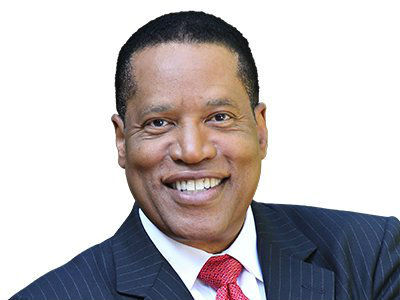
Larry Elder is an American lawyer, writer, and radio and television personality who calls himself the "Sage of South Central" a district of Los Angeles, Larry says his philosophy is to entertain, inform, provoke and to hopefully uplift. His calling card is "we have a country to save" and to him this means returning to the bedrock Constitutional principles of limited government and maximum personal responsibility. Elder's iconoclastic wit and intellectual agility makes him a particularly attractive voice in a nation that seems weary of traditional racial dialogue.” – Los Angeles Times.

Mike Gallagher Mike Gallagher began his broadcasting career in 1978 in Dayton, Ohio. Today, he is one of the most listened-to talk radio show hosts in America, recently having been ranked in the Talkers Magazine “Heavy Hundred” list – the 100 most important talk radio hosts in America. Prior to being launched into national syndication in 1998, Mike hosted the morning show on WABC-AM in New York City. Today, Talkers Magazine reports that his show is heard by over 3.75 million weekly listeners. Besides his radio work, Mike is seen on Fox News Channel as an on-air contributor, frequently appearing on the cable news giant.
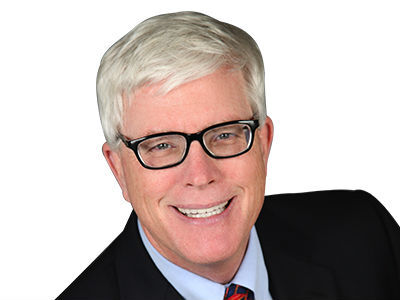
Hugh Hewitt is one of the nation’s leading bloggers and a genuine media revolutionary. He brings that expertise, his wit and what The New Yorker magazine calls his “amiable but relentless manner” to his nationally syndicated show each day.

When Dr. Sebastian Gorka was growing up, he listened to talk radio under his pillow with a transistor radio, dreaming that one day he would be behind the microphone. Beginning New Year’s Day 2019, he got his wish. Gorka now hosts America First every weekday afternoon 3 to 6pm ET. Gorka’s unique story works well on the radio. He is national security analyst for the Fox News Channel and author of two books: "Why We Fight" and "Defeating Jihad." His latest book releasing this fall is “War For America’s Soul.” He is uniquely qualified to fight the culture war and stand up for what is great about America, his adopted home country.

Broadcasting from his home station of KRLA in Los Angeles, the Dennis Prager Show is heard across the country. Everything in life – from politics to religion to relationships – is grist for Dennis’ mill. If it’s interesting, if it affects your life, then Dennis will be talking about it – with passion, humor, insight and wisdom.

Sean Hannity is a conservative radio and television host, and one of the original primetime hosts on the Fox News Channel, where he has appeared since 1996. Sean Hannity began his radio career at a college station in California, before moving on to markets in the Southeast and New York. Today, he’s one of the most listened to on-air voices. Hannity’s radio program went into national syndication on September 10, 2001, and airs on more than 500 stations. Talkers Magazine estimates Hannity’s weekly radio audience at 13.5 million. In 1996 he was hired as one of the original hosts on Fox News Channel. As host of several popular Fox programs, Hannity has become the highest-paid news anchor on television.
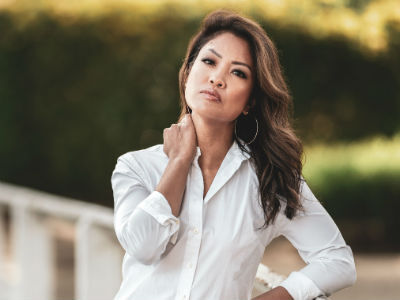
Michelle Malkin is a mother, wife, blogger, conservative syndicated columnist, longtime cable TV news commentator, and best-selling author of six books. She started her newspaper journalism career at the Los Angeles Daily News in 1992, moved to the Seattle Times in 1995, and has been penning nationally syndicated newspaper columns for Creators Syndicate since 1999. She is founder of conservative Internet start-ups Hot Air and Twitchy.com. Malkin has received numerous awards for her investigative journalism, including the Council on Governmental Ethics Laws (COGEL) national award for outstanding service for the cause of governmental ethics and leadership (1998), the Reed Irvine Accuracy in Media Award for Investigative Journalism (2006), the Heritage Foundation and Franklin Center for Government & Public Integrity's Breitbart Award for Excellence in Journalism (2013), the Center for Immigration Studies' Eugene Katz Award for Excellence in the Coverage of Immigration Award (2016), and the Manhattan Film Festival's Film Heals Award (2018). Married for 26 years and the mother of two teenage children, she lives with her family in Colorado. Follow her at michellemalkin.com. (Photo reprinted with kind permission from Peter Duke Photography.)

Sponsored by:

The Human Connection Study: How Gen Z’s pursuit of personal growth is redefining romance

Carbonatix Pre-Player Loader

Audio By Carbonatix

The Human Connection Study: How Gen Z’s pursuit of personal growth is redefining romance

Despite what recent headlines might have you think, young singles are not rejecting romance. They want love and yearn for connection. But they’re redefining what it means to be relationship-ready.

A Match Group survey conducted in September and October found 80% of Gen Z (18-29 year old) singles believe they’ll find true love, far more than any generation before them (compared to just 57% of all U.S. singles). Yet only 55% feel like they’re ready for partnership. Before committing, they believe they must first be able to set healthy boundaries (42%), be comfortable being alone (41%), feel happy and fulfilled (41%), invest in personal growth (37%), and have strong established friendships (36%) before committing to a romantic relationship.

As readiness becomes a more distant target, Gen Z is still seeking out connections online and offline. But they’re looking for lower-pressure interactions that could lead not only to new partners but also to friends, acquaintances — or something in between.

The Gender Gap: Feeling Social Pressure to Have Life Figured Out

Young singles of all genders are more likely to believe that finding themselves should be a prerequisite for partnership, but it’s young women who feel the most social pressure to do so.

While 58% of Gen Z say therapy is essential to relationship success, Gen Z women are 14% more likely (65% vs 51%) to agree with this than their male counterparts. Gen Z women (34%) also feel more strongly than men (23%) that working through issues from a past relationship is an indicator of readiness for a romantic connection. Perhaps most significantly, they are less likely (38%) than single men (46%) to say that they feel that dating is an important component of their overall social life.

The finding that young women may be more resistant to dating ties in with their belief that healthy boundaries, both for oneself and respecting those of others, is a prime indication of being ready for a romantic relationship (47% for Gen Z women vs. 37% for Gen Z men).

Across genders, Gen Z singles are 56% more likely to believe that investing in their personal growth (e.g., therapy, self-reflection, etc.) makes them “ready” for a romantic relationship compared to other generations (Millennials + Gen X + Boomers). They believe that if they have not done this work to be ready, relationships have a much higher chance of failure. For Gen Z, that prospect of failure is reason enough to delay seeking a relationship.

The result: Almost half (45%) of Gen Z say they’re not ready for relationships right now, and 75% are not in a hurry to find a partner. They’re waiting to feel “ready,” but readiness keeps receding.

The Readiness Paradox: Compounding Loneliness

Waiting to feel ready for a relationship has some complex trade-offs.

Despite championing independence, Gen Z is actually less comfortable being alone overall than older generations. Rather than seeking connections with the goal of authentic love, emotional support, or intimacy, 51% of Gen Z reports seeking connections to avoid loneliness, compared to just 26% of older generations. Women feel additional pressure to enter a relationship for “the right reason,” rather than solely to avoid loneliness. Forty-eight percent believe a significant indicator of relationship readiness is being comfortable while alone.

This sets off a self-reinforcing cycle: set a high bar for readiness, achieve less comfort being alone than generations who didn’t set this bar, feel lonely and want relationships, believe they’re not ready and wait longer, experience intensifying loneliness, and repeat. The focus on self-actualization introduced so much pressure that in some cases, it’s creating the loneliness it was meant to prevent.

Yet, as Dr. Justin Garcia from the Kinsey Institute observes, “Young people want their relationships to be rooted in desire rather than practical needs. If you’re financially independent, can pay for your own bills, get your own groceries, manage your own laundry and house projects, you convince yourself that you don’t need a partner except for the pleasures of hanging out and going to the movies with them so you’re not lonely. But when we set up this false dichotomy of needs and wants, you’re robbing yourself and your potential partner of ways to show up for each other, to learn and expand together, and the pleasures of supporting one another.”

The Bridge: Seeking Low-Pressure Connections

Gen Z is caught in a triple bind:

  1. Like previous generations, they face the traditional milestone pressures like marriage, children, and buying a house).
  2. But they also face self-imposed pressure to avoid their parents’ relationship mistakes. Only 37% describe their parents' relationship as "happy," compared to 52% of Boomers who reported “happy” parental relationship examples, according to the Singles in America study. Three-quarters of Gen Z singles want to avoid divorce at all costs. Through this lens, Gen Z is making a logical decision: wait until perfectly ready.
  3. Most uniquely, this generation faces social media performance pressure—46% of Gen Z soft launch relationships on social media versus 27% overall, and among Gen Z singles who have hard launched a relationship, 81% believe the act indicates commitment. Relationships become public performances where the stakes feel impossibly high, and Gen Z feels it’s better to wait until everything is perfect than risk public failure.

This is why Gen Z is taking an open-ended approach to relationships; they’re seeking out

connections that could lead to partners, friends, or just an acquaintance in real life. More than half feel lonely despite online connections, according to a 2025 survey of more than 2,000 Gen Z adults funded by Match Group Americas LLC and conducted in association with Current Forward. Sixty-six percent are looking for belonging, not just social interaction, and 64% are actively looking to make platonic friends. Underneath it all, they still believe in lasting love: 80% of Gen Z singles believe they’ll find true love, compared with just 57% of all U.S. singles. Eighty-six percent want to find a committed romantic relationship. But the path to get there feels like much less pressure if they approach the search to an “openness” to the end result (partners, friends, acquaintances).

Gen Z’s persistent search for connection is why the self-actualization barrier presents such a tricky bind. When you believe you must be “ready” to deserve connection, you delay romantic partnerships that create mutual support. As a result, Gen Z is increasingly looking to The address loneliness across all types of relationships.

The Path Forward

Gen Z is focused on learning before partnership.

But older generations followed a pattern of meeting, dating, committing, and feeling out compatibility while working through challenges—in other words, learning through partnership. They discovered that you don't need to be perfect to deserve connection or love.

As Amelia Miller, a researcher and MSc at the Oxford Internet Institute, puts it, “Social media and AI companions are teaching Gen Z that the messiness of human relationships is something to be tamed, not embraced, but vulnerability and friction are essential ingredients of intimacy. Gen Z is learning that the self-actualization they seek solo is actually unlocked through their relationships with others.”

Of course, just as Gen Z can learn from the wisdom of older generations, Boomer and Gen X singles can learn from how Gen Z has adapted its use of online spaces. While older singles continue to use dating apps predominantly as a tool to identify romantic partners, Gen Z and Millennials are deploying dating app technology to help work toward their own self-actualization and relationship readiness. Gen Z and Millennial dating app users say dating apps help them learn about themselves (80%). They feel dating apps clarify what they want in a partner (87%), say apps have taught them how to set and maintain boundaries (81%), and have used them to challenge assumptions about attraction and compatibility (78%), all clear steps on the way to most traditional pursuits of love.

Gen Z’s pursuit of low-pressure connection shows they’re discovering you can value independence and still need connection. These aren’t

contradictory—they’re complementary. Rather than treating self-actualization as a prerequisite, young singles can shift their mindset to recognize that self-actualization itself can evolve from connection with others via the vulnerability of being known, and showing up for someone else while they show up for you.

The question is whether young singles will stop waiting for perfect readiness long enough to find it. Growth happens in partnership, not before it, and showing up imperfectly is better than waiting for perfection that doesn’t exist.

Methodology

Third-party research was funded by Match Group Americas LLC, conducted in association with Current Forward, with data collected by The Harris Poll. The survey was conducted online in the United States from Sept. 26 to Oct. 5, 2025, among a nationally representative sample of 2,500 single adults ages 18-79. Gen Z is defined as those ages 18-29; Millennial is defined as those ages 30-44; Gen X is defined as those ages 45-60; and Boomers are defined as those ages 61-79. Older generations are defined as Gen X and Boomers.

The results have been weighted by age, gender, region, race and household income within each generation group to match the population, according to Census data. This is to ensure the sample is representative of the entire adult single population in the US overall and by generation.

For comparison purposes, a probability sample of 2,500 has an estimated margin of error (which measures sampling variability) of ±2.0%, 19 times out of 20. At 1,000 the margin of error is 3.1% and at 500 at 4.4%. Discrepancies in or between totals when compared to the data tables are due to rounding.

Additional Sources

Singles in America 2025 Match Group Americas, LLC. Funded by Match and conducted in association with The Kinsey Institute, with data collected by Dynata, the 14th annual Singles in America study surveyed a demographically representative sample of 5,001 U.S. singles between the ages of 18 and 98. It remains the most robust scientific study of single Americans, with generational breakouts for Gen Z (18–27), Millennials (28–43), Gen X (44–59), and Boomers (60+).

Third-party research funded by Match Group Americas LLC, conducted in association with Current Forward, with data collection by Rep Data, Inc. This survey was conducted online in the United States from May 23, 2025 to June 11, 2025 among a nationally representative sample of 2,030 single adults ages 18-49. Gen Z is defined as 18-29.

This story was produced by Match Group and reviewed and distributed by Stacker.


Salem News Channel Today

Sponsored Links

On Air & Up Next

See the Full Program Guide