
















Who can afford culture? Comparing the price of art, music, film and fashion in 2025

Carbonatix Pre-Player Loader

Audio By Carbonatix

Who can afford culture? Comparing the price of art, music, film and fashion in 2025

“Do people realize the amount we have to pay for concert tickets is not normal?” Last month, this seemingly innocuous tweet struck a nerve because it’s true—ticket prices today are not normal. Somewhere between the service fees, dynamic pricing and VIP experiences, prices have crept up fast. The average concert ticket in the U.S. now costs about $136, according to a report by industry trade magazine Pollstar, and museum tickets, which used to cost a few dollars, can now set you back $40 to $50, based on the American Alliance of Museums (AAM) and Wilkening Consulting’s 2024 Annual Survey of Museum-Goers.

The things that used to bring people together, like music, art, and shared experiences, are beginning to feel like gated spaces. That same survey found that cost is now the number-one reason why occasional museum-goers choose not to attend more often. Meanwhile, the 2024 Arts Funding Snapshot from Grantmakers in the Arts found that public arts funding in 2023 dropped to just $3.94 per person, representing a 43% decrease from 2022 when adjusted for inflation and population growth—a sign that cultural funding is struggling to match community demand. So it’s worth asking: Who can still afford to show up, and what can the rest of us do?

One answer, Pew Research Center has found, is to turn to the internet. Ninety-six percent of U.S. adults now use the internet, and 79% have broadband at home, according to a 2024 study by the think tank. Over 2,000 museums, galleries, and cultural institutions are now available to explore through Google Arts & Culture. The Association of Science and Technology Centers’ Museum Digital Engagement: Before, During, and Beyond the COVID-19 Pandemic report found that digital engagement continued long after pandemic restrictions were lifted, with many museums still investing in hybrid and virtual experiences due to visitor demand.

This migration to the web suggests that perhaps culture isn’t dying; it’s just moving to more accessible virtual spaces. Ahead, Decentraland Foundation examines the cost of cultural participation in 2025, drawing on data from Pollstar, the National Endowment for the Arts (NEA), the Bureau of Labor Statistics (BLS), and insights from virtual worlds.

The cost of showing up to cultural events

Cultural participation in 2025 requires cash—and pretty considerable sums of it. Pollstar’s 2024 year-end analysis put the average concert ticket for the top 100 touring artists in North America at $136.45, up 41% from $96.17 in 2019. That doesn’t include service fees, merchandise, and travel costs. While global grosses reached record highs in 2024, North America saw a decline in ticket sales and average attendance per show.

Museum costs have risen, too. The AAM reported in 2024 that U.S. adult admission now averages $27, with many big institutions charging $40 to $50. Among those who visit museums “occasionally,” cost was named as the number-one reason they don’t go more often.

Fashion events are even further out of reach. A trip to New York Fashion Week, including travel, accommodation, and access to shows, can cost anywhere from $1,000 to $10,000, based on pricing compiled by FashionWeekOnline. And that’s if you can get in. Most shows remain invite-only.

These numbers are in huge contrast to household income. The BLS 2023 report shows that while average annual incomes have gone up since 2019, they have not kept pace with inflation-adjusted increases in entertainment spending. The BLS groups culture-related expenses under “entertainment,” a category that also includes everything from cable subscriptions to concert tickets (as defined in its glossary). Within it, “fees and admissions” covers the cost of showing up: entry to concerts, theaters, sporting events, movies, museums, as well as costs for clubs and other social venues. This is where the rising cost of culture is most evident.

Between 2019 and 2023, spending on “entertainment” increased by over 25%, while average annual household income rose by only 17%, and general inflation by roughly 20%. In other words, the price of going out has risen faster than wages and inflation.

Cost of In-Person Cultural Participation

A table listing average costs of in-person cultural participation by category.
Decentraland


Methodology: Figures are drawn from industry and federal data sources, including Pollstar (concert pricing, 2024), the American Alliance of Museums (admissions, 2024), FashionWeekOnline (NYFW cost ranges, 2024), U.S. News & World Report (music festival pricing, 2025), The Numbers (national movie ticket prices, 2024), Broadway News (Broadway pricing, 2025), and WDW Magazine (theme park ticketing, 2025). All costs are expressed in USD. Ranges reflect averages across major U.S. institutions and events.

Geography still matters

Cultural access in the U.S. also comes down to where you live. The internet may have globalized creative content, but in-person culture—including galleries, theaters, concerts, and festivals—is still concentrated in cities and wealthy areas. For millions of Americans in rural or low-income neighborhoods, taking part means crossing both literal and financial distances.

The NEA’s Arts in Neighborhood Choice report found that people who prioritize access to culture tend to pay more to live near it. Thirty-five percent of householders who said that living conveniently to arts and cultural events was “very” important also reported housing costs of $1,500 or more per month, compared to just 23% of people who said culture access was “not important.” In other words, cultural proximity comes at a premium and is something people with higher incomes can afford to choose.

Distance matters, too. A 2021 report from University College London examined who engages in the arts in the U.S. and found that people in rural areas are significantly less likely to attend live events or visit museums, largely because of lower income levels and a lack of nearby options. While the research does not directly itemize costs like travel, parking, or work time loss, the reduced attendance among less urban residents points to access barriers tied to geography and socioeconomic status.

Increasingly, however, virtual experiences are stepping in where physical access falls short. Social virtual worlds where people can attend concerts, exhibitions, and events together in 3D spaces, are beginning to fill some of that gap.

As early as 2012, researchers at Roskilde University described virtual worlds as “environments that carry the potential for social and cultural innovation,” enabling people to form new kinds of relationships and shared experiences. A decade later, that vision is materializing. Virtual spaces offer something traditional culture can’t: convenience, flexibility, and access. For those distanced by location, income, or caregiving, logging on may be the only way to show up.

The behavioral shift

While in-person attendance has declined, digital and hybrid participation is growing fast. The NEA’s Online Audiences for Arts Programming report found that 82% of U.S. adults took part in some form of digital arts activity between 2021 and 2022, from livestreamed concerts and online museum tours to podcasts and virtual classes. About 30% said they were doing these more often than the year before, showing that digital participation is now a habit, not a pandemic stopgap.

The same pattern shows up in film and entertainment. An Associated Press poll found that 3 in 5 Americans now prefer streaming at home to going to the cinema, citing cost and convenience as the main reasons. Box Office Mojo data shows 2024 ticket sales remain around 20% below pre-pandemic levels despite record studio output, while streaming platforms keep expanding. Netflix added a record number of subscribers last year, according to the Financial Times.

Increasingly, rituals that once defined a night out—wristbands, ticket stubs, Sharpie Xs on our hands—are being replaced by the frictionless habit of logging in. And that login leads not just to films, but to concerts, theatre broadcasts, museum tours, and virtual worlds. Fortnite’s Remix: The Finale drew 14 million live attendees, reported IQ Magazine, showing that audiences aren’t disappearing but rather showing up somewhere else.

Cost of Virtual Cultural Participation

A table listing the typical cost of virtual cultural participation by category (based on data from 2024-2025).
Decentraland


Notes: Figures reflect typical consumer-facing costs for publicly accessible virtual cultural experiences in the United States. “Free” indicates no ticketing or admission charge, although activities require internet access and a compatible device. Price ranges represent common platform pricing for livestreams, workshops, and streaming services. Streaming prices reflect a four-subscriber home based on data from Deloitte’s 2025 digital media trends report. Virtual concerts and workshop prices are based on Eventbrite data for average online ticket pricing.

Methodology: Costs are based on publicly listed pricing from major streaming platforms, virtual event providers, and online learning sites between 2021 and 2025. All numbers are rounded for clarity.

Is digital culture really free?

Virtual doesn’t mean barrier-free. Online access still depends on basics: equipment, internet quality, and time. The USTelecom 2024 Broadband Pricing Index puts the average U.S. household internet bill at $72.58 per month, which is roughly $870 per year. Even when a virtual concert or exhibition is free, participation still requires an ongoing subscription just to connect.

Device access is another divide. The Benton Institute for Broadband & Society reports that 1 in 7 U.S. households lacks a computer or relies only on a smartphone, which is about 18 million homes, or 33 million people. While smartphones allow connection, they can’t replace large screens for creative work, video events, or education. Researchers call this “restricted digital participation.”

Baseline Digital Access Requirements (United States, 2025)

A table listing the baseline digital access requirement and their cost or access level (based on US data, 2025).
Decentraland


Notes: Digital participation assumes access to broadband internet and a desktop or laptop computer capable of streaming video and accessing interactive platforms. The $300 annual figure reflects a portion of the average $873 U.S. broadband bill used for cultural activities like streaming concerts, museum tours, and online classes. Device costs represent a standard laptop or desktop.

Methodology: Internet costs based on national broadband pricing data (USTelecom, 2024) and federal spending surveys. Internet and device access figures from Pew Research Center and the Benton Institute for Broadband & Society. All figures rounded for clarity.

Culture in virtual worlds

As the cost of physical attendance climbs, virtual worlds are becoming a third space in the cultural economy, sitting alongside Netflix and YouTube but built around participation rather than passive viewing.

Decentraland hosts community-led events year-round—from art exhibitions and live performances to workshops, drawing people from over 100 countries to events where attendance is typically open and free. This kind of user-driven structure highlights how virtual environments can widen access to cultural participation without relying on traditional gatekeeping or ticketing models. Other virtual environments illustrate similar cultural events in virtual spaces.

For instance, the Epic Games-owned platform Fortnite has hosted free concerts with artists like Ariana Grande and Travis Scott, monetized through optional digital merch. And Roblox, the game creation platform developed by Roblox Corporation, has run branded performances by Lil Nas X and Twenty One Pilots. The virtual reality (VR) entertainment company WaveXR offers paid interactive shows with artists like Justin Bieber and The Weeknd, while Meta’s Horizon Worlds runs comedy clubs and festivals within its VR ecosystem (however, it’s important to remember that only 13% of U.S. households own a headset, reported G2).

As recent research into loneliness and online interaction shows, shared digital experiences can reproduce many of the social functions of live events, especially for those excluded by cost, distance, or accessibility.

This story was produced by Decentraland and reviewed and distributed by Stacker.


Salem News Channel Today

Sponsored Links


September 26 - Phoenix, AZ
Scottsdale Center for the Performing Arts


November 2 - Detroit, MI
Zion Christian Church in Troy


October 6 - Los Angeles, CA
Pasadena Convention Center


November 5 - San Antonio, TX
Norris Centers – The Grand Red Oak Ballroom


October 8 - Sacramento, CA
William Jessup University


November 7 - Tampa, FL
The Palladium at St. Pete College


October 22 - Minneapolis, MN
Crowne Plaza AiRE


November 15 - San Francisco, CA
Fremont Marriott Silicon Valley


October 23 - Philadelphia, PA
Green Valley Country Club


November 16 - Denver, CO
CU South Denver - Formerly Wildlife Experience


November 2 - Chicago, IL
Chicago Westin Northwest in Itasca


November 21 - Cleveland, OH
Holiday Inn Rockside in Independence


Salem Radio Network Speakers
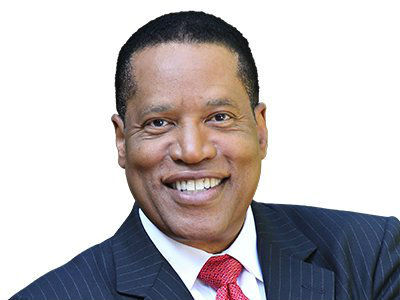
Larry Elder is an American lawyer, writer, and radio and television personality who calls himself the "Sage of South Central" a district of Los Angeles, Larry says his philosophy is to entertain, inform, provoke and to hopefully uplift. His calling card is "we have a country to save" and to him this means returning to the bedrock Constitutional principles of limited government and maximum personal responsibility. Elder's iconoclastic wit and intellectual agility makes him a particularly attractive voice in a nation that seems weary of traditional racial dialogue.” – Los Angeles Times.

Mike Gallagher Mike Gallagher began his broadcasting career in 1978 in Dayton, Ohio. Today, he is one of the most listened-to talk radio show hosts in America, recently having been ranked in the Talkers Magazine “Heavy Hundred” list – the 100 most important talk radio hosts in America. Prior to being launched into national syndication in 1998, Mike hosted the morning show on WABC-AM in New York City. Today, Talkers Magazine reports that his show is heard by over 3.75 million weekly listeners. Besides his radio work, Mike is seen on Fox News Channel as an on-air contributor, frequently appearing on the cable news giant.

Hugh Hewitt is one of the nation’s leading bloggers and a genuine media revolutionary. He brings that expertise, his wit and what The New Yorker magazine calls his “amiable but relentless manner” to his nationally syndicated show each day.
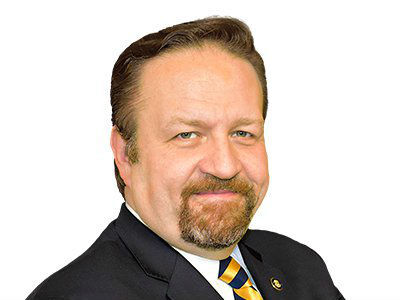
When Dr. Sebastian Gorka was growing up, he listened to talk radio under his pillow with a transistor radio, dreaming that one day he would be behind the microphone. Beginning New Year’s Day 2019, he got his wish. Gorka now hosts America First every weekday afternoon 3 to 6pm ET. Gorka’s unique story works well on the radio. He is national security analyst for the Fox News Channel and author of two books: "Why We Fight" and "Defeating Jihad." His latest book releasing this fall is “War For America’s Soul.” He is uniquely qualified to fight the culture war and stand up for what is great about America, his adopted home country.

Broadcasting from his home station of KRLA in Los Angeles, the Dennis Prager Show is heard across the country. Everything in life – from politics to religion to relationships – is grist for Dennis’ mill. If it’s interesting, if it affects your life, then Dennis will be talking about it – with passion, humor, insight and wisdom.
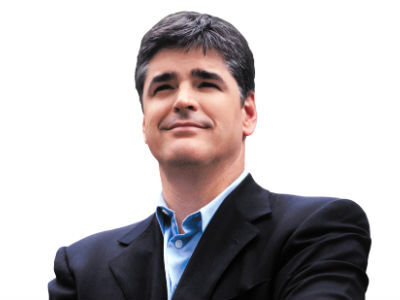
Sean Hannity is a conservative radio and television host, and one of the original primetime hosts on the Fox News Channel, where he has appeared since 1996. Sean Hannity began his radio career at a college station in California, before moving on to markets in the Southeast and New York. Today, he’s one of the most listened to on-air voices. Hannity’s radio program went into national syndication on September 10, 2001, and airs on more than 500 stations. Talkers Magazine estimates Hannity’s weekly radio audience at 13.5 million. In 1996 he was hired as one of the original hosts on Fox News Channel. As host of several popular Fox programs, Hannity has become the highest-paid news anchor on television.

Michelle Malkin is a mother, wife, blogger, conservative syndicated columnist, longtime cable TV news commentator, and best-selling author of six books. She started her newspaper journalism career at the Los Angeles Daily News in 1992, moved to the Seattle Times in 1995, and has been penning nationally syndicated newspaper columns for Creators Syndicate since 1999. She is founder of conservative Internet start-ups Hot Air and Twitchy.com. Malkin has received numerous awards for her investigative journalism, including the Council on Governmental Ethics Laws (COGEL) national award for outstanding service for the cause of governmental ethics and leadership (1998), the Reed Irvine Accuracy in Media Award for Investigative Journalism (2006), the Heritage Foundation and Franklin Center for Government & Public Integrity's Breitbart Award for Excellence in Journalism (2013), the Center for Immigration Studies' Eugene Katz Award for Excellence in the Coverage of Immigration Award (2016), and the Manhattan Film Festival's Film Heals Award (2018). Married for 26 years and the mother of two teenage children, she lives with her family in Colorado. Follow her at michellemalkin.com. (Photo reprinted with kind permission from Peter Duke Photography.)

Sponsored by:

Who can afford culture? Comparing the price of art, music, film and fashion in 2025

Carbonatix Pre-Player Loader

Audio By Carbonatix

Who can afford culture? Comparing the price of art, music, film and fashion in 2025

“Do people realize the amount we have to pay for concert tickets is not normal?” Last month, this seemingly innocuous tweet struck a nerve because it’s true—ticket prices today are not normal. Somewhere between the service fees, dynamic pricing and VIP experiences, prices have crept up fast. The average concert ticket in the U.S. now costs about $136, according to a report by industry trade magazine Pollstar, and museum tickets, which used to cost a few dollars, can now set you back $40 to $50, based on the American Alliance of Museums (AAM) and Wilkening Consulting’s 2024 Annual Survey of Museum-Goers.

The things that used to bring people together, like music, art, and shared experiences, are beginning to feel like gated spaces. That same survey found that cost is now the number-one reason why occasional museum-goers choose not to attend more often. Meanwhile, the 2024 Arts Funding Snapshot from Grantmakers in the Arts found that public arts funding in 2023 dropped to just $3.94 per person, representing a 43% decrease from 2022 when adjusted for inflation and population growth—a sign that cultural funding is struggling to match community demand. So it’s worth asking: Who can still afford to show up, and what can the rest of us do?

One answer, Pew Research Center has found, is to turn to the internet. Ninety-six percent of U.S. adults now use the internet, and 79% have broadband at home, according to a 2024 study by the think tank. Over 2,000 museums, galleries, and cultural institutions are now available to explore through Google Arts & Culture. The Association of Science and Technology Centers’ Museum Digital Engagement: Before, During, and Beyond the COVID-19 Pandemic report found that digital engagement continued long after pandemic restrictions were lifted, with many museums still investing in hybrid and virtual experiences due to visitor demand.

This migration to the web suggests that perhaps culture isn’t dying; it’s just moving to more accessible virtual spaces. Ahead, Decentraland Foundation examines the cost of cultural participation in 2025, drawing on data from Pollstar, the National Endowment for the Arts (NEA), the Bureau of Labor Statistics (BLS), and insights from virtual worlds.

The cost of showing up to cultural events

Cultural participation in 2025 requires cash—and pretty considerable sums of it. Pollstar’s 2024 year-end analysis put the average concert ticket for the top 100 touring artists in North America at $136.45, up 41% from $96.17 in 2019. That doesn’t include service fees, merchandise, and travel costs. While global grosses reached record highs in 2024, North America saw a decline in ticket sales and average attendance per show.

Museum costs have risen, too. The AAM reported in 2024 that U.S. adult admission now averages $27, with many big institutions charging $40 to $50. Among those who visit museums “occasionally,” cost was named as the number-one reason they don’t go more often.

Fashion events are even further out of reach. A trip to New York Fashion Week, including travel, accommodation, and access to shows, can cost anywhere from $1,000 to $10,000, based on pricing compiled by FashionWeekOnline. And that’s if you can get in. Most shows remain invite-only.

These numbers are in huge contrast to household income. The BLS 2023 report shows that while average annual incomes have gone up since 2019, they have not kept pace with inflation-adjusted increases in entertainment spending. The BLS groups culture-related expenses under “entertainment,” a category that also includes everything from cable subscriptions to concert tickets (as defined in its glossary). Within it, “fees and admissions” covers the cost of showing up: entry to concerts, theaters, sporting events, movies, museums, as well as costs for clubs and other social venues. This is where the rising cost of culture is most evident.

Between 2019 and 2023, spending on “entertainment” increased by over 25%, while average annual household income rose by only 17%, and general inflation by roughly 20%. In other words, the price of going out has risen faster than wages and inflation.

Cost of In-Person Cultural Participation

A table listing average costs of in-person cultural participation by category.
Decentraland


Methodology: Figures are drawn from industry and federal data sources, including Pollstar (concert pricing, 2024), the American Alliance of Museums (admissions, 2024), FashionWeekOnline (NYFW cost ranges, 2024), U.S. News & World Report (music festival pricing, 2025), The Numbers (national movie ticket prices, 2024), Broadway News (Broadway pricing, 2025), and WDW Magazine (theme park ticketing, 2025). All costs are expressed in USD. Ranges reflect averages across major U.S. institutions and events.

Geography still matters

Cultural access in the U.S. also comes down to where you live. The internet may have globalized creative content, but in-person culture—including galleries, theaters, concerts, and festivals—is still concentrated in cities and wealthy areas. For millions of Americans in rural or low-income neighborhoods, taking part means crossing both literal and financial distances.

The NEA’s Arts in Neighborhood Choice report found that people who prioritize access to culture tend to pay more to live near it. Thirty-five percent of householders who said that living conveniently to arts and cultural events was “very” important also reported housing costs of $1,500 or more per month, compared to just 23% of people who said culture access was “not important.” In other words, cultural proximity comes at a premium and is something people with higher incomes can afford to choose.

Distance matters, too. A 2021 report from University College London examined who engages in the arts in the U.S. and found that people in rural areas are significantly less likely to attend live events or visit museums, largely because of lower income levels and a lack of nearby options. While the research does not directly itemize costs like travel, parking, or work time loss, the reduced attendance among less urban residents points to access barriers tied to geography and socioeconomic status.

Increasingly, however, virtual experiences are stepping in where physical access falls short. Social virtual worlds where people can attend concerts, exhibitions, and events together in 3D spaces, are beginning to fill some of that gap.

As early as 2012, researchers at Roskilde University described virtual worlds as “environments that carry the potential for social and cultural innovation,” enabling people to form new kinds of relationships and shared experiences. A decade later, that vision is materializing. Virtual spaces offer something traditional culture can’t: convenience, flexibility, and access. For those distanced by location, income, or caregiving, logging on may be the only way to show up.

The behavioral shift

While in-person attendance has declined, digital and hybrid participation is growing fast. The NEA’s Online Audiences for Arts Programming report found that 82% of U.S. adults took part in some form of digital arts activity between 2021 and 2022, from livestreamed concerts and online museum tours to podcasts and virtual classes. About 30% said they were doing these more often than the year before, showing that digital participation is now a habit, not a pandemic stopgap.

The same pattern shows up in film and entertainment. An Associated Press poll found that 3 in 5 Americans now prefer streaming at home to going to the cinema, citing cost and convenience as the main reasons. Box Office Mojo data shows 2024 ticket sales remain around 20% below pre-pandemic levels despite record studio output, while streaming platforms keep expanding. Netflix added a record number of subscribers last year, according to the Financial Times.

Increasingly, rituals that once defined a night out—wristbands, ticket stubs, Sharpie Xs on our hands—are being replaced by the frictionless habit of logging in. And that login leads not just to films, but to concerts, theatre broadcasts, museum tours, and virtual worlds. Fortnite’s Remix: The Finale drew 14 million live attendees, reported IQ Magazine, showing that audiences aren’t disappearing but rather showing up somewhere else.

Cost of Virtual Cultural Participation

A table listing the typical cost of virtual cultural participation by category (based on data from 2024-2025).
Decentraland


Notes: Figures reflect typical consumer-facing costs for publicly accessible virtual cultural experiences in the United States. “Free” indicates no ticketing or admission charge, although activities require internet access and a compatible device. Price ranges represent common platform pricing for livestreams, workshops, and streaming services. Streaming prices reflect a four-subscriber home based on data from Deloitte’s 2025 digital media trends report. Virtual concerts and workshop prices are based on Eventbrite data for average online ticket pricing.

Methodology: Costs are based on publicly listed pricing from major streaming platforms, virtual event providers, and online learning sites between 2021 and 2025. All numbers are rounded for clarity.

Is digital culture really free?

Virtual doesn’t mean barrier-free. Online access still depends on basics: equipment, internet quality, and time. The USTelecom 2024 Broadband Pricing Index puts the average U.S. household internet bill at $72.58 per month, which is roughly $870 per year. Even when a virtual concert or exhibition is free, participation still requires an ongoing subscription just to connect.

Device access is another divide. The Benton Institute for Broadband & Society reports that 1 in 7 U.S. households lacks a computer or relies only on a smartphone, which is about 18 million homes, or 33 million people. While smartphones allow connection, they can’t replace large screens for creative work, video events, or education. Researchers call this “restricted digital participation.”

Baseline Digital Access Requirements (United States, 2025)

A table listing the baseline digital access requirement and their cost or access level (based on US data, 2025).
Decentraland


Notes: Digital participation assumes access to broadband internet and a desktop or laptop computer capable of streaming video and accessing interactive platforms. The $300 annual figure reflects a portion of the average $873 U.S. broadband bill used for cultural activities like streaming concerts, museum tours, and online classes. Device costs represent a standard laptop or desktop.

Methodology: Internet costs based on national broadband pricing data (USTelecom, 2024) and federal spending surveys. Internet and device access figures from Pew Research Center and the Benton Institute for Broadband & Society. All figures rounded for clarity.

Culture in virtual worlds

As the cost of physical attendance climbs, virtual worlds are becoming a third space in the cultural economy, sitting alongside Netflix and YouTube but built around participation rather than passive viewing.

Decentraland hosts community-led events year-round—from art exhibitions and live performances to workshops, drawing people from over 100 countries to events where attendance is typically open and free. This kind of user-driven structure highlights how virtual environments can widen access to cultural participation without relying on traditional gatekeeping or ticketing models. Other virtual environments illustrate similar cultural events in virtual spaces.

For instance, the Epic Games-owned platform Fortnite has hosted free concerts with artists like Ariana Grande and Travis Scott, monetized through optional digital merch. And Roblox, the game creation platform developed by Roblox Corporation, has run branded performances by Lil Nas X and Twenty One Pilots. The virtual reality (VR) entertainment company WaveXR offers paid interactive shows with artists like Justin Bieber and The Weeknd, while Meta’s Horizon Worlds runs comedy clubs and festivals within its VR ecosystem (however, it’s important to remember that only 13% of U.S. households own a headset, reported G2).

As recent research into loneliness and online interaction shows, shared digital experiences can reproduce many of the social functions of live events, especially for those excluded by cost, distance, or accessibility.

This story was produced by Decentraland and reviewed and distributed by Stacker.


Salem News Channel Today

Sponsored Links

On Air & Up Next

See the Full Program Guide