6 Ways an Interfaith Marriage Will Become a Challenge

Carbonatix Pre-Player Loader

Audio By Carbonatix

1. Pressure from Family and Friends

There is no doubt that an interfaith couple will face some pushback from well-meaning family members and friends, especially if they were raised in a home that practiced their faith and lived out their religious customs and traditions. In many cases, this can feel like a slap in the face for a parent who has earnestly taught their child the way in which to go.

As believers, we must approach family and in-laws with compassion, sincerity, respect, and love (1 John 4:8). Choose to be an attentive listener while also setting healthy boundaries. If hurtful or untrue statements are made, seek to understand the reason behind the words and actions expressed; many times, it is based on hurt, shame, or the feeling of betrayal.

When we approach family members and friends in love and respect, we demonstrate the beautiful kind of love of our God. An unbiased love that calls upon all people to get to know Him (1 Timothy 4:2-7).

Photo credit: ©GettyImages/PixelsEffect

2. Deciding How to Raise Children

This is a big challenge. Maybe even the biggest one! While views may differ a bit, the importance of family runs fairly deep in most cultures and religions. While there are those natural ground rules in obedience to keep those little darlings safe and to, one day, be productive citizens, when it comes to what deity to teach them and what to believe about the purpose of this life, well, this is where things can get a bit muddy.

That's because we not only get emotionally and mentally invested in our children's lives, but our whole spiritual being gets invested, and we want to share what gives us hope and gives us peace. As believers, we want to explain to our children that their life has purpose and meaning (Romans 8:28) and that there is life beyond this one (John 17:3)! And even more than that, we want to know whole-heartedly that we will be together with them for eternity (1 John 2:25).

We must fervently pray for the salvation of our spouse and children. This is where believers can make a great impact for the kingdom of Christ and pray that God will open minds and soften hearts (Romans 10:1).
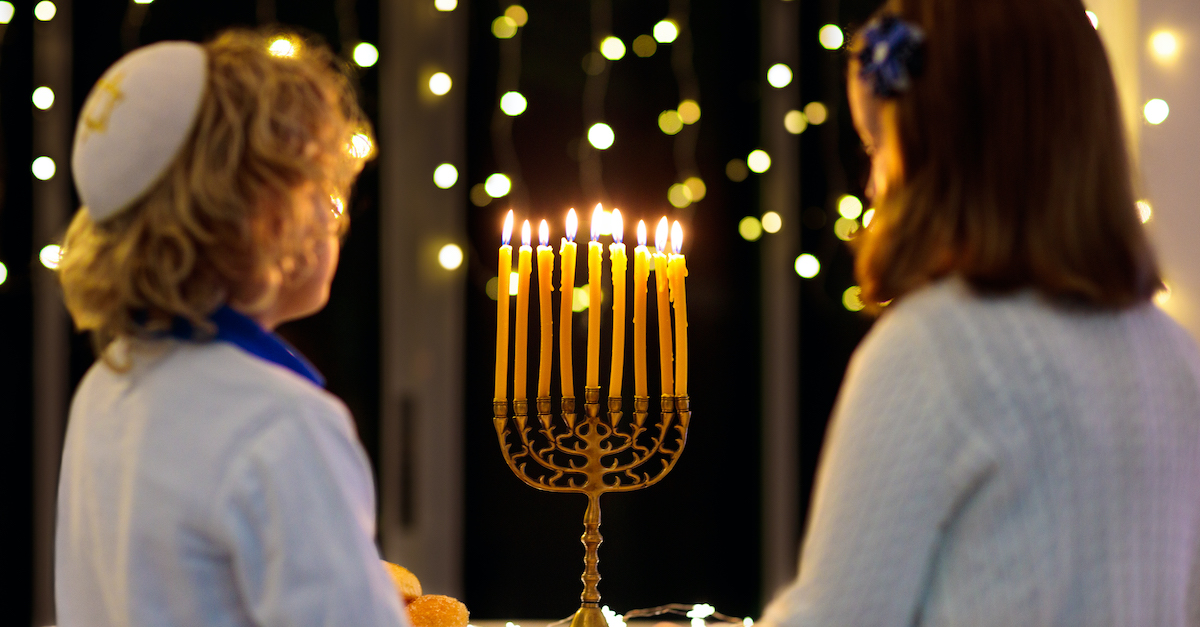
Photo credit: ©Pexels/Ketut Subiyanto

3. How to Celebrate Holidays

As you may have guessed, major holidays will pose a problem. Granted, some holidays will bring on more meaning than others, but it is wise to plan ahead to address and navigate these sacred and holy times respectfully. Of course, there is not a simple answer here, and once again, it can come with many emotional strings attached.

It's important to note that an interfaith couple should build time to discuss the holidays that must take precedence and the ones they wish to celebrate. Each needs to allow ample space to honor and respect the other spouse's wishes. Healthy boundaries always need to set the tone here with love while allowing your family to partake in religious traditions that can cultivate faith.

During these times, believers can read stories in the Bible about Christ's birth, death, and resurrection, all the while sharing how Jesus' life has impacted their own lives. Personal testimonies are a great way to open up about faith, all while planting a seed (Mark 11:24).

Photo credit: ©GettyImages/FamVeld

4. May Lead to Arguments

Most of the big decisions and choices we make in this life are based on our religious beliefs. As Christ-followers, our decisions are to be in sync with God's will and way for our lives (Psalm 143:10). We know that this life is about honoring and glorifying God, so as faithful followers, we try to follow His lead and direction, knowing His plans are good (Proverbs 3:5-6).

In a Christian marriage, God is the head, leading and directing a husband and wife as they seek Him through His Word and prayer together. However, in an interfaith marriage, a believer may choose to heed the direction of God, while their spouse may choose to listen to another deity or their own will. This will fuel the fire on topics surrounding major decisions like when to start a family, where to live, career paths, and even where to go to church.

While arguments will arise in every marriage, they may be more intense and controversial when certain topics or issues arise in a marriage that holds different faiths and religious beliefs. Keeping in mind that tensions may rise, a believer may be able to win over the heart of their unbelieving spouse simply by approaching heated situations with amicable peace, reverence, and harmony (1 Peter 3:1-2).

Photo credit: ©GettyImages/PeopleImages

5. Less Hope for the Future

As believers, we know where our hope for the future is found (Jeremiah 29:11). We hold on to the hope in the Lord for our future plans in this life and the life beyond this one (John 3:16). However, when a spouse doesn't have that same life perspective or is holding on to a different view of hope, it can be discouraging as well as disheartening.

As believers, we must remember to have hope that God loves us and that our marriage and future are still in His hands. Just as He did for Samson, Ruth, Joeseph, Esther, and countless others, our God can make way for any marriage to prosper and be rich in love, fulfilling a greater purpose than we may ever know (Proverbs 19:21).

Seeing our loved ones beyond this life is especially crucial to us as Christ-followers, and we should hold on to the precious promise in 1 Thessalonians 4:13-18. Yet, that should also motivate us to mourn for those who do not fully know Him, convicting us to live out our faith as God leads, all the while praying for God's mercy and grace.

Photo credit: ©GettyImages/PeopleImages

6. Sadly, it Is More Prone to Divorce

Currently, over 40% of marriages in America are interfaith, and that percentage is only said to be growing! That means more and more couples are finding love outside of the Christian faith. The statistics surrounding an interfaith marriage are alarming and should bring about genuine concern because recent studies surprisingly indicate that interfaith marriages hold a 50% divorce rate!

Due to spiritual differences, the majority of interfaith couples choose not to partake in regular or consistent religious activities. Many choose not to go to a church at all; some opt to venture back and forth to the two different faith-based congregations, while others divide and get filled up spiritually on their own endeavors. This can lead to a disconnect as a couple and family.

These couples also claim to share similar values and rather than focusing on faith, they choose to focus on their love. However, a human's view on love and marriage will shift and change with the cultural tides, which can cause a rift in a marriage. Not to mention, human love is bound by emotions that can become corroded and jaded over time. Yet, God's view on marriage and love never fails, never changes, and always remains the same (Genesis 2:18, Ephesians 5:21-33, Hebrews 13:4). God sees marriage as a gift that is bound together through a covenant (Ecclesiastes 4:9-12).

Photo Credit: ©iStock/Getty Images Plus/djedzura

God Is Still Good

Unfortunately, many interfaith couples have little faith-based support, lack marital guidance, and cling to misconceptions about love, causing tensions to ensue and isolation to occur. But that doesn't mean it will befall a tragic fate! It does mean that interfaith marriages will be full of hardships and challenges, but God is still good. His faithfulness may come with glimmers of hope, growing one's faith, or making way to showcase His unfailing and purposeful love, providing a powerful testimony to share with others. How sweet is that?

Related: Are Interfaith Marriages "Okay?"

Photo credit: ©Unsplash/Jon Asato

 

Salem News Channel Today

Sponsored Links


September 26 - Phoenix, AZ
Scottsdale Center for the Performing Arts


November 2 - Detroit, MI
Zion Christian Church in Troy


October 6 - Los Angeles, CA
Pasadena Convention Center


November 5 - San Antonio, TX
Norris Centers – The Grand Red Oak Ballroom


October 8 - Sacramento, CA
William Jessup University


November 7 - Tampa, FL
The Palladium at St. Pete College


October 22 - Minneapolis, MN
Crowne Plaza AiRE


November 15 - San Francisco, CA
Fremont Marriott Silicon Valley


October 23 - Philadelphia, PA
Green Valley Country Club


November 16 - Denver, CO
CU South Denver - Formerly Wildlife Experience


November 2 - Chicago, IL
Chicago Westin Northwest in Itasca


November 21 - Cleveland, OH
Holiday Inn Rockside in Independence


Salem Radio Network Speakers

Larry Elder is an American lawyer, writer, and radio and television personality who calls himself the "Sage of South Central" a district of Los Angeles, Larry says his philosophy is to entertain, inform, provoke and to hopefully uplift. His calling card is "we have a country to save" and to him this means returning to the bedrock Constitutional principles of limited government and maximum personal responsibility. Elder's iconoclastic wit and intellectual agility makes him a particularly attractive voice in a nation that seems weary of traditional racial dialogue.” – Los Angeles Times.

Mike Gallagher Mike Gallagher began his broadcasting career in 1978 in Dayton, Ohio. Today, he is one of the most listened-to talk radio show hosts in America, recently having been ranked in the Talkers Magazine “Heavy Hundred” list – the 100 most important talk radio hosts in America. Prior to being launched into national syndication in 1998, Mike hosted the morning show on WABC-AM in New York City. Today, Talkers Magazine reports that his show is heard by over 3.75 million weekly listeners. Besides his radio work, Mike is seen on Fox News Channel as an on-air contributor, frequently appearing on the cable news giant.

Hugh Hewitt is one of the nation’s leading bloggers and a genuine media revolutionary. He brings that expertise, his wit and what The New Yorker magazine calls his “amiable but relentless manner” to his nationally syndicated show each day.

When Dr. Sebastian Gorka was growing up, he listened to talk radio under his pillow with a transistor radio, dreaming that one day he would be behind the microphone. Beginning New Year’s Day 2019, he got his wish. Gorka now hosts America First every weekday afternoon 3 to 6pm ET. Gorka’s unique story works well on the radio. He is national security analyst for the Fox News Channel and author of two books: "Why We Fight" and "Defeating Jihad." His latest book releasing this fall is “War For America’s Soul.” He is uniquely qualified to fight the culture war and stand up for what is great about America, his adopted home country.

Broadcasting from his home station of KRLA in Los Angeles, the Dennis Prager Show is heard across the country. Everything in life – from politics to religion to relationships – is grist for Dennis’ mill. If it’s interesting, if it affects your life, then Dennis will be talking about it – with passion, humor, insight and wisdom.

Sean Hannity is a conservative radio and television host, and one of the original primetime hosts on the Fox News Channel, where he has appeared since 1996. Sean Hannity began his radio career at a college station in California, before moving on to markets in the Southeast and New York. Today, he’s one of the most listened to on-air voices. Hannity’s radio program went into national syndication on September 10, 2001, and airs on more than 500 stations. Talkers Magazine estimates Hannity’s weekly radio audience at 13.5 million. In 1996 he was hired as one of the original hosts on Fox News Channel. As host of several popular Fox programs, Hannity has become the highest-paid news anchor on television.

Michelle Malkin is a mother, wife, blogger, conservative syndicated columnist, longtime cable TV news commentator, and best-selling author of six books. She started her newspaper journalism career at the Los Angeles Daily News in 1992, moved to the Seattle Times in 1995, and has been penning nationally syndicated newspaper columns for Creators Syndicate since 1999. She is founder of conservative Internet start-ups Hot Air and Twitchy.com. Malkin has received numerous awards for her investigative journalism, including the Council on Governmental Ethics Laws (COGEL) national award for outstanding service for the cause of governmental ethics and leadership (1998), the Reed Irvine Accuracy in Media Award for Investigative Journalism (2006), the Heritage Foundation and Franklin Center for Government & Public Integrity's Breitbart Award for Excellence in Journalism (2013), the Center for Immigration Studies' Eugene Katz Award for Excellence in the Coverage of Immigration Award (2016), and the Manhattan Film Festival's Film Heals Award (2018). Married for 26 years and the mother of two teenage children, she lives with her family in Colorado. Follow her at michellemalkin.com. (Photo reprinted with kind permission from Peter Duke Photography.)

Sponsored by:

6 Ways an Interfaith Marriage Will Become a Challenge

Carbonatix Pre-Player Loader

Audio By Carbonatix

1. Pressure from Family and Friends

There is no doubt that an interfaith couple will face some pushback from well-meaning family members and friends, especially if they were raised in a home that practiced their faith and lived out their religious customs and traditions. In many cases, this can feel like a slap in the face for a parent who has earnestly taught their child the way in which to go.

As believers, we must approach family and in-laws with compassion, sincerity, respect, and love (1 John 4:8). Choose to be an attentive listener while also setting healthy boundaries. If hurtful or untrue statements are made, seek to understand the reason behind the words and actions expressed; many times, it is based on hurt, shame, or the feeling of betrayal.

When we approach family members and friends in love and respect, we demonstrate the beautiful kind of love of our God. An unbiased love that calls upon all people to get to know Him (1 Timothy 4:2-7).

Photo credit: ©GettyImages/PixelsEffect

2. Deciding How to Raise Children

This is a big challenge. Maybe even the biggest one! While views may differ a bit, the importance of family runs fairly deep in most cultures and religions. While there are those natural ground rules in obedience to keep those little darlings safe and to, one day, be productive citizens, when it comes to what deity to teach them and what to believe about the purpose of this life, well, this is where things can get a bit muddy.

That's because we not only get emotionally and mentally invested in our children's lives, but our whole spiritual being gets invested, and we want to share what gives us hope and gives us peace. As believers, we want to explain to our children that their life has purpose and meaning (Romans 8:28) and that there is life beyond this one (John 17:3)! And even more than that, we want to know whole-heartedly that we will be together with them for eternity (1 John 2:25).

We must fervently pray for the salvation of our spouse and children. This is where believers can make a great impact for the kingdom of Christ and pray that God will open minds and soften hearts (Romans 10:1).

Photo credit: ©Pexels/Ketut Subiyanto

3. How to Celebrate Holidays

As you may have guessed, major holidays will pose a problem. Granted, some holidays will bring on more meaning than others, but it is wise to plan ahead to address and navigate these sacred and holy times respectfully. Of course, there is not a simple answer here, and once again, it can come with many emotional strings attached.

It's important to note that an interfaith couple should build time to discuss the holidays that must take precedence and the ones they wish to celebrate. Each needs to allow ample space to honor and respect the other spouse's wishes. Healthy boundaries always need to set the tone here with love while allowing your family to partake in religious traditions that can cultivate faith.

During these times, believers can read stories in the Bible about Christ's birth, death, and resurrection, all the while sharing how Jesus' life has impacted their own lives. Personal testimonies are a great way to open up about faith, all while planting a seed (Mark 11:24).

Photo credit: ©GettyImages/FamVeld

4. May Lead to Arguments

Most of the big decisions and choices we make in this life are based on our religious beliefs. As Christ-followers, our decisions are to be in sync with God's will and way for our lives (Psalm 143:10). We know that this life is about honoring and glorifying God, so as faithful followers, we try to follow His lead and direction, knowing His plans are good (Proverbs 3:5-6).

In a Christian marriage, God is the head, leading and directing a husband and wife as they seek Him through His Word and prayer together. However, in an interfaith marriage, a believer may choose to heed the direction of God, while their spouse may choose to listen to another deity or their own will. This will fuel the fire on topics surrounding major decisions like when to start a family, where to live, career paths, and even where to go to church.

While arguments will arise in every marriage, they may be more intense and controversial when certain topics or issues arise in a marriage that holds different faiths and religious beliefs. Keeping in mind that tensions may rise, a believer may be able to win over the heart of their unbelieving spouse simply by approaching heated situations with amicable peace, reverence, and harmony (1 Peter 3:1-2).

Photo credit: ©GettyImages/PeopleImages

5. Less Hope for the Future

As believers, we know where our hope for the future is found (Jeremiah 29:11). We hold on to the hope in the Lord for our future plans in this life and the life beyond this one (John 3:16). However, when a spouse doesn't have that same life perspective or is holding on to a different view of hope, it can be discouraging as well as disheartening.

As believers, we must remember to have hope that God loves us and that our marriage and future are still in His hands. Just as He did for Samson, Ruth, Joeseph, Esther, and countless others, our God can make way for any marriage to prosper and be rich in love, fulfilling a greater purpose than we may ever know (Proverbs 19:21).

Seeing our loved ones beyond this life is especially crucial to us as Christ-followers, and we should hold on to the precious promise in 1 Thessalonians 4:13-18. Yet, that should also motivate us to mourn for those who do not fully know Him, convicting us to live out our faith as God leads, all the while praying for God's mercy and grace.

Photo credit: ©GettyImages/PeopleImages

6. Sadly, it Is More Prone to Divorce

Currently, over 40% of marriages in America are interfaith, and that percentage is only said to be growing! That means more and more couples are finding love outside of the Christian faith. The statistics surrounding an interfaith marriage are alarming and should bring about genuine concern because recent studies surprisingly indicate that interfaith marriages hold a 50% divorce rate!

Due to spiritual differences, the majority of interfaith couples choose not to partake in regular or consistent religious activities. Many choose not to go to a church at all; some opt to venture back and forth to the two different faith-based congregations, while others divide and get filled up spiritually on their own endeavors. This can lead to a disconnect as a couple and family.

These couples also claim to share similar values and rather than focusing on faith, they choose to focus on their love. However, a human's view on love and marriage will shift and change with the cultural tides, which can cause a rift in a marriage. Not to mention, human love is bound by emotions that can become corroded and jaded over time. Yet, God's view on marriage and love never fails, never changes, and always remains the same (Genesis 2:18, Ephesians 5:21-33, Hebrews 13:4). God sees marriage as a gift that is bound together through a covenant (Ecclesiastes 4:9-12).

Photo Credit: ©iStock/Getty Images Plus/djedzura

God Is Still Good

Unfortunately, many interfaith couples have little faith-based support, lack marital guidance, and cling to misconceptions about love, causing tensions to ensue and isolation to occur. But that doesn't mean it will befall a tragic fate! It does mean that interfaith marriages will be full of hardships and challenges, but God is still good. His faithfulness may come with glimmers of hope, growing one's faith, or making way to showcase His unfailing and purposeful love, providing a powerful testimony to share with others. How sweet is that?

Related: Are Interfaith Marriages "Okay?"

Photo credit: ©Unsplash/Jon Asato

 

Salem News Channel Today

Sponsored Links

On Air & Up Next

See the Full Program Guide