3 Powerful Lessons from the Movie ‘Bonhoeffer’

Carbonatix Pre-Player Loader

Audio By Carbonatix

1. It Urges Us to Speak Out against Injustice

Director Todd Komarnicki masterfully weaves a gripping narrative, showing us the aftermath of Bonhoeffer's courageous actions before it unfolds the story of his heroics. In the film's opening scenes, we watch as Bonhoeffer and his fellow prisoners are transported on a bus to a prison in Bavaria, Germany, where they see human skulls and skeletal fragments alongside the road.

Soon, however, the story takes us back in time to Bonhoeffer's childhood, where we see him watching his older brother, Walter, depart for the front lines of the Great War, a conflict that claimed Walter's life. From there, we follow Bonhoeffer through pivotal moments, including his transformative time in America and his return to a Germany on the verge of war.

He's a man who is not afraid to confront injustice and evil.

Told that his black friend cannot stay in an American motel, Bonhoeffer stands up to the manager, pointing to a cross on the wall near the reception desk. "Surely our love of the Lord unites us," he pleads. Bonhoeffer, though, only receives cruel treatment -- he's spat upon and beaten.

Hearing a German bishop label Hitler a "savior" to loud applause, Bonhoeffer walks out of the sermon and subsequently confronts a Nazi-sympathizing friend. "The church does not belong to him or any man," he tells his friend, referencing the bishop and Hitler. "It belongs to the living God."

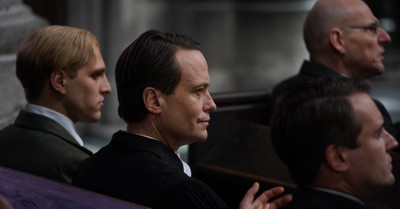
Several scenes later, Bonhoeffer himself stands at the pulpit and proclaims to Nazi soldiers in attendance: "The German church must stand on God's Word alone, not any man's word, and especially not a Fuhrer's word." The soldiers leave in protest, but Bonhoeffer is undaunted.

Photo Credit: ©Angel Studios

2. It Reveals How We Can Be Blind to Evil in Our Own Time

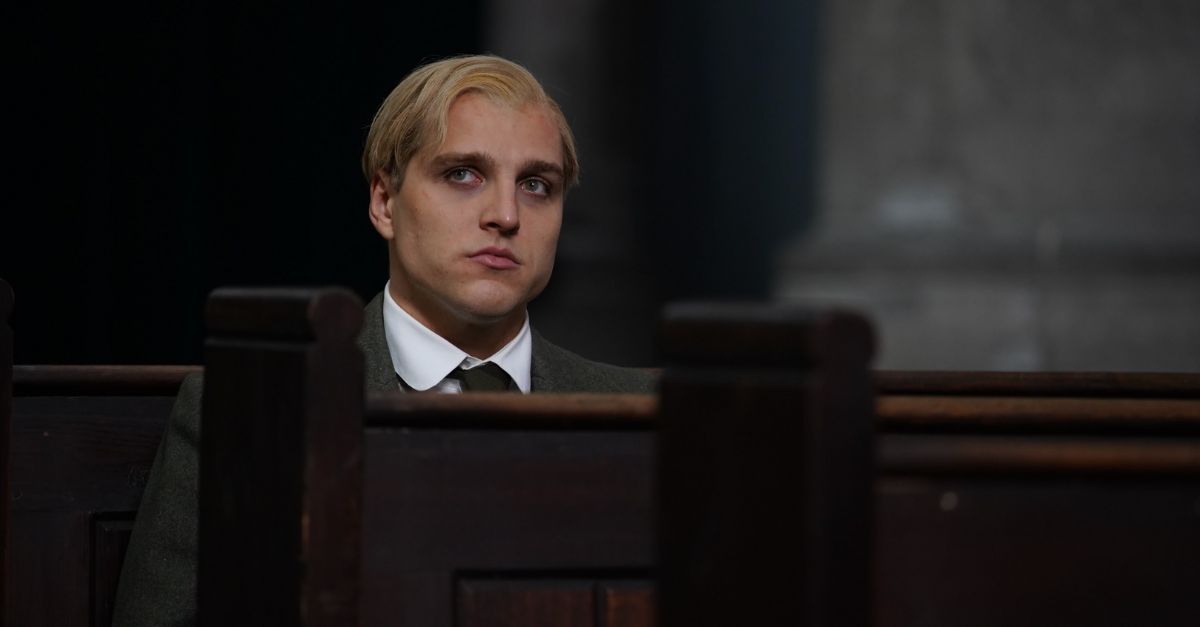
At first, Bonhoeffer is blind to the evil in his own nation. Yet even when his eyes are opened, the rest of the German church remains quiet -- either out of fear or complicity.

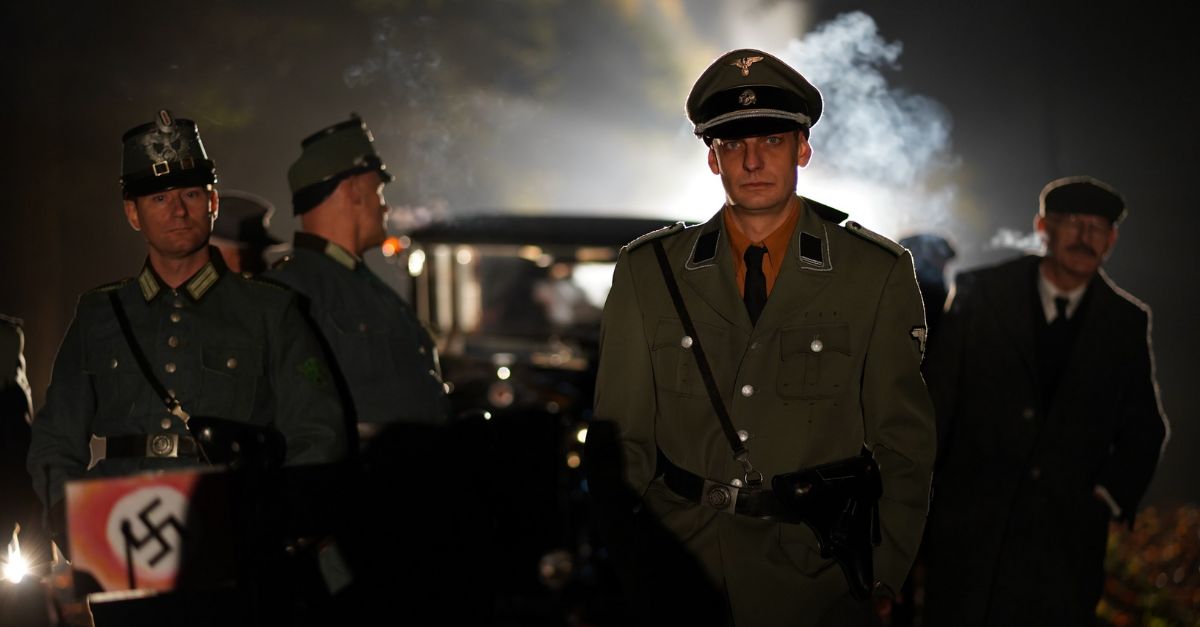
Crucifixes of Christ and statues of saints are torn down. In their place are lifted Nazi imagery, including swastikas. When confronted with declining morality within the church, a German bishop boasts to Bonhoeffer, "Our churches are fuller than they have been in years." 

Bonhoeffer, though, remains unimpressed. The problem isn't attendance but rather the message. Incredibly, the German church even buys the Nazi propaganda about Jews. 

"Hitler will resolve the Jewish question," a bishop reassures Bonhoeffer, assuming the two are on the same side. 

"Why must there even be a Jewish question?" an incredulous Bonhoeffer responds.

Bonhoeffer travels to England, where he requests support for the small band of German Christians opposing Hitler. At first, British clergy are resistant, calling it a German problem with little impact on the world. Bonhoeffer, though, insists that Hitler's targeting of Jews requires international outrage. "Our silence in the face of evil is itself evil," he says. "Not to speak is to speak. Not to act is to act."

Eventually, Bonhoeffer's bold action influences the German bishops around him. One of those bishops, Martin Noemoller, shifts from a supporter of Hitler to a steadfast opponent -- thanks to the voice of Bonhoeffer and others.

"When the Nazis first came for the socialists, I didn't speak out because I was not a socialist," Noemoller preaches from the pulpit hours prior to his arrest. "And when they later came for the trade unionists, I didn't speak out because I am not a unionist. And then they came for the Jews, and I didn't speak out, not soon enough, because I am not a Jew. So, when they come to knock at my door, will there be anyone left to speak out for me?"

Photo Credit: ©Angel Studios

3. It Shows How the Courage of One Person Can Inspire Change

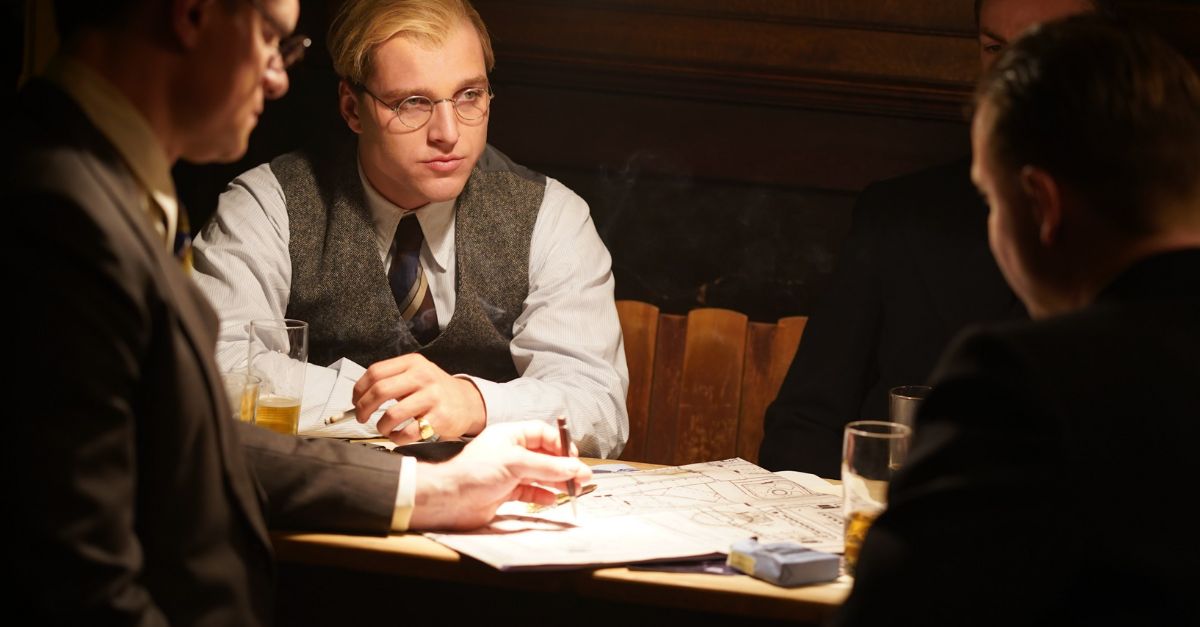
Eventually, Bonhoeffer joins a plot to assassinate Hitler, resisting his pacifistic impulses to try and stop the Nazi madman. Hitler is not the first evil leader in world history, Bonhoeffer explains, but "he's the first one I can stop."

The plot, of course, failed, and Hitler's evil march continued. Hitler even outlived Bonhoeffer, although by only three weeks. (In the film's final moments, Bonhoeffer turns down an opportunity to escape from prison, believing it would place his wife and children in jeopardy.)  

It's worth asking: Why do we still remember Bonhoeffer? It's because he displayed moral courage in the face of overwhelming evil. He spoke up when others remained silent. He changed hearts when others were indifferent. He defended the innocent when others looked away. He was even willing to die when others chose self-preservation. 

Six months after the war, the German Lutheran church issued a statement of repentance, acknowledging that "through us … infinite wrong was done." The names of the cowardly Christian leaders who survived are known only to a few historians. But the name of the man who stood boldly against injustice -- and who died a martyr -- is remembered by millions worldwide.

Bonhoeffer is a gripping movie with a few surprises and plenty of inspiration. It includes minor language (details below) and mild violence. (The execution by hanging, if you're curious, takes place off-screen -- although the sound of it is heard.)

It's one of the most inspiring movies of the year.

Entertainment rating: 4 out of 5 stars.

Family-friendly rating: 4 out of 5 stars. 

Rated PG-13 for violent content, thematic elements, and some smoking. Language details: h-ll (1), d--n (1), SOB (1). 

Discussion questions: Why do you think the German church was silent in the face of evil? What injustices or wrongs in our society might people fail to see or acknowledge? What lessons can we learn from Bonhoeffer's life? Do you agree with his attempt to assassinate Hitler? (Why or why not?)

Photo Credit: ©Angel Studios

 

Salem News Channel Today

Sponsored Links


September 26 - Phoenix, AZ
Scottsdale Center for the Performing Arts


November 2 - Detroit, MI
Zion Christian Church in Troy


October 6 - Los Angeles, CA
Pasadena Convention Center


November 5 - San Antonio, TX
Norris Centers – The Grand Red Oak Ballroom


October 8 - Sacramento, CA
William Jessup University


November 7 - Tampa, FL
The Palladium at St. Pete College


October 22 - Minneapolis, MN
Crowne Plaza AiRE


November 15 - San Francisco, CA
Fremont Marriott Silicon Valley


October 23 - Philadelphia, PA
Green Valley Country Club


November 16 - Denver, CO
CU South Denver - Formerly Wildlife Experience


November 2 - Chicago, IL
Chicago Westin Northwest in Itasca


November 21 - Cleveland, OH
Holiday Inn Rockside in Independence


Salem Radio Network Speakers

Larry Elder is an American lawyer, writer, and radio and television personality who calls himself the "Sage of South Central" a district of Los Angeles, Larry says his philosophy is to entertain, inform, provoke and to hopefully uplift. His calling card is "we have a country to save" and to him this means returning to the bedrock Constitutional principles of limited government and maximum personal responsibility. Elder's iconoclastic wit and intellectual agility makes him a particularly attractive voice in a nation that seems weary of traditional racial dialogue.” – Los Angeles Times.

Mike Gallagher Mike Gallagher began his broadcasting career in 1978 in Dayton, Ohio. Today, he is one of the most listened-to talk radio show hosts in America, recently having been ranked in the Talkers Magazine “Heavy Hundred” list – the 100 most important talk radio hosts in America. Prior to being launched into national syndication in 1998, Mike hosted the morning show on WABC-AM in New York City. Today, Talkers Magazine reports that his show is heard by over 3.75 million weekly listeners. Besides his radio work, Mike is seen on Fox News Channel as an on-air contributor, frequently appearing on the cable news giant.

Hugh Hewitt is one of the nation’s leading bloggers and a genuine media revolutionary. He brings that expertise, his wit and what The New Yorker magazine calls his “amiable but relentless manner” to his nationally syndicated show each day.

When Dr. Sebastian Gorka was growing up, he listened to talk radio under his pillow with a transistor radio, dreaming that one day he would be behind the microphone. Beginning New Year’s Day 2019, he got his wish. Gorka now hosts America First every weekday afternoon 3 to 6pm ET. Gorka’s unique story works well on the radio. He is national security analyst for the Fox News Channel and author of two books: "Why We Fight" and "Defeating Jihad." His latest book releasing this fall is “War For America’s Soul.” He is uniquely qualified to fight the culture war and stand up for what is great about America, his adopted home country.

Broadcasting from his home station of KRLA in Los Angeles, the Dennis Prager Show is heard across the country. Everything in life – from politics to religion to relationships – is grist for Dennis’ mill. If it’s interesting, if it affects your life, then Dennis will be talking about it – with passion, humor, insight and wisdom.

Sean Hannity is a conservative radio and television host, and one of the original primetime hosts on the Fox News Channel, where he has appeared since 1996. Sean Hannity began his radio career at a college station in California, before moving on to markets in the Southeast and New York. Today, he’s one of the most listened to on-air voices. Hannity’s radio program went into national syndication on September 10, 2001, and airs on more than 500 stations. Talkers Magazine estimates Hannity’s weekly radio audience at 13.5 million. In 1996 he was hired as one of the original hosts on Fox News Channel. As host of several popular Fox programs, Hannity has become the highest-paid news anchor on television.

Michelle Malkin is a mother, wife, blogger, conservative syndicated columnist, longtime cable TV news commentator, and best-selling author of six books. She started her newspaper journalism career at the Los Angeles Daily News in 1992, moved to the Seattle Times in 1995, and has been penning nationally syndicated newspaper columns for Creators Syndicate since 1999. She is founder of conservative Internet start-ups Hot Air and Twitchy.com. Malkin has received numerous awards for her investigative journalism, including the Council on Governmental Ethics Laws (COGEL) national award for outstanding service for the cause of governmental ethics and leadership (1998), the Reed Irvine Accuracy in Media Award for Investigative Journalism (2006), the Heritage Foundation and Franklin Center for Government & Public Integrity's Breitbart Award for Excellence in Journalism (2013), the Center for Immigration Studies' Eugene Katz Award for Excellence in the Coverage of Immigration Award (2016), and the Manhattan Film Festival's Film Heals Award (2018). Married for 26 years and the mother of two teenage children, she lives with her family in Colorado. Follow her at michellemalkin.com. (Photo reprinted with kind permission from Peter Duke Photography.)

Sponsored by:

3 Powerful Lessons from the Movie ‘Bonhoeffer’

Carbonatix Pre-Player Loader

Audio By Carbonatix

1. It Urges Us to Speak Out against Injustice

Director Todd Komarnicki masterfully weaves a gripping narrative, showing us the aftermath of Bonhoeffer's courageous actions before it unfolds the story of his heroics. In the film's opening scenes, we watch as Bonhoeffer and his fellow prisoners are transported on a bus to a prison in Bavaria, Germany, where they see human skulls and skeletal fragments alongside the road.

Soon, however, the story takes us back in time to Bonhoeffer's childhood, where we see him watching his older brother, Walter, depart for the front lines of the Great War, a conflict that claimed Walter's life. From there, we follow Bonhoeffer through pivotal moments, including his transformative time in America and his return to a Germany on the verge of war.

He's a man who is not afraid to confront injustice and evil.

Told that his black friend cannot stay in an American motel, Bonhoeffer stands up to the manager, pointing to a cross on the wall near the reception desk. "Surely our love of the Lord unites us," he pleads. Bonhoeffer, though, only receives cruel treatment -- he's spat upon and beaten.

Hearing a German bishop label Hitler a "savior" to loud applause, Bonhoeffer walks out of the sermon and subsequently confronts a Nazi-sympathizing friend. "The church does not belong to him or any man," he tells his friend, referencing the bishop and Hitler. "It belongs to the living God."

Several scenes later, Bonhoeffer himself stands at the pulpit and proclaims to Nazi soldiers in attendance: "The German church must stand on God's Word alone, not any man's word, and especially not a Fuhrer's word." The soldiers leave in protest, but Bonhoeffer is undaunted.

Photo Credit: ©Angel Studios


2. It Reveals How We Can Be Blind to Evil in Our Own Time

At first, Bonhoeffer is blind to the evil in his own nation. Yet even when his eyes are opened, the rest of the German church remains quiet -- either out of fear or complicity.

Crucifixes of Christ and statues of saints are torn down. In their place are lifted Nazi imagery, including swastikas. When confronted with declining morality within the church, a German bishop boasts to Bonhoeffer, "Our churches are fuller than they have been in years." 

Bonhoeffer, though, remains unimpressed. The problem isn't attendance but rather the message. Incredibly, the German church even buys the Nazi propaganda about Jews. 

"Hitler will resolve the Jewish question," a bishop reassures Bonhoeffer, assuming the two are on the same side. 

"Why must there even be a Jewish question?" an incredulous Bonhoeffer responds.

Bonhoeffer travels to England, where he requests support for the small band of German Christians opposing Hitler. At first, British clergy are resistant, calling it a German problem with little impact on the world. Bonhoeffer, though, insists that Hitler's targeting of Jews requires international outrage. "Our silence in the face of evil is itself evil," he says. "Not to speak is to speak. Not to act is to act."

Eventually, Bonhoeffer's bold action influences the German bishops around him. One of those bishops, Martin Noemoller, shifts from a supporter of Hitler to a steadfast opponent -- thanks to the voice of Bonhoeffer and others.

"When the Nazis first came for the socialists, I didn't speak out because I was not a socialist," Noemoller preaches from the pulpit hours prior to his arrest. "And when they later came for the trade unionists, I didn't speak out because I am not a unionist. And then they came for the Jews, and I didn't speak out, not soon enough, because I am not a Jew. So, when they come to knock at my door, will there be anyone left to speak out for me?"

Photo Credit: ©Angel Studios


3. It Shows How the Courage of One Person Can Inspire Change

Eventually, Bonhoeffer joins a plot to assassinate Hitler, resisting his pacifistic impulses to try and stop the Nazi madman. Hitler is not the first evil leader in world history, Bonhoeffer explains, but "he's the first one I can stop."

The plot, of course, failed, and Hitler's evil march continued. Hitler even outlived Bonhoeffer, although by only three weeks. (In the film's final moments, Bonhoeffer turns down an opportunity to escape from prison, believing it would place his wife and children in jeopardy.)  

It's worth asking: Why do we still remember Bonhoeffer? It's because he displayed moral courage in the face of overwhelming evil. He spoke up when others remained silent. He changed hearts when others were indifferent. He defended the innocent when others looked away. He was even willing to die when others chose self-preservation. 

Six months after the war, the German Lutheran church issued a statement of repentance, acknowledging that "through us … infinite wrong was done." The names of the cowardly Christian leaders who survived are known only to a few historians. But the name of the man who stood boldly against injustice -- and who died a martyr -- is remembered by millions worldwide.

Bonhoeffer is a gripping movie with a few surprises and plenty of inspiration. It includes minor language (details below) and mild violence. (The execution by hanging, if you're curious, takes place off-screen -- although the sound of it is heard.)

It's one of the most inspiring movies of the year.

Entertainment rating: 4 out of 5 stars.

Family-friendly rating: 4 out of 5 stars. 

Rated PG-13 for violent content, thematic elements, and some smoking. Language details: h-ll (1), d--n (1), SOB (1). 

Discussion questions: Why do you think the German church was silent in the face of evil? What injustices or wrongs in our society might people fail to see or acknowledge? What lessons can we learn from Bonhoeffer's life? Do you agree with his attempt to assassinate Hitler? (Why or why not?)

Photo Credit: ©Angel Studios

 

Salem News Channel Today

Sponsored Links

On Air & Up Next

See the Full Program Guide