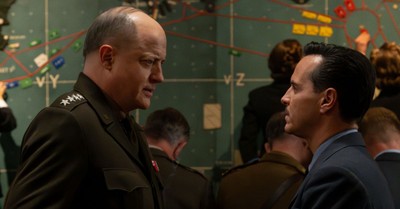
3 Reasons ‘Pressure’ Stands Out in a Crowded WWII Genre

Carbonatix Pre-Player Loader

Audio By Carbonatix

It Tells a Little-Known Story

Only the most devoted students of World War II history know the true story on which it was based. Pressure brings that forgotten chapter to the general public – and delivers tension every bit as gripping as the battlefield epics that dominate the genre.

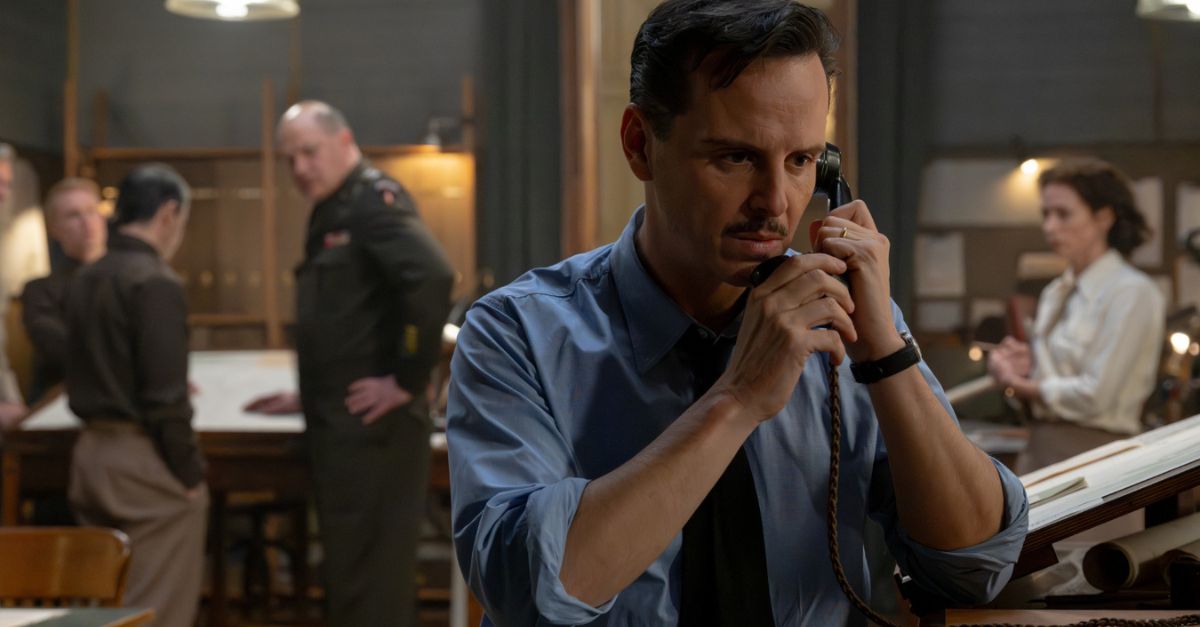
Set in the tense hours leading up to the Allied invasion of the beaches of Normandy – when Nazi forces occupied France – Pressure spotlights a clash between two forecasters: Scotland’s James Stagg and America’s Irving P. Krick, two men with dramatically different approaches to predicting the weather. Krick relied heavily on historical weather patterns – methods similar to those found in the Farmer’s Almanac – believing the past offered clues about the future. Stagg, by contrast, dismissed such thinking as nonsense, insisting that accurate forecasting depended on tracking weather systems thousands of miles away and studying conditions high in the atmosphere through weather balloons.

The outcome of the war may have depended on it. The D-Day invasion involved hundreds of thousands of U.S. and Allied troops storming the beaches of Normandy by air and sea – a massive operation that Stagg warned could end in catastrophe if the Allies stuck to the originally planned date of June 5. He predicted rough seas, powerful winds, and dangerous storms across the English Channel that would make a landing perilous for troops and equipment alike.

Had the Allies landed June 5 and the invasion failed, director Anthony Maras told Crosswalk, “We might have been living in a world where Europe was Soviet or where Europe was German or where it’s a combination of the two.”

Photo Credit: ©Focus

It’s Surprisingly Tense and Gripping

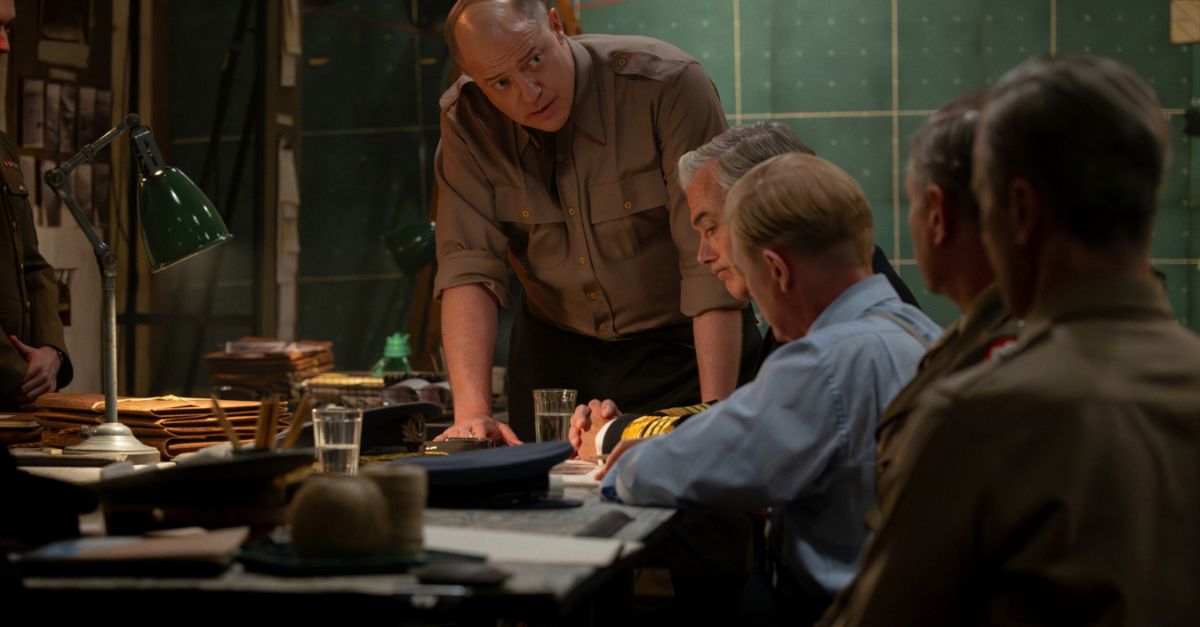
Pressure has few battle scenes but sustains the tension through a high-stakes debate over a weather forecast that could alter the course of the war – and through a series of tense meetings among Allied leaders that pit Stagg not only against Eisenhower and top military officials but also against Krick, whose off-putting confidence is rooted in past successes, including a correct forecast during the previous North Africa campaign.

Eisenhower has confidence in Krick and respects his track record, but he also places considerable trust in Stagg, knowing the Scottish forecaster came highly recommended by Churchill.

Several of Eisenhower’s top advisers warn that any delay could spell doom for the Allies.

“If D-Day is canceled, we will lose this war,” one of the top military officials tells Stagg. “Do you want to be personally responsible for losing this war?”

Adding to the tension: It’s sunny outside the offices of the Allied bunker, with calm conditions and few clouds. Those same military leaders continually press Stagg with the same question: Do you really expect us to believe a major storm is coming?

The plot sets up a gripping dilemma: Delaying the invasion could spell doom, but so could moving ahead in dangerous weather conditions.

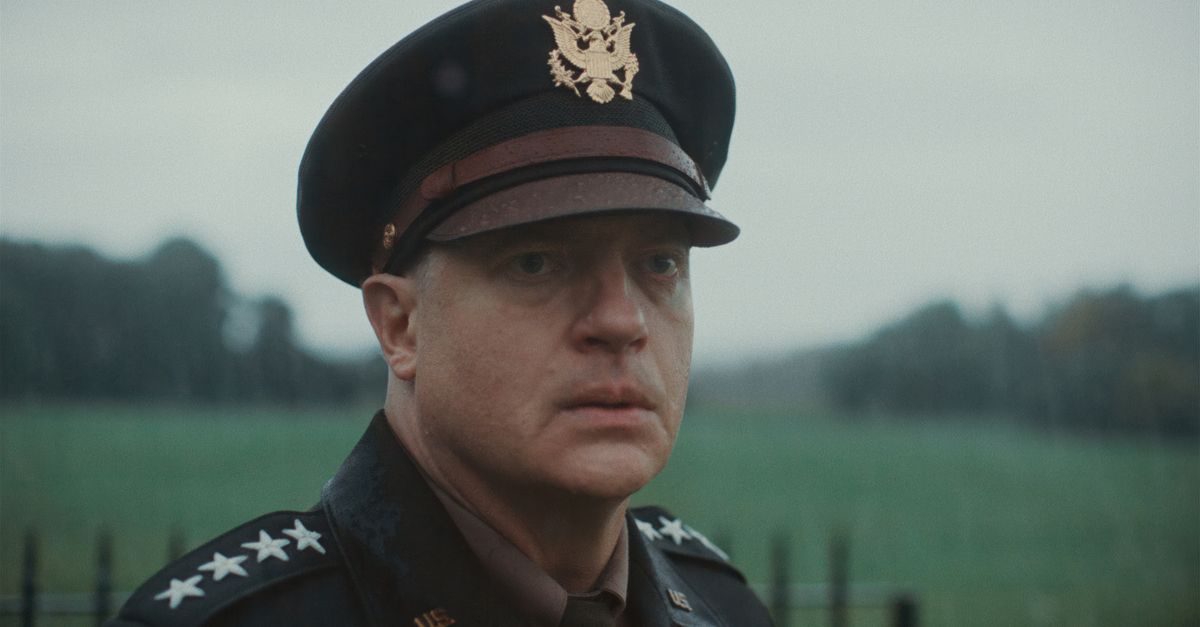
The decision ultimately rests on the shoulders of Eisenhower, the Allied commander.

Photo Credit: ©Focus

Its Message Still Resonates Today

The film’s turning point comes midway through the story, when an anxious, visibly shaken Stagg stands before Eisenhower and a room full of military brass – all dressed in their uniforms – delivering a message they do not want to hear: Countless soldiers likely will die if the invasion moves forward as planned. As he speaks, sunlight beams down on the building, making his grim forecast seem almost impossible to believe.

Stagg may not possess Krick’s confidence, but he has the facts on his side.

“If you invade tomorrow, you're going to be washed away – because the storms that I'm talking about are real, and the jet stream that's propelling them towards the Normandy coast is real, and the wrath of nature is real,” Stagg says.

With a handful of his advisors still demanding an invasion date of June 5, Eisenhower makes the call: D-Day will be delayed.

Pressure offers powerful lessons for modern society about courage in leadership, about speaking truth to power, and about accepting hard truths even when they conflict with what we want to hear. Our echo-chamber news culture often tempts us to believe only the information that confirms our assumptions. Pressure offers a more realistic reminder: Facts don’t change simply because they are inconvenient.

The film is not without its flaws, particularly for families, due largely to its inclusion of strong language (details below).

But for fans of real-life stories based in history, Pressure is hard to beat.

Rated PG-13 for war violence, bloody images, some strong language, and smoking. Language details: GD (4), misuse of “Jesus” (2), s–t (2), a-ss (1), h-11 (1).

Entertainment rating: 4 out of 5 stars.

Family-friendly rating: 3 out of 5 stars.

Photo Credit: ©Focus

 

Salem News Channel Today

Sponsored Links


September 26 - Phoenix, AZ
Scottsdale Center for the Performing Arts


November 2 - Detroit, MI
Zion Christian Church in Troy


October 6 - Los Angeles, CA
Pasadena Convention Center


November 5 - San Antonio, TX
Norris Centers – The Grand Red Oak Ballroom


October 8 - Sacramento, CA
William Jessup University


November 7 - Tampa, FL
The Palladium at St. Pete College


October 22 - Minneapolis, MN
Crowne Plaza AiRE


November 15 - San Francisco, CA
Fremont Marriott Silicon Valley


October 23 - Philadelphia, PA
Green Valley Country Club


November 16 - Denver, CO
CU South Denver - Formerly Wildlife Experience


November 2 - Chicago, IL
Chicago Westin Northwest in Itasca


November 21 - Cleveland, OH
Holiday Inn Rockside in Independence


Salem Radio Network Speakers

Larry Elder is an American lawyer, writer, and radio and television personality who calls himself the "Sage of South Central" a district of Los Angeles, Larry says his philosophy is to entertain, inform, provoke and to hopefully uplift. His calling card is "we have a country to save" and to him this means returning to the bedrock Constitutional principles of limited government and maximum personal responsibility. Elder's iconoclastic wit and intellectual agility makes him a particularly attractive voice in a nation that seems weary of traditional racial dialogue.” – Los Angeles Times.

Mike Gallagher Mike Gallagher began his broadcasting career in 1978 in Dayton, Ohio. Today, he is one of the most listened-to talk radio show hosts in America, recently having been ranked in the Talkers Magazine “Heavy Hundred” list – the 100 most important talk radio hosts in America. Prior to being launched into national syndication in 1998, Mike hosted the morning show on WABC-AM in New York City. Today, Talkers Magazine reports that his show is heard by over 3.75 million weekly listeners. Besides his radio work, Mike is seen on Fox News Channel as an on-air contributor, frequently appearing on the cable news giant.

Hugh Hewitt is one of the nation’s leading bloggers and a genuine media revolutionary. He brings that expertise, his wit and what The New Yorker magazine calls his “amiable but relentless manner” to his nationally syndicated show each day.

When Dr. Sebastian Gorka was growing up, he listened to talk radio under his pillow with a transistor radio, dreaming that one day he would be behind the microphone. Beginning New Year’s Day 2019, he got his wish. Gorka now hosts America First every weekday afternoon 3 to 6pm ET. Gorka’s unique story works well on the radio. He is national security analyst for the Fox News Channel and author of two books: "Why We Fight" and "Defeating Jihad." His latest book releasing this fall is “War For America’s Soul.” He is uniquely qualified to fight the culture war and stand up for what is great about America, his adopted home country.

Broadcasting from his home station of KRLA in Los Angeles, the Dennis Prager Show is heard across the country. Everything in life – from politics to religion to relationships – is grist for Dennis’ mill. If it’s interesting, if it affects your life, then Dennis will be talking about it – with passion, humor, insight and wisdom.

Sean Hannity is a conservative radio and television host, and one of the original primetime hosts on the Fox News Channel, where he has appeared since 1996. Sean Hannity began his radio career at a college station in California, before moving on to markets in the Southeast and New York. Today, he’s one of the most listened to on-air voices. Hannity’s radio program went into national syndication on September 10, 2001, and airs on more than 500 stations. Talkers Magazine estimates Hannity’s weekly radio audience at 13.5 million. In 1996 he was hired as one of the original hosts on Fox News Channel. As host of several popular Fox programs, Hannity has become the highest-paid news anchor on television.

Michelle Malkin is a mother, wife, blogger, conservative syndicated columnist, longtime cable TV news commentator, and best-selling author of six books. She started her newspaper journalism career at the Los Angeles Daily News in 1992, moved to the Seattle Times in 1995, and has been penning nationally syndicated newspaper columns for Creators Syndicate since 1999. She is founder of conservative Internet start-ups Hot Air and Twitchy.com. Malkin has received numerous awards for her investigative journalism, including the Council on Governmental Ethics Laws (COGEL) national award for outstanding service for the cause of governmental ethics and leadership (1998), the Reed Irvine Accuracy in Media Award for Investigative Journalism (2006), the Heritage Foundation and Franklin Center for Government & Public Integrity's Breitbart Award for Excellence in Journalism (2013), the Center for Immigration Studies' Eugene Katz Award for Excellence in the Coverage of Immigration Award (2016), and the Manhattan Film Festival's Film Heals Award (2018). Married for 26 years and the mother of two teenage children, she lives with her family in Colorado. Follow her at michellemalkin.com. (Photo reprinted with kind permission from Peter Duke Photography.)

Sponsored by:

3 Reasons ‘Pressure’ Stands Out in a Crowded WWII Genre

Carbonatix Pre-Player Loader

Audio By Carbonatix

It Tells a Little-Known Story

Only the most devoted students of World War II history know the true story on which it was based. Pressure brings that forgotten chapter to the general public – and delivers tension every bit as gripping as the battlefield epics that dominate the genre.

Set in the tense hours leading up to the Allied invasion of the beaches of Normandy – when Nazi forces occupied France – Pressure spotlights a clash between two forecasters: Scotland’s James Stagg and America’s Irving P. Krick, two men with dramatically different approaches to predicting the weather. Krick relied heavily on historical weather patterns – methods similar to those found in the Farmer’s Almanac – believing the past offered clues about the future. Stagg, by contrast, dismissed such thinking as nonsense, insisting that accurate forecasting depended on tracking weather systems thousands of miles away and studying conditions high in the atmosphere through weather balloons.

The outcome of the war may have depended on it. The D-Day invasion involved hundreds of thousands of U.S. and Allied troops storming the beaches of Normandy by air and sea – a massive operation that Stagg warned could end in catastrophe if the Allies stuck to the originally planned date of June 5. He predicted rough seas, powerful winds, and dangerous storms across the English Channel that would make a landing perilous for troops and equipment alike.

Had the Allies landed June 5 and the invasion failed, director Anthony Maras told Crosswalk, “We might have been living in a world where Europe was Soviet or where Europe was German or where it’s a combination of the two.”

Photo Credit: ©Focus


It’s Surprisingly Tense and Gripping

Pressure has few battle scenes but sustains the tension through a high-stakes debate over a weather forecast that could alter the course of the war – and through a series of tense meetings among Allied leaders that pit Stagg not only against Eisenhower and top military officials but also against Krick, whose off-putting confidence is rooted in past successes, including a correct forecast during the previous North Africa campaign.

Eisenhower has confidence in Krick and respects his track record, but he also places considerable trust in Stagg, knowing the Scottish forecaster came highly recommended by Churchill.

Several of Eisenhower’s top advisers warn that any delay could spell doom for the Allies.

“If D-Day is canceled, we will lose this war,” one of the top military officials tells Stagg. “Do you want to be personally responsible for losing this war?”

Adding to the tension: It’s sunny outside the offices of the Allied bunker, with calm conditions and few clouds. Those same military leaders continually press Stagg with the same question: Do you really expect us to believe a major storm is coming?

The plot sets up a gripping dilemma: Delaying the invasion could spell doom, but so could moving ahead in dangerous weather conditions.

The decision ultimately rests on the shoulders of Eisenhower, the Allied commander.

Photo Credit: ©Focus


Its Message Still Resonates Today

The film’s turning point comes midway through the story, when an anxious, visibly shaken Stagg stands before Eisenhower and a room full of military brass – all dressed in their uniforms – delivering a message they do not want to hear: Countless soldiers likely will die if the invasion moves forward as planned. As he speaks, sunlight beams down on the building, making his grim forecast seem almost impossible to believe.

Stagg may not possess Krick’s confidence, but he has the facts on his side.

“If you invade tomorrow, you're going to be washed away – because the storms that I'm talking about are real, and the jet stream that's propelling them towards the Normandy coast is real, and the wrath of nature is real,” Stagg says.

With a handful of his advisors still demanding an invasion date of June 5, Eisenhower makes the call: D-Day will be delayed.

Pressure offers powerful lessons for modern society about courage in leadership, about speaking truth to power, and about accepting hard truths even when they conflict with what we want to hear. Our echo-chamber news culture often tempts us to believe only the information that confirms our assumptions. Pressure offers a more realistic reminder: Facts don’t change simply because they are inconvenient.

The film is not without its flaws, particularly for families, due largely to its inclusion of strong language (details below).

But for fans of real-life stories based in history, Pressure is hard to beat.

Rated PG-13 for war violence, bloody images, some strong language, and smoking. Language details: GD (4), misuse of “Jesus” (2), s–t (2), a-ss (1), h-11 (1).

Entertainment rating: 4 out of 5 stars.

Family-friendly rating: 3 out of 5 stars.

Photo Credit: ©Focus

 

Salem News Channel Today

Sponsored Links

On Air & Up Next

See the Full Program Guide